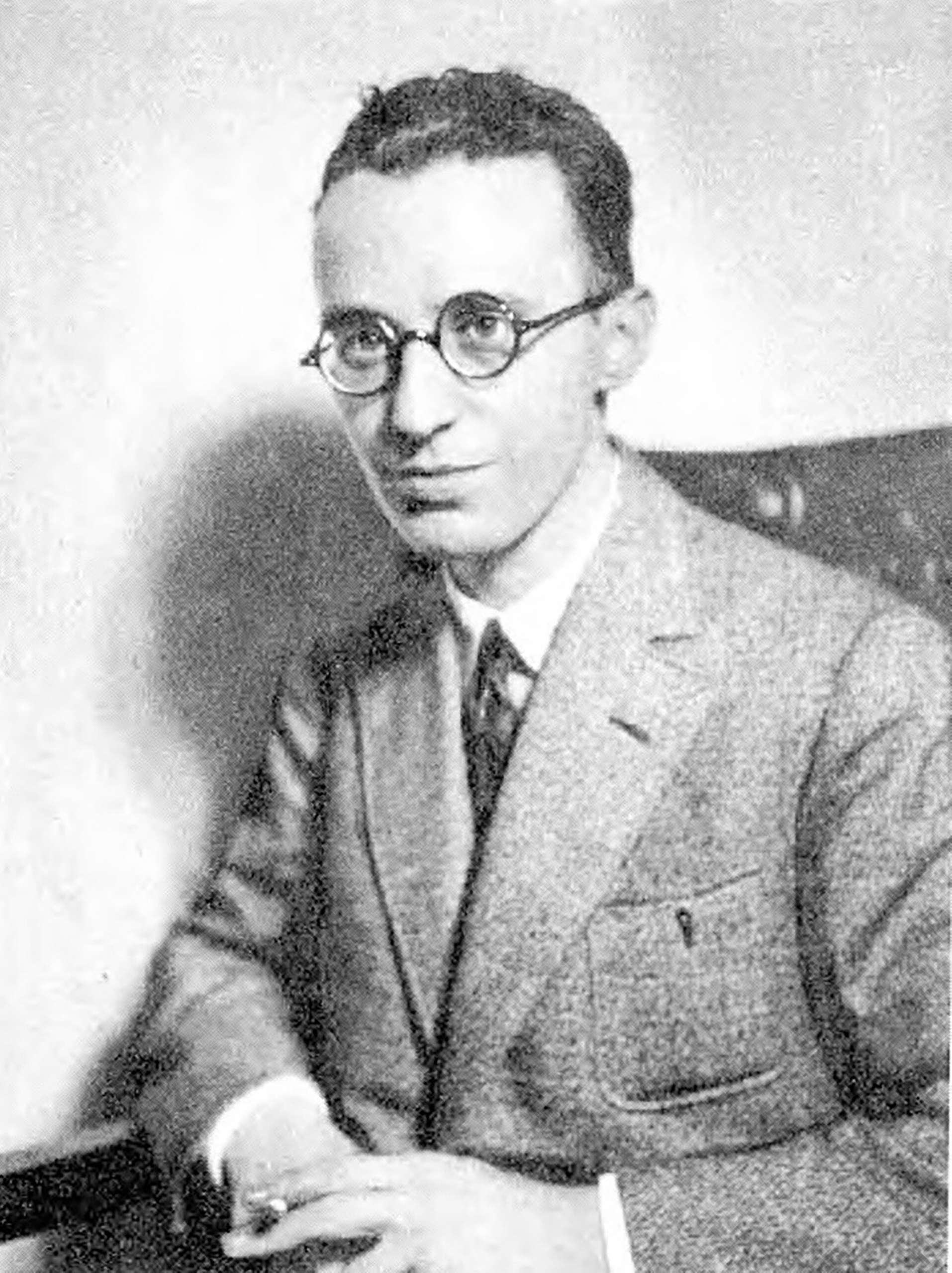
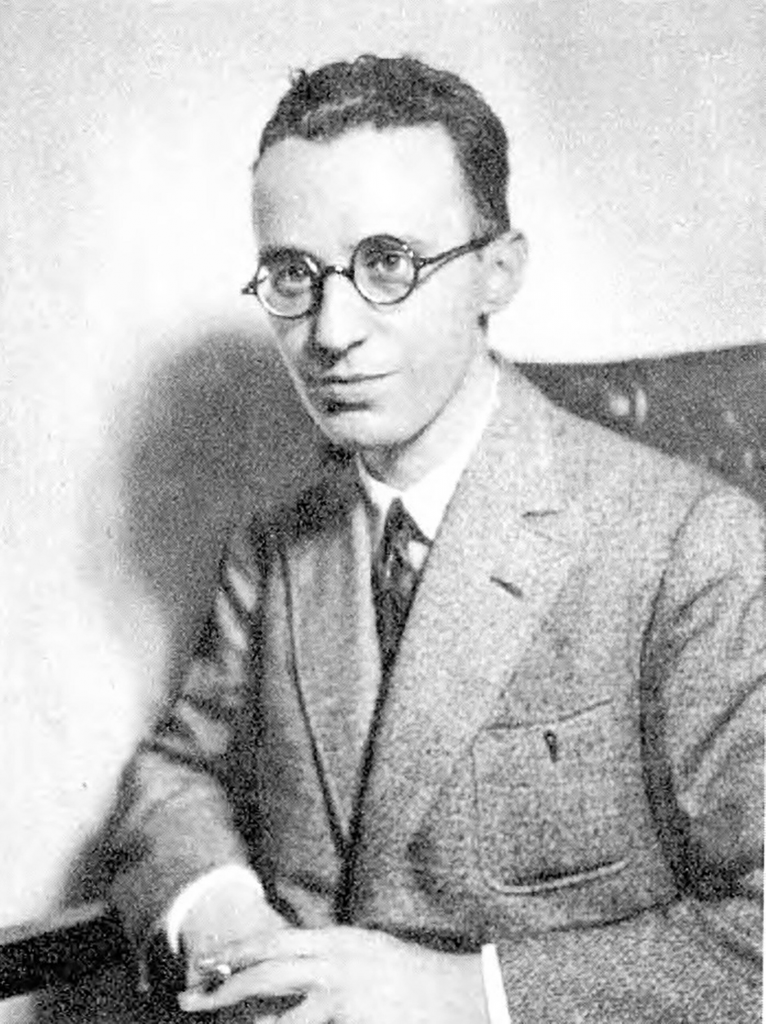
Reinhold Adolf Merten (June 6, 1894 in Wiesbaden; August 19, 1943 in Munich[1][2]) was a German conductor and physician.
Coming from a family of musicians, Merten initially attended the conservatory in Wiesbaden, but then studied medicine at the Philipps University of Marburg and the Johann Wolfgang Goethe University of Frankfurt am Main, and served as a medical officer in World War I. After the war, he received his doctorate from the University of Frankfurt with a dissertation on acid-fast, tubercle-like bacilli in wind instruments (1933).
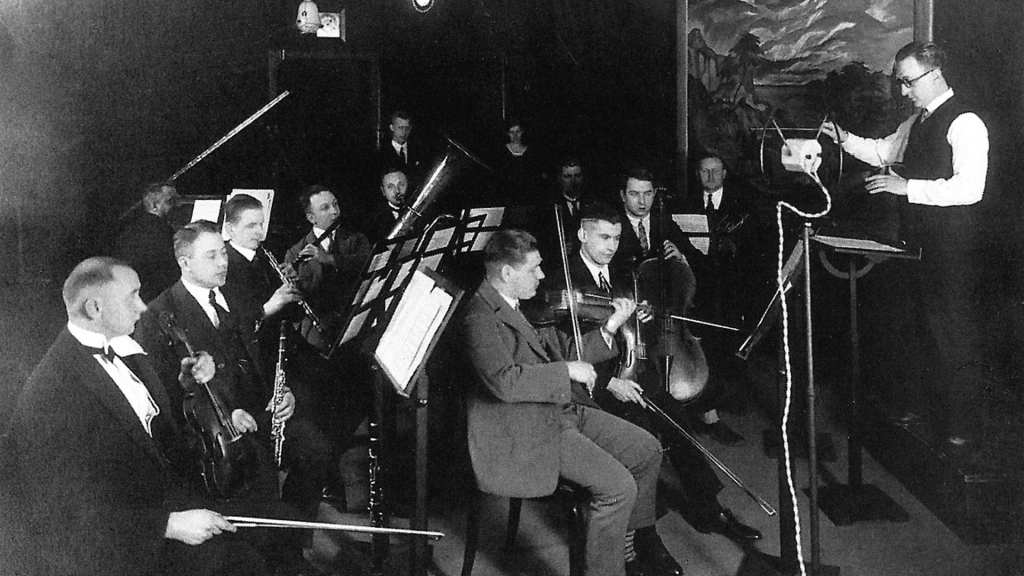
Merten did not work as a doctor, however, but became a solo répétiteur at the Frankfurt Opera in 1920. Together with Paul Hindemith, he founded the Frankfurter Gemeinschaft für Musik in 1922. After the Südwestdeutsche Rundfunkdienst AG (Radio Frankfurt) began operations in Frankfurt am Main in April 1924, several musicians gathered under Merten’s direction in the station’s studio in the old postal savings bank on Stephanstrasse and played ensemble music. From 1926, he worked in Frankfurt as an organist and pianist. In 1927, he joined the SPD, a party he remained a member of until 1931. On October 1, 1929, the Frankfurt Radio Symphony Orchestra was founded, with Hans Rosbaud as first and Reinhold Merten as second conductor.
In addition to his musical activities, he was a “music official” at the radio station. On April 1, 1933, he joined the Nazi Party (membership number 1,795,051). In 1934, he was tasked with establishing a sound engineering school in Berlin. In 1938, he became head of the acoustic-musical border areas department of the Central Technical Directorate within the Reich Broadcasting Company in Dresden. In 1939, he moved to the Great Orchestra of the Reichssender Leipzig as chief conductor. He remained there until the station was shut down in 1940 due to the war. He also taught applied musicology at the University of Freiburg.
In 1941, he went to the Reichssender Munich as first Kapellmeister. After a serious illness, he died in Munich in 1943.
Die einzige Quelle in der Gegenwart | The only source of the presence
ca. 1870 – 1948
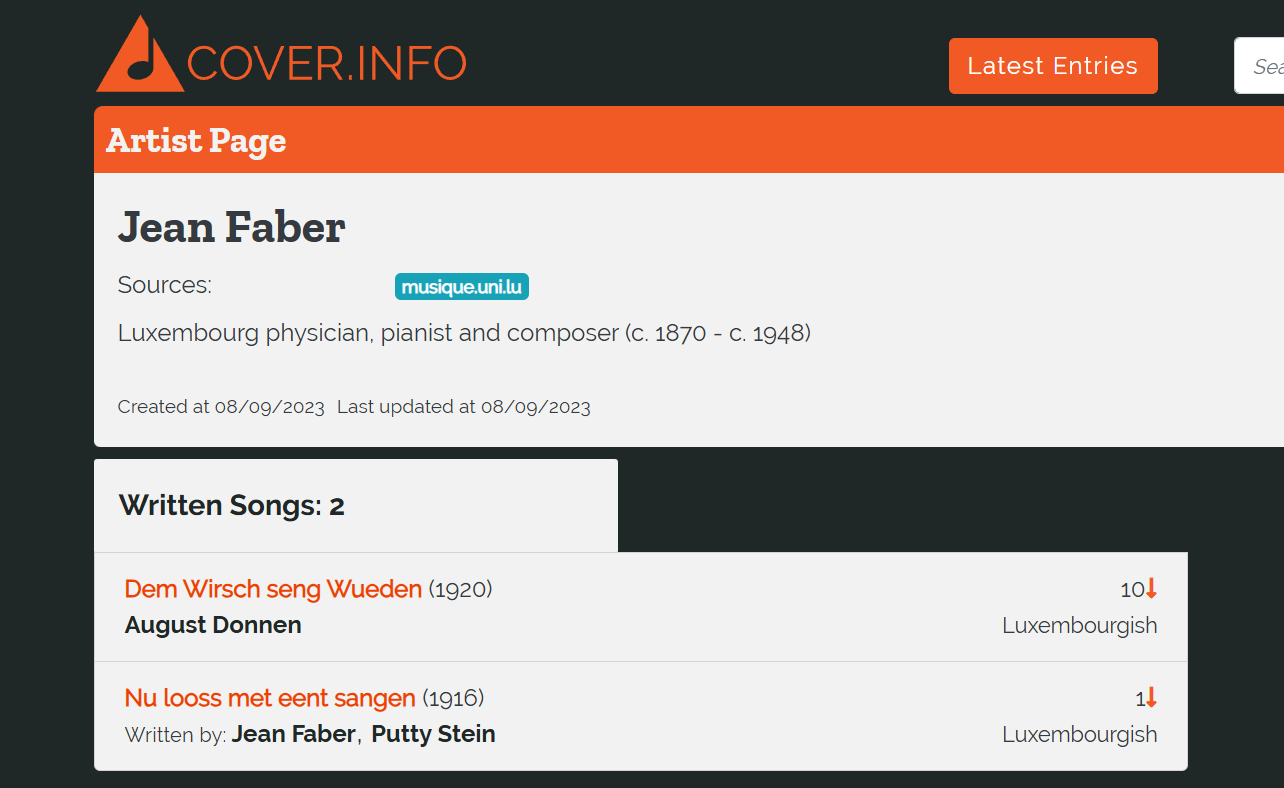
Jean Faber was most likely born in the 1870s. He studied medicine and worked as a practicing surgeon, but was also interested in music and gave informative lectures about musicians, including Beethoven. He also performed as a pianist at a Beethoven celebration, specifically in Beethoven’s Trio in E-flat major for violin, cello, and piano.3 He also acted as a piano accompanist at other concerts. He was married to Marie-Marguerite Bandermann (1864–October 24, 1918).
Dr. Jean Faber was a versatile man and also involved in social activities. He was president of the Luxembourg Medical Society (until 1947) and a member of the Société Belge de Chirurgie.
He was also president of the supervisory committee of the Music Conservatory and the Harmonie d’Eich. He was on the board of the society Les Amis de la Musique, founded in October 1928, and also on the executive committee of the Red Cross. In 1939, a hospital was built in Siebenbrunnen Castle, and he was to take over its management.
In 1947, he resigned from his presidency for health reasons.
The versatile physician Jean Faber was also active as a composer.
The Institut national de Luxembourg, the literary department of the supra-political Union nationale luxembourgeoise, has just published 30 old and modern songs under the title Vun den He’chten an aus den De’ften, with lyrics primarily by Siggy vu Lëtzebuerg (a pseudonym of Lucien Koenig). Composers such as Jean Pierre Beicht, Gustav Kahnt, Goldschmit, Jean Faber, and other anonymous composers contributed to this work.
At the General Assembly of the Medical Society, the Society’s former president, Dr. Jean Faber, also performed as a pianist: a review, whose author is not stated, states that he played the piano masterfully.
List of works (musical sources)
1. Weltliche Vokalwerke (Chorwerke, Kantaten)
Aux Armes (mit Pistonsolo)
Berceuse (Td.: Paul Palgen)
2. Klavierlieder/Melodien
Chanson d´Amour (Td.: Paul Palgen), Melodie
De Lëtzebuerger Stodent (Td.: Putty Stein), Klavierlied
De Mouer (Td.: Putty Stein), Melodie
De Musti (Td.: Putty Stein), Klavierlied , 1918 ersch.
Dem Wirsch seng Wuoden (Td.: Putty Stein), Melodie (UA: 1920 op der Fo’er; von August Donnen gesungen)
De Roosnewupp vum Foussballklub (Td.: Putty Stein, 31.12.1916 gedichtet), Melodie
Fuesend (Td.: Guillaume Lauff, 9.3.1918 gedichtet,) Melodie (UA: August Donnen)
Gräfin Elsa (Td.: Putty Stein), Melodie
Lidd fir den Héil opzehänken (Td.: Putty Stein), Melodie von Jean Faber/Louis Beicht
Nu looss mer eent sangen (Td.: Putty Stein, 1916 gedichtet), Melodie
Prozessionslied
Wann et Feierowend schléit (Td.: Putty Stein), Melodie
3. Orchesterwerke
D’Fuesent, arr. für Orch. von Jean-Pierre Kemmer
4. Blasorchesterwerke
An Amerika (ein Fox-Blues über das gleichnamige Luxemburger Lied: Text von Michel Lentz und Musik von Edmond Lentz)
5. Sammlungen (von Liedern oder Chorwerken)
Vun den He´chten an aus den De´ften (= Sammlung von ca. 30 luxemburgischen alten und modernen Liedern von u. a. Gustav Kahnt, Victor Goldschmit und Jean Faber)
6. Werke mit unbekannter Besetzung
De Lëtzeburger Stodent (Td.: Putty Stei), als Beiheft zu La Voix des Jeunes
Carl Clauberg (September 28, 1898 in Witzhelden-Wupperhof; August 9, 1957 in Kiel) was a German gynecologist who, as an SS doctor, performed forced sterilizations on hundreds of female concentration camp prisoners. Due to his research into hormone-based contraceptive methods, which he also conducted in the Auschwitz extermination camp using brutal human experiments, Clauberg is considered one of the fathers of the birth control pill.
Political Activity
Clauberg joined the Nazi Party (NSDAP) (membership number 2,733,970)[10] and the SA on May 1, 1933.[1][2] In the SA, Clauberg held the rank of Sanitätsobersturmführer.[9] He was also a member of the NS Lecturers’ Association and the NS Doctors’ Association.[2] In 1940, Clauberg became an honorary SS-Gruppenführer of the Reserve.
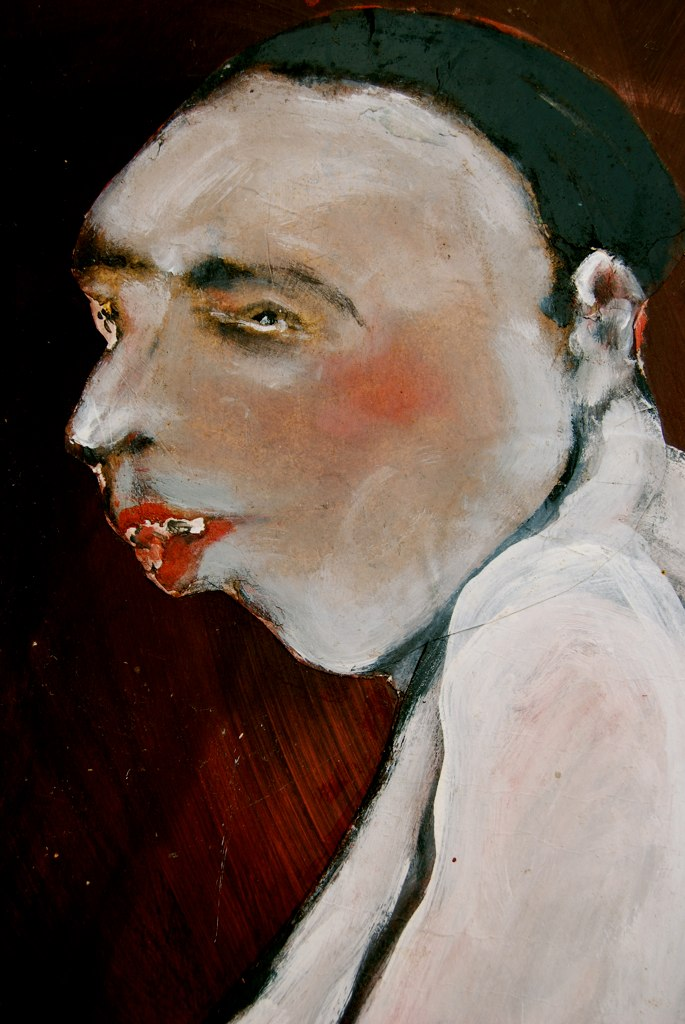
Dr. Carl Clauberg „The beast“, Gemälde des expressionistischen Künstlers Stefan Krikl aus dessen Serie Doctors of Death, 1985 (dt. Dr. Carl Clauberg „Die Bestie“ aus Ärzte des Todes)
“Clauberg’s brutal actions soon became known throughout the camp – at one point, female SS guards arrived because they wanted to see what he was actually doing with the women whose screams echoed through the camp.”[4] Due to the advance of the Red Army, he continued his experiments on at least 35 other women in the Ravensbrück concentration camp.[4] In total, Clauberg carried out between 550 and 700 forced sterilizations. Among his victims was Ilse Arndt.
Am 8. Juni 1945 wurde Clauberg in Eckernförde (Schleswig-Holstein) festgenommen. Er wurde nach Anerkennung seiner Schuld im Juli 1948 in der Sowjetunion wegen der Ermordung sowjetischer Staatsbürger im KL Auschwitz zu 25 Jahren Haft verurteilt. Am 11. Oktober 1955 wurde er aus der Kriegsgefangenschaft im Rahmen der „Heimkehr der Zehntausend“ als „Nichtamnestierter“ entlassen.[9] Initially, he returned to work as a gynecologist[19] at his old university hospital. He was celebrated there as a “late returnee” and martyr.[20] The Central Council of Jews in Germany filed a criminal complaint for continued grievous bodily harm. On November 21, 1955, an arrest warrant was issued in Kiel, shortly after he had been admitted to the psychiatric clinic in Neustadt in Holstein at the request of his wife for threats of murder and manslaughter. At the beginning of February 1956, the experts determined his sanity, but certified that he had an “abnormal” personality. He was imprisoned in Neumünster prison, and charges were not brought until December 1956 – “no leading gynecologist (such as Martius, Philipp, etc.) could be found who would have wanted to act as an expert witness in court.”[21] Ralph Giordano wrote of the indictment:[22]
“Although I have attended many Nazi trials before West German jury courts, the indictment against Clauberg is among the most unbearable reading I have ever undergone in the study of Nazi crimes.”
Due to the charges against him, Clauberg was denied membership in the German Society of Gynecology in 1956 and banned from practicing his profession in March 1957.[23] Before the trial could begin – the defense had thwarted the opening[24] and the Kiel Regional Court, staffed with many former Nazi lawyers, had dismissed the joint plaintiff, Henry Ormond – Clauberg died of a stroke in custody in August 1957. At only 155 cm tall, he was severely obese and considered an alcoholic. Because there were doubts about natural death, an autopsy was performed by the Kiel Institute for Forensic Medicine. It revealed early stages of brain softening (encephalomalacia).
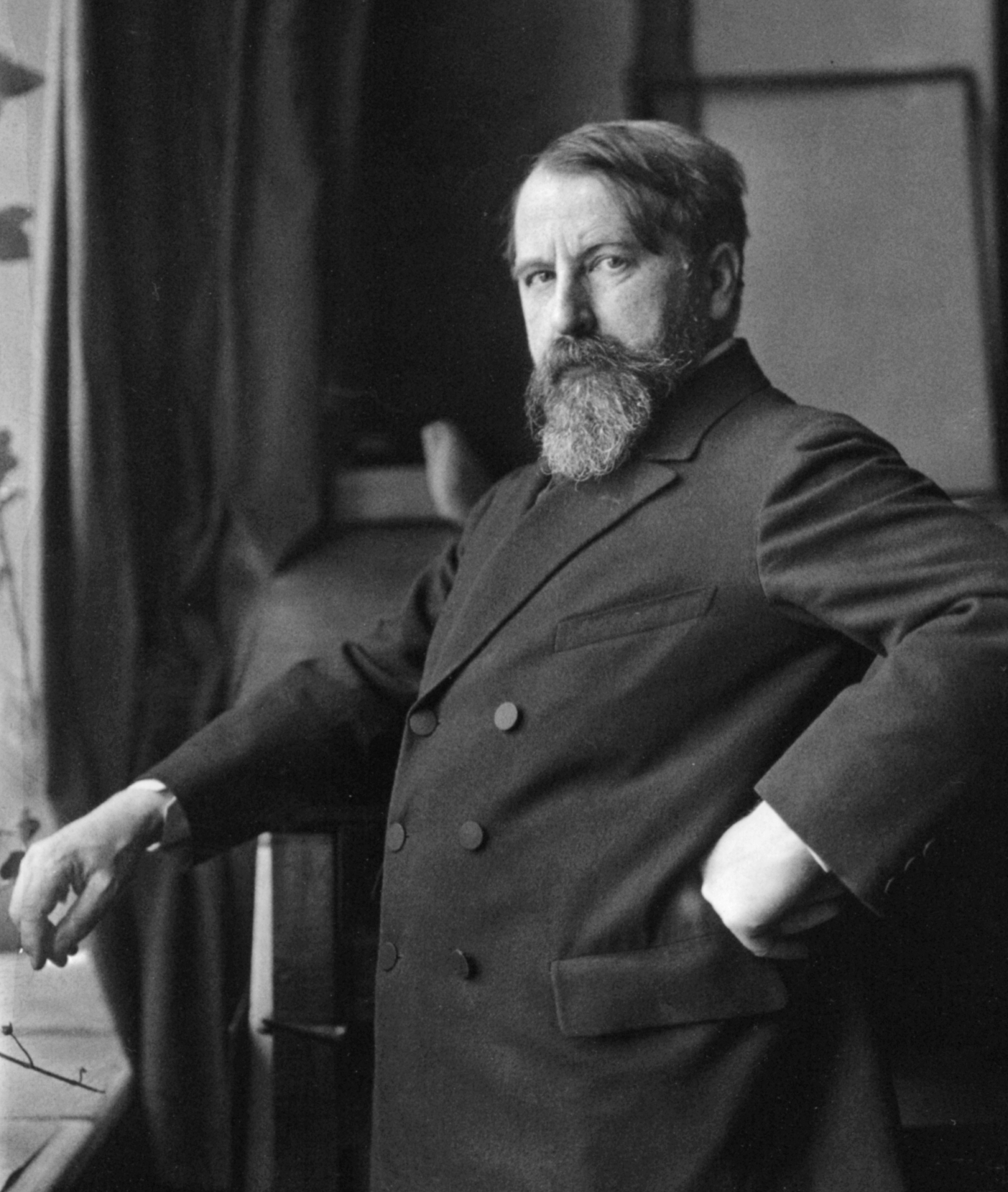
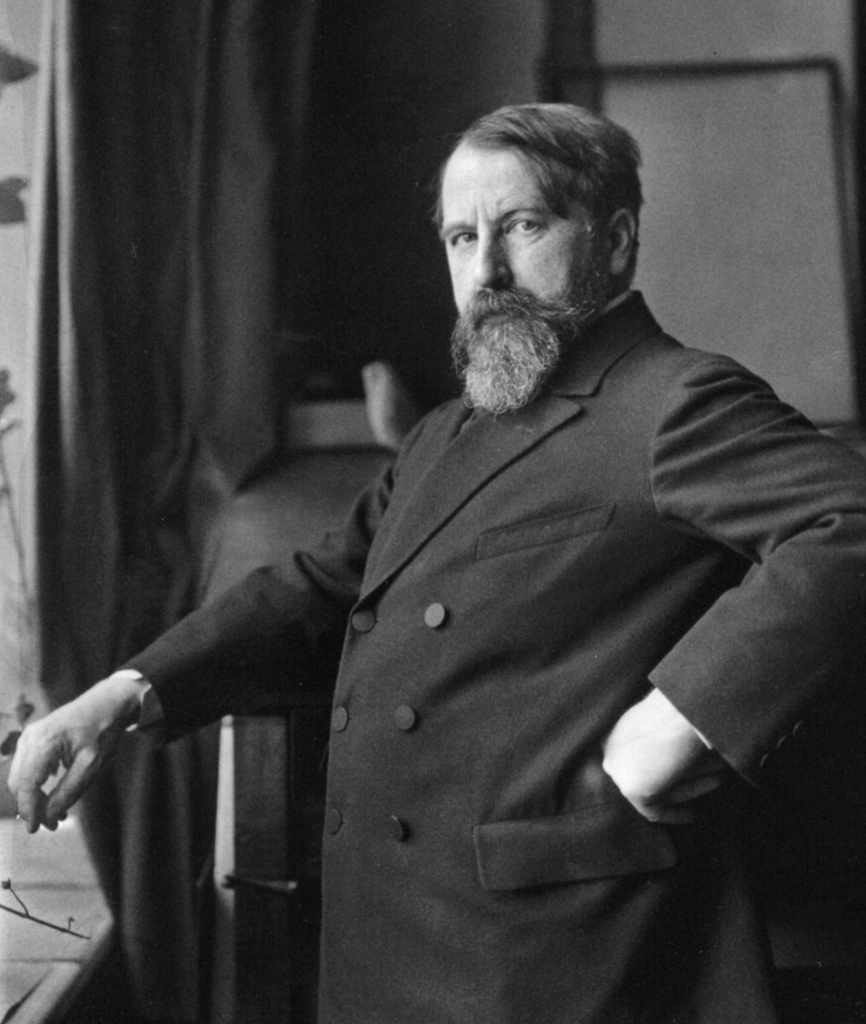
Arthur Schnitzler (May 15, 1862 in Vienna,[1] Austrian Empire; October 21, 1931, ibid.) was an Austrian physician, narrator, and playwright. He is considered one of the most important representatives of Viennese Modernism.
From 1871 to 1879, Arthur Schnitzler attended the Akademisches Gymnasium in the 1st district and graduated with honors on July 8, 1879.[2] Afterwards, at his father’s request, he studied medicine at the University of Vienna. On May 30, 1885, he received his doctorate in medicine. His younger brother Julius (1865–1939) also became a physician.
From 1885 to 1888 he worked as an assistant and secondary physician at the General Hospital of the City of Vienna in internal medicine and in the field of psychiatry and dermatology.[3] He then worked as his father’s assistant in the laryngological department of the polyclinic in Vienna until 1893. From 1886 to 1893 Schnitzler published on medical topics and wrote more than 70 articles, mostly reviews of specialist books, including as editor of the International Clinical Review founded by his father.[4] He authored one (only) scientific book publication: On functional aphonia and its treatment through hypnosis and suggestion (1889).
Although Schnitzler had been writing literary texts since childhood and made his literary debut in 1880 (Liebeslied der Ballerine in the magazine Der freie Landbote), his public literary activity only began to intensify in 1888, when he was in his mid-20s. He published poems, one-act plays, and short stories in the magazine An der Schönen Blauen Donau, edited by Fedor Mamroth and Paul Goldmann.[5] Around this magazine, but also in the Viennese coffee houses that Schnitzler frequented, including the Café Griensteidl, like-minded people began to gather who wanted to create a new, Austrian literary movement. The term “Jung Wien” soon became established for this, even though it did not describe a unified program and only partially shared aesthetic goals. Key figures with whom Schnitzler became friends around 1890/1891 were Hugo von Hofmannsthal, Hermann Bahr and Richard Beer-Hofmann.
In addition to this scandal, the publication of Reigen caused further controversy. First produced in 1900 as a private print in a small number of copies, it was freely published by Fritz Freund’s Viennese publishing house in 1903. The conversations it depicts before and after sexual intercourse between women and men from different social classes were denounced as pornography by Schnitzler’s opponents. The two themes of criticism of the army and eroticism, combined with Schnitzler’s obvious success, made him a popular target for anti-Semites.
Privately, Schnitzler documented several relationships with women in his diary for the period up to the age of 40, often conducted simultaneously without the partners’ knowledge. In particular, his largely platonic relationship with Olga Waissnix, the married landlady of the Thalhof (Reichenau an der Rax), as well as his relationships with Marie Glümer and Maria Reinhard, were considered more profound partnerships. Both Maria (often referred to in the diary as “Mizi I” and “Mizi II”), as well as others, hoped to legitimize their relationship through marriage. In Maria Reinhard’s case, this became even more pressing because she was pregnant with his child twice. The first child was stillborn, and she died of appendicitis during the second pregnancy.
His relationship with actress Olga Gussmann (1882–1970) led to a stabilization of his lifestyle. On August 9, 1902, she gave birth to their son, Heinrich Schnitzler. On August 26, 1903, the couple married. Their daughter, Lili, was born on September 13, 1909.[11] Schnitzler remained faithful for the duration of the marriage and ceased his promiscuous lifestyle.
From the beginning of the 20th century, the writer was one of the most frequently performed playwrights on German stages. With the outbreak of the First World War, interest in his works declined. This was also due to the fact that he was one of the few Austrian intellectuals who was not enthusiastic about warmongering and did not make any bellicose statements.
Reigen is Arthur Schnitzler’s most successful play for several decades. Largely unperformed during his lifetime at the author’s request, it describes in ten dialogues how a man and a woman talk to each other before and after sexual intercourse. In 1921, on the occasion of the premiere of the play Reigen, which led to a staged theater scandal in Berlin in 1920/1921 and then in Vienna, he was put on trial for causing public nuisance. The case was ultimately decided in the author’s favor by the Vienna Constitutional Court. After further performances in Vienna, however, Schnitzler asked his theater publisher in 1922 not to permit any more performances. His son only had the ban on performances lifted in 1982.
Während Schnitzler als jüdischer Autor in der Zeit des Nationalsozialismus verpönt war, setzte in der NIn the postwar period, a slow institutionalization as a classic began.[38]
In 1959/1960, the Arthur Schnitzler Courtyard in Vienna-Döbling (19th district) was named after him.
In 1971, a bust of Schnitzler by Sandor Jaray was unveiled at the Burgtheater in Vienna.
On May 13, 1982, a bust of Paul Peschke was unveiled in Vienna’s Türkenschanzpark (18th district).[39] The memorial was initiated by Viktor Anninger (1911–2004), who was a friend of Lili Schnitzler and frequented Schnitzler’s house at Sternwartestraße 71. Peschke, in turn, was the son-in-law of Ferdinand Schmutzer and, when he created the memorial, lived directly across from Schnitzler’s former residence in his father-in-law’s former house.
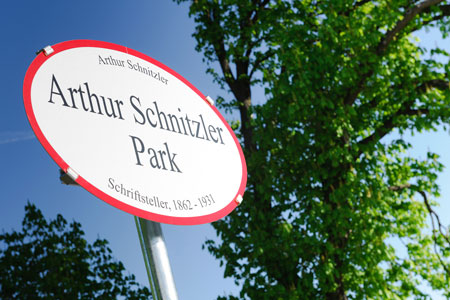
April 2012: The small park opposite the train station in Baden (Lower Austria) is named “Arthur Schnitzler Park.”[40]
May 6, 2017: Following a municipal council resolution from September 2016, the forecourt of the Volkstheater between Burggasse, Museumstraße, and Neustiftgasse in Vienna’s 7th district, Neubau, is named “Arthur Schnitzler Square.” The theater now uses the address Arthur Schnitzler Square 1, 1070 Vienna.
The Arthur Schnitzler Prize is awarded every four years by the Arthur Schnitzler Society. This prize is endowed with 10,000 euros by the Austrian Ministry of Education and the Cultural Department of the City of Vienna.
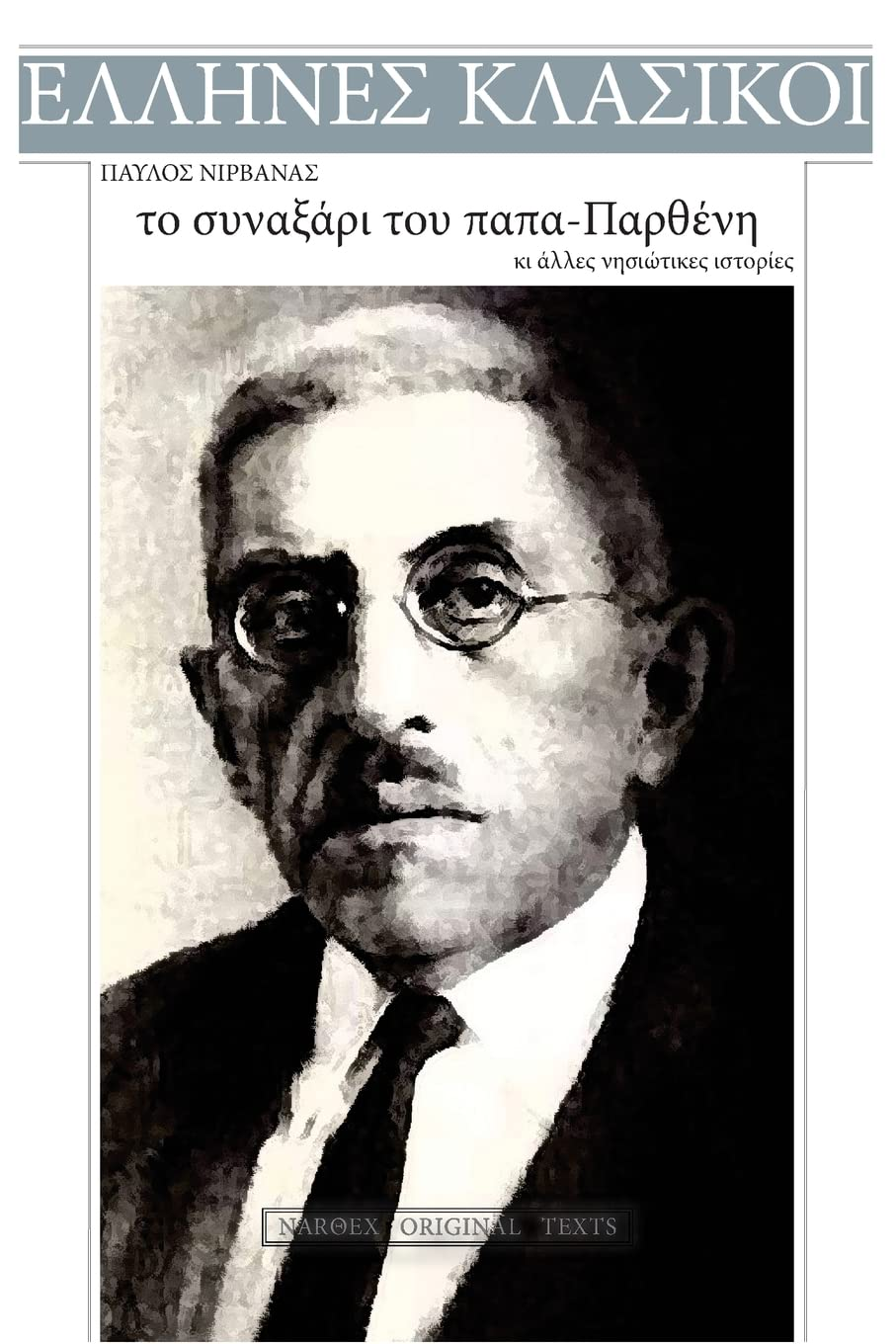
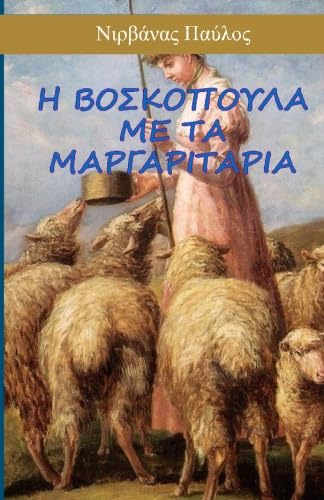
Pavlos Nirvanas (Greek: Parasloός Niρβάνας, * 1866 in Mariupol, Russian Empire; † 28 November 1937 in Athens, Greece) was a Greek writer whose real name was Petros K. Apostolidis.
Nirvanas’ father came from Skopelos, his mother from Chios. As a child, Pavlos Nirvanas moved from his then Russian hometown to Greece and lived in Piraeus. He studied medicine at the University of Athens and graduated in 1890. He joined the Navy and rose to the rank of senior physician (γενικός αρχίατρος). He left the service in 1922. He also worked as a journalist and was a member of the Academy of Athens from 1928. Although not born on Skopelos himself, he considered the Aegean island his home throughout his life.
https://www.youtube.com/watch?v=oCW4O7uO0BI
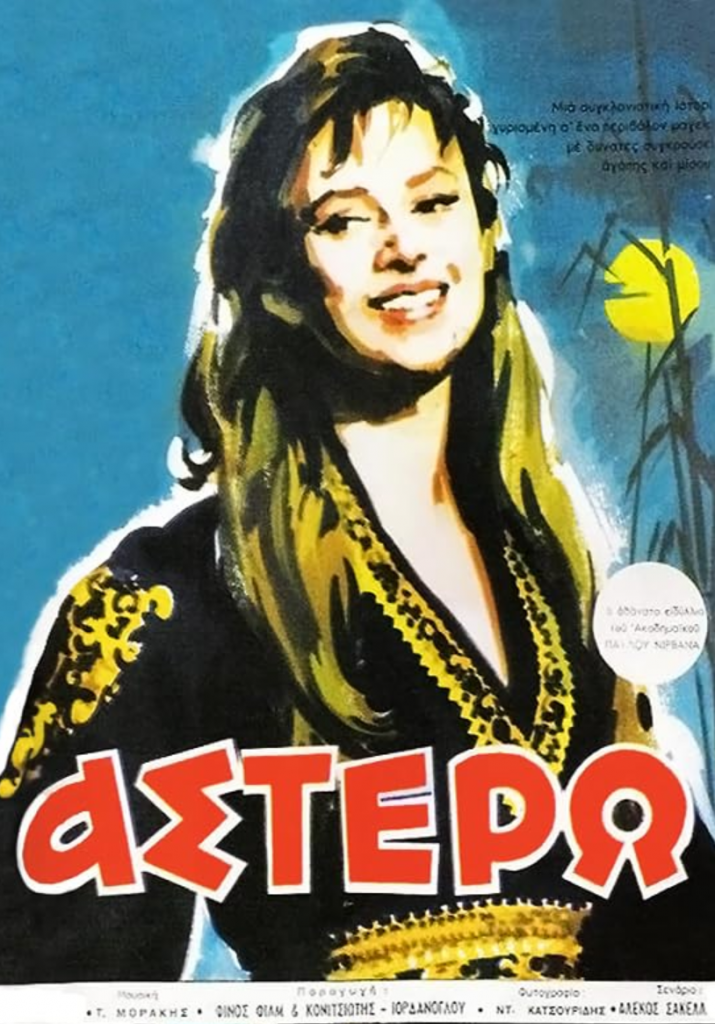
In a village in the Peloponnese, on the slopes of Mount Helmos, lives Astero, the beloved daughter of Lord Mitros, who falls in love with his son Thymios. However, Grandfather Mitros decides to marry his son to the rich Tselingo girl Maro, and Astero to the wealthy landowner Thanos. His wife Stamatina also contributes to this with her machinations. On their wedding day, however, Astero loses his mind and runs away, while Thymios goes off to search for her. Thymios’ father is filled with remorse, especially when the village elders remind him that he owes everything he has created to the Asteros estate, which he has exploited…
Pavlos Nirvanas explored almost all genres of literature: he wrote short stories, dramas, poems, essays, critiques, novels, satires, and contemporary historical texts; he also worked as a translator. He published his first volume of poetry in 1884. Of literary-historical significance, however, are less the poems in Nirvanas’s oeuvre than the richness of the work itself and certain individual works, such as the Linguistic Autobiography (Γλωσσική Αυτοβιογραφία) from 1905, in which Nirvanas takes a position on the Greek linguistic dispute.
In a first-person narrative, he describes the career of a young man who increasingly succumbs to the fascination of the standard language and rises to become an extremely atticized scholar. Even though his learned speeches are understood by few, he is admired for his expressive abilities. Only the encounter with some beautiful girls from the people makes him doubt his linguistic world view, because instead of ῥῖ�ες (rínes), ὄμματα (ómmata), ὦτα (óta) and χεῖρες (chíres) – in German something like: heads, faces, facial bays… –[1] he suddenly only sees in his mind their delicate μύτες (mýtes), μάτια (mátja), αυτιά (aftjá) and χέρια (chérja) – completely “natural” noses, eyes, ears and hands – and as a result he turns away from the madness of the standard language.
Pavlos Nirvanas was awarded for his literary work in 1923.
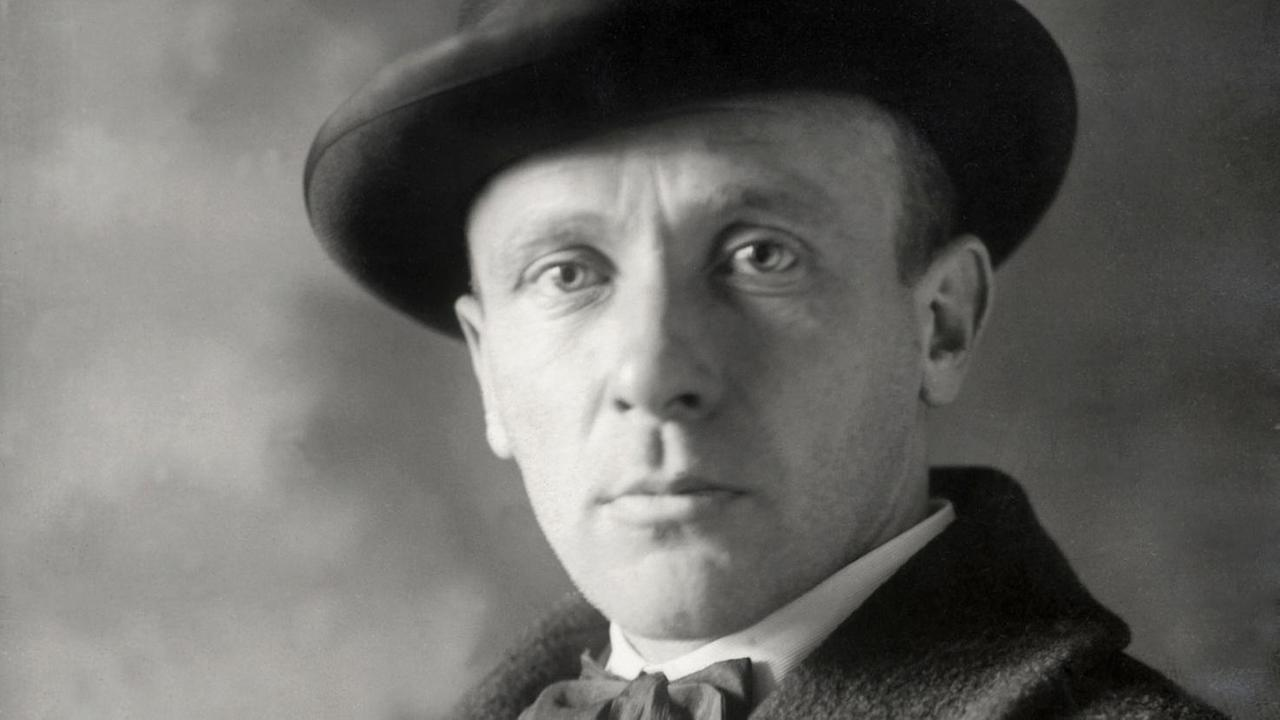
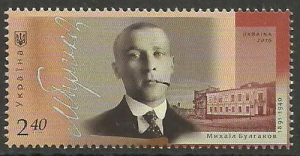
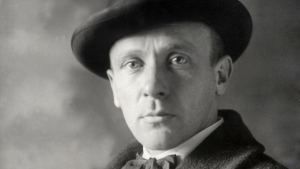
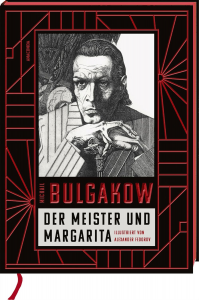
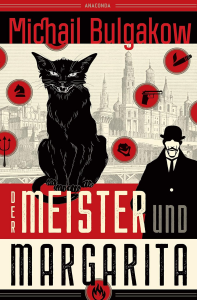
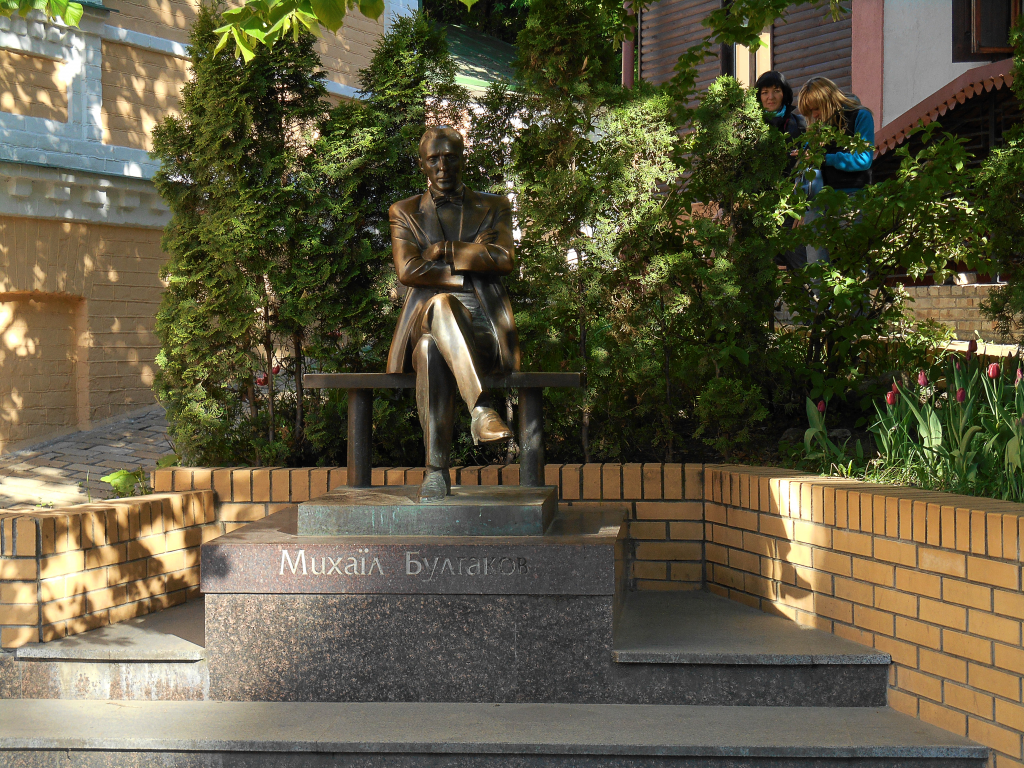
Mikhail Afanasyevich Bulgakov (Russian: Михаи́л Афана́сьевич Булга́ков, scientific transliteration: Mikhail Afanas’evič Bulgakov; May 3, 1891 in Kiev, Russian Empire – March 10, 1940 in Moscow, Soviet Union) was a Russian and Soviet writer. He is considered one of the great satirists of Russian literature. One of his major works is the novel The Master and Margarita, which was published posthumously in 1966 after heavy censorship. The excerpts were distributed as samizdat and thus contributed to his popularity.
Mikhail Bulgakov was born in 1891 to Afanasy Ivanovich Bulgakov, a lecturer at the Kyiv Theological Academy, and his wife Varvara Mikhailovna (née Pokrovskaya), and was baptized in the Podil Church of the Exaltation of the Holy Cross that same year. After graduating from the Kyiv First Gymnasium in 1909, he enrolled at the Medical Faculty of Kyiv University. In 1916, he received his medical degree and took up a rural position in the Smolensk Region before practicing medicine in the town of Vyazma. In 1913, he married Tatyana Nikolaevna Lappa (Russian: Татьяна Николаевна Лаппа).
At the end of October 1921, Bulgakov moved to Moscow and began working for several newspapers (Siren, Worker) and magazines (The Medical Worker, Russia, Rebirth). During this time, he published occasional prose pieces in the Berlin-based exile newspaper Am Vortag. Between 1922 and 1926, Siren printed more than 120 of his reports, essays, and columns. Bulgakov joined the All-Russian Writers’ Union in 1923.
In 1924, he met Lyubov Yevgenyevna Belozerskaya (Russian: Любовь Евгеньевна Белозёрская), whom he married the following year. In 1928, the couple toured the Caucasus, visiting the cities of Tbilisi, Batumi, Vladikavkaz, and Gudermes. The premiere of Bagrovsky Island (Blood-Red Island) took place in Moscow that same year. During this time, the author developed the first ideas for The Master and Margarita and began work on a play about Molière entitled Cabal Svyatosh (Slavery of the Bigots). In 1929, he met Yelena Sergeyevna Shilovskaya, who became his third wife in 1932.
In the partly autobiographical novel The White Guard from 1924, Bulgakov uses the example of the Turbin family from Kyiv to describe the chaotic period of upheaval that followed the October Revolution and the collapse of the Russian Empire. Bulgakov’s play The Days of the Turbins, which premiered in Moscow on October 5, 1926, is also based on the novel. However, Bulgakov is better known for his grotesque depictions of everyday life in the young Soviet Union, often with fantastical or absurd elements—a typical form of social criticism in Russian-language literature since Gogol. The story “Heart of a Dog” was written in 1925 but was not published in the Soviet Union until 1987.
The Master and Margarita
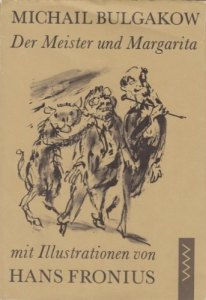
Bulgakov’s best-known work is The Master and Margarita, a satirical and grotesque take on the Faust motif, a journey through time. The work first appeared in print in 1966/67 in serialized form in the literary magazine Moskva, almost 30 years after the author’s death, in an abridged version. The unabridged version first appeared in book form in 1973. Shortly after its initial Soviet publication, the novel was published in 1968 in the German translation by Thomas Reschke in the GDR. In protest against Stalinism, during which the novel was written, he criticizes the dialectical materialism and militant atheism expressed in the Soviet Union.[3]
Some critics consider the book the best Russian novel of the 20th century. It was number 1 on the Spiegel bestseller list from April 29 to May 5, 1968.
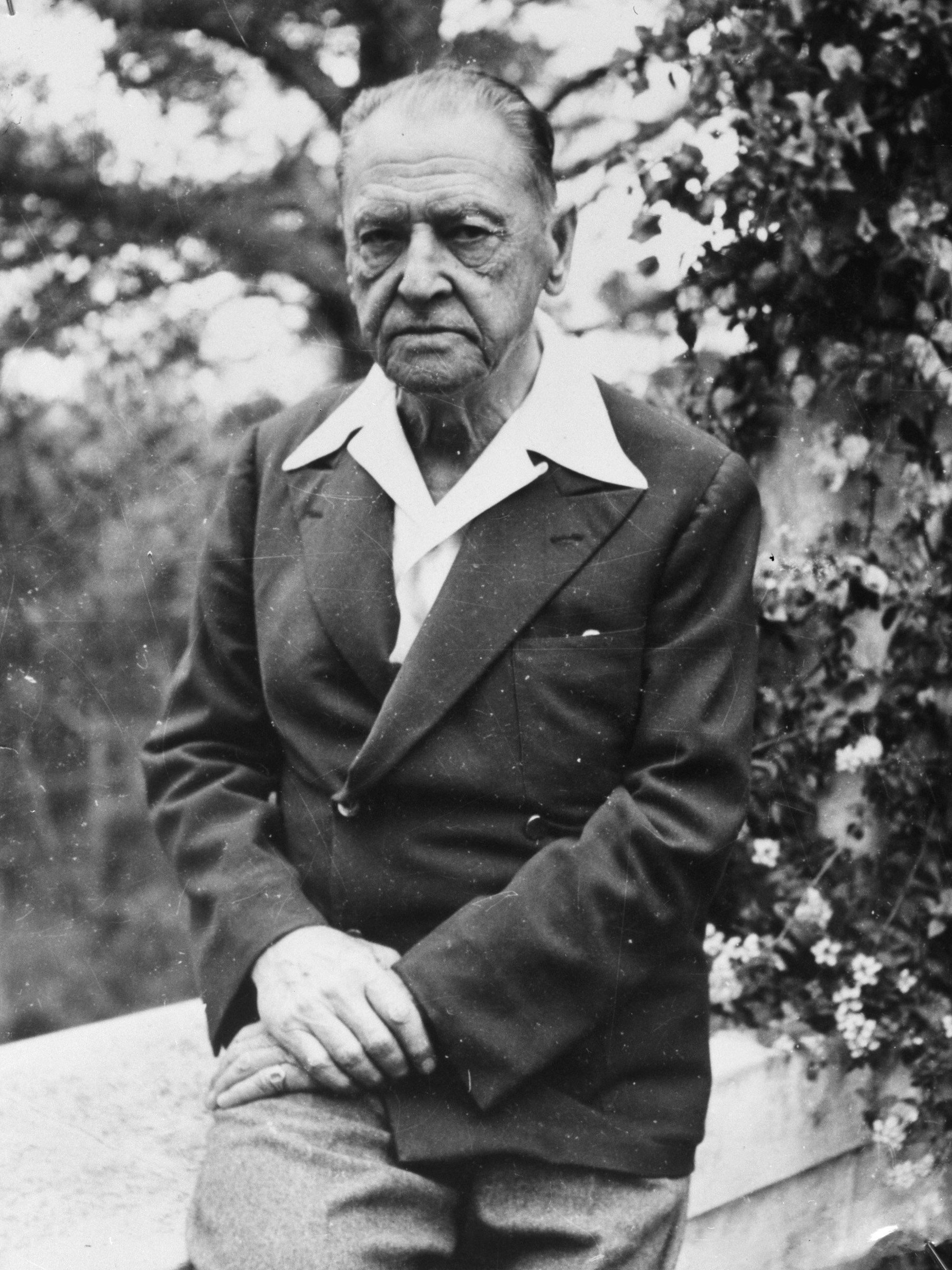
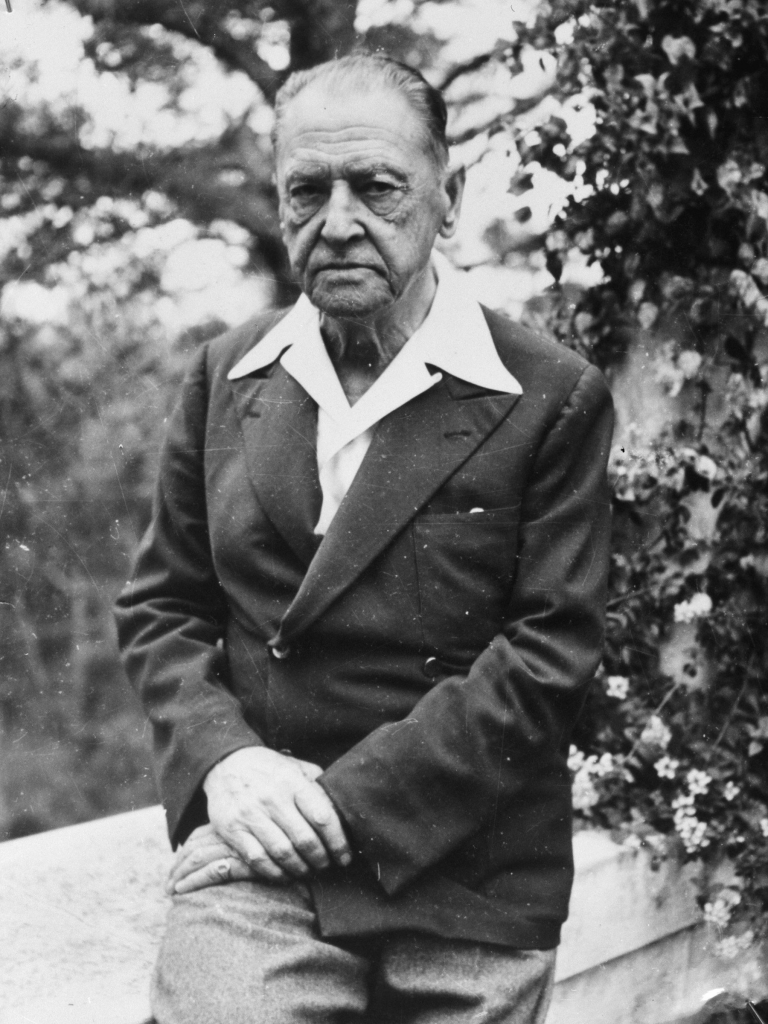
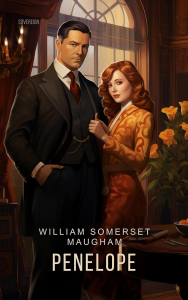
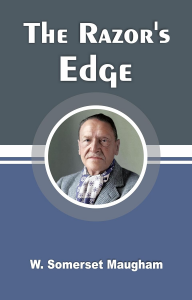
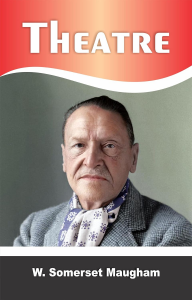
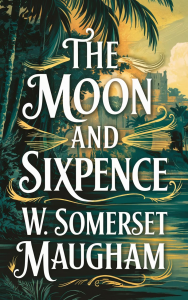
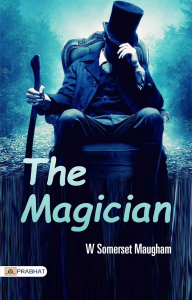
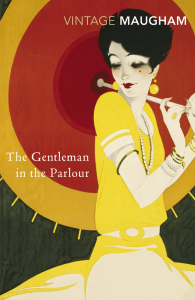
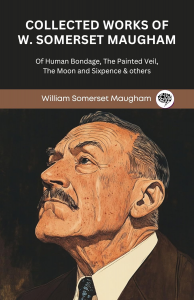
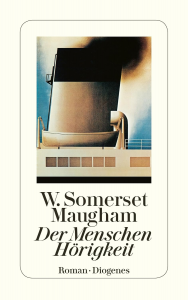
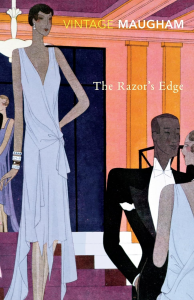
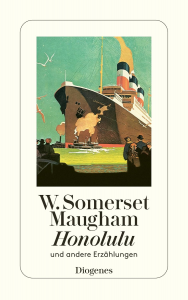
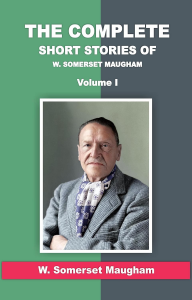
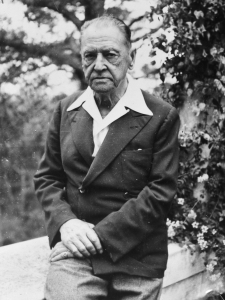
William Somerset Maugham [ˈsʌməsɪt mɔːm] (January 25, 1874 in Paris – December 16, 1965 in Saint-Jean-Cap-Ferrat near Nice), also known as W. Somerset Maugham, was an English novelist and playwright. He is one of the most widely read English-language authors of the 20th century.
William Somerset Maugham was the son of an English lawyer who worked for British clients in Paris. His older brother was the jurist Frederic Maugham. His parents died when he was still a child. As an orphan, he spent his youth under the supervision of a sanctimonious uncle and in boarding schools. He suffered from a stutter. He studied German, literature, and philosophy at the University of Heidelberg, and later medicine at King’s College London. Despite his passion for literature, Maugham successfully completed his medical studies in 1898—largely under pressure from his uncle.
William Somerset Maugham achieved early literary success with his first novel, Liza of Lambeth, published in 1897, and simultaneously caused a scandal. In the novel, Maugham processed experiences he had as a trainee doctor in the slums of London. The middle class considered it inappropriate to portray the world of the working class in such a naturalistic way.
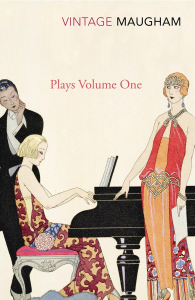
The book was followed by years of self-determination as an author. At first, he worked as a playwright, writing plays such as The Circle, Our Betters, and The Constant Wife. In the early 20th century, four of his plays were performed simultaneously in London. His productivity was astonishing: he usually needed only a week to write each act and another week to edit the play. Later, he devoted himself to prose and wrote numerous novels and short stories.
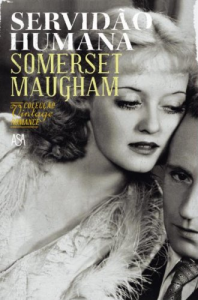
Maugham’s most important work is generally considered to be the novel Of Human Bondage, an autobiographical story whose hero, Philip Carey, like Maugham, grows up as an orphan with his sanctimonious uncle and is handicapped by a clubfoot. Maugham himself stuttered.
In the English-speaking world, Maugham’s work is considered middle-brow literature, which, while easy to read and highly entertaining, nevertheless achieves a remarkable artistic and formal level.[2] A theme that repeatedly occupied Maugham in his dramatic and narrative work is adultery.
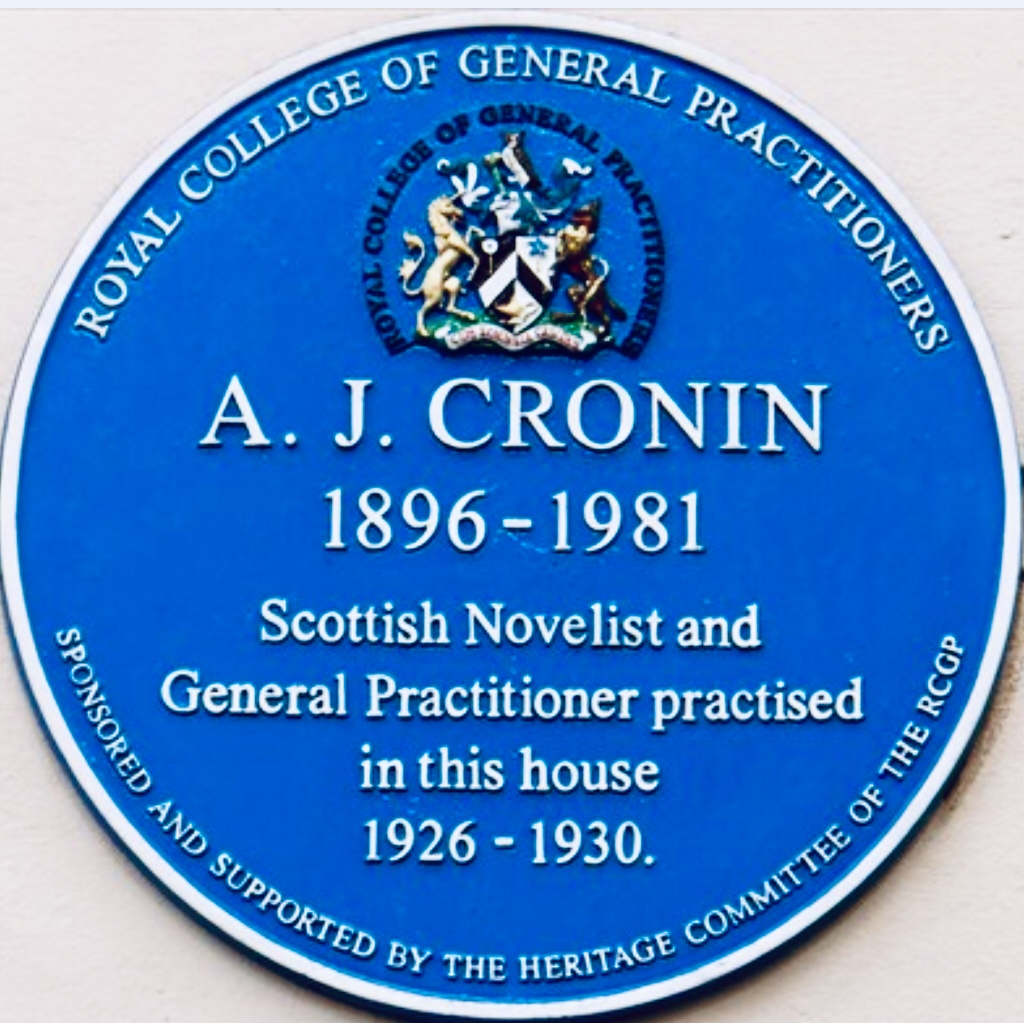
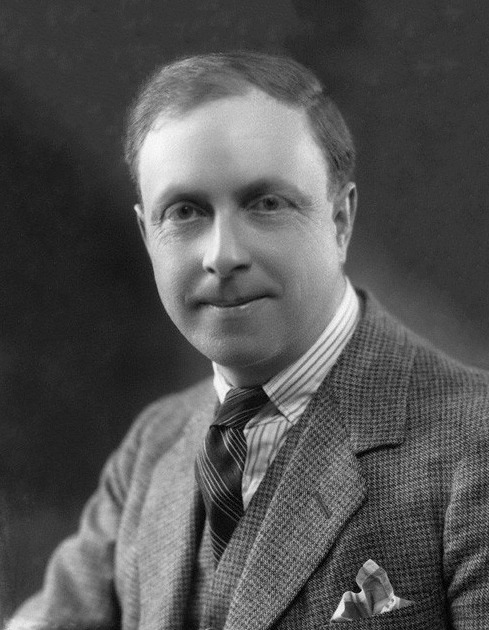
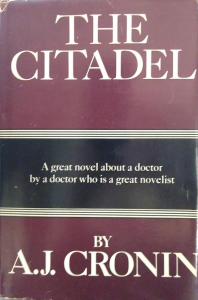
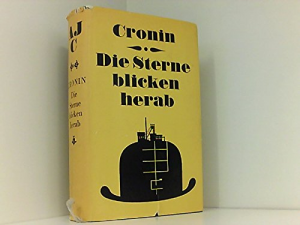
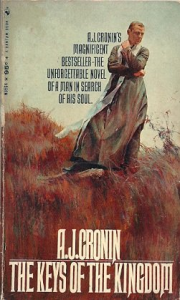
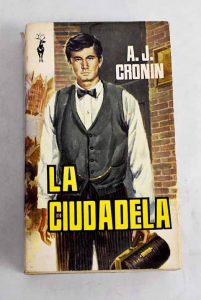
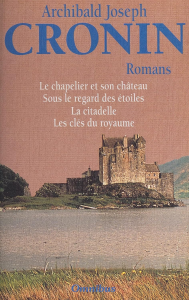
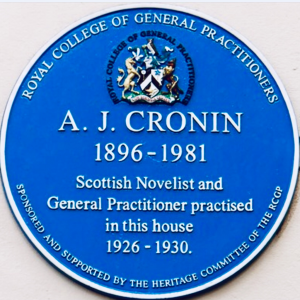
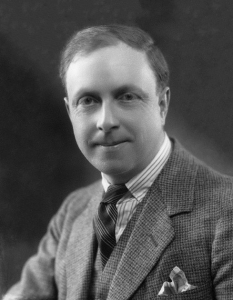
Archibald Joseph Cronin (July 19, 1896 in Cardross, Scotland; January 6, 1981 in Glion, Switzerland) was a Scottish physician and writer. Some of his novels became international successes. His narrative is characterized by exciting plots, realistic characters, and pronounced social criticism. In his autobiography, Adventures in Two Worlds, he also unequivocally professes his Christian faith. Cronin follows the tradition of the Bildungsroman and uses the techniques of Victorian novel realism.
Archibald Joseph Cronin was born the only child of Patrick Cronin and his wife, Jessie Montgomerie. He later attended Dumbarton Academy and won several writing competitions. For his outstanding achievements, he was awarded a medical scholarship to the University of Glasgow. There he met his future wife, Agnes Mary Gibson, who, like him, was studying medicine.
Cronin initially worked in various hospitals, as a ship’s doctor, and during the First World War as a surgeon in the service of the British Army. After the war, he practiced in a mining district in South Wales. Experiences from this work later flowed into his novels The Stars Look Down (1935) and The Citadel (1937). He later moved to London and ran a successful practice on Harley Street. However, Cronin struggled with his mundane desires for profit and self-interest, as he explains in his autobiography. While on vacation in the Scottish Highlands, he wrote his first novel, Hatter’s Castle (1930), which was an immediate success. In the 1930s, Cronin moved to the United States with his wife and three sons, settling in New Canaan, Connecticut. He later returned to Europe and has lived in Switzerland for the past 25 years.
A.J. Cronin died at the age of 84 and was buried in La Tour-de-Peilz, where his grave still stands.
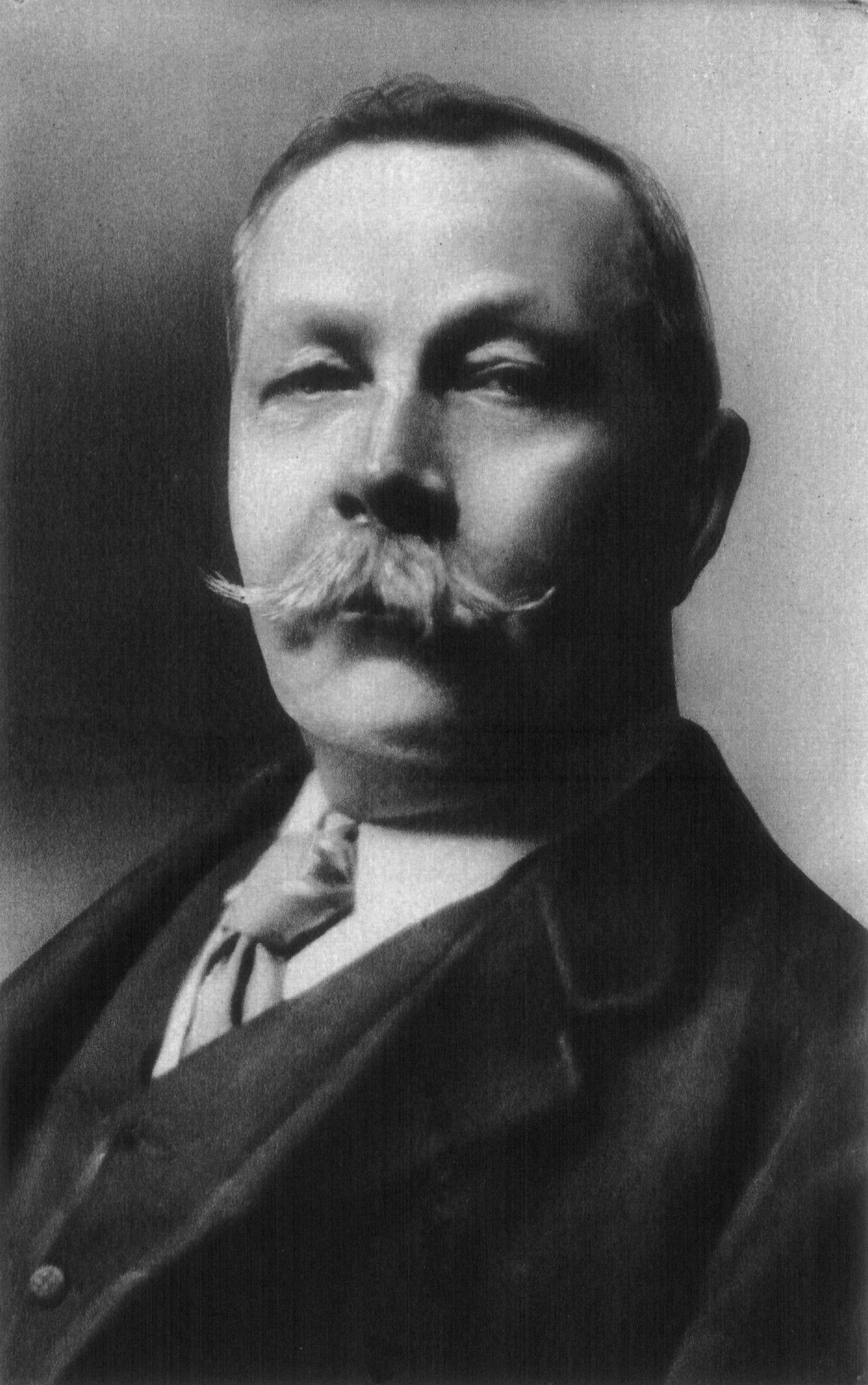
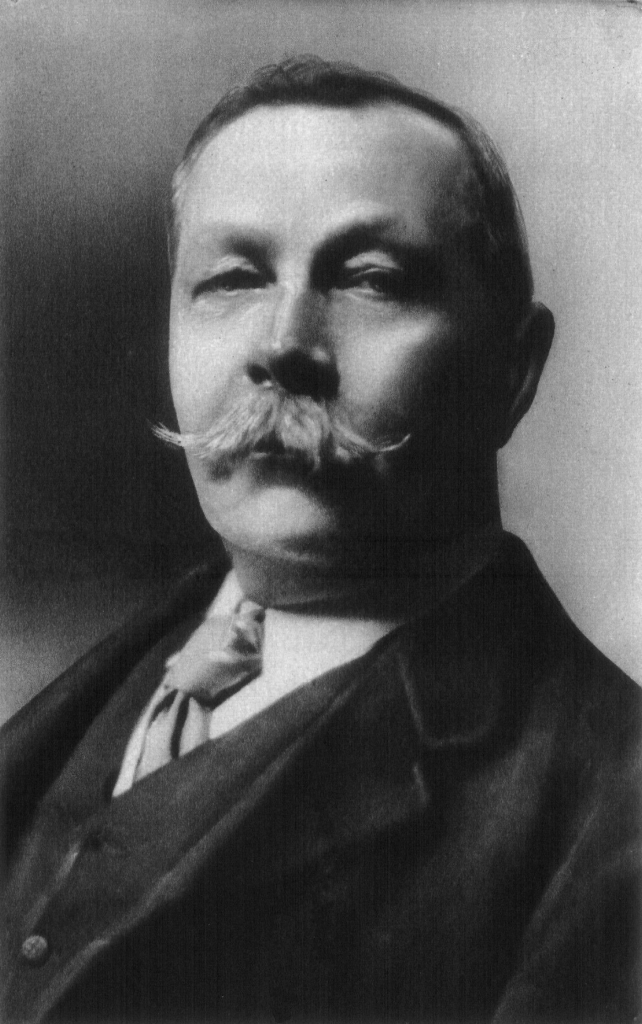
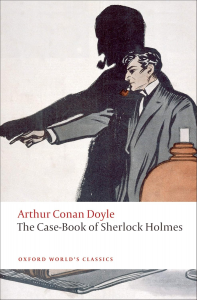
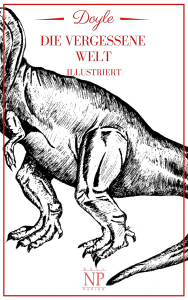
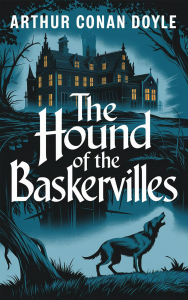
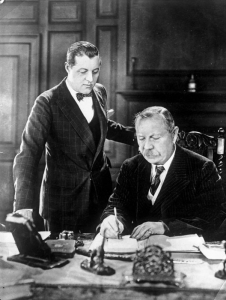
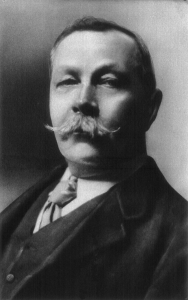
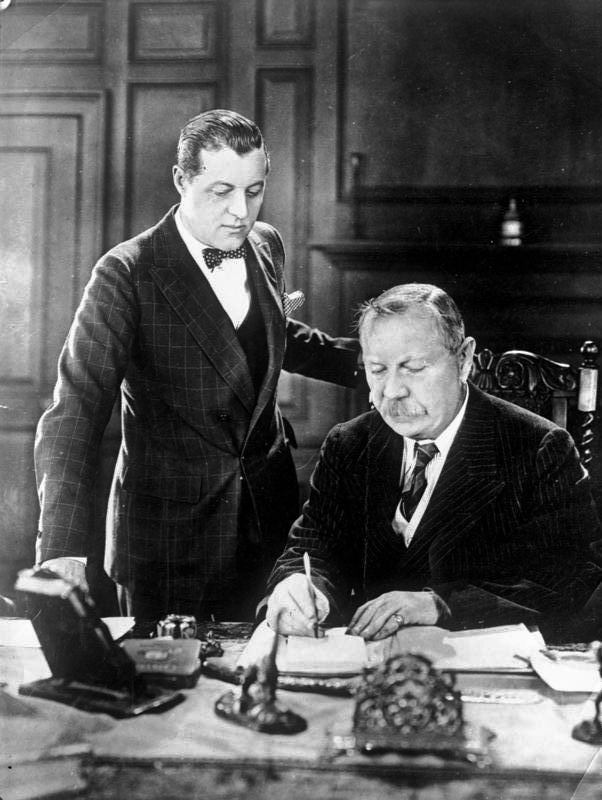
Sir Arthur Ignatius Conan Doyle (May 22, 1859 in Edinburgh, Scotland – July 7, 1930 in Crowborough, Sussex, England) was a British physician and author. He wrote about the adventures of Sherlock Holmes and his friend Dr. Watson. He is also known for the character Challenger from his novel The Lost World, which served as the basis for numerous films and a television series.
In 1880, Doyle traveled to the Arctic as a ship’s doctor on the whaler Hope, and a year later to West Africa on the Mayumba. From 1882 to 1890, he ran a medical practice in Southsea near Portsmouth. In his free time, he also wrote his first literary works. In 1883, while in Portsmouth, he wrote his first novel, The Narrative of John Smith (see below), which, however, remained unfinished and unpublished and was not published until 2011. In 1887, he published the first story about the detective Sherlock Holmes and his friend Dr. Watson: A Study in Scarlet.
In the following period, Conan Doyle created his second very popular character, Professor Challenger. The Lost World, in which she first appears, was published in 1912 and is considered his best-known novel alongside the Sherlock Holmes series. Doyle’s texts published during the First World War sometimes take a critical look at Germany at the time. In October 1918, a few months before the official end of the war, his son Kingsley died of the Spanish flu. Doyle then began to devote himself increasingly to science fiction novels in the tradition of Jules Verne, as well as to spiritualism and mysticism, and also undertook lecture tours (including to the USA and South Africa).
Among other things, he made the so-called Cottingley Fairies famous – fake photos of fairies in whose authenticity he firmly believed, made into a film in 1997 in The Fairy Garden. His public controversy with the magician Harry Houdini made headlines.[6] The friendship between Doyle and Houdini broke down due to differing ideas about spiritualism – Doyle accepted various mediums as genuine and believed that Houdini himself had supernatural abilities, while Houdini himself said that he never experienced a séance in his life whose effects he could not have imitated with magic tricks.
The deductive and criminal analysis method is characteristic of Doyle’s characters. He, himself a physician, created the role of Dr. Watson. He endowed Sherlock Holmes with characteristics of his teacher at the University of Edinburgh, Joseph Bell. The criminalistic methods described by Doyle in his novels, such as fingerprinting, were ahead of the police methods of their time. This is especially true of the fundamentally scientifically oriented methodology of crime investigation.
In 1890, his novel The Firm of Girdlestone (1890) was published, painting a picture of his hometown of Edinburgh in the age of imperialism. Father and son Girdlestone & Co. operate a lucrative African trade with poorly maintained sailing ships.
That same year, Doyle moved to London. From 1891 onward, he was able to earn a living through writing, following the publication of his first detective story, A Scandal in Bohemia, in The Strand Magazine that same year.
In 1893, Conan Doyle decided to end the life of his protagonist Holmes, as the regular writing of new Holmes stories took up too much of his time and he wanted to concentrate his literary work on other works. This led to protests from his audience.[1] The author’s mother, an avid reader of the stories, tried in vain to dissuade him from the plan. In the story “The Final Problem,” Sherlock falls from the Reichenbach Falls near Meiringen in Switzerland during a fight with his adversary, Professor Moriarty, and is pronounced dead by Watson.
In the same year, Doyle became Master of the Phoenix No. 257 Masonic Lodge in Portsmouth.
In March 1893, Doyle became the first Briton to complete a day’s cross-country skiing. In commemoration of this achievement, the UK Antarctic Place-Names Committee named the Doyle Glacier in Antarctica after him in 1959.
On March 23, 1894, in a daring attempt, he crossed the Maienfelder Furgga from Davos to Arosa on skis, accompanied by two locals, brothers Tobias and Johann Branger. The event helped popularize skiing in England. It was recreated a good century later by the Austrian Broadcasting Corporation (ORF) in a television film based on Conan Doyle’s article “An Alpine Pass on ‘Skiing’,” published in Strand Magazine in December 1894.
Doyle played football as a goalkeeper for the amateur Portsmouth Association Football Club. He used the pseudonym A.C. Smith. He was also a keen cricketer and was capped ten times by the famous Marylebone Cricket Club (MCC) in the first team between 1899 and 1907. As a golfer, he was captain of Crowborough Beacon Golf Club, East Sussex, in 1910. He also initiated the construction of the golf course at Davos during his stays there from 1893 to 1895.
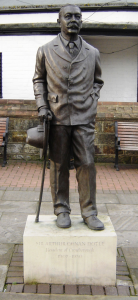
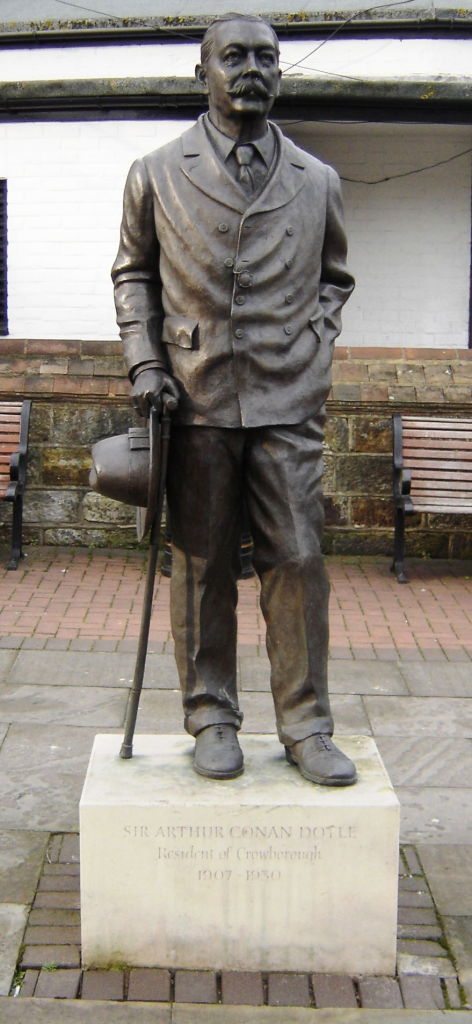
At the 1908 London Olympic Games, Arthur Conan Doyle reported on the marathon for the Daily Mail newspaper. Dorando Pietri was the first to cross the finish line, but because judges and doctors helped him across the finish line, the runner was disqualified. Doyle’s detailed and emotional report in the Daily Mail of July 25, 1908, about the weakened Italian’s finish, and a letter to the editor published at the same time as his article, in which Doyle appealed for donations for Pietri, are the basis of one of the most well-known myths of the modern Olympic Games. Doyle’s great commitment led to the widespread, but untrue, legend that Doyle himself helped Pietri across the finish line. Dr. Michael Bulger, who can be seen in one photograph as an assistant, was often mistaken for Doyle. A memorial to Sir Conan Doyle has stood at Cloke’s Corner in Crowborough since April 14, 2001. The bronze statue was created by sculptor David Cornell and funded by the Conan Doyle Statue Trust with grants from Crowborough Town Council and private donations. To finance the bronze casting, Cornell commissioned a limited edition of a scaled-down model.
In 2023, the Venezuelan frog Caligophryne doylei was named after Conan Doyle.
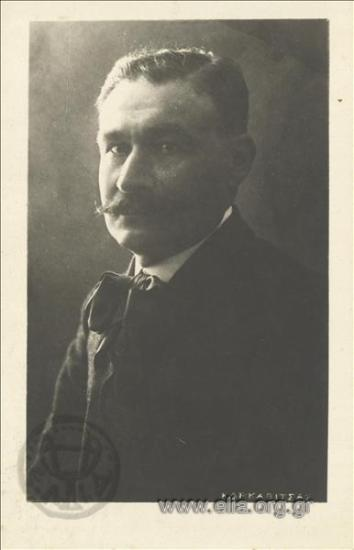
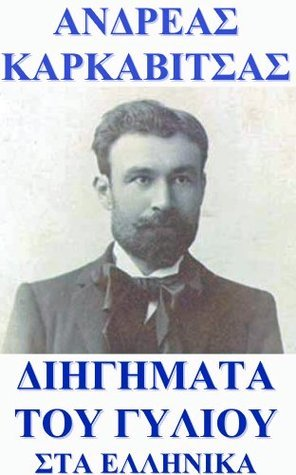
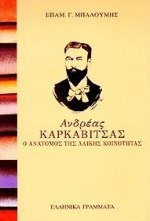
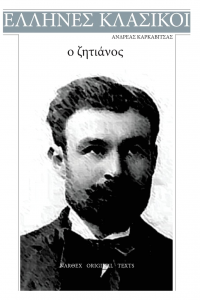
He was born in 1866 in the north-west Peloponnese, in the town of Lechaina in Elis. He studied medicine. As an army doctor, he travelled across a great range of villages and settlements, from which he recorded traditions and legends. He died on October 10, 1922, of laryngeal cancer. Several streets in Greece have been named after him, for instance in Pyrgos.
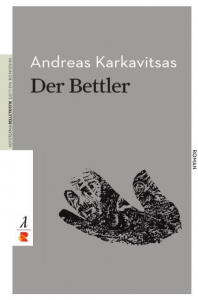
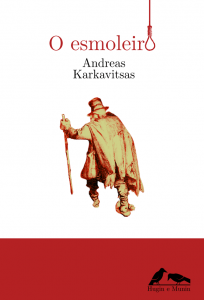
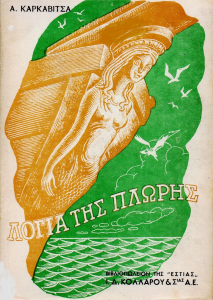
Karkavitsas wrote in the European tradition of naturalism (exemplified by Émile Zola), which does not shrink from portraying the seamier parts of life among humble people, rather than romanticising or embellishing reality. He was a folklorist with a gift for spinning tales full of authentic details of simple people’s lives, local customs, dialects and folktales, as well as psychological insights about them. He was more successful as a short-story and novella writer. “The Beggar” is a novella about con-men, violence and the grotesque practices of professional beggars (including purposely maiming children to turn them into profitable objects of pity). “Words from the prow” is about the lives of seafarers, fishermen and sponge-divers, full of arcane details of their craft as well as folk-tale-inflected plots of tragedy, shipwreck, hands lost at sea, murder, superstition and the supernatural, as well as the joys of making a living off the sea.
Year
Title
English meaning
Published in
1892
Διηγήματα (Diiyimata)
Stories
Athens
1896
Η Λυγερή (I Liyeri)
The willowy girl
Athens
1897
Θεσσαλικές εικόνες. Ο ζητιάνος (Thessalikes eikones. O zitianos)