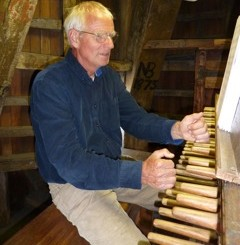
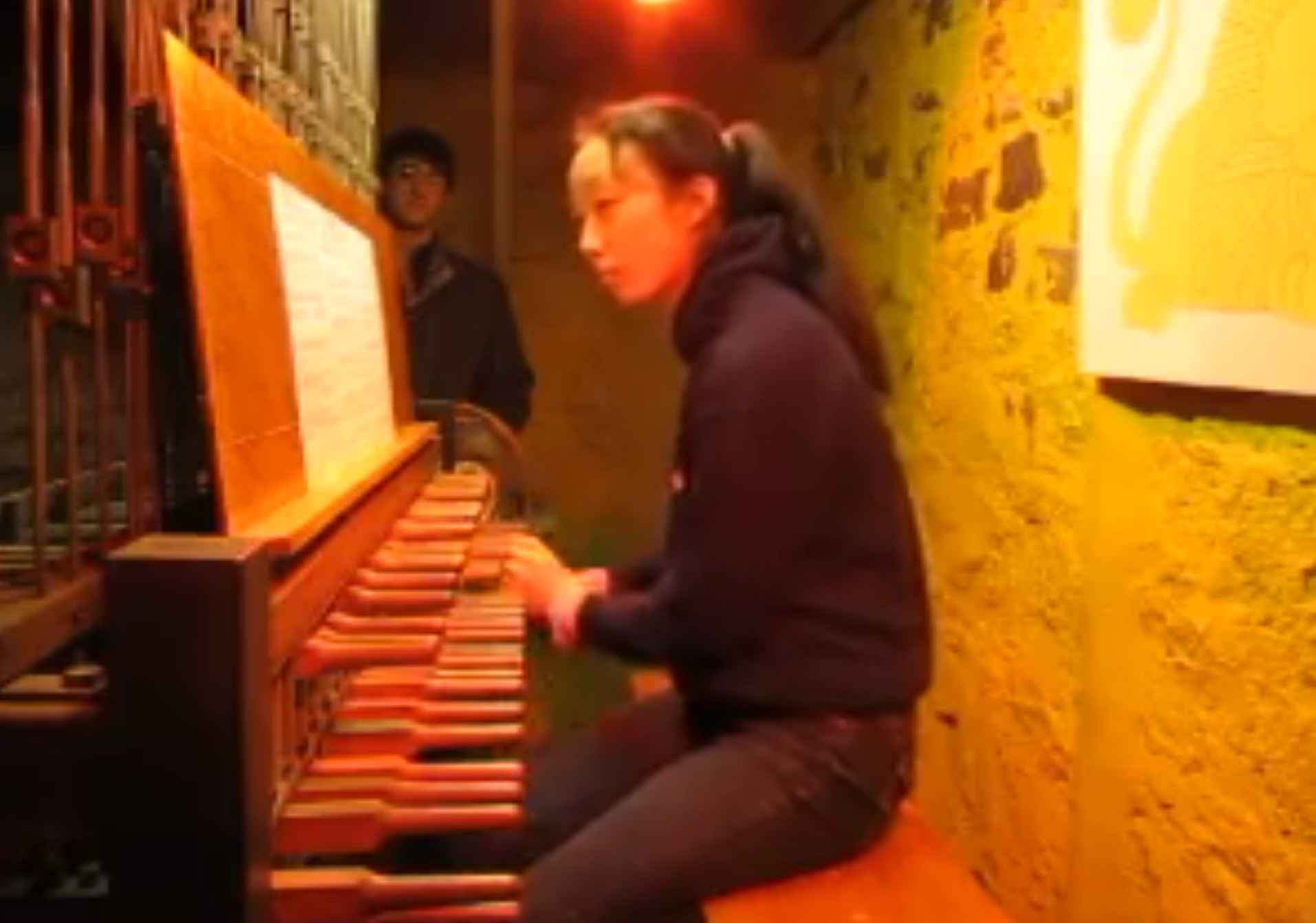
“I find the sound of a carillon very beautiful. It’s a joy to be making such wonderful music. I also like that during a performance, no-one actually sees you up in the tower. The audience is outside, enjoying the day and listening to the music.
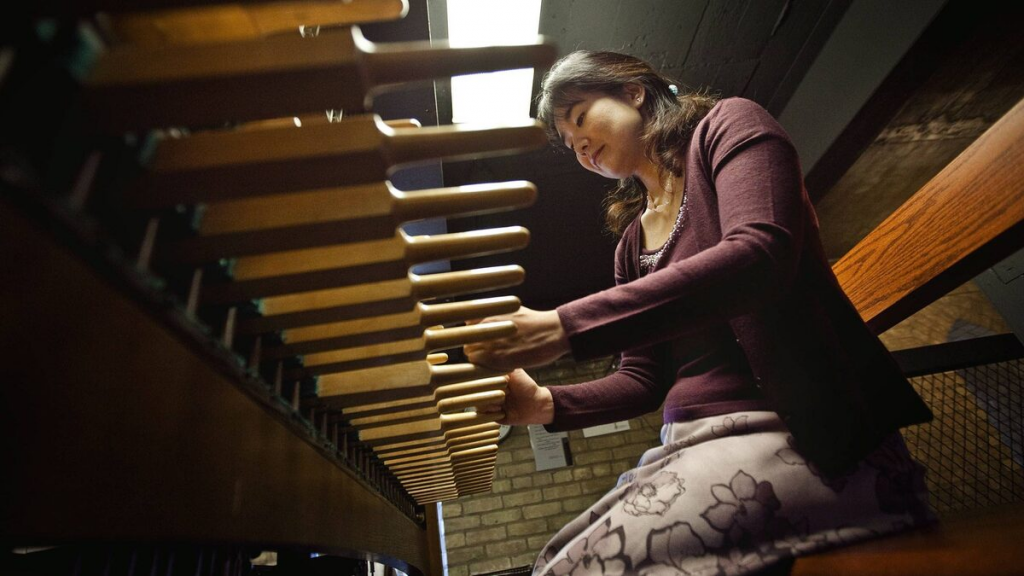
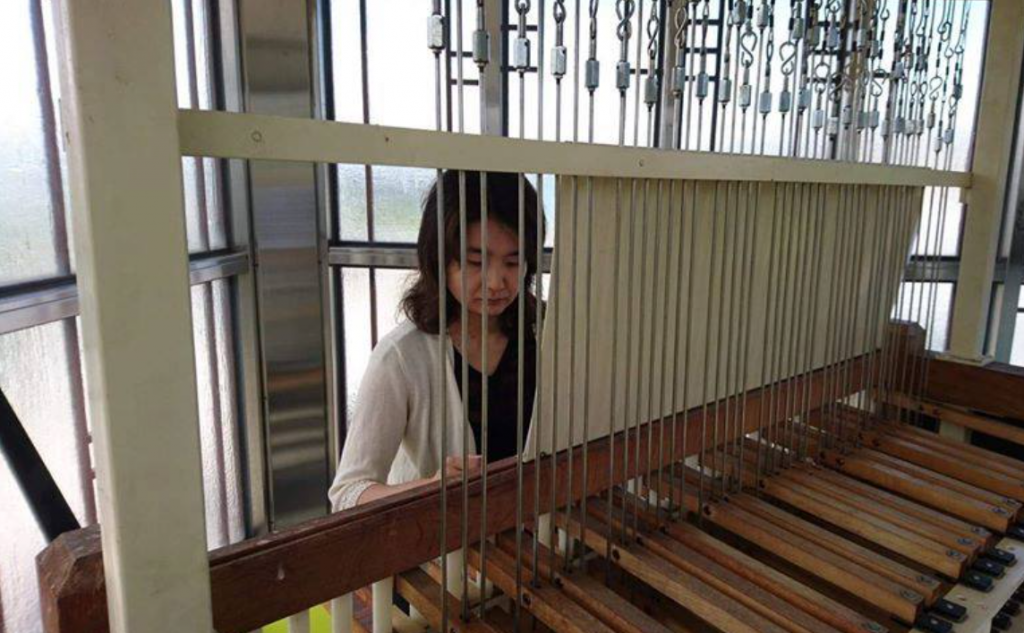
Minako Uchino began her music studies at age 4 in Tokyo and started playing organ in grade 8. She pursued a medical career, completing her training as a radiation oncologist. In 2009, while studying medical education at the University of Toronto, Dr. Uchino discovered the carillon at Soldiers’ Tower and began studying under Roy Lee.
She has played recitals in Toronto, Ottawa, and Japan, including for the 150th Anniversary of Friendship between Japan and Belgium recital at the Belgian Embassy of Tokyo in 2017. In 2019, she became the first Japanese member of the Guild of Carillonneurs in North America. Since 2022, Dr. Uchino has studied carillon, organ and figured base full-time at Carleton University in Ottawa. She is currently at the Royal Carillon School in Belgium, pursuing her passion for music.
“Flying in the Sky” composed by Koichi Sugiyama. “Flying in the Sky” is the song played during the flying scenes in the game “Dragon Quest.” This piece was arranged for performance on a glockenspiel and recorder. This piece was performed at Carillon Day (Beiarddag) in May 2024 in Mechelen with Japanese recorder player Gosuke Nozaki. Please excuse the poor camera position, as only the glockenspiel is captured… (I’m truly sorry, Mr. Nozaki.)
A musette piece entitled “Carillon” was performed by an ensemble consisting of a real carillon and musette. Musette: Gosuke Nozaki; Glockenspiel: Minako Uchino
“Furusato” is one of the most popular songs from the Japanese children’s songbook. Performed by GCNA member Minako Uchino in Itami, Japan.
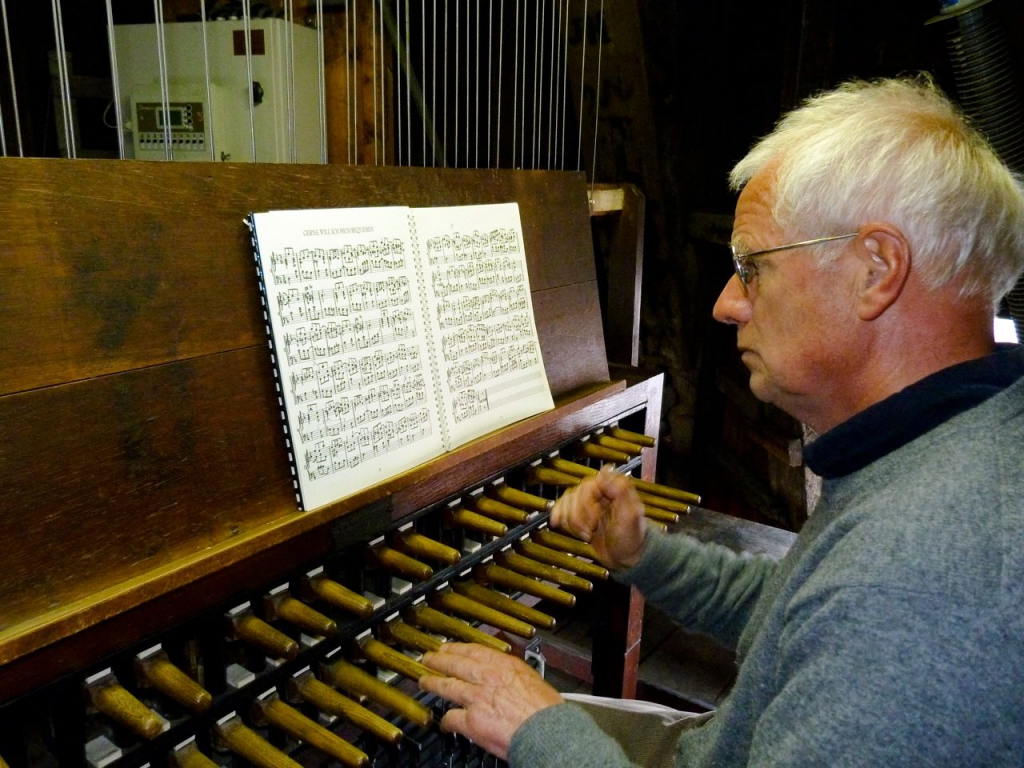
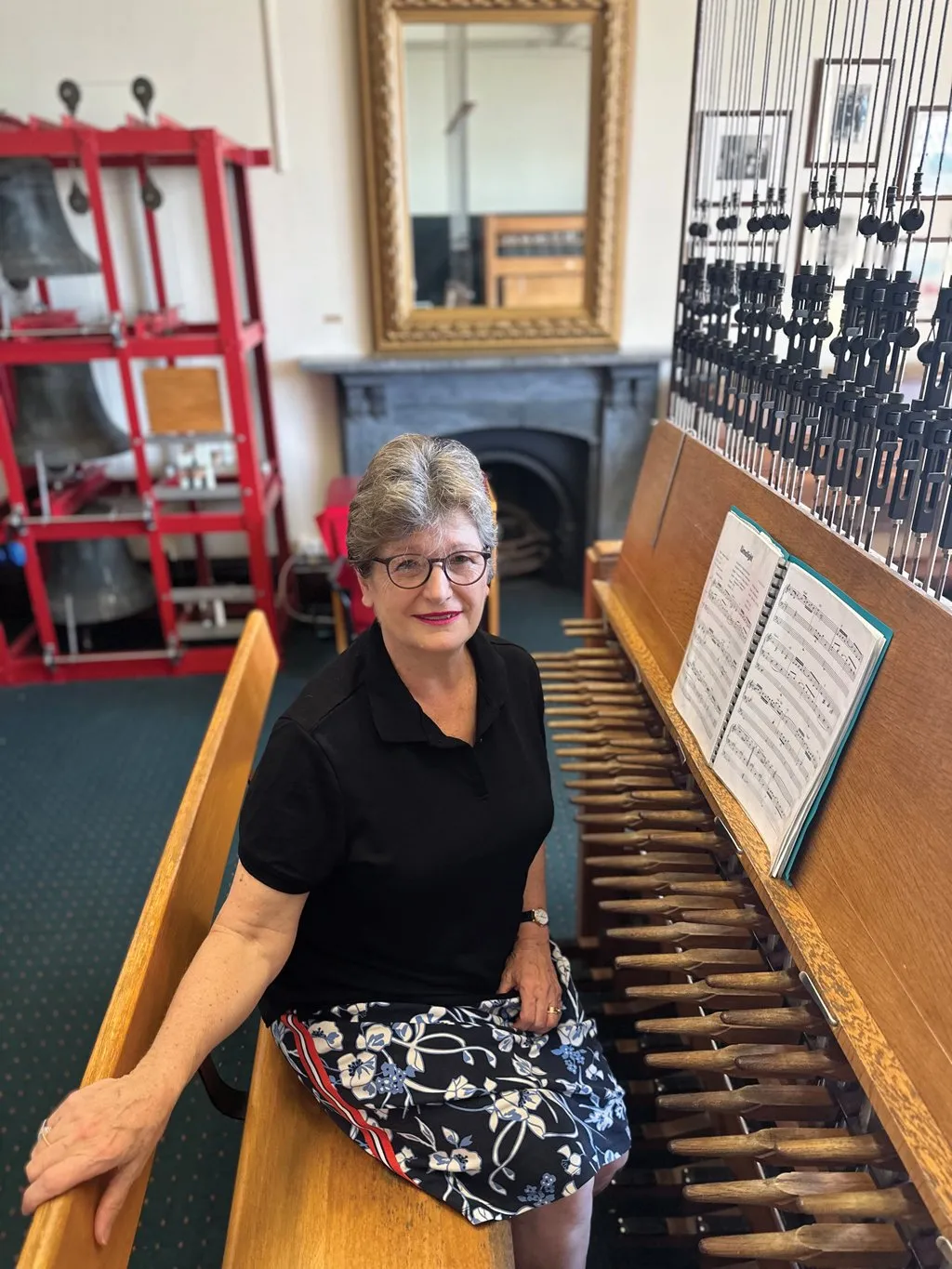
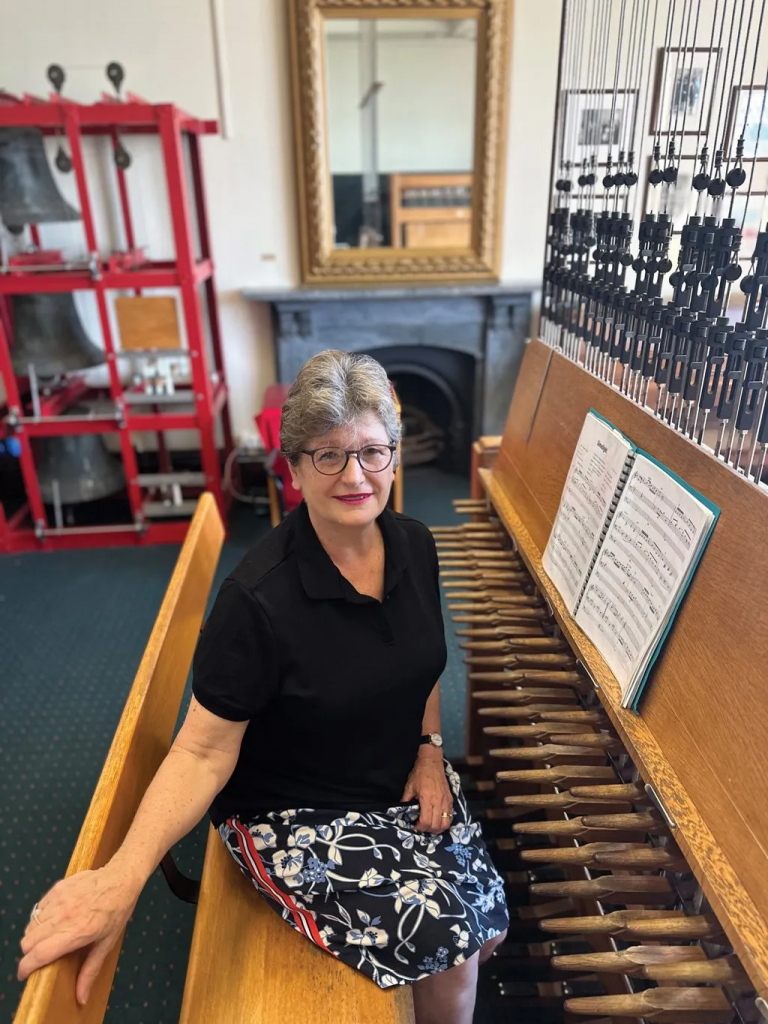
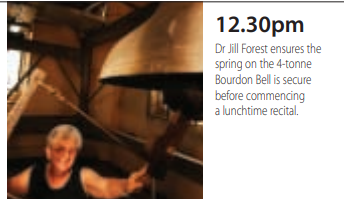
Alongside her medical work, in 1978 Jill Forrest was appointed an Honorary Carillonist. In 1993 she was appointed University Carillonist through to her retirement in 2010. In this position Jill Forrest and the carillon have brought great prestige to the University. The War Memorial Carillon is the ceremonial voice of the University of Sydney, the only University in Australia to have such a splendid asset. It is played to celebrate festive occasions and to dignify solemn occasions and serves all faculties and organisations of the University. Jill Forrest has treasured the carillon and with distinction, made an outstanding contribution in her role as the University Carillonist. She is a highly accomplished performer and has represented Australia at International Carillon Festivals in Europe and America. During her tenure she played the carillon for well over a hundred graduations, Sunday recitals and festive occasions each year. She has maintained the fabric of the carillon, bell chamber and clavier at world standards and fostered strong links between the University and all other countries with carillons. She also founded and donated a library of carillon music, with the latest annual publications. She has published, edited, arranged and composed a vast quantity of high quality carillon music, and has educated carillonists to world standards, thus ensuring Australian carillonists for the future. She has hosted international carillonists all of whom have been immensely impressed with the instrument and the art of carillon in Australia. In addition, as Honorary Consultant to the Bathurst Council, she has advised on refurbishment and upgrading of the Bathurst War Memorial Carillon. Her dedication to Medicine and Music for over 50 years was recognised in 2011 by the Award of Member of the Order of Australia (AM). Chancellor, I present Consultant Physician Emeritus and Emeritus University Carillonist Dr Jill Forrest AM and invite you to confer the title of Honorary Fellow of the University upon her.
Interview: Katherine Connolly talks to Jill Forest, University Carillonist
So what exactly is a Carillon and how does it work? Carillons are the largest musical instruments in existence. They consist of at least two chromatic octaves of tuned bells, made from an alloy of 80% copper and 20% tin, which sound when struck by internal clappers of soft iron. The Sydney carillon contains 54 bells (4 ½ octaves) that are hung in the clock tower in the main quadrangle. The bells are fixed in position; their clappers are connected by wires to a large keyboard in the room below the belfry. When the clapper strikes the inside of the bell, the bell’s diameter determines the frequency of the fundamental note. A number of overtones also sound, including the minor third; these add richness to the sound. The instrument is played from a keyboard of manual batons and pedals.
How did you get to become the University Carillonist?
In its early years, the carillon was played by a number of honorary carillonists. In 1944 John Douglas Gordon was appointed the first University Carillonist, a position that he held until his death in 1991. He taught me to play, and in 1978 I passed an exam and joined the group of enthusiasts who assisted him as Honorary Carillonists. Later I studied carillon in New Zealand and Holland. When John died senior Honorary Carillonist, Dr Reginald Walker, took over for a year, during which time auditions and interviews took place and I was fortunate enough to be appointed to the position.
What’s the history of the University’s Carillon?
The University of Sydney War Memorial Carillon commemorates the 197 undergraduates, graduates and staff who died in World War I. It was paid for by private subscription both inside and outside the university, and was dedicated on Anzac Day 25 April 1928. The original bells were cast in England by the famous bellfoundry of John Taylor and Co. of Loughborough, Leicestershire. In 1973, the Taylors recast the top bells, and in 2003 the top 33 treble bells were replaced by Whitechapel of London, the bellfoundry that cast Big Ben.
Is it difficult for players to access the Carillon to practice?
Yes, this certainly restricts the number of students. The Environmental Protection Act precludes playing the bells themselves before 8 am (if we were a chainsaw we could start at 7 am!), and of course during working hours and lectures they could be a distraction. So if you are jogging in the morning between 8 and 8.45 am, or in the evenings and weekends when there are no other functions in the vicinity, someone will be practicing.
What is the best time and place to hear the Carillon being played?
There are free recitals every Sunday afternoon at 2 pm, and every Tuesday at 1 pm, except when there are exams in the vicinity. However, to hear the bells at their joyful best one should listen on the front lawns or in the main quadrangle before and after each of the University graduation ceremonies because then, as the Ceremonial Voice of the University, the bells will rejoice with you.
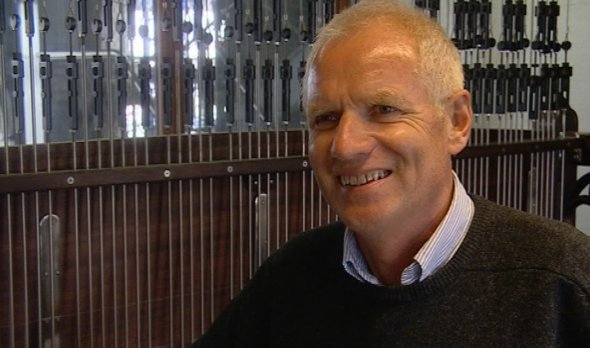
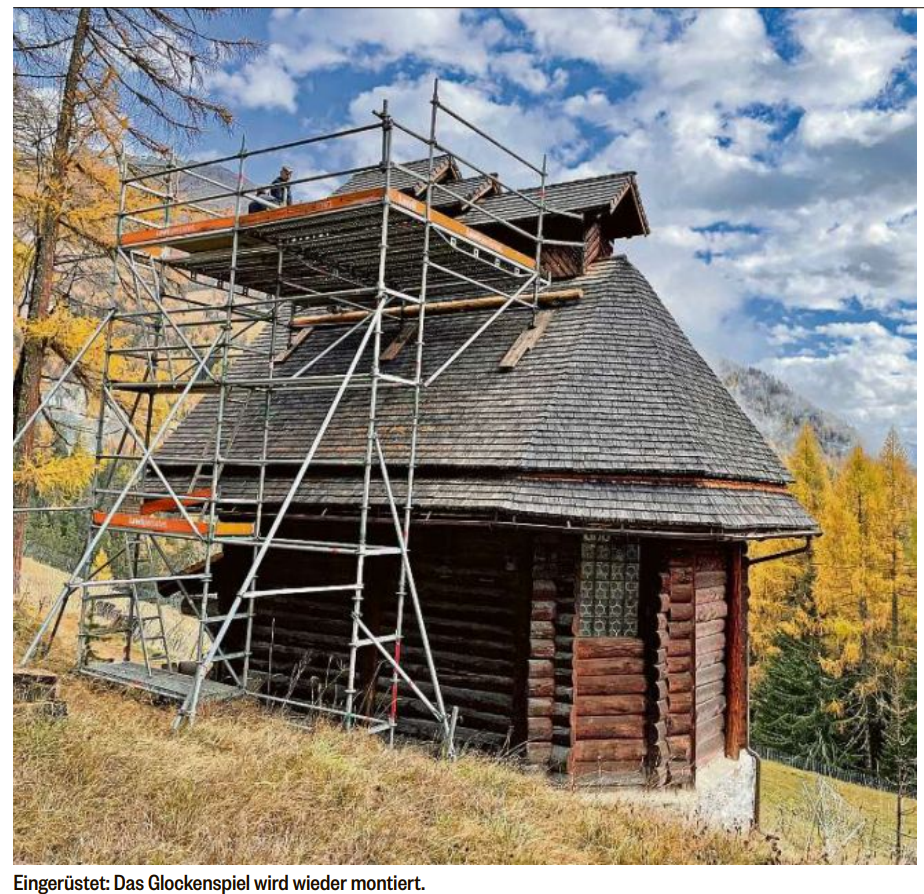
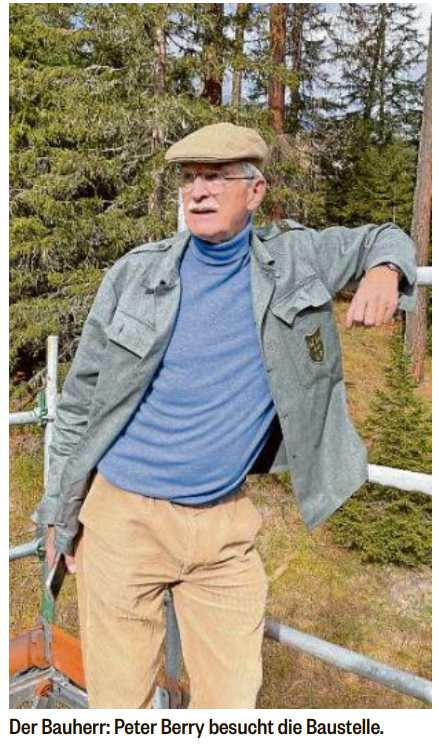
Peter Berry is a CarillonDoc of a special kind: he restored a historic carillon that was once built by Willem Mengelberg near St. Moritz in the mountains:
He also plays some songs himself and, of course, operates the carillon’s electronics!
From 1978 to 1986, assistant physician in Zurich, Chur, New York, and St. Moritz. Between 1986 and 2002, self-employed medical practice at the St. Moritz Rehabilitation Clinic, establishing the emergency services in the Upper Engadin region. Since 1991, entrepreneurial activity in the real estate sector. In 2003/2004, conceptual design and construction management for the renovation of the Berry Museum.
Membership in Swiss societies for internal medicine, emergency medicine, and nutritional science. Membership in the Hunters’ and Fishermen’s Association. Membership in Pro Natura. Membership in the Swiss Animal Welfare Association. AOPA pilots/aircraft owners. Private pilot since 2001.
The 49-bell Carillon of St Colman’s Cathedral in Cobh is the largest such instrument in Ireland and Britain.
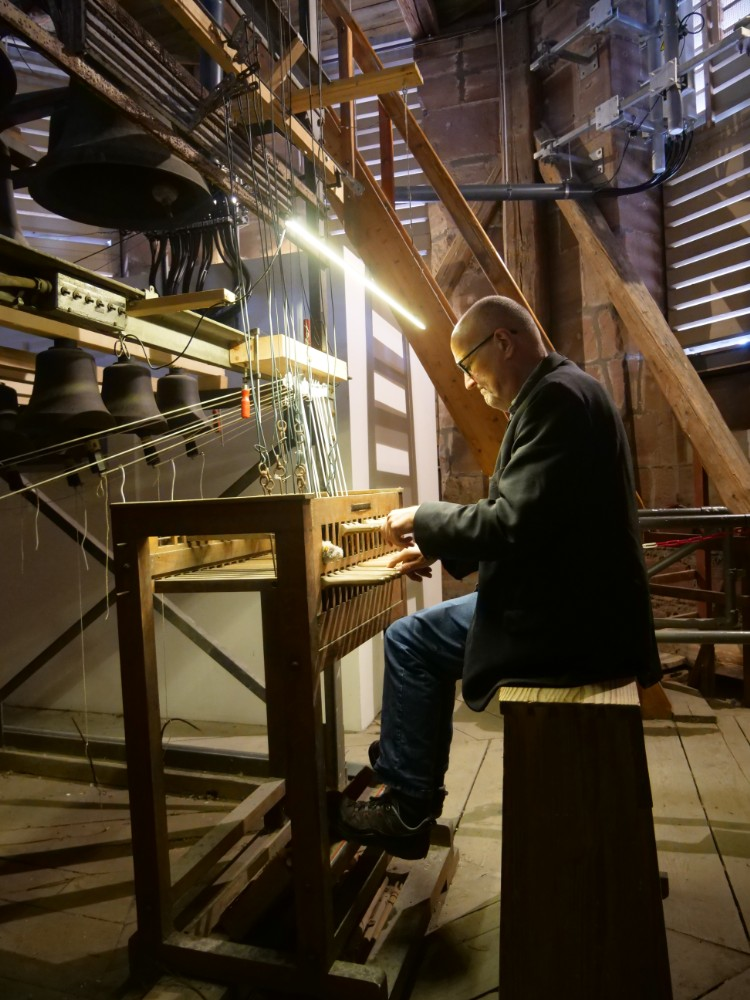
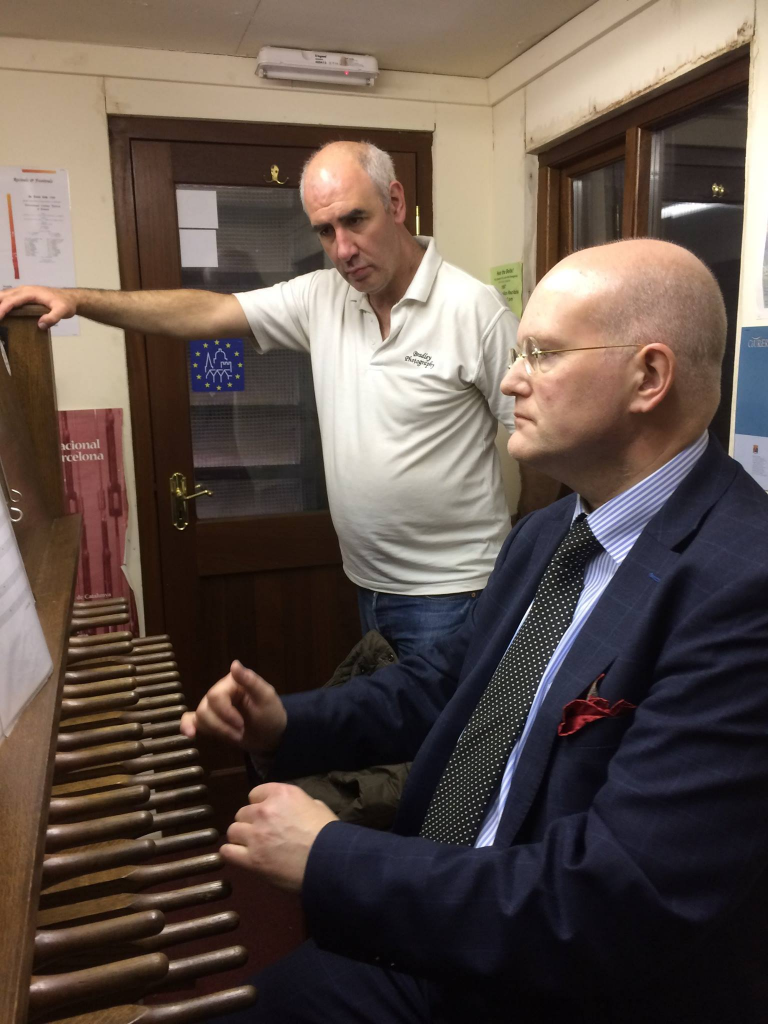
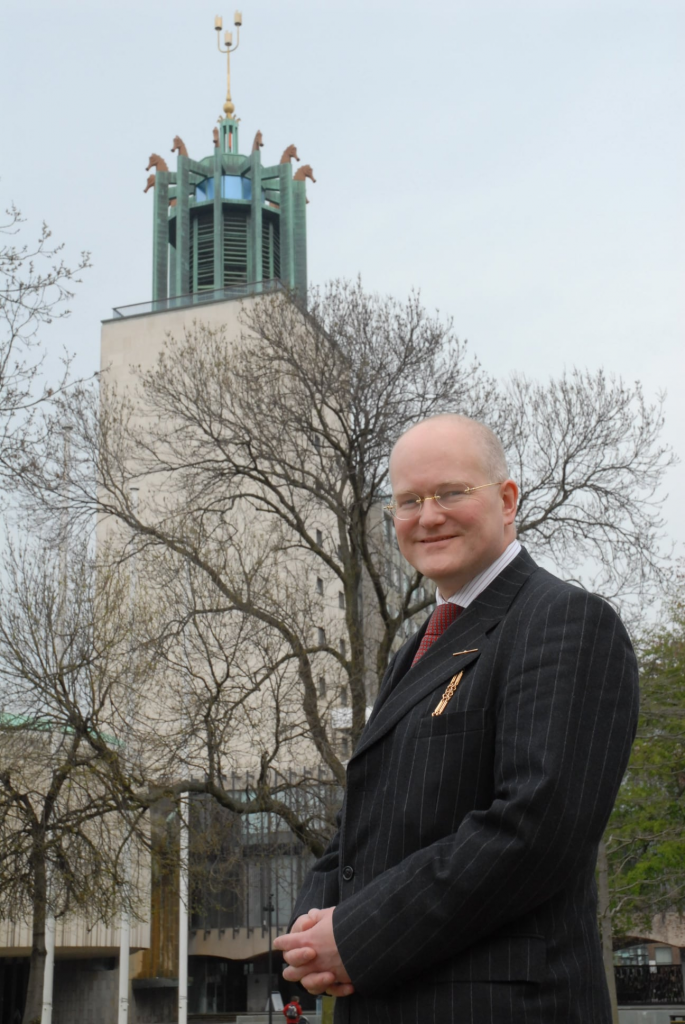
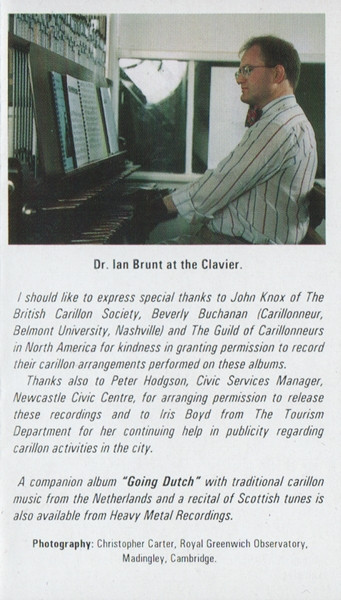
Dr Ian Brunt was Director of The Lanchester Early Music Festival and City Carillonneur of Newcastle Upon Tyne, regularly giving concerts and recitals on organ, carillon, harpsichord and fortepiano. He was a member of the National Youth Orchestra of Great Britain 1979- 1981 as flautist, composer and general musician and has specialised in the baroque flute for over thirty years. He performs with Hexham Collegium Musicum, Anglia Concertante, Durham Sinfonietta, Tyneside Baroque Players, Durham Baroque, The Hallgate Ensemble, among others, playing chamber music and giving concerto performances and has recorded six commercial solo albums on harpsichord, organ and carillon. Recent new music composed includes a pair of Notturni for classical guitar, a setting of George Herbert’s “My Words and Thoughts” and a solo organ concert piece “Fantazia on a Melody from the Scottish Psalter (1615).” In 2007 he was photographed for The North East Passion Archive project, the images held by Tyne and Wear Museums at The Discovery Museum, Blandford Square, Newcastle and also accessible on the Internet.
In a tribute to Dr Brunt, Michael Boyd of the British Carillon Society, wrote: “Ian was proud of his Northumberland heritage – he was an exceptionally competent player of the Northumbrian small pipes.
“I believe he wanted to instil a sense of community pride in the Edith Adamson memorial carillon, the first and only carillon to be installed in a civic centre of a major city in Britain. His repertoire also reflected his deep personal connection with the North of England.”
Dr Brunt championed the music of 18th-century Newcastle composer
Charles Avison and was an advocate of folk music on the carillon.
2021: News has just come through of the death this morning at the age of fifty-eight of Ian Brunt, Carillonneur of the Newcastle Civic Centre. Despite his busy workload as a G.P. and ongoing health issues, Ian was also dedicated to his beloved carillon art. He once described how he would swim seventy lengths five times a week in order to keep fit enough to play the carillon, which he claimed was “like going for a five-mile run”! He gave a memorable guest recital in Cobh in July 2007, when this photo was taken. This gentle and cultured man will be sorely missed and long remembered by his colleagues and friends. Requiescat in pace.
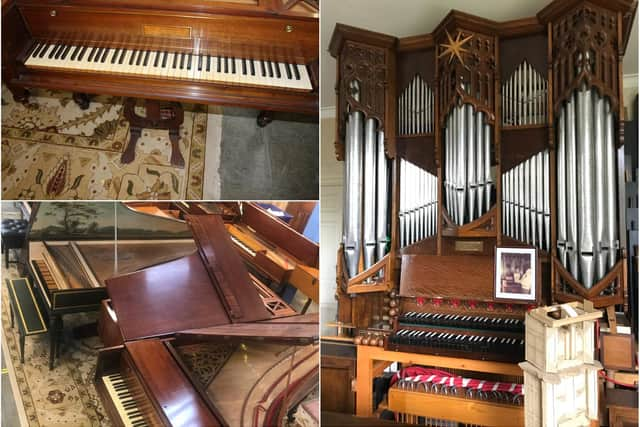
The Edith Adamson Memorial Carillon, Newcastle Civic Centre The Edith Adamson Memorial Carillon, constructed in 1966 by J.Taylor and Co and installed in 1967, was given to the city by James Wilfred Adamson in memory of his wife. James (‘Jimmy’) Adamson started his paints business from a horse and cart, and went on to be a driving force in the establishment of British Paints Ltd, see Link . The carillon, see Link has 25 bells, the largest of which weighs 71cwt, 1qr, 13lb – which if my maths serves me correctly is 825lb, or 374.214kg – and is tuned to A major. Recitals take place on Saturdays at 2pm and occasionally on Thursday at 7pm – the Carilloneur is Dr Ian Brunt, who swims 70 lengths five times a week in order to keep fit enough to play the carillon, which takes so much physical energy that he describes it as ‘like going for a five-mile run’, see Link . The carillon tower has twelve seahorses and is topped by the three castles of the Newcastle coat-of-arms, see Link .
Sjoerd Tamminga, born in 1947 in Goes, Netherlands, received his first carillon lessons at the age of eleven from his piano teacher, the then city carillonneur of Goes, Wilhelm Harthoorn. While studying dentistry in Amsterdam, he received further carillon lessons from the carillonneur of the Oudekerk in Amsterdam, Cees Roelofs, who had studied with Jef Denyn at the Carillon School in Mechelen, Belgium, and graduated there in 1933. Tamminga followed his example and earned his own carillon diploma “with great distinction” from the same school in 1976. That same year, he won first prize in the carillon competition at the Holland Festival in Tiel. In 1977, he became city carillonneur of Goes. He performs at carillon festivals in various European countries and records CDs. He specializes in popular melodies, evergreens, and jazz. Together with his son, the carillonneur and composer Jorrit Tamminga, he works on music for carillon and electronics.
Carillon der Maria MagdalenakerkGoes Niederlande
GOES – City carillonneur Sjoerd Tamminga has passed away at the age of 65. From 1977, he was the regular carillon player in Goes. With Tamminga’s death, the city loses a remarkable musician who dared to combine modern music with the ancient craft of carillonnage.
Tamminga first encountered carillon music at the age of 11 through piano lessons with city carillonneur Willem Harthoorn, whose successor he later became. From 1974, he studied at the Royal Carillon School in Mechelen, where he received his diploma with honors in 1976.
Lou Reed In 2009, Sjoerd Tamminga represented the Netherlands at the celebration of the 400th anniversary of relations between our country and New York. On Queen’s Day of the same year, he played the carillon of the Riverside Church in the metropolis, the largest carillon in the world. In the presence of singer Lou Reed, Tamminga performed his version of “Perfect Day.”
Anniversary Seven years earlier, the Goes native celebrated his 25th anniversary as the city’s carillonneur. On October 30, Sjoerd Tamminga would have celebrated his 66th birthday.
This video features an uplifting Easter message by the Rev. Dr. Vanessa Ward, Co-Pastor of Dayton’s Omega Baptist Church, followed by Easter musical selections performed on the 57 bells of Deeds Carillon by Dr. Larry Weinstein, carillonneur since 1988.
What are your interests outside of medicine? I like to play the carillon. I haven’t made it to the Duke Chapel carillon yet, but I hope to sometime. I also like traveling with family, and watching shows with my fiancé in our free time.
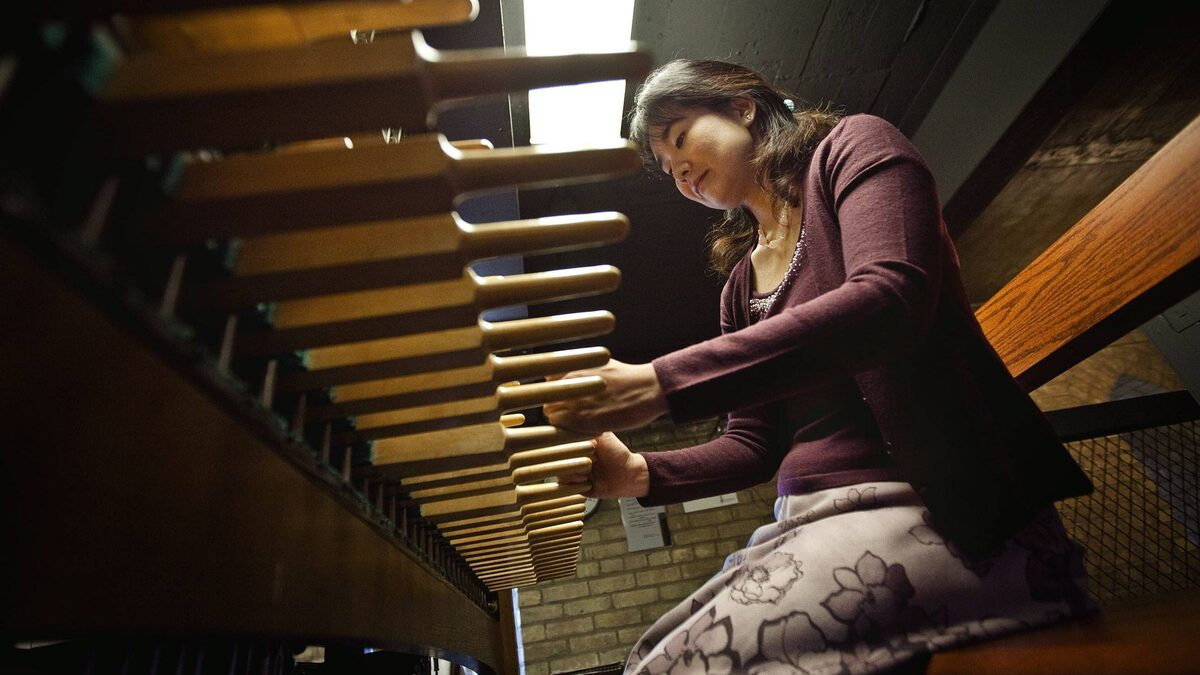
Organist and carillonist Grace Chan is a PhD Candidate at the Sydney Conservatorium of Music researching organ and carillon performance/ culture in Australia. Grace has performed on all three carillons Australia. She was a carillon student at the National Carillon, Canberra from 2018-2022. In July 2019, she was invited to perform the world premiere of an Australian carillon work at the Palau de la Generalitat Carillon, Barcelona. Grace has performed for Sydney University Graduation ceremonies and special occasions for the Faculty of Medicine. As a practicing medical doctor, she has had a longstanding interest in community wellbeing.
Grace Chan is the carillonist of the University of Sydney. As organ player she gives impressive recitals as well.

 . The carillon, see