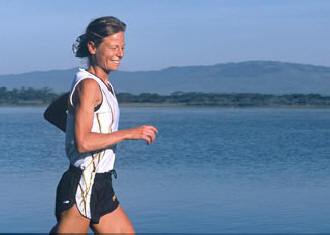
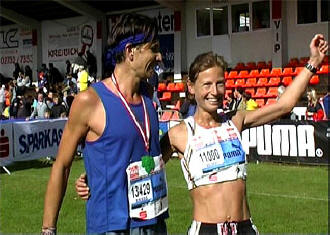
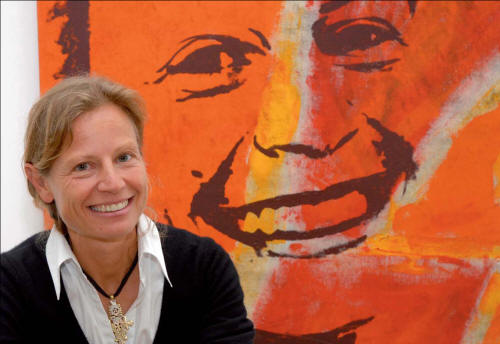
Dagmar Rabensteiner (born June 15, 1963 in Innsbruck) is a former Austrian long-distance runner.
As an elementary school student, she walked the seven-kilometer route from Sadrach, a district of Innsbruck, to school in the city center every day. As a high school student, she undertook climbing and ski tours, and later, with her husband and young son, she embarked on multi-week trips and trekking tours through jungles in Indonesia or into the highlands of Kashmir, all the way to the base of Mount Everest. She didn’t start running until she was 27.
At the age of 30, the medical doctor ran her first marathon in 3:28 hours. After recognizing her talent for the sport, she continually improved and in 1997, she finished sixth in the Florence Marathon with a time of 2:55:19, breaking the three-hour mark for the first time.
Competitive training led to further improvements. In 1999, she finished sixth in the Vienna City Marathon in 2:49:33 hours and won the Graz Marathon in 2:41:46 hours. In 2000, she became Austrian marathon champion, finishing sixth overall in the Vienna City Marathon in 2:39:08, won the Wachau Marathon half marathon, and then broke Carina Lilge-Leutner’s nearly 17-year-old national record by finishing third in the Amsterdam Marathon with a time of 2:35:42. A week later, she became Austrian half marathon champion in Salzburg.
She set her record by finishing third in the 2002 Vienna City Marathon in 2:35:42, beating the time limit for the marathon at the European Athletics Championships in Munich, where she finished 15th.
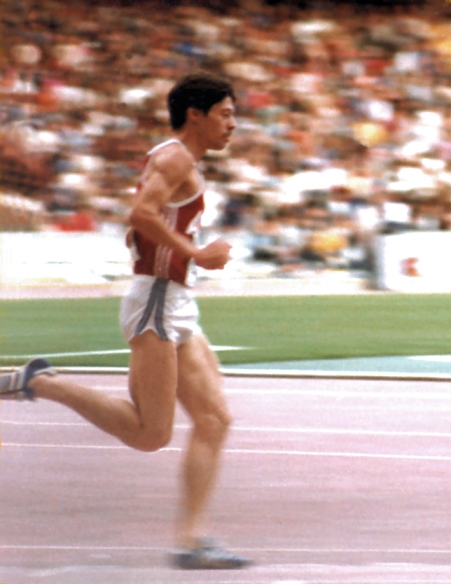
In 2003, she ran her third national marathon record, finishing tenth in the Berlin Marathon with a time of 2:34:35. However, she missed qualifying for the 2004 Olympic Games by 1:35 minutes, and so she retired from competitive sport after this race. She continues to run up to 150 kilometers per week, achieving sporting successes such as winning the half marathon at the 2004 Regensburg Marathon and finishing 14th (second in the 40-49 age group) at the 2005 Comrades Marathon over 89 km.
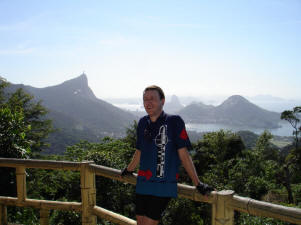
Dagmar Rabensteiner has been married to lawyer and entrepreneur Peter Rabensteiner since 1983; they have a son born in the same year. She is a specialist in internal medicine and a sports doctor, runs a practice in Vienna, and was the official race doctor at the Vienna City Marathon and the Austrian Women’s Run from 2004 to 2008.
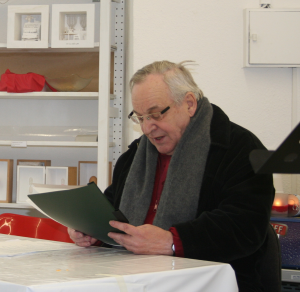
Uhlenbruck’s family wasn’t supposed to know that their Gerd was running, because to them he was ill (sarcoidosis). So he chose Urbach’s GSV Porz, a slightly out-of-town club, as his club. He has completed 36 marathons and a 100km race, which he ran on his birthday. Twice he finished the 42.195km in the age group 70. His personal best of 3:18 hours is astonishing considering his lung history. Once (1984), he even became German Marathon Champion for cross-country doctors and pharmacists. He demonstrated athletic versatility by taking runner-up titles for cycling doctors, both in the road and time trial categories.
From Reader to Writer
“The aphorism condenses the quintessence of an experience into the sentence of an insight.”
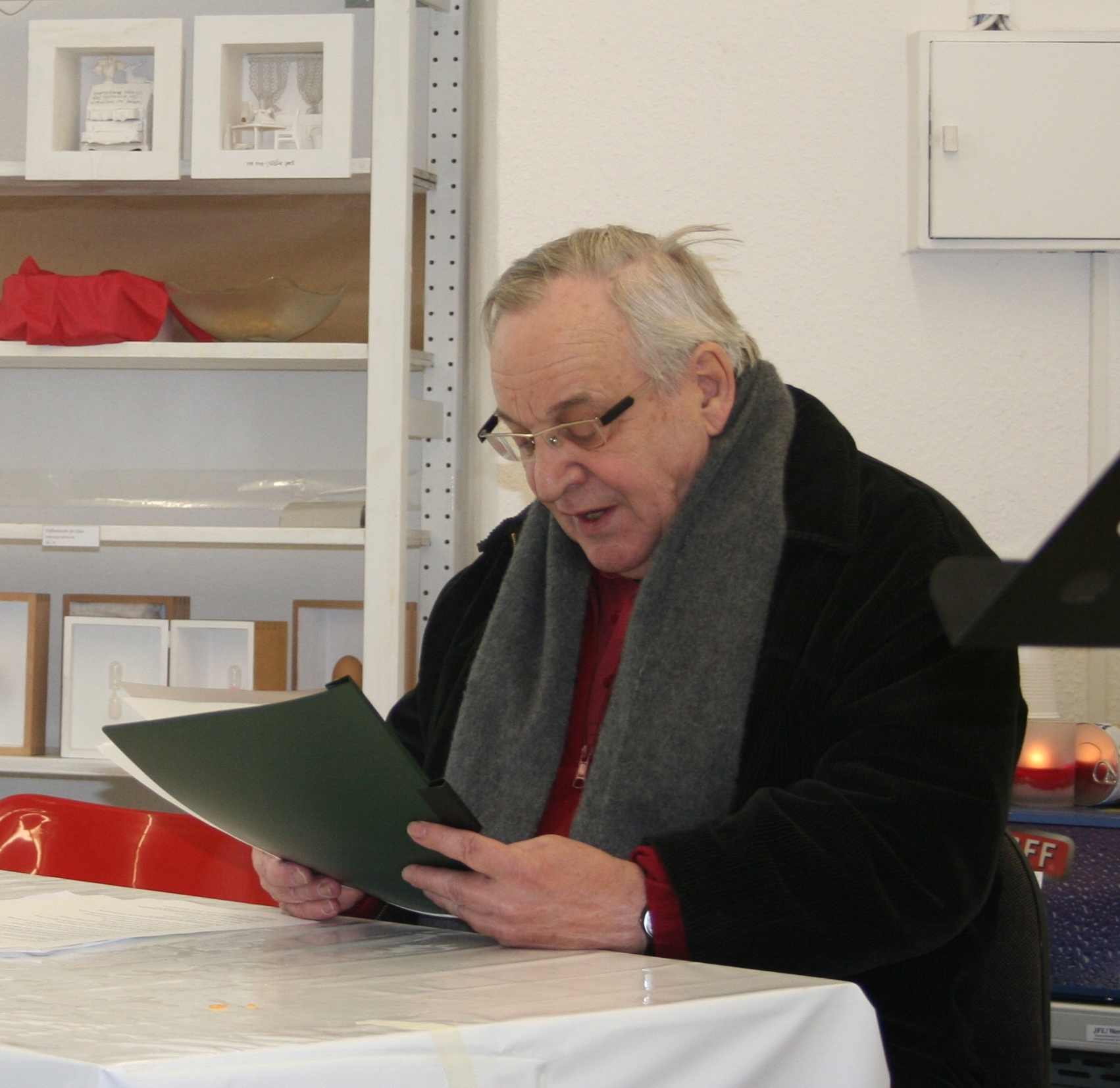
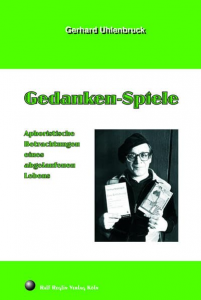
During his hospital stay, Gerhard Uhlenbruck wanted to set himself a task to combat giving up, not only physically; he sought a challenge for body and mind. While he gained physical fitness with his “therapy of small steps,” he kept himself mentally fit with a “therapy of small sentences.” He began writing poems, exploring “life, love, and the love of life.” They were published in 1975 under the pseudonym Gerhard Günther (“Not Forever”).
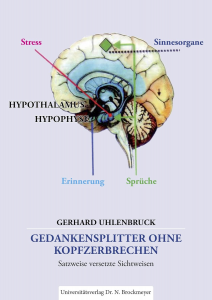
Subsequently, he presented himself entirely as an aphorist. The number of his “rich fragments of thought” has risen astronomically over the decades. Whether medical aphorisms or sports aphorisms, with which he launched a new genre, Uhlenbruck was not only the most prolific writer of this genre, but also impressed with his quality and originality. “An insightful understanding of human nature emerges everywhere, which, despite all social criticism, does not result in cynicism or pessimism, but rather expresses hope for a better order of this fragile world” (Prof. Dr. Wolfgang Mieder).
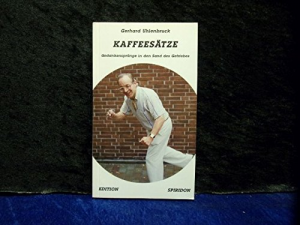
Dozens of volumes of his aphorisms have been published since 1977, including “An Educated Sick Person,” “Blows to One’s Neighbor,” and “The Smarter One Doesn’t Give Up.” His flashes of inspiration, thought-provoking ideas, and observations can be found in satirical and specialist magazines, on calendar pages, and in illustrated books. H.-H. alone contains 1,000 volumes of aphorisms. Skupys’ “The Complete Handbook of Quotations from A to Z” (2004) included over 300 of his witty remarks. In recognition, the Narrenakademie (Fools’ Academy) in Dülken awarded him the title of “Dr. humoris causa” in 2001. The German Aphorism Archive in Hattingen elected him its honorary chairman. Finally, in 2017, he was awarded the Lehrer-Welsch Language Prize for Literature in Cologne.
Uhlenbruck also addressed running in countless aphorisms. It’s difficult to choose just one. “In the end, a marathon just drags on and on,” might particularly appeal to marathon runners. Running therapists might appreciate the following statements: “Running as therapy: What moves you internally can be processed through external movement.” “Running is psychotherapy without psychotherapists – with the help of your legs.” Or: “Running is the only therapy that costs nothing, except time! A one-person company like the AOK: Everything free of charge!”
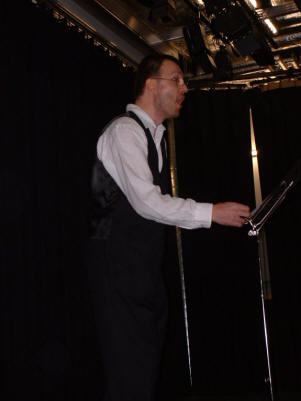
Like running, for Uhlenbruck, laughter was medicine, a stress reliever, and an immune fitness booster. And because his interest in humor knew no bounds, he participated, whenever his time permitted, in an amateur drama group at the adult education center (VHS) and in the book project “Humor as Cologne Philosophy” (Cologne 2003). He also spoke perfect Cologne dialect.
Athletic Awards
Uhlenbruck began his athletic career in high school, first as a boxer, then as a runner. He was:
German Physicians’ Marathon Champion
German Physicians’ Cycling Runner-up (road race & time trial).
Citations of his Aphorisms (naturally in German):
Manche halten einen ausgefüllten Terminkalender für ein ausgefülltes Leben.
Zeitungsenten bringen die Leser zum Schnattern.
Die ungeschminkte Wahrheit bringt immer Farbe ins Gesicht.
Wenn man Spaß an einer Sache hat, dann nimmt man sie auch ernst.
Frisch gesagt ist halb gewonnen.
Wir sind alles Nichtsnutze, das heißt, wir tun nichts, was uns nichts nützt.
Neidhammel = Ehrgeizige Schafe.
Man empfindet es oft als ungerecht, daß Menschen, die Stroh im Kopf haben, auch noch Geld wie Heu besitzen.
Inzwischen wissen wir, was uns noch blüht – nämlich immer weniger!
Das wirklich Rührende an der Liebe ist der Kochlöffel.
Karrieristen = Leute, welche andere vor ihren Karren spannen.
Auf dem Gipfel des Erfolgs steht auch ein Kreuz: für die Leichen, über die man gegangen ist. (Als Betriebsrat/Sozialpolitiker/Manager wissen Sie, wovon ich rede. Von der Rücksichtslosigkeit. Vom Egoismus. Als Christ sage ich: Wer sich so verhält, kann kein Christ sein. Denn das Christentum kreist im Kern um den einen Satz, der da lautet: “Liebe deinen Nächsten wie dich selbst!”)
An Karneval maskiert man sich, damit man die Maske fallen lassen kann.
Unsere Leistungsgesellschaft ist nicht eine Gesellschaft, in der nur Leistung gilt, sondern eine, welche bestimmt, was Leistung ist und wer sie leisten darf.
Manches wäre anders in der Welt, wenn man an manchen Dingen nichts verdienen würde.
Fanatiker lassen sich schon aus Überzeugung nicht überzeugen.
Ehrgeiz schafft viel, sogar einen selbst.
Sein Pferdefuß bestand darin, daß er nicht beschlagen war.
Wir sind ein Volk der Denker, denn wir denken immer daran, was andere wohl von uns denken.
Eine Änderung des Bewußtseins verändert unbewußt auch das Sein.
Guter Rat ist teuer, schlechter Rat kann teuer zu stehen kommen.
Man muß sich dauernd beherrschen, um die Beherrschung nicht zu verlieren.
Das Geheimnis des Autos: Man ist in seinen eigenen vier Wänden.
Erst haben die Menschen das Atom gespalten, jetzt spaltet das Atom die Menschen.
Aller Anfang ist leicht – wenn man ihn mit dem Ende vergleicht.
Zwischenmenschliche Beziehungen sind “mit Abstand” die besten.
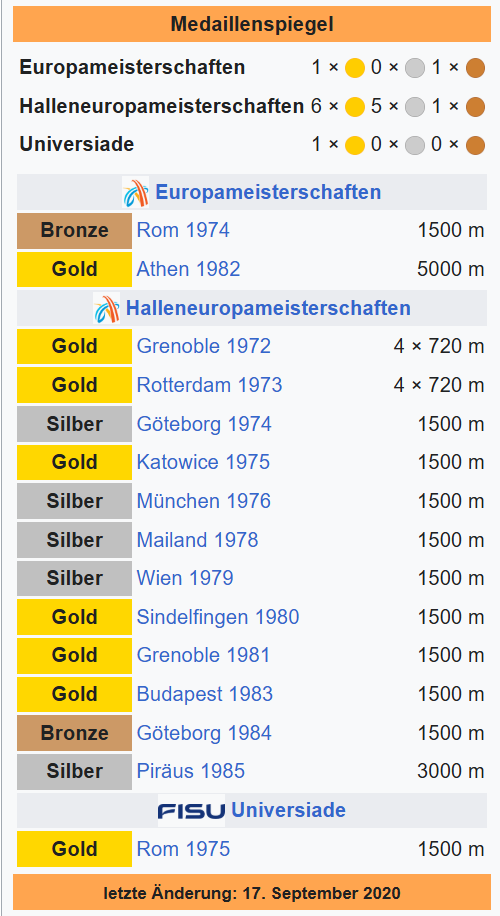
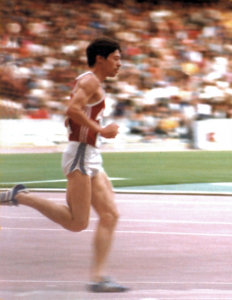
Because he was already thirty at the time, and had been an international-level runner for a decade, this victory was a long-awaited one for him. He admitted that he decided to run the 5,000 metres instead of the 1,500 metres, because he lost to Ovett and Coe so often in the shorter distance. The fairly slow pace of the 1982 European Athletics Championships 5,000-metre final favoured Wessinghage, because he was in top form – having set a European record at 2,000 metres shortly before the Championships – and because he was the fastest 1,500-metre runner in the final, having run that distance in 3 minutes 31.6 seconds in 1980.
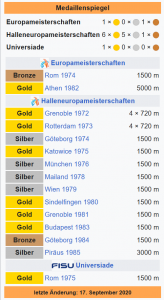
He won the German championship title 22 times. The European Championship over 5000 meters, which he won in 1982, was his greatest success. In 1979, he won the World Cup over 1500 meters in Montreal, in 1975 the European Cup over 1500 meters in Nice, and in 1983 the 5000 meters in London. He set German and European records, of which the German records over 1500 and 2000 meters (4:52.20 min) still stand.
In his marathon debut in Berlin in 1989, Wessinghage ran a time of 2:26 h.
Thomas Wessinghage was German champion 22 times, particularly in the 1500 meters. His greatest success, however, was in the 5000 meters. He won gold in this event at the 1982 European Championships in Athens. Wessinghage also competed at the 1972 Olympic Games in Munich and the 1976 Olympic Games in Montreal.
All achievements at a glance:
22-time German Champion
1972: Olympic Participant
1975: European Indoor Champion (1500 m)
1976: Olympic Participant
1977: World Record with the German 4×1500-meter relay team (Wessinghage, Harald Hudak, Michael Lederer, and Karl Fleschen), valid until September 4, 2009
Lukas Grafenauer has positioned himself at the forefront of tennis in Austria.
Tenniskarriere und Tennisausbildung
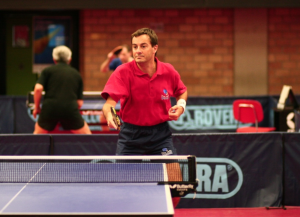
In addition to my medical training, I also completed the highest level of training in ÖTV tennis teaching to become a state-certified tennis instructor and state-certified tennis coach at the Austrian Federal Sports Academy. I have also achieved valuable tennis successes myself and, as a counterbalance to my medical activities, I still keep myself fit through sport. Discipline, punctuality, taking personal responsibility, commitment, consistency, stamina, focus, the ability to overcome obstacles, resilience, resistance to stress, dealing with disappointment and defeat, accepting defeat, not becoming arrogant because of victories, setting goals and working consistently towards them, practicing teamwork, lifelong friendships, and staying calm and overview in critical situations are positive aspects that I have also learned through tennis and that help me a lot in my professional and private life. For an incredible 40 years, from the age of 16, I played for the SV Sparkasse Leobendorf men’s tennis team in the general league (interrupted by three years of championship play for UTC Stockerau). I also served as team captain for several years and enjoyed great success in championship competitions, including in the state league. I’m still very active in sports, fortunately in top shape, passionate about skiing, and, of course, still playing tennis, as well as extensive, exciting bike rides.
1994 and 1995: Men’s Singles Tennis: National Physicians’ Championship in Schladming and Bad Waltersdorf
2001-2003: Men’s Singles Tennis: Bronze medalist at the World Medical Games in Evian, France, Tihany, Hungary, and Stirling, Scotland
2001-2003: Mixed Doubles Tennis: World Physicians’ Championship
Born in 1965 at Eltville am Rhein, grown up in the “gotical Wine Village” Kiedrich im Rheingau. 1971-1986 Member in the boys choir “Kiedricher Chorbuben”
singing studies as Baritone 1988-1996 with Richard Levitt, Basel and 1996-1998 with Mary McSweeney, München, actually studies with his brother, the well-known Countertenor Andreas Scholl; solistical performances in cantatas and Oratories by J. S. Bach and moderation of wine testings.
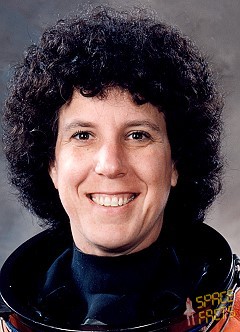
Bachelor of arts in geology from State University of New York at Buffalo, 1970; doctorate of medicine from Cornell University, 1978; masters in public health from University of Texas School of Public Health, 1994; prior to her selection she served as a physician in the Flight Medicine Clinic at the JSC; recreational interrests include swimming, skiing, running, softball, movies, music, and reading; was Lead Astronaut for Medical Issues, Johnson Space Center.