Category Archives: ComposerDocs

  • -

Rainer Bach

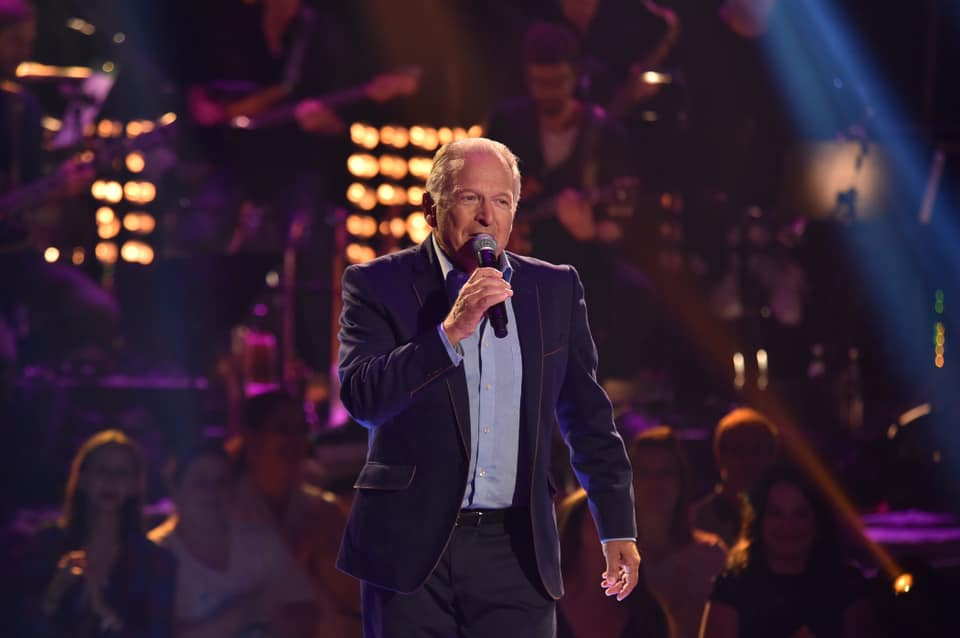
Rainer Bach (* December 14, 1947 in Bielefeld) is a German country singer and pedal steel guitarist. He was a founding member of the group Truck Stop, released solo albums, and worked as a dentist.

Musical Career

Rainer Bach began playing the piano at the age of seven. In April 1963, he discovered the Beatles and started learning to play the guitar, initially on an acoustic guitar. During his school years, he founded a beat band called The Misfits, which performed in front of audiences of up to 1000 people. After graduating from high school, the band broke up. Following his schooling, Bach joined the German Navy and served, among other places, on the Gorch Fock, whose choir he conducted in 1968. In 1971, he began studying dentistry in Hamburg.

In the autumn of 1972, he founded the band Truck Stop together with Günter “Cisco” Berndt, Burkhard “Lucius” Reichling, Erich Doll, Wolfgang “Teddy” Ibing, and Eckart Hofmann. He remained with the band for about ten years, singing and playing pedal steel guitar. He composed numerous hits, including their first chart success, “Ich möcht’ so gern Dave Dudley hör’n” (I’d really like to hear Dave Dudley), and the hit “Der wilde wilde Westen” (The Wild, Wild West) together with Erich Doll. In December 1983, he left the group because he was working as a dentist and needed more time for his patients. In addition to his work with Truck Stop, he also contributed as a steel guitarist to albums by Volker Lechtenbrink, Reinhard Mey, and Peter, Sue & Marc.

After Truck Stop

He opened his dental practice in Seevetal in 1982 and ran it until 2013. During this time, he composed music for other artists, among other things. He also wrote meditation music for a friend at the German Red Cross (DRK) health resort in Carolinensiel and composed the charity CD “I’d Really Like to Go to the Children’s Home” for their children’s center, the title track of which was based on the melody of “I’d Really Like to Hear Dave Dudley.”[2]

In 1992, he released his first solo album, “Auf meine Art” (My Way), through Dino Music; in 2014, his album “Ich bin nicht mehr der Alte” (I’m Not the Same Man Anymore) was released by DTM Musik. In addition to his solo albums, he is a member of the all-star country band Third Coast, which also included Nils Tuxen, Werner Becker, and Uwe Lost, among others.[3]

At the end of 2019, he participated in the second season of The Voice Senior and was eliminated in the sing-offs. His coach was Michael Patrick Kelly.

https://de.wikipedia.org/wiki/Rainer_Bach_(Musiker)

https://www.facebook.com/drrainerbach/?locale=de_DE

https://www.facebook.com/watch/?v=1085174399647662

https://www.bild.de/unterhaltung/tv/tv/truck-stop-gruender-country-comeback-fuer-rainer-bach-66369622.bild.html


  • -

Tobias Riether

Tobee (* June 24, 1985 in Geislingen an der Steige; real name Tobias Riether[3]) is a German party pop singer, concert promoter, and dentist.

In his youth, Tobias Riether learned to play several instruments and took singing lessons. At 15, he founded a rock cover band, and at 18, he won a talent competition in party music and became the lead singer of a show band from Baden-Württemberg.

He achieved his first success in 2006 with his self-written song “Die Ina.” He found producers at Xtreme Sound in Cologne, who included the song on numerous party compilation albums. The following year, he had a hit with “Banane, Zitrone,” which landed on the Ballermann Hits compilation and led to him becoming a regular performer at the Bierkönig in Mallorca. Further hits followed, including remakes of “Lotusblume,” originally by The Flippers, “Westerland” by Die Ärzte, and “Eine weiße Rose” by the Kastelruther Spatzen.

In 2008, major label EMI signed Tobee and produced the song ’72, ’80, ’96, 2008 for the European Football Championship, which, at least in its title, was reminiscent of the hit ’54, ’74, ’90, 2006 by Sportfreunde Stiller for the Football World Cup two years earlier. This gave Riether his first chart hit, reaching number 70 in the German singles charts. Tobee has since become an established entertainer at both summer and winter parties.

In the summer of 2009, the singer had his second chart success together with Chris Andrews. Andrews’ 1969 hit “Pretty Belinda” was given a German chorus and an added element of a sinking inflatable boat, transforming it into a summer party hit.

In the summer of 2014, his single “Blau wie das Meer” (Blue like the Sea) was released, and since its release, he has had to deal with accusations of plagiarism. The single bears strong similarities to the song of the same name by the group Mr. Hurley & die Pulveraffen.

His song “Helikopter 117 (Mach’ den Hub Hub Hub),” released in December 2017, which entered the German single charts on March 8, 2019, received a gold record in October 2020 for 200,000 units sold and a platinum record in July 2023. It is a cover of the song “Medicopter Mainz17” (based on the television series Medicopter 117 – Every Life Counts), which became popular at the 2017 Medimeisterschaften (a medical student festival) and held the number one spot on the German Spotify Viral Charts for an extended period that year.[5][6][7]

In addition to his career as a singer, Tobee runs his own label, “Brainstall,” and is active as a producer for other artists, such as DJ Düse, Vroni, Daaan, and Danito Lopez.

https://de.wikipedia.org/wiki/Tobee#:~:text=Tobias%20Riether%20lernte%20in%20seiner,dem%20selbstgeschriebenen%20Titel%20Die%20Ina.

https://www.youtube.com/@TobeeOfficial


  • -

Hans Wolf

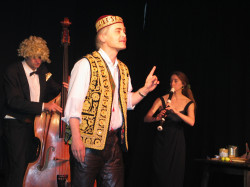
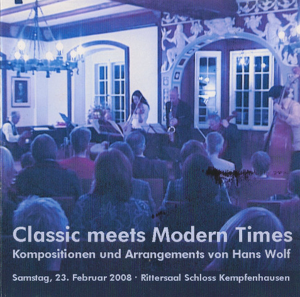
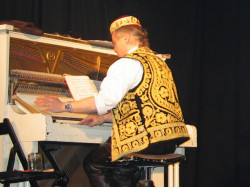
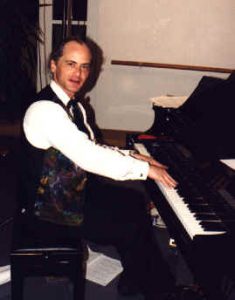
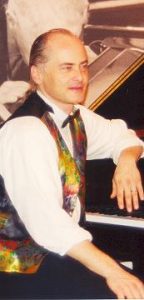
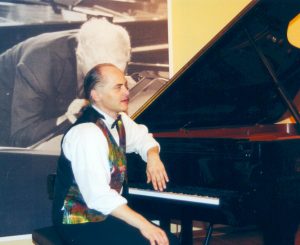
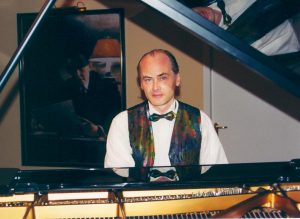
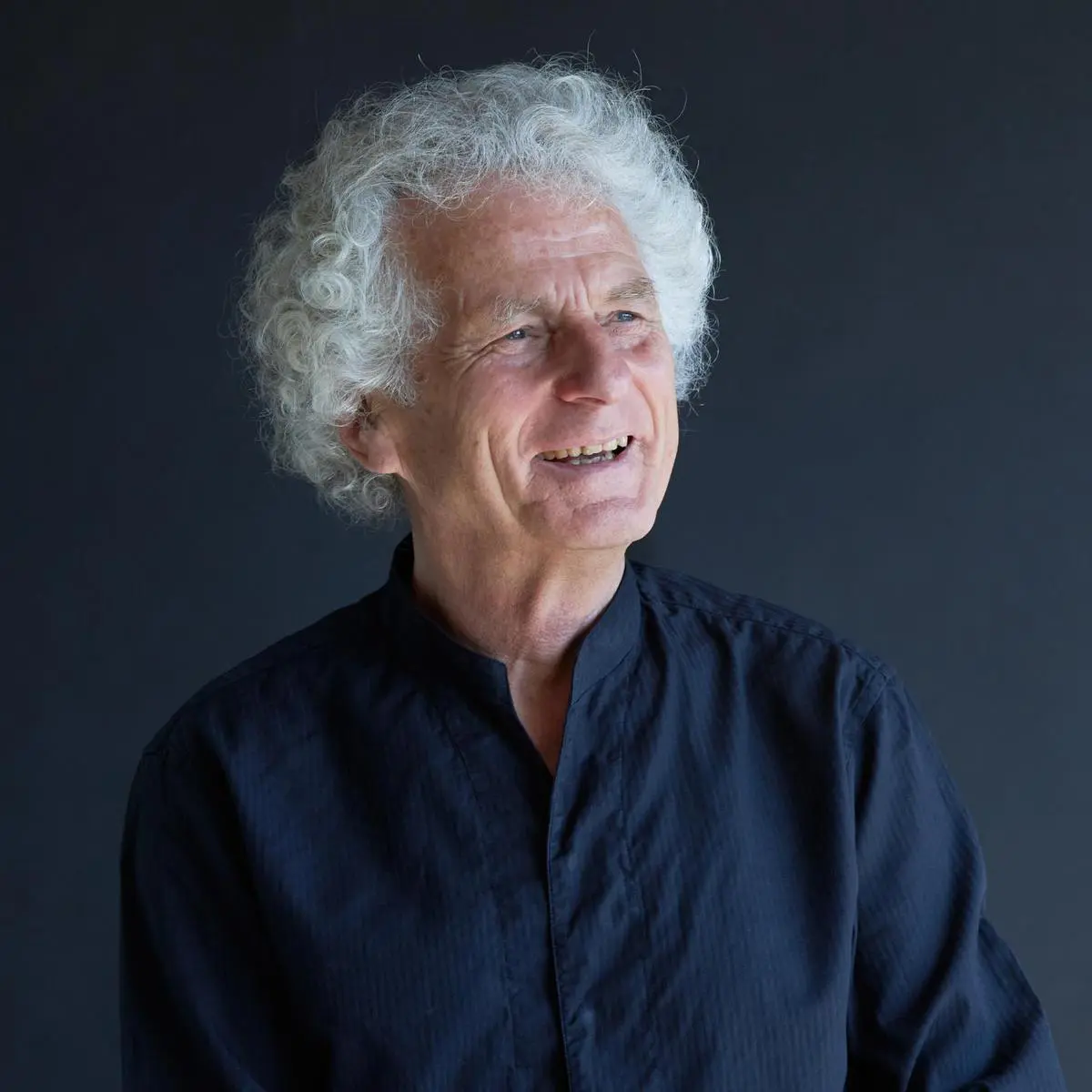
Hans Wolf, born May 31, 1958 in Braunschweig, is a German physician, concert pianist, and multimedia artist. From 1977 to 1985, he studied medicine and worked as a medical officer. He performed numerous cabaret shows at holistic medicine conferences in Bad Herrenalb.

He completed classical piano studies with Prof. Edith Picht-Axenfeld in Freiburg, receiving his diploma.

  • Premieres of his own compositions at the Munich Festivals for Contemporary Music/Art by the MGNM (Munich Society for New Music) and the Echtzeithalle group.
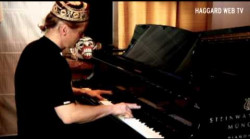
  • Member of well-known ensembles: Haggard: Medieval metal with classical influences, founded in 1993; tours across Europe and to Mexico (2001). Three CDs, one DVD
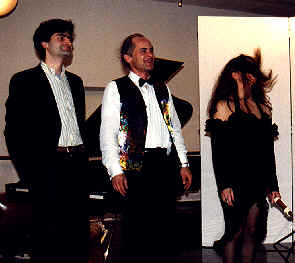
  • Trio Superstrada, founded in 1995 (here, in addition to piano, he also plays accordion, guitar, and djembe): polystylistic musical theater with Stephan Lanius (double bass) and Michaela Götz (vocals, flute). One CD, one demo video.
  • A brief member of the PHREN Music Theater in Munich.
  • Ensembles for free improvisation from Munich’s avant-garde and jazz circles: With the well-known group N.I.E. (New Improvisors Ensemble), founded in 1993 and disbanded after a year, Wolf performed in concerts in public squares and at the Unterfahrt Jazz Club, among others. N.I.E. is partially continued in the following groups to which Wolf belongs:
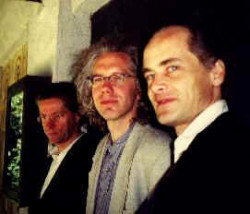
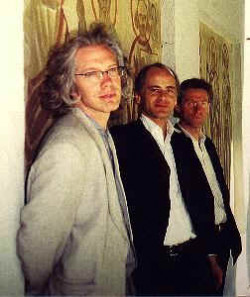
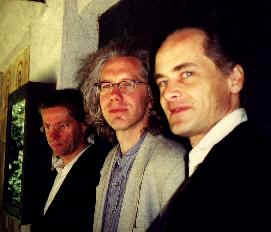
  • Trio Animali (founded in 1994, performances at Club 2 and the Munich Jazz Festival 1995, among others) with G. Geisse (g) and L. Hahn (from left), group ECHT (founded in 2000, performances at the Long Night of Music ’01, scoring computer-animated images at “Echtzeit 2001”, group Asyl-Art (founded in 2000, including poetry and image scoring at the Asylart Festivals ’00 and ’01).
  • Founding member of the jazz big band “Forum 2” (since 1993), Munich Olympic Village Cultural Association.
  • Duos: Duo Capriccioso with Andreas Suttner (cello), founded in 1999: Music “from entertaining to serious.”
  • Duo with Anne Greve (mezzo-soprano), founded in 2001: A swinging kind of music.
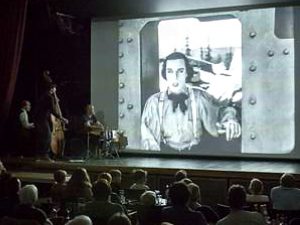
  • Live silent film scoring in a trio (founded in 1998) with Thomas Hüter (percussion, fl) and Stephan Lanius (bass): “Metropolis,” “Nosferatu,” and “Dr. Caligari.”
  • Collaboration with directors Javier Andrade and Martina Veh (Munich) since 1995, and with Alexander Schilling (Nuremberg) since 2001, as a composer and pianist in music theater and multimedia projects.
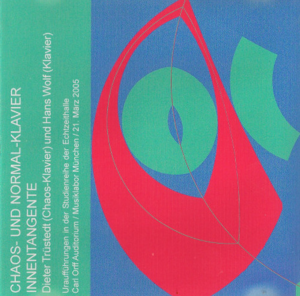
  • Collaboration with Dieter Trüstedt since 1999: Several lectures at the “Monday Talks” he organized, including on his own compositions; jointly creating the music for the performance “Genesis.”
  • Commissions for theater music, big bands, fashion shows, and musical settings for art and literature.
  • Commissions as a studio musician, especially for piano music in television films.
  • Performances as a versatile party pianist at all kinds of celebrations; regular pianist in bars and cafes, e.g., at the Cafe am Beethovenplatz and Cafe Giesing in Munich.
  • Engagements as an accompanist and keyboardist for touring musical productions.
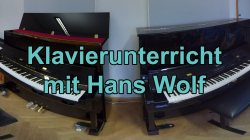
  • Teaching activities: Piano teacher with new creativity-oriented concepts, piano technique based on the Langenhan-Serkin school, classical instruction, including preparation for the entrance exams to music colleges, including theory and ear training. Lessons in rock, pop, and jazz piano, as well as other piano improvisation; development and teaching of improvisation and composition courses, e.g., with the title “Discover Your Own Music.” Since 1995, instructor at the Grafing Adult Education Center; organization of student concerts for the Munich Pianists’ Club.
  • Active memberships: Society for New Music and Music Education Darmstadt, International Summer Courses for New Music Darmstadt, Bavarian Association of Musicians, Pianists’ Club, MGNM (Munich Society for New Music), Echtzeithalle e.V.

web

youtube


  • -

Christoph Wagner

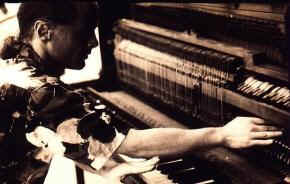
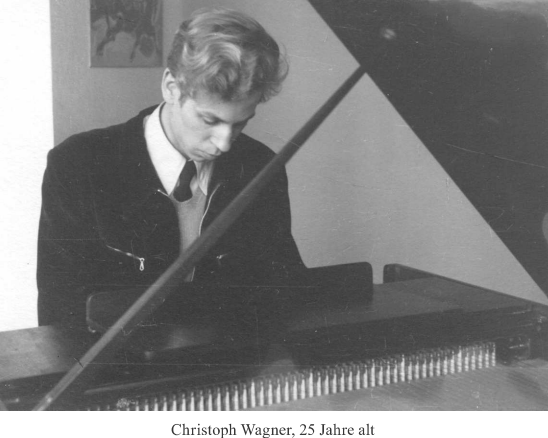
Few people know the musician Christoph Wagner. Anyone who listened to him improvise on the piano understood that it was this immediate proximity to music that motivated and drove him to create a science for musicians.

Born on May 20, 1931, in Marburg, Christoph Wagner grew up in Weilburg/Lahn in a culturally diverse and stimulating home. Despite only sporadic piano lessons due to the war, the boy soprano developed into a sensitive pianist who mastered the great works of piano and violin literature. Even as a young man, he was a sensitive chamber music partner and accompanist. From early childhood, improvisation was also second nature to him. Throughout his life, it remained a source of spiritual balance – later in a musical language that was partly reminiscent of Bach, but often also of Brahms or Schumann.

1958 – 1963Music studies in Detmold – majoring in conducting with Martin Stephani, piano with Renate Kretschmar-Fischer, composition with Günter Bialas

Christoph Wagner’s longing for music was so constant that in 1958, after studying medicine (“out of reason”) and subsequently obtaining his doctorate, he began studying music with a major in conducting. In Detmold, he enjoyed a musically fulfilling time—but on the other hand, doubts crept in:
“The idea for a systematic investigation into the physiological foundations of music performance arose during my music studies, which followed my medical studies. Given the conceptual background of natural science, with its efforts to objectively validate insights and decisions as much as possible, it seemed strange that musical education relied solely on subjective experience, despite obvious contradictions in methods and results. Successes were admired, failures were usually explained away as a lack of talent, but their causes were not investigated. The increasing incidence of tendonitis and similar complaints remained consistently silent. It was obvious that many of my fellow students were unsure of themselves and suffered from self-doubt. As my studies progressed, it became increasingly clear to me that this dilemma could be significantly improved if the work of musicians and its physiological prerequisites were scientifically investigated. In 1963, at the end of his music studies in Detmold, he predicted to his then piano teacher Renate Kretschmar-Fischer while out for a walk: “There will be an institute dedicated to this task full-time.” – Eleven years later, the time had come.

http://www.christoph-wagner-musikphysiologie.de

https://dgfmm.org/nachruf-christoph-wagner


  • -

Kwame Boaten

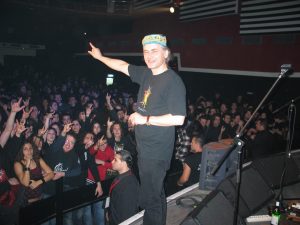
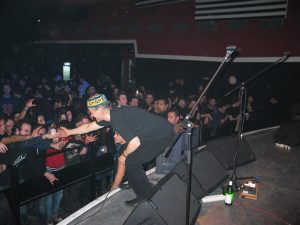
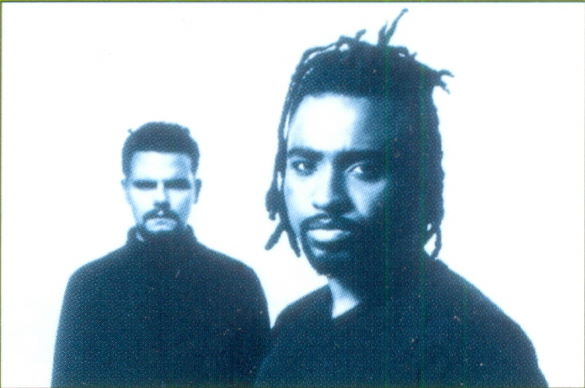
Kwame is something quite unusual, a collaboration between an African trumpeter and metal musician (Kwame Boaten) and a Swedish guitarist who has previously devoted himself primarily to classical music (Carl Ljungström). They met a few years ago in a music student dormitory in London. This would be the beginning of “Volatile.”

On the album cover, I see a blurry image of a dark-haired guy with dreadlocks. Yes, I think it’s another Swedish hip-hop artist hanging out with Ken and the guys. Oh, what a mistake I made. Ghanaian-born Kwame Boaten has brought new light into the pop fog with his calm, captivating music. After a few years, he found Calle Ljungström, a former metal musician, at music school in London. The two began a slow and cautious collaboration, and now we hear the final result. It quickly becomes clear: when you bring two musicians with such different backgrounds into a studio, it works really well.

The album Volatile is difficult to describe precisely, as it differs so markedly from other productions in this genre. Calle Ljungström is responsible for the beautiful strings and guitars, and Kwame for his wonderfully beautiful, bright voice. Also in the studio are names like Magnus Frykberg, Pontus Olsson, and Lars Halapi, who have also never performed in similar contexts before. An exciting collaboration that I’d like to learn more about. If it’s long enough for another album.

The danger of rehashing unbearable, sleazy music is in the air when a classical guitarist of Ljungström’s caliber is about to release an album. But to be blunt, that’s not a good way to get off. The sound is a bit too clean and suitable for a living room at times, but it also avoids unnecessary gimmicks.

Furthermore, this could probably be described as music for adults, and some songs have an almost baroque touch at times, but it never becomes intrusive. Ljungström, on the other hand, provides striking tones with his six nylon strings, which, together with Boaten’s tasteful voice, create cool, slightly melancholic songs of the quiet variety. One danger of this restrained music is that certain elements tend to become repetitive. This is partly the case here, as the same mood runs through almost the entire album. And it’s nice, isn’t it, but a little more variety wouldn’t have hurt.

The vocals are at times Jeff Buckley-esque and at least as intense and captivating. The fact that the strings also play a fairly large role makes the whole thing even more exquisite, and it’s impossible not to curl up and enjoy it—as is usually the case.

1993 he has worked at the theatre of Kiel / Germany.

https://www.smp.se/artikel/kwame-volatile

https://www.hungama.com/song/volatile/35229063

https://www.puls.no/937.html

https://ng.se/recensioner/musik/volatile


  • -

Richard Bauer

Seine erste Liebe, sagt der heute (2025) 72-Jährige, war jedoch immer die Musik. Und das begann schon im Kindesalter. Wenn seine älteren Schwestern Klavierunterricht hatten, dann hörte er zu und spielte die Melodien später selbst nach – ohne Noten, nur nach Gehör. Aber auch an der Gitarre war Richard Bauer talentiert: Schon 1972 hatte er einen Auftritt in der Saarlandhalle in Saarbrücken, mit der damals in der Region bekannten Band „Studio 64“.

Hauptberuflich ging es dann zwar mit der medizinischen Karriere weiter, aber daneben blieb die Kultur für Richard Bauer immer eine „Parallelwelt“, in die er sich gerne zurückzog. Nicht nur musikalisch, auch kabarettistisch war er aktiv, mit Programmen wie „Strapsodie in Bluff“. Jetzt, nachdem er seine Laufbahn als Arzt beendet hat, kann er sich ganz der Musik widmen.

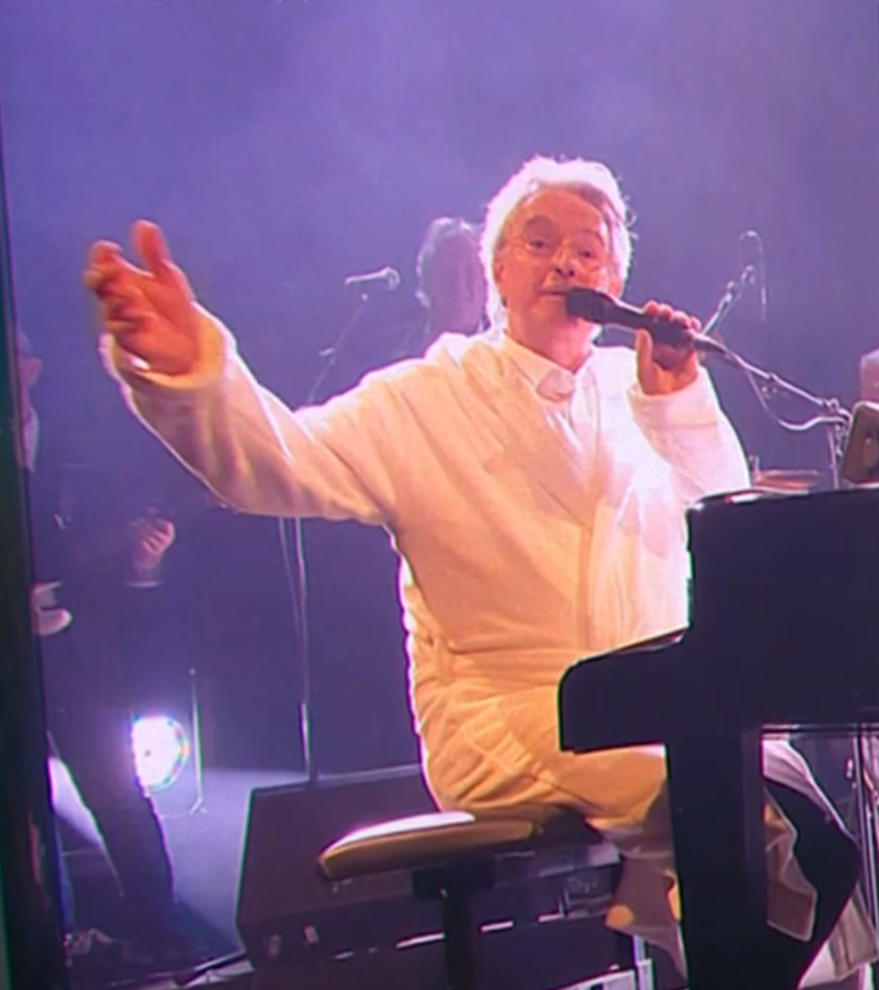
Für sein aktuelles Projekt hat Richard Bauer den Arztkittel gegen den Bademantel eingetauscht, das Markenzeichen von Udo Jürgens. Am 11. November 2014 besuchte er eines der letzten Konzerte des österreichischen Sängers.

„Sechs Wochen später die Todesnachricht von Udo, den ich zuvor noch zu präsent auf der Bühne erlebte. Der Wunsch, seine großen Lieder live mit meiner 2012 gegründeten BAUERS BRASS BAND in Szene zu setzen, wurde immer stärker gefühlvoll und authentisch interpretieren Udo, ich bin Deiner Meinung: „Die Welt braucht Lieder.“

Mit der im Jahr 2012 gegründeten Bauers Brass Band machte er sich daran, den Titel für sein neunköpfiges Ensemble zu bearbeiten. 2019 war es dann so weit: Zum fünften Todestag von Udo Jürgens erblickte das Programm „Hallo Udo“ in der Saarburger Stadthalle das Licht der Welt. „Der Saal war zum Brechen voll“, erinnert sich Richard Bauer. Alle Konzerte ausverkauft. „Wir hätten doppelt so viele Karten verkaufen können.“ In Richard Bauers Band spielt an der Querflöte auch seine Tochter Katharina. Mit ihr singt er natürlich auch das Duett „Liebe ohne Leiden“, das schon Udo Jürgens mit seiner Tochter sang.

https://www.halloudo.de/ueber-uns

https://www.volksfreund.de/die-woch/bademantel-statt-arztkittel-von-dr-bauer-zu-hallo-udo_aid-125740523

https://www.volksfreund.de/region/konz-saarburg-hochwald/saarburger-arzt-dr-richard-bauer-geht-in-ruhestand_aid-81820633


  • -

Krzysztof Komeda

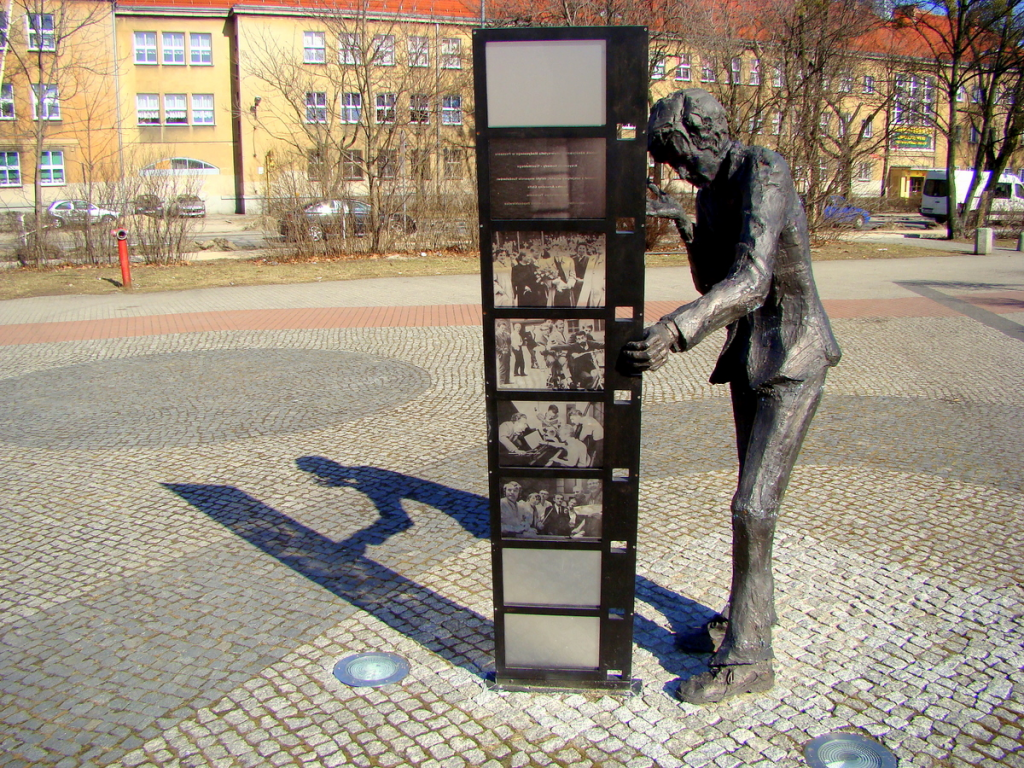
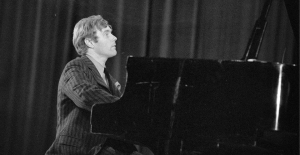
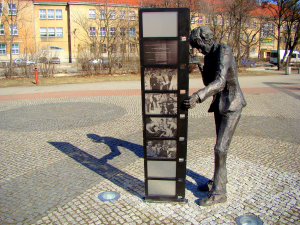
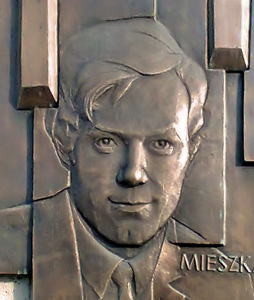
Krzysztof Komeda (born Krzysztof Trzciński; April 27, 1931 in Poznań – April 23, 1969 in Warsaw) was a Polish jazz pianist and composer of jazz and film music of international renown. According to Jan Wróblewski, Komeda occupies a similar musical rank in Poland to Chopin.

In his youth, he received piano lessons in Ostrów Wielkopolski (German: Ostrowo), where he lived from 1946 to 1951. Later, he became a student at the Conservatory in Poznań (piano lessons and music theory). He then decided to study medicine. His father, Mieczysław Trzciński, was a banker and took over the position of branch director of the National Bank of Poland in Poznań in December 1952. During his studies, he lived there with his parents from 1952 to 1956[2] and had his own piano.[3] As a student, he made contact with the Krakow underground jazz scene. They met in private apartments or nightclubs, the “catacombs of jazz”.[3] His interest in popular and dance music shifted from Dixieland to bebop and finally to contemporary jazz.

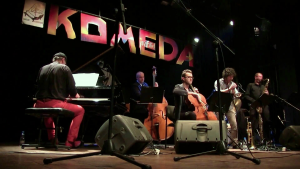
Komeda-Trzciński celebrated her first national success in August 1956 at the first jazz festival in Sopot with the Komeda Sextet. News of a jazz festival had spread like wildfire throughout Poland. The completely improvised event attracted approximately 30,000 to 50,000 young Poles, who spent the night on lawns, in parks, or in beach chairs.

The festival began with a parade similar to the New Orleans orchestra parades at Mardi Gras. The Komeda Sextet, in two boxes, symbolically buried the traditional Dixieland jazz and dance music. Since all the newspapers reported on the first free jazz festival, jazz music could no longer be banned from public view as easily as before.

https://de.wikipedia.org/wiki/Krzysztof_Komeda

https://en.wikipedia.org/wiki/Krzysztof_Komeda


  • -

Elisa Kafritsas

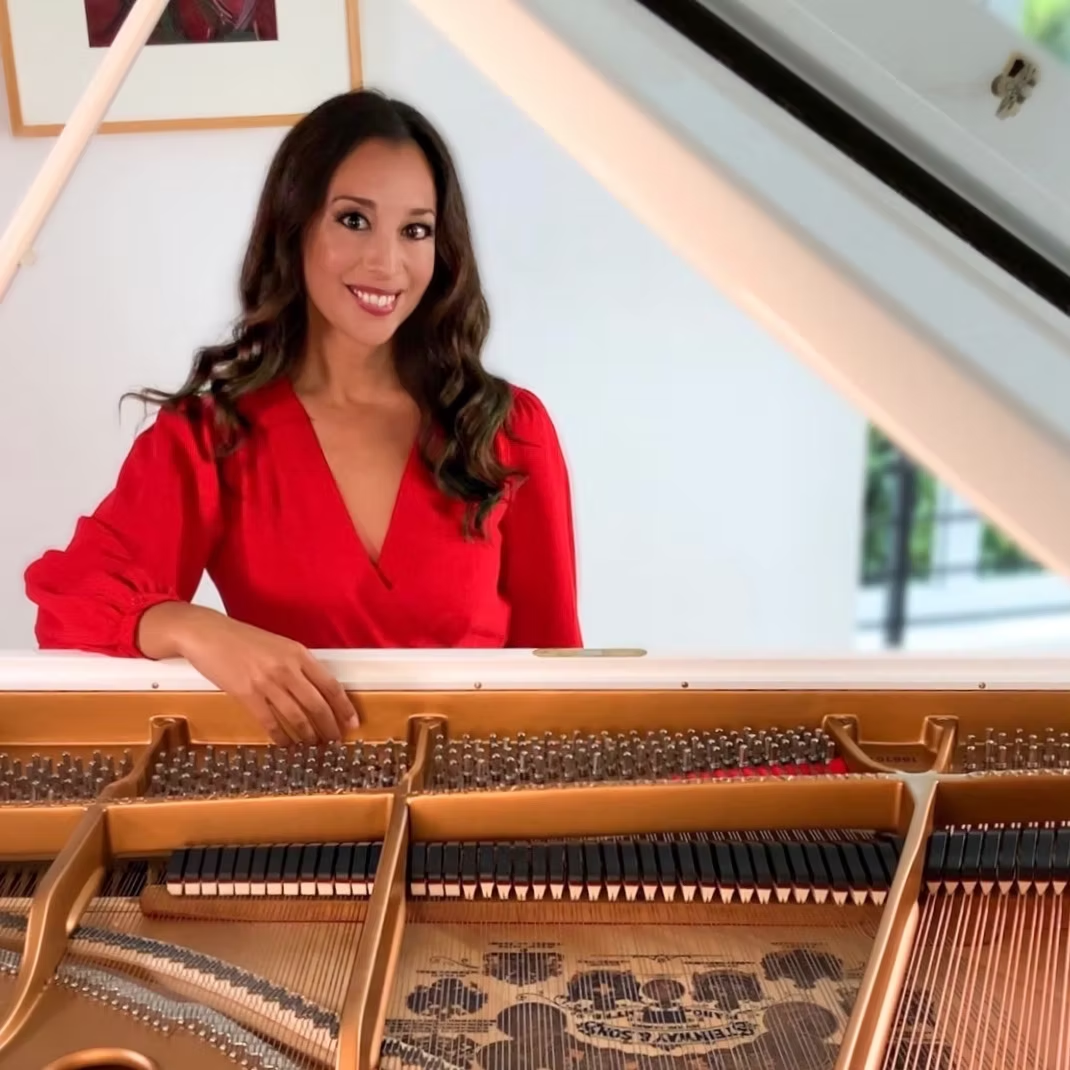
My name is Elisa, named after Beethoven’s “Für Elise,” a piece my mother loved. I started piano lessons at the age of 6, supported by my Korean mother and Sicilian father, and music has always been a big part of my life. After studying dentistry 🦷 and working as a dentist, I returned to the piano in 2020 after a 21-year hiatus.🎹🎵

Elisa Kafritsas played her debut piano concerto at the age of 7, won prizes at the “Jugend musiziert” competition, and performed with orchestras such as the Junge Süddeutsche Philharmonie Esslingen. While pursuing a career as a dentist, the pianist with Korean and Sicilian roots took a 21-year break, but then reactivated her dormant talent and received personal instruction from Professor Friedemann Rieger, Dean of Piano at the Stuttgart University of Music. This was followed by her viral Instagram channel “Pianotaste,” on which she participates in international piano competitions and presents her own neoclassical compositions. The premiere of her first composition, “Starlight,” took place in 2023 as a benefit for the Stelp e.V. Gala.

Sprecherin | Speaker

In 2023, I began composing to process the emotions I felt during a family member’s illness. 💉Music has always been my way of expressing my soul. As a child, I recorded my favorite songs on cassettes, played them by ear, and modified them by adding new piano runs.

You can listen to my music under Elisa Kafritsas on all music platforms, and find sheet music for my compositions on my website.

Chopin

As a piano influencer, she has not only infected people around the world, but also her family: her little daughter now practices voluntarily, and her husband is also hitting the keys more often again. “We’re really totally into the piano, and it’s doing us all a lot of good.

https://www.pianotaste.de

https://www.instagram.com/pianotaste/?hl=de

https://www.klassikradio.de/aktuelles/zahnaerztin-wird-piano-influencerin-instagramerfolge-mit-mehr-als-40-000-followern


  • -

Peter Menger

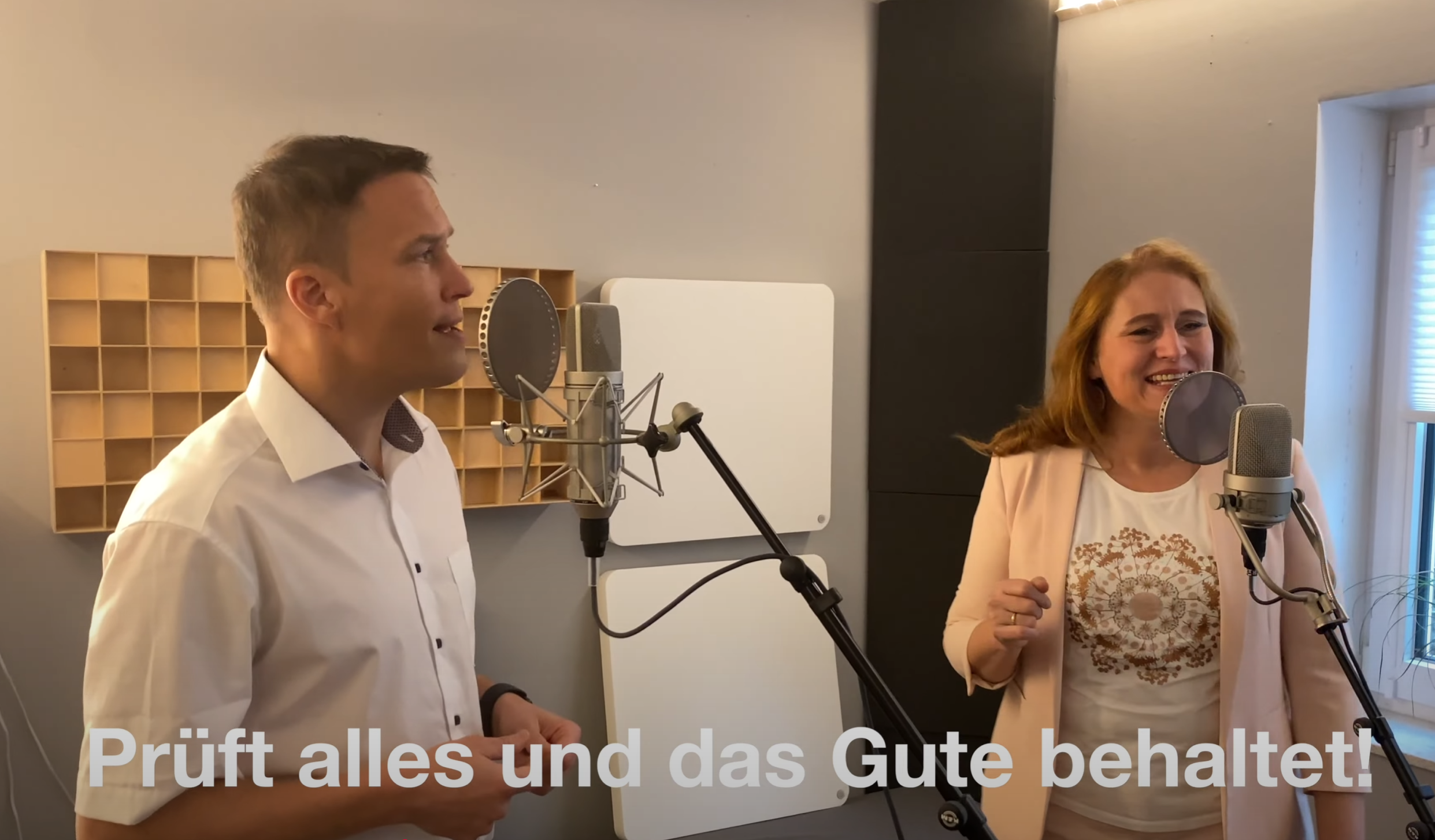
We are Deborah and Peter Menger, and we met in a choir in 1995. It’s only fitting that we’ve been making music together for many years. We perform in choirs, bands, other vocal ensembles, and as a duo in Germany and internationally. For the past 12 years, we’ve enjoyed making music together, especially with our four children.

Since 2016, we have been leading the Hüttenberg Children’s Choir together with a great team and a fantastic manager. Around 120 children meet there weekly to sing our children’s songs together and prepare for upcoming musicals and concerts. (Choir rehearsals are on Mondays at 5:30 p.m. at the Evangelical Free Congregation in Hüttenberg-Hochelheim. During the coronavirus pandemic, we meet at a safe distance on the sports field behind the parish hall. Due to limited space, we ask that you register for events on the EFG website.)

In addition, we are involved in church services and events in the surrounding communities and in the work of the association sdg (soli deo gloria) e.V.

https://www.youtube.com/@mengermusic/videos

https://www.orthopaediezentrum-giessen.de/oz/team/dr-med-peter-menger


  • -

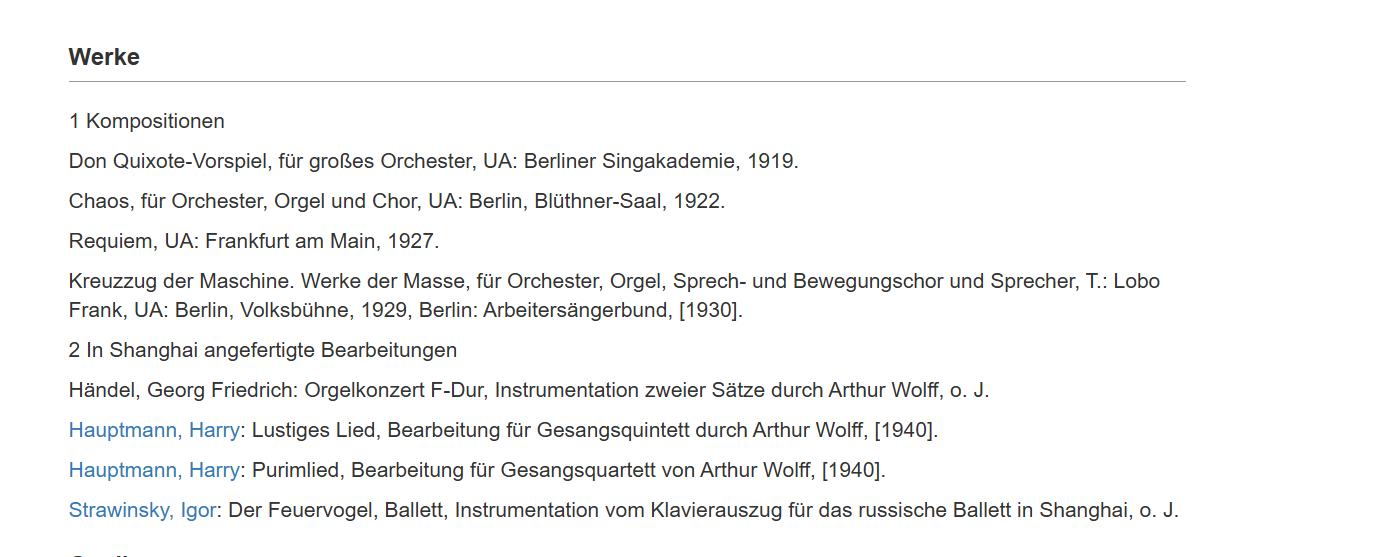
Arthur Wolff

Personendaten

name:Wolff, Arthur
born:28. Febr. 1885 Guttentag (Oberschlesien)/Dobrodzień, Deutschland/heute: Polen
died:23. Dez. 1945 Shanghai, China
mother:Eugenie Wolff, geb. Straßmann (gest. vor 1939)
father:Berthold Wolff (gest. vor 1939), Dr., Arzt
matrimony∞ 23. Dez. 1916 Berlin Elisabeth Wolff, geb. Heine (geb. 13. Okt. 1889), Exil 1939 in Shanghai
mother language:German
nationality:deutsch, 1941? staatenlos
grave:Shanghai

Berufe/Tätigkeiten

overview:doctor, conductor, pianist, organist, accompanist, composer, arranger
education:Berlin: Köllnisches Gymnasium (Abitur), medical studies, piano lessons with a student of Theodor Kullak, Stern Conservatory (1908-1910? in the Kapellmeister class of Arno Kleffel), Stern Conservatory (1905-1907 participation in the special music theory courses of Wilhelm Klatte and 1908/1909 to 1909/1910 studies in the Kapellmeister class of Arno Kleffel)
jobs:Opera Houses/Theatres Weimar: Grand Ducal Court Theatre (1911/1912 Solo Repetiteur-Volunteer) Erfurt: City Theatre (1912-1914 Kapellmeister, Repetiteur), Shanghai: Russian Opera, Russian Ballet (1941-1945 Conductor) Instrumental Ensembles Shanghai: Dr. Arthur Wolff Chapel Choirs Shanghai: Chinese Choir (Choirmaster) Churches Shanghai: China Hungchao College Church (Organist), Union Church (Organist) Organizations/Associations Berlin: Jewish Cultural Association
memberships:Reichsmusikkammer (1937 Ausschluss), Shanghai Musicians Association
titles:Akademische Titel Dr. med. (1909)

https://www.lexm.uni-hamburg.de/object/lexm_lexmperson_00002505