Arthur Conan Doyle
Category : (water-)skiingDocs , FootballDocs , GolfDocs , JournalistDocs , monumentDocs , NameGivingDocs , SpiritualDocs , SportDocs , travelDocs , WriterDocs
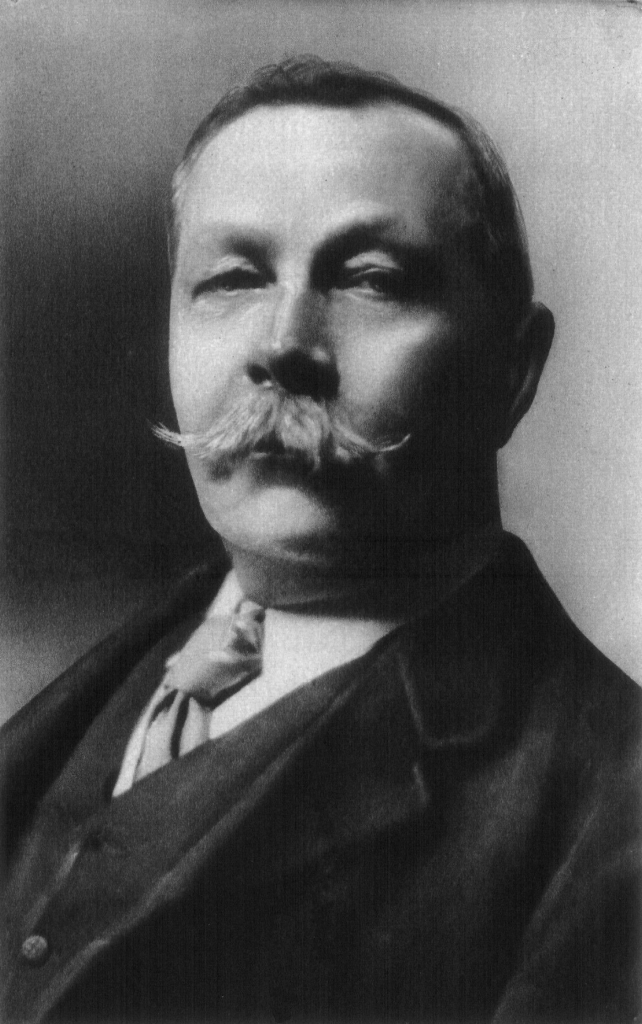
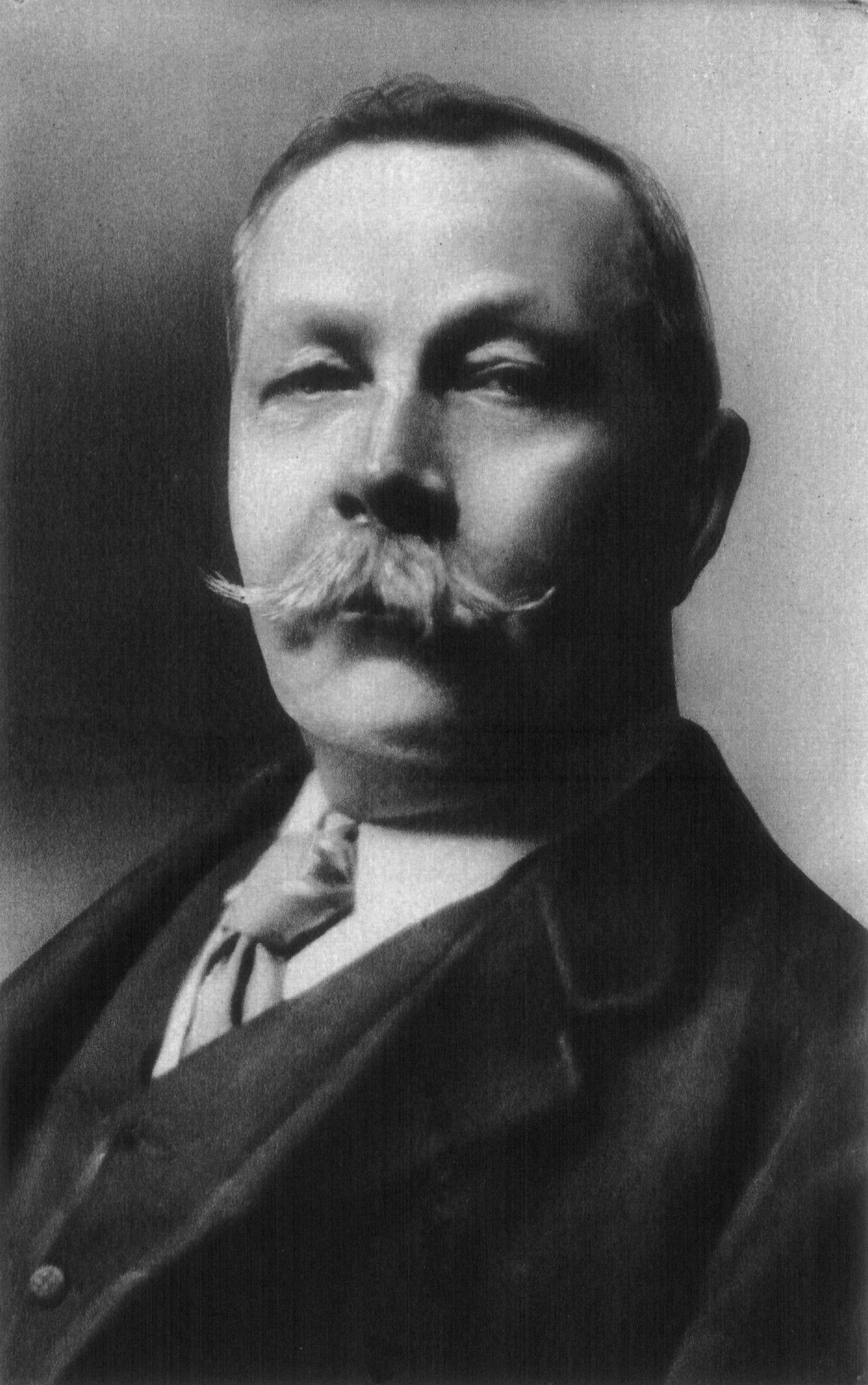
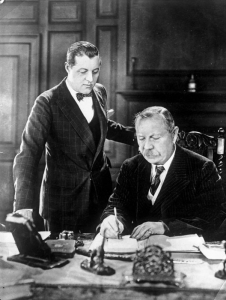
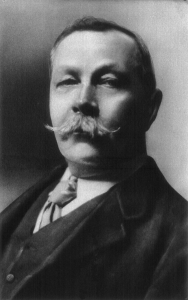
Sir Arthur Ignatius Conan Doyle (May 22, 1859 in Edinburgh, Scotland – July 7, 1930 in Crowborough, Sussex, England) was a British physician and author. He wrote about the adventures of Sherlock Holmes and his friend Dr. Watson. He is also known for the character Challenger from his novel The Lost World, which served as the basis for numerous films and a television series.
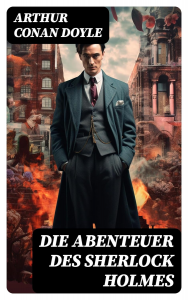
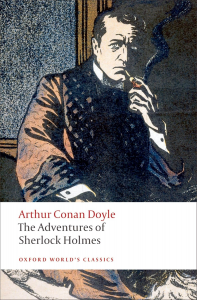
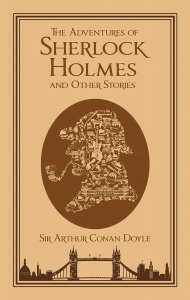
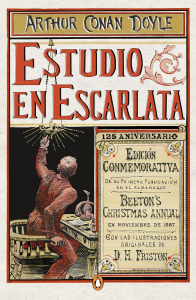
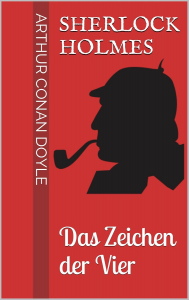
In 1880, Doyle traveled to the Arctic as a ship’s doctor on the whaler Hope, and a year later to West Africa on the Mayumba. From 1882 to 1890, he ran a medical practice in Southsea near Portsmouth. In his free time, he also wrote his first literary works. In 1883, while in Portsmouth, he wrote his first novel, The Narrative of John Smith (see below), which, however, remained unfinished and unpublished and was not published until 2011. In 1887, he published the first story about the detective Sherlock Holmes and his friend Dr. Watson: A Study in Scarlet.
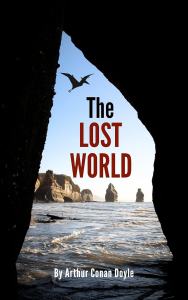
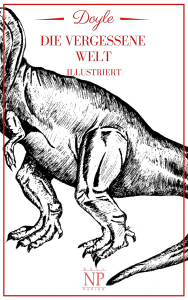
In the following period, Conan Doyle created his second very popular character, Professor Challenger. The Lost World, in which she first appears, was published in 1912 and is considered his best-known novel alongside the Sherlock Holmes series. Doyle’s texts published during the First World War sometimes take a critical look at Germany at the time. In October 1918, a few months before the official end of the war, his son Kingsley died of the Spanish flu. Doyle then began to devote himself increasingly to science fiction novels in the tradition of Jules Verne, as well as to spiritualism and mysticism, and also undertook lecture tours (including to the USA and South Africa).
Among other things, he made the so-called Cottingley Fairies famous – fake photos of fairies in whose authenticity he firmly believed, made into a film in 1997 in The Fairy Garden. His public controversy with the magician Harry Houdini made headlines.[6] The friendship between Doyle and Houdini broke down due to differing ideas about spiritualism – Doyle accepted various mediums as genuine and believed that Houdini himself had supernatural abilities, while Houdini himself said that he never experienced a séance in his life whose effects he could not have imitated with magic tricks.
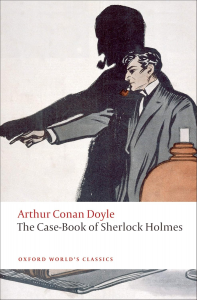
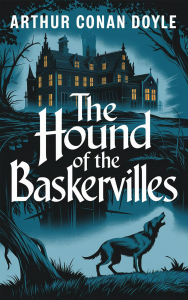
The deductive and criminal analysis method is characteristic of Doyle’s characters. He, himself a physician, created the role of Dr. Watson. He endowed Sherlock Holmes with characteristics of his teacher at the University of Edinburgh, Joseph Bell. The criminalistic methods described by Doyle in his novels, such as fingerprinting, were ahead of the police methods of their time. This is especially true of the fundamentally scientifically oriented methodology of crime investigation.
In 1890, his novel The Firm of Girdlestone (1890) was published, painting a picture of his hometown of Edinburgh in the age of imperialism. Father and son Girdlestone & Co. operate a lucrative African trade with poorly maintained sailing ships.
That same year, Doyle moved to London. From 1891 onward, he was able to earn a living through writing, following the publication of his first detective story, A Scandal in Bohemia, in The Strand Magazine that same year.
In 1893, Conan Doyle decided to end the life of his protagonist Holmes, as the regular writing of new Holmes stories took up too much of his time and he wanted to concentrate his literary work on other works. This led to protests from his audience.[1] The author’s mother, an avid reader of the stories, tried in vain to dissuade him from the plan. In the story “The Final Problem,” Sherlock falls from the Reichenbach Falls near Meiringen in Switzerland during a fight with his adversary, Professor Moriarty, and is pronounced dead by Watson.
In the same year, Doyle became Master of the Phoenix No. 257 Masonic Lodge in Portsmouth.
In March 1893, Doyle became the first Briton to complete a day’s cross-country skiing. In commemoration of this achievement, the UK Antarctic Place-Names Committee named the Doyle Glacier in Antarctica after him in 1959.
On March 23, 1894, in a daring attempt, he crossed the Maienfelder Furgga from Davos to Arosa on skis, accompanied by two locals, brothers Tobias and Johann Branger. The event helped popularize skiing in England. It was recreated a good century later by the Austrian Broadcasting Corporation (ORF) in a television film based on Conan Doyle’s article “An Alpine Pass on ‘Skiing’,” published in Strand Magazine in December 1894.
Doyle played football as a goalkeeper for the amateur Portsmouth Association Football Club. He used the pseudonym A.C. Smith. He was also a keen cricketer and was capped ten times by the famous Marylebone Cricket Club (MCC) in the first team between 1899 and 1907. As a golfer, he was captain of Crowborough Beacon Golf Club, East Sussex, in 1910. He also initiated the construction of the golf course at Davos during his stays there from 1893 to 1895.
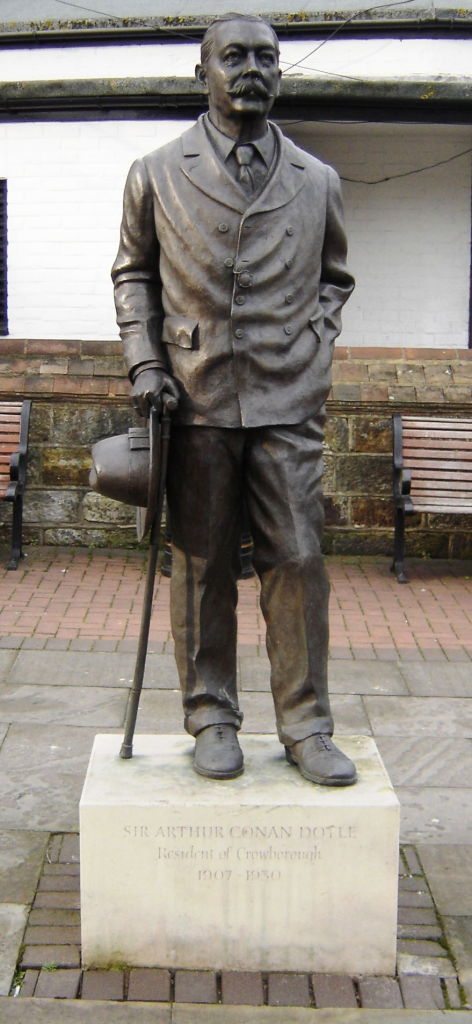
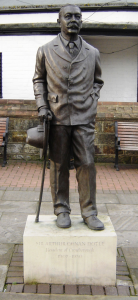
At the 1908 London Olympic Games, Arthur Conan Doyle reported on the marathon for the Daily Mail newspaper. Dorando Pietri was the first to cross the finish line, but because judges and doctors helped him across the finish line, the runner was disqualified. Doyle’s detailed and emotional report in the Daily Mail of July 25, 1908, about the weakened Italian’s finish, and a letter to the editor published at the same time as his article, in which Doyle appealed for donations for Pietri, are the basis of one of the most well-known myths of the modern Olympic Games. Doyle’s great commitment led to the widespread, but untrue, legend that Doyle himself helped Pietri across the finish line. Dr. Michael Bulger, who can be seen in one photograph as an assistant, was often mistaken for Doyle. A memorial to Sir Conan Doyle has stood at Cloke’s Corner in Crowborough since April 14, 2001. The bronze statue was created by sculptor David Cornell and funded by the Conan Doyle Statue Trust with grants from Crowborough Town Council and private donations. To finance the bronze casting, Cornell commissioned a limited edition of a scaled-down model.
In 2023, the Venezuelan frog Caligophryne doylei was named after Conan Doyle.
https://www.arthurconandoyle.com
https://www.youtube.com/@ArthurConanDoyleEncyclopedia/videos