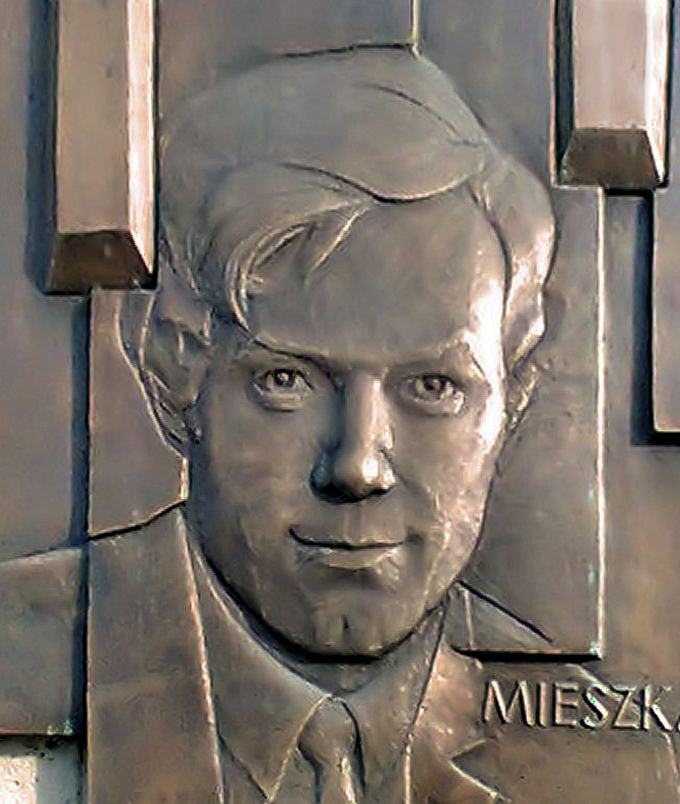
Krzysztof Komeda

  • -

Krzysztof Komeda

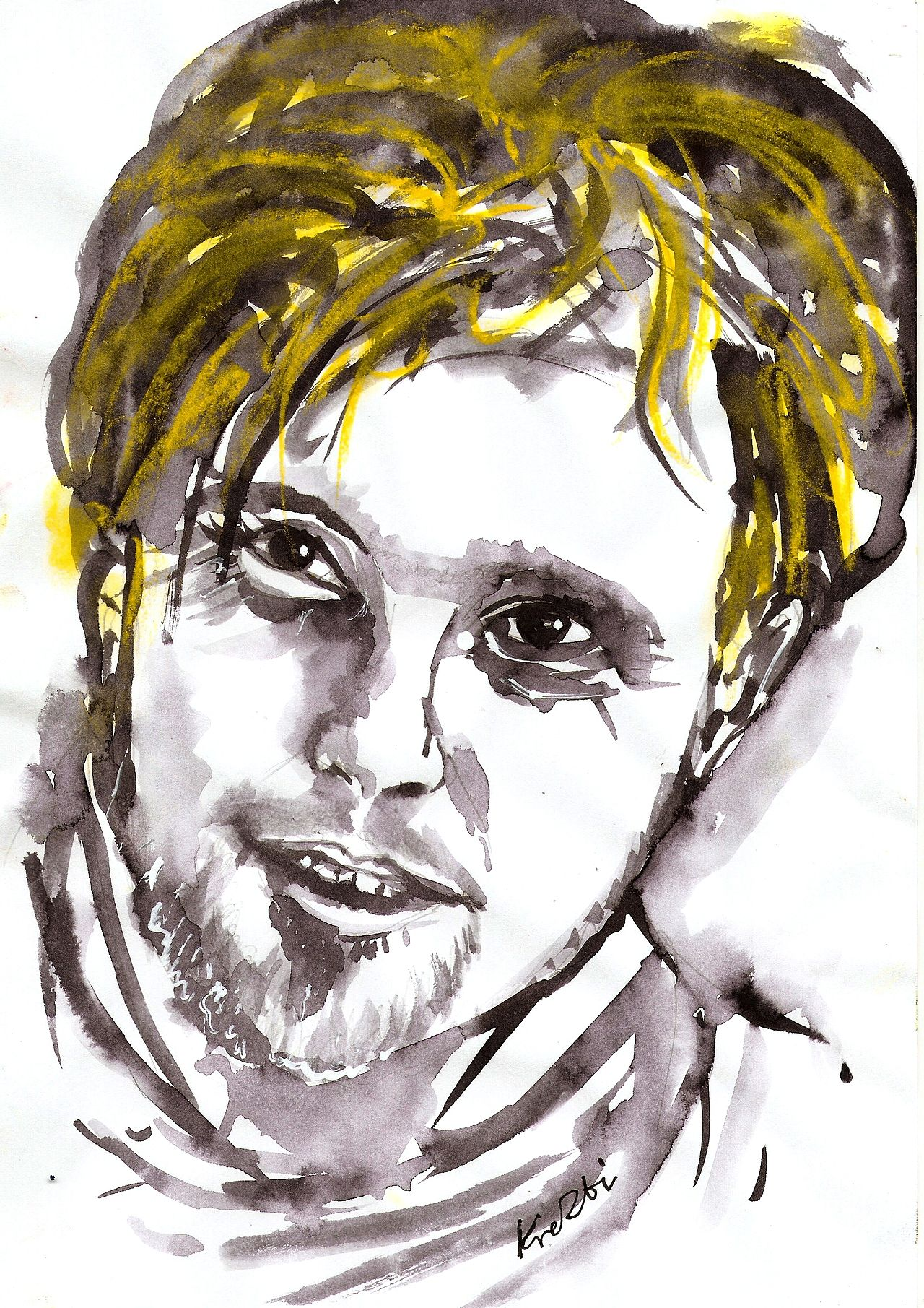
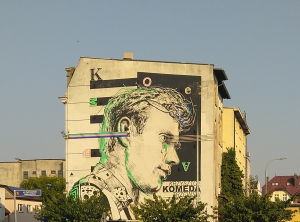
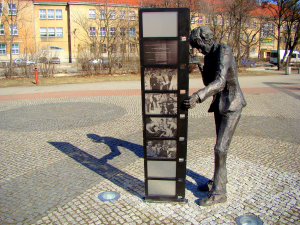
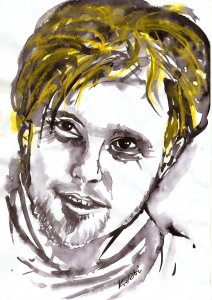
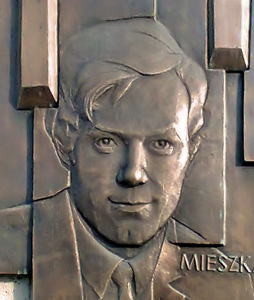
Krzysztof Komeda (born Krzysztof Trzciński; April 27, 1931 in Poznań – April 23, 1969 in Warsaw) was a Polish jazz pianist and composer of jazz and film music of international renown. According to Jan Wróblewski, Komeda occupies a similar musical rank in Poland to Chopin.

In his youth, he received piano lessons in Ostrów Wielkopolski (German: Ostrowo), where he lived from 1946 to 1951. Later, he became a student at the Conservatory in Poznań (piano lessons and music theory). He then decided to study medicine. His father, Mieczysław Trzciński, was a banker and took over the position of branch director of the National Bank of Poland in Poznań in December 1952. During his studies, he lived there with his parents from 1952 to 1956[2] and had his own piano.[3] As a student, he made contact with the Krakow underground jazz scene. They met in private apartments or nightclubs, the “catacombs of jazz”.[3] His interest in popular and dance music shifted from Dixieland to bebop and finally to contemporary jazz.
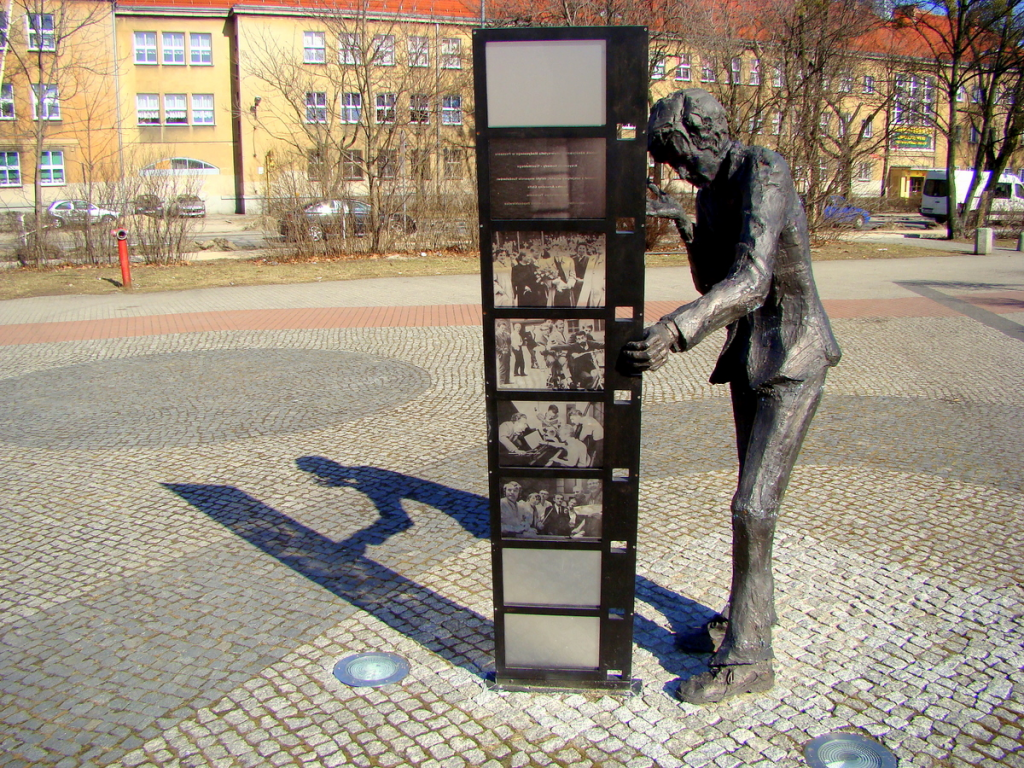
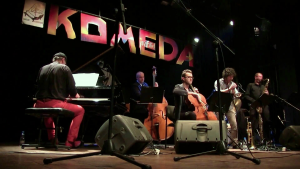
Komeda-Trzciński celebrated her first national success in August 1956 at the first jazz festival in Sopot with the Komeda Sextet. News of a jazz festival had spread like wildfire throughout Poland. The completely improvised event attracted approximately 30,000 to 50,000 young Poles, who spent the night on lawns, in parks, or in beach chairs.
The festival began with a parade similar to the New Orleans orchestra parades at Mardi Gras. The Komeda Sextet, in two boxes, symbolically buried the traditional Dixieland jazz and dance music. Since all the newspapers reported on the first free jazz festival, jazz music could no longer be banned from public view as easily as before.
https://de.wikipedia.org/wiki/Krzysztof_Komeda

https://en.wikipedia.org/wiki/Krzysztof_Komeda


  • -

Bartosz Zwolan

Bartowz ist Medizinstudent in Warschau und hat Klavier studiert.

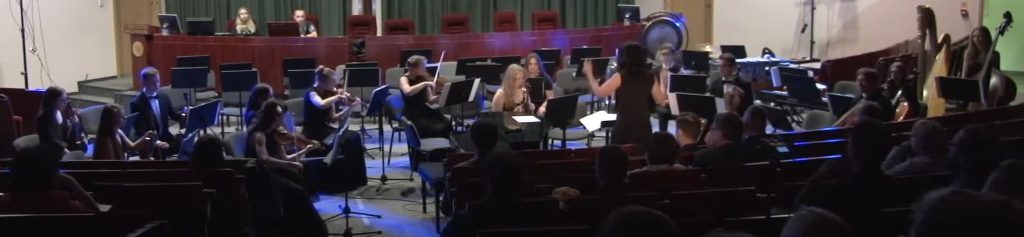
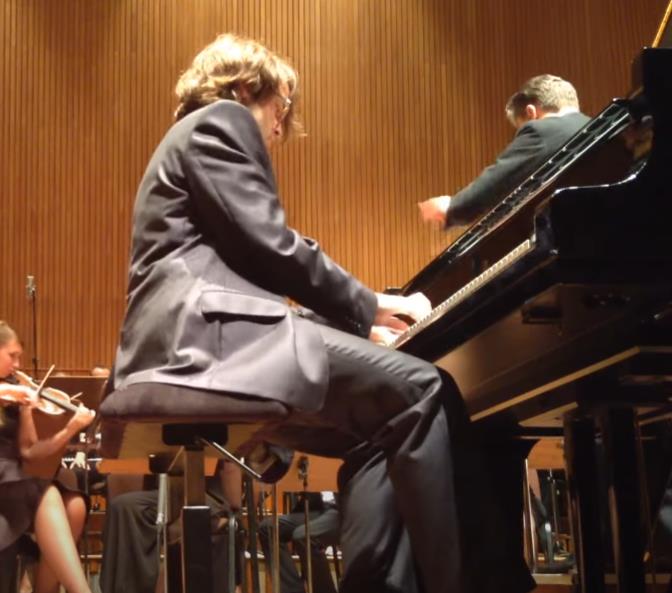
Bartosz Zwolan is a student of the 3rd year of the Medical University of Warsaw on the Faculty of Medicine. He was born in Zamość where he completed with distinction the State Music School of Karol Szymanowski in 2011. He performed concerts both as a soloist and with accompaniment of orchestra. One of his more significant concerts was the spectacle “Fryderyk Chopin – The Space Concert” in Zamość, where he played with The Symphony Orchestra of Karol Namysłowski in Zamość, conducted by Tadeusz Wicherek. He also participated in many piano contests and parades in Poland. His greatest achievements include the special prize for the best performance of Fryderyk Chopin’s piece on the 4th Competition of Music and Knowledge of Fryderyk Chopin in Lublin in 2005 and the 1st place in the 10th Regional Auditions for Piano Students from the School of Music in Radzyń Podlaski in 2006. Since 2012 he is a member of the Orchestra of the Medical University of Warsaw conducted by Beata Herman.

web orchestra


  • -

WUM Orchestra Warshawa

Founded in 2007 – participated in EMSO orchestra project Poland

website

Orkiestra WUM


  • -

Kuba Sienkiewicz

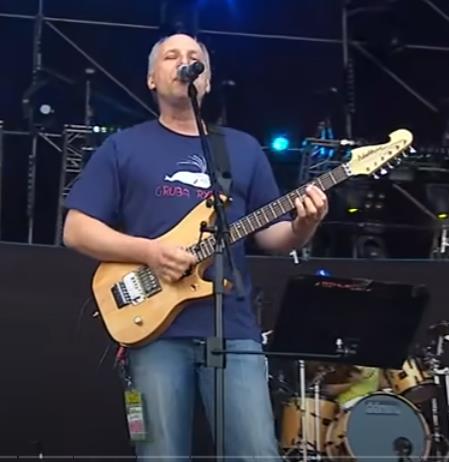
What can we say about Jakub “Kuba” Sienkiewicz? Well, he staunchly refuses to be put in any sort of box, that’s for sure. Put him in the eccentric pop/rock musician box? You’ll learn he’s also a practicing MD. And a guy who looks and sounds so friendly could never come up with strange, ironic, weird lyrics like these, right?

So, yeah, he might be just a little bit Crazy Sane. And slightly cool. Has covered a lot of Jacek Kleyff (communist-era poet and comedian) songs, most famously Telewizja, and cooperates with his fellow doctor/musician, the legendary skiffler Zacier.

No relation. (That we know of.) He is however a nephew of a famous Polish actress Krystyna Sienkiewicz, known from comedic routines and movies.

He is leader of the Pop-/Rock band ElektryczneGitary

youtube Kuba Sienkiewicz

youtube Elektryczne Gitary

profile

presentation

work 1

work 2


  • -

Nikolaus Kopernikus

Nicolaus Copernicus (/koʊˈpɜːrnɪkəs, kə-/;[2][3][4] PolishMikołaj Kopernik;[b] Middle Low GermanNiklas KoppernigkGermanNikolaus Kopernikus; 19 February 1473 – 24 May 1543) was a Renaissance polymath, active as a mathematician, astronomer, and Catholic canon, who formulated a model of the universe that placed the Sun rather than Earth at its center. In all likelihood, Copernicus developed his model independently of Aristarchus of Samos, an ancient Greek astronomer who had formulated such a model some eighteen centuries earlier.[5][c][d][e]

The publication of Copernicus’s model in his book De revolutionibus orbium coelestium (On the Revolutions of the Celestial Spheres), just before his death in 1543, was a major event in the history of science, triggering the Copernican Revolution and making a pioneering contribution to the Scientific Revolution.[7]

Copernicus was born and died in Royal Prussia, a region that had been part of the Kingdom of Poland since 1466. A polyglot and polymath, he obtained a doctorate in canon law and was a mathematician, astronomer, physicianclassics scholartranslatorgovernordiplomat, and economist. From 1497 he was a Warmian Cathedral chapter canon. In 1517 he derived a quantity theory of money—a key concept in economics—and in 1519 he formulated an economic principle that later came to be called Gresham’s law.[f]

Some time before 1514, Copernicus wrote an initial outline of his heliocentric theory known only from later transcripts, by the title (perhaps given to it by a copyist), Nicolai Copernici de hypothesibus motuum coelestium a se constitutis commentariolus—commonly referred to as the Commentariolus. It was a succinct theoretical description of the world’s heliocentric mechanism, without mathematical apparatus, and differed in some important details of geometric construction from De revolutionibus; but it was already based on the same assumptions regarding Earth’s triple motions. The Commentariolus, which Copernicus consciously saw as merely a first sketch for his planned book, was not intended for printed distribution. He made only a very few manuscript copies available to his closest acquaintances, including, it seems, several Kraków astronomers with whom he collaborated in 1515–30 in observing eclipsesTycho Brahe would include a fragment from the Commentariolus in his own treatise, Astronomiae instauratae progymnasmata, published in Prague in 1602, based on a manuscript that he had received from the Bohemian physician and astronomer Tadeáš Hájek, a friend of Rheticus. The Commentariolus would appear complete in print for the first time only in 1878.[45]

aus | from manuskript
Tusi-Paar | tusi couple

In 1526 Kopernikus cooperated with Bernard Wapowski working out a map of the Königreich PolenGroßfürstentum Litauen, in 1529 he also made a map of Herzogtums PreußenGeorg Joachim Rheticus, professor in Wittenberg, came to work with Kopernikus for three years in Frauenburg, beginning in 1539.

POLAND – AUGUST 02: 1000 zloty banknote, 1982, obverse, Nicolaus Copernicus (1473-1543). Poland, 20th century. (Photo by DeAgostini/Getty Images)

wikipedia DE

wikipedia EN