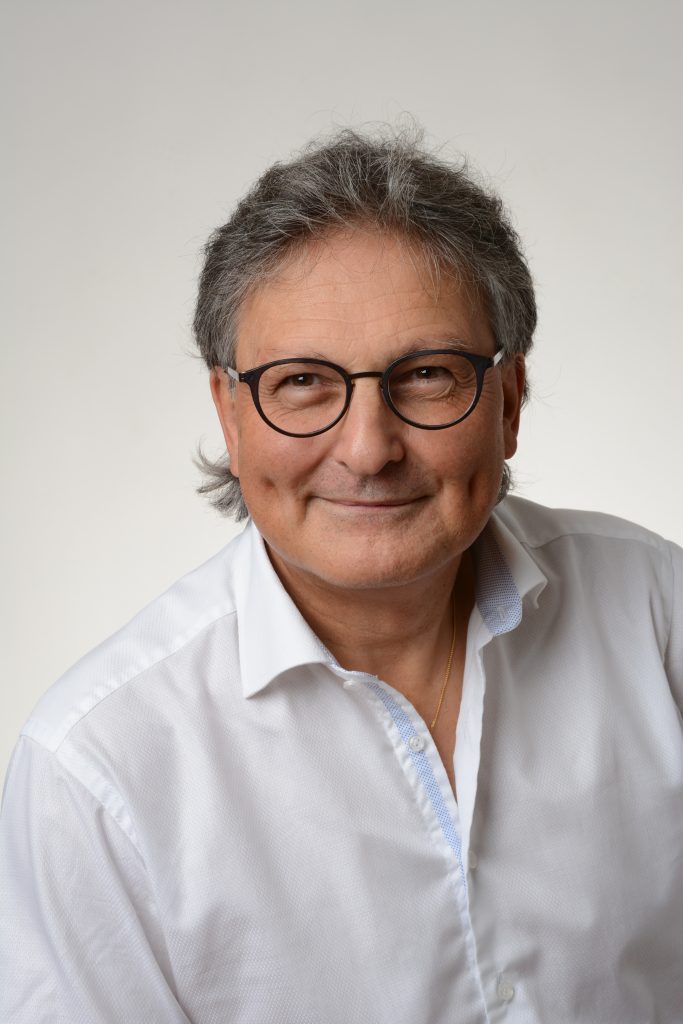
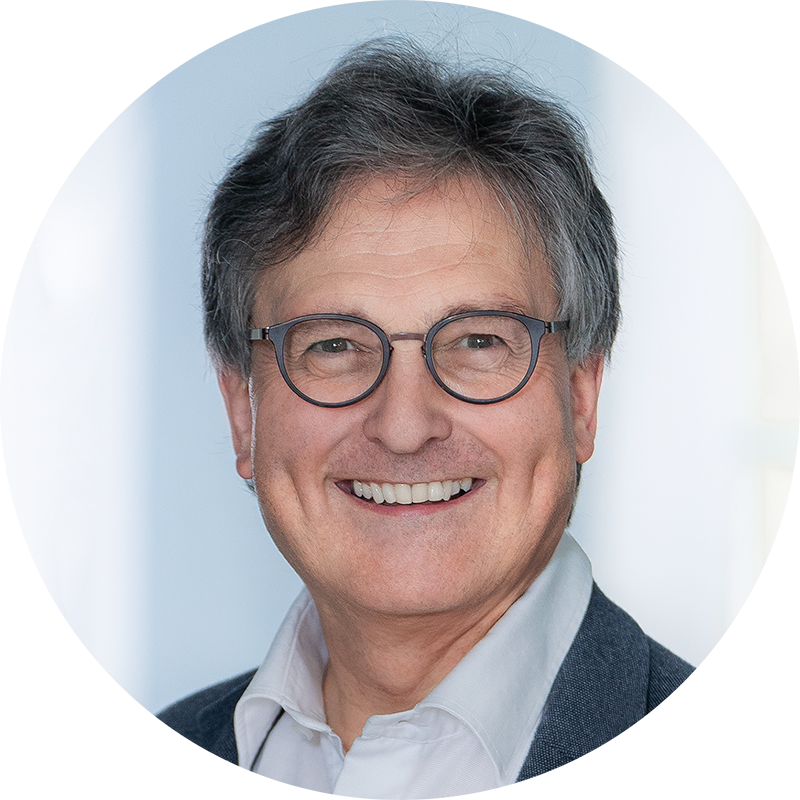
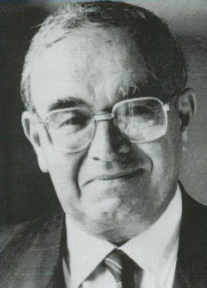
Originally from Basel, he has lived in Central Switzerland for over 45 years. As a qualified eye surgeon, he runs the Zentravis eye practice at Bahnhofplatz in Lucerne and is a co-founder of the Sursee Eye Day Clinic. He also initiated an optical chain with the integration of ophthalmic diagnostics into the eyewear business and a so-called one-price policy, Doctor-Eyepoint. “Central Switzerland is a paradise. Being able to live and/or work here is a privilege.”
He builds model trains in H0 and H0m scales with the themes of Göschenen and Disentis (planned). He likes steam locomotives and steamships and is a member of the Lake Lucerne Steamship Company. He sings in the Basel Theater Choir (due to lack of time…). He enjoys hiking, skiing, cycling, concerts and cinema, as well as traditional and popular Swiss folk theater. He shoots videos, edits, and creates his own soundtrack. He also enjoys cooking, spending time outdoors and playing games like “The Settlers of Catan…”
“The child’s soul is the greatest asset,” says Hamburg physician Dr. Carlos Schumacher. To help it develop and at the same time provide children with unforgettable moments, he relies less on the world of medicine than on the magic of imagination. He wants to enchant children with stories and has therefore founded his own publishing house. He presented the Hamburger Kinderbuch publishing house to the public for the first time at the Frankfurt Book Fair (2006).
The new venture, however, reflected an old dream of the 43-year-old. Since his studies, the Hamburg physician had thought about publishing books suitable for promoting child development. Last year, he fulfilled this dream and founded the Hamburger Kinderbuch publishing house.
In it, he focuses primarily on medical, psychological, and developmental topics. But he definitely doesn’t want to publish “boring textbooks with a wagging finger.” He wants to package the content in exciting and funny stories. He wants children to not just have the books read to them, but to discover the joy of browsing for themselves.
One of his first books is “The Story of the Little Kitten.” This classic by Christen Kold, the founder of the Danish adult education centers, is an encouraging book that Schumacher’s wife Katrin translated from Danish into German for the first time. The first publishing program also includes the interactive picture book “Alexandra, where are you going?” (Alexandra, where are you going?). In it, young readers can decide for themselves which path the protagonist should take – thereby influencing the further course of the story.
The doctor is also passionate about a project he developed with five colleagues. “The Drop Gang” – a book scheduled to be published in October 2007 – is a story about five children suffering from long-term illnesses: atopic dermatitis, asthma, epilepsy, cancer, and poor vision.
After completing his medical studies, Schumacher worked, among other things, as a research assistant in a pharmacology laboratory at the University Hospital of Aachen. The Hamburg-based children’s book publisher is not yet breaking even, so he currently works as a real estate entrepreneur.
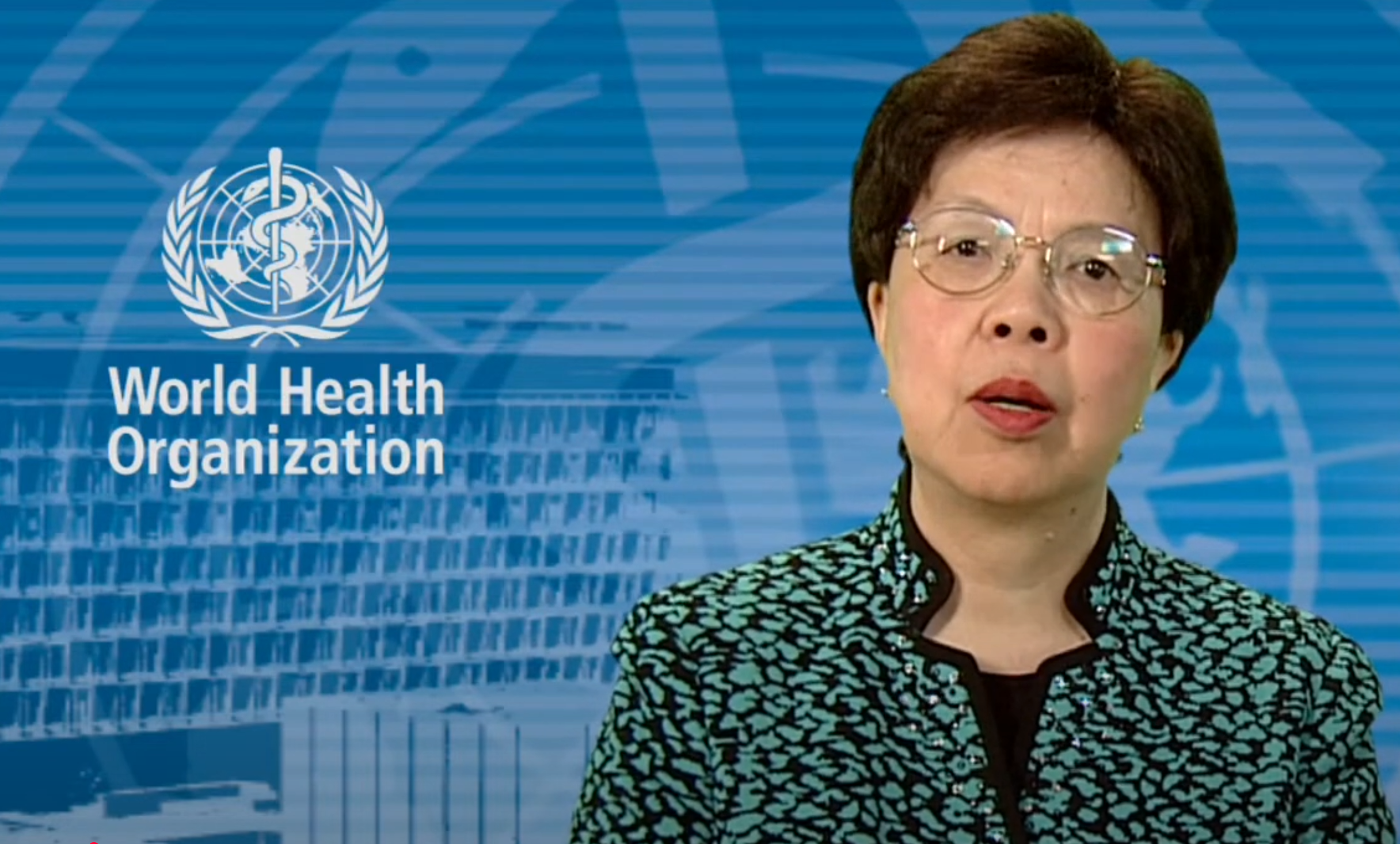
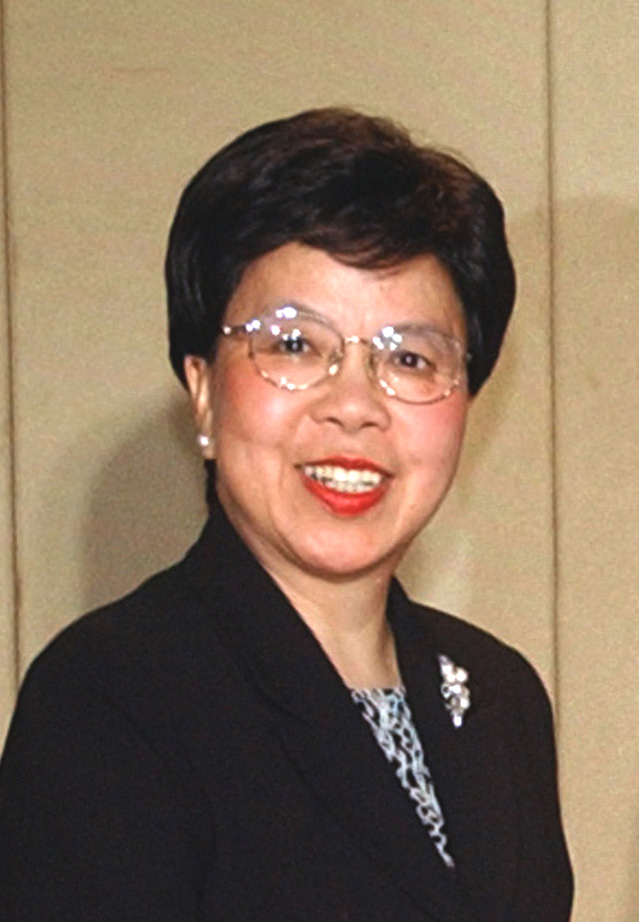
Margaret Chan Fung Fu-chun (Chinese: 陳馮富珍/陈冯富珍; born 1947 in Hong Kong) was Director-General of the World Health Organization from 2006 to 2017 (in May 2012 she was elected for a second term until June 30, 2017). She was the first Chinese woman to head a UN specialized agency.
Biografie
Margaret Chan completed her medical studies at the Canadian University of Western Ontario. After returning to Hong Kong, she joined the health department of the then British Crown Colony in 1978. From 1994 to 2003, she was Director of Health in the Hong Kong government. In this role, she was also responsible for combating the H5N1 avian flu (1997) and SARS in 2003, the outbreak of which claimed nearly 300 lives in Hong Kong. She was criticized by the public and parliament for her hesitant stance in combating SARS.[2] On the other hand, a commission of experts appointed by the government concluded that she could not be held responsible for the mismanagement.
That same year, she left her post to accept a position at the WHO as Director of the Department for the Protection of the Human Environment. In 2005, she became Director of the WHO Department of Communicable Disease Surveillance and Control and Deputy to the Director-General for Pandemic Influenza.
She was heavily criticized for her agreement to classify the 2009/10 swine flu, caused by the H1N1 influenza A virus, as a pandemic, as the criteria for a pandemic were lowered for that virus.[4] Members of the Council of Europe also criticized Chan, most notably the German physician and politician Wolfgang Wodarg (SPD), a member of the Parliamentary Assembly of the Council of Europe.[5] The WHO rejected the accusations of hasty action.
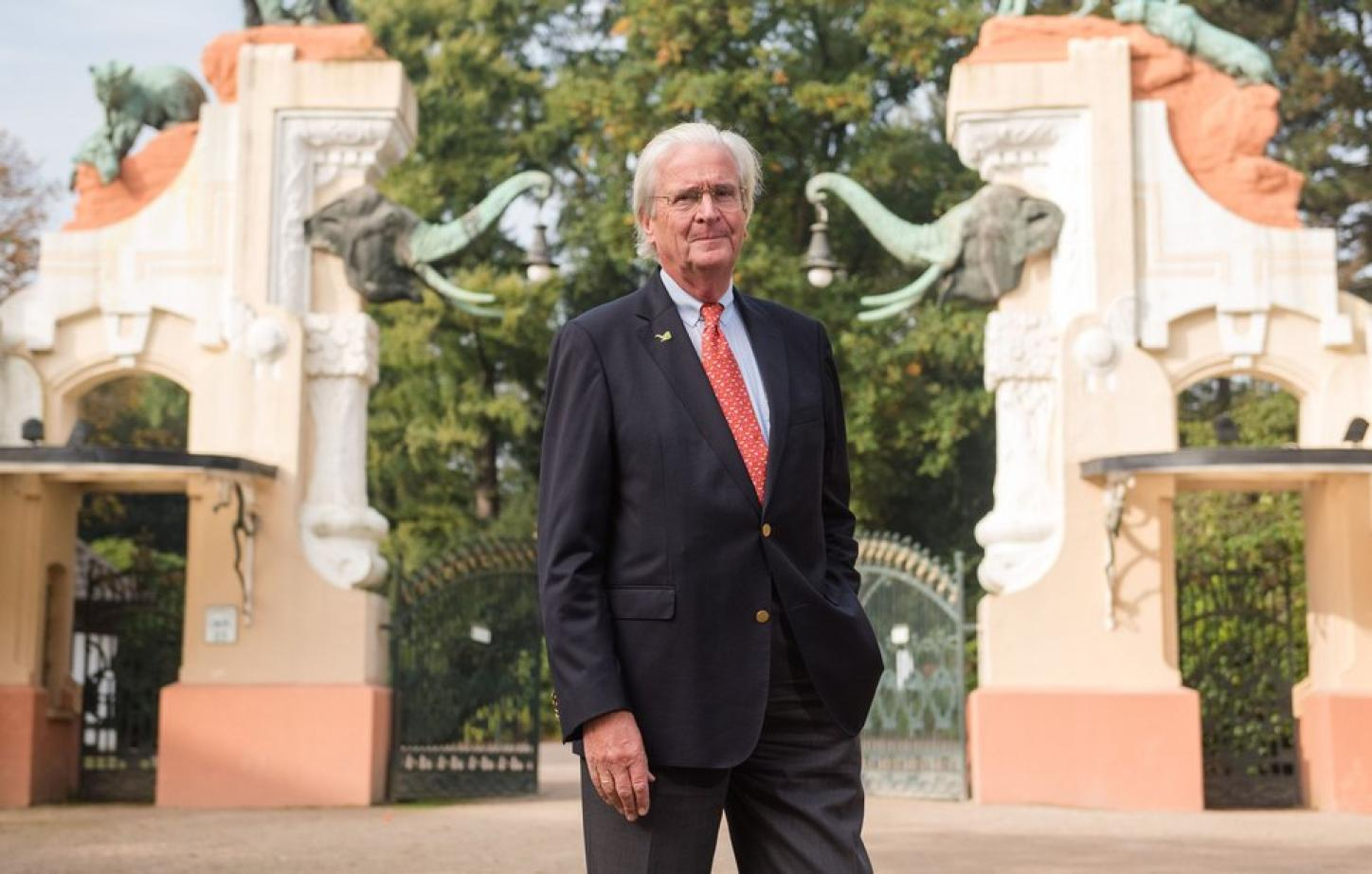
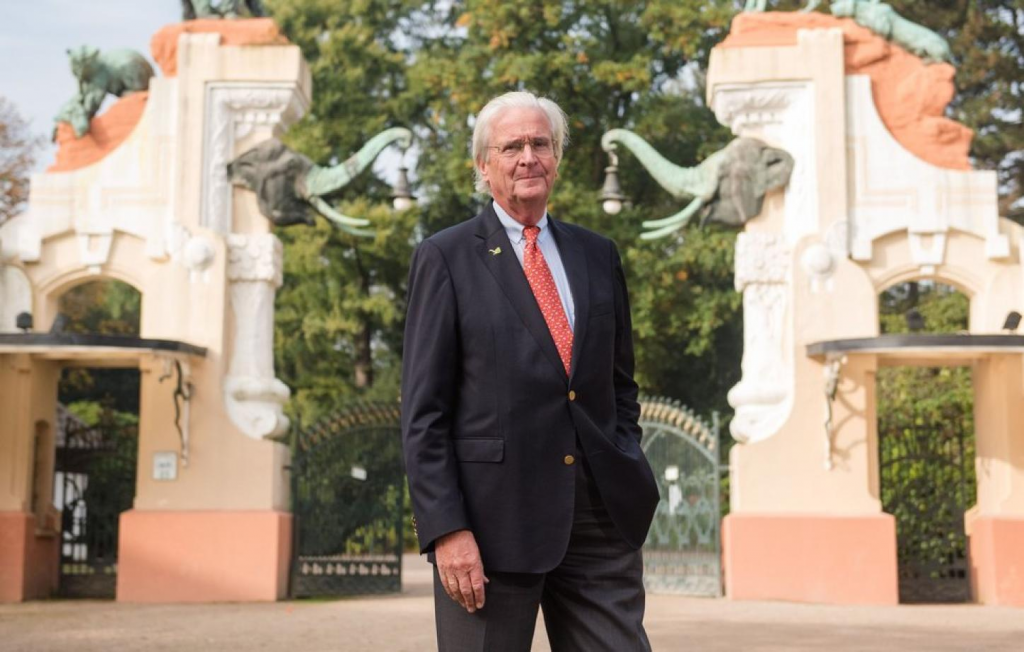
Carl Claus Hagenbeck (born 1 November 1941 in Hamburg) is a German veterinarian and former zoo director.
From 1962 to 1967 he studied veterinary medicine at the Hannover Veterinary School and received his doctorate in veterinary medicine. Hagenbeck is married and has two daughters. From 1977 to 1982 he was junior director of the Hagenbeck Zoo in Hamburg,[1] which he then directed from 1982 to 2004. Between 1982[2] and 1989 he directed the zoo together with his third cousin from the Lorenz Hagenbeck family, Caroline Hagenbeck (1959–2005),[3] and from 1989 onwards with her husband Joachim Weinlig-Hagenbeck (* 1956).
Carl Claus Hagenbeck was born as the son of Carl-Heinrich Hagenbeck (1911–1977); his grandfather was the Hamburg Zoo director Heinrich Hagenbeck (1875–1945), and his great-grandfather was the zoo founder Carl Hagenbeck.
In 1998, Carl Claus Hagenbeck founded the Hagenbeck Zoo Foundation together with Caroline Hagenbeck.[1] He handed over the position of zoo director to his son-in-law Stephan Hering-Hagenbeck (* 1967) in 2004.[4] From 2012[5] until the beginning of April 2015, he was once again managing director of the zoo together with Joachim Weinlig-Hagenbeck.[6] A falling out developed between the two.[4] Stephan Hering-Hagenbeck and Friederike Hagenbeck initially succeeded him, but in June 2015, Carl Claus Hagenbeck’s daughter Bettina[4] joined the management instead of Hering-Hagenbeck.
Barner studied medicine and mathematics and earned doctorates in both subjects. “As a researcher at the helm of a globally active company, he knows exactly how important science is for the economy,” said Andreas Schlüter, Secretary General of the Stifterverband, according to a statement.
Andreas Barner (born February 10, 1953 in Freiburg im Breisgau) is a German physician and mathematician. From 2009 to 2016, he was Chairman of the Board of Directors of Boehringer Ingelheim.
Barner studied medicine at the University of Freiburg and mathematics at the Swiss Federal Institute of Technology in Zurich, completing both degrees with doctorates.
After a year as a medical intern, he moved to the pharmaceutical industry and initially held various positions in the research department of the then Ciba-Geigy AG in Basel, Switzerland.
In 1992, Barner joined Boehringer Ingelheim, Ingelheim am Rhein (Germany), where he took over the management of the Medical Division, which includes global clinical research, registration, information and biometrics, and drug safety. Since July 1, 1999, he has been a member of the Executive Board, responsible for the Pharmaceutical Research, Development, and Medical Division. In 2009, he also assumed the role of Spokesperson of the Executive Board.
On June 30, 2016, Barner stepped down as Chairman of the Executive Board and joined the Shareholders’ Committee of Boehringer Ingelheim.
Barner holds positions in several scientific and industrial associations. Since June 2013, he has been President of the Stifterverband für die Deutsche Wissenschaft (Donors’ Association for the Promotion of Sciences and Humanities in Germany).[2] Barner is also a member of the Senate of the Max Planck Society[3] and a member of the Executive Board of the German Research Foundation (DFG).
He was also Chairman of the Board of the German Association of Research-Based Pharmaceutical Companies (VFA) until 2007.[4][5] He was also a member of the Executive Board of the Federation of German Industries (BDI)[6] and the Association of the Chemical Industry (VCI).[7] In 2007, he was appointed to the German Council of Science and Humanities by the German Federal President.
Barner has been a member of the Presidium of the German Evangelical Church Congress since 2008.[9] He chaired the 35th German Evangelical Church Congress in Stuttgart in 2015 as President.[10] In November 2015, he was elected as a member of the Council of the EKD[11] and re-elected in 2021.
From 2016, Barner served as Chairman of the Board of Trustees and Managing Director of the Fazit Foundation, which, as majority shareholder, controls the Frankfurter Allgemeine Zeitung. In July 2019, he swapped roles with Karl Dietrich Seikel in the Fazit Foundation and the Supervisory Board. He is now Chairman of the Supervisory Board of the Frankfurter Allgemeine Zeitung.
Since 2017, Barner has been Chairman of the Board of the Gutenberg Foundation, which supports the Gutenberg Museum in Mainz.
Detlef Strathmann (1941-2001) He financed his medical studies as a medical journalist – including for the Bild newspaper – and thus found his way into the pharmaceutical industry. His subsequent career then led him into advertising. In 1973, he founded the advertising agency Intramed, which is still part of the Strathmann Group today.
At the same time, he recommended the right medications as a mailbox doctor for several magazines. He advised readers of the women’s magazine “Petra” as family doctor Detlef Günther. In the television program “TV Hören und Sehen,” he offered his expert advice as physician Michael Falk, and in the rainbow newspaper “Neue Post,” he gave health tips under the pseudonym Dr. Bertram.
Strathmann reached the pinnacle of his doctorate in the illustrated magazine “Brigitte” when he wrote about the skin disease cellulite in the women’s breviary “Brigitte”: He coined the fruity name “orange peel” for this common female blemish, referring to a medication that he was soon able to offer from his own production.
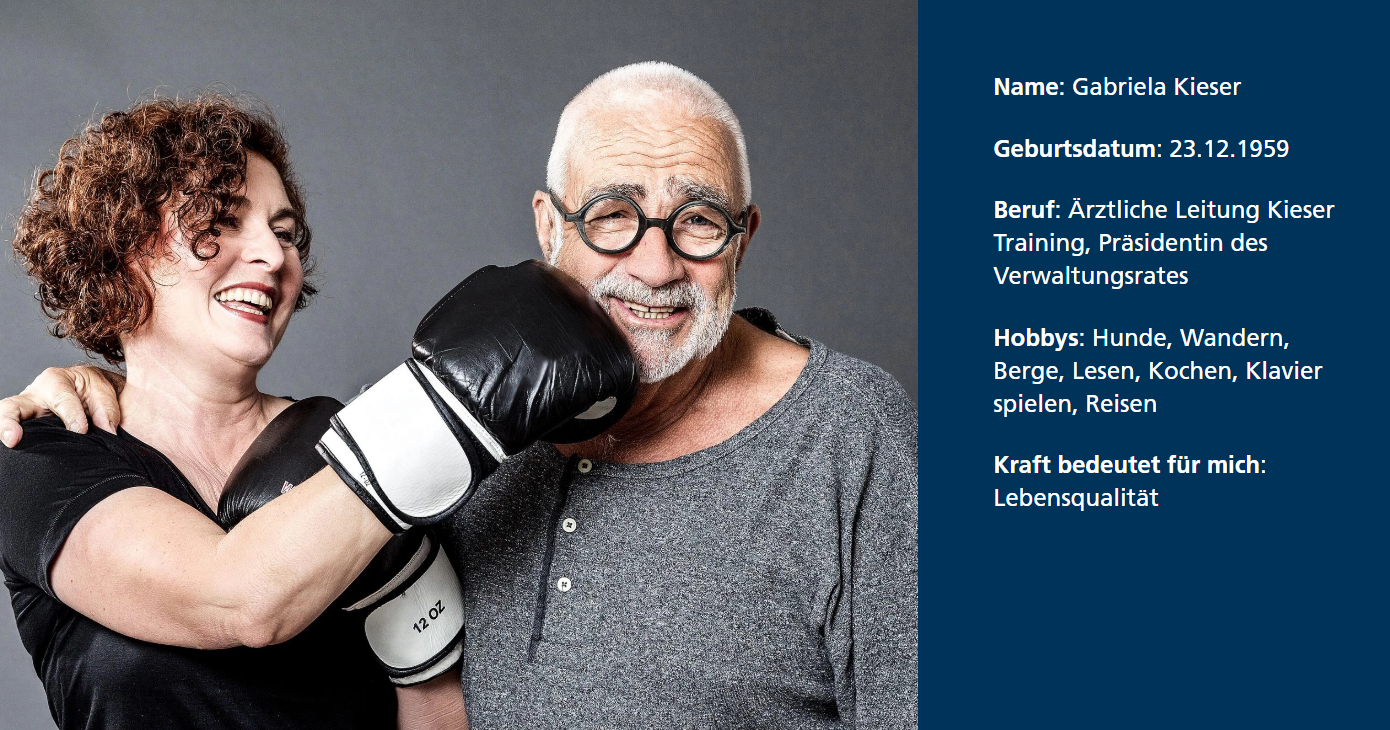
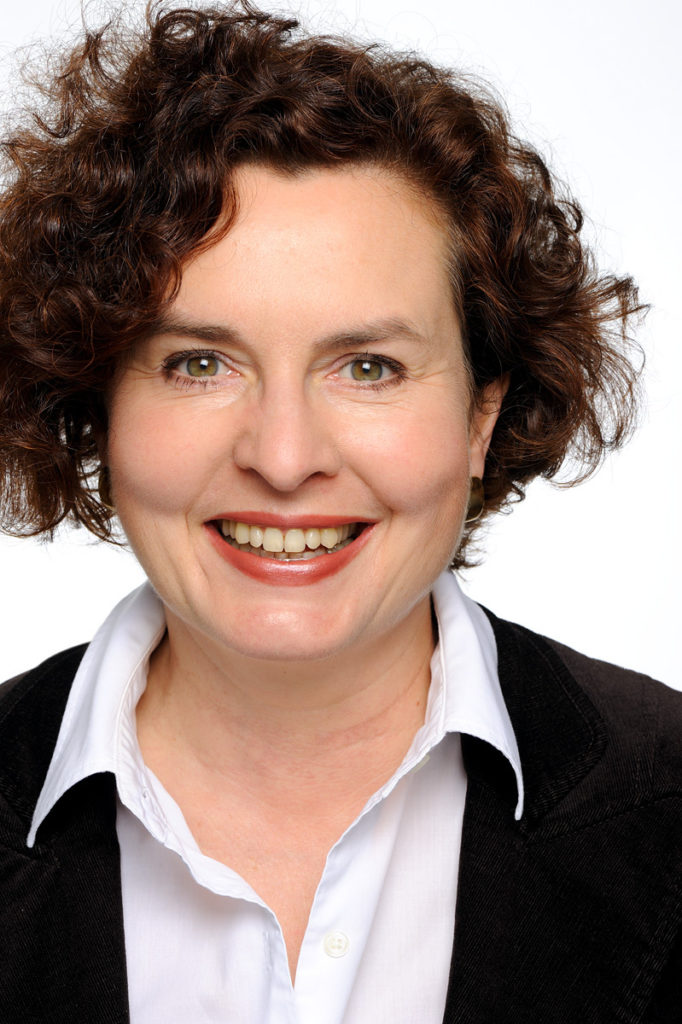
Dr. Gabriela Kieser studied medicine at the University of Zurich and earned her MBA from the Universities of Rochester, USA, and Bern. In 1990, the first European medical practice for medical strength therapy opened in Zurich. The practice demonstrated effective synergy with Kieser Training, located in the same building. Together with her husband, Werner Kieser (†), she developed the concept of health-oriented strength training and thus expanded internationally. Today, 280,000 customers train in 154 Kieser Training studios in five countries.
After more than twenty years in management and on the supervisory board, and since the sale of the company as part of an MBO in early 2017, she now conducts medical training consultations at three studios in Zurich. She also gives lectures on the preventative and therapeutic benefits of health-oriented strength training. She lives in Zurich and in the mountains with her dog.
Since she and her husband sold Kieser Training to their two successors, Michael Antonopoulos and Nils Planzer, Gabi Kieser has been working as an employee. She takes it in her stride. “I let the company consume me. Now I’m enjoying the new freedom and looking forward to wonderful years with Werner.” She’s just started learning Tai Chi. “The movements are so beautiful. It really helps you unwind.” She also wants to take up piano again. “You don’t play much,” Werner interrupts. “Let me finish,” she counters. “It’s on my agenda.” Does she argue well? “Well, yes. I come from a culture of debate. Werner is above things. That’s why things rarely escalate. But we have heated discussions. And we don’t always agree.”
Gabi Kieser loves spending time with her husband and dogs at their holiday home at 2,000 meters above sea level in Graubünden. Just as arguments are the spice of their relationship, she doesn’t always like sunshine when it comes to the weather. She raves about the fog in the mountains. “The fog is beautiful here. You simply feel peaceful. A fire by the fireplace. A good book. That’s all you need for happy moments with Werni and the dogs. You’re not alone, but you’re alone.”
Fereydoon Batmanghelidj (1931 – 15 November 2004) was an Iranian doctor, naturopath, HIV/AIDS denialist and writer. He is best known for believing increased water consumption is the cure for most disease, a view not supported by everybody.
Fereydoon Batmanghelidj was born in Iran in 1931.[4][5] He attended secondary school in the United Kingdom, at Fettes College in Scotland, and later graduated from St Mary’s Hospital Medical School of London University. He then practiced medicine in the United Kingdom, before returning to Iran.[4] There he became a wealthy entrepreneur,[6] helping in the development of hospitals and medical centres, and in sports projects, including the Ice Palace ice skating rink in Tehran.[4]
In 1979, after the Iranian Revolution, he was sent to Evin Prison in Tehran, which housed political prisoners; he was incarcerated there for two years and seven months.[7][4] Following his release in 1982, he moved to the United States.[4]
He married Lucile,[4] a Belgian,[6] and they had four children: Ardeshir, Babak, Camila,[4] and Lila, who died by suicide while he was imprisoned.[8] His first marriage ended in divorce. He later married Xiaopo Huang Batmanghelidj.[4]
Batmanghelidj was trained at St Mary’s Hospital Medical School, and practised medicine in the United Kingdom before his return to Iran.[4]
He claimed that he discovered the medicinal value of water in treating the pain of peptic ulcers during his detention in Evin Prison by treating inmates with water when medication was not available. He advanced this position in a guest editorial in the Journal of Clinical Gastroenterology in 1983.[7]
In 1992, he wrote Your Body’s Many Cries for Water.[2] In this book, Batmanghelidj asserts that chronic dehydration is the root cause of most pain and many ailments, opposing the use of drugs to cure conditions that he claimed could instead be addressed by increased water consumption.[4]
He argued that water is an important provider of “hydro-electric” energy for the body and brain, by splitting into its components hydrogen and oxygen.[2] This claim is not supported by scientific evidence.[2]
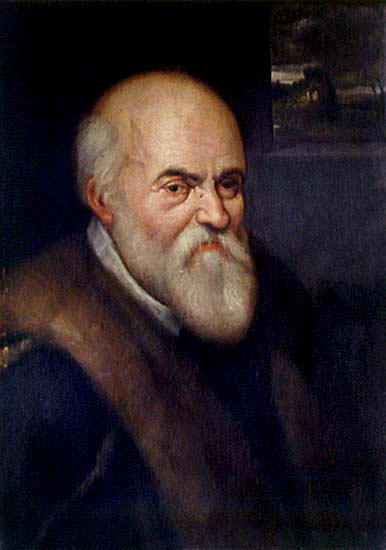
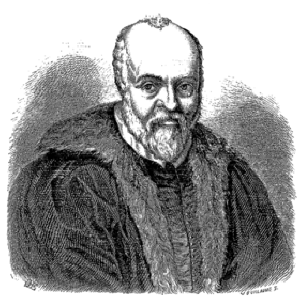
Ulisse Aldrovandi (11 September 1522 – 4 May 1605) was an Italian naturalist, the moving force behind Bologna’s botanical garden, one of the first in Europe. Carl Linnaeus and the comte de Buffon reckoned him the father of natural history studies. He is usually referred to, especially in older scientific literature in Latin, as Aldrovandus; his name in Italian is equally given as Aldroandi.
Aldrovandi was born in Bologna to Teseo Aldrovandi and his wife, a noble but poor family. His father was a lawyer, and Secretary to the Senate of Bologna, but died when Ulisse was seven years old. His widowed mother wanted him to become a jurist. Initially he was sent to apprentice with merchants as a scribe for a short time when he was 14 years old, but after studying mathematics, Latin, law, and philosophy, initially at the University of Bologna, and then at the University of Padua in 1545, he became a notary. His interests successively extended to philosophy and logic, which he combined with the study of medicine.[1]
In June 1549, Aldrovandi was accused and arrested for heresy on account of his espousing of the anti-trinitarian beliefs of the AnabaptistCamillo Renato. By September, he publicly abjured, but was nevertheless transferred to Rome, and remained in custody or house arrest until absolved in April, 1550. During this time, he befriended many local scholars. While in light captivity there, he became more and more interested in botany, zoology, and geology (he is credited for the invention/first written record of this word[2]). From 1551 onward, he organized a variety of expeditions to the Italian mountains, countryside, islands, and coasts to collect and catalogue plants.
He obtained a degree in medicine and philosophy in 1553 and started teaching logic and philosophy in 1554 at the University of Bologna. In 1559, he became professor of philosophy and in 1561 he became the first professor of natural sciences at Bologna (lectura philosophiae naturalis ordinaria de fossilibus, plantis et animalibus).[1] Aldrovandi was a friend of Francesco de’ Medici, Grand Duke of Tuscany (1574 – 1587), visiting his garden at Pratolino and travelling with him, compiling a list of the most valuable plants at Pratolino.[b] He also formed fruitful associations with botanical artists such as Jacopo Ligozzi, to further develop illustrated texts.[3] He died in Bologna on 4 May 1605, at the age of 82.
Aldrovandi’s wife Francesca Fontana was invaluable to his research. He utilized her dowry to build their massive country estate that ultimately included his natural history collection. She was a research partner who located texts for him to cite and use in his books, edited his books, and wrote sections of them as well. She wrote the preface for his posthumous book On the Remains of Bloodless Animals, which Suzanne Le-May Sheffield described as “their shared work”.[4]
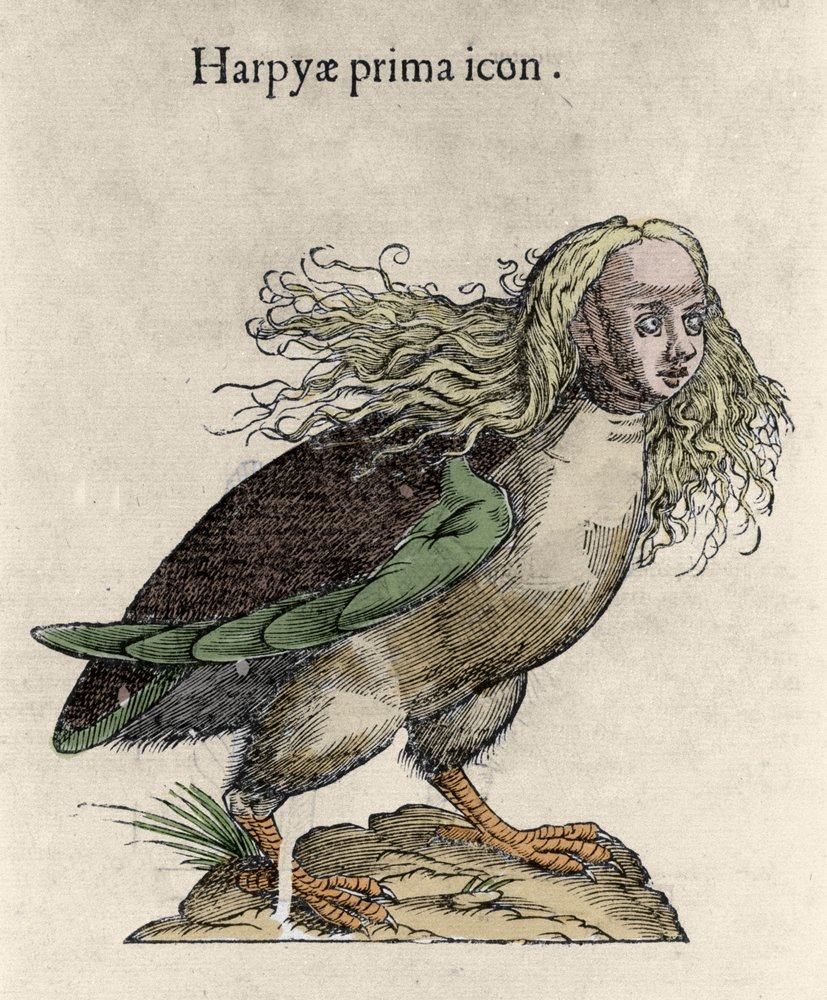
Over the course of his life, he would assemble one of the most spectacular cabinets of curiosities: his “theatre” illuminating natural history comprising some 7000 specimens of the diversitàdi cose naturali, of which he wrote a description in 1595. Between 1551 and 1554, he organized several expeditions to collect plants for a herbarium, among the first botanizing expeditions. Eventually, his herbarium contained about 4760 dried specimens on 4117 sheets in sixteen volumes, preserved at the University of Bologna. He also had various artists including Jacopo Ligozzi, Giovanni Neri, and Cornelio Schwindt, compose illustrations of specimens.
At his demand and under his direction, a public botanic garden was created in Bologna in 1568, now the Orto Botanico dell’Università di Bologna.[5] Due to a dispute on the composition of a popular medicine with the pharmacists and doctors of Bologna in 1575, he was suspended from all public positions for five years. In 1577, he sought the aid of PopeGregory XIII (a cousin of his mother), who wrote to the authorities of Bologna to reinstate Aldrovandi in his public offices and request financial aid to help him publish his books.
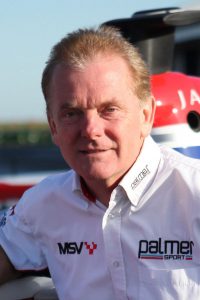
Jonathan Charles Palmer (born 7 November 1956) is a British businessman and former Formula Oneracing driver. Before opting for a career in motor racing, Palmer trained as a physician at London’s Guy’s Hospital. He also worked as a junior physician at Cuckfield and Brighton hospitals.
He is currently the majority shareholder and Chief Executive of MotorSport Vision (MSV), a company that runs six UK motorsport circuits, the PalmerSport corporate driving event at Bedford Autodrome and several racing championships including British Superbikes and GB3.[3]
Palmer joined Williams as a test driver for the 1982 and 1983 seasons whilst racing in F2, and made his Formula One debut at Brands Hatch on 25 September 1983, driving a Williams in the European Grand Prix. This drive was a ‘thank you’ from Frank Williams and Patrick Head. He finished 13th out of 26 starters. Moving to the Skoal Bandit RAM March team in 1984, his six finishes yielded one 8th place, three 9th, one 10th, and one 13th. He joined Zakspeed in 1985, starting in eight races and retiring from all except the 1985 Detroit Grand Prix, where he finished 11th. Sixteen starts with the same team in 1986 resulted in eight retirements and a best finish of 8th in Detroit.
In 1987, Palmer talked with McLaren boss Ron Dennis about becoming the team’s No. 2 driver to double World Champion Alain Prost. Dennis ultimately signed Stefan Johansson, and Palmer joined Tyrrell a week before the season’s opening race in Brazil. Although outpaced by its turbocharged competitors, Tyrrell’s naturally-aspirated Cosworth-powered car proved reliable, and it was nimble on tighter circuits. Palmer won championship points in three races, and it was in the Australian Grand Prix that he achieved his career-best fourth-place finish. He also won the Jim Clark Cup, a championship for drivers of normally aspirated cars. He stayed with Tyrrell for the next two seasons, during which his best results were two 5th-place finishes and three 6th. At the end of 1989 he signed as McLaren’s test driver.