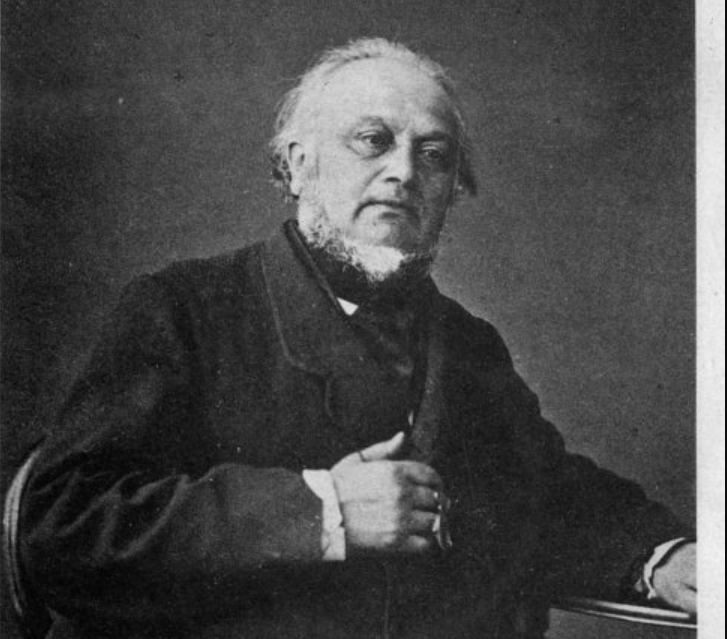
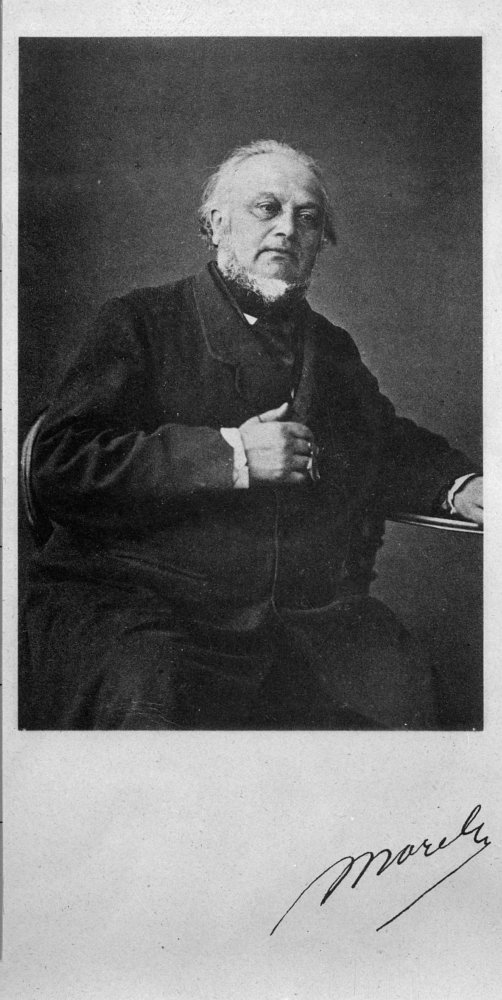
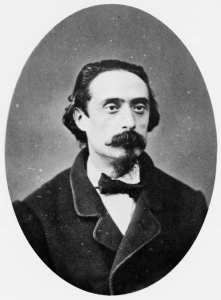
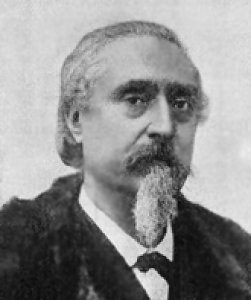
Bénédict Augustin Morel (22 November 1809 – 30 March 1873) was a French psychiatrist born in Vienna, Austria. He was an influential figure in the field of degeneration theory during the mid-19th century.
Morel received his education in Paris, and while a student, supplemented his income by teaching English and German classes. In 1839 he earned his medical doctorate, and two years later became an assistant to psychiatrist Jean-Pierre Falret (1794–1870) at the Salpêtrière in Paris.[2]
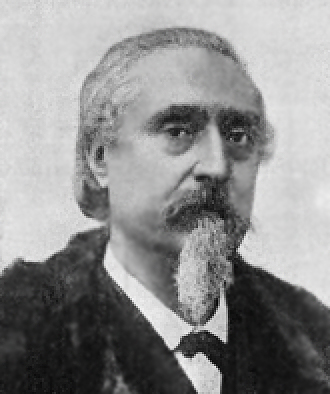
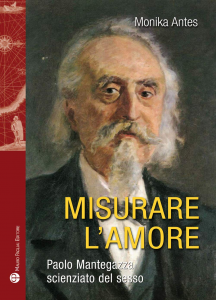
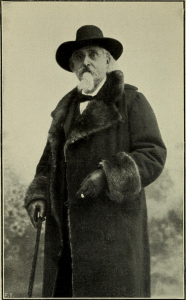
Paolo Mantegazza (October 31, 1831 in Monza, Austrian Empire – August 28, 1910 in San Terenzo) was an Italian neurologist, physiologist, and anthropologist, as well as a prominent physician and consciousness researcher. Mantegazza published several works on the effects of psychotropic plants on human consciousness, numerous other scientific writings, and several novels that were bestsellers in their time but have since been largely forgotten.
Mantegazza first studied medicine in Pisa and Milan, graduating in Pavia in 1854. He then traveled to India and South America, where he practiced medicine in Argentina and Paraguay. In 1858, he returned to Italy and worked as a surgeon in Milan. In 1860, he was appointed professor of pathology at the University of Pavia, where he founded the first Institute of General Pathology in Europe.
In 1870, Mantegazza became a professor of anthropology at the Istituto di Studi Superiori in Florence. There he founded the Museo Antropologico-Etnografico di Firenze (Anthropological and Ethnographic Museum) and, in 1871, the journal Archivio per l’Antropologia e l’Etnologia, which is still published today, with Felice Finzi. At that time, culture and science in Italy were far more influenced by the Catholic Church than they are today. Mantegazza was repeatedly attacked by ecclesiastical circles, particularly because he was an advocate of Darwinism and an atheist.[2] From 1868 to 1875, he had a lively correspondence with Charles Darwin.
Pioneer of psychedelic Drug research
During his several years working as a doctor in South America, Mantegazza observed the habit of local coca farmers chewing the leaves of the coca bush. In the “service of science” he began to imitate them, taking three daily doses of three grams of coca leaves. In 1859 he published the work Sulle virtù igieniche e medicinali della coca e sugli alimenti nervosi in generale (On the Hygienic and Medicinal Benefits of Coca and Nerve Food in General), for which he received an award and which caused a sensation both in Italy and abroad. Due to the fact that Mantegazza distinguishes between coca and cocaina in his writings, it is assumed that he had already extracted the alkaloid cocaine from the coca leaves and taken it himself in 1859. Mantegazza is therefore often associated with cocaine in literature, but his interest in the effects of psychotropic substances went much further, and he published numerous works with treatises on the intoxicating effects of various drugs such as alcohol, mate, guarana, opium, hashish, kava and ayahuasca (agahuasca), and classified them according to their effects in 1859, more than sixty years before Louis Lewin made his classification in his 1924 work Phantastica.
Sexual science
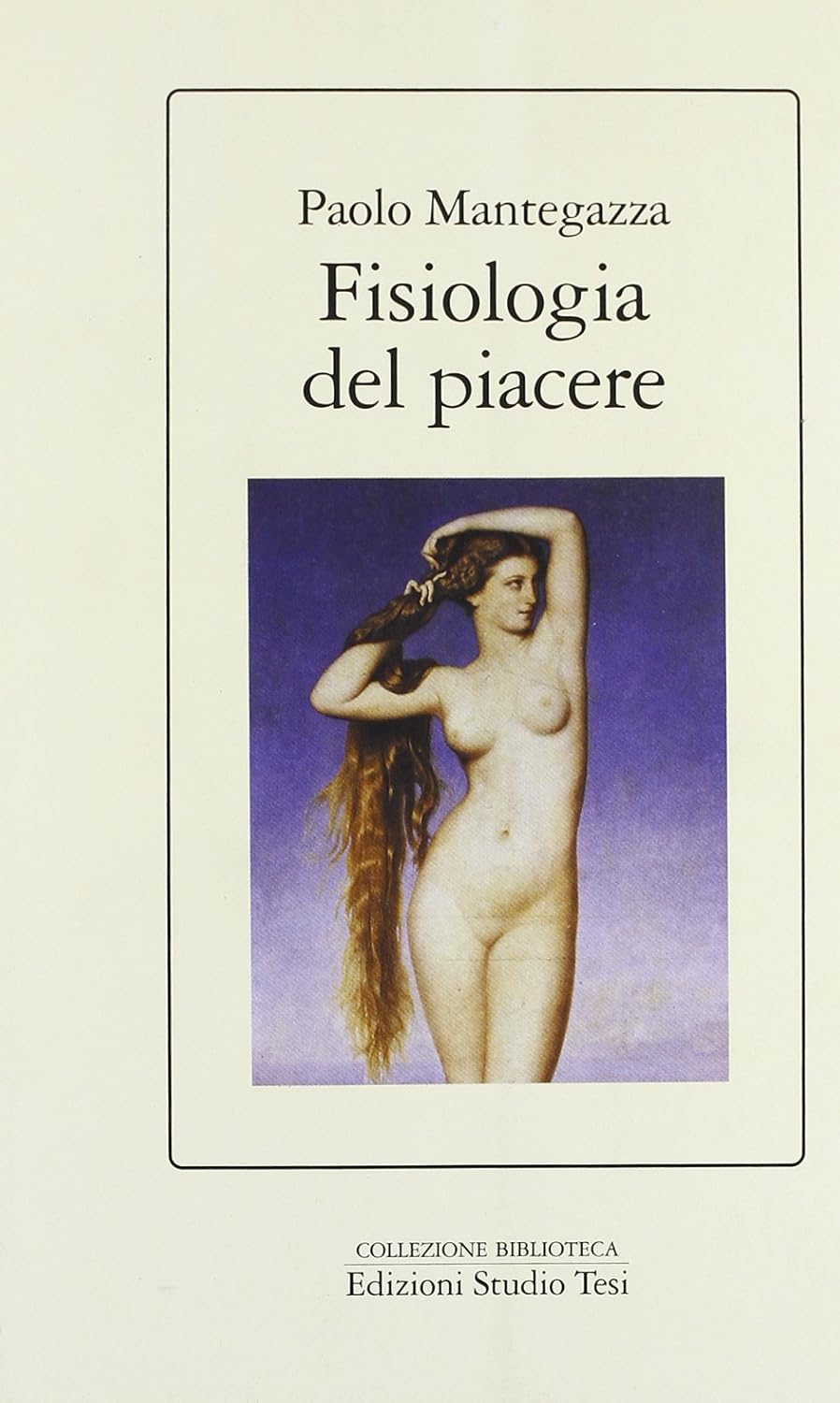
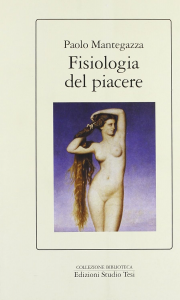
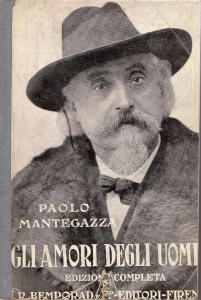
Almost forgotten, but outstanding in his time, were his numerous publications in the field of sexology, which only emerged later: Fisiologia del piacere (1854); Fisiologia dell’amore (1873); Igiene dell’amore (1886); Gli amori degli uomini – Saggio di una etnologia dell’amore (1886) and Fisiologia della donna (1893) – in which he summarized observations, his own experiments and anthropological-ethnological results of extensive collections, research and travels in the sense of a “phenomenology of heterosexual love… which is unparalleled in the history of sexology.” At just 22 years old, he wrote “Fundamentals of Edonology or the Science of Pleasure” (today understood as hedonism) and spoke out against “false puritans” and the “murky, stinking fog of hypocrisy” (Volkmar Sigusch in: Deutsches Ärzteblatt 7/2007 – see web link).
“Wherever a beautiful woman appears, all human energies bubble from their battle-tested sources: Everything best and worst in man springs forth to pay homage to her or to insult her with envy.” (Paolo Mantegazza, The Concept of Woman Through the Ages, Nuova Antologia, January 15, 1893)
Politics
From 1865 to 1876, Mantegazza was a deputy from Monza in the Italian Chamber of Deputies and, from 1876, a senator in the Kingdom of Italy.
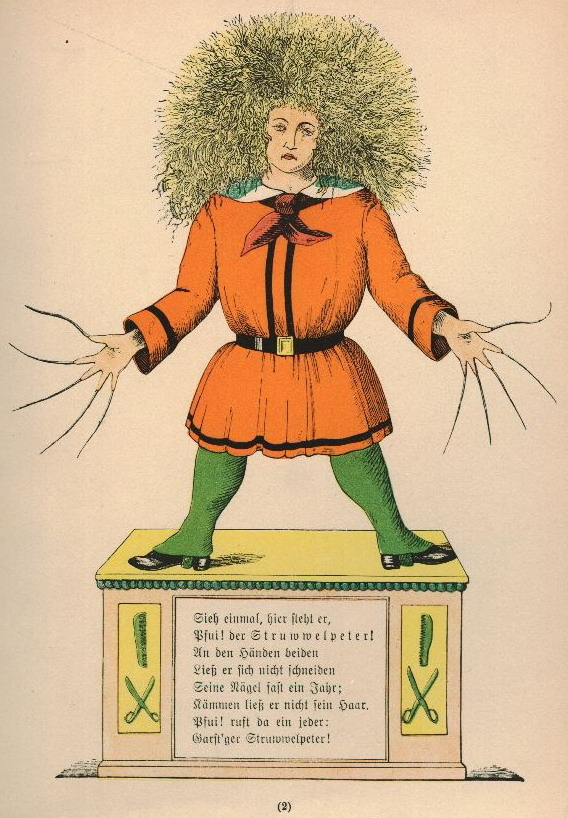
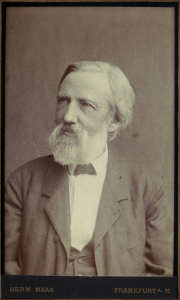
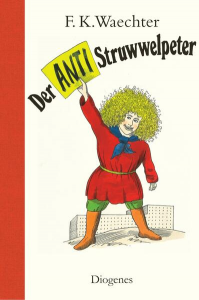
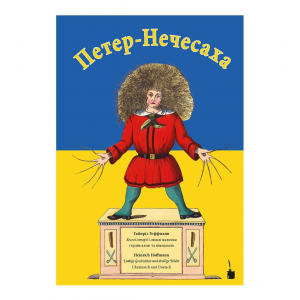
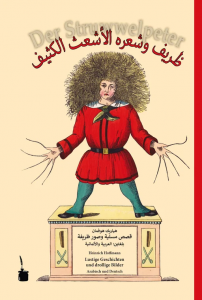
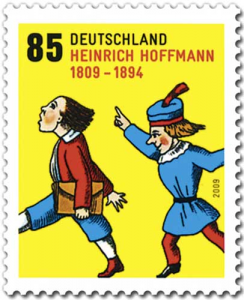
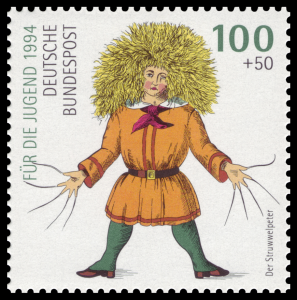
Heinrich Hoffmann (June 13, 1809 in Frankfurt am Main; September 20, 1894 in Frankfurt am Main) was a German psychiatrist, poet, and children’s book author. He is the author of Struwwelpeter (The Struwwel Peter). He also used the pseudonyms Heulalius von Heulenburg, Reimerich Kinderlieb, Peter Struwwel, and Polycarpus Gastfenger.
Politics
In 1848, he was a member of the Frankfurt Preliminary Parliament. He hosted the revolutionary Friedrich Hecker in his household. Hoffmann himself advocated a constitutional monarchy under Prussian rule and was a member of the Hereditary Imperial Party. In his satirical works “Handbook for Diggers or Concise Instructions on Becoming a People’s Man in a Few Days” (1848) and “The Howler Mirror” (1849), he strongly opposed the republicans. In 1866, he supported the annexation of the Free City of Frankfurt by Prussia.
Literarische Werke
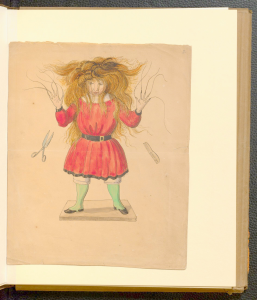
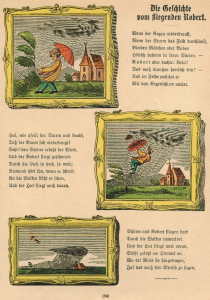
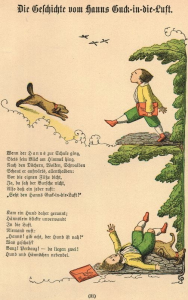
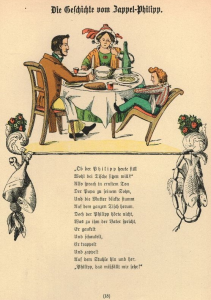
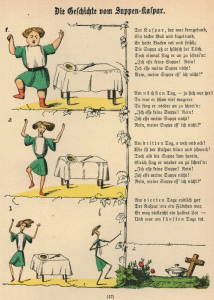
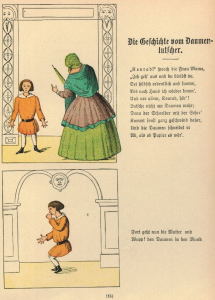
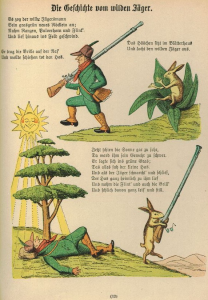
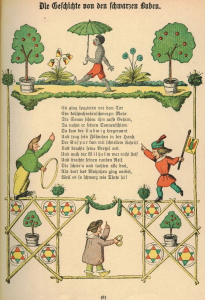
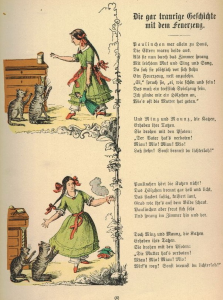
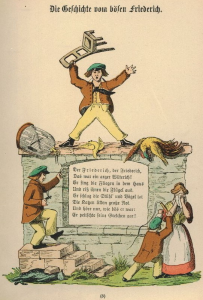
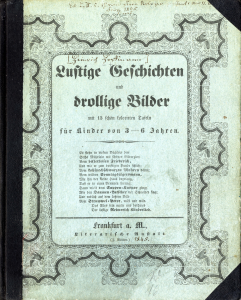
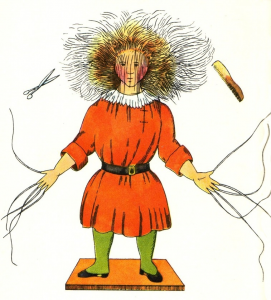
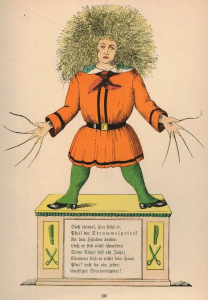
From 1842 onwards, Hoffmann published poems and plays under various pseudonyms. He described himself as an occasional verse writer. He became known worldwide through his children’s book, Struwwelpeter, which he illustrated himself and wrote for his eldest son for Christmas 1844. Presumably in 1858, Hoffmann created a new version with modified illustrations; all subsequent editions of Struwwelpeter are based on this.
In 1851, he published his Christmas fairy tale “King Nutcracker and Poor Reinhold.” The first edition was illustrated with a drawing by the author depicting the Frankfurt Christmas market.
After his retirement, he wrote his memoirs, which were not published until 1926.
Memberships, Private Life
As a student in Heidelberg, Hoffmann had been a member of the Corps Alemannia since 1830, later an honorary member.[3] In 1836, he joined the Masonic lodge “Zur Einigkeit.” After a few years, he left because it did not admit Jews.[4]
In the fall of 1840, Hoffmann founded the Society of Tutti Frutti and its Baths in the Ganges in Frankfurt am Main, a society of writers, artists, and scholars whose members adopted specially chosen “fruit names.” Hoffmann himself was the “Onion.” The members included Franz Xaver Schnyder von Wartensee (“Pine Cone”), Ludwig Braunfels (“Chestnut”), Wilhelm Speyer (“Betel”), Theodor Creizenach (“Deadly Nightshade”), Carl Trost (“Thorn Apple”), Friedrich Maximilian Hessemer (“Date”), Eduard Schmidt von der Launitz (“Juniper”), Lorenz Diefenbach (“Strawberry”), Georg Eduard Steitz (“Nut 2”), Johann David Passavant (“Pomeranian Orange”), Heinrich von Rustige (“Nut”) and Philipp Veit (“Fennel”).
In 1845, he co-founded a medical association and composed “Wine Songs for Doctors” for social occasions.
He died after a stroke and was buried in Frankfurt’s Main Cemetery (at the Wall, No. 541, honorary grave).[6]
A street in Frankfurt-Niederrad is named after him, where the Clinic for Psychiatry, Psychosomatics, and Psychotherapy of the Frankfurt University Hospital is now located. Two museums are dedicated to him, as are several memorial plaques at his former residences in Frankfurt.
Dice Game
Mr. Fix von Bickenbach’s Journey Around the World in 77 Days, Struwwelpeter Museum, Frankfurt am Main, 2012. Available as a facsimile in a slipcase.[7]
Museum
The Heinrich Hoffmann and Struwwelpeter Museum has been located in Frankfurt am Main since 1977, providing information about the life and work of this man and his classic children’s book.[8] In September 2019, the museum, now known as “Struwwelpeter,” moved to its current location.-Museum“, in das Haus zum Esslinger in der Neuen Frankfurter Altstadt.[9]
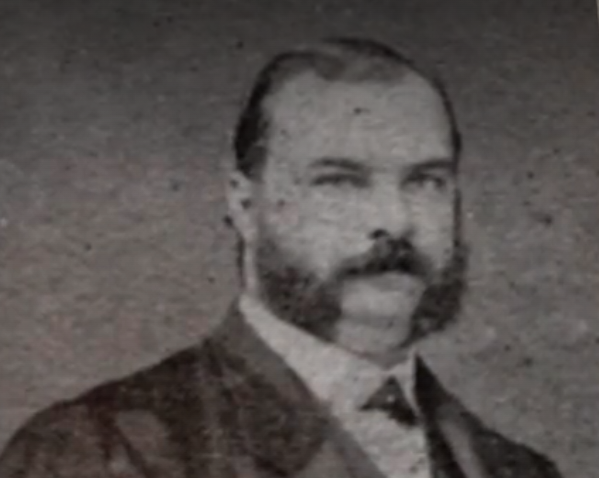
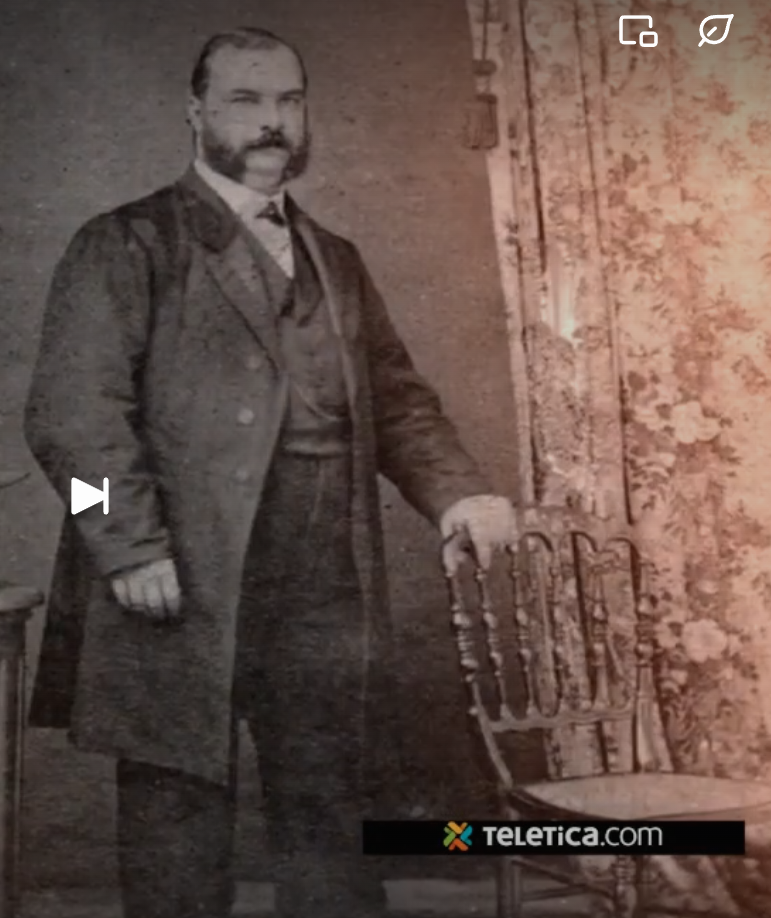
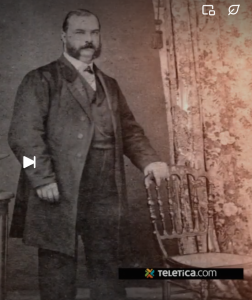
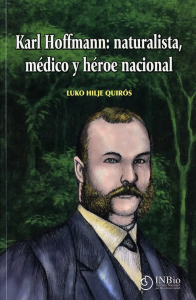
Karl Hoffmann (7 December 1823 – 11 May 1859) was a German physician and naturalist.
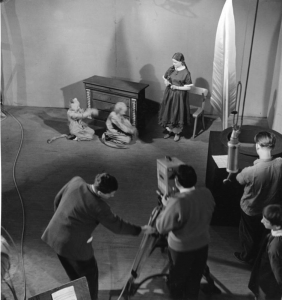
TV-film
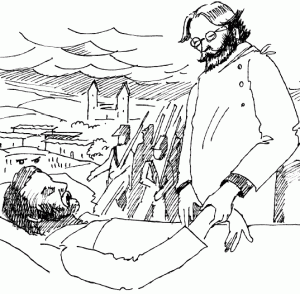
Hoffmann was born in Stettin, Kingdom of Prussia and studied at Berlin University. In 1853 he travelled to Costa Rica with Alexander von Frantzius to collect natural history specimens. With his wife, Emilia Hoffmann, he settled in San José, where he operated a consultation clinic and small pharmacy from his home. In order to supplement his income, he sold wine and liquor. He served as a doctor in the Costa Rican army during the invasion of William Walker in 1856.[1] He died of typhoid in Puntarenas.
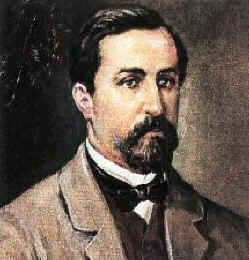
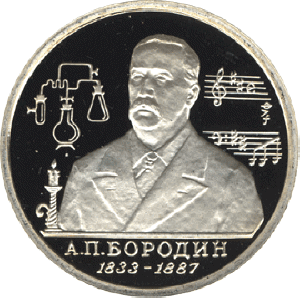
A doctor and chemist by profession and training, Borodin made important early contributions to organic chemistry. Although he is presently known better as a composer, he regarded medicine and science as his primary occupations, only practising music and composition in his spare time or when he was ill.[7] As a chemist, Borodin is known best for his work concerning organic synthesis, including being among the first chemists to demonstrate nucleophilic substitution, as well as being the co-discoverer of the aldol reaction. Borodin was a promoter of education in Russia and founded the School of Medicine for Women in Saint Petersburg, where he taught until 1885.