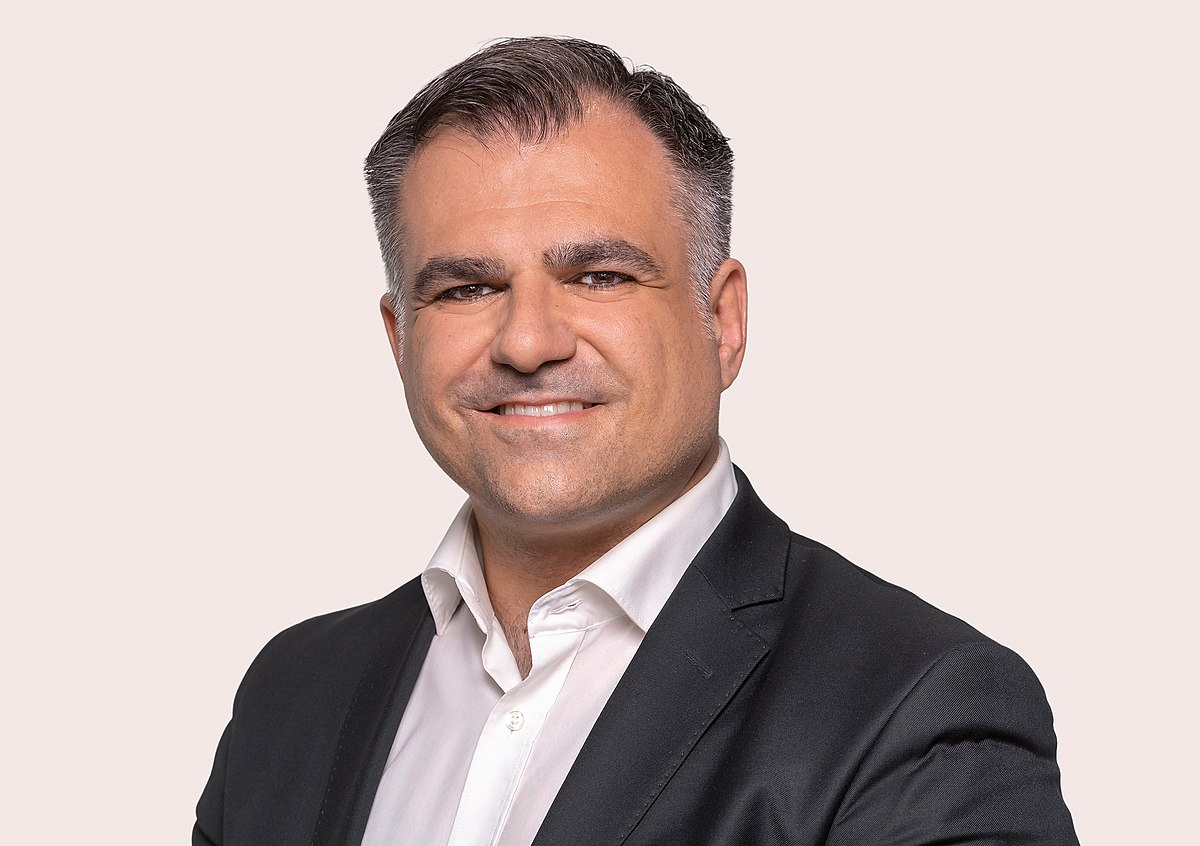
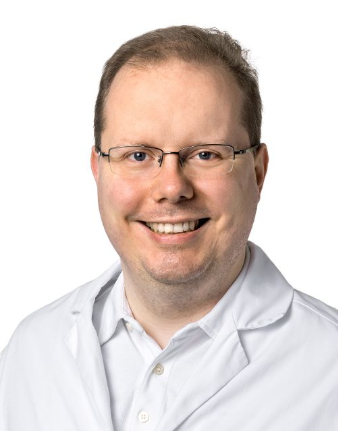
Christos Pantazis (born October 9, 1975 in Hanover)[1] is a German physician and politician (SPD). He has been a member of the German Bundestag since October 26, 2021. Previously, he was a member of the Lower Saxony State Parliament from February 2013 to November 2021 and deputy chairman of the SPD parliamentary group there from November 2017.
1998 Joined the SPD 2001 – 04 Elected to the Seelze local council (where he was parliamentary group leader) 2003 – 05 Spokesperson for the Jusos in the SPD district of Hanover 2003 – 04 Deputy Chairman of the Jusos Lower Saxony 2009 Member of the Executive Board of the SPD Braunschweig 2011 – 15 Deputy Chairman of the SPD Braunschweig 2011 Member of the Executive Board of the SPD parliamentary group in the city council 2012 – 13 Chairman of the SPD Bebelhof – Viewegsgarten 2013 – 21 Member of the Lower Saxony State Parliament for constituency 1 | Braunschweig-Nord 2015 Chairman of the SPD Braunschweig | Member of the Executive Board of the SPD district Braunschweig 2016 – 21 Member of the Association Assembly in the Greater Braunschweig Regional Association 2017 – 21 Deputy Chairman of the SPD parliamentary group in Lower Saxony State Parliament
2017 – 21 Spokesperson for the Braunschweig Group at the state level 2019 Deputy Chairman of the SPD Braunschweig District 2021 Member of the German Bundestag for the constituency | Braunschweig 2022 Deputy Health Policy Spokesperson for the SPD parliamentary group 2022 Spokesperson for the Braunschweig Group at the federal level 2023 Member of the Executive Board of the SPD Braunschweig District 2023 Deputy Chairman of the Lower Saxony/Hanover State Group in the SPD parliamentary group
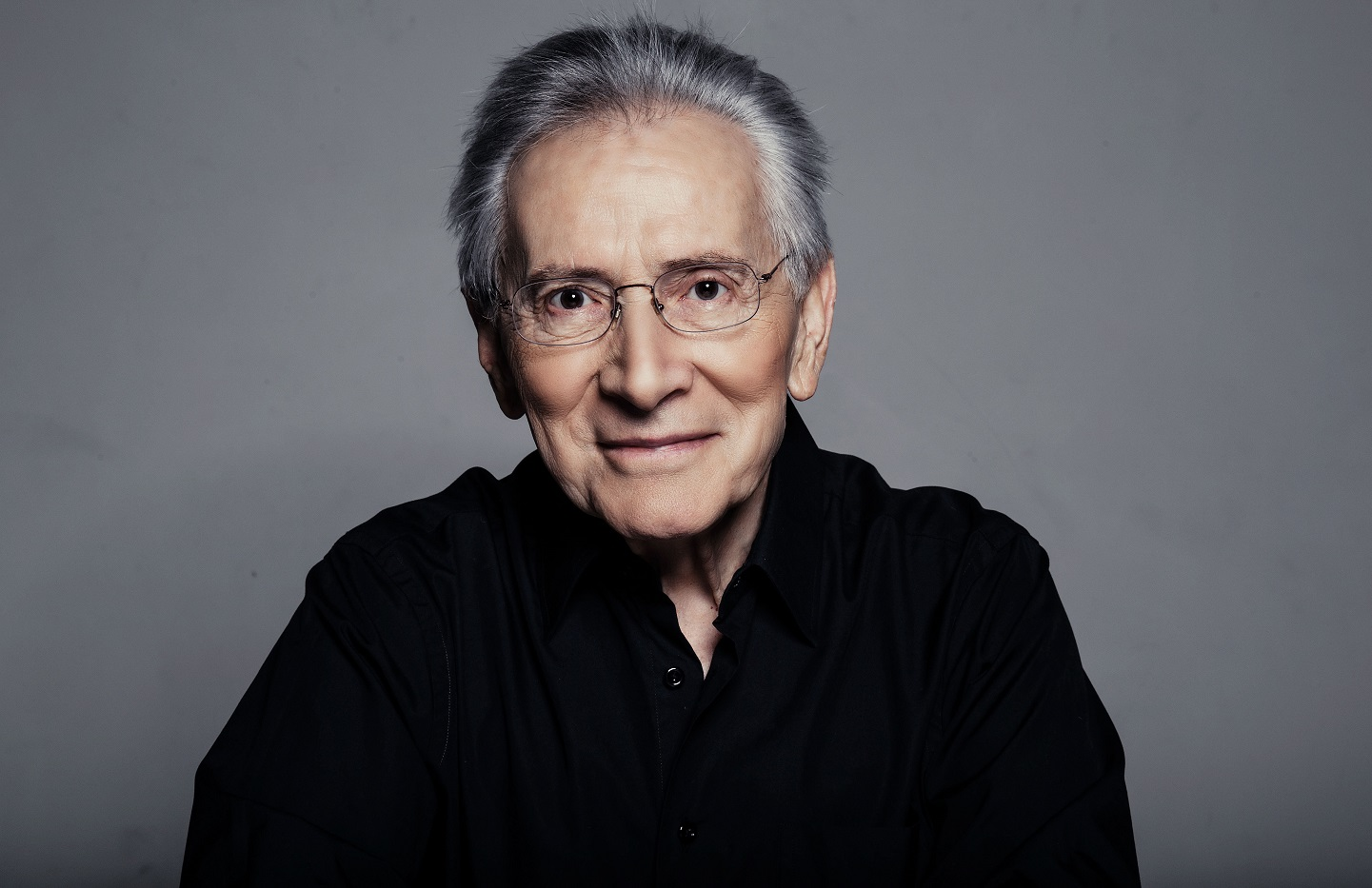
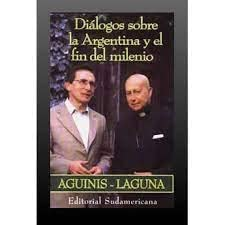
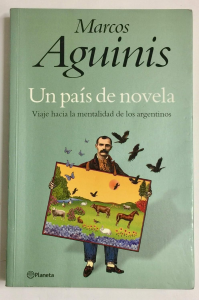
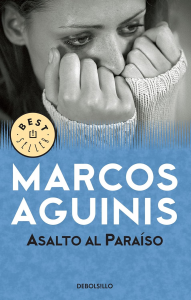
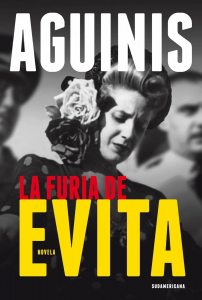
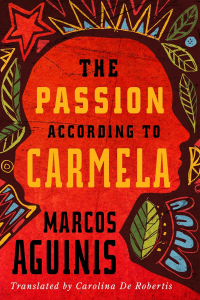
Marcos Aguinis (born January 15, 1935 in Córdoba, Argentina) is an Argentine neurosurgeon and writer.
Aguinis’ father immigrated to Buenos Aires from Bessarabia in 1928 and soon moved in with relatives living in Cruz del Eje in the province of Córdoba. As a schoolchild, Marcos Aguinis suffered discrimination from classmates and some teachers because of his Jewish heritage. During the persecution of Jews in Germany, all of his remaining family members in Europe were killed. After his bar mitzvah, he began to study literature and religion intensively. He borrowed books about the Bible and Israel from the public library. Among other works, he read Stefan Zweig, Julio Nin y Silva’s “History of the Religion of Israel,” Emil Ludwig’s “The Son of Man,” “Muhammad and the Koran” by the Spaniard Rafael Cansinos Assens, and Ernest Renan’s “The Life of Jesus.” Reading Renan’s book marked the beginning of his doubts about his faith. Today, Aguini is an agnostic.
He began writing short stories while still at school. After finishing school, he studied psychiatry, neurology, and psychoanalysis. At the age of 23, he received a scholarship to study neurosurgery in Buenos Aires. He continued his medical and psychiatric studies at the Hôpital de la Salpêtrière in France, as well as in Freiburg im Breisgau and Cologne with the help of a scholarship from the Alexander von Humboldt Foundation. After returning from Europe, he earned his doctorate at the University of Córdoba and initially worked as a neurosurgeon at the Southern Regional Clinic. During this time, he published his first short stories.
Aguinis published his first book in 1963. Since then, he has published numerous novels, essay collections, short story collections, and two biographies. His articles in newspapers and magazines in Latin America, the United States, and Europe cover a wide range of diverse topics. He has given numerous lectures and offered courses in Germany, Spain, the United States, France, Israel, Russia, Italy, and almost all Latin American countries.
During the dictatorship in Argentina, the distribution of Aguinis’s works was subject to restrictions. Some of his works could only be published abroad and were brought into the country illegally.
When Argentina returned to democracy in December 1983, Aguinis was appointed Secretary of State and then Secretary of Culture. He organized PRONDEC, a national program for the democratization of culture, supported by UNESCO and the UN. He launched intensive activities to raise public awareness of their rights, responsibilities, and opportunities for developing a genuine democracy. For his work, he was nominated by UNESCO for the Peace Education Prize.
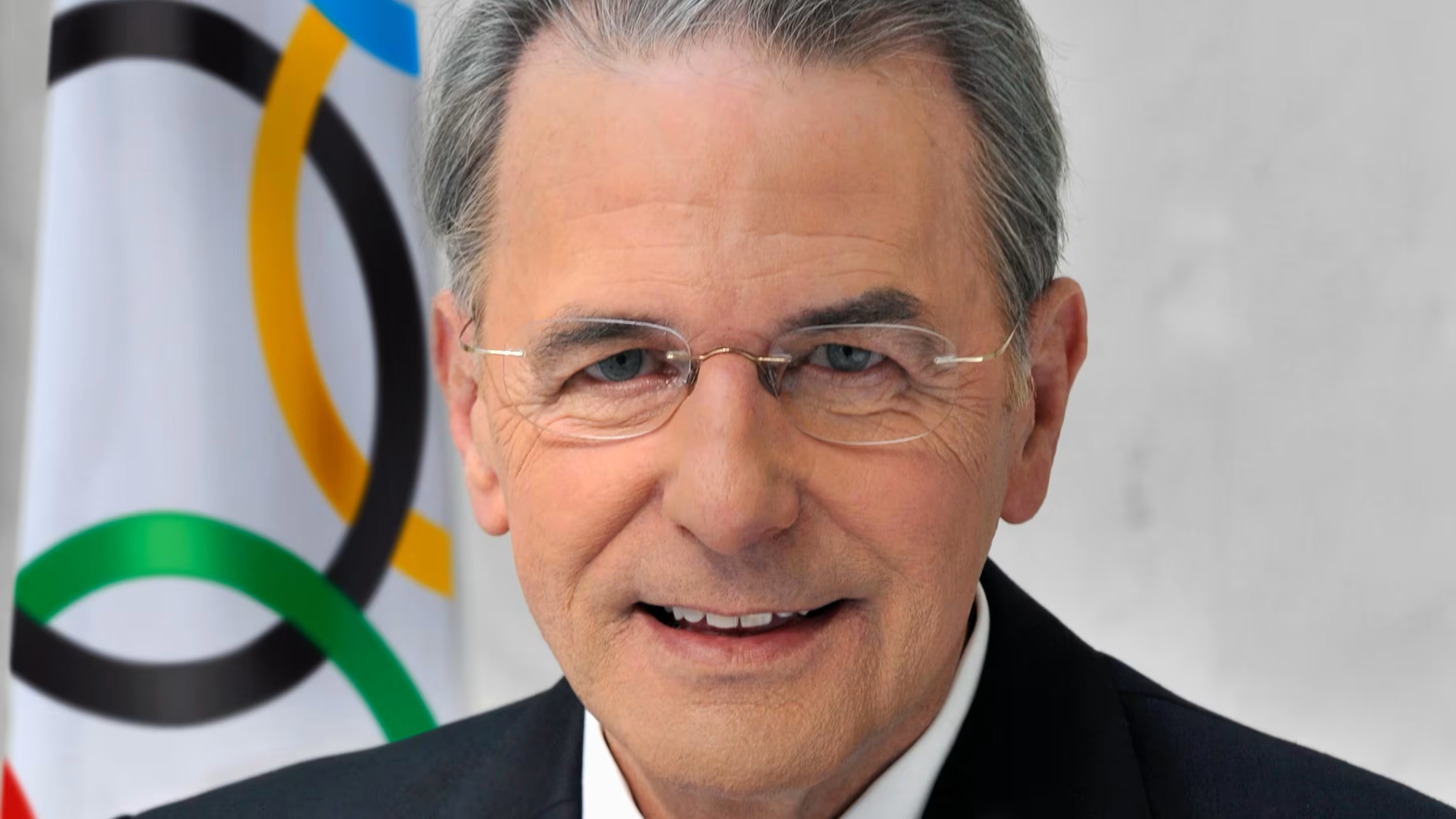
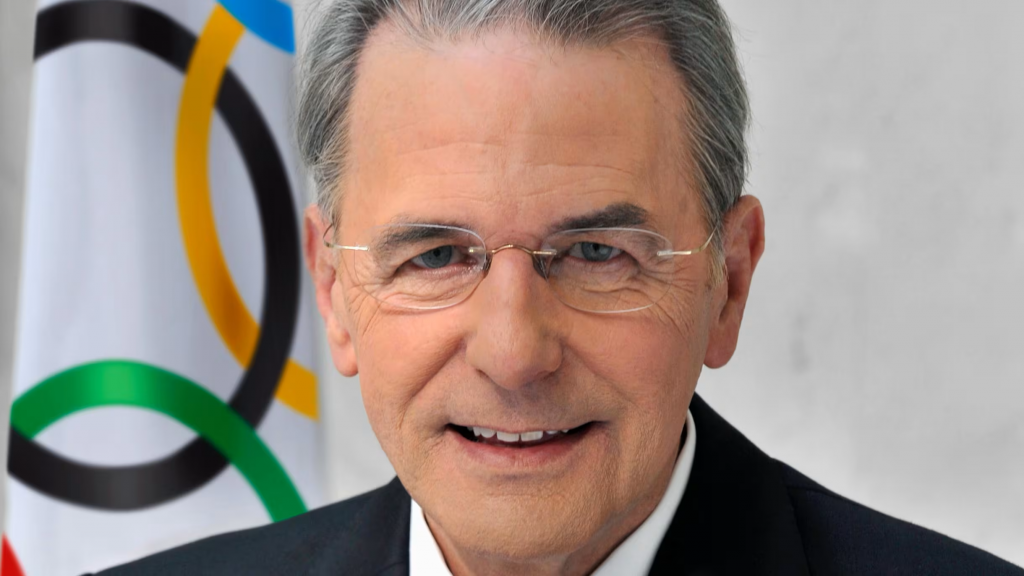
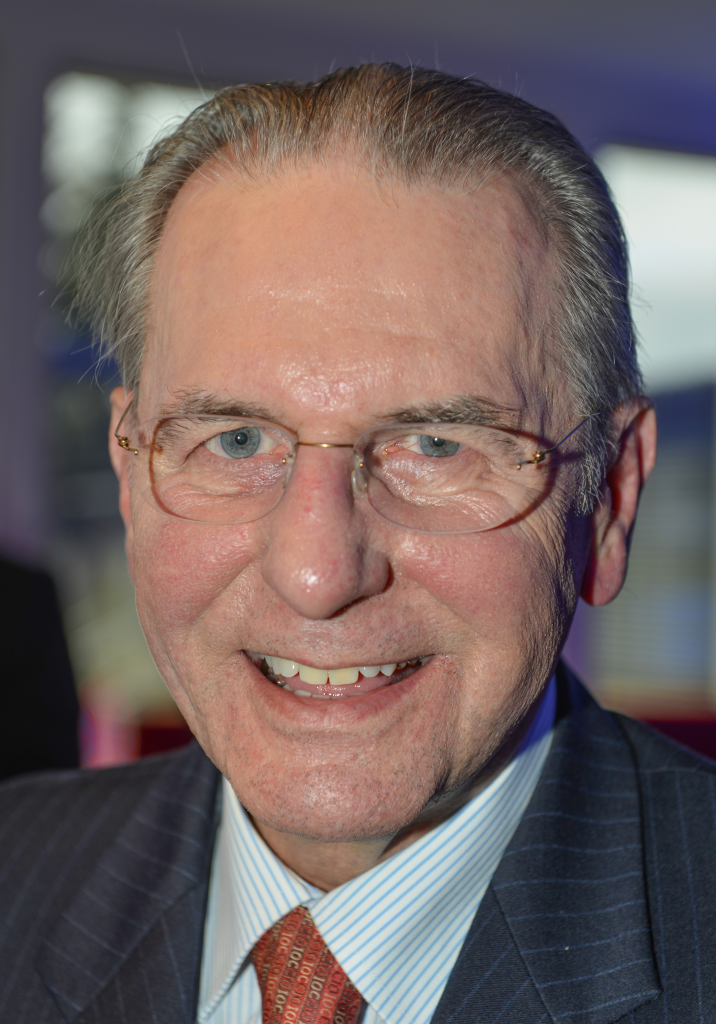
Jacques, Count Rogge KCMG (May 2, 1942 in Ghent; August 29, 2021 in Deinze) was a Belgian sports official. From 2001 to 2013, he was President of the International Olympic Committee (IOC) in Lausanne, Switzerland.
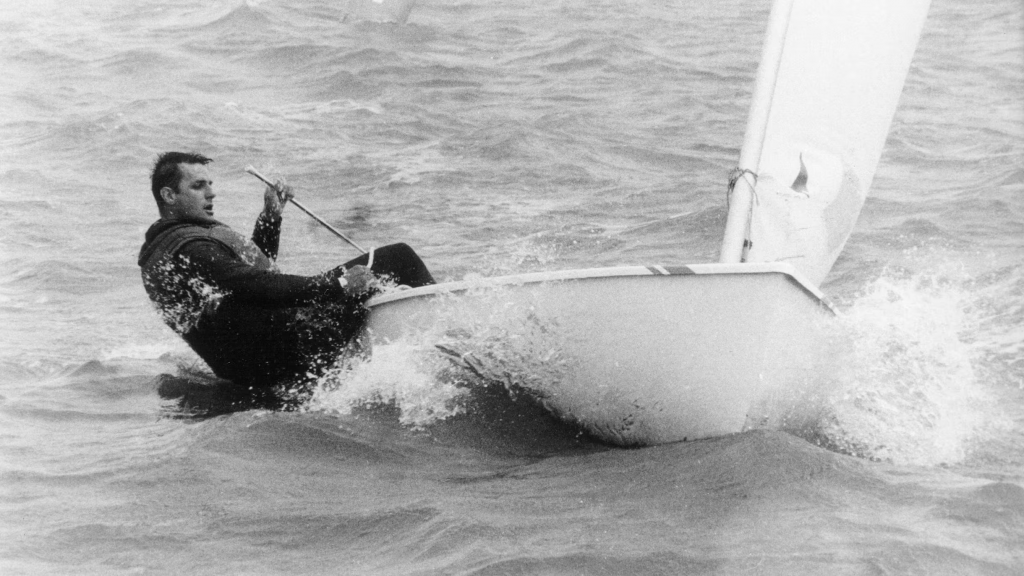
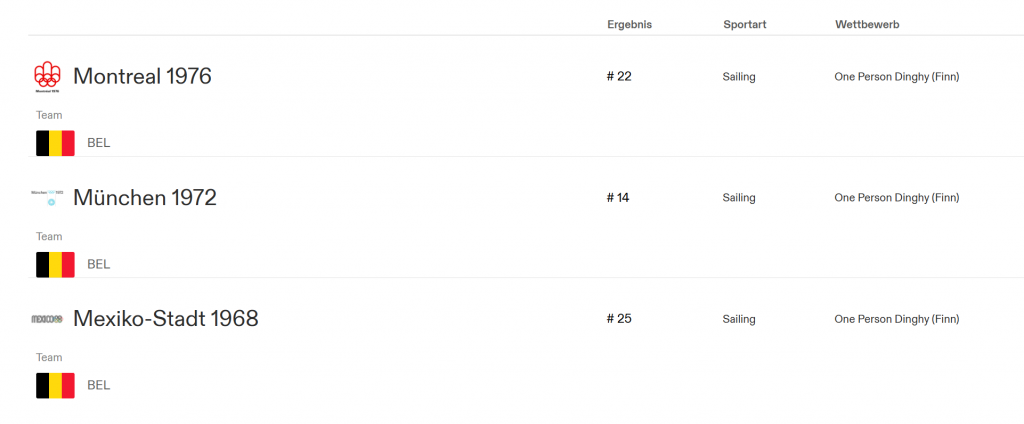
After completing his schooling at Sint-Barbaracollege, a Jesuit college in Ghent, Jacques Rogge studied at Ghent University, where he earned a doctorate in orthopedic surgery. He competed in sailing at the 1968, 1972, and 1976 Summer Olympics, achieving his best finish of 14th in the 1972 Finn Dinghy. He also played for the Belgian national rugby team.
In 1991, he became a member of the IOC and President of the Belgian National Olympic Committee. On July 16, 2001, at the 112th IOC General Assembly in Moscow, he was elected as the eighth President of the IOC, succeeding Juan Antonio Samaranch, for an initial term of eight years. The 2002 Winter Olympics in Salt Lake City were his first as IOC President, and that year he was also knighted by King Albert II of Belgium; his title was that of Comte (French) or Graaf (Dutch).
One of the core principles of his policy was limiting the number of Olympic participants to 10,000. He also campaigned against the increasing gigantism of construction projects and against commercialization.
On October 9, 2009, Jacques Rogge was re-elected for a second four-year term at the 121st IOC General Assembly in Copenhagen. A re-candidacy in 2013 was not permitted under the IOC Statutes. Thomas Bach, a German, was elected Rogge’s successor.
Jacques Rogge was married and had two children. He died at the end of August 2021 at the age of 79.
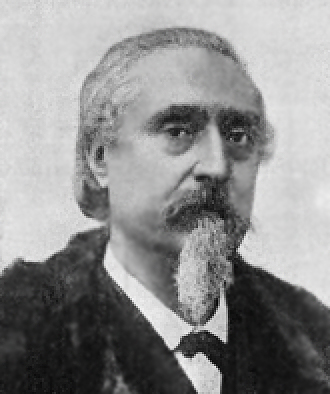
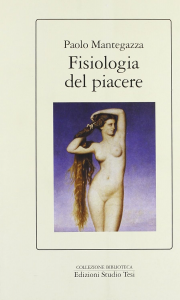
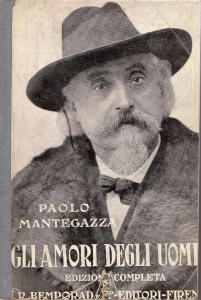
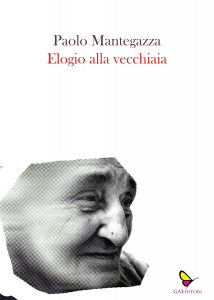
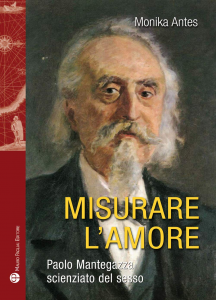
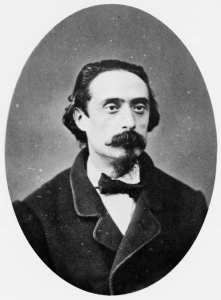
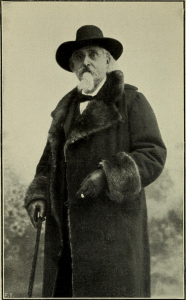
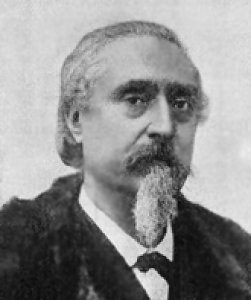
Paolo Mantegazza (October 31, 1831 in Monza, Austrian Empire – August 28, 1910 in San Terenzo) was an Italian neurologist, physiologist, and anthropologist, as well as a prominent physician and consciousness researcher. Mantegazza published several works on the effects of psychotropic plants on human consciousness, numerous other scientific writings, and several novels that were bestsellers in their time but have since been largely forgotten.
Mantegazza first studied medicine in Pisa and Milan, graduating in Pavia in 1854. He then traveled to India and South America, where he practiced medicine in Argentina and Paraguay. In 1858, he returned to Italy and worked as a surgeon in Milan. In 1860, he was appointed professor of pathology at the University of Pavia, where he founded the first Institute of General Pathology in Europe.
In 1870, Mantegazza became a professor of anthropology at the Istituto di Studi Superiori in Florence. There he founded the Museo Antropologico-Etnografico di Firenze (Anthropological and Ethnographic Museum) and, in 1871, the journal Archivio per l’Antropologia e l’Etnologia, which is still published today, with Felice Finzi. At that time, culture and science in Italy were far more influenced by the Catholic Church than they are today. Mantegazza was repeatedly attacked by ecclesiastical circles, particularly because he was an advocate of Darwinism and an atheist.[2] From 1868 to 1875, he had a lively correspondence with Charles Darwin.
Pioneer of psychedelic Drug research
During his several years working as a doctor in South America, Mantegazza observed the habit of local coca farmers chewing the leaves of the coca bush. In the “service of science” he began to imitate them, taking three daily doses of three grams of coca leaves. In 1859 he published the work Sulle virtù igieniche e medicinali della coca e sugli alimenti nervosi in generale (On the Hygienic and Medicinal Benefits of Coca and Nerve Food in General), for which he received an award and which caused a sensation both in Italy and abroad. Due to the fact that Mantegazza distinguishes between coca and cocaina in his writings, it is assumed that he had already extracted the alkaloid cocaine from the coca leaves and taken it himself in 1859. Mantegazza is therefore often associated with cocaine in literature, but his interest in the effects of psychotropic substances went much further, and he published numerous works with treatises on the intoxicating effects of various drugs such as alcohol, mate, guarana, opium, hashish, kava and ayahuasca (agahuasca), and classified them according to their effects in 1859, more than sixty years before Louis Lewin made his classification in his 1924 work Phantastica.
Sexual science
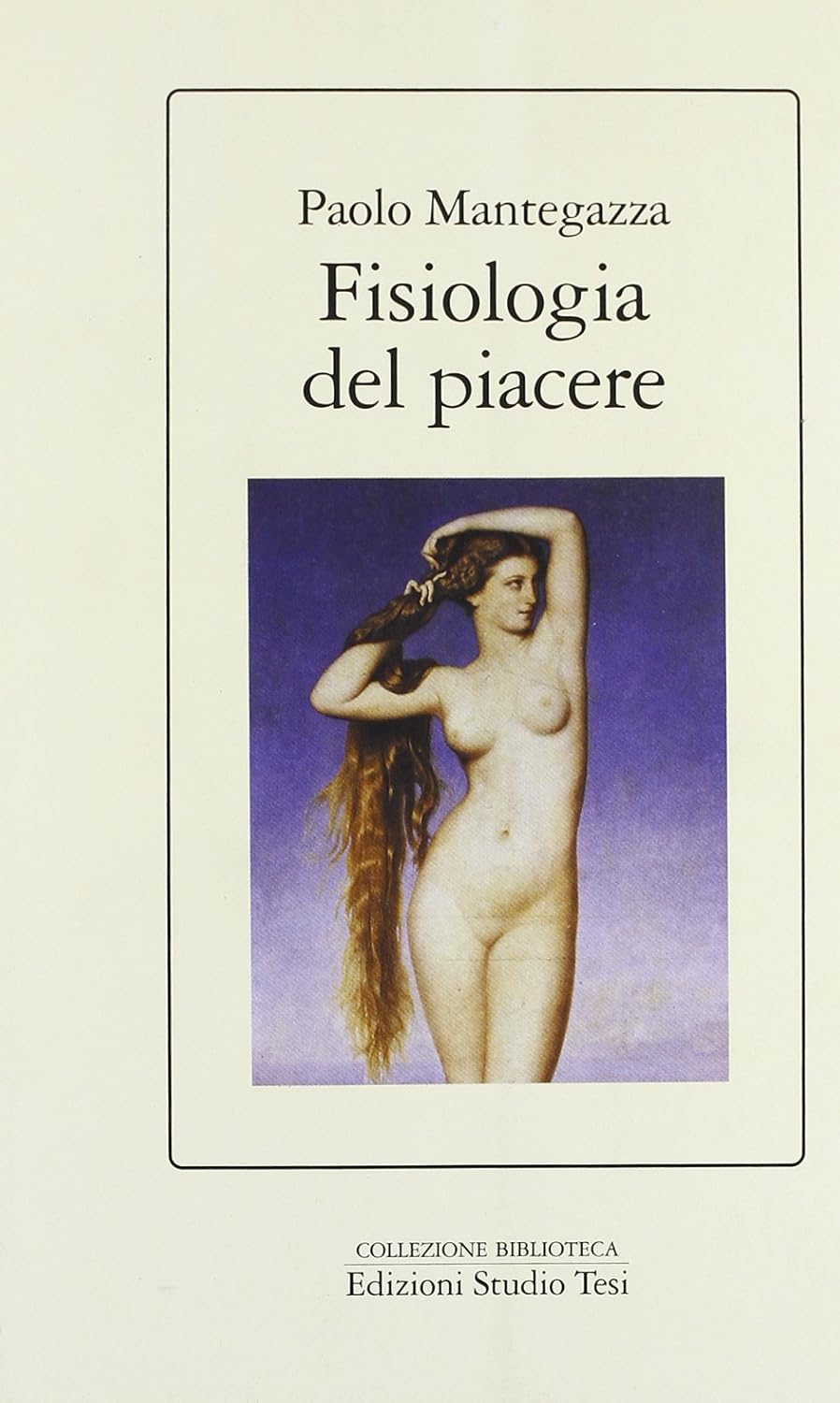
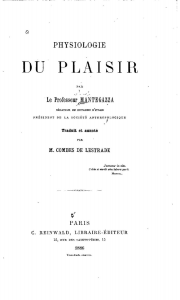
Almost forgotten, but outstanding in his time, were his numerous publications in the field of sexology, which only emerged later: Fisiologia del piacere (1854); Fisiologia dell’amore (1873); Igiene dell’amore (1886); Gli amori degli uomini – Saggio di una etnologia dell’amore (1886) and Fisiologia della donna (1893) – in which he summarized observations, his own experiments and anthropological-ethnological results of extensive collections, research and travels in the sense of a “phenomenology of heterosexual love… which is unparalleled in the history of sexology.” At just 22 years old, he wrote “Fundamentals of Edonology or the Science of Pleasure” (today understood as hedonism) and spoke out against “false puritans” and the “murky, stinking fog of hypocrisy” (Volkmar Sigusch in: Deutsches Ärzteblatt 7/2007 – see web link).
“Wherever a beautiful woman appears, all human energies bubble from their battle-tested sources: Everything best and worst in man springs forth to pay homage to her or to insult her with envy.” (Paolo Mantegazza, The Concept of Woman Through the Ages, Nuova Antologia, January 15, 1893)
Politics
From 1865 to 1876, Mantegazza was a deputy from Monza in the Italian Chamber of Deputies and, from 1876, a senator in the Kingdom of Italy.
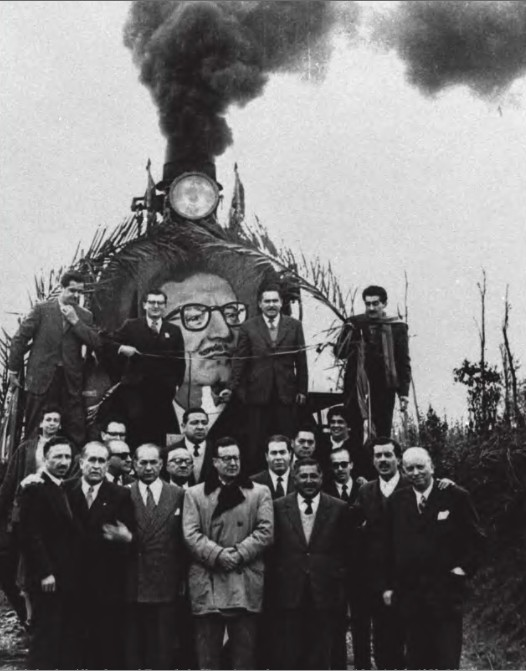
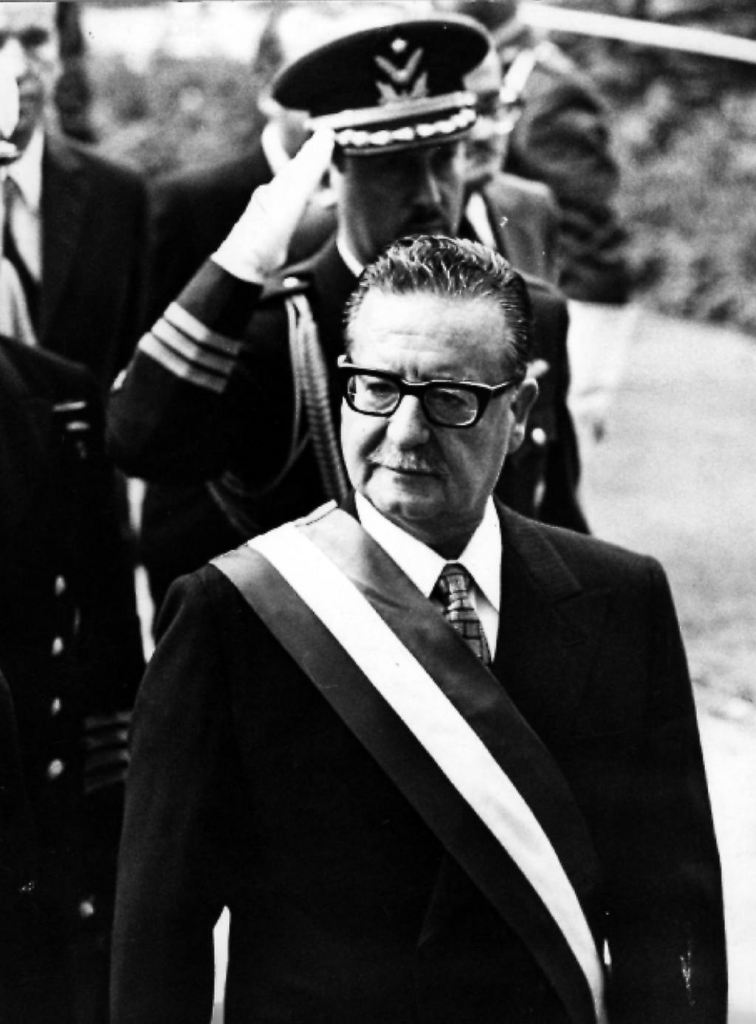
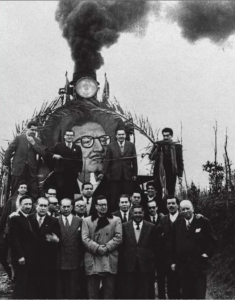
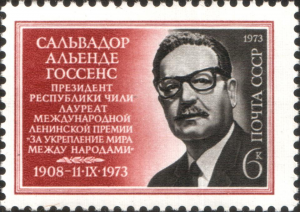
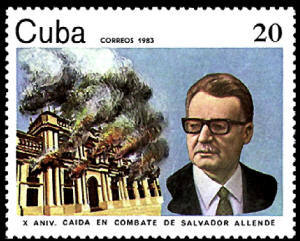
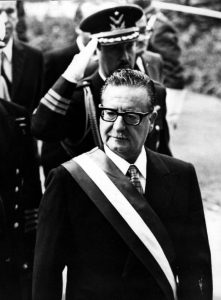
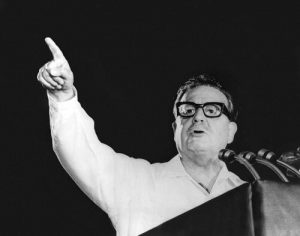
Salvador Guillermo Allende Gossens [salβaˈðoɾ ɣiˈjeɾmo aˈjende ˈɣosens] (June 26, 1908 in Valparaíso – September 11, 1973 in Santiago de Chile) was a Chilean physician and politician. He served as President of Chile from 1970 to 1973. His presidency was an attempt to establish a socialist society in Chile through democratic means. Allende was overthrown in a military coup in 1973, during which he committed suicide.
Allende became politically active in the late 1920s as a medical student at the University of Chile. He participated in protests against the dictatorship of Colonel Carlos Ibáñez del Campo and was elected vice president of the Federation of Chilean Students (FECH). In 1929, he joined both the Freemasons[5] and the group “Avance” (“Forward”).[6] In both organizations, he made important contacts for his later political career.
After the suppression of an uprising against the Ibáñez dictatorship led by Marmaduque Grove, Allende was arrested but later released. Shortly thereafter, he became secretary of the Socialist Party, founded in 1933, for the Valparaíso region.
In 1952, Allende ran for president for the first time, but only finished fourth. In 1954, he served as Deputy President of the Senate. In 1958, he was again the presidential candidate of the left-wing alliance Frente de Acción Popular (FRAP), but narrowly lost to the businessman Jorge Alessandri Rodríguez, who was supported by the right-wing parties. In 1964, he ran for president again, but was decisively defeated by the Christian Democrat Eduardo Frei. The reasons for this final electoral defeat were the last-minute support of the conservative parties for the more progressive Frei, as well as the massive support of the Christian Democrats by the CIA.[7]
In 1966, Allende was elected President of the Senate. In 1968, calls for his resignation followed his personal protection of the survivors of Che Guevara’s guerrilla force in Bolivia. In the same year he condemned the Soviet invasion of Prague.
Namegiving
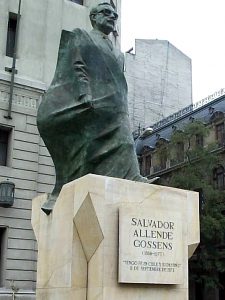
After the end of the military dictatorship in Chile, Allende’s body was transported from Valparaíso, where he had been buried behind closed doors after the coup, to Santiago de Chile and interred in the main cemetery. Several hundred thousand people attended the funeral. A statue of Allende stands next to the presidential palace, La Moneda.
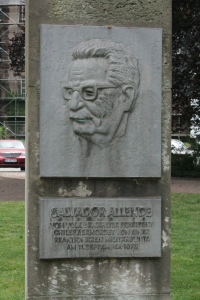
After his death, Salvador Allende was honored primarily in the socialist countries of Europe. In the Berlin district of Köpenick, the Salvador Allende Quarter is named after him. There is also an Allende Quarter in Wittenberge (Brandenburg). In the university town of Greifswald, in the GDR, the vocational school of the VEB Kombinat Ingenieur-Tief- und Verkehrsbau Rostock (State Industrial Estate Combine) bore the name Dr. Salvador Allende. An “Allende Memorial Stone” stood in the schoolyard. This educational institution was closed after the fall of the Berlin Wall. Two of the former buildings were converted into student housing and prop storage for the theater, in front of which the memorial stone is located. In Jena, a square in the Lobeda-Ost district, and streets in Bautzen, Chemnitz, Ludwigsfelde, Magdeburg, Neubrandenburg, Rostock, Frankfurt (Oder), Waltershausen, Weimar, Wittenberge, and Zwickau are named after Allende.
In Bernburg (Saale) in Saxony-Anhalt, the then new residential area on Kirschberg was named Dr. Salvador Allende Settlement in 1973, and a memorial plaque was erected at the corner of Dr. John Rittmeister Street, which was “stored indefinitely” in 2007.[33] The secondary school in Klötze (Saxony-Anhalt) bears the name “Dr. Salvador Allende,”[34] as does a primary school in Chemnitz.[35] A primary school in Rheinsberg (Brandenburg)[36] bore his name until 2018.[37]
In the Federal Republic of Germany, the former Bornplatz in the Hanseatic City of Hamburg was renamed Allende-Platz in 1983. It is located next to the grounds of the University of Hamburg, in the immediate vicinity of the former Talmud Torah School. In Oer-Erkenschwick, the Socialist Youth of Germany – The Falcons – has called its educational facility the Salvador Allende House since it opened in the late 1970s. There is also a Salvador Allende Street in Berlin, Bremen, and Frankfurt am Main. In Berlin, there is also the Salvador Allende Quarter.
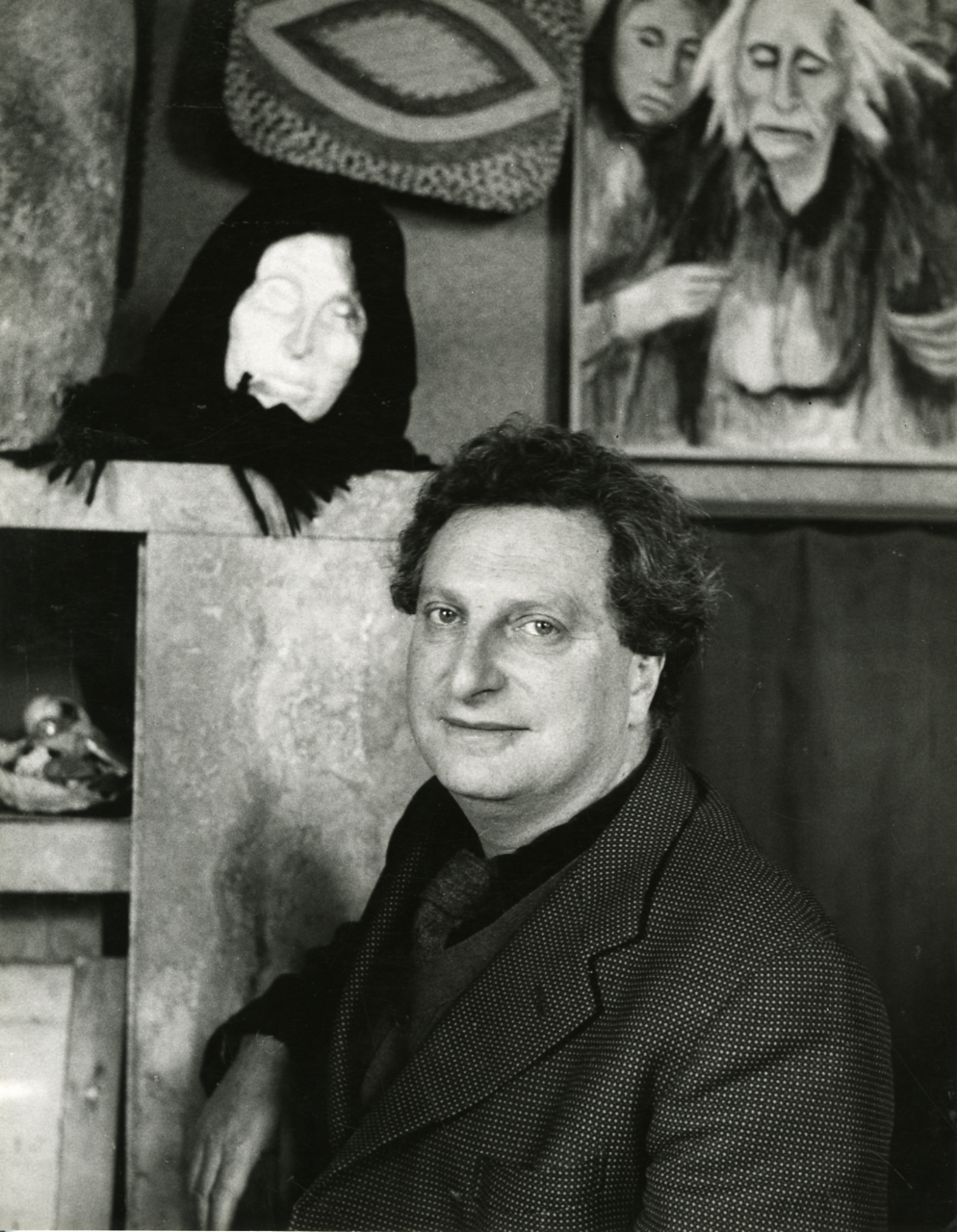
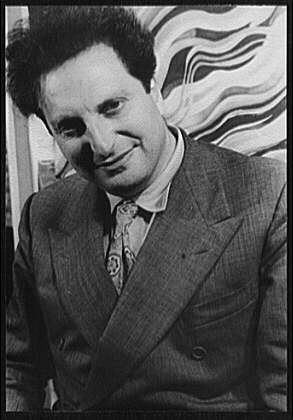
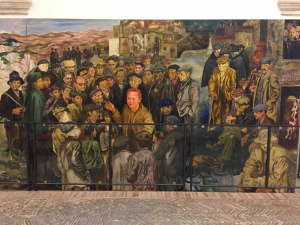
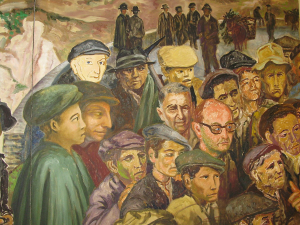
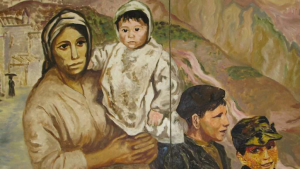
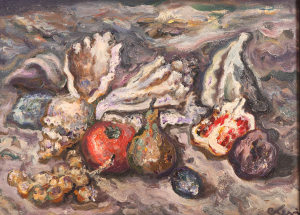
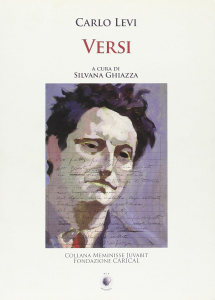
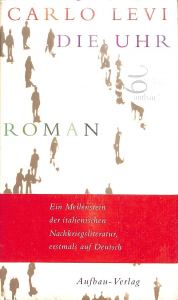
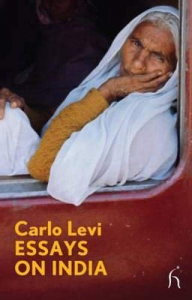
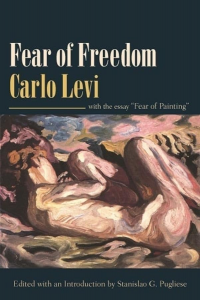
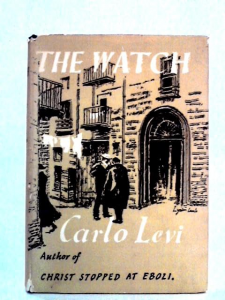
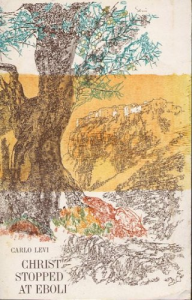
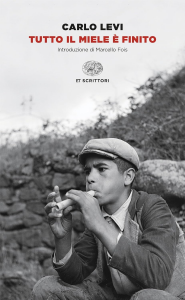
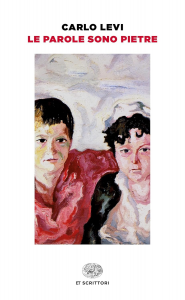
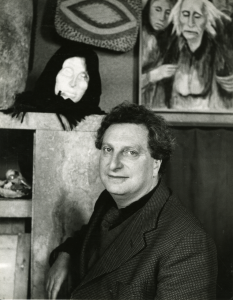
Graziadio Carlo Levi or Carlo Lèvi (born November 29, 1902 in Turin; died January 4, 1975 in Rome) was an Italian writer, painter, doctor and politician.
Carlo Levi came from an upper-class, assimilated Jewish family; his parents were Ercole Levi and Annetta Treves. In 1917 or 1918, he enrolled to study medicine at the University of Turin, graduating in 1924.[1] Although he worked as an assistant doctor at a Turin clinic from 1924 to 1928, he never practiced as a regular doctor, as he was more interested in politics and painting, to which he devoted himself intensively from 1923 onwards.[2] He became a member of the Rivoluzione liberale (“Liberal Revolution”) group led by Piero Gobetti, spent some time in Paris, and took part in the 1929 exhibition Sei pittori di Torino (“Six Turin Painters”).
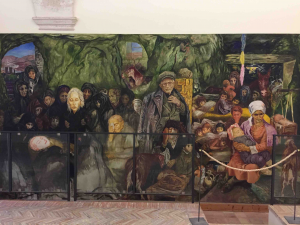
Because he had founded the anti-fascist group Giustizia e Libertà (“Justice and Freedom”) together with Carlo and Nello Roselli in 1929 and led it together with Leone Ginzburg, Levi was imprisoned in Rome for two months in the spring of 1934 and exiled to the southern Italian region of Lucania (now Basilicata) in May 1935. There, after some time in the small town of Grassano, he spent the period from September 1935 to May 1936 in the village of Aliano, where, due to the poverty of the inhabitants, he practiced as a doctor without pay and with limited resources. Until the provincial administration forbade this too and treatments could only be carried out in secret. On the side, he painted people and landscapes and explored the customs of the inhabitants, especially magic and superstition.
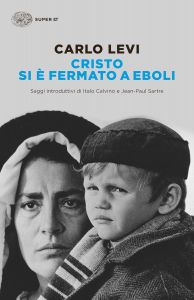
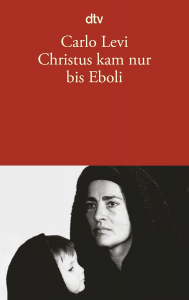
After his early release in 1936 through a general amnesty proclaimed by the fascist state to celebrate the annexation of Abyssinia during the Abyssinian War, Levi went into exile and took over the leadership of the Justice and Liberation group from Paris. In 1941, he returned to Italy, was arrested and imprisoned in Florence. After the fall of Mussolini, he was released, sought refuge in the Palazzo Pitti, and there, in 1943/1944, wrote his book Cristo si è fermato a Eboli (published in 1945, see below), in which he recorded his memories of his time in Aliano, choosing the slightly coded name Gagliano for Aliano.
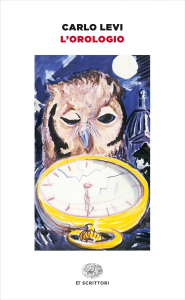
After the end of the Second World War, Levi moved to Rome, where he lived and worked from then on in the Villa Strohl-Fern[3] and for some time as editor of the magazine Italia libera, which belonged to the Partito d’Azione (“Party of Action”). He continued to paint (his paintings were exhibited in various European countries and in the USA) and wrote more books (see below). In 1963, he was elected to the Senate as an independent on the Communist Party list, where he remained until 1972.
Carlo Levi died of pneumonia in a Roman hospital in 1975. In accordance with his express testamentary wish, he was buried in the cemetery of Aliano, which was one of his favorite places to stay during his exile there.
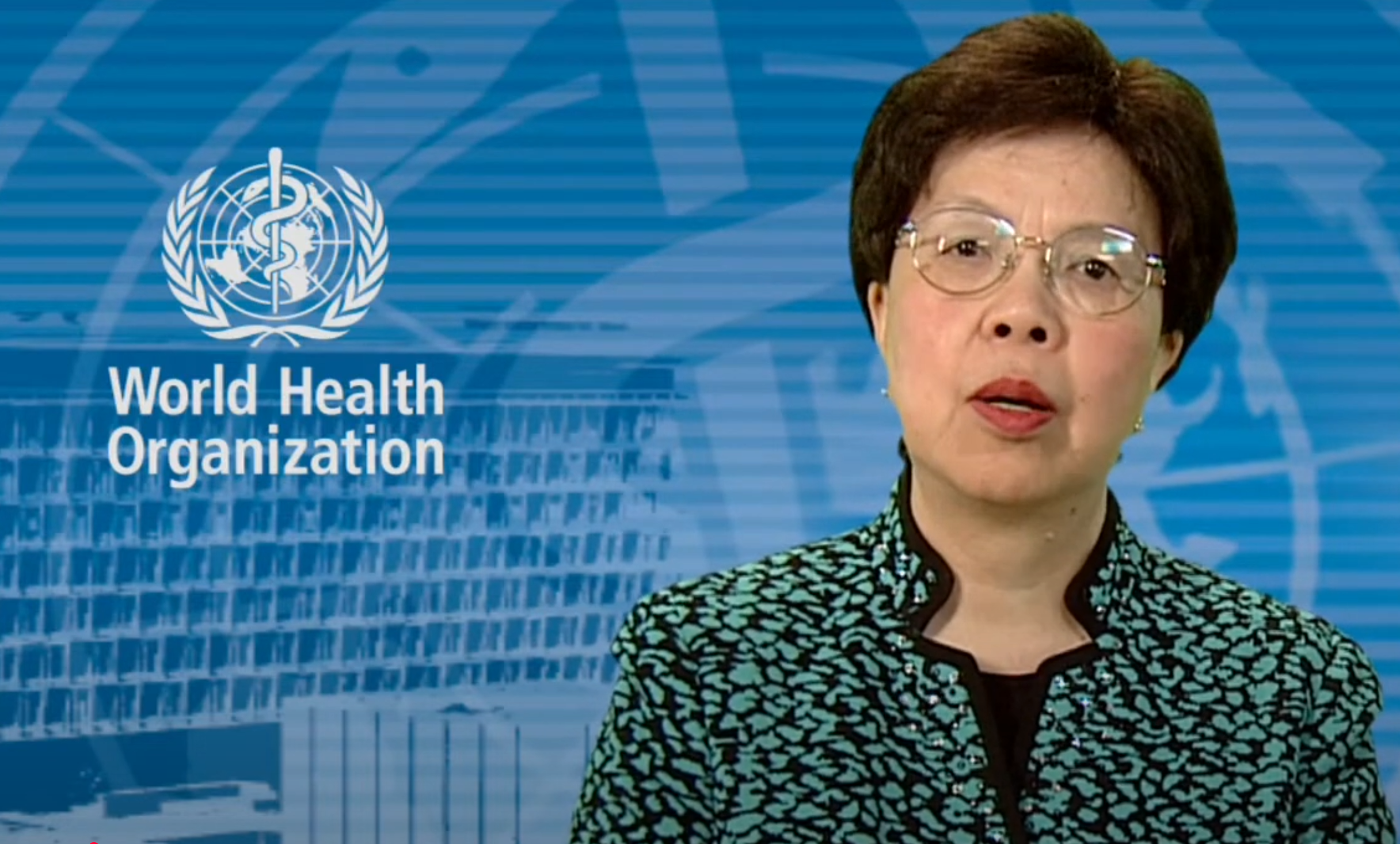
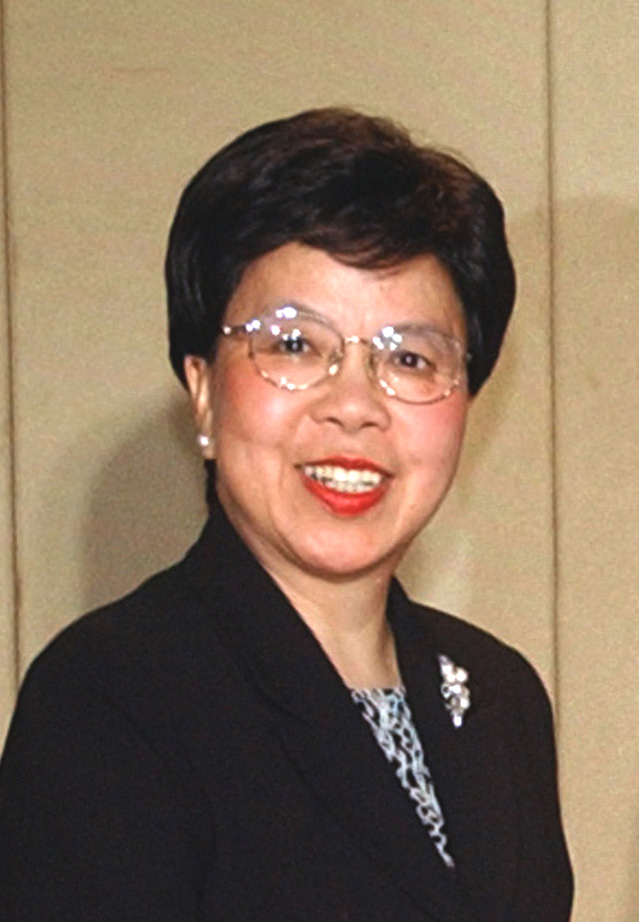
Margaret Chan Fung Fu-chun (Chinese: 陳馮富珍/陈冯富珍; born 1947 in Hong Kong) was Director-General of the World Health Organization from 2006 to 2017 (in May 2012 she was elected for a second term until June 30, 2017). She was the first Chinese woman to head a UN specialized agency.
Biografie
Margaret Chan completed her medical studies at the Canadian University of Western Ontario. After returning to Hong Kong, she joined the health department of the then British Crown Colony in 1978. From 1994 to 2003, she was Director of Health in the Hong Kong government. In this role, she was also responsible for combating the H5N1 avian flu (1997) and SARS in 2003, the outbreak of which claimed nearly 300 lives in Hong Kong. She was criticized by the public and parliament for her hesitant stance in combating SARS.[2] On the other hand, a commission of experts appointed by the government concluded that she could not be held responsible for the mismanagement.
That same year, she left her post to accept a position at the WHO as Director of the Department for the Protection of the Human Environment. In 2005, she became Director of the WHO Department of Communicable Disease Surveillance and Control and Deputy to the Director-General for Pandemic Influenza.
She was heavily criticized for her agreement to classify the 2009/10 swine flu, caused by the H1N1 influenza A virus, as a pandemic, as the criteria for a pandemic were lowered for that virus.[4] Members of the Council of Europe also criticized Chan, most notably the German physician and politician Wolfgang Wodarg (SPD), a member of the Parliamentary Assembly of the Council of Europe.[5] The WHO rejected the accusations of hasty action.
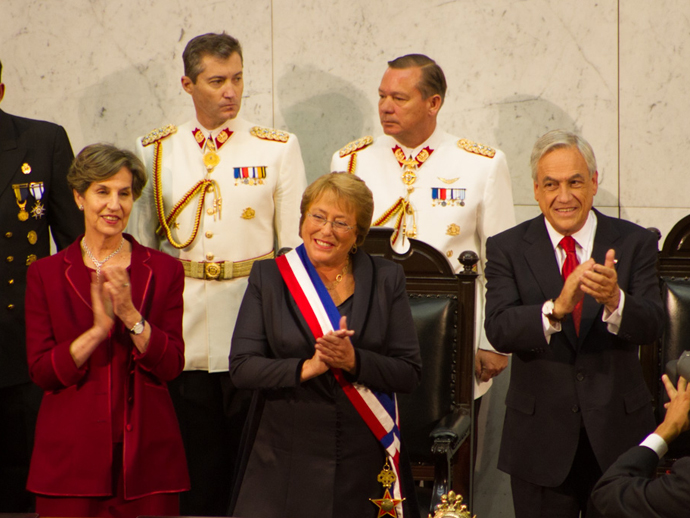
Verónica Michelle Bachelet Jeria [beˈɾonika miˈtʃel βaʃeˈlet ˈxeɾja] (born 29 September 1951 in Santiago de Chile) is a Chilean surgeon[1] and politician (PS). From 2006 to 2010 and from 2014 to 2018 she was President of Chile, making her the first woman to hold this office. From 1 September 2018 to 31 August 2022 she was United Nations High Commissioner for Human Rights. In the meantime she was Under-Secretary-General of the United Nations as Executive Director of the UN Women organization.
Michelle Bachelet was named after the French actress Michèle Morgan.[2] She is the daughter of Chilean Air Force General Alberto Bachelet, who remained loyal to President Salvador Allende during the 1973 coup in Chile and was captured and tortured by members of Augusto Pinochet’s regime. The following year, he suffered a fatal heart attack in prison. Michelle and her mother fled to East Germany via Australia. In 2013, shortly before the presidential election, Bachelet recounted her own experiences in the Villa Grimaldi torture prison in January 1975 before her escape: “My head was in a hood and I was insulted, threatened and sometimes beaten. But I was spared the parrilla, a torture device consisting of a bed frame for electric shocks, literally called a grill in Spanish.”[3] She learned German at the Herder Institute of the University of Leipzig.[4] She studied medicine at the Humboldt University of Berlin. On October 19, 2006, she was awarded an honorary doctorate from the Charité.[5] This was in recognition of her services to healthcare and the care of underprivileged people, which she achieved as a pediatrician and politician in Chile.
In 2019, she was awarded honorary citizenship of the city of Montreal.
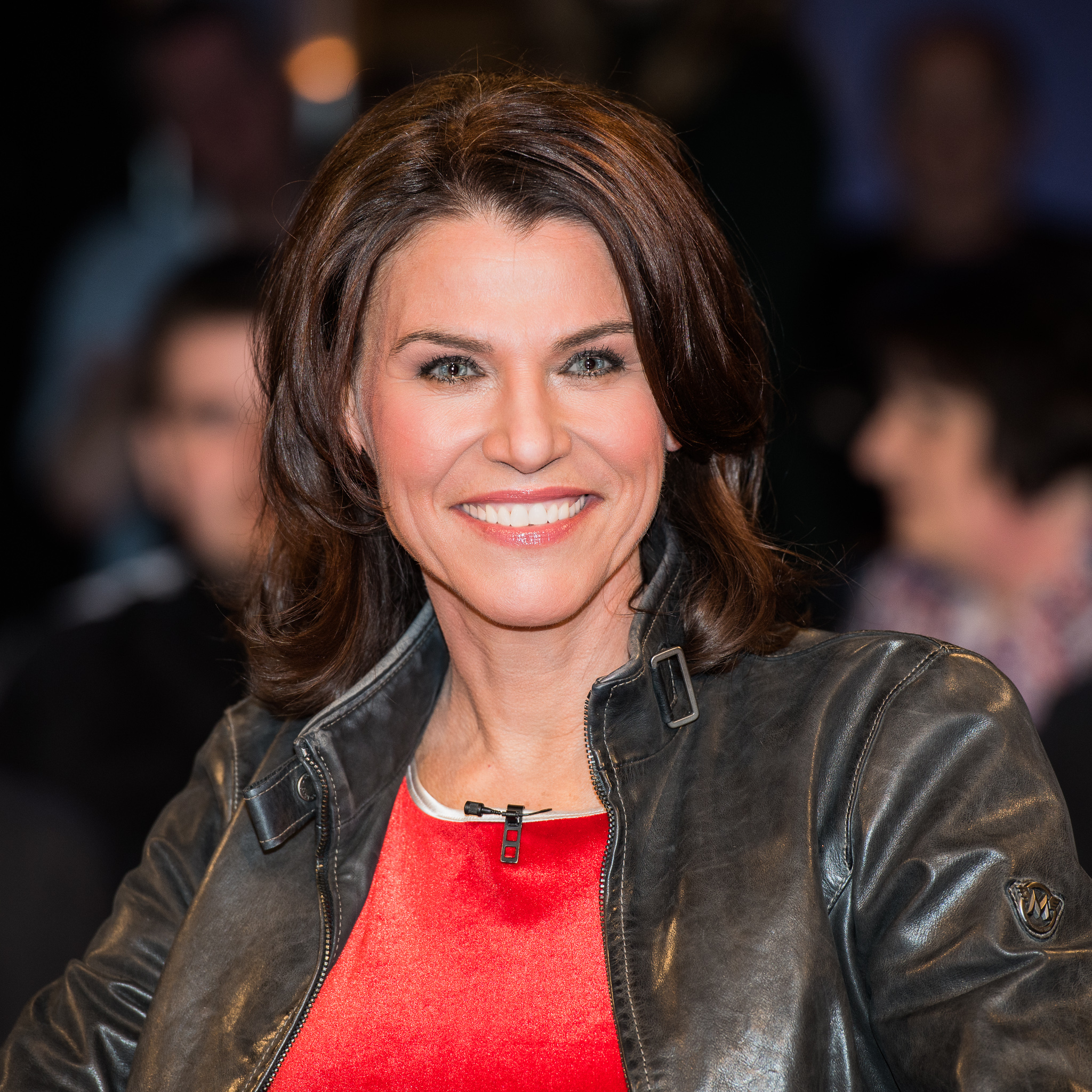
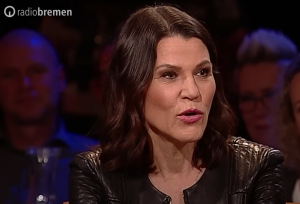
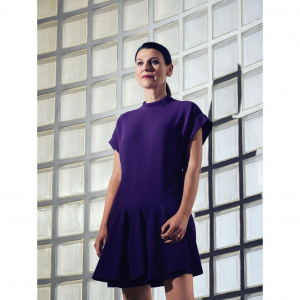
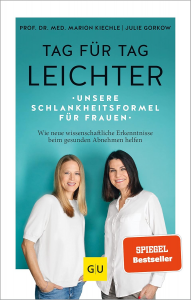
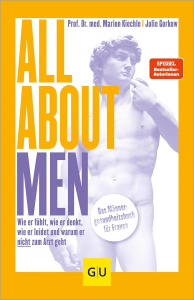
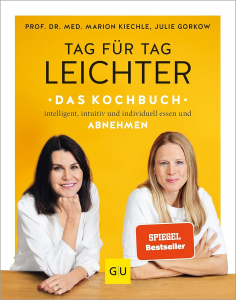
Marion Brigitta Kiechle (formerly Kiechle-Schwarz; born April 4, 1960 in Oberkirch) is a German physician, scientist, author, and former politician (CSU). Since October 2000, she has been Director of the Gynaecology Clinic at the Klinikum rechts der Isar of the Technical University of Munich and holds the Chair of Gynecology and Obstetrics.
On March 21, 2018, Markus Söder appointed her to his cabinet as Bavarian Minister of Science. Kiechle is chair of the Bavarian Bioethics Commission and deputy chair of the Central Ethics Committee for Stem Cell Research. Initially independent, she joined the CSU in April 2018 and, on the 21st of that month, was placed in the hopeless fifth place on the Upper Bavaria district list for the 2018 Bavarian state election. After the end of the legislative period in November 2018, she left the government and returned to TUM.
Engagement
Since 2021, Marion Kiechle has been chairwoman of the board of trustees for the Hospice House of Life project in Munich. Since February 2023, she has been a member of the administrative advisory board of FC Bayern Munich.
Privates
Since April 2010, she has been married to television journalist and sports commentator Marcel Reif, her fourth wife. Before that, she was married to a special education teacher and two doctors.