Category Archives: inventorDocs

  • -

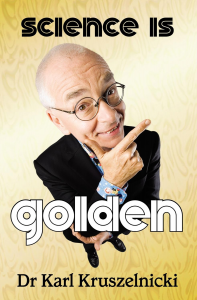
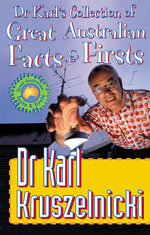
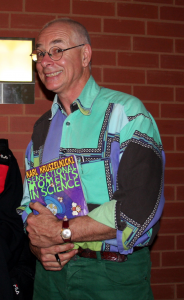
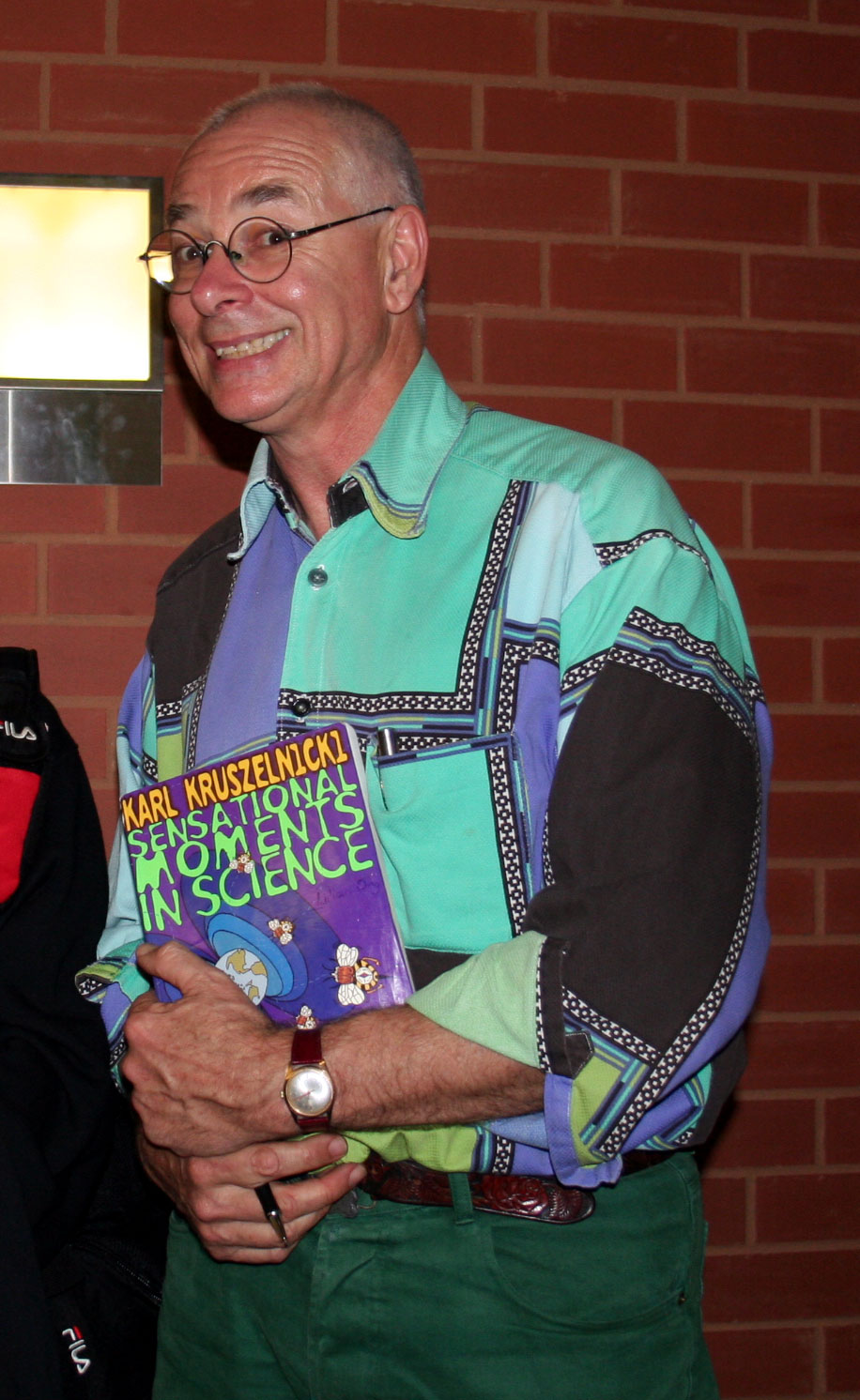
Karl Kruszelnicki

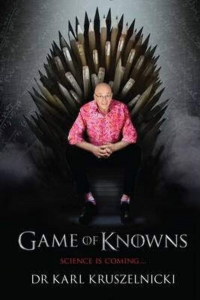
Karl Sven Woytek Sas Konkovitch Matthew Kruszelnicki AM (born 1948), often referred to as Dr Karl,[2] is an Australian science communicator and populariser,[2] who is known as an author and a science commentator on Australian radio, television, and podcasts.

Kruszelnicki is the Julius Sumner Miller Fellow in the Science Foundation for Physics at the School of PhysicsUniversity of Sydney.

Kruszelnicki was awarded a Master of Biomedical Engineering degree at the University of New South Wales. He completed his Bachelor of Medicine and Bachelor of Surgery degrees at Sydney University in 1986.
After primary school, Kruszelnicki’s first job was ditch digger in the Wollongong suburb of Dapto.[11] He also worked as a filmmaker, car mechanic, TV weatherman and as roadie for Slim DustyBo Diddley and Chuck Berry.[12] While working as a taxi driver in Sydney, he was beaten unconscious after picking up a passenger trying to escape a group of men.[1]

Kruszelnicki presented the first series of Quantum (replaced by Catalyst) in 1985. As a science communicator and presenter, he appears on the Seven Network’s Weekend Sunrise and on ABC TV. From early 2008 to 2010 he co-hosted a TV series called Sleek Geeks with Adam Spencer.

Kruszelnicki presented a program on ABC TV in January 2025 titled Dr Karl’s How Things Work.[16]

Kruszelnicki does a number of weekly radio shows and podcasts. His hour-long show on ABC radio station Triple J has been going on in one form or another since 1981; this weekly science talkback show, Science with Dr Karl, is broadcast on Thursday mornings from 11:00 am to midday and attracts up to 300,000 listeners; it is also available as a podcast.[17]

Kruszelnicki also often helps with other science and education Triple J promotions such as the Sleek Geek Week roadshow with Adam Spencer and Caroline Pegram. He and Adam Spencer released the Sleek Geeks podcast regularly until December 2015.[18] Also, Since 2016, he has hosted the podcast Shirtloads of Science.[19][20]

For many years, until March 2020, Kruszelnicki appeared on a live weekly late-night link-up on BBC Radio 5 Live‘s Up All Night, usually with Rhod Sharp, answering science questions.[21] In 2017, he hosted Dr. Karl’s Outrageous Acts of Science on Discovery Channel (Australia).[22]

Kruszelnicki writes a regular column for Australian Geographic magazine, called ‘Need to Know’, which is republished as a blog on the magazine’s website.[23] He has also written for the Sydney Morning Herald‘s Good Weekend magazine.[24]

In 1981, he appeared on an Australian radio documentary about death and near-death experiences that aired on the ABCAnd When I Die, Will I Be Dead?[25] It was adapted into a book in 1987.

Politics

Kruszelnicki was an unsuccessful candidate for the Australian Senate in the 2007 Australian federal election. He was placed number two on the Climate Change Coalition ticket in New South Wales.[27]

In 2015, Kruszelnicki appeared in an Australian Government advertising campaign for the recently published intergenerational report. He had previously agreed to do the campaign, believing it would be a “non-political, bipartisan, independent report.” After its publication, however, he backed away from the campaign, describing it as “flawed”. “How can you possibly have a report that looks at the next 40 years and doesn’t mention climate change? It should have acknowledged that climate change is real and we cause it and it will be messy.”
https://www.abc.net.au/news/karl-kruszelnicki/8462002

https://en.wikipedia.org/wiki/Karl_Kruszelnicki


  • -

Heinrich Hoffmann

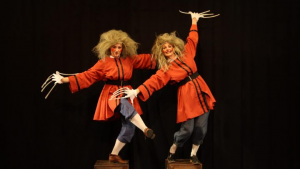
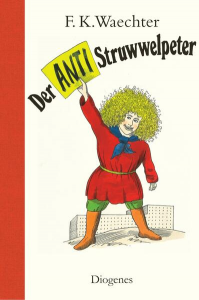
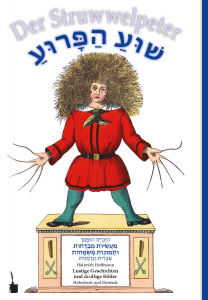
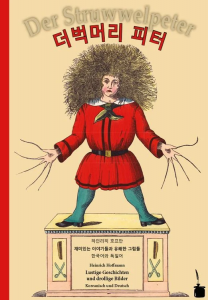
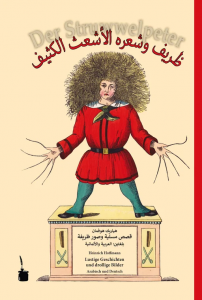
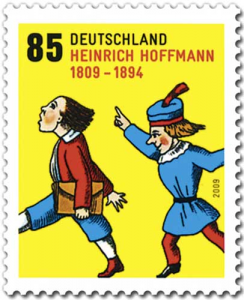
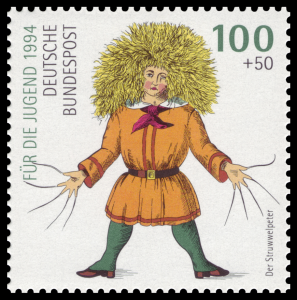
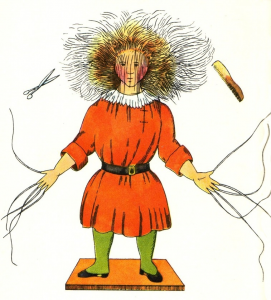
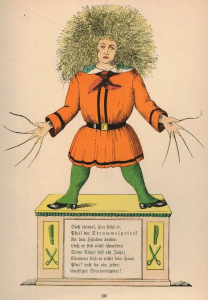
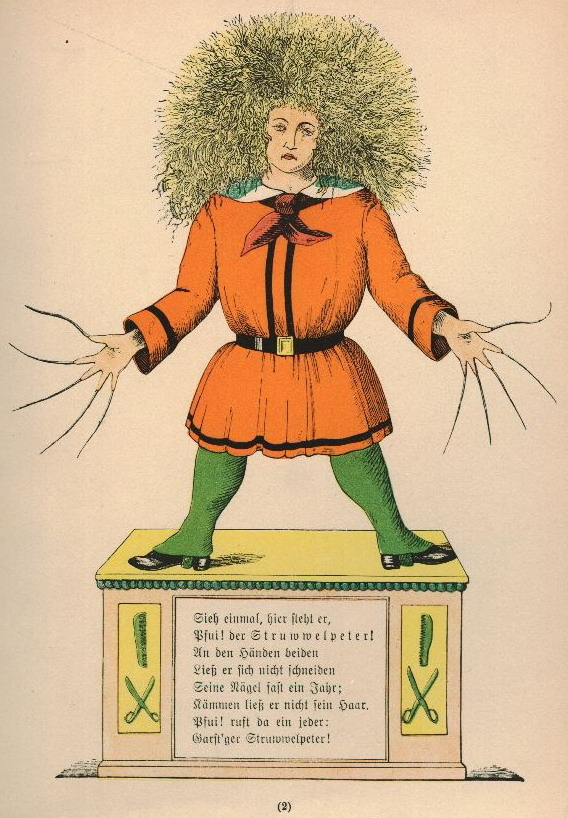
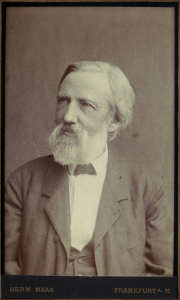
Heinrich Hoffmann (June 13, 1809 in Frankfurt am Main; September 20, 1894 in Frankfurt am Main) was a German psychiatrist, poet, and children’s book author. He is the author of Struwwelpeter (The Struwwel Peter). He also used the pseudonyms Heulalius von Heulenburg, Reimerich Kinderlieb, Peter Struwwel, and Polycarpus Gastfenger.

Politics

In 1848, he was a member of the Frankfurt Preliminary Parliament. He hosted the revolutionary Friedrich Hecker in his household. Hoffmann himself advocated a constitutional monarchy under Prussian rule and was a member of the Hereditary Imperial Party. In his satirical works “Handbook for Diggers or Concise Instructions on Becoming a People’s Man in a Few Days” (1848) and “The Howler Mirror” (1849), he strongly opposed the republicans. In 1866, he supported the annexation of the Free City of Frankfurt by Prussia.

Literarische Werke

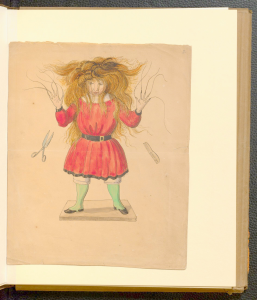
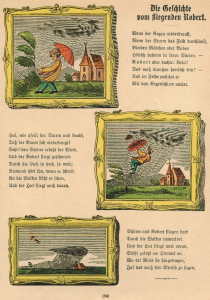
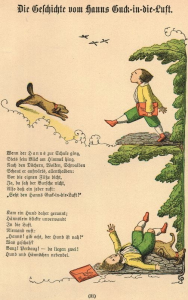
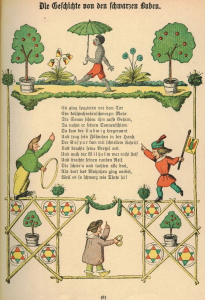
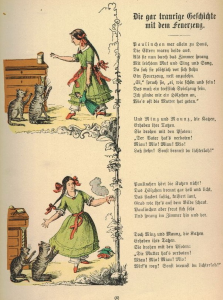
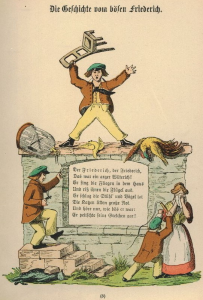
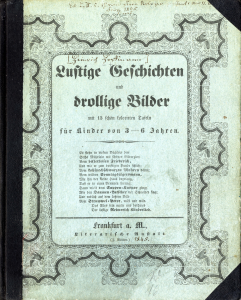
From 1842 onwards, Hoffmann published poems and plays under various pseudonyms. He described himself as an occasional verse writer. He became known worldwide through his children’s book, Struwwelpeter, which he illustrated himself and wrote for his eldest son for Christmas 1844. Presumably in 1858, Hoffmann created a new version with modified illustrations; all subsequent editions of Struwwelpeter are based on this.

In 1851, he published his Christmas fairy tale “King Nutcracker and Poor Reinhold.” The first edition was illustrated with a drawing by the author depicting the Frankfurt Christmas market.
After his retirement, he wrote his memoirs, which were not published until 1926.

Memberships, Private Life

As a student in Heidelberg, Hoffmann had been a member of the Corps Alemannia since 1830, later an honorary member.[3] In 1836, he joined the Masonic lodge “Zur Einigkeit.” After a few years, he left because it did not admit Jews.[4]
In the fall of 1840, Hoffmann founded the Society of Tutti Frutti and its Baths in the Ganges in Frankfurt am Main, a society of writers, artists, and scholars whose members adopted specially chosen “fruit names.” Hoffmann himself was the “Onion.” The members included Franz Xaver Schnyder von Wartensee (“Pine Cone”), Ludwig Braunfels (“Chestnut”), Wilhelm Speyer (“Betel”), Theodor Creizenach (“Deadly Nightshade”), Carl Trost (“Thorn Apple”), Friedrich Maximilian Hessemer (“Date”), Eduard Schmidt von der Launitz (“Juniper”), Lorenz Diefenbach (“Strawberry”), Georg Eduard Steitz (“Nut 2”), Johann David Passavant (“Pomeranian Orange”), Heinrich von Rustige (“Nut”) and Philipp Veit (“Fennel”).

Interesting humorous version of Struwwelpeter by Böhmermann:
https://www.youtube.com/watch?v=–X5XjyynMw

In 1845, he co-founded a medical association and composed “Wine Songs for Doctors” for social occasions.

He died after a stroke and was buried in Frankfurt’s Main Cemetery (at the Wall, No. 541, honorary grave).[6]

A street in Frankfurt-Niederrad is named after him, where the Clinic for Psychiatry, Psychosomatics, and Psychotherapy of the Frankfurt University Hospital is now located. Two museums are dedicated to him, as are several memorial plaques at his former residences in Frankfurt.

Dice Game

Mr. Fix von Bickenbach’s Journey Around the World in 77 Days, Struwwelpeter Museum, Frankfurt am Main, 2012. Available as a facsimile in a slipcase.[7]

Museum

The Heinrich Hoffmann and Struwwelpeter Museum has been located in Frankfurt am Main since 1977, providing information about the life and work of this man and his classic children’s book.[8] In September 2019, the museum, now known as “Struwwelpeter,” moved to its current location.-Museum“, in das Haus zum Esslinger in der Neuen Frankfurter Altstadt.[9]

https://en.wikipedia.org/wiki/Heinrich_Hoffmann_(author)

https://de.wikipedia.org/wiki/Heinrich_Hoffmann

https://de.wikipedia.org/wiki/Struwwelpeter

https://en.wikipedia.org/wiki/Struwwelpeter


  • -

Werner Schunk

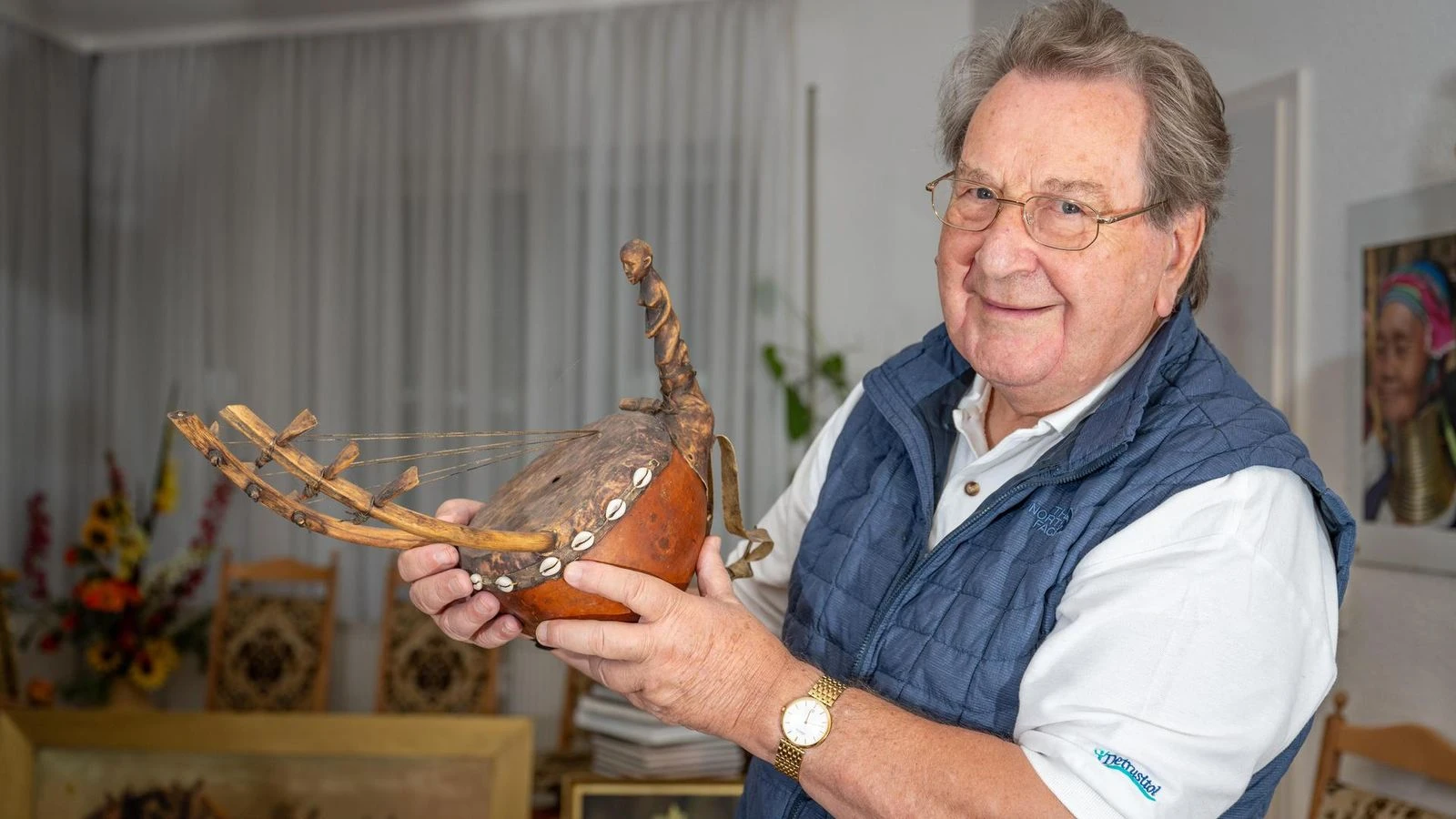
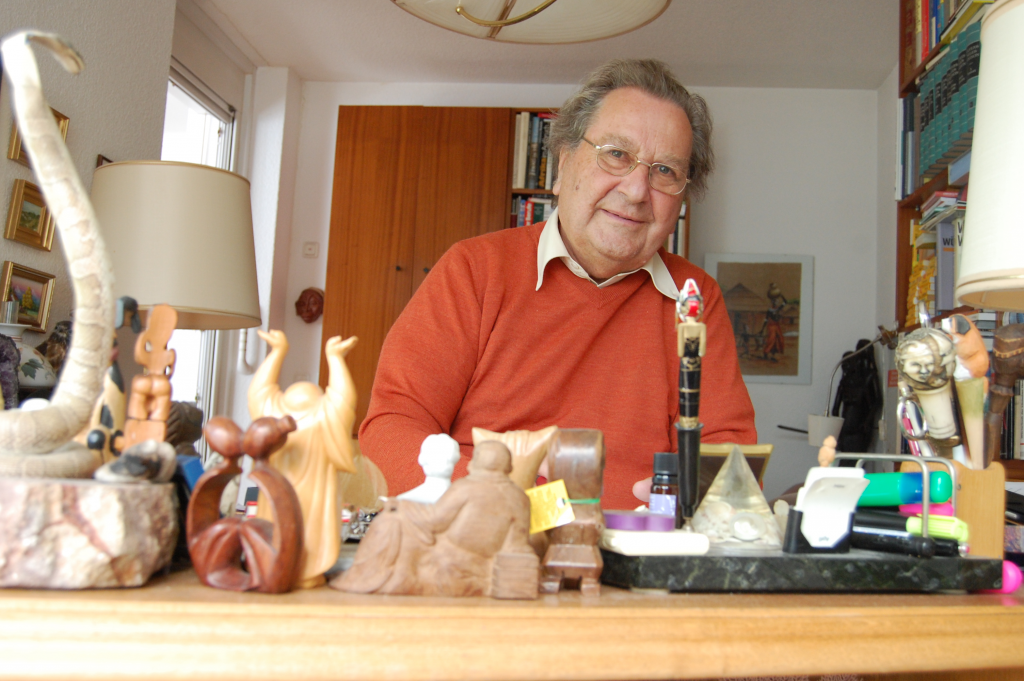
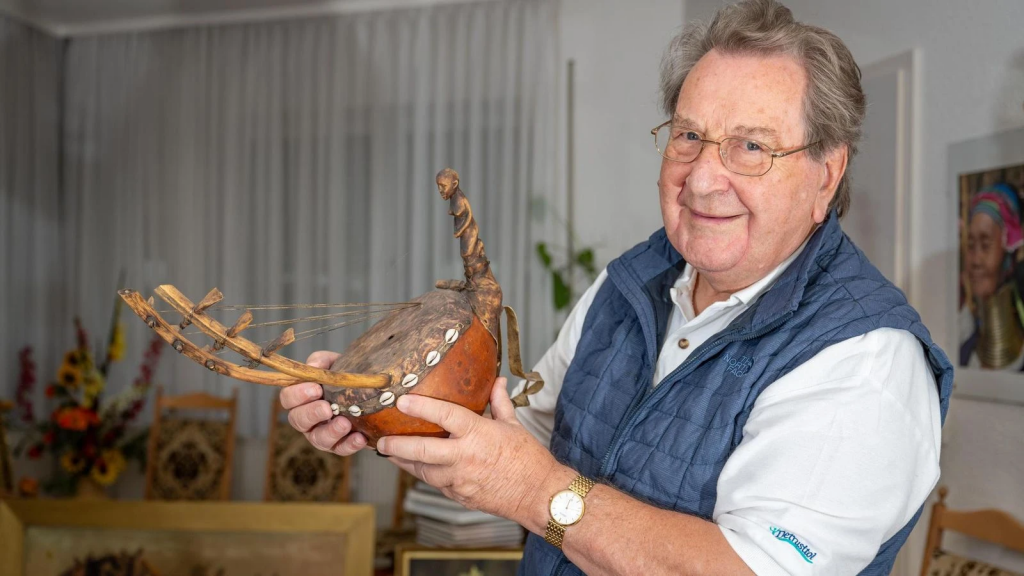
Prof. Dr. Werner Schunk has traveled to more than 100 countries in his lifetime. His curiosity about people in other cultures, their way of life, and their art has repeatedly led him to board trains, cars, buses, airplanes, rickety helicopters, and the suspiciously light boats of the locals. He wanted to see with his own eyes how the indigenous people of Papua New Guinea, the Amazon, or Madagascar live, and always stayed for a while. Rich in impressions, insights, and the gratitude of the people, he returned home, bringing back rare works of art as souvenirs. He will exhibit some of these extraordinary mementos at the KunstForum Gotha from October 2, 2020, to March 28, 2021, combining them with interesting anecdotes and tips from his work as a physician and brain researcher.

The astonishingly universal life’s work of Professor Werner Schunk is anchored in his hometown of Gotha. He was born in Sundhausen, trained as a metalworker in railroad car manufacturing, and just a few years after completing his medical studies, became a company doctor. When practice space became scarce, he treated people from Gotha East in his apartment. For the rubber combine, he systematized poisons, their effects, and their treatment. Schunk shared the findings of his work with other researchers from Sweden, Great Britain, and America. He later traveled to Japan and India to help people suffering from Parkinson’s disease with his “Way of Schunk” treatment method. Thanks to his extensive knowledge and experience, he became Director of the Institute for Occupational Medicine and Vice-Rector of the Medical Academy in Erfurt, while also serving on the Gotha City Council and for the Perthes Forum in Gotha.

The core of Professor Werner Schunk’s research is the miracle of the brain. He knows it with incredible precision, down to the most complex biochemical processes, yet has never lost his sense of wonder. He calls this mysterious organ a work of art capable of thinking, feeling, and moving. He explored it so extensively and persistently that he became one of the first people in the world to discover that the brain’s own metabolism can be severely disrupted by manganese. From then on, he could have only hung around at receptions and accepted numerous prizes and honors. But then he swapped his fine suit for a doctor’s coat and tropical clothing to be where true art is created: among people.

He has published 800 scientific publications and lectures, as well as ten scientific books. He holds 68 patents, including those for biomaterials.

Wandlung des Lächelns

Jetzt huscht es über dein Gesicht,
ein Lächeln, das die Starre bricht.
Zeigt an die innere Verspannung,
löst Körper, Geist aus der Verbannung.

Das Lächeln ist auf bestem Wege
zur wundersamen Körperpflege.
Verschenke es mit deinem Blick,
es kommt in andrer Form zurück.

Diese äußerliche Handlung
zeugt von innerer Verwandlung.

https://werner-schunk.de

https://www.kultourstadt.de/kunstforum/ausstellungen/werner-schunk


  • -

William R. Bertelsen

Tags :

Category : inventorDocs , pioneerDocs

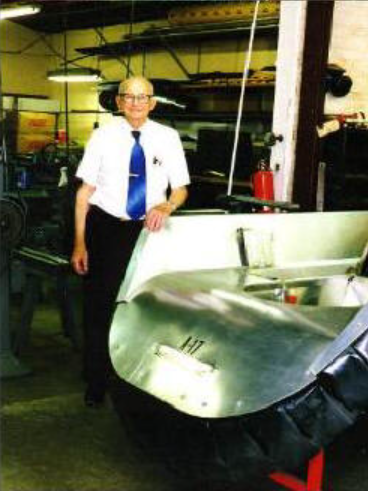
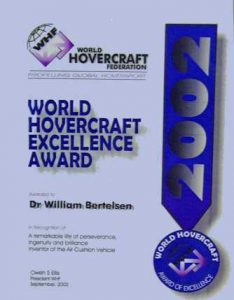
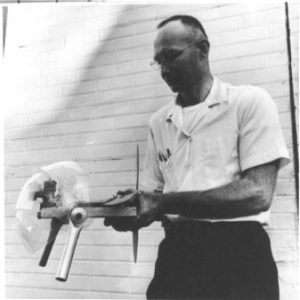
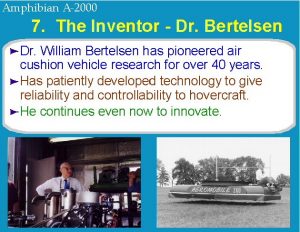
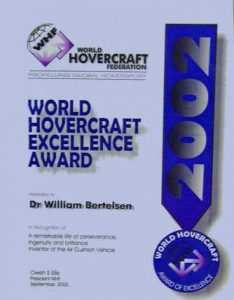
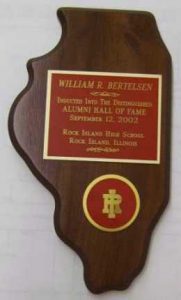
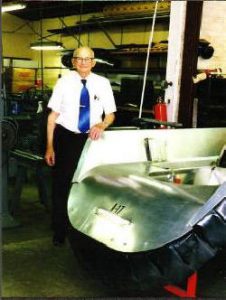
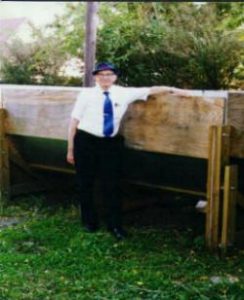
William R. Bertelsen (May 20, 1920 – July 16, 2009) was an American inventor and pioneer in the field of hovercrafts. Bertelsen is best known as the inventor of the Aeromobil, the first hovercraft to transport a person over land and water.[1] In 2002, Bertelsen was named the “Father of the Hovercraft” by the World Hovercraft Federation.[1] William R. Bertelsen married Alberta Menzel on September 21, 1946, in Homewood, Illinois.

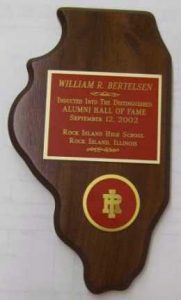
He graduated from Rock Island High School in 1938 and studied mechanical engineering for two years at the Indiana Institute of Technology. In addition to his busy career as a physician and inventor, Bertelsen was also a husband and father of four children. It was Bertelsen’s career as a country doctor that led him to develop and experiment with various ACVs. His need to reach patients in rural areas even in inclement weather quickly developed into a lifelong passion for developing alternative transportation. Despite both encouraging and negative responses, Bertelsen developed a series of ACVs and ground-effect vehicles (GEMs), including the Aeromobile 35-1, 35-2, 72, 200-1, 200-2, and 250-1; the Arcopter GEM-1, GEM-2, and GEM-3; and a vertical takeoff and landing (VTOL) aircraft.

https://en.wikipedia.org/wiki/William_R._Bertelsen


  • -

Ludwik Lejzer Zamenhof

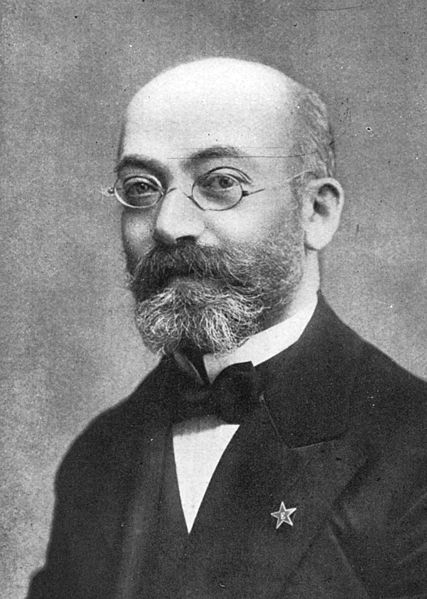
L. L. Zamenhof[a] (15 December 1859 – 14 April 1917)[b] was an ophthalmologist who lived for most of his life in Warsaw. He is best known as the creator of Esperanto, the most widely used constructed international auxiliary language.[1][2]

Zamenhof first developed the Esperanto language in 1873 while still in school. He grew up fascinated by the idea of a world without war and believed that this could happen with the help of a new international auxiliary language.[3] The language would be a tool to gather people together through neutral, fair, equitable communication.[4] He successfully formed a community that continues today despite the World Wars of the 20th century,[5] attempts to reform the language, and more modern IALs (the only other language like it at the time was Volapük). Additionally, Esperanto has developed like other languages: through the interaction and creativity of its users.[6]

In light of his achievements, and his support of intercultural dialogue, UNESCO selected Zamenhof as one of its eminent personalities of 2017, on the 100th anniversary of his death.[7][8] As of 2019, there are a minimum of 2 million people speaking Esperanto, including an estimated 1,000 native speakers.[9][10]

wikipedia DE
wikipedia EN


  • -

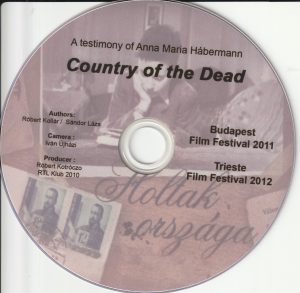
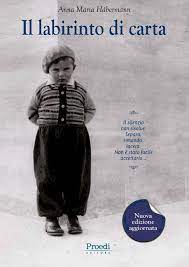
Anna Maria Habermann

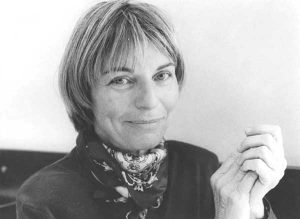
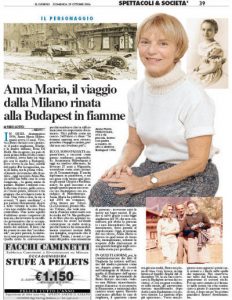
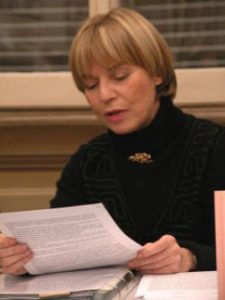
(EN:) Anna Maria Habermann, daughter of an italian mother and a hungarian father has studied different subjects:
She got her piano diploma in 1964 at the “conservatorio di musica Benedetto Marcello di Venezia” and plays as soloist and with her chamber music trio.

She got her medical degree with “summa cum laude” at the Siena university in 1969 and has worked as assistant doctor in anesthesia and surgery. Further on she specialized in orthopedics and traumatologics, practising these specialities in the Niguarda hospital of Milano.

Since 1990 she worke as free lance and researches about the deseases of musicians.

She gave classes of neuro-physiology of learning for musicians at the “Accademia Incontri con il Maestro di Imola” and at the
“conservatorio Giuseppe Verdi di Milano”.

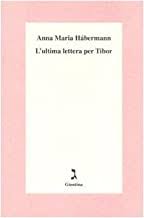
Her scientific publications are numerous. AND she writes prosa books like her last publication “L´Ultima Lettera Di Tibor”.

26 october 2002 “primo premio assoluto” of Literature Prize “Mario Tobino” for Italy given to Dr.med. Annamaria Habermann for her book: “L´Ultima Lettera Di Tibor”, published in italian and coming close to be a bestseller…

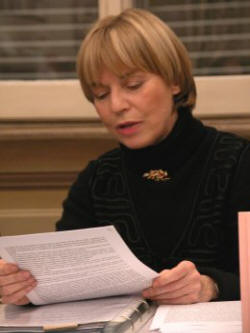
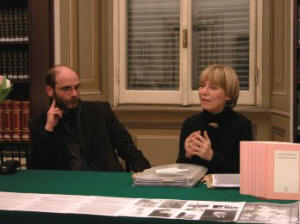
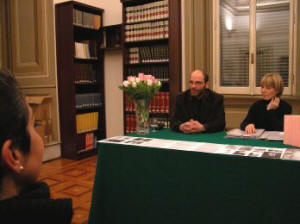
Dott. Sergio Nazzar and Dott. Anna Maria Habermann during a lecture of her book “L´Ultima Lettera Di Tibor”in Rome.

book Ungarn | Hungary
report IT
book in IT

web

wikipedia

youtube – vimeo

facebook – twitter – instagram

work

https://DoctorsTalents.com/cd00196en

  • -

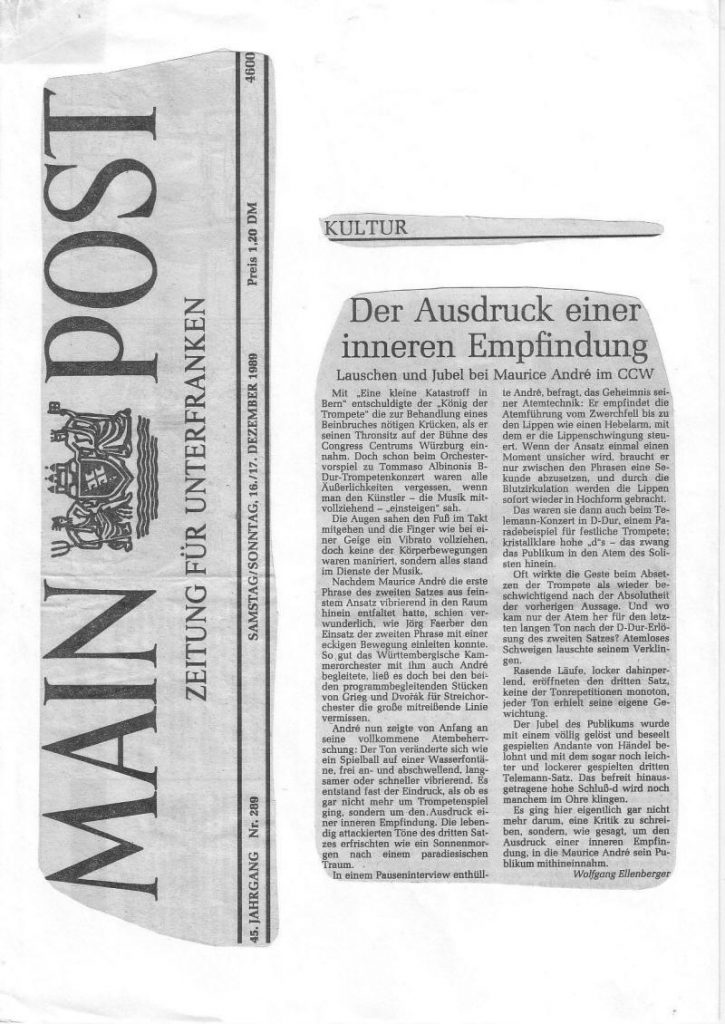
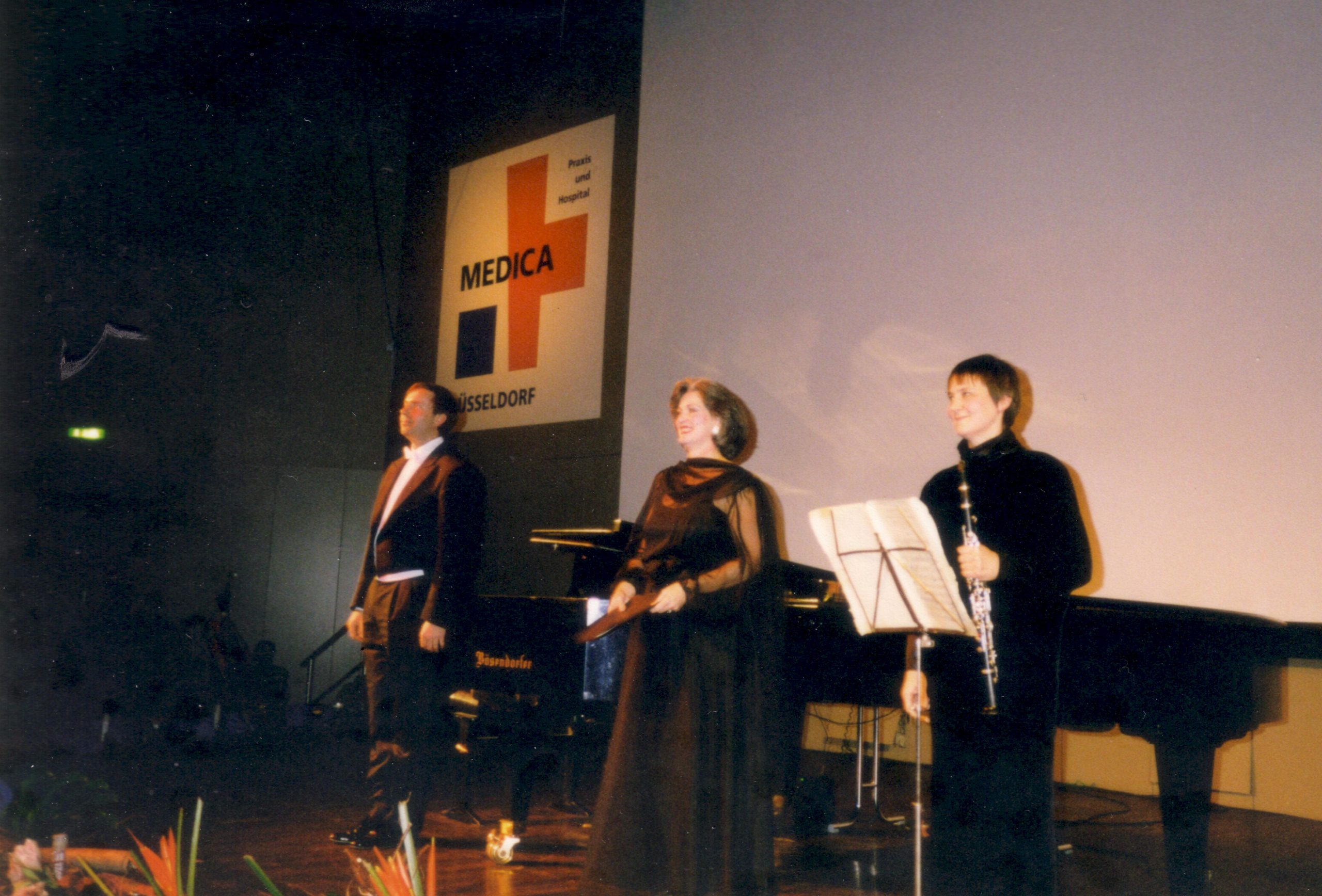
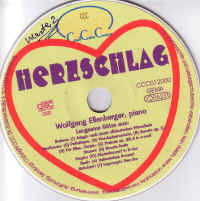
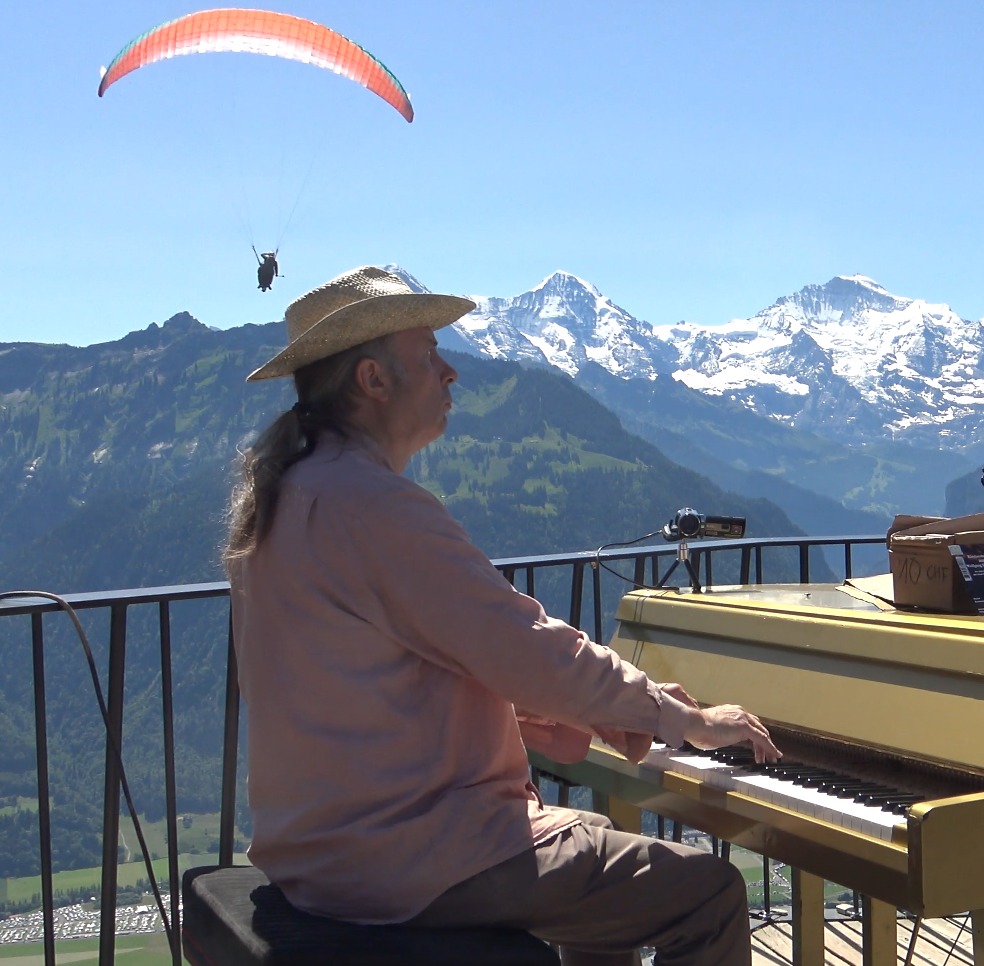
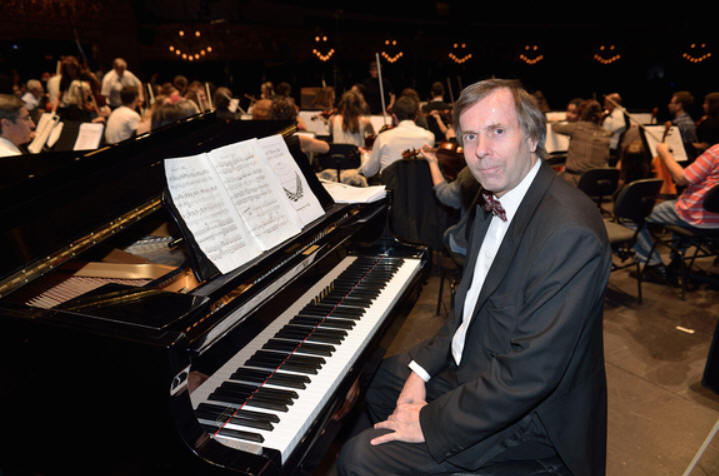
Wolfgang Ellenberger

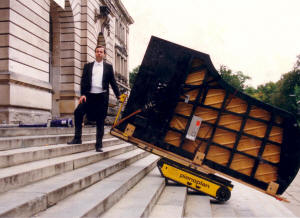
piano = Handgepäck | hand luggage

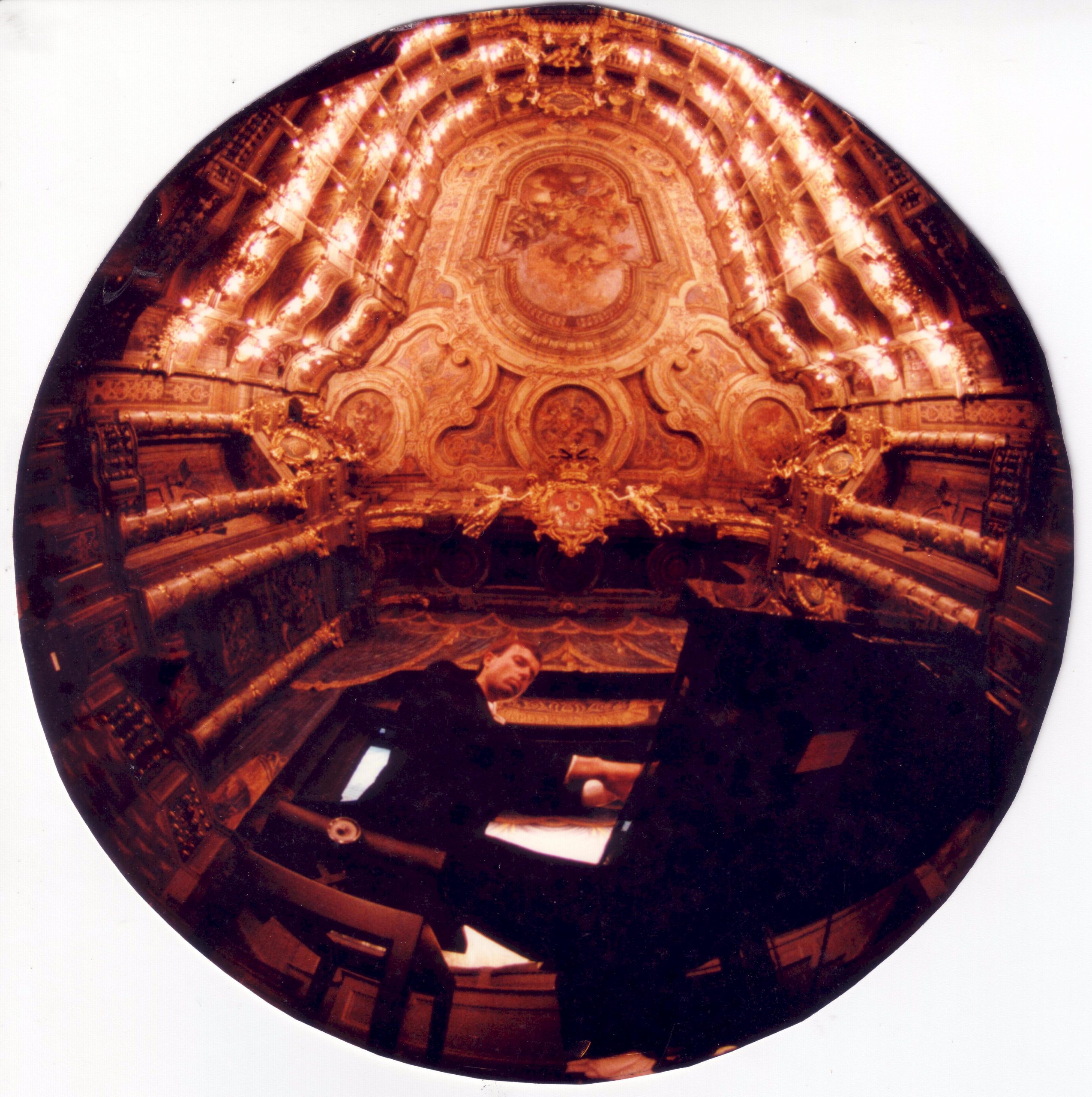
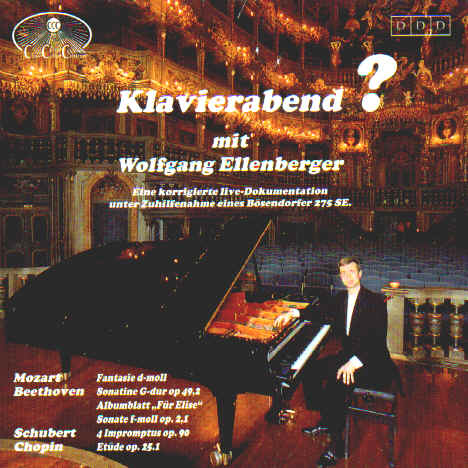
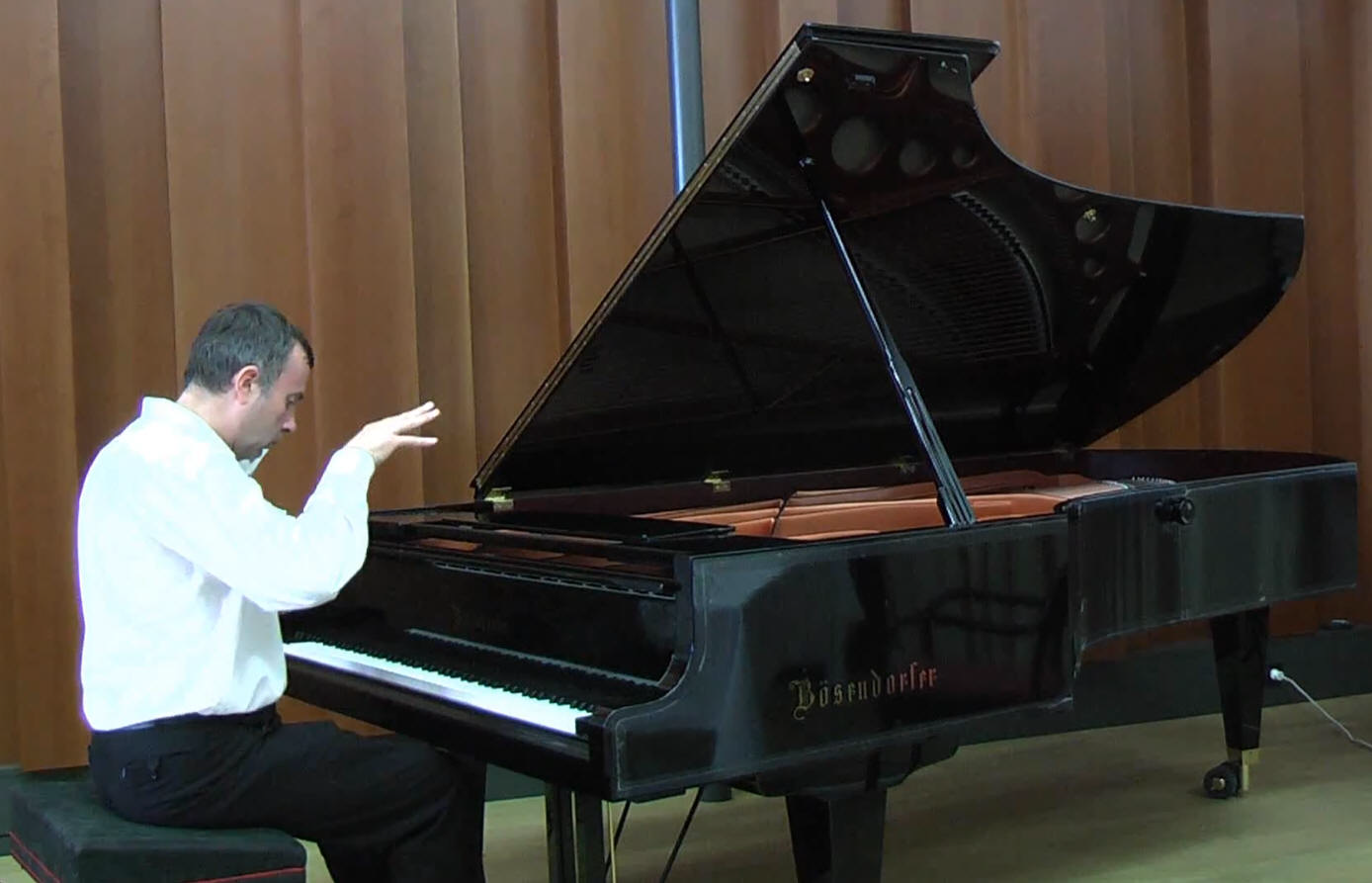
Wolfgang Ellenberger, the author of this web site has studied also piano diploma and concert exam besides music therapy.
1987-1989 he worked at the ballet of the Scala of Milano as pianist.
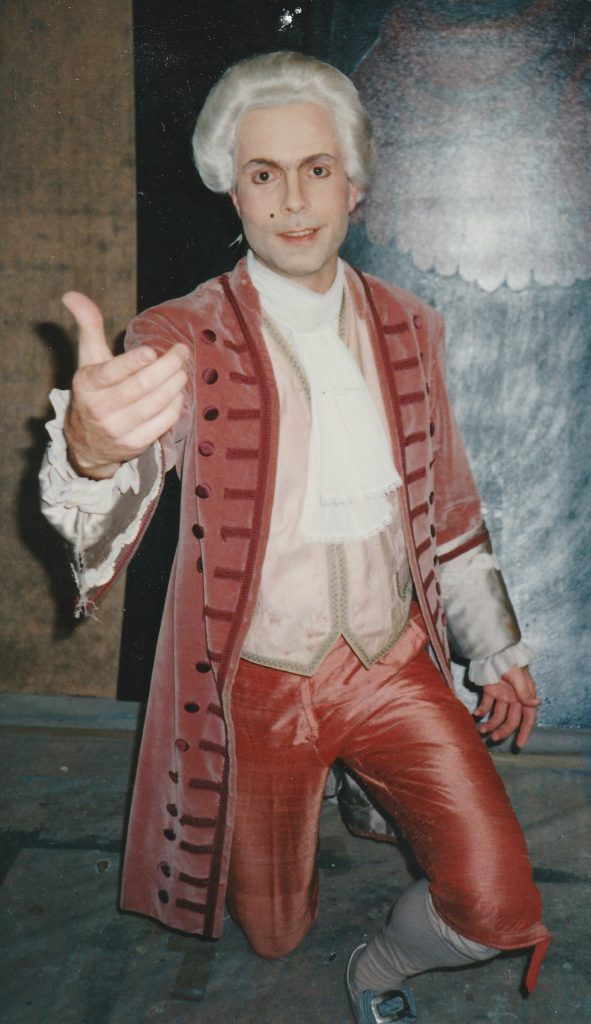
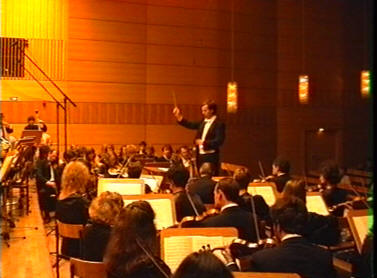
1994 debut as conductor with the Sibirian State orchestra Kemerovo. In the nineties he conducted three choirs and in the opera project Magic Flute.
He has lived three years of his life in a camper on camping sites.
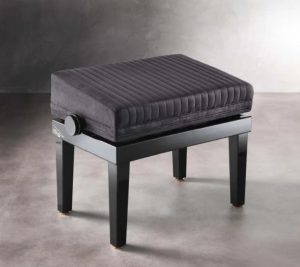
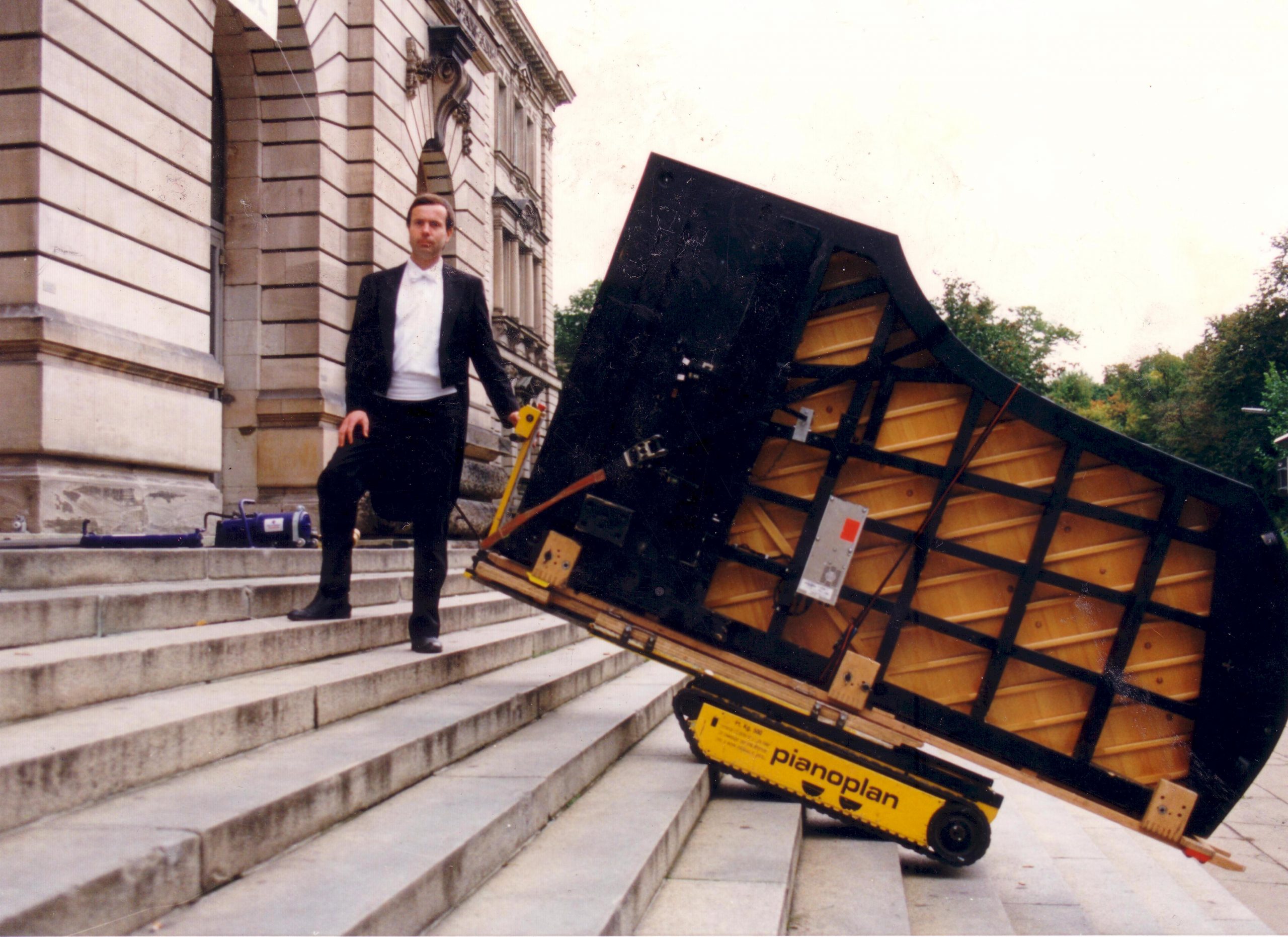
He invented several things: piano-lift-hydraulics, piano fingering system and he introduced cinema therapy to a psychosomatic hospital.
Since 1982 he manages an event service (see clients list).
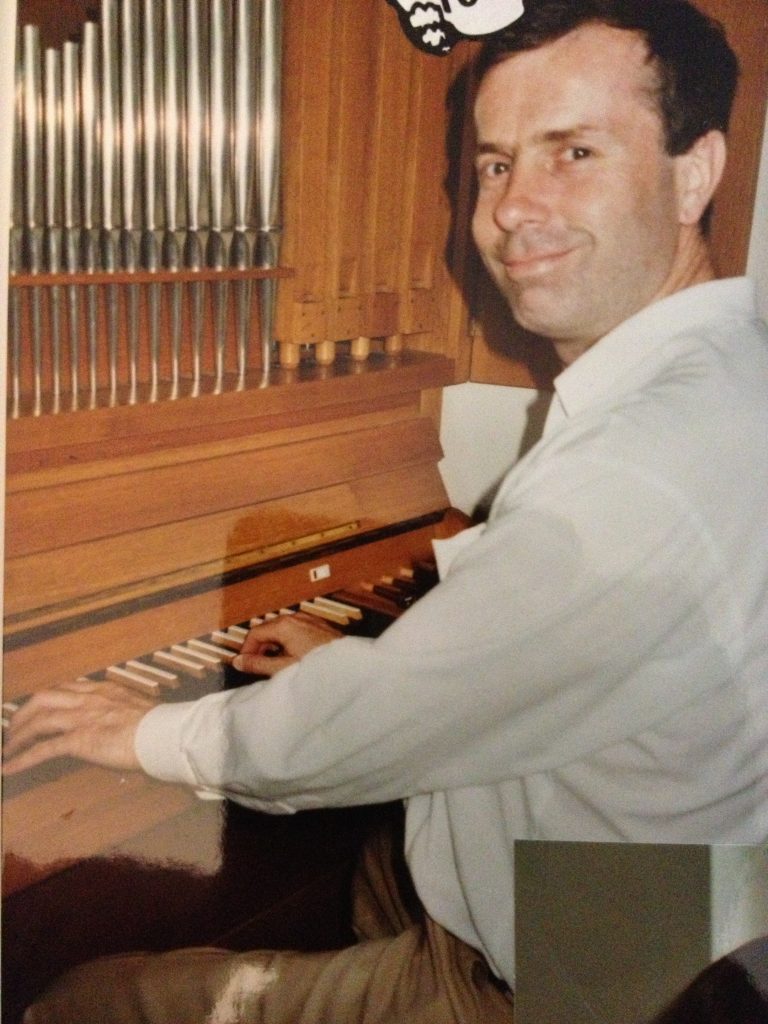
In his youth he played a pneumatic organ in a church in Hamburg Altona for 12 years.
Since his workshop with Elisabeth Kübler-Ross he studied spirituality intensively and finally wrote a film script about the communication with the spiritual world according to the book of Johannes Greber.
He produced many hundreds of films for his youtube account and other places.
In 2011 he moved to Switzerland (with two interruptions in Germany) where he likes to hike in the mountains.

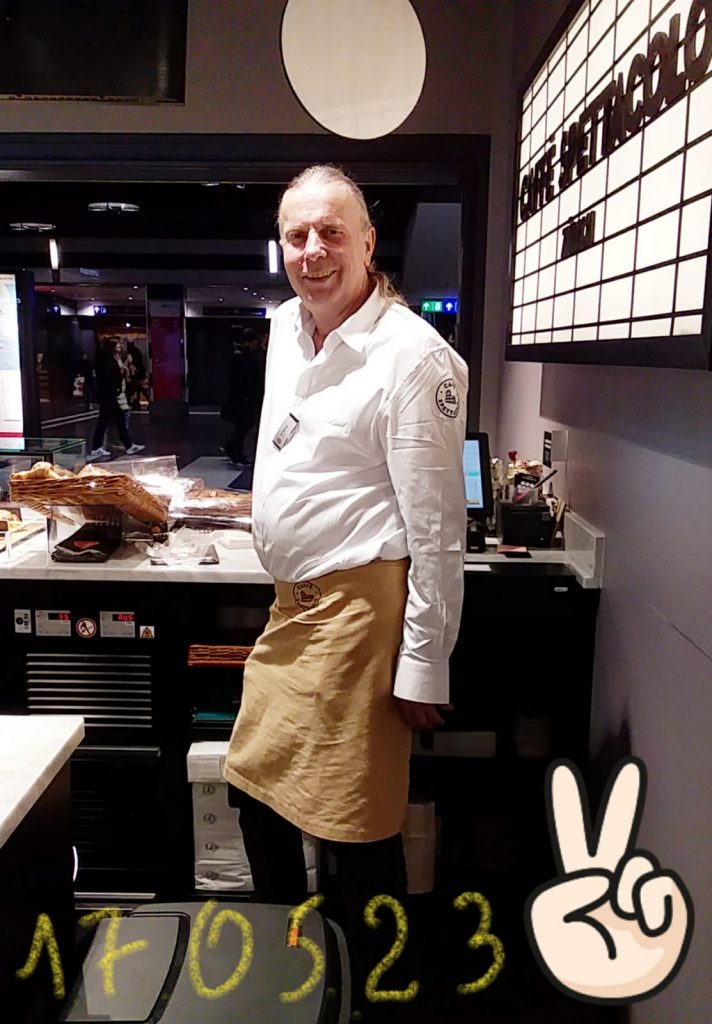
Ellenberger worked as a waiter fully employed @ maritim hotel Würzburg for some months.

web

https://linktr.ee/ellenberger

wikipedia

youtube vimeo

facebook twitter instagram

work


  • -

Gunther von Hagen

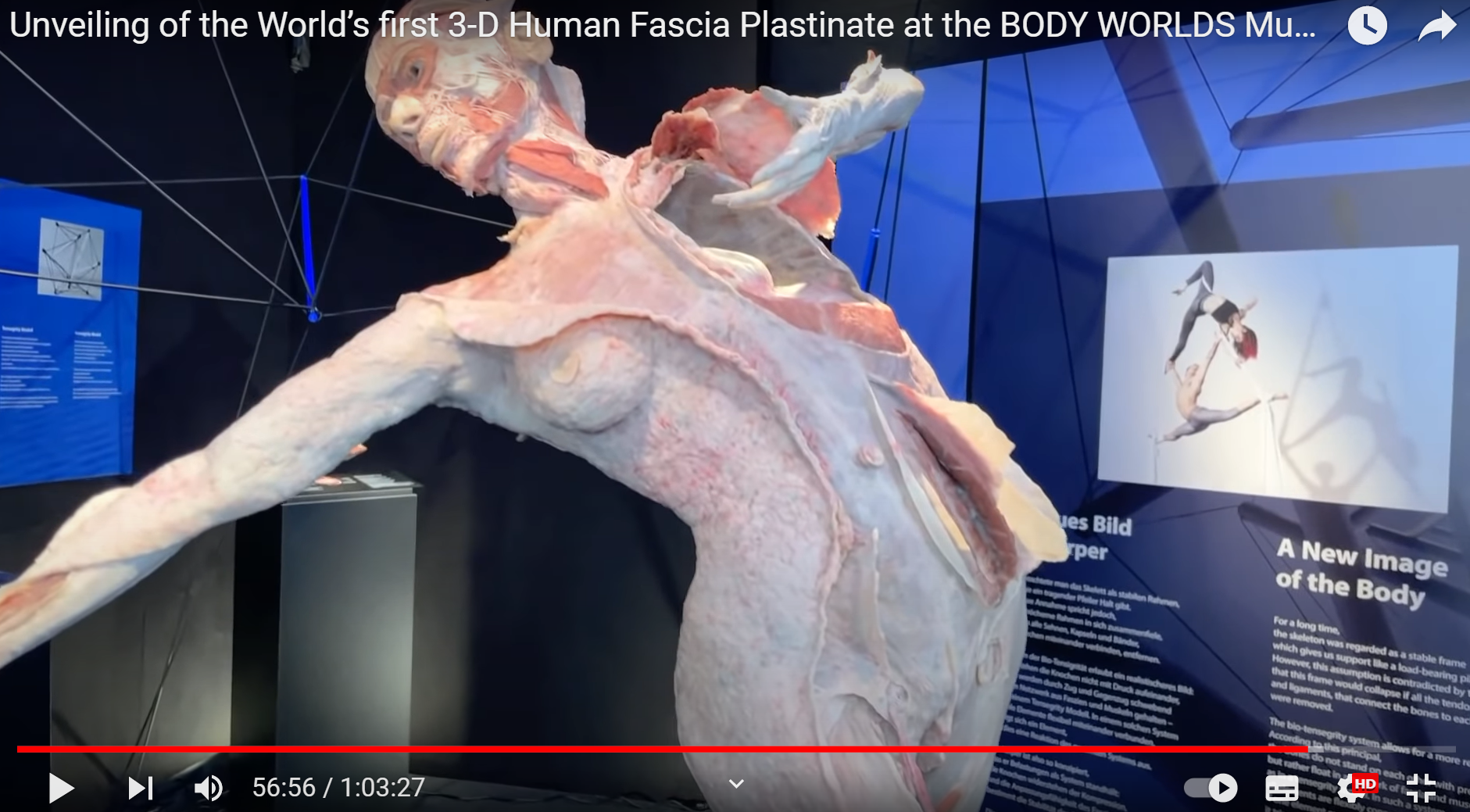
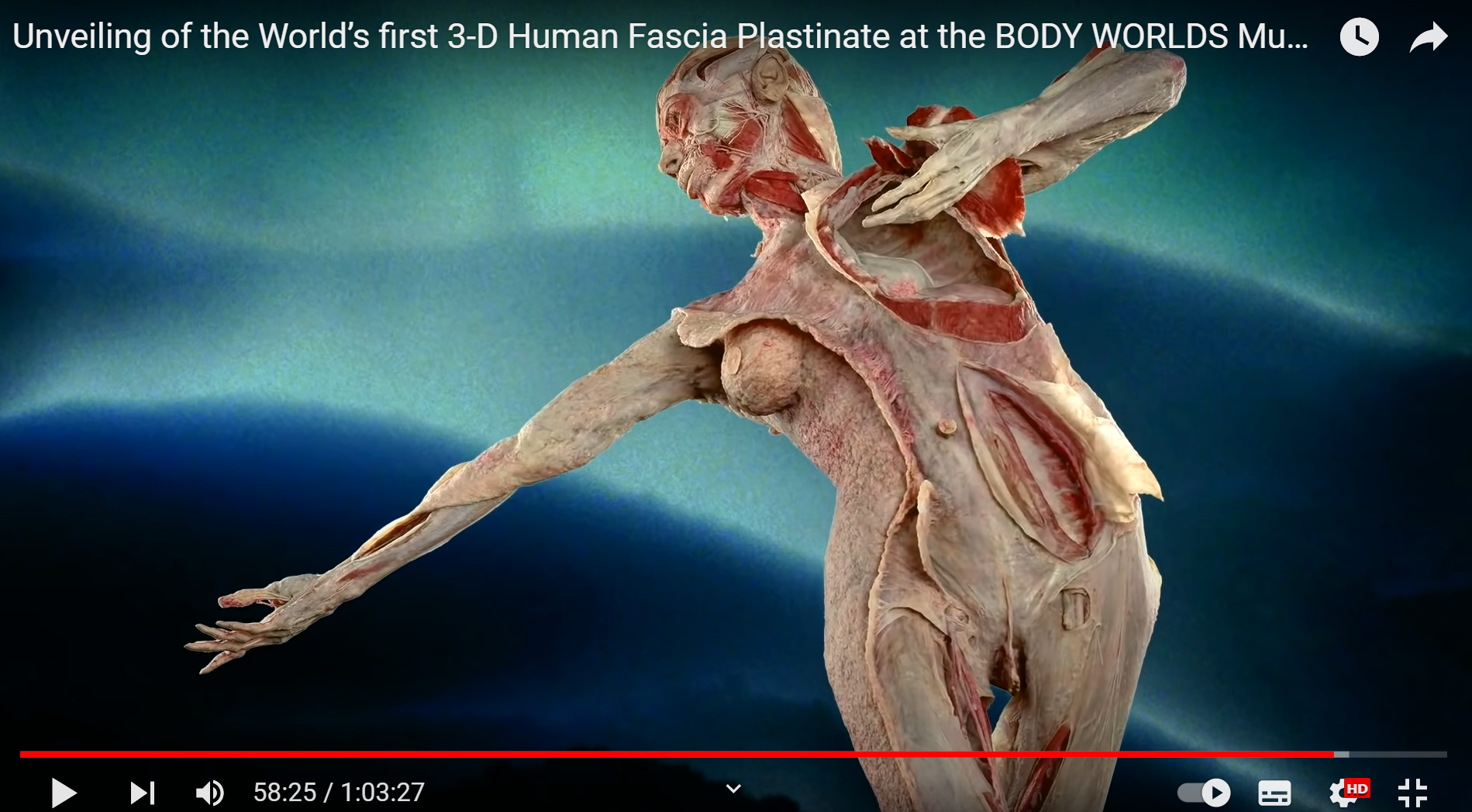
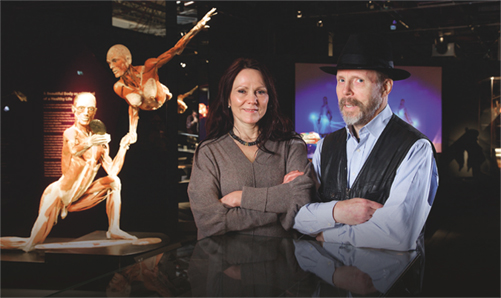
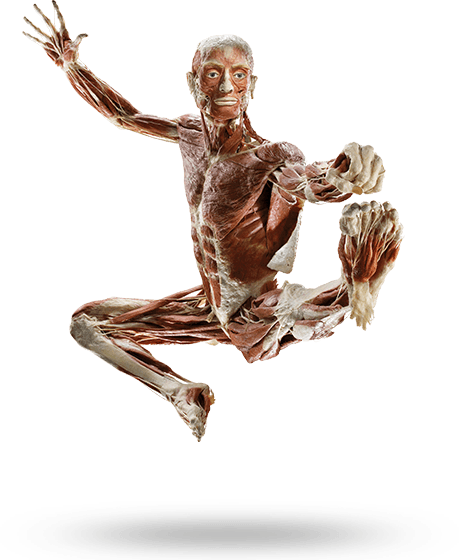
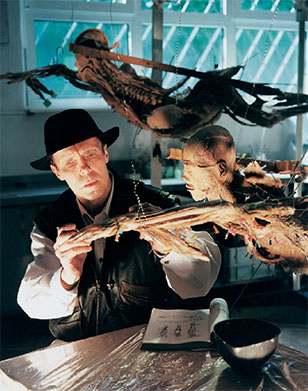
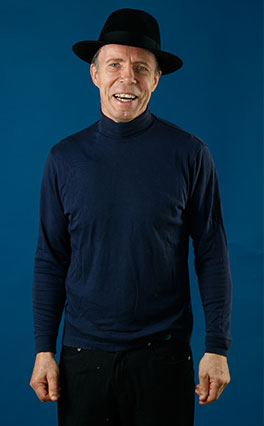
THE pioneer of plastination and a world-wide reception of anatomy!

wikipedia DE

wikipedia EN

Körperwelten

bodyworlds


  • -

Imhotep

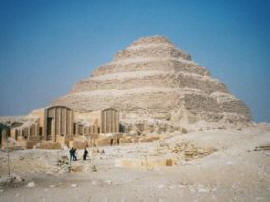
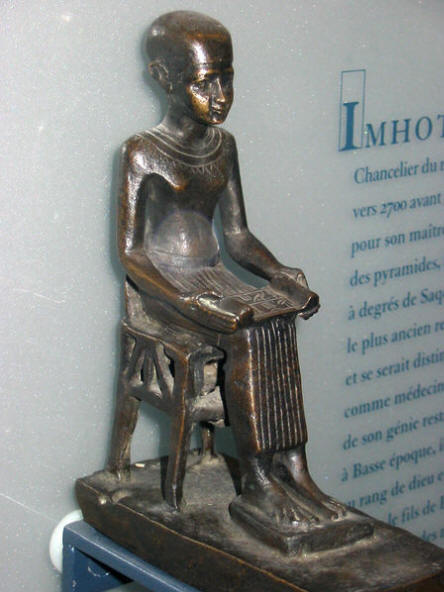
Imhotep (/ɪmˈhoʊtɛp/;[1] Ancient Egyptianỉỉ-m-ḥtp “the one who comes in peace”;[2] fl. late 27th century BCE) was an Egyptian chancellor to the Pharaoh Djoser, possible architect of Djoser‘s step pyramid, and high priest of the sun god Ra at Heliopolis. Very little is known of Imhotep as a historical figure, but in the 3,000 years following his death, he was gradually glorified and deified.

Traditions from long after Imhotep’s death treated him as a great author of wisdom texts[3] and especially as a physician.[4][5][6][7][8] No text from his lifetime mentions these capacities and no text mentions his name in the first 1,200 years following his death.[9][10] Apart from the three short contemporary inscriptions that establish him as chancellor to the Pharaoh, the first text to reference Imhotep dates to the time of Amenhotep III (c. 1391–1353 BCE). It is addressed to the owner of a tomb, and reads:

wikipedia DE

wikipedia EN