Category Archives: AstronomicDocs

  • -

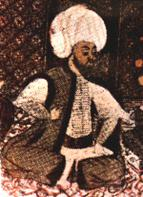
al-Kindi

Abū Yūsuf Yaʻqūb ibn ʼIsḥāq aṣ-Ṣabbāḥ al-Kindī (/ælˈkɪndi/Arabic: أبو يوسف يعقوب بن إسحاق الصبّاح الكندي; LatinAlkindus; c. 801–873 AD) was an Arab Muslim polymath active as a philosophermathematicianphysician, and music theorist. Al-Kindi was the first of the Islamic peripatetic philosophers, and is hailed as the “father of Arab philosophy“.[4][5][6]

Al-Kindi was born in Kufa and educated in Baghdad.[7] He became a prominent figure in the House of Wisdom, and a number of Abbasid Caliphs appointed him to oversee the translation of Greek scientific and philosophical texts into the Arabic language. This contact with “the philosophy of the ancients” (as Hellenistic philosophy was often referred to by Muslim scholars) had a profound effect on him, as he synthesized, adapted and promoted Hellenistic and Peripatetic philosophy in the Muslim world.[8] He subsequently wrote hundreds of original treatises of his own on a range of subjects ranging from metaphysics, ethics, logic and psychology, to medicine, pharmacology,[9] mathematics, astronomyastrology and optics, and further afield to more practical topics like perfumes, swords, jewels, glass, dyes, zoology, tides, mirrors, meteorology and earthquakes.
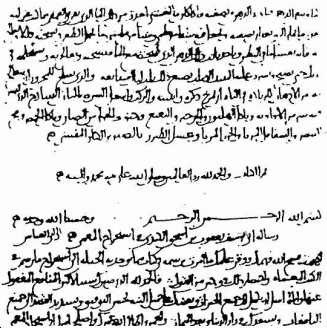
Die erste Seite al-Kindīs Manuskript über die Kryptanalyse

In the field of mathematics, al-Kindi played an important role in introducing Hindu numerals to the Islamic world, and their further development into Arabic numerals along with al-Khwarizmi which eventually was adopted by the rest of the world.[12] Al-Kindi was also one of the fathers of cryptography.[13][14] Building on the work of al-Khalil (717–786),[15] Al-Kindi’s book entitled Manuscript on Deciphering Cryptographic Messages gave rise to the birth of cryptanalysis, was the earliest known use of statistical inference,[16] and introduced several new methods of breaking ciphers, notably frequency analysis.[17][18] He was able to create a scale that would enable doctors to gauge the effectiveness of their medication by combining his knowledge of mathematics and medicine.
The central theme underpinning al-Kindi’s philosophical writings is the compatibility between philosophy and other “orthodox” Islamic sciences, particularly theology, and many of his works deal with subjects that theology had an immediate interest in. These include the nature of God, the soul and prophetic knowledge.[

Al-Kindi is credited with developing a method whereby variations in the frequency of the occurrence of letters could be analyzed and exploited to break ciphers (i.e. cryptanalysis by frequency analysis).[18] His book on this topic is Risāla fī Istikhrāj al-Kutub al-Mu’ammāh (رسالة في استخراج الكتب المعماة; literally: On Extracting Obscured Correspondence, more contemporarily: On Decrypting Encrypted Correspondence). In his treatise on cryptanalysis, he wrote:

One way to solve an encrypted message, if we know its language, is to find a different plaintext of the same language long enough to fill one sheet or so, and then we count the occurrences of each letter. We call the most frequently occurring letter the “first”, the next most occurring letter the “second”, the following most occurring letter the “third”, and so on, until we account for all the different letters in the plaintext sample. Then we look at the cipher text we want to solve and we also classify its symbols. We find the most occurring symbol and change it to the form of the “first” letter of the plaintext sample, the next most common symbol is changed to the form of the “second” letter, and the following most common symbol is changed to the form of the “third” letter, and so on, until we account for all symbols of the cryptogram we want to solve

https://de.wikipedia.org/wiki/Al-Kind%C4%AB

https://en.wikipedia.org/wiki/Al-Kindi


  • -

Joachim Gardemann

Joachim Gardemann is a passionate hobby astronomer and a watercolour illustrator in his international Red Cross missions.

His Red Cross working experience as health delegate, health coordinator, paediatrician and senior medical officer with IFRC or ICRC is covering emergency missions in Tanzania (1995 and 1998), Macedonia (1999), Iran (2003), Sudan (2004), Sri Lanka (2005), the Peoples Republic of China (2008) and Haiti (2010), additionally he has teaching and research experiences in Serbia (2002), Macedonia (2003), Mongolia (2002) and Ethiopia (2007).


  • -

Nikolaus Kopernikus

Nicolaus Copernicus (/koʊˈpɜːrnɪkəs, kə-/;[2][3][4] PolishMikołaj Kopernik;[b] Middle Low GermanNiklas KoppernigkGermanNikolaus Kopernikus; 19 February 1473 – 24 May 1543) was a Renaissance polymath, active as a mathematician, astronomer, and Catholic canon, who formulated a model of the universe that placed the Sun rather than Earth at its center. In all likelihood, Copernicus developed his model independently of Aristarchus of Samos, an ancient Greek astronomer who had formulated such a model some eighteen centuries earlier.[5][c][d][e]

The publication of Copernicus’s model in his book De revolutionibus orbium coelestium (On the Revolutions of the Celestial Spheres), just before his death in 1543, was a major event in the history of science, triggering the Copernican Revolution and making a pioneering contribution to the Scientific Revolution.[7]

Copernicus was born and died in Royal Prussia, a region that had been part of the Kingdom of Poland since 1466. A polyglot and polymath, he obtained a doctorate in canon law and was a mathematician, astronomer, physicianclassics scholartranslatorgovernordiplomat, and economist. From 1497 he was a Warmian Cathedral chapter canon. In 1517 he derived a quantity theory of money—a key concept in economics—and in 1519 he formulated an economic principle that later came to be called Gresham’s law.[f]

Some time before 1514, Copernicus wrote an initial outline of his heliocentric theory known only from later transcripts, by the title (perhaps given to it by a copyist), Nicolai Copernici de hypothesibus motuum coelestium a se constitutis commentariolus—commonly referred to as the Commentariolus. It was a succinct theoretical description of the world’s heliocentric mechanism, without mathematical apparatus, and differed in some important details of geometric construction from De revolutionibus; but it was already based on the same assumptions regarding Earth’s triple motions. The Commentariolus, which Copernicus consciously saw as merely a first sketch for his planned book, was not intended for printed distribution. He made only a very few manuscript copies available to his closest acquaintances, including, it seems, several Kraków astronomers with whom he collaborated in 1515–30 in observing eclipsesTycho Brahe would include a fragment from the Commentariolus in his own treatise, Astronomiae instauratae progymnasmata, published in Prague in 1602, based on a manuscript that he had received from the Bohemian physician and astronomer Tadeáš Hájek, a friend of Rheticus. The Commentariolus would appear complete in print for the first time only in 1878.[45]

aus | from manuskript
Tusi-Paar | tusi couple

In 1526 Kopernikus cooperated with Bernard Wapowski working out a map of the Königreich PolenGroßfürstentum Litauen, in 1529 he also made a map of Herzogtums PreußenGeorg Joachim Rheticus, professor in Wittenberg, came to work with Kopernikus for three years in Frauenburg, beginning in 1539.

POLAND – AUGUST 02: 1000 zloty banknote, 1982, obverse, Nicolaus Copernicus (1473-1543). Poland, 20th century. (Photo by DeAgostini/Getty Images)

wikipedia DE

wikipedia EN


  • -

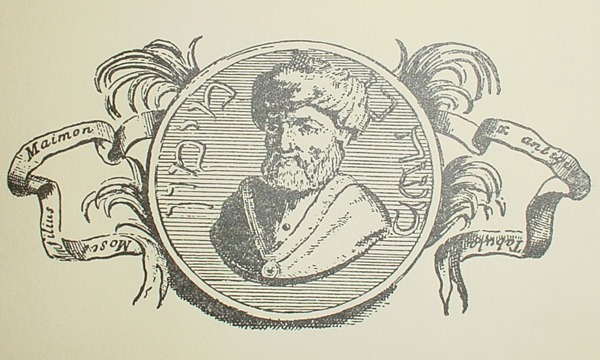
Maimonides

Moses ben Maimon[a] (1138–1204), commonly known as Maimonides (/maɪˈmɒnɪdiːz/)[b] and also referred to by the acronym Rambam (Hebrew: רמב״ם),[c] was a medieval Sephardic Jewish philosopher who became one of the most prolific and influential Torah scholars of the Middle Ages. In his time, he was also a preeminent astronomer and physician, serving as the personal physician of Saladin. Born in CórdobaAlmoravid Empire (present-day Spain), on Passover eve, 1138 (or 1135),[d][8][9][10] he worked as a rabbi, physician and philosopher in Morocco and Egypt. He died in Egypt on 12 December 1204, whence his body was taken to the lower Galilee and buried in Tiberias.[11][12]

During his lifetime, most Jews greeted Maimonides’ writings on Jewish law and ethics with acclaim and gratitude, even as far away as Iraq and Yemen. Yet, while Maimonides rose to become the revered head of the Jewish community in Egypt, his writings also had vociferous critics, particularly in Spain. Nonetheless, he was posthumously acknowledged as one of the foremost rabbinic decisors and philosophers in Jewish history, and his copious work comprises a cornerstone of Jewish scholarship. His fourteen-volume Mishneh Torah still carries significant canonical authority as a codification of Halacha. He is sometimes known as “ha’Nesher ha’Gadol” (The Great Eagle)[13] in recognition of his outstanding status as a bona fide exponent of the Oral Torah.

Aside from being revered by Jewish historians, Maimonides also figures very prominently in the history of Islamic and Arab sciences and he is mentioned extensively in studies. Influenced by AristotleAl-FarabiIbn Sina, and his contemporary Ibn Rushd, he became a prominent philosopher and polymath in both the Jewish and Islamic worlds. On his tomb is inscribed “From Moses to Moses there was none like Moses”.[14]

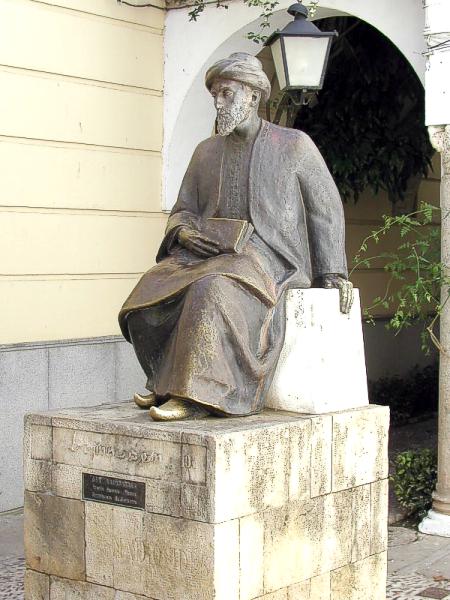
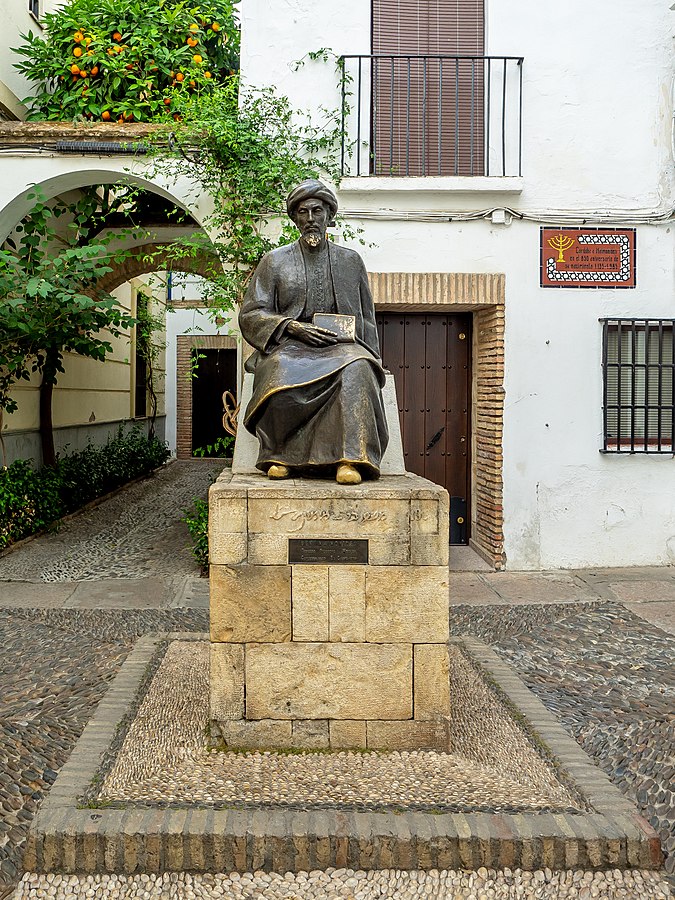
Denkmal | monument in Cordoba

wikipedia DE

wikipedia EN


  • -

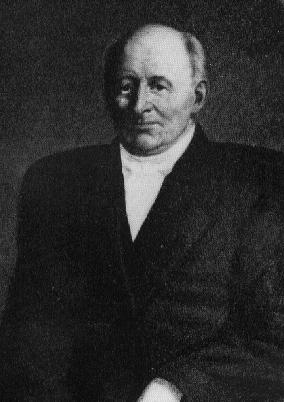
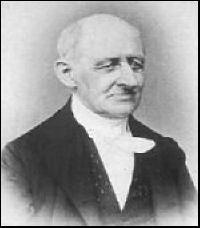
Samuel Heinrich Schwabe

Samuel Heinrich Schwabe (25 October 1789 – 11 April 1875) a German astronomer remembered for his work on sunspots. He also was Botaniker. His official botanic short code is „Schwabe“.

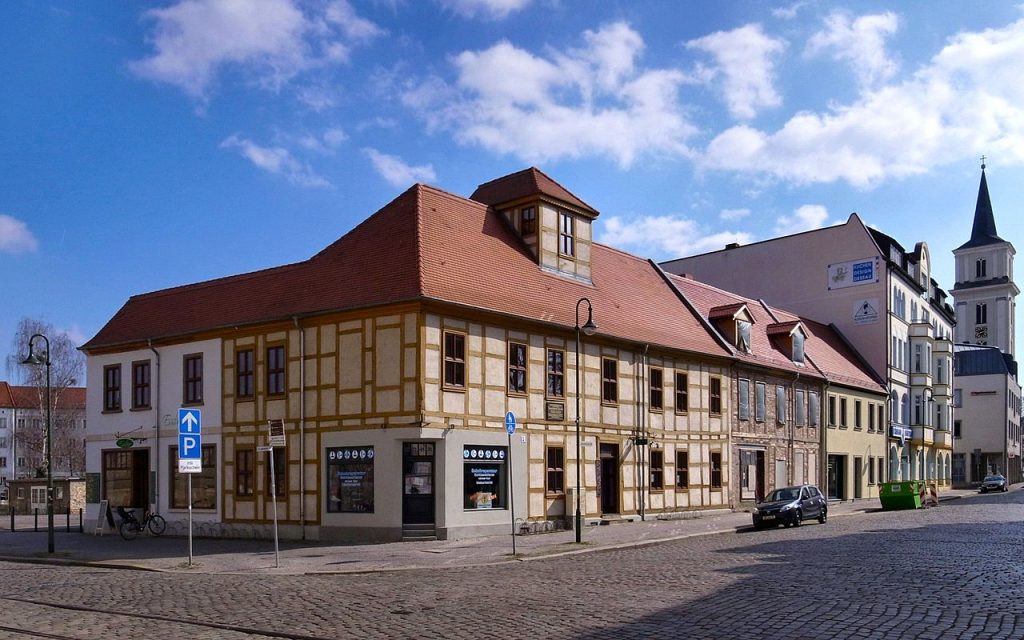
He studied pharmacy, chemistry, botanics and physics in Berlin. Coming back to Dessau in 1811 he ran the pharmacy of his grandfather. After selling the pharmacy in 1829 he dedicated himself to science and lived in the Schwabehaus.

Schwabe was born at Dessau. At first an apothecary, he turned his attention to astronomy, and in 1826 commenced his observations on sunspots. Schwabe was looking for a possible planet inside the orbit of Mercury. Because of the proximity to the Sun, it would have been very difficult to observe such a planet, and Schwabe believed one possibility to detect a new planet might be to see it as a dark spot when passing in front of the Sun. For 17 years, from 1826 to 1843, on every clear day, Schwabe would scan the Sun and record its spots trying to detect any new planet among them. He did not find any planet but noticed the regular variation in the number of sunspots and published his findings in a short article entitled “Solar Observations during 1843”.[1] In it he made the suggestion of a probable ten-year period (i.e. that at every tenth year the number of spots reached a maximum). This paper at first attracted little attention, but Rudolf Wolf who was at that time the director of Bern observatory, was impressed so he began regular observations of sunspots. Schwabe’s observations were afterwards utilized in 1850 by Alexander von Humboldt in the third volume of his Kosmos.[2] The periodicity of sunspots is now fully recognized; and to Schwabe is thus due the credit of one of the most important discoveries in astronomy.

In 1857 Schwabe was awarded the Gold Medal of the Royal Astronomical Society.

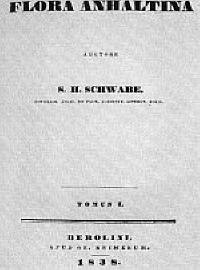
1838 he published Flora Anhaltina, a standard work about the flora of his country Anhalt. Remarkable is his Herbarium.

In 1841 he married Ernestine Amalie Moldenhauer.

A moon crater is named Schwabe after him.

Schwabehaus

wikipedia DE

wikipedia EN

Deutsches Ärzteblatt

www.SchwabeHaus.de


  • -

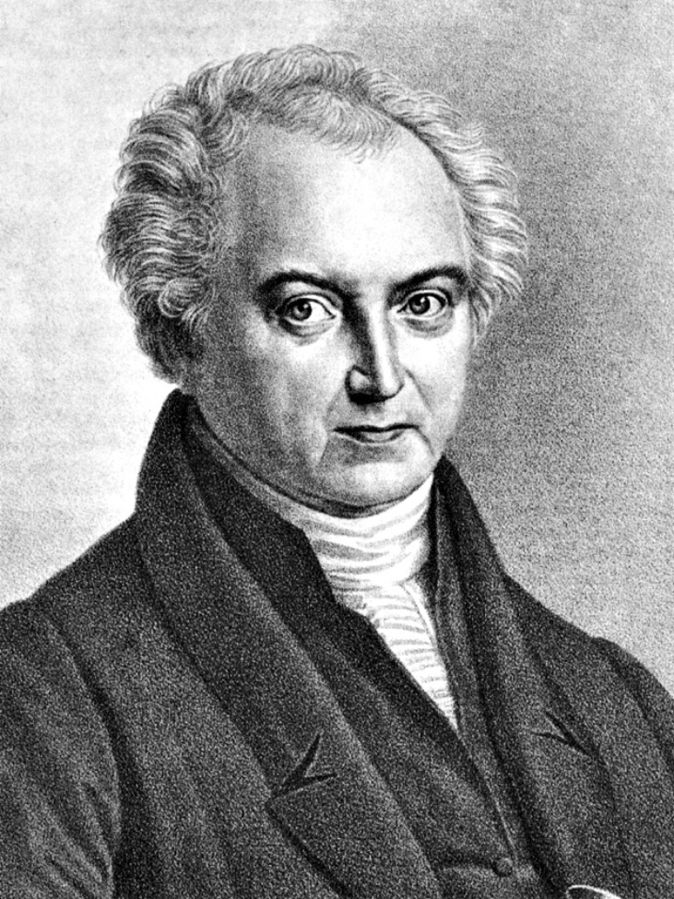
Heinrich Wilhelm Olbers

Heinrich Wilhelm Matthias Olbers (/ˈɔːlbərz/German: [ˈɔlbɐs]; 11 October 1758 – 2 March 1840) was a German physician and astronomer.

On 28 March 1802, Olbers discovered and named the asteroidPallas. Five years later, on 29 March 1807, he discovered the asteroid Vesta, which he allowed Carl Friedrich Gauss to name. As the word “asteroid” was not yet coined, the literature of the time referred to these minor planets as planets in their own right. He proposed that the asteroid belt, where these objects lay, was the remnants of a planet that had been destroyed. The current view of most scientists is that tidal effects from the planet Jupiter disrupted the planet-formation process in the asteroid belt. On 6 March 1815, Olbers discovered a periodic comet, now named after him (formally designated 13P/Olbers). Olbers’ paradox, described by him in 1823 (and then reformulated in 1826), states that the darkness of the night sky conflicts with the supposition of an infinite and eternal static universe.

Olbers was deputed by his fellow citizens to assist at the baptism of Napoleon II of France on 9 June 1811. He was a member of the corps legislatif in Paris 1812–13. He died in Bremen aged 81. He was twice married, and one son survived him. Olbers’ paradox, the argument that the dark sky at night shows that stars cannot be evenly distributed through infinite space, is named for him, though others had also advanced it.

Ships were named after him (DE):

Olbers war außerdem der Name verschiedener Segelschiffe: Eine in Archangelsk gebaute Fregatte wurde 1829 von F. C. Delius & Co. in Bremen erworben und 1837 abgewrackt. Ein 1838 in Grohn gebauter Segler des gleichen Eigners, das Vollschiff Olbers (1851), havarierte 1848. Später trug eine Dreimastbark der Kaiserlichen Marine den Namen des Astronomen.

Olbers streets in Berlin, Bremen, Hannover, Lilienthal and other places.

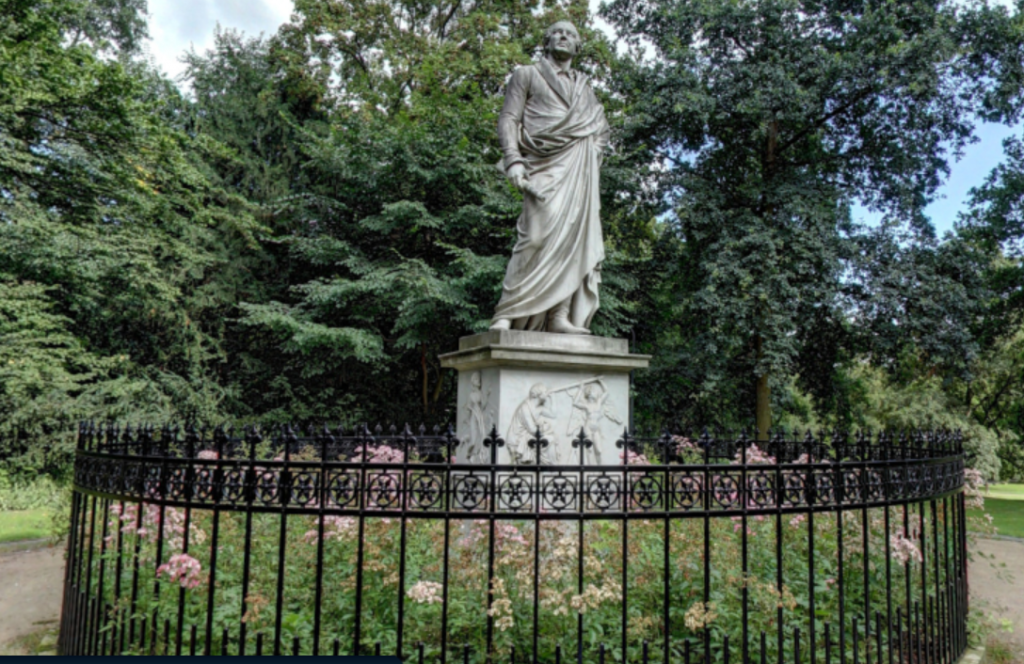
Olbers statue in Bremen in the “Wallanlagen”

wikipedia DE

wikipedia EN

Olbers Planetarium Bremen/Germany


  • -

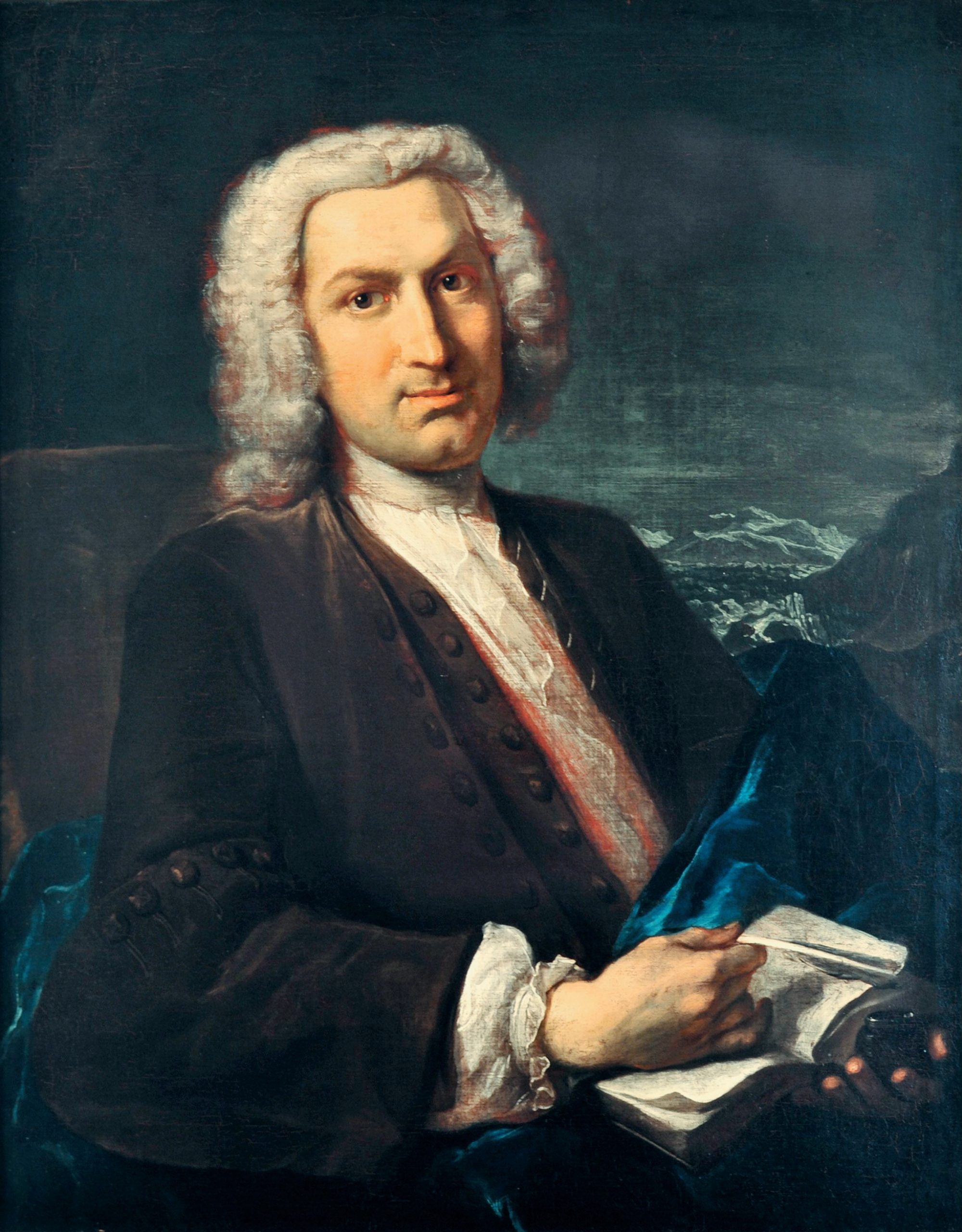
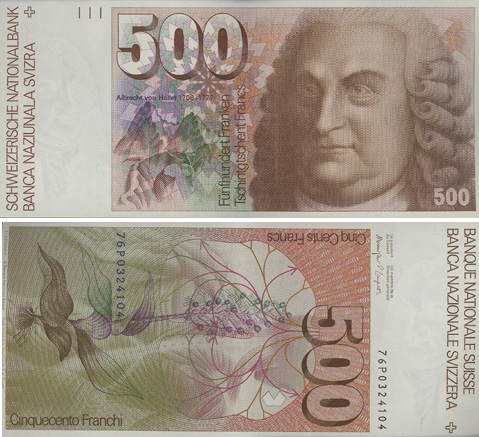
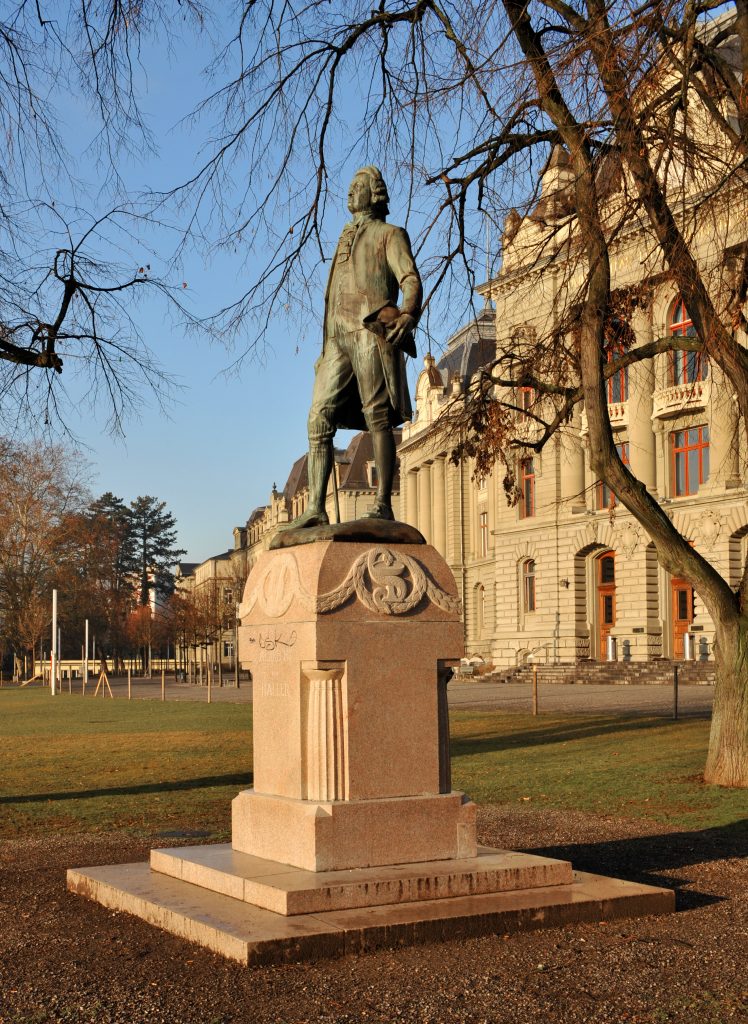
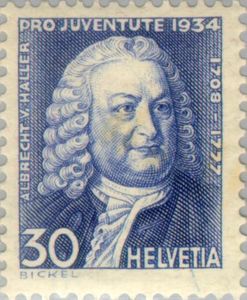
Albrecht von Haller

Albrecht von Haller (also known as Albertus de Haller; 16 October 1708 – 12 December 1777) was a Swiss anatomistphysiologistnaturalist, encyclopedist, bibliographer and poet. A pupil of Herman Boerhaave, he is often referred to as “the father of modern physiology.”[1][2]

His botanic abbreviation is “Haller”, also used as “Hall.”

AS author his monumental work is Die Alpen.

In “Die Alpen” are notes pointing out some plants of his main botanic work Enumeratio methodica stirpium Helvetiae indigenarum:

Botanics

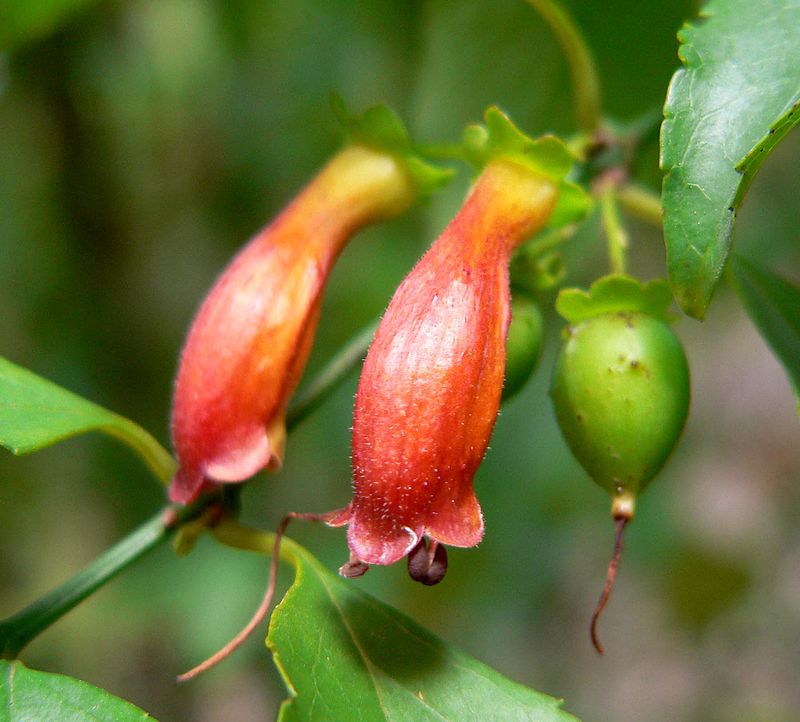
  • Die Gattung Halleria L. der Pflanzenfamilie der Stilbaceae wurde zu Ehren Hallers benannt.

Astronomy

Geography

  • The Haller Rocks, in the antarctic Palmer-Archipel, wear his name since 1960.

Street

wikipedia DE

wikipedia EN