Category Archives: PresidentDocs

  • -

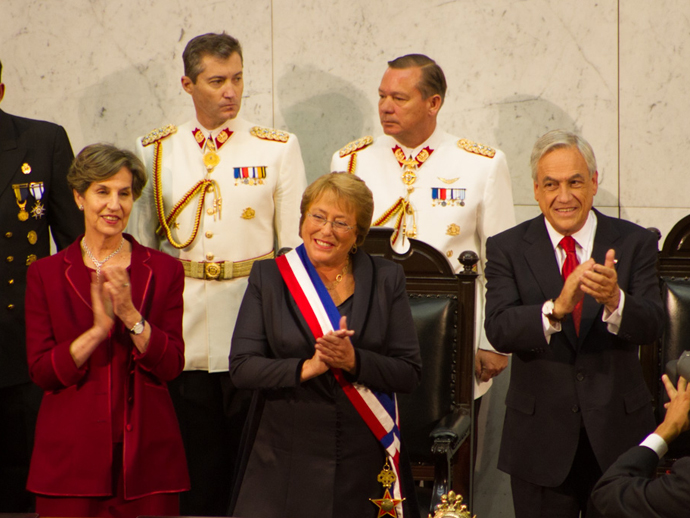
Michelle Bachelet

Verónica Michelle Bachelet Jeria [beˈɾonika miˈtʃel βaʃeˈlet ˈxeɾja] (born 29 September 1951 in Santiago de Chile) is a Chilean surgeon[1] and politician (PS). From 2006 to 2010 and from 2014 to 2018 she was President of Chile, making her the first woman to hold this office. From 1 September 2018 to 31 August 2022 she was United Nations High Commissioner for Human Rights. In the meantime she was Under-Secretary-General of the United Nations as Executive Director of the UN Women organization.

Michelle Bachelet was named after the French actress Michèle Morgan.[2] She is the daughter of Chilean Air Force General Alberto Bachelet, who remained loyal to President Salvador Allende during the 1973 coup in Chile and was captured and tortured by members of Augusto Pinochet’s regime. The following year, he suffered a fatal heart attack in prison. Michelle and her mother fled to East Germany via Australia. In 2013, shortly before the presidential election, Bachelet recounted her own experiences in the Villa Grimaldi torture prison in January 1975 before her escape: “My head was in a hood and I was insulted, threatened and sometimes beaten. But I was spared the parrilla, a torture device consisting of a bed frame for electric shocks, literally called a grill in Spanish.”[3] She learned German at the Herder Institute of the University of Leipzig.[4] She studied medicine at the Humboldt University of Berlin. On October 19, 2006, she was awarded an honorary doctorate from the Charité.[5] This was in recognition of her services to healthcare and the care of underprivileged people, which she achieved as a pediatrician and politician in Chile.

In 2019, she was awarded honorary citizenship of the city of Montreal.

https://de.wikipedia.org/wiki/Michelle_Bachelet

https://en.wikipedia.org/wiki/Michelle_Bachelet

https://www.youtube.com/results?search_query=michelle+bachelet

  • -

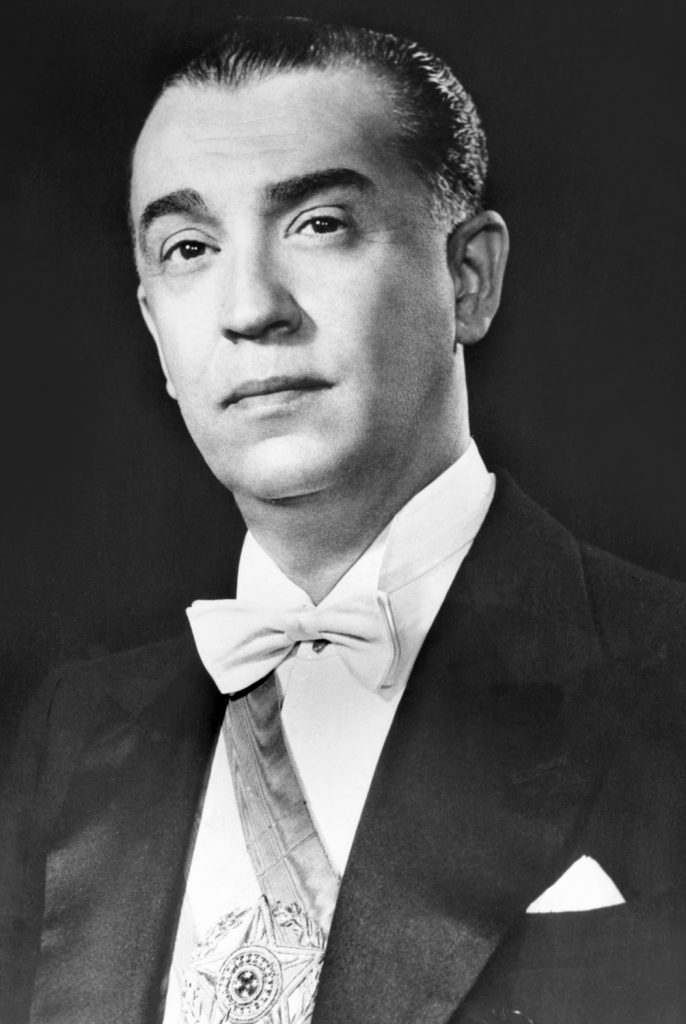
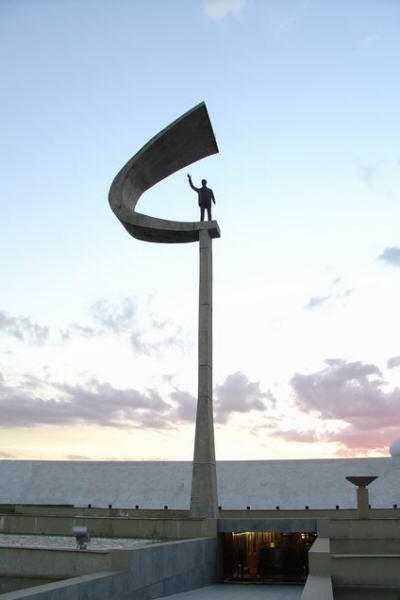
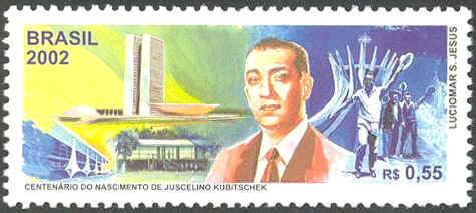
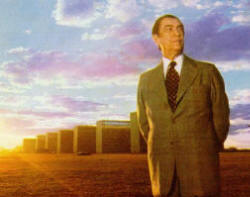
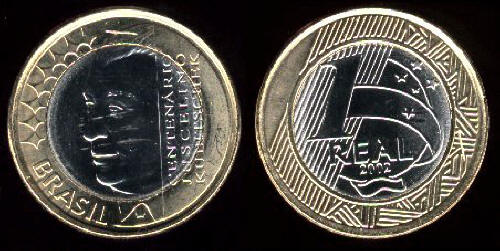
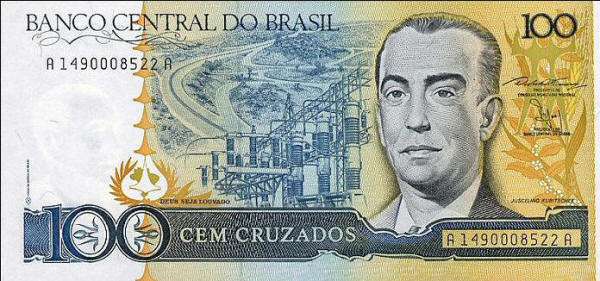
Juscelino Kubitschek

Juscelino Kubitschek de Oliveira (Portuguese pronunciation: [ʒuseˈlinu kubiˈʃɛk(i) dʒi oliˈve(j)ɾɐ]; 12 September 1902 – 22 August 1976), also known by his initials JK, was a prominent Brazilian politician who served as the 21st president of Brazil from 1956 to 1961. Kubitschek’s government plan, dubbed “50 years in 5”, was centered on economic and social development. During his term the country experienced a period of notable economic growth and relative political stability. However, there was also a significant increase in external debt, inflation, income concentration and wage erosion. At the time, there was no re-election and, on 31 January 1961, he was succeeded by Jânio Quadros, supported by the UDN. Kubitschek is best known for the construction of Brazil’s new capital: Brasília, which was inaugurated on 21 April 1960, replacing Rio de Janeiro.

Kubitschek was born in DiamantinaMinas Gerais, in 1902. His father, João César de Oliveira, died when he was only two years old. JK completed the humanities course at the Diamantina Seminary and moved to Belo Horizonte in 1920. In 1927, he graduated in medicine from the Federal University of Minas Gerais (UFMG), and in 1930 he specialized in urology in Paris. In December 1931, he married Sarah Lemos, with whom he had a daughter, Márcia, in 1943. The couple also adopted Maria Estela in 1947. In 1931, Kubitschek joined the Public Force of Minas Gerais as a doctor. During this period, he served on the Constitutionalist Revolution and became friends with politician Benedito Valadares who, upon being appointed federal intervenor in 1933, appointed Kubitschek as his chief of staff. In 1934, Kubitschek was elected federal deputy, but his term was revoked during the Estado Novo coup. With the loss of his term, Kubitschek returned to medicine. In 1940, he was appointed mayor of Belo Horizonte by Valadares, remaining in this position until October 1945. At the end of the same year he was elected constituent deputy for the Social Democratic Party (PSD). In 1950, he defeated Bias Fortes in the PSD caucuses to choose the party’s candidate for that year’s gubernatorial election in Minas Gerais. In the election, he defeated his brother-in-law Gabriel Passos and was sworn in as governor on 31 January 1951. As governor, he created the Companhia Energética de Minas Gerais, and also prioritized road building and industrialization.

wikipedia DE

wikipedia EN


  • -

Ursula von der Leyen

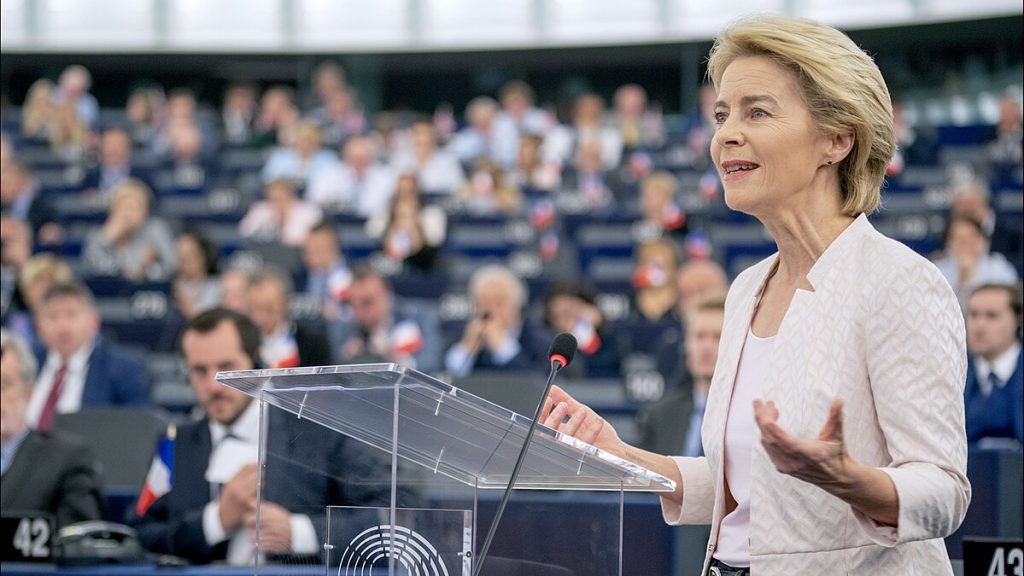
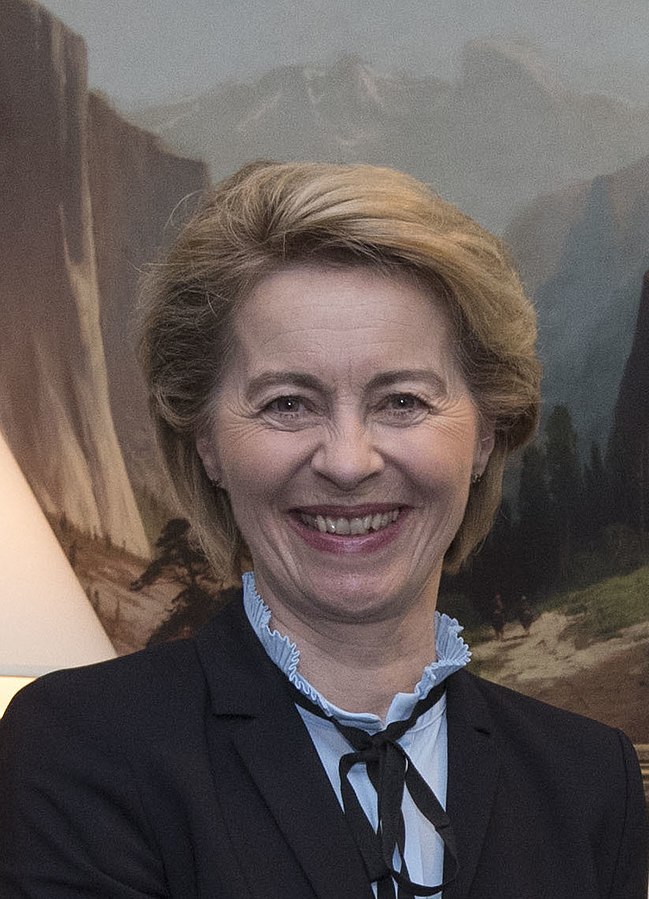
Ursula Gertrud von der Leyen (German: [ˈʊʁzula ˈɡɛʁtʁuːt fɔn deːɐ̯ ˈlaɪən] née Albrecht; born 8 October 1958) is a German politician, serving as the 13th president of the European Commission since 2019. She served in the German federal government between 2005 and 2019, holding positions in Angela Merkel‘s cabinet, most recently as federal minister of defence. She is a member of the centre-right Christian Democratic Union (CDU) and its affiliated European political party, the European People’s Party (EPP). On 7 March 2024, the EPP elected her as its Spitzenkandidat to lead the campaign for the 2024 European Parliament elections. She was re-elected to head the Commission in July 2024.

She was Minister for family, seniors, women and youth since November 2005.
Now (2024) president of the EU European Union.

born 8. October 1958 in Brussels
now living in Sehnde/Ilten /Germany

husband: Prof. Dr. med. Heiko E. von der Leyen
children: David, Sophie, Donata, Victoria, Johanna, Egmont und Gracia

education:
Europäische Schule in Brüssel 1964 – 1971
Mathematisch-naturwissenschaftliches Gymnasium, Lehrte 1971 – 1976
Studium der Volkswirtschaft (Göttingen, Münster) 1977 – 1980
London School of Economics 1978
Studium der Medizin (Medizinische Hochschule Hannover; MHH) 1980 – 1987
Staatsexamen und Approbation 1987
Promotion 1991
Magister Public Health (M.P.H.) 2001

professional experiences:
Assistenzärztin, Frauenklinik der MHH 1988 – 1992
Aufenthalt in Stanford, Californien/USA 1992 – 1996
Auditing guest: Stanford University, Graduate School of Business 1993
Marktanalyse, Stanford Health Services Hospital Administration 1995
Wissenschaftliche Mitarbeiterin Abteilung Epidemiol 1998 – 2002
Sozialmedizin und Gesundheitssystemforschung (MHH)

Political career:
CDU-member since 1990
Mitglied im Arbeitskreis Ärzte der CDU Niedersachsen 1999
Kommunalpolitische Mandate in der Region Hannover 2001 – 2004
Mitglied der CDU im Niedersächsischen Landtag seit März 2003
März 2003 bis November 2005 Niedersächsische Ministerin für Soziales, Frauen, Familie und Gesundheit
seit Dezember 2004 Mitglied des Präsidiums der CDU Deutschland
seit November 2005 Bundesministerin für Familie, Senioren, Frauen und Jugend

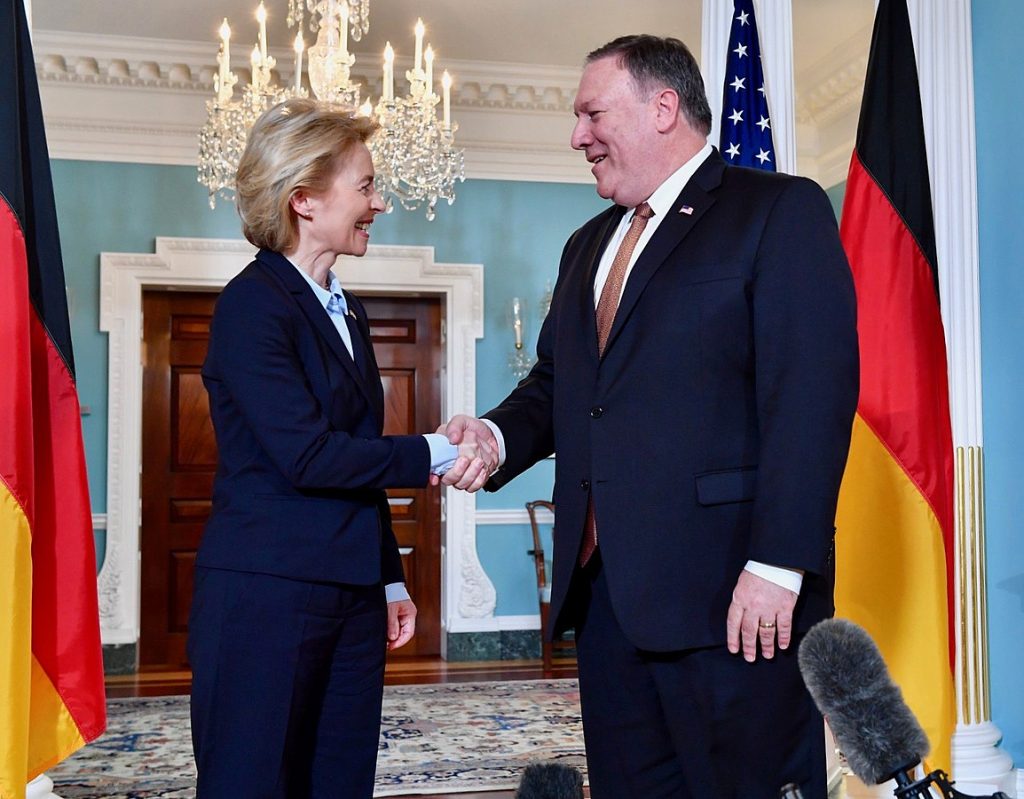
U.S. Acting Secretary of Defense Patrick M. Shanahan hosts German Defense Minister Ursula von der Leyen, at the Pentagon, Washington, D.C., April 12, 2019. (DoD photo by Lisa Ferdinando)

wikipedia DE

wikipedia EN


  • -

Radovan Karadžić

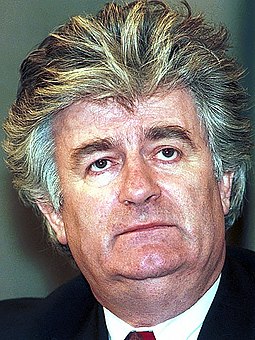
Radovan Karadžić (Serbian Cyrillic: Радован Караџић, pronounced [râdoʋaːn kâradʒitɕ]; born 19 June 1945) is a Bosnian Serb psychiatrist, poet and former politician who served as the president of Republika Srpska during the Bosnian War, and was later convicted of genocidecrimes against humanity and war crimes by the International Criminal Tribunal for the former Yugoslavia (ICTY).[2]

Trained as a psychiatrist, he co-founded the Serb Democratic Party in Bosnia and Herzegovina and served as the first president of Republika Srpska from 1992 to 1996. He was a fugitive from 1996 until July 2008, after having been indicted for war crimes by the ICTY.[3] The indictment concluded there were reasonable grounds for believing he committed war crimes, including genocide against Bosniak and Croat civilians during the Bosnian War (1992–1995).[3] While a fugitive, he worked at a private clinic in Belgrade, specializing in alternative medicine and psychology, under an alias.[4]

He was arrested in Belgrade on 21 July 2008 and brought before Belgrade’s War Crimes Court a few days later.[3] Extradited to the Netherlands, he was placed in the custody of the International Criminal Tribunal for the former Yugoslavia in the United Nations Detention Unit of Scheveningen, where he was charged with 11 counts of war crimes and crimes against humanity.[5][6] He is sometimes referred to by the Western media as the “Butcher of Bosnia”,[7][8][9] a sobriquet also applied to former Army of Republika Srpska (VRS) General Ratko Mladić.[10][11][12] On 24 March 2016, he was found guilty of the genocide in Srebrenica, war crimes, and crimes against humanity, 10 of the 11 charges in total, and sentenced to 40 years’ imprisonment.[13][14] On 22 July 2016, he filed an appeal against his conviction. The appeal was rejected on 20 March 2019, and the sentence was increased to life imprisonment.[15] In May 2021, it was announced that he would be transferred to a British prison.[16]

web

wikipedia DEwikipedia EN – wikipedia XY

youtube – vimeo – soundcloud

facebook – twitter – instagram – XING

work


  • -

Bashar Hafez al-Assad

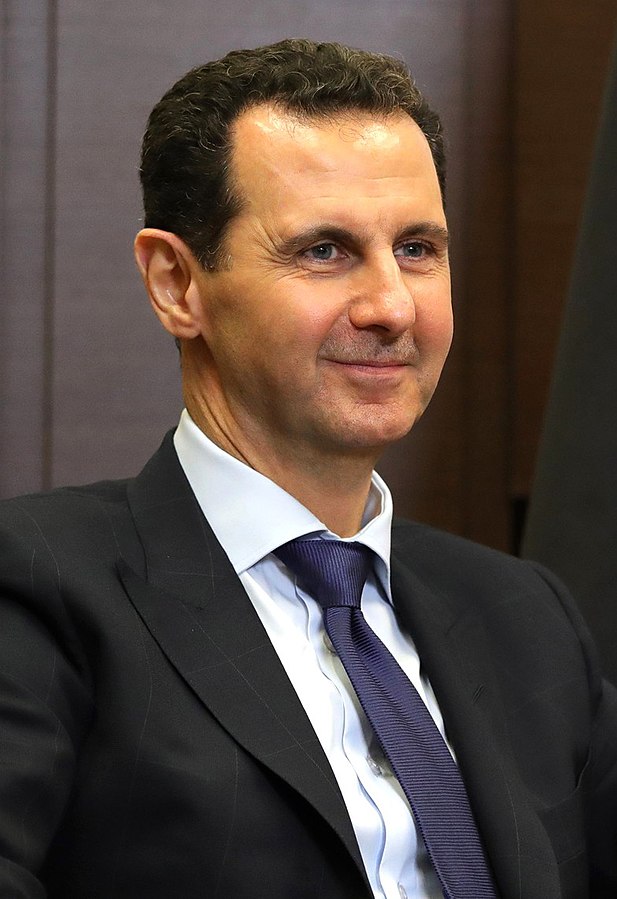
Bashar Hafez al-Assad[a] (Arabic: بَشَّارُ ٱلْأَسَدِ, born 11 September 1965) is a Syrian politician who is the 19th president of Syria, since 17 July 2000. In addition, he is the commander-in-chief of the Syrian Armed Forces and the Secretary-General of the Central Command of the Arab Socialist Ba’ath Party.

His father, Hafez al-Assad, was the president of Syria before him, serving from 1971 to 2000. Born and raised in Damascus, Bashar al-Assad graduated from the medical school of Damascus University in 1988 and began to work as a doctor in the Syrian Army. Four years later, he attended postgraduate studies at the Western Eye Hospital in London, specialising in ophthalmology. In 1994, after his elder brother Bassel died in a car accident, Bashar was recalled to Syria to take over Bassel’s role as heir apparent. He entered the military academy, taking charge of the Syrian military presence in Lebanon in 1998.

Political scientists have characterised the Assad family’s rule of Syria as a personalist dictatorship.[b] On 17 July 2000, Assad became president, succeeding his father, who died in office on 10 June 2000. In the 2000 and 2007 elections, he received 97.29% and 97.6% support, respectively.[c] On 16 July 2014, Assad was sworn in for another seven-year term after another election gave him 88.7% of the vote.[d] The election was held only in areas controlled by the Syrian government during the country’s ongoing civil war and was criticised by the United Nations (UN).[21][22] Assad was re-elected in 2021 with over 95% of the vote in national election. Throughout his leadership, human rights groups have characterized Syria’s human rights situation as poor. The Assad government describes itself as secular,[23] while some political scientists write that his regime exploits sectarian tensions in the country.[24][25]

Assad received his primary and secondary education in the Arab-French al-Hurriya School in Damascus.[41] In 1982, he graduated from high school and then studied medicine at Damascus University.[47]

web

wikipedia DEwikipedia EN – wikipedia XY

youtube – vimeo – soundcloud

facebook – twitter – instagram – XING

work