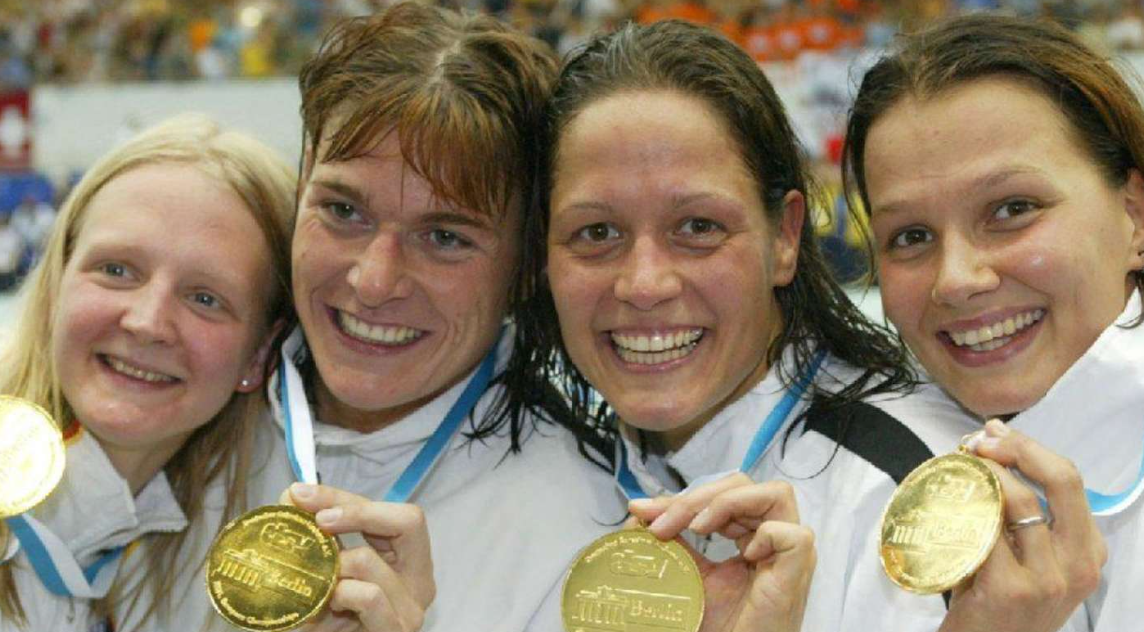
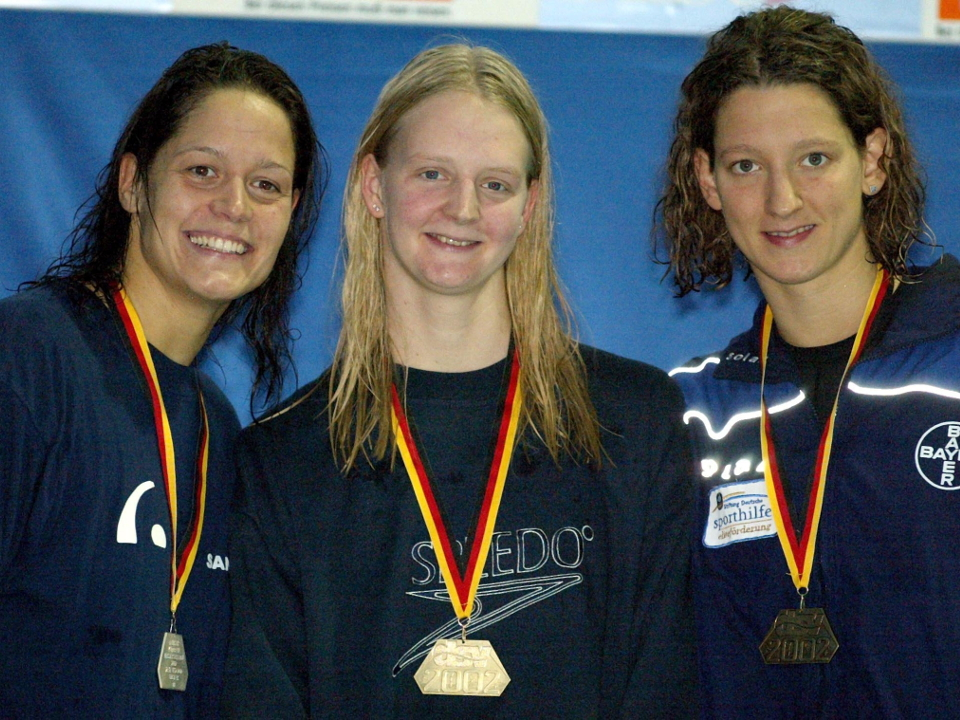
Petra Dallmann (center, next to Sandra Völker, left, and Antje Buschschulte, right) was supported by Sporthilfe for nine years and subsequently joined the Sporthilfe Alumni Club. Today, she works as a specialist in psychiatry and psychotherapy and has created “ATHLETES IN MIND,” a digital mental health offering for competitive athletes. (Photo: picture alliance)
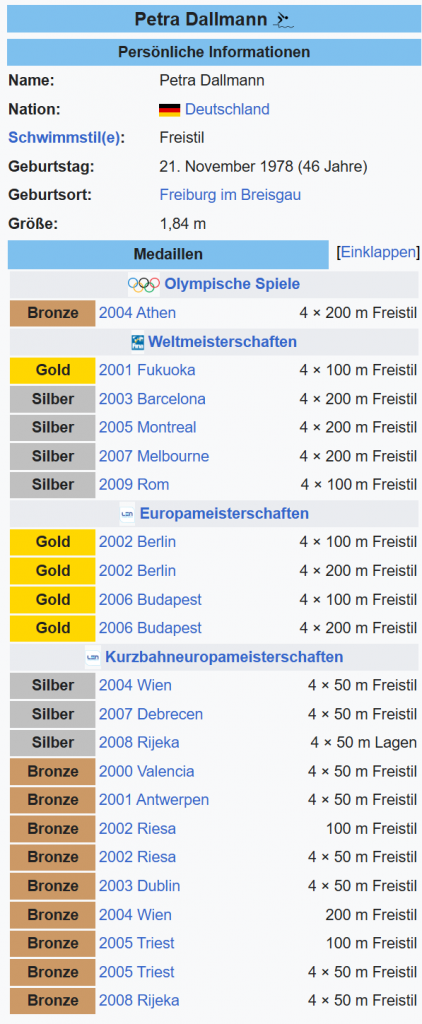
Petra Dallmann (born November 21, 1978 in Freiburg im Breisgau) is a former German swimmer.
Her swimming career began at SV Neptun Umkirch e. V.
Her specialty was the 100-meter and 200-meter freestyle, which is why she often swam for the German national team in the freestyle relay. In 2001, Dallmann became world champion with the 4×100-meter relay team (Petra Dallmann, Antje Buschschulte, Katrin Meißner, and Sandra Völker), and in 2004 at the Olympic Games in Athens, she won the bronze medal with the 4×200-meter relay team (Franziska van Almsick, Petra Dallmann, Antje Buschschulte, and Hannah Stockbauer).
For this, she and her relay team received the Silver Laurel Leaf on March 16, 2005.
She also won four European Championship titles and became German champion in the 200-meter freestyle in 2005. After the 2009 World Championships in Rome, where she won another silver medal with the 4 x 100-meter relay, she retired.
Dallmann, who is 1.84 meters tall, competed for SV Nikar Heidelberg. She studied medicine at the University of Heidelberg and has been a doctor since 2006. She is a specialist in psychiatry and psychotherapy and chief physician of the Libermenta Klinik Schloss Freudental.
In March 2023, she spoke with former professional cyclist Dominik Nerz in an interview on Deutschlandfunk about eating disorders in (top-level) sport.
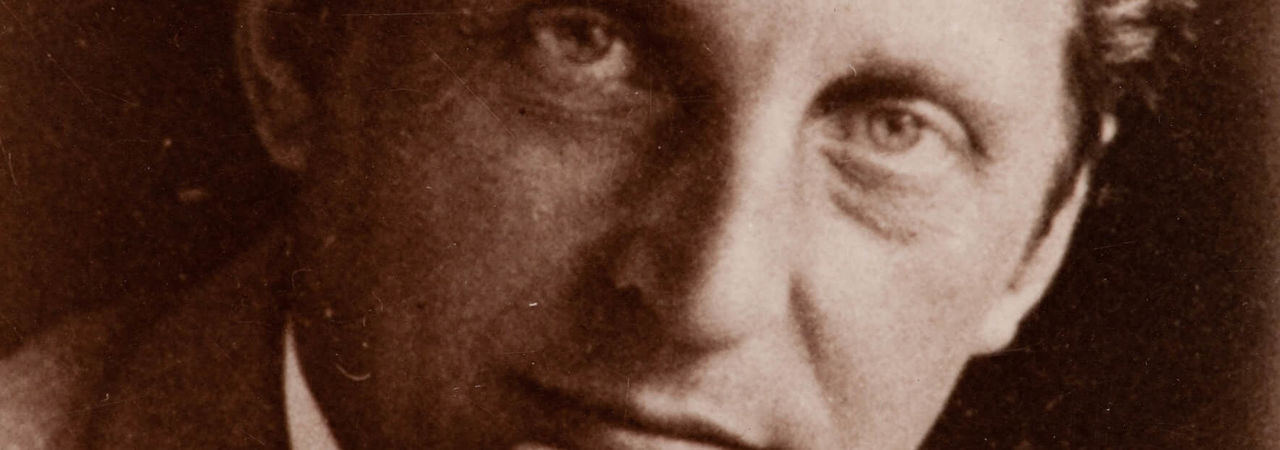
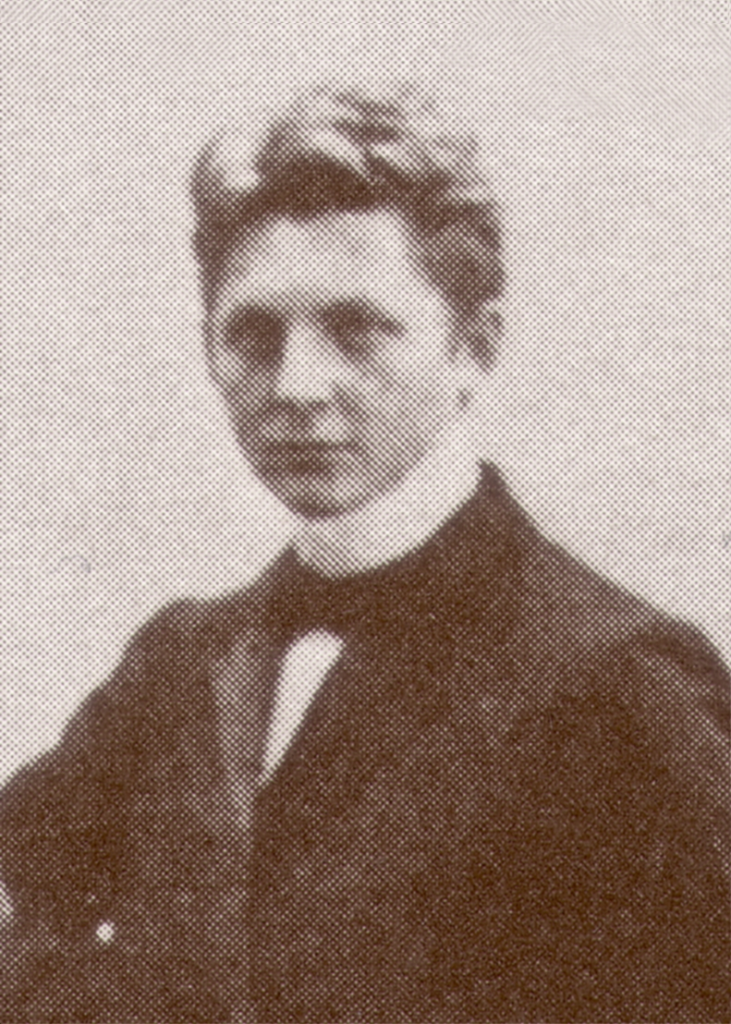
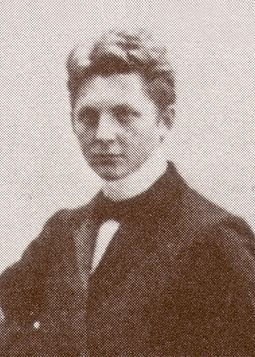
Born in Hemer, Westphalia, he studied art history and philosophy at the universities of Tübingen, Leipzig and Munich, then receiving his doctorate under Theodor Lipps with the dissertation “Gottfried Semper’s basic aesthetic views” in 1908. He then went to the Leipzig Conservatory in 1909 and received lessons in music theory and piano. Afterwards he went to London to pursue his desire of becoming a singer, however his voice was ultimately not good enough for an artistic career. During the First World War, he assisted a military surgeon and in 1913 he finally started studying medicine, receiving his training at the universities of Freiburg and Strasbourg. He completed his second doctorate (in medicine) in 1919 at the University of Heidelberg after an invitation from Karl Wilmanns, with the dissertation “The artistic capabilities of the mentally ill”.
In 1919 he became assistant to Karl Wilmanns at the psychiatric hospital of the University of Heidelberg. His task was to expand an earlier collection of art created by the mentally ill and started by Emil Kraepelin. When he left in 1921 the collection was extended to more than 5,000 works by about 450 “cases”.
The book is mainly concerned with the borderline between psychiatry and art, illness and self-expression. It represents one of the first attempts to analyse the work of the mentally ill.
After short stays at sanatoriums in Zürich, Dresden and Wiesbaden, he began a psychotherapy practice in Frankfurt in 1925, but without much success. He published a follow up project to his first book, titled “Bildnerei der Gefangenen” (Artistry of Prisoners) in 1926, however it was met with little success. He also wrote poems, which were published by a private publisher after his death. He continued to write numerous other books which were mainly on the field of psychotherapy. He approached psychology with an original method where he combined philosophy, anthropology and psychoanalysis. He went on to give lectures over radio, and he was a sought-after speaker home and abroad. He went to an invitation-based lecture tour of US universities in 1929. His original approach was well respected within the German community, however it was largely forgotten due to the dominant force of experimental psychology. His hopes to find a permanent position at a university were never fulfilled. Disillusioned by professional failures, and after three failed marriages, he moved in with an aunt in Munich and retreated from public life, making a living from giving lectures and writing essays. He died in 1933 in Munich after contracting typhus on a trip to Italy.
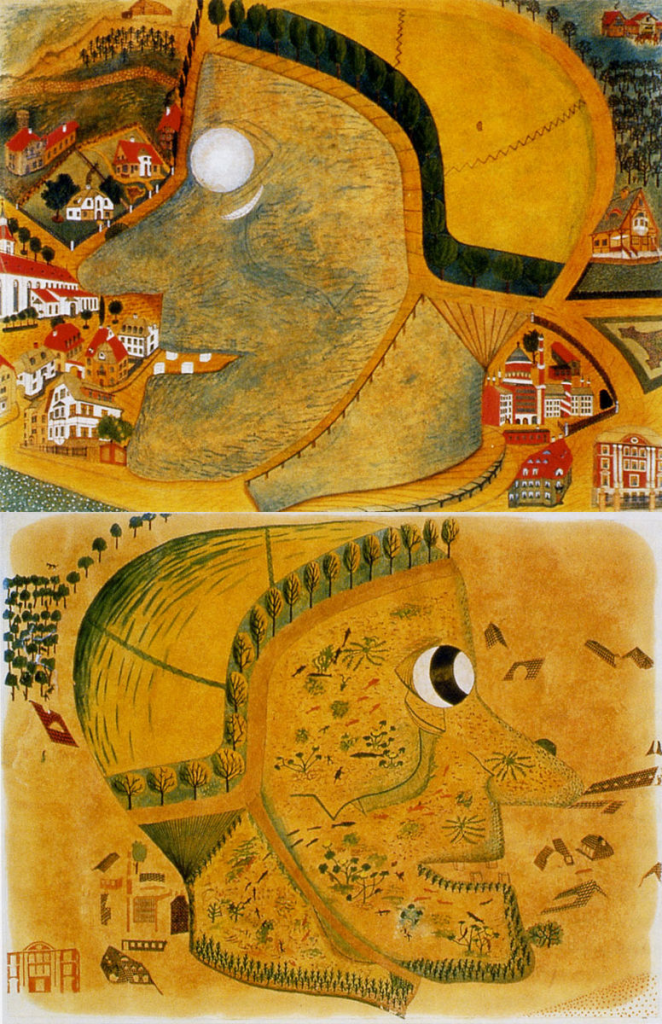
Aus der Sammlung Prinzhorn: August Natterer (Neter): „Hexenkopf“ (Vorder- u. Rückseite), ca. 1915
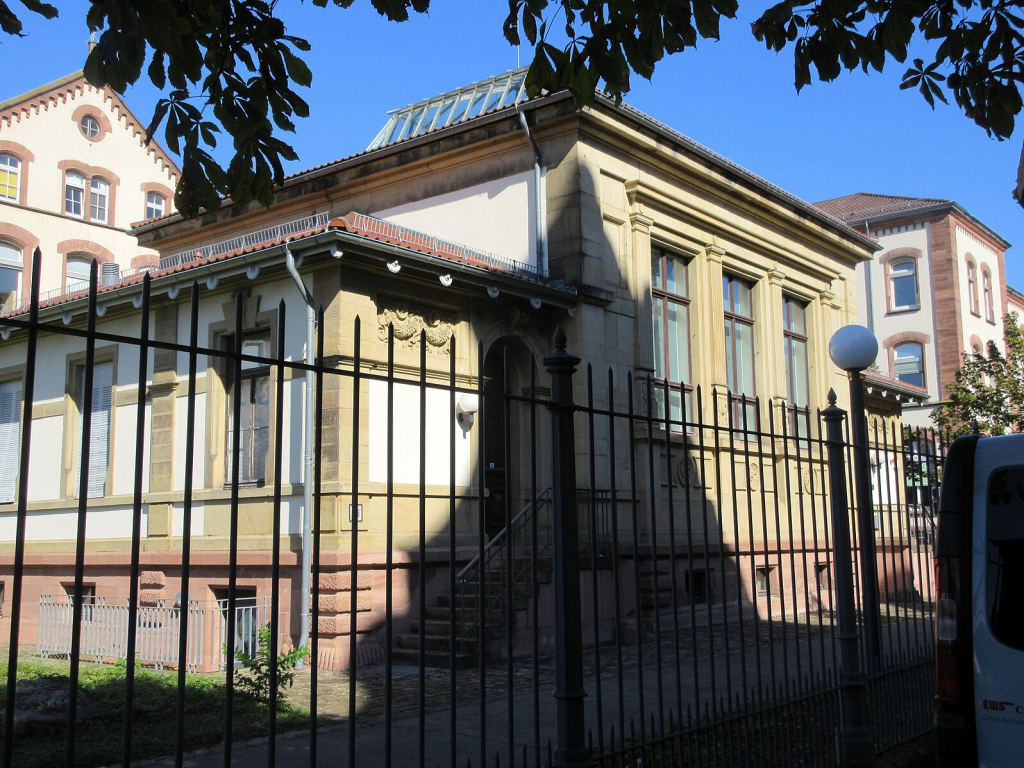
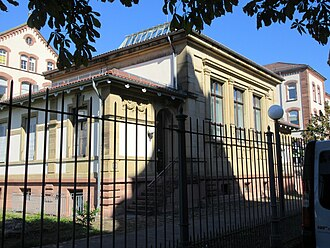
Shortly after his death the Prinzhorn Collection was stowed away in the attics of the university. In 1938 a few items were displayed in the Nazi propaganda exhibition Entartete Kunst (“Degenerate Art”). Since 2001 the collection has been on display in a former oratory of the University of Heidelberg.
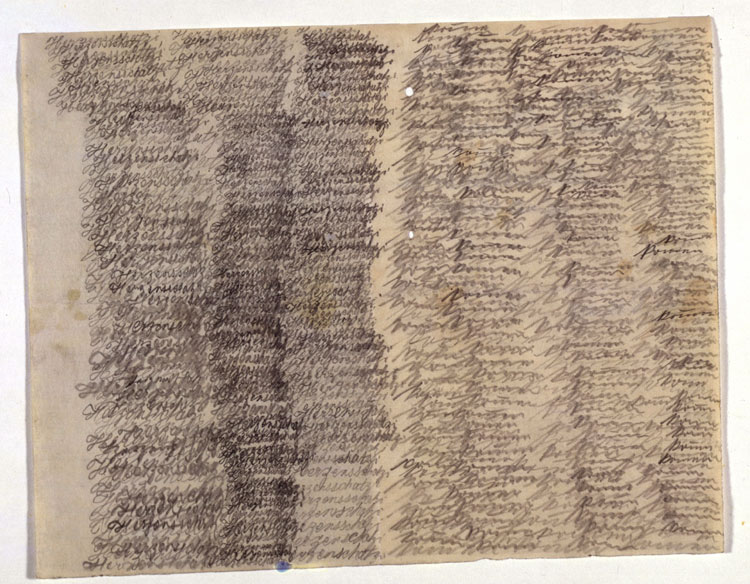
Brief der Psychiatriepatientin Emma Hauck 1909, von Prinzhorn als Beispiel für „Kritzeleien“ angeführt, Sammlung Prinzhorn
In Hans Prinzhorn’s hometown of Hemer, the municipal secondary school and the local specialized clinic for psychiatry and psychotherapy are named after him. A clinic for differentiated treatment options in compulsory and full-service settings, the clinic is sponsored by the Regional Association of Westphalia-Lippe. The clinic also serves as a training and continuing education institution. The Felsenmeer Museum, run by the Citizens’ and Local History Association, houses a Prinzhorn archive, largely filled with copies. The literary scholar Yukio Kotani, influenced by Ludwig Klages, campaigned to raise awareness of Prinzhorn’s work in Japan.
Gunter Frank (born 1963 in Buchen (Odenwald)) is a German physician and non-fiction author.
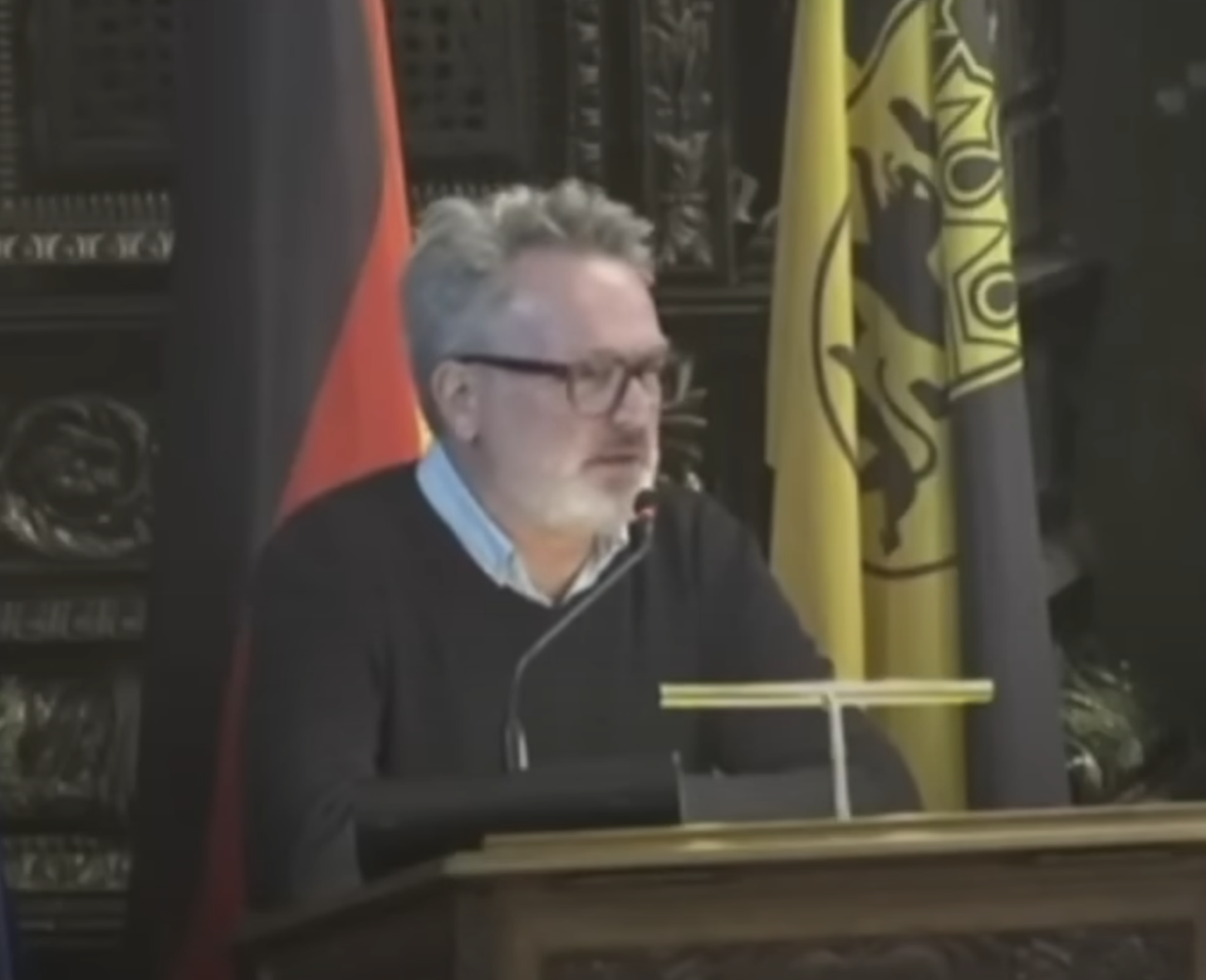
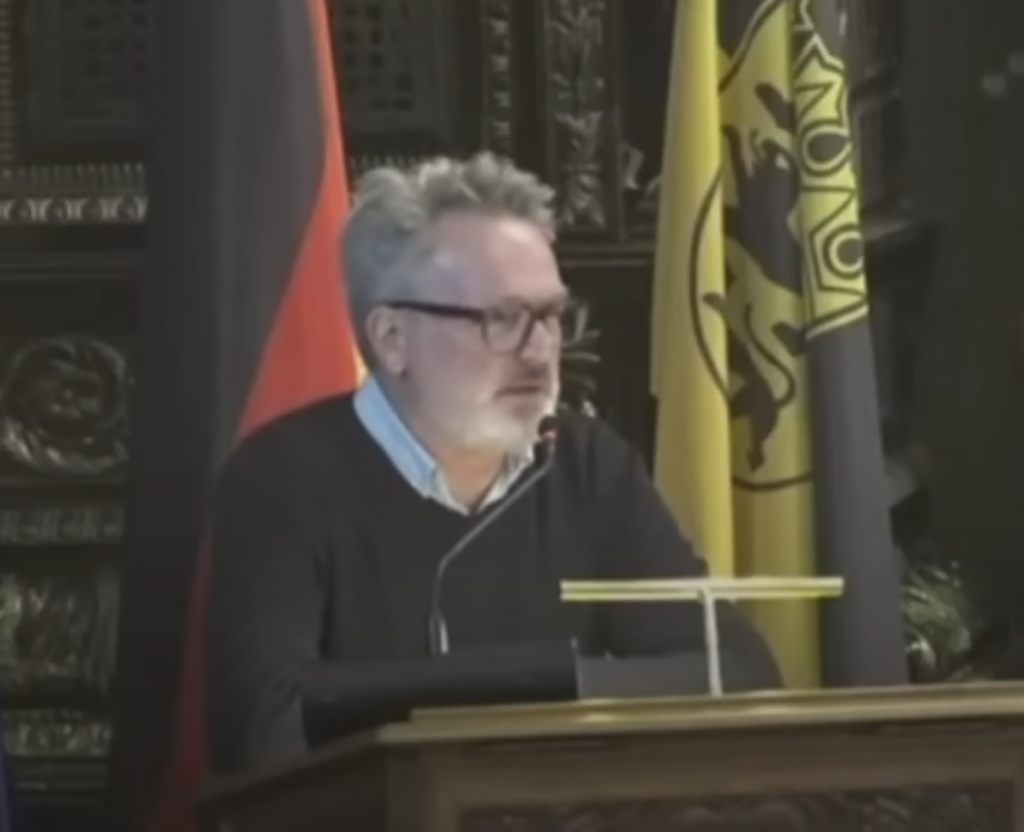
Frank studied medicine in Heidelberg and Chicago. He runs his own general practice in Heidelberg. He is a member of the Heidelberg City Council.
Frank is a lecturer at the Business School St. Gallen,[1] a private provider of executive education seminars, and the author of several books on health and nutrition. He is a public critic of the German healthcare system.[2]
He publishes his theses on the political blog “Achse des Guten” (Axis of Good).[3] At the invitation of the AfD parliamentary group, he said in committee hearings that the COVID vaccinations were a “thalidomide scandal by a factor of ten.”
Bei der Prinzhorn-Sammlung in Heidelberg wurde bis vor einiger Zeit der Film von Henning Burk “Der Arzt, die Patienten, die Kunst” als DVD im Shop verkauft, die uns vorliegt.
Christoph Karle is FlyingDoc. After getting a good deal for his plane in Canada he got it transferred from there to Germany which is quite an action for such a small plane!