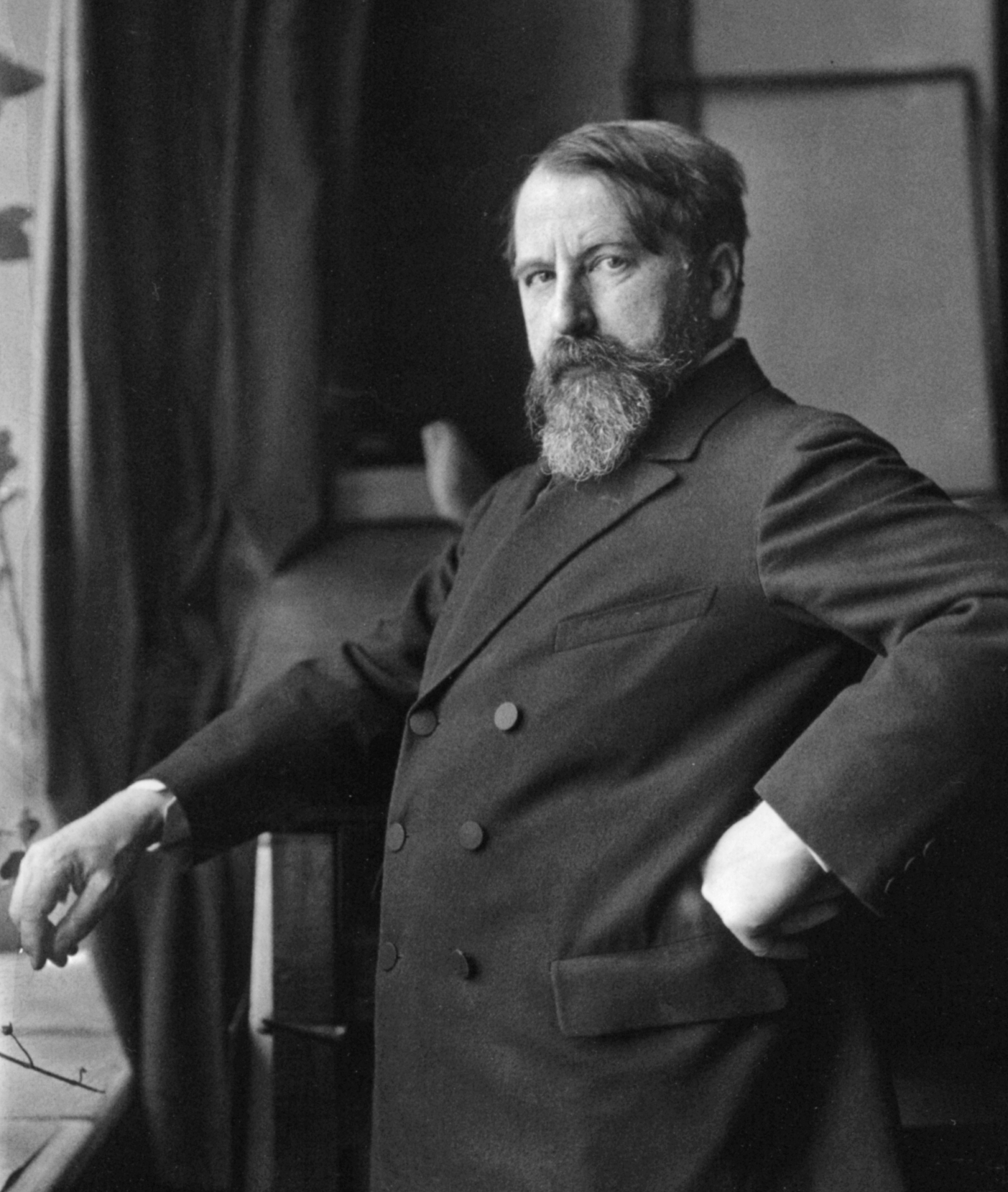
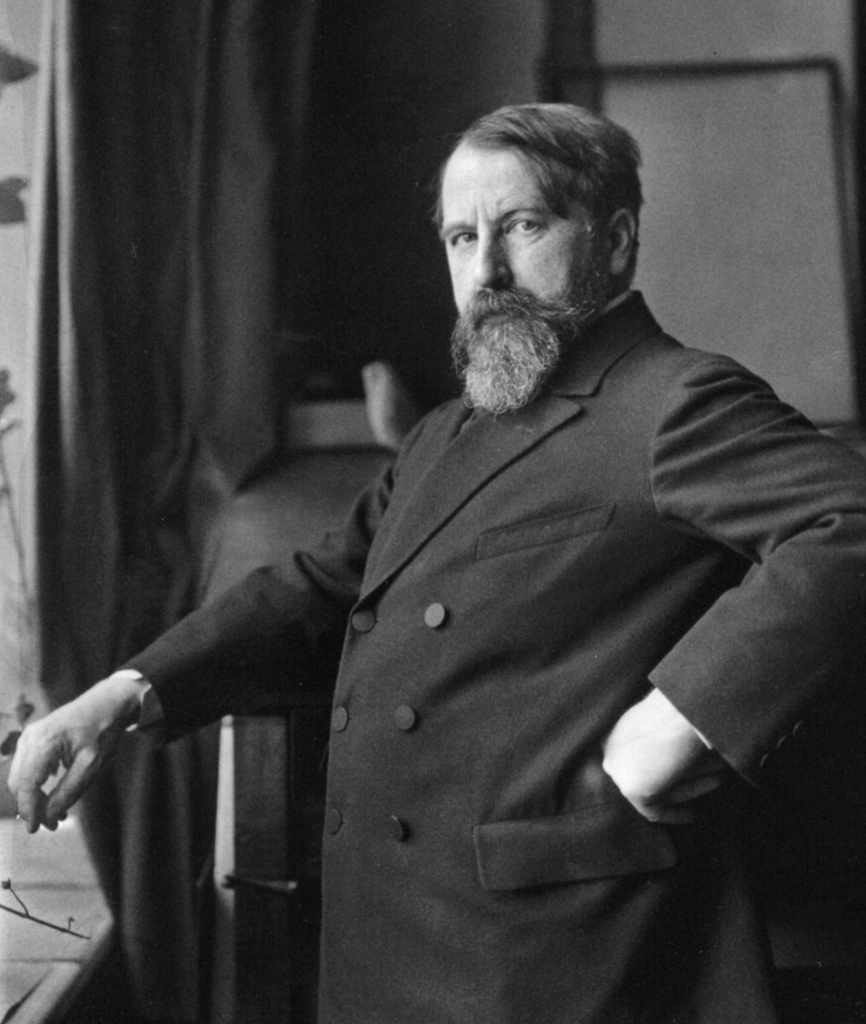
Arthur Schnitzler (May 15, 1862 in Vienna,[1] Austrian Empire; October 21, 1931, ibid.) was an Austrian physician, narrator, and playwright. He is considered one of the most important representatives of Viennese Modernism.
From 1871 to 1879, Arthur Schnitzler attended the Akademisches Gymnasium in the 1st district and graduated with honors on July 8, 1879.[2] Afterwards, at his father’s request, he studied medicine at the University of Vienna. On May 30, 1885, he received his doctorate in medicine. His younger brother Julius (1865–1939) also became a physician.
From 1885 to 1888 he worked as an assistant and secondary physician at the General Hospital of the City of Vienna in internal medicine and in the field of psychiatry and dermatology.[3] He then worked as his father’s assistant in the laryngological department of the polyclinic in Vienna until 1893. From 1886 to 1893 Schnitzler published on medical topics and wrote more than 70 articles, mostly reviews of specialist books, including as editor of the International Clinical Review founded by his father.[4] He authored one (only) scientific book publication: On functional aphonia and its treatment through hypnosis and suggestion (1889).
Although Schnitzler had been writing literary texts since childhood and made his literary debut in 1880 (Liebeslied der Ballerine in the magazine Der freie Landbote), his public literary activity only began to intensify in 1888, when he was in his mid-20s. He published poems, one-act plays, and short stories in the magazine An der Schönen Blauen Donau, edited by Fedor Mamroth and Paul Goldmann.[5] Around this magazine, but also in the Viennese coffee houses that Schnitzler frequented, including the Café Griensteidl, like-minded people began to gather who wanted to create a new, Austrian literary movement. The term “Jung Wien” soon became established for this, even though it did not describe a unified program and only partially shared aesthetic goals. Key figures with whom Schnitzler became friends around 1890/1891 were Hugo von Hofmannsthal, Hermann Bahr and Richard Beer-Hofmann.
In addition to this scandal, the publication of Reigen caused further controversy. First produced in 1900 as a private print in a small number of copies, it was freely published by Fritz Freund’s Viennese publishing house in 1903. The conversations it depicts before and after sexual intercourse between women and men from different social classes were denounced as pornography by Schnitzler’s opponents. The two themes of criticism of the army and eroticism, combined with Schnitzler’s obvious success, made him a popular target for anti-Semites.
Privately, Schnitzler documented several relationships with women in his diary for the period up to the age of 40, often conducted simultaneously without the partners’ knowledge. In particular, his largely platonic relationship with Olga Waissnix, the married landlady of the Thalhof (Reichenau an der Rax), as well as his relationships with Marie Glümer and Maria Reinhard, were considered more profound partnerships. Both Maria (often referred to in the diary as “Mizi I” and “Mizi II”), as well as others, hoped to legitimize their relationship through marriage. In Maria Reinhard’s case, this became even more pressing because she was pregnant with his child twice. The first child was stillborn, and she died of appendicitis during the second pregnancy.
His relationship with actress Olga Gussmann (1882–1970) led to a stabilization of his lifestyle. On August 9, 1902, she gave birth to their son, Heinrich Schnitzler. On August 26, 1903, the couple married. Their daughter, Lili, was born on September 13, 1909.[11] Schnitzler remained faithful for the duration of the marriage and ceased his promiscuous lifestyle.
From the beginning of the 20th century, the writer was one of the most frequently performed playwrights on German stages. With the outbreak of the First World War, interest in his works declined. This was also due to the fact that he was one of the few Austrian intellectuals who was not enthusiastic about warmongering and did not make any bellicose statements.
Reigen is Arthur Schnitzler’s most successful play for several decades. Largely unperformed during his lifetime at the author’s request, it describes in ten dialogues how a man and a woman talk to each other before and after sexual intercourse. In 1921, on the occasion of the premiere of the play Reigen, which led to a staged theater scandal in Berlin in 1920/1921 and then in Vienna, he was put on trial for causing public nuisance. The case was ultimately decided in the author’s favor by the Vienna Constitutional Court. After further performances in Vienna, however, Schnitzler asked his theater publisher in 1922 not to permit any more performances. His son only had the ban on performances lifted in 1982.
Während Schnitzler als jüdischer Autor in der Zeit des Nationalsozialismus verpönt war, setzte in der NIn the postwar period, a slow institutionalization as a classic began.[38]
In 1959/1960, the Arthur Schnitzler Courtyard in Vienna-Döbling (19th district) was named after him.
In 1971, a bust of Schnitzler by Sandor Jaray was unveiled at the Burgtheater in Vienna.
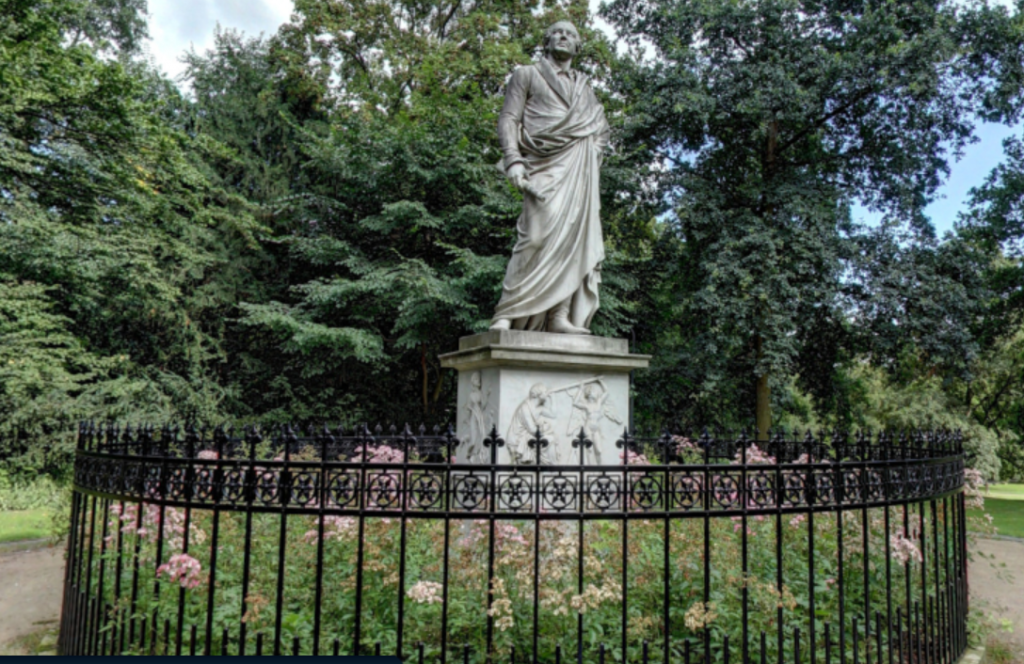
On May 13, 1982, a bust of Paul Peschke was unveiled in Vienna’s Türkenschanzpark (18th district).[39] The memorial was initiated by Viktor Anninger (1911–2004), who was a friend of Lili Schnitzler and frequented Schnitzler’s house at Sternwartestraße 71. Peschke, in turn, was the son-in-law of Ferdinand Schmutzer and, when he created the memorial, lived directly across from Schnitzler’s former residence in his father-in-law’s former house.
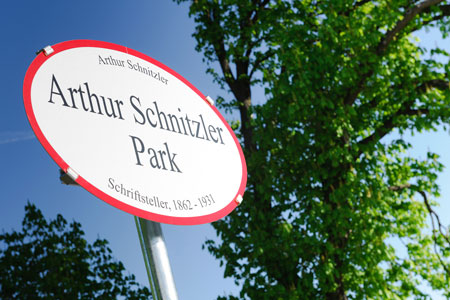
April 2012: The small park opposite the train station in Baden (Lower Austria) is named “Arthur Schnitzler Park.”[40]
May 6, 2017: Following a municipal council resolution from September 2016, the forecourt of the Volkstheater between Burggasse, Museumstraße, and Neustiftgasse in Vienna’s 7th district, Neubau, is named “Arthur Schnitzler Square.” The theater now uses the address Arthur Schnitzler Square 1, 1070 Vienna.
The Arthur Schnitzler Prize is awarded every four years by the Arthur Schnitzler Society. This prize is endowed with 10,000 euros by the Austrian Ministry of Education and the Cultural Department of the City of Vienna.
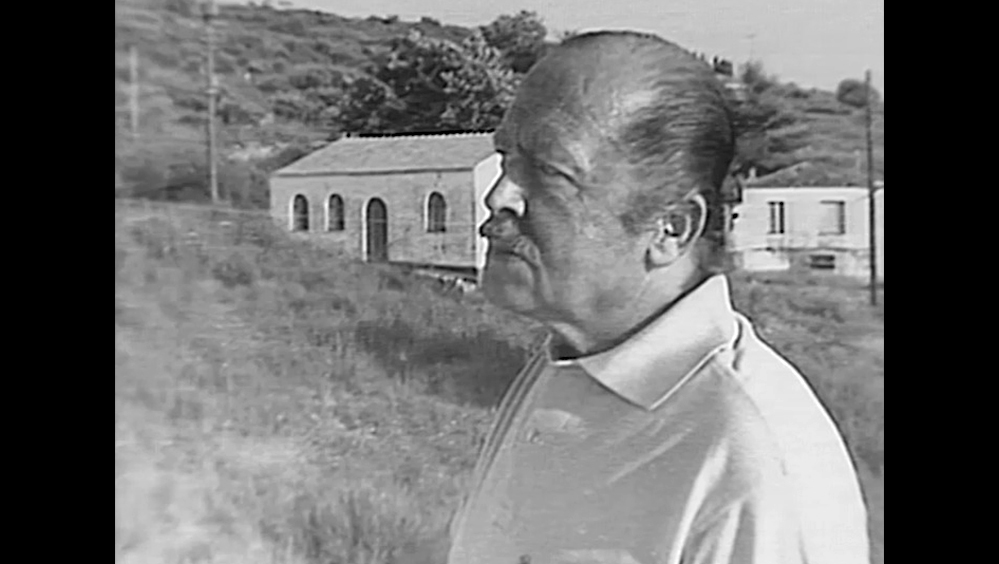
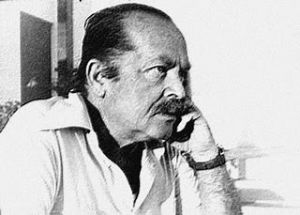
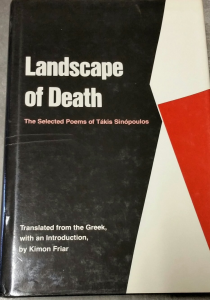
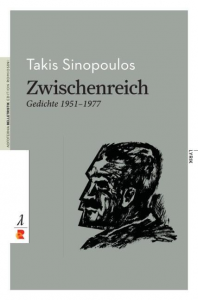
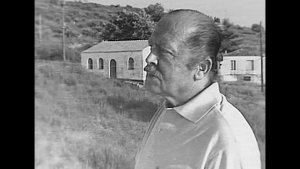
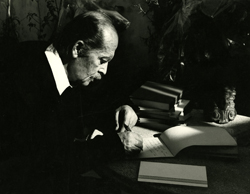
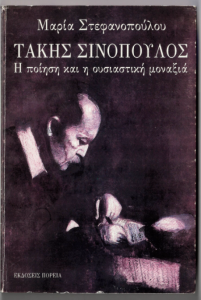
Takis Sinopoulos was born in 1917 in the Peloponnese. He served as a military doctor in the Greek Civil War from 1946 to 1949; his experiences of fratricide and excessive violence had a lasting impact on him and his work. He died in 1981 in Pyrgos in the Peloponnese.
He was born in Agolinitsa, the first-born son of philologist Giorgos Sinopoulos and Roussa-Veneta Argyropoulou. He studied medicine at the University of Athens, graduating in 1944. In 1934, under the pseudonym Argyros Roubanis, he published the poem “Betrayal” and the short story “The Revenge of a Modest Man” in the Pyrgio newspaper “Nea Imara”. In 1941, he was drafted as a medical sergeant in Loutraki. [3] During the occupation, he published translations of French poets and some essays on poetry. In 1942, he was briefly imprisoned by the Italians as a resistance fighter. During the civil war, he was a doctor in an infantry battalion. After the end of the civil war, he began working as a doctor in the capital. In 1951 he published his first collection of poems, entitled Metaihmio. He was a member of the editorial staff of Eighteen Texts, New Texts 1-2, Deposition ’73, and the journal The Continuation. He also collaborated with numerous journals (Nea Estia, Filologika Chronika, Odysseas (Pyrgou), Kochlias, Piraika Grammata, Anglohelleniki Epitheoresis, Kainouria Epochi, Zygos, Epochen, Tram, O Tachydromos, etc.). He belonged to the first post-war generation. He was particularly influenced by T.S. Eliot, Seferis, and Ezra Pound. In general, his poetry is lyrical, epigrammatic, and characterized by tragic self-awareness and pessimism. In his final years, a shift in the use of linguistic material toward an anti-poetic, aggressive, and often ironic discourse was observable. He donated a large part of his library to the University of Thessaloniki.
Sinopoulos spent his student years in Pyrgos and went to Athens to study medicine in 1934. He made his first appearance in the literary world in 1934 with the publication of the poem “Betrayal” and the short story “The Revenge of a Modest Man” in the Pyrgos newspaper “Nea Imera” under the pseudonym Argyros Roubanis. His first book of poetry, titled “Metaihmio,” was published in 1951. The first poem in this volume, “Elpinor,” was written in 1944.
A pioneering figure of the “Generation of the 1950s,” Sinopoulos authored a number of poetry collections, essays, and book reviews throughout his creative career, which shaped the country’s intellectual life in the post-war years. He is a tragedian par excellence. The emphasis on the tragic “stigmatizes” his entire poetry, the drama, the decay, the death, the suffering and the alienation, and embodies the tragic historical events he experienced (the dictatorship of Metaxas, the war occupation, the civil war, the 1967 dictatorship, the coup and the invasion of Cyprus).
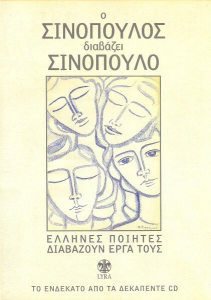
He also wrote the poetry collections “The Song of Joanna and Constantine,” which won the 1961 State Prize for Poetry, “Acquaintance with Max,” and “Night and Counterpoint,” as well as various studies and essays on the work of Seferis, such as “Strofi.” He was awarded the 2nd State Poetry Prize in 1962 for “The Song of Joanna and Constantine.”
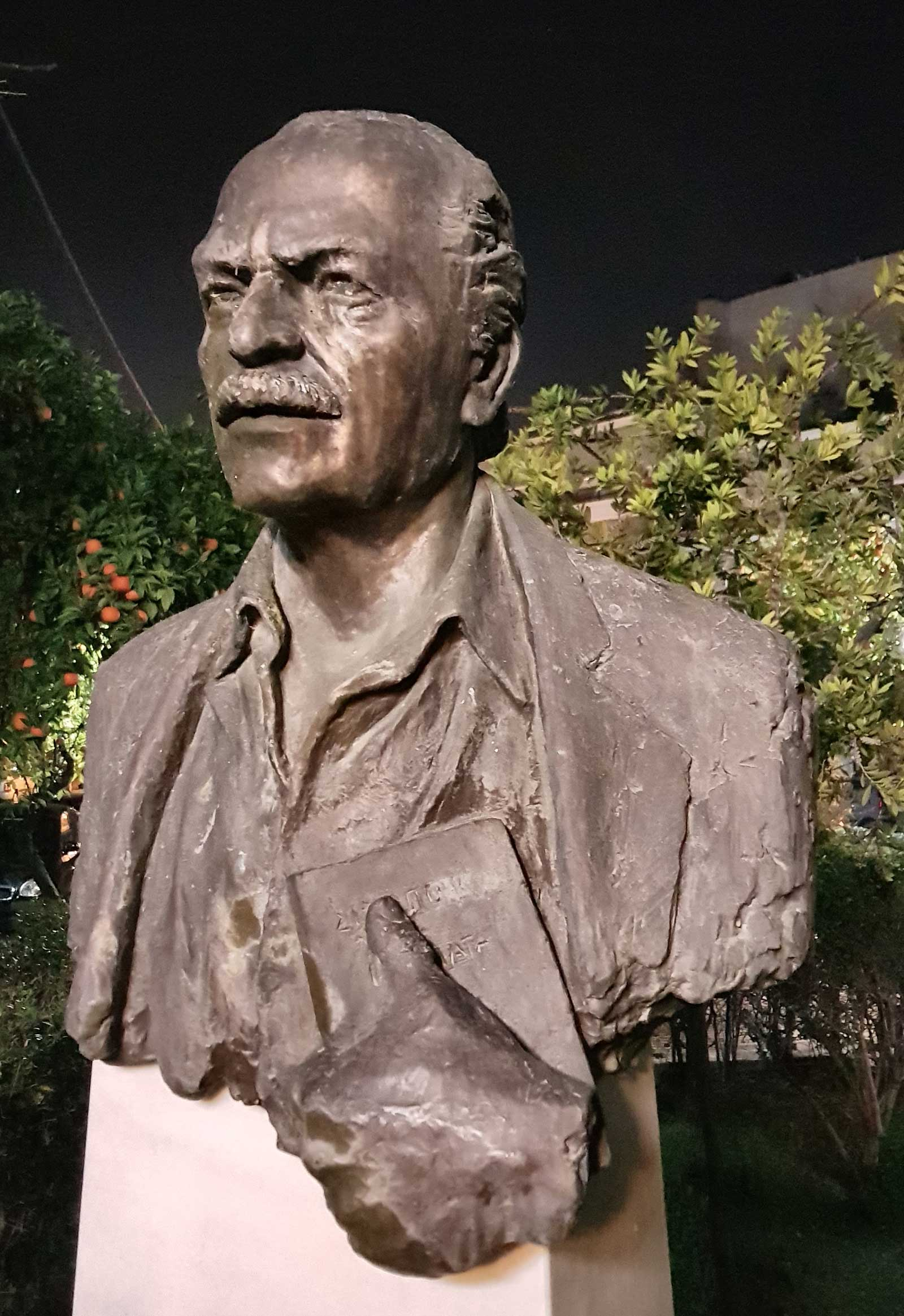
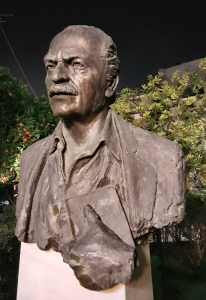
He died on April 25, 1981 (Easter Eve 1981) in Pyrgos. He was married to Maria Dotta, who in 1995 donated the house she lived in in the municipality of Nea Ionia to the Takis Sinopoulos Foundation as accommodation. A bust of the poet stands in the square in front of his house on Takis Sinopoulos Street in Perissos.
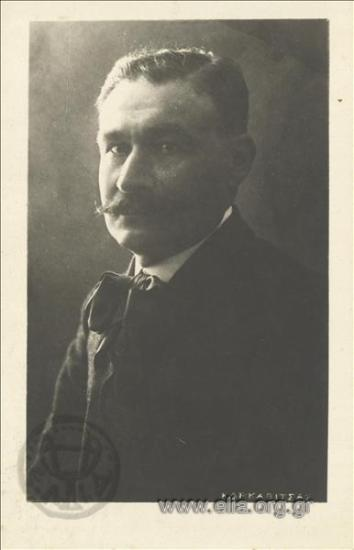
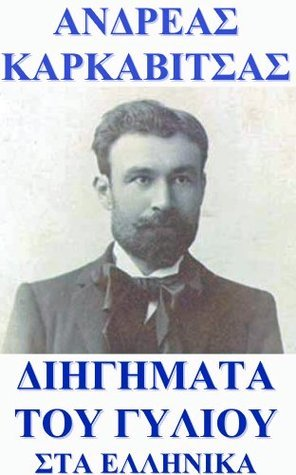
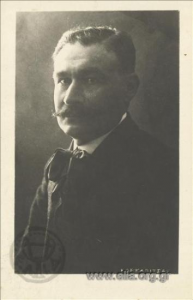
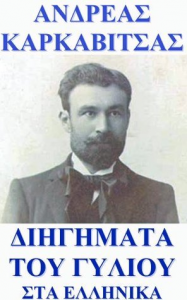
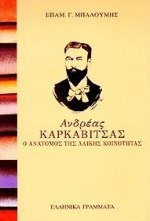
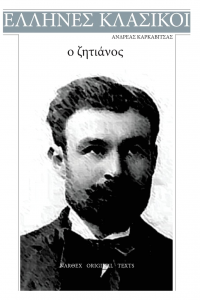
He was born in 1866 in the north-west Peloponnese, in the town of Lechaina in Elis. He studied medicine. As an army doctor, he travelled across a great range of villages and settlements, from which he recorded traditions and legends. He died on October 10, 1922, of laryngeal cancer. Several streets in Greece have been named after him, for instance in Pyrgos.
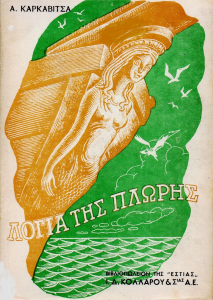
Karkavitsas wrote in the European tradition of naturalism (exemplified by Émile Zola), which does not shrink from portraying the seamier parts of life among humble people, rather than romanticising or embellishing reality. He was a folklorist with a gift for spinning tales full of authentic details of simple people’s lives, local customs, dialects and folktales, as well as psychological insights about them. He was more successful as a short-story and novella writer. “The Beggar” is a novella about con-men, violence and the grotesque practices of professional beggars (including purposely maiming children to turn them into profitable objects of pity). “Words from the prow” is about the lives of seafarers, fishermen and sponge-divers, full of arcane details of their craft as well as folk-tale-inflected plots of tragedy, shipwreck, hands lost at sea, murder, superstition and the supernatural, as well as the joys of making a living off the sea.
Year
Title
English meaning
Published in
1892
Διηγήματα (Diiyimata)
Stories
Athens
1896
Η Λυγερή (I Liyeri)
The willowy girl
Athens
1897
Θεσσαλικές εικόνες. Ο ζητιάνος (Thessalikes eikones. O zitianos)
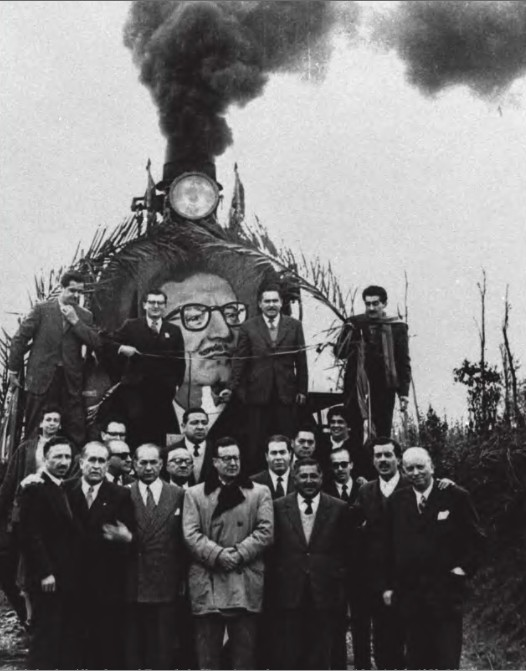
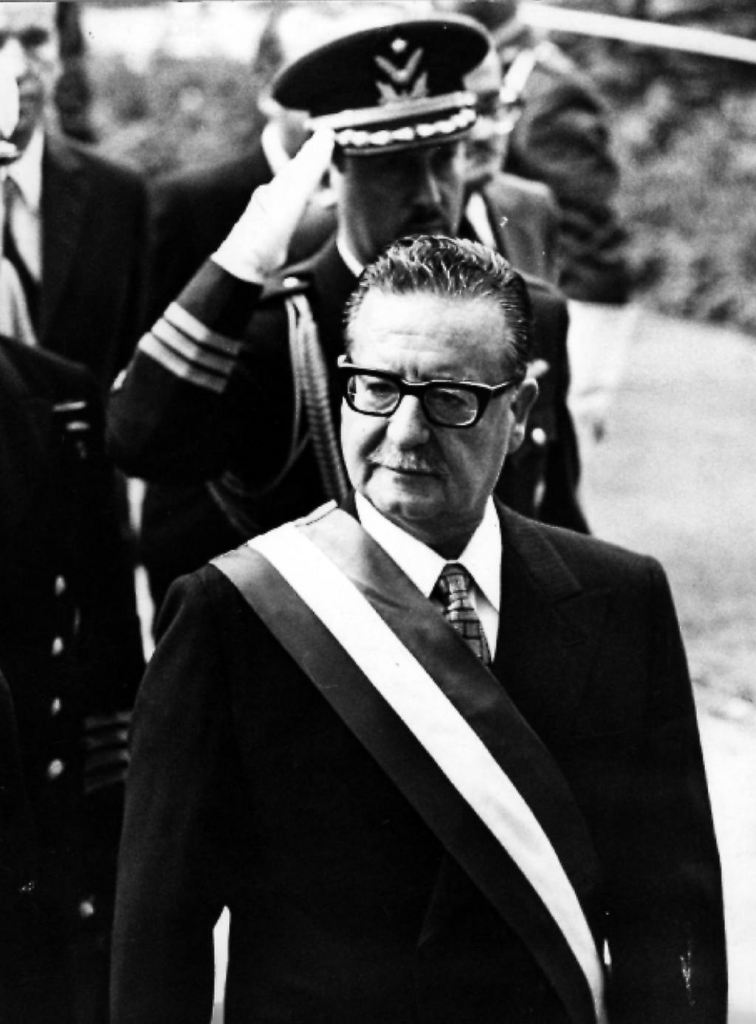
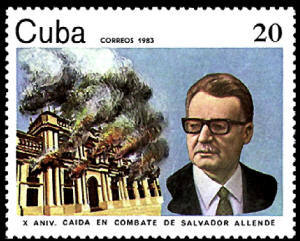
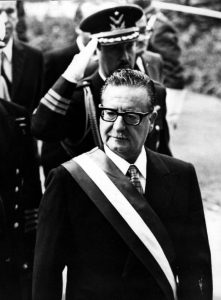
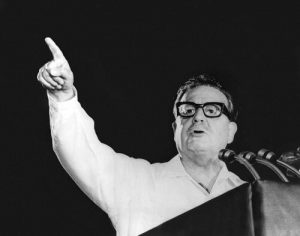
Salvador Guillermo Allende Gossens [salβaˈðoɾ ɣiˈjeɾmo aˈjende ˈɣosens] (June 26, 1908 in Valparaíso – September 11, 1973 in Santiago de Chile) was a Chilean physician and politician. He served as President of Chile from 1970 to 1973. His presidency was an attempt to establish a socialist society in Chile through democratic means. Allende was overthrown in a military coup in 1973, during which he committed suicide.
Allende became politically active in the late 1920s as a medical student at the University of Chile. He participated in protests against the dictatorship of Colonel Carlos Ibáñez del Campo and was elected vice president of the Federation of Chilean Students (FECH). In 1929, he joined both the Freemasons[5] and the group “Avance” (“Forward”).[6] In both organizations, he made important contacts for his later political career.
After the suppression of an uprising against the Ibáñez dictatorship led by Marmaduque Grove, Allende was arrested but later released. Shortly thereafter, he became secretary of the Socialist Party, founded in 1933, for the Valparaíso region.
In 1952, Allende ran for president for the first time, but only finished fourth. In 1954, he served as Deputy President of the Senate. In 1958, he was again the presidential candidate of the left-wing alliance Frente de Acción Popular (FRAP), but narrowly lost to the businessman Jorge Alessandri Rodríguez, who was supported by the right-wing parties. In 1964, he ran for president again, but was decisively defeated by the Christian Democrat Eduardo Frei. The reasons for this final electoral defeat were the last-minute support of the conservative parties for the more progressive Frei, as well as the massive support of the Christian Democrats by the CIA.[7]
In 1966, Allende was elected President of the Senate. In 1968, calls for his resignation followed his personal protection of the survivors of Che Guevara’s guerrilla force in Bolivia. In the same year he condemned the Soviet invasion of Prague.
Namegiving
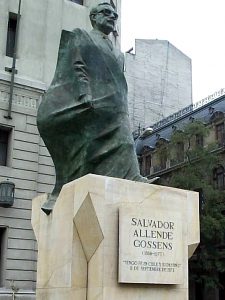
After the end of the military dictatorship in Chile, Allende’s body was transported from Valparaíso, where he had been buried behind closed doors after the coup, to Santiago de Chile and interred in the main cemetery. Several hundred thousand people attended the funeral. A statue of Allende stands next to the presidential palace, La Moneda.
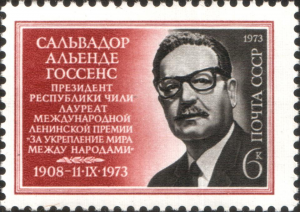
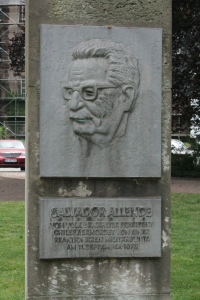
After his death, Salvador Allende was honored primarily in the socialist countries of Europe. In the Berlin district of Köpenick, the Salvador Allende Quarter is named after him. There is also an Allende Quarter in Wittenberge (Brandenburg). In the university town of Greifswald, in the GDR, the vocational school of the VEB Kombinat Ingenieur-Tief- und Verkehrsbau Rostock (State Industrial Estate Combine) bore the name Dr. Salvador Allende. An “Allende Memorial Stone” stood in the schoolyard. This educational institution was closed after the fall of the Berlin Wall. Two of the former buildings were converted into student housing and prop storage for the theater, in front of which the memorial stone is located. In Jena, a square in the Lobeda-Ost district, and streets in Bautzen, Chemnitz, Ludwigsfelde, Magdeburg, Neubrandenburg, Rostock, Frankfurt (Oder), Waltershausen, Weimar, Wittenberge, and Zwickau are named after Allende.
In Bernburg (Saale) in Saxony-Anhalt, the then new residential area on Kirschberg was named Dr. Salvador Allende Settlement in 1973, and a memorial plaque was erected at the corner of Dr. John Rittmeister Street, which was “stored indefinitely” in 2007.[33] The secondary school in Klötze (Saxony-Anhalt) bears the name “Dr. Salvador Allende,”[34] as does a primary school in Chemnitz.[35] A primary school in Rheinsberg (Brandenburg)[36] bore his name until 2018.[37]
In the Federal Republic of Germany, the former Bornplatz in the Hanseatic City of Hamburg was renamed Allende-Platz in 1983. It is located next to the grounds of the University of Hamburg, in the immediate vicinity of the former Talmud Torah School. In Oer-Erkenschwick, the Socialist Youth of Germany – The Falcons – has called its educational facility the Salvador Allende House since it opened in the late 1970s. There is also a Salvador Allende Street in Berlin, Bremen, and Frankfurt am Main. In Berlin, there is also the Salvador Allende Quarter.
In Munich, Schubaurstrasse in the Obermenzing district is named after him.[3]
Music holds a high value for many physicians as an expression of a cultural way of life. Anyone with some insight will also know how many physicians, as music lovers, spend their free time not only listening to music, but also making music themselves. Some have even tried their hand at composing. The Munich court physician and composer Johann Lukas Schubaur was one of those few personalities for whom doctor and composer formed an unusual combination, both as a profession and as a hobby. The life and work of Johann Lukas Schubaur demonstrates the possibility of a harmony between medical and musical talent. This is rare in the history of medicine and music. “I have no answer to the accusation that the practice of an art that once seemed so sacred and healing to the physicians of ancient times is incompatible with the serious science of medicine. Anyone who can judge so easily must have a head that is either too heavy or too light.” Johann Lukas Schubaur addressed these remarks in a note to the libretto of his operetta “The Faithful Charcoal Burners” to those critics who apparently considered the composition of operas and operettas incompatible with the medical profession.
The life of court physician and composer Johann Lukas Schubaur has many unusual aspects. He wanted to become a musician, as his musical talent partly enabled him to study. And he apparently wanted to become a theologian and join an order, probably in accordance with the wishes of his parents, who died early, as well as the opinion of his teachers in the Premonstratensian, Benedictine, and Jesuit schools. He would certainly not have disappointed this hope had a serious illness not intervened. It set his life in a different direction, and he became an important physician. The Allgemeine Deutsche Biographie (General German Biography) from 1891 honors Johann Lukas Schubaur with the following words: “Schubaur, who, as an excellent physician, earned rare merit for the state, and indeed for suffering humanity, enjoyed high esteem for his scholarship and philanthropy, which were accompanied by an impeccable character.”
Johann Lukas Schubaur was one of the many Swabians who rose to the highest positions in the Bavarian capital of Munich. His birthplace was in Klosterlechfeld, i.e., on the Lechfeld River south of Augsburg. His father, Ignaz Schubaur, lived there as a painter and grocer. He had moved from Obergessertshausen, married Theresia Laicher on January 9, 1749, and took over the “Gnadenhäusel” (housing estate) from his widowed mother-in-law, Maria Laicher, in Klosterlechfeld for 400 guilders. On December 23, 1749, the young couple had a son baptized, whom the parents named Johann and Lukas. The baptism was recorded in the baptismal register of the Untermeitingen parish, to which the residents of Klosterlechfeld belonged. While one of Johann Lukas Schubaur’s grandfathers, Georg Laicher, was a grocer in the pilgrimage site of Klosterlechfeld, the other, Ignaz Schubaur, ran a village inn in Obergessertshausen.
Johann Lukas Schubaur spent the first decade of his life in his hometown of Klosterlechfeld with his parents and siblings. Around the middle of the 18th century, Klosterlechfeld experienced the Baroque heyday of the Maria Hilf pilgrimage. Pilgrims came from near and far to the small town, where Franciscans from the local monastery preached, heard confessions, and distributed communion during services. Johann Lukas Schubaur’s parents may have had a reasonable living from their general store. In 1759, they sent Johann Lukas, just under 10 years old, to the Premonstratensian monastery school in Roggenburg. Later, Johann Lukas Schubaur was admitted to the Benedictine Gymnasium at the Imperial Abbey of Zwiefalten to learn the religious profession. In Zwiefalten, musical culture reached a remarkably high level in the second half of the 18th century. Father Ernestus Weinrauch, a native of Donauwörth who worked as a music teacher, organist, and composer at the abbey for thirty years, trained a number of talented young musicians. Among these musicians were the well-known opera composer Konradin Kreutzer from Meßkirch, whose “Night Camp of Granada” remains unforgettable, the Ottobeuren monastery composer Father Konrad Back, and probably also Johann Lukas Schubaur.
Johann Lukas Schubaur’s parents died during his student years. On February 24, 1765, his mother died first, leaving behind four underage children. His father soon married the widow Martha Miller and, in the marriage contract, committed himself to paying his mother’s inheritance to the remaining children and raising each of them in the Christian faith in the fear and love of God at home until the age of 16, faithfully providing for them with all necessities, giving each of the two girls 50 guilders and a dowry appropriate to their status, but paying only 25 guilders to the two sons, given that they had already cost a lot, and allowing the younger son to learn a trade at his father’s expense. Barely a year later, in the summer of 1766, his father, Ignaz, “a former painter and carpenter on the Lechfeld,” also died. The widow Martha remarried, this time to the carpenter Johannes Clauss from Schwabmühlhausen. She advanced 24 guilders to her older stepson, Johann Lukas Schubaur, “for his need.” He also received partial payments in 1768 and the following years.
After completing his lower studies in Zwiefalten, Johann Lukas Schubaur attended the Jesuit high schools in Augsburg and Neuburg an der Donau, where, thanks to his great talent, he excelled in all subjects. He received his first humanistic and musical training as a soprano at the Jesuit high school in Augsburg, which Leopold Mozart had also attended. At the seminary in Neuburg, he supported the young Johann Evangelist Brand, who there decided to pursue a career as a musician and later developed a prolific compositional output as music director of the Prince-Bishop of Speyer in Bruchsal and at the court of the Grand Duchy of Baden in Karlsruhe. Neuburg’s rich musical life and its great, unbroken musical tradition were also known to Lipowsky, who, in his “Bavarian Music Encyclopedia,” praised the Neuburg seminary in the following words in a treatise on Johann Lukas Schubaur: “The seminary in Neuburg, which was capable of fielding a magnificent orchestra with its students, and which was able to perform church and chamber music by the first and latest classical composers and Kapellmeisters with admirable precision, fire, taste, and accuracy, like a princely court orchestra, and which knew and honored the works of Handel, Graun, Bach, Sacchini, Porpora, Pergolesi, Haydn, and other major stars on the musical horizon, was very beneficial for the scientific and musical education of the young Schuhbauer.”
Johann Lukas Schubaur thus had ample opportunity to cultivate his musical talents at the Neuburg seminary, especially since the seminarians were responsible for providing official church music not only in the court church, but also in the two Neuburg parish churches. In this conducive atmosphere, Johann Lukas Schubaur “studied the scores of the first classics of composition and began to compose church music that, when performed, was universally pleasing and amazed connoisseurs. These fortunately daring attempts energized the young composer to pursue the musical path he had once so honorably trodden, and with each piece he wrote, his compositions increased in spirit, inner content, richness of ideas, artistry, power, and correct, deeply thought-out texture. Soon he became a master in the treatment of singing voices and in the correct treatment of the effects of instruments, and thus his reputation preceded him when he left Neuburg after completing his philosophical studies.”
In 1768, Johann Lukas Schubaur enrolled at the University of Dillingen and attended theological lectures there in 1770 and 1771. The Jesuit high-quality music education at the St. Joseph Seminary in Augsburg, the seminary in Neuburg an der Donau, and, last but not least, the Jesuits in Dillingen offered him the opportunity to expand and deepen the musical knowledge and skills he had acquired in Zwiefalten. He is said to have already drawn attention to his compositional talent during his student years with church music. As a singer and pianist, he always surpassed his classmates and fellow students in their abilities.
His academic career initially pointed to a planned entry into the Jesuit order. This seems to have been thwarted by the dissolution of the Society of Jesus in 1773. Nevertheless, Johann Lukas Schubaur pursued the intention of dedicating his life to a religious vocation. He entered the Benedictine Abbey of Wiblingen, just outside the gates of the imperial city of Ulm, and began his novitiate there. An obituary in the “Bayerisches Intelligenzblatt für den Isarkreis” (Bavarian Intelligence Gazette for the Isar District) of December 27, 1815, reports: “Poor and helpless, he entered the only path of life available to his peers at that time: the clerical profession in the Wiblingen Monastery. An attack of hemorrhage proved to him that the duties of the monastery and the way of life there did not suit his personal constitution, and he was forced to leave the novitiate he had entered.”
After this experience, Johann Lukas Schubaur decided to become a doctor. He probably traveled to Vienna in 1771 and attended the university, one of the famous medical schools of the time, where he devoted himself to “medical sciences and the art of obstetrics.” In Vienna, he worked as a music teacher to finance his studies. From 1773 onward, he studied in Ingolstadt and received his doctorate from the Bavarian University in 1784, exempt from all taxes as recognition. In addition to his medical studies, he earned his living by teaching music and composing smaller pieces. In Neuburg an der Donau, where he reconnected with former benefactors and met his first wife, Maria Anna Thekla Gängl, he began his practical work in 1775 at the Hospital of the Brothers of Mercy, which still exists today. The certificate from 1778 there, as well as that from the Electoral College of Medicine from 1785, concerning his final examinations and the associated license to practice medicine were “comprehensive and full of expressions of unusual distinction.”
At that time, Johann Lukas Schubaur had already been living for some time in Munich, the Bavarian capital and residence city, where he initially worked as a city physician and became acquainted with leading musicians and composers. He gradually rose to the highest positions a practicing physician could achieve. A medical report on a “painful case” that caused a stir at the time drew the attention of influential circles and, at the suggestion of the Collegium medicum, earned him the appointment as a full medical councilor. In 1791, the Bavarian state took him into its service. “His reputation as a thoughtful and at the same time a successful physician, as a philanthropist, as a comforting and witty friend at the sickbed, now grew rapidly. The city’s most distinguished households, as well as the poor, sought his medical help, and that he did not forget the latter in the face of the former is attested to by a letter of thanks from the Poor Institute Deputation in Munich, found among his papers.”
Elector Karl Theodor, who valued Johann Lukas Schubaur as an artist, scholar, and excellent physician, appointed him his court physician on April 4, 1792, with a salary of 400 guilders. One year later, Johann Lukas Schubaur was assigned the position of criminal physician, a laborious and unpleasant task that involved not only the medical care of criminal arrestees, but also that of the prison. He was initially paid 100 guilders for this, and from June 1, 1796, 200 guilders. While Johann Lukas Schubaur had previously spent years, often at the risk of his life, researching dangerous diseases, such as injuries caused by rabid dogs, he now increasingly became a psychologist and, in the treatment of prisoners, a psychotherapist. He was so fascinated by his psychological studies that his private practice suffered as a result.
A cattle epidemic prompted Johann Lukas Schubaur to propose the establishment of a cattle hospital or cure stable for 16 to 20 sick cattle. In his letter to the Elector dated December 1, 1796, he recommended the cattle hospital to gain precise knowledge of the disease, the best way to treat it, and, above all, to expose the impotence of all those trivial remedies with which the newspapers “beguile some,” as he put it. He wanted to discover or confirm a scientific cure so that the damage could be reduced. The proposed animal hospital was to be set up in a stable belonging to the Munich Veterinary School.
On another occasion, Johann Lukas Schubaur presented his thoughts on the reorganization of the medical system in Bavaria. In a detailed critical statement on the draft of Dr. Marcus, who was entrusted with the management of the medical system in the Franconian principalities, Johann Lukas Schubaur, dated December 27, 1804, stated, among other things, regarding medical institutions in rural areas: “We establish the general principle: Medical care should be made available to the people as much as can be fairly demanded by the government.” He further advocated for the standardization of the medical system in the Bavarian provinces and the creation of a supreme medical office. In his opinion, every regional court should have a pharmacy.
Occasionally, Johann Lukas Schubaur appeared in public with essays. He particularly wrote medical articles. Musical treatises in Wieland’s Teutschem Merkur, which some commentators attribute to him, are not by Johann Lukas Schubaur, but by Joseph Schubart. Since in later years he devoted his extraordinarily active life almost exclusively to the most unfortunate of all sick people, prisoners, he did not have much time for his literary work. A metaphysics of physicians in Latin, which he mastered like his native language, remained unfinished.
In 1799, Elector Karl Theodor appointed Johann Lukas Schubaur Medical Councilor of the Electoral General Directorate. When the medical college, formed in 1755 from the electoral personal physicians, was reorganized, Johann Lukas Schubaur was appointed Vicar of the Directorate as representative of the Royal Privy Councilor and personal physician von Besnard. In 1808, the Bavarian King Max I Joseph assigned him the duties of the first Medical Councilor of the Royal General Commissariat of the Isar District and, at the same time, the first directing councilor of the Medical Committee in Munich. In 1814, after the death of the Royal Privy Councilor and personal physician von Besnard, Johann Lukas Schubaur received the title of a functioning, but actual, chairman of this committee.
Despite all the euphonious titles for Munich’s highest-ranking physician, the salary was by no means royal, understandable in the kingdom’s early days, when the Napoleonic Wars placed extreme demands on the Bavarian treasury. Despite a 200-florin allowance granted to him by the king in 1814, a certain discontentment in the physician’s letter to the General Commissariat of April 9, 1815, after financial disappointments in government service, a doctor who had made a great contribution to the capital’s medical system, reveals a certain discontent after financial disappointments in government service, in which he requested a leave of absence of at least three months “so that I could continue my work, if it had had the good fortune to earn anything other than the highest favor, of which I have had the grace to receive no sign in my long years of service, except for an increase in work.”
Johann Lukas Schubaur’s first wife, Maria Anna Thekla Gängl, a native of Neuburg an der Donau, died of consumption on October 22, 1803. The marriage produced three daughters and two sons, of whom only two were still alive at the time of their mother’s death. In February 1805, the widower decided to remarry. In his dutiful marriage petition to the Elector, he declared: “I have two daughters. The adult needs a friend, the underage needs a mother, and my household needs a wife.” His second marriage, to Elisabeth von Mayr, the daughter of the late Court Chamberlain Mathias von Mayr, produced two more sons. Of the four surviving children, his daughter Theresia Walburga attracted attention with her musical talent. Taught piano by Knechtl and basso continuo by the royal court organist Johann Nepomuk Kalcher, she became an excellent virtuoso. In 1806, she was appointed lady’s maid to Queen Caroline of Bavaria. In 1810, she married Carl Hagemann from Neustrelitz, a former court actor and then inspector of the seal office. Hagemann had already made a name for himself as an actor in Munich but then abandoned his successful career.
At his second marriage, Johann Lukas Schubaur was already 56 years old. A few years later, he began to ill, likely overtaxed by his regular work in the penal labor house. In June 1810, he asked the king for permission to visit the mineral baths in Bad Gastein to restore and improve his health. The king then granted him an eight-week business leave. In the summer of 1811, Johann Lukas Schubaur became ill in his left eye. In the first half of the following year, he was confined to bed and room for four months “due to a chest affection that had been neglected.” On June 5, 1812, he asked for two months’ leave from his work at the General Commissariat and the Medical Committee to restore his shattered health. The king granted him the requested dispensation from business “in view of the great zeal for service he had always demonstrated.”
In the spring of 1815, a renewed bout of illness forced Johann Lukas Schubaur to permanently resign from his official duties, “after the great distance from the penal workhouse, his ill health, and the sacrifices it cost his scant sources of income had long since made his resignation advisable.” In his letter of April 9, 1815, to the Royal General Commissariat, he explained that the establishment of new medical institutions and the events of the time had considerably increased his workload in the district. His health had declined to the same extent, and he could only complete the assigned work with the greatest effort. Therefore, he was seeking a three-month leave of absence. During the business leave granted by the king, the second District Medical Officer, Dr. Oeggl, represented him.
In August 1815, a fortnight of diarrhea and colic so severely affected the patient that he could neither walk nor stand without assistance. In a request dated September 1, 1815, for an extension of his leave, the responsible official, Hofstetter, who forwarded it to the Medical Section of the Ministry of the Interior, added the comment that the completely diminished physical strength of the so deserving district medical officer gave rise to fears of the imminent loss of this skilled, diligent, and honest advisor, and therefore requested that he be granted an additional, unlimited leave for his recovery. The sick leave was then extended indefinitely.
Johann Lukas Schubaur died on November 15, 1815. Three days later, court official Schleich reported the doctor’s death to King Max I Joseph and at the same time commended his large family, including his widow and children, to His Majesty. In the letter, he spoke of the deceased’s high value, whose loss would be difficult to compensate, and he praised him as a man “who lived entirely for his duty, forgetting his own and his family’s interests, and even, despite his limited official income, voluntarily renounced his permitted secondary occupation. Even when his weakened body had long been confined to a sickbed and his hand had failed to serve him, he still provided nourishment for his mind, which, until the last days of his life, remained always bright and lively, dedicated only to his official duties, and even then refused the help of a third party to communicate his deeply considered opinions in writing.”
The Bavarian Intelligence Gazette for the Isar District of December 27, 1815, concludes its obituary for Johann Lukas Schubaur and his “both useful and laudable life” with the words: “All who knew the deceased from close and intimate contact admired in him a strictly logical determination of thought, which left no gap in the presentation of his thoughts, which surprised, and an expression in his lectures which, through their determination and laconic satirism, illuminated the confused darkness like brilliant lightning. His lectures remain eternally instructive monuments in the archives of forensic pharmacology. Non omninis moritur.”
However, it was not the outstanding, successful physician who helped many people and made a career in his profession who secured the memory of posterity down to the present day, but the composer Johann Lukas Schubaur, who earned an honorable place in the history of German opera with his Singspiels. The name of this physician, famous in his time, is not found in any encyclopedia or history of medicine; however, musical reference works and studies of opera history note and honor Johann Lukas Schubaur as a notable South German representative of the Singspiel, following in the footsteps of Johann Adam Hiller, and as one of the pioneers of an independent German opera, freeing itself from French and Italian models, for which Ignaz Holzbauer had already paved the way in his “Günther von Schwarzburg.”
Along with others striving for similar goals, Johann Lukas Schubaur, with his beautiful, richly formal, and imaginative pieces, made very charming contributions to the operatic repertoire of the time, which were rightly welcomed before 1800. The fact that their minor fame faded before works of genius such as Mozart’s “The Abduction” and “The Magic Flute,” that they have long been forgotten and are unlikely ever to be rediscovered for the stage, does not detract from their historical significance. The setting for the great success that Johann Lukas Schubaur achieved with his Singspiele was the Munich Opera House on Salvatorplatz, the so-called Court National Theater, which was demolished in 1802 and subsequently relocated to the Munich Residence. At the time when Johann Lukas Schubaur came from Ingolstadt, Munich had one of the most outstanding orchestras among the German courts. This was due to the fact that with the death of King Max Joseph III on December 30, 1777, and the resulting extinction of the Bavarian Wittelsbach line, Bavaria was united with the Palatinate, and Elector Karl Theodor, who took over the Bavarian government on January 2, 1778, also took his famous court orchestra with him when he relocated his residence from Mannheim to Munich.
Johann Lukas Schubaur’s first stage work was “Melide oder Der Schiffer,” based on a text he translated from French. The two-act singspiel premiered on September 24, 1782, at the Nationalschaubühne in Munich and was repeated on January 15, 1783, and August 26, 1783. Thanks to the Regensburg Court Theater’s good connections to Munich, the score, along with the complete performance material and an excerpt, was brought to the Princely Court of Thurn and Taxis, where the piece was likely also performed. The music of the opera, long thought lost, was thus preserved. Regarding the more than modest success of his opera “Melide,” which was performed only three times in Munich, the critic, publisher, and bookseller Johann Baptist Strobl (1748–1805) wrote in the “Dramatic Censor”:
“Schubaur already delivered us a Singspiel last year entitled “Melide,” which he likely chose as the first work of his local production, in order to recommend himself to all important music connoisseurs and not be booed by his fellow musicians for being merely an ordinary songwriter. While the music of “Melide” had much true merit, this Singspiel did not quite receive the acclaim it truly deserved from the majority of the audience. Furthermore, since even the subject matter of this piece had too much tragic seriousness and too little spectacularity for two-thirds of our audience, the music unfortunately had to be set almost exclusively for insightful congeners.” Strobl therefore saw the reason for the moderate success of “Melide” primarily in the overly serious text. The audience expected a Singspiel to have a cheerful subject matter with light music, such as was later generally offered in operettas.
Johann Lukas Schubaur best addressed this taste with his second major work, “The Village Deputies.” Heermann wrote the text for this singspiel based on a comedy by the famous Venetian Carlo Goldoni. It was one of the village comedies that gave a special character to the era in which a return to nature and rural life was preached and in which the differences between the various social classes were presented. The premiere took place on May 8, 1783, at the Munich Nationalschaubühne, just about half a year after “Melide.”
The piece was a great success and, in a series of performances that was unusual for the time, conquered numerous opera houses, first in Mannheim and Regensburg, then in Salzburg (1785) and Nuremberg (1787), Hanover (1787), at the court of the Electorate of Trier in Koblenz (December 10, 1787, October 15, 1788, and 1791), in Amsterdam (1791), Bonn (1792), Cologne (1793), Frankfurt am Main (1793), Leipzig (1795), Würzburg (1807), Basel (1809), and probably in other places as well. The popular folk opera remained in the repertoire of German-speaking theaters for more than three decades. In Munich alone, it remained on the opera’s schedule for thirty years, with more than 100 performances. At the Nationalschaubühne, “Die Dorfdeputierten” was performed 38 times between 1783 and 1796. Elector Karl Theodor granted the composer an annual honorary salary of 300 guilders for this amiable work.
What was the secret of this success? “The Village Deputies” had an appealing libretto, which inspired other composers before and after Johann Lukas Schubaur to set it to music. It represented one of those village comedies that were fashionable at the time. Johann Lukas Schubaur showed a fortunate hand in the musical arrangement. The Munich bookseller and critic Johann Baptist Strobl, an ardent advocate of German opera, wrote: “Mr. Schubaur’s composition is distinguished above all by its lively melodies and a sincerely felt declamation, authentic in all its nuances; and what makes Mr. Schubaur even more significant in our judgment is that his entire work is consistently German and purely national in song, gait, and accompaniment, entirely in the incorrigible style that the worthy Hiller first adopted in our Germany, and with which Mr. Schubaur may have degraded an entire army of French dalliances and Italian enthusiasms in our fatherland. We therefore very much hope that Mr. Schubaur would also publish this unspoiled German product on pre-numbered piano scores.”
Johann Lukas Schubaur immediately fulfilled this wish, and in the same year he published a self-published piano score, which was distributed by the Donauwörth-born bookseller and newspaper publisher Lorenz Hübner. Hübner’s announcement in the magazine “Magazin der Musik” read: “For two months now, we have been enjoying a German Singspiel at the local Hofschaubühne. It is the well-known “Dorfdeputierten.” Indeed, there is much comic humor in the subject matter and something of the kind of farce that any civilized audience would happily allow its actors to indulge in. Now for this already quite whimsical piece, a local musician, Schubaur, who had already practiced the art of composition for several years and is known among us for the beautiful music in “Melide” and “Der Schiffer,” a native Bavarian, has composed a completely German score, written in the most wonderful song style and with a unique sense of humor.
I can cite as witnesses the most renowned connoisseurs of music, among whom Baron von Kospoth, who was here for some time on his journey to Venice and Turin, deserves to be mentioned. All of them have publicly acknowledged that this Singspiel deserves to be considered equal to the first in Europe, if not, because of the novelty of the prevailing taste in it, it should even be called an original, entirely new phenomenon for Germany. Since its short existence, it has been performed five times in succession and has been requested again and again, which is something very rare here, and people wish to see it again from time to time, just as there is almost no celebration that they do not wish to glorify with it. At the urgent request of the local nobility and all music-loving friends, Mr. Schubaur has now decided to publish this beautiful Singspiel in piano reduction, with all parts, of which he has even reduced the duets to a single part, for a pre-numbered edition. The total price is 1 ducat in imperial coin or five guilders, the guilder being equivalent to 650 kreuzers.
More than two hundred years after its last performance, the “Village Deputies” were awakened from their slumber by the Halsbach Country Folk Theater and performed six times between September 7, 2001, and September 21, 2001.
The sustained success of “The Village Deputies” was not repeated in either of Schubaur’s two subsequent Singspiels. “The Pleasure Camp,” a comedy set in a soldierly milieu, was less well-received. The comedy “The Pleasure Camp” premiered in Munich on August 4, 1784, and was performed three more times at the Nationalschaubühne. From some remarks in the performance reports, one can conclude that a field camp set up near Munich provided the impetus for the creation of this Singspiel. The weak libretto by Joseph Marius Babo, who was director of the Munich Electoral Theater Company from 1799 to 1810, contributed primarily to its failure. Schubaur’s music, with the exception of one song, is said to have contained little that was new or original. However, this can no longer be verified because the music is lost. The comedy “The Pleasure Camp” would be largely unknown if it hadn’t given rise to a public debate between two critics, from which we can learn some interesting facts. The reason for this was the performance report, which appeared in the Munich newspaper in June 1784 and read as follows:
“Since this play is a period piece and therefore had to be completed in a very short time, everyone will easily understand that the author could not have taken too seriously the proper design and execution of the plan, as well as the elaboration of the dialogue and the arias. Master Hammer, a shoemaker, comes to the pleasure camp with his beloved wife. There she flirts and flirts with the soldiers, to whom she is heartily fond, and finally, with their help, deliberately persuades him to enlist himself as a soldier. This is the first act. In the second act, remorse sets in, on both the man and the woman: they lament, sigh, and deliberate about what to do next. Mrs. Hammer finally goes to the captain to request her husband’s release and is granted it, all the more so since a married man is not usually accepted as a soldier. Occasionally, an episode also occurs before.
One can clearly see that the episode, which is not even fully developed, does not necessarily belong in the plan and that it could be removed without separating the whole. The characters are very well complemented by one another, and the way they are developed reveals a man who, if he is willing to devote sufficient time and attention to it, can deliver something excellent. The language is largely appropriate to the characters, and there is no lack of humor and cheerfulness in this piece. The poetry in the arias, however, is extremely dull, their content at times far too trivial, and the versification harsh. There are also some good arias among them, among which the following “The Shoemaker’s Hammer” is certainly the best: “When I make a pair of boots, I think of the horse, etc.”
Another critic took offense at this, at least benevolent, criticism and expressed outrage that anyone dared to publicly defend this “immoral, lewd product.” In an anonymously printed brochure entitled “Impartial Assessment of the Munich Court and National Theater on the Occasion of the Performed German Operetta “Das Lustlager” to Save the Honor of the Stage and the Audience,” he developed the same ideas about the Schaubühne as a moral institution as Strobl had earlier done in his “Friendly Letter to the Actors in Munich” on the occasion of the performance of Winter’s “Paris and Helena.” Before the anonymous critic delves into the operetta “Das Lustlager” in more detail, he discusses all the members of the Court Theater, from the artistic director, Count Josef von Seeau, to the orchestra members, praising almost all of them, so that the reader feels all the more deeply the disgrace that these “deserving actors and actresses” were expected to perform a piece like the operetta “Das Lustlager” in a theater that, after Vienna, was one of the leading in Germany. He continues:
“The Pleasure Camp,” this magnificent product of obscenities and immoral, shallow farces, had the honor of being performed here. Mr. Schubaur, a young physician who, in addition to the recipe, also delighted in Apollo’s lyres, composed the music for this little piece. He was already well-known as the author of “The Village Deputies.” The music, which gained immensely from the splendid performances of the local actors, was immensely popular and truly appropriate; it was appropriate to the character of the peasants involved; Mr. Schubaur sang it in the purest language of nature. The music did the author honor, and the audience did his merits justice. But now the good Mr. Schubaur has the misfortune of coming across a piece that wasn’t even worth reading, much less worthy of music.
Yet he composed this music without examining the quality of the piece; his mind, it seems, was still full of the “Village Deputies,” for lo and behold, the music, which an entire audience had been looking forward to for many months, was almost entirely that of the “Village Deputies.” Only one chorus and the shoemaker’s aria were new and not bad; the rest was a warmed, very lean, melted soup, to which I wish a hearty appetite to anyone who wishes to savor it. The piece itself—this obscene, haphazardly conceived piece of work that corrupts morals and good taste—is so far below criticism that I truly would not have taken it into my pen if I had not deemed it necessary to save the honor of the local court and national theater and the public. But the world must know that taste in Bavaria is not so corrupt as to applaud a play that belongs only to the hairdresser’s papillae, but not to a civilized German stage.”
The anonymous critic then concludes his essay with a personal attack on Johann Baptist Strobl, who must be credited with the first review in the Münchner Zeitung. This attack, of course, did not go unanswered. In a longer article in the Münchner Zeitung, Strobl provides some elaboration on his initial report and, in some points, somewhat tempers his favorable assessment. On the whole, however, he maintains his initial position. He does not elaborate on the attack on Johann Lukas Schubaur, but leaves it to the composer to justify himself, which, however, did not happen.
Johann Lukas Schubaur achieved another notable success with his opera “Die treuen Köhler,” premiered on September 29, 1786, at the Munich National Theater. It remained on the Munich repertoire until 1790 and was also rehearsed in Mannheim. The libretto was again by Heermann, who had also provided him with the model for “Die Dorfdeputierten.” The opera is based on the historical event of the Saxon prince’s abduction in 1455 and thus also on the legend of the charcoal burner Georg Schmidt, known as Triller, who is said to have freed one of the young princes from the clutches of the kidnapper Kunz von Kaufungen, who wanted to enforce his supposed right to the return of property by kidnapping the sons of Elector Frederick II of Saxony as hostages. In his preface to the libretto, Schubaur himself stated: “I chose this operetta for my spare time primarily because it is by the author of “The Village Deputies.”
He possesses to a high degree the gift of expressing naive feeling well, or of presenting small pictures of objects that, despite their appearance of commonplaceness, are anything but easy to paint, in flowing verse.” Despite this praise, the libretto had significant flaws; above all, the plot lacked a captivating and dramatic narrative. Therefore, “The Faithful Charcoal Burners” was only performed in Mannheim (1789). The composer received warm acclaim in the surviving reviews for the music, to which Johann Lukas Schubaur had devoted more time and care than in the previous piece. The “Münchener Zeitung” of October 3, 1786, reported on the stage event in a prominent place: “Herr Dr. Schubaur has once again given our Schaubühne a pleasant gift with his excellent music for the musical “Die treuen Köhler.”
This music, like the music of the “Village Deputies,” is distinguished by the intimate characterization of the characters and the diligence with which he immerses himself in the poetry. The poet’s felt thoughts are precisely expressed through the composer’s imagined feelings. The instrumental accompaniment is as simple as it is pleasing and picturesque. It merely hovers around the song, like the costume with Greek grace. The actors and actresses also deserve public praise for the excellent performance of this piece. The “Pfalz-bayerische Muse” of November 1786 devoted an even more detailed review to the piece and concluded: “…he handles the naive very successfully; he seems to have been born a master of the idyll.” Indeed, the tendency toward the idyll, popular at the time, is at the forefront of this Singspiel.
Johann Lukas Schubaur also self-published a piano reduction of this piece, dedicating “The Faithful Charcoal Burners” to Electress Maria Amalia with the following words:
“Most illuminating! This is the picture the poet paints of the reigning princess who glorified Saxony’s throne at the time of the incident depicted in this Singspiel; he drew the idea from history and borrowed the colors from truth—colors that never fade, never wear off. The princesses of your illustrious house must have bound the aforementioned virtues to themselves with garlands of flowers, for, after a long line of inheritance, they still bloom unfaded in you. The world knows, appreciates, and admires them all in Your Highness too. How happy I would be if my music could only describe the outline of the feeling that filled me with such thoughts. I can do nothing better than to join the poet in calling out to your and our fatherland: All of you here wish you friends, join me in wishing the best of princesses. Long life. Your Most Serene Highness. Most humbly obedient, Lukas Schubaur.
Johann Lukas Schubaur may have primarily become known through his four Singspiele (sing plays) written for the operatic stage. At least equally important, however, are his six symphonies, which he composed before 1790 and whose authorship was long unclear. These six symphonies belong to the holdings of the Princely Thurn and Taxis Court Library in Regensburg, where they are cataloged under the name “Schubaur.” How and when the six symphonies came to Regensburg cannot be researched with absolute certainty. The Oettingen-Wallerstein and Munich courts, with which the Regensburg court had closer ties, are the main possible sources of transmission for Johann Lukas Schubaur’s symphonies.
A very close familial, social, and therefore also artistic connection existed since around 1775, especially between the court of Regensburg and the court of Oettingen-Wallerstein. The Oettingen-Wallerstein court therefore entrusted many musical works to the Regensburg Music Department for copying. Similar to the three Haydn symphonies that Haydn verifiably sent to Prince Kraft Ernst of Oettingen-Wallerstein, and whose copies are also part of the Thurn and Taxis Library, the compositions of Johann Lukas Schubaur may have come from there to Regensburg for copying. This assumption, however, is difficult to prove, since the Oettingen-Wallerstein Library does not possess a single work by Johann Lukas Schubaur.
It is much more likely that the symphonies of Johann Lukas Schubaur came to Regensburg via Munich. For example, Theodor Freiherr von Schacht, who compiled the aforementioned “Catalogus of All the Symphonies of the Princely Thurn and Taxis” around 1790, traveled to Munich once before completing his work to seek advice from the Munich intendant, Joseph Anton Graf von Seeau (1713–1799), and to receive suggestions from him in his work as director of the princely court music. Even if Theodor Freiherr von Schacht did not bring any sheet music back from this visit, the close ties between Munich and Regensburg—with regard to the borrowing of sheet music—are easily verifiable. Franz Marius von Babo, who had written the text for the musical “Das Lustlager,” submitted the following offer to Theodor Freiherr von Schacht in a letter, which reflects the then-common practice regarding copyright and the reproduction of musical scores.
The letter states: “I can only give you, Your Excellency, the music for “Reinhold and Armida” for eight days for quick copying, because Kapellmeister Winter considers this work extremely valuable, so that a purchase has so far failed.” For such copies, the Regensburg Court Orchestra, like the other courts of the time, had court musicians or their own court copyists, who were primarily responsible for duplicating sheet music. The symphonies by Johann Lukas Schubaur, which are part of the holdings of the Princely Thurn and Taxis Court Library in Regensburg, are therefore highly likely copies of the symphonies originally composed for the Munich court.
Whether Johann Lukas Schubaur also composed the operettas “Rosalia,” “The Inn at Genoa,” “The Landplagen,” and “The Blue Monster” can no longer be proven beyond doubt and seems rather unlikely. Gerber, who still assumes this in his Historical-Biographical Encyclopedia of Musicians for the years 1790-1792, does not repeat this claim in his work of the same name for the years 1812-1814.
After writing four works for the operatic stage and six symphonies within about five years in his fourth decade of life, Johann Lukas Schubaur renounced further musical activity and only occasionally appeared in public with his compositions. In addition to his singspiels and symphonies, he also composed secular and sacred music, a concerto and sonatas, as well as four Latin motets (“Dixit Dominus” – “Laudate pueri” – “Lauda Jerusalem” – “Magnificat”) from the former musical treasury of the Electorate of Trier’s court in Koblenz. A major choral work, a setting of Psalm 106 based on a translation by Mendelssohn, was performed in 1807 at a court concert and at a music academy. It brought the composer Johann Lukas Schubaur renewed recognition among music lovers in the Bavarian capital in his later years. This work, written around 1780, was performed under the patronage of the Prince of Thurn and Taxis on April 23, 1791, in the Augustinian Church in Regensburg. Finally, among the music manuscripts of the Theatinerkirche St. Kajetan in Munich is a hymnal with “Melodies for General Use in the Royal Elementary Schools in Munich” from 1812, which includes, among other things, a musical score by Johann Lukas Schubaur.
The numerous sacred and secular compositions of Johann Lukas Schubaur can be summarized as follows, based on current research (see the list of works in the Wikipedia article).
Johann Lukas Schubaur undoubtedly deserves recognition as a member of the generation of composers in the late 18th century that helped to establish an independent German opera. His music successfully combines “simple folk song with rich artistic expression in arias and ensemble pieces. “The Village Deputies” is distinguished by a particular freshness of melodic invention and plenty of droll humor. His contemporaries praised Schubaur’s talent for the naive and idyllic as well as his gift for dramatic characterization.” The success of his major work was surpassed in its time only by that of “The Magic Flute” and “The Freischütz.” However, Johann Lukas Schubaur was not a professional musician like Mozart and Weber, but rather a dilettante in the sense that his contemporary Goethe described a true lover of the fine arts. He devoted himself passionately to his hobby during his student years and then for about a decade as a practicing physician, but then apparently only occasionally picked up music and pen. His growing medical obligations left him little time for larger musical works.
Author: Wolfgang Schubaur (grand-grand-grand-grand son or more of the composer)
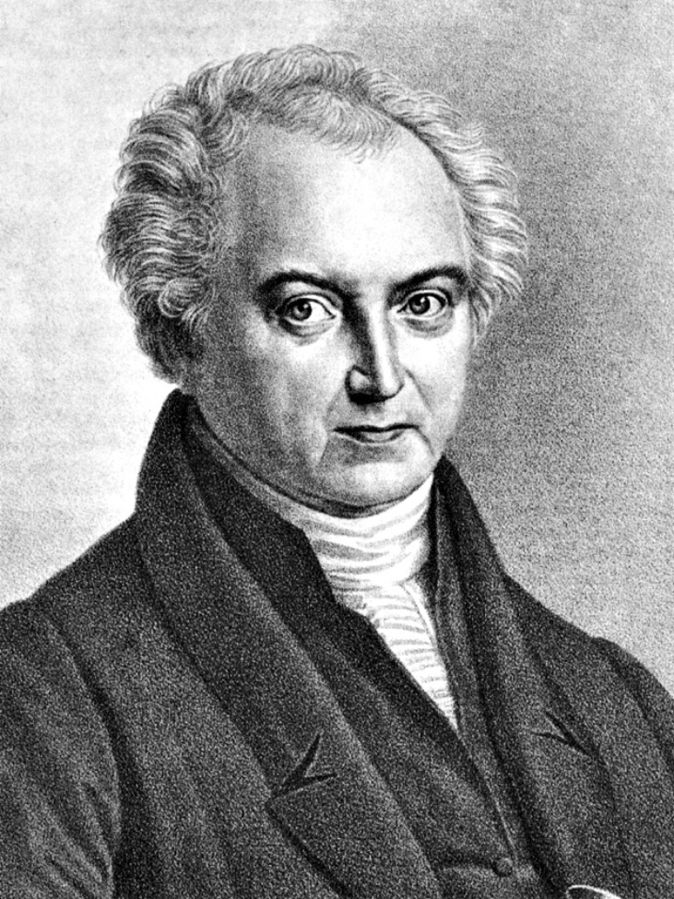
On 28 March 1802, Olbers discovered and named the asteroidPallas. Five years later, on 29 March 1807, he discovered the asteroid Vesta, which he allowed Carl Friedrich Gauss to name. As the word “asteroid” was not yet coined, the literature of the time referred to these minor planets as planets in their own right. He proposed that the asteroid belt, where these objects lay, was the remnants of a planet that had been destroyed. The current view of most scientists is that tidal effects from the planet Jupiter disrupted the planet-formation process in the asteroid belt. On 6 March 1815, Olbers discovered a periodic comet, now named after him (formally designated 13P/Olbers). Olbers’ paradox, described by him in 1823 (and then reformulated in 1826), states that the darkness of the night sky conflicts with the supposition of an infinite and eternal static universe.
Olbers was deputed by his fellow citizens to assist at the baptism of Napoleon II of France on 9 June 1811. He was a member of the corps legislatif in Paris 1812–13. He died in Bremen aged 81. He was twice married, and one son survived him. Olbers’ paradox, the argument that the dark sky at night shows that stars cannot be evenly distributed through infinite space, is named for him, though others had also advanced it.
Ships were named after him (DE):
Olbers war außerdem der Name verschiedener Segelschiffe: Eine in Archangelsk gebaute Fregatte wurde 1829 von F. C. Delius & Co. in Bremen erworben und 1837 abgewrackt. Ein 1838 in Grohn gebauter Segler des gleichen Eigners, das Vollschiff Olbers (1851), havarierte 1848. Später trug eine Dreimastbark der Kaiserlichen Marine den Namen des Astronomen.
Olbers streets in Berlin, Bremen, Hannover, Lilienthal and other places.