CD Mozart+Beethoven | Amadeo String Quartet
Category : CD-+DVD+BD+VHSDocs
CD Mozart+Beethoven | Amadeo String Quartet
Category : CD-+DVD+BD+VHSDocs
CD Mozart+Beethoven | Amadeo String Quartet
Category : photographyDocs , theatreDocs , WriterDocs
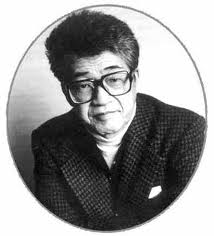
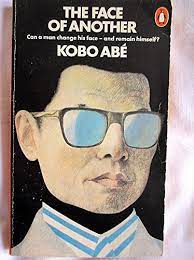
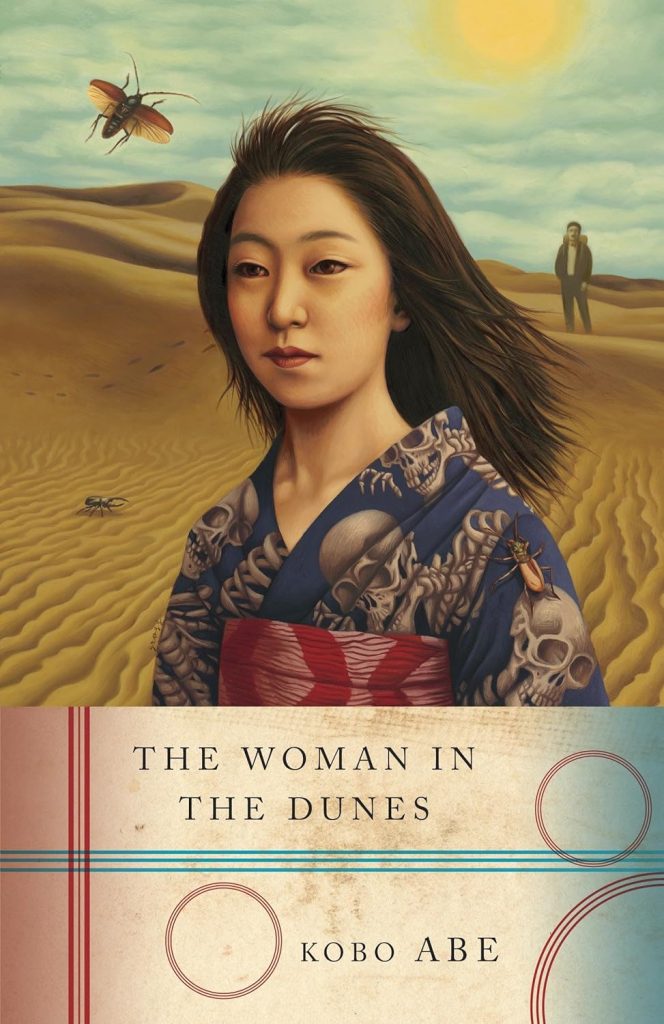
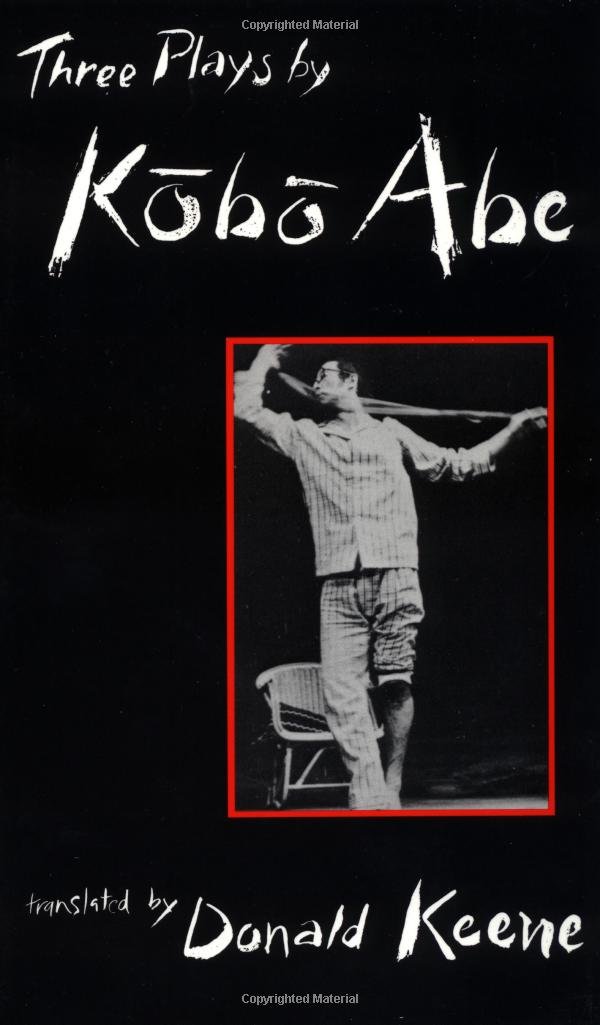
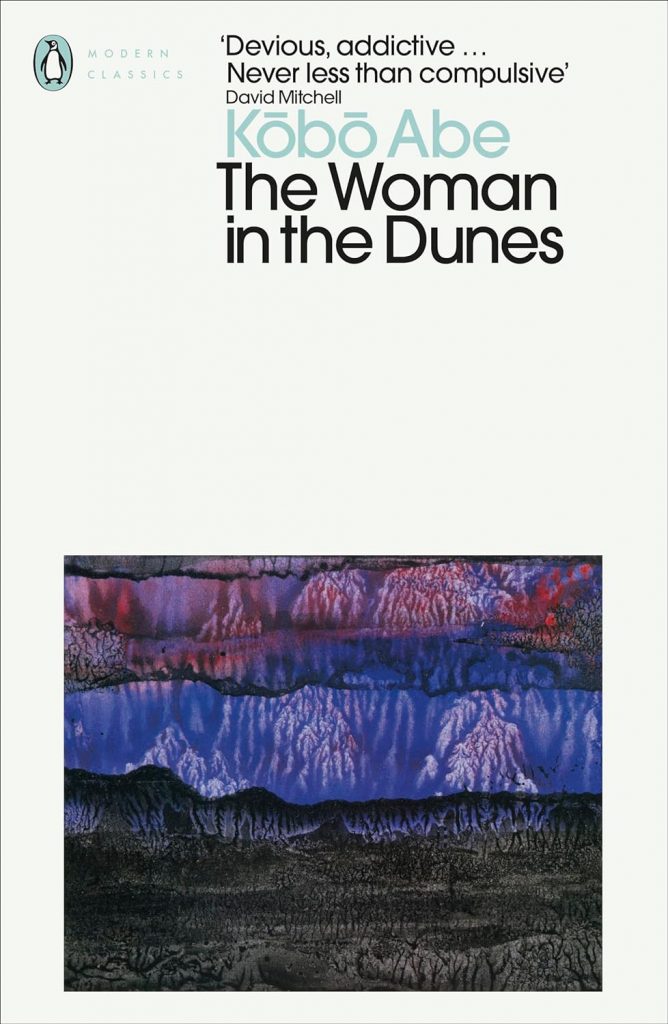
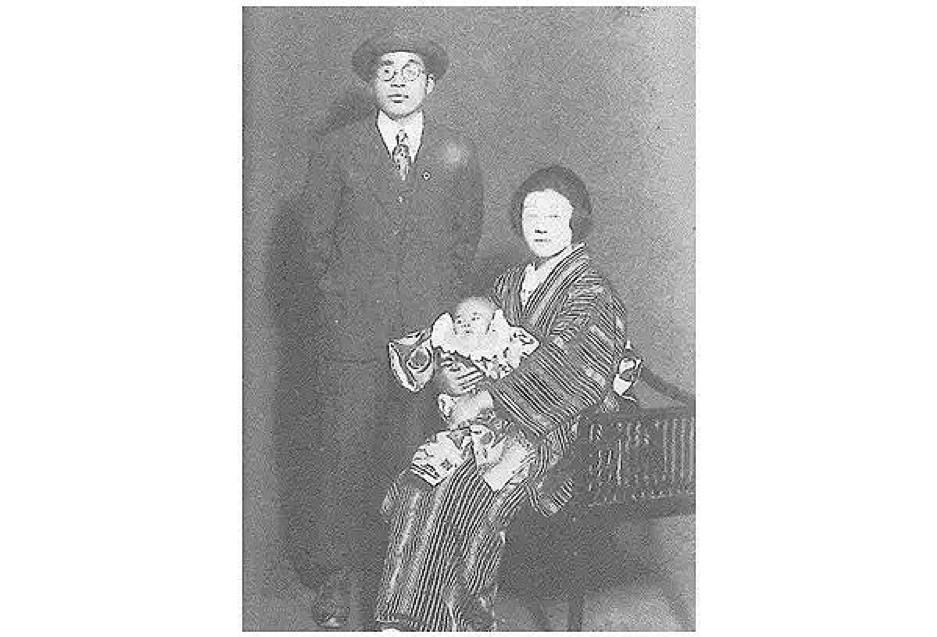
Kōbō Abe (安部 公房, Abe Kōbō), pen name of Kimifusa Abe (安部 公房, Abe Kimifusa, March 7, 1924 – January 22, 1993), was a Japanese writer, playwright, musician, photographer, and inventor. He is best known for his 1962 novel The Woman in the Dunes that was made into an award-winning film by Hiroshi Teshigahara in 1964.[2] Abe has often been compared to Franz Kafka for his modernist sensibilities and his surreal, often nightmarish explorations of individuals in contemporary society.
Abe was born on March 7, 1924[1][6] in Kita, Tokyo, Japan and grew up in Mukden (now Shenyang) in Manchuria.[2][1] Abe’s family was in Tokyo at the time due to his father’s year of medical research in Tokyo.[7] His mother had been raised in Hokkaido, while he experienced childhood in Manchuria. This triplicate assignment of origin was influential to Abe, who told Nancy Shields in a 1978 interview, “I am essentially a man without a hometown.[2] This may be what lies behind the ‘hometown phobia’ that runs in the depth of my feelings. All things that are valued for their stability offend me.”[7] As a child, Abe was interested in insect-collecting, mathematics, and reading. His favorite authors were Fyodor Dostoyevsky, Martin Heidegger, Karl Jaspers, Franz Kafka, Friedrich Nietzsche, and Edgar Allan Poe.
Abe returned to Tokyo briefly in April 1940 to study at Seijo High School, but a lung condition forced his return to Mukden, where he read Jaspers, Heidegger, Dostoyevsky, and Edmund Husserl. Abe began to study medicine at Tokyo Imperial University in 1943, partially out of respect for his father, but also because “[t]hose students who specialized in medicine were exempted from becoming soldiers. My friends who chose the humanities were killed in the war.”[7] He returned to Manchuria around the end of World War II.[1] Specifically, Abe left the Tokyo University Medical School in October 1944, returning to his father’s clinic in Mukden.[7] That winter, his father died of eruptive typhus. Returning to Tokyo with his father’s ashes, Abe reentered the medical school. Abe started writing novellas and short stories during his last year in university. He graduated in 1948 with a medical degree, joking once that he was allowed to graduate only on the condition that he would not practice.
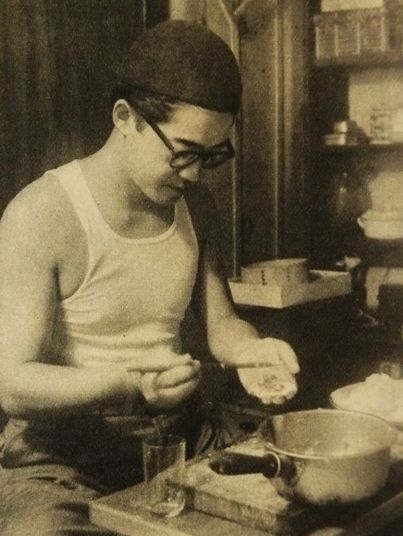
In 1945 Abe married Machi Yamada, an artist and stage director, and the couple saw successes within their fields in similar time frames.[7] Initially, they lived in an old barracks within a bombed-out area of the city center. Abe sold pickles and charcoal on the street to pay their bills. The couple joined a number of artistic study groups, such as Yoru no Kai (Group of the Night or The Night Society) and Nihon Bungaku Gakko (Japanese Literary School). Their daughter, Abe Neri, was born in 1954.[8]
As the postwar period progressed, Abe’s stance as an intellectual pacifist led to his joining the Japanese Communist Party, with which he worked to organize laborers in poor parts of Tokyo. Soon after receiving the Akutagawa Prize in 1951, Abe began to feel the constraints of the Communist Party’s rules and regulations alongside doubts about what meaningful artistic works could be created in the genre of “socialist realism.”[7] By 1956, Abe began writing in solidarity with the Polish workers who were protesting against their Communist government, drawing the Communist Party’s ire. The criticism reaffirmed his stance: “The Communist Party put pressure on me to change the content of the article and apologize. But I refused. I said I would never change my opinion on the matter. This was my first break with the Party.”[7]: 35 [a] The next year, Abe traveled to Eastern Europe for the 20th Convention of the Soviet Communist Party. He saw little of interest there, but the arts gave him some solace. He visited Kafka’s house in Prague, read Rilke and Karel Čapek, reflected on his idol Lu Xun, and was moved by a Mayakovsky play in Brno.[7]
The Soviet invasion of Hungary in 1956 disgusted Abe. He attempted to leave the Communist Party, but resignations from the party were not accepted at the time. In 1960, he participated in the Anpo Protests against revision of the US-Japan Security Treaty as part of the pan-ideological Young Japan Society.[10] He later wrote a play about the protests, The Day the Stones Speak, which was staged several times in Japan and China in 1960 and 1961.[11] In the summer of 1961, Abe joined a group of other authors in criticizing the cultural policies of the Communist Party. He was forcibly expelled from the party the following year.[12] His political activity came to an end in 1967 in the form of a statement published by himself, Yukio Mishima, Yasunari Kawabata, and Jun Ishikawa, protesting the treatment of writers, artists, and intellectuals in Communist China.[7] According to translator John Nathan, this statement led to the falling-out between Abe and fellow writer Kenzaburō Ōe.[13]
His experiences in Manchuria were also deeply influential on his writing, imprinting terrors and fever dreams that became surrealist hallmarks of his works. In his recollections of Mukden, these markers are evident: “The fact is, it may not have been trash in the center of the marsh at all; it may have been crows. I do have a memory of thousands of crows flying up from the swamp at dusk, as if the surface of the swamp were being lifted up into the air.”[7] The trash of the marsh was a truth of life, as were the crows, yet Abe’s recollections of them tie them distinctively. Further experiences with the swamp centered around its use as a staking ground for condemned criminals with “[their] heads—now food for crows—appearing suddenly out of the darkness and disappearing again, terrified and attracted to us.” These ideas are present in much of Abe’s work.
Abe was first published as a poet in 1947 with Mumei-shishū (“Poems of an unknown poet”), which he paid for himself,[1] and as a novelist the following year with Owarishi michi no shirube ni (“The Road Sign at the End of the Street”), which established his reputation.[1] When he received the Akutagawa Prize in 1951, his ability to continue publishing was confirmed.[7] Though he did much work as an avant-garde novelist and playwright, it was not until the publication of The Woman in the Dunes in 1962 that Abe won widespread international acclaim.[14]
In the 1960s, he collaborated with Japanese director Hiroshi Teshigahara on the film adaptations of The Pitfall, Woman in the Dunes, The Face of Another, and The Man Without a Map. Woman in the Dunes received widespread critical acclaim and was released only four months after Abe was expelled from the Japanese Communist Party.
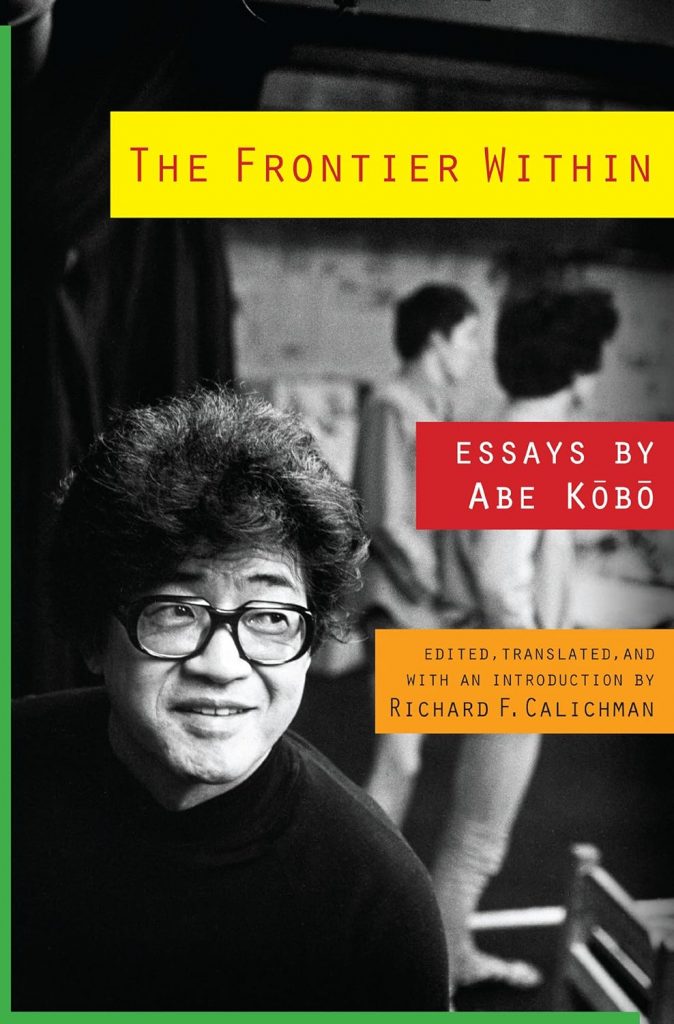
In 1971, he founded the Abe Studio, an acting studio in Tokyo.[7] Until the end of the decade, he trained performers and directed plays. The decision to found the studio came two years after he first directed his own work in 1969, a production of The Man Who Turned Into A Stick. The production’s sets were designed by Abe’s wife, and Hisashi Igawa starred. Abe had become dissatisfied with ability of the theatre to materialize the abstract, reducing it to a passive medium. Until 1979, he wrote, directed, and produced 14 plays at the Abe Studio. He also published two novels, Box Man (1973) and Secret Rendezvous (1977), alongside a series of essays, musical scores, and photographic exhibits.[7] The Seibu Theater, an avant-garde theater in the new department store Parco, was allegedly established in 1973 specifically for Abe, though many other artists were given the chance to use it. The Abe Studio production of The Glasses of Love Are Rose Colored (1973) opened there. Later, the entirety of the Seibu Museum was used to present one of Abe’s photographic works, An Exhibition of Images: I.[7]
The Abe Studio provided a foil for much of the contemporary scene in Japanese theater, contrasting with the Haiyuza‘s conventional productions, opting to focus on dramatic, as opposed to physical, expression. It was a safe space for young performers, whom Abe would often recruit from the Toho Gakuen College in Chofu City, on the outskirts of Tokyo, where he taught. The average age of the performers in the studio was about 27 throughout the decade, as members left and fresh faces were brought in. Abe “deftly” handled issues arising from difference in stage experience.
In 1977 Abe was elected a Foreign Honorary Member of the American Academy of Arts and Sciences.

Category : CartoonDocs , movieDocs , TV-doc
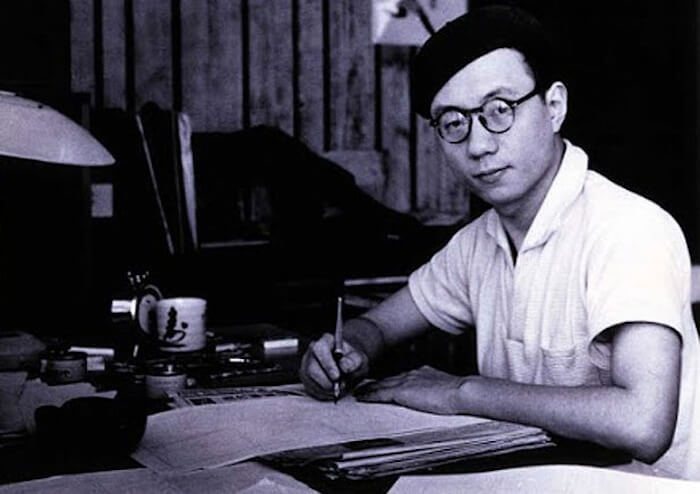
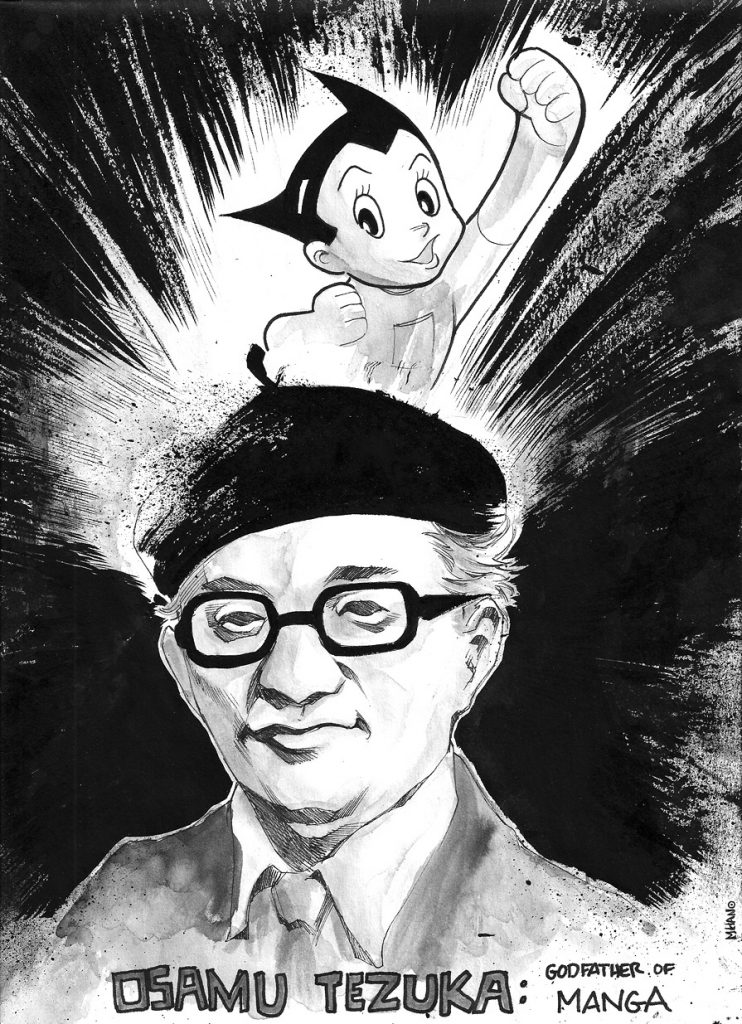
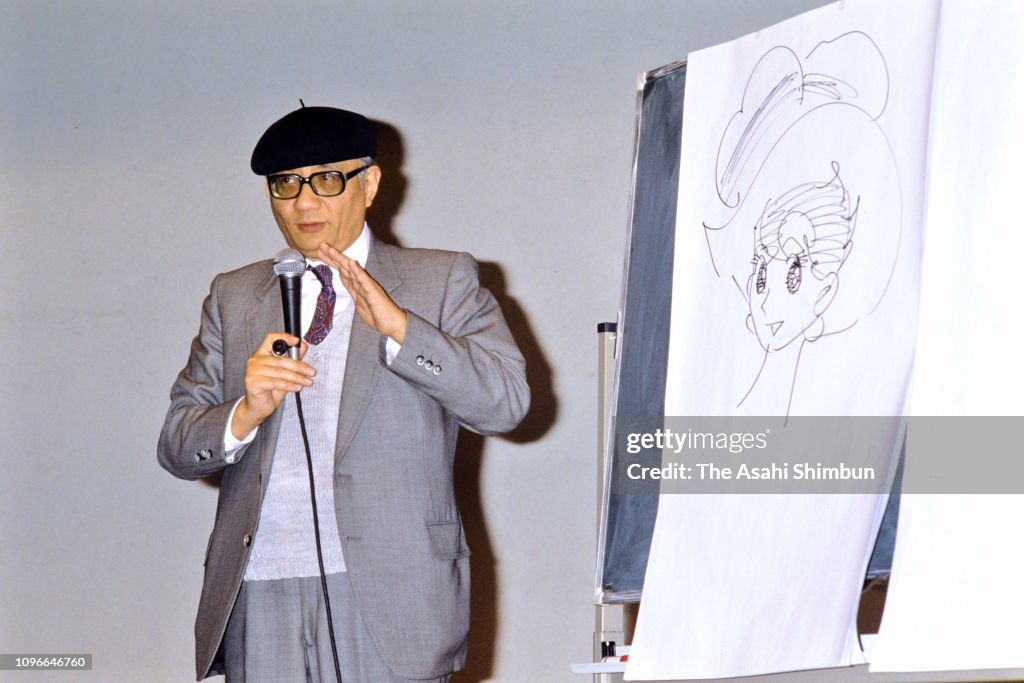
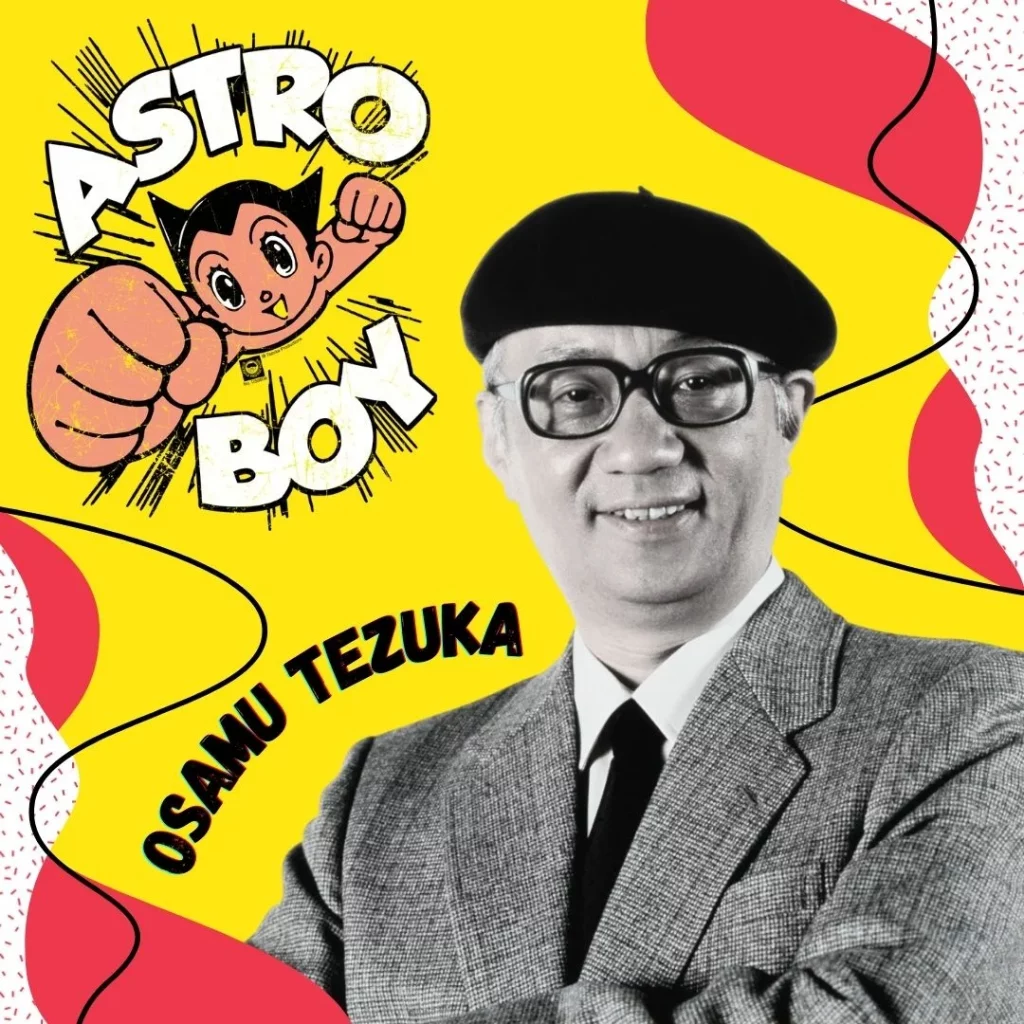
Osamu Tezuka (手塚 治虫, born 手塚 治, Tezuka Osamu; 3 November 1928 – 9 February 1989) was a Japanese manga artist, cartoonist, and animator. Born in Osaka Prefecture, his prolific output, pioneering techniques, and innovative redefinitions of genres earned him such titles as “the Father of Manga” (マンガの父, Manga no Chichi), “the Godfather of Manga” (マンガの教父, Manga no Kyōfu) and “the God of Manga” (マンガの神様, Manga no Kami-sama). Additionally, he is often considered the Japanese equivalent to Walt Disney, who served as a major inspiration during Tezuka’s formative years.[2] Though this phrase praises the quality of his early manga works for children and animations, it also blurs the significant influence of his later, more literary, gekiga works.
Tezuka began what was known as the manga revolution in Japan with his New Treasure Island published in 1947. His output would spawn some of the most influential, successful, and well-received manga series including the children mangas Astro Boy, Princess Knight and Kimba the White Lion, and the adult-oriented series Black Jack, Phoenix, and Buddha, all of which won several awards.
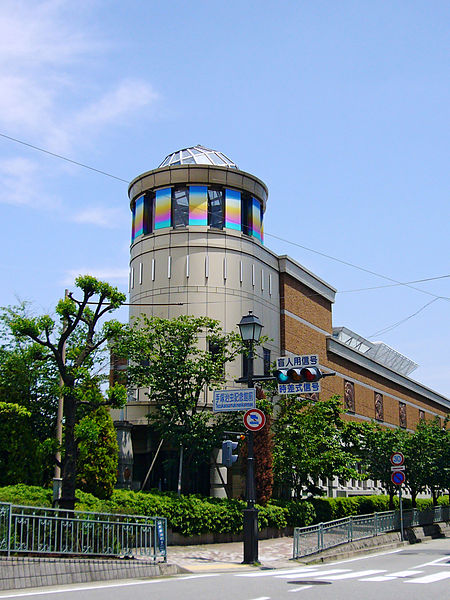
Tezuka died of stomach cancer in 1989. His death had an immediate impact on the Japanese public and other cartoonists. A museum was constructed in Takarazuka dedicated to his memory and life works, and Tezuka received many posthumous awards. Several animations were in production at the time of his death along with the final chapters of Phoenix, which were never released.
Osamu Tezuka (手塚 治虫, born 手塚 治, Tezuka Osamu; 3 November 1928 – 9 February 1989) was a Japanese manga artist, cartoonist, and animator. Born in Osaka Prefecture, his prolific output, pioneering techniques, and innovative redefinitions of genres earned him such titles as “the Father of Manga” (マンガの父, Manga no Chichi), “the Godfather of Manga” (マンガの教父, Manga no Kyōfu) and “the God of Manga” (マンガの神様, Manga no Kami-sama). Additionally, he is often considered the Japanese equivalent to Walt Disney, who served as a major inspiration during Tezuka’s formative years.[2] Though this phrase praises the quality of his early manga works for children and animations, it also blurs the significant influence of his later, more literary, gekiga works.
Tezuka began what was known as the manga revolution in Japan with his New Treasure Island published in 1947. His output would spawn some of the most influential, successful, and well-received manga series including the children mangas Astro Boy, Princess Knight and Kimba the White Lion, and the adult-oriented series Black Jack, Phoenix, and Buddha, all of which won several awards.
Tezuka died of stomach cancer in 1989. His death had an immediate impact on the Japanese public and other cartoonists. A museum was constructed in Takarazuka dedicated to his memory and life works, and Tezuka received many posthumous awards. Several animations were in production at the time of his death along with the final chapters of Phoenix, which were never released.
Tezuka was a descendant of Hattori Hanzō,[69] a famous ninja and samurai who faithfully served Tokugawa Ieyasu during the Sengoku period in Japan.
Tezuka’s childhood nickname was gashagasha-atama: “messy head” (gashagasha is slang for messy, atama means head).[citation needed] As a child, Tezuka’s arms swelled up and he became ill. He was treated and cured by a doctor, which made him also want to be a doctor. At a crossing point, he asked his mother whether he should look into doing manga full-time or whether he should become a doctor. At the time, being a manga author was not a particularly rewarding job. The answer his mother gave was: “You should work doing the thing you like most of all.” Tezuka decided to devote himself to manga creation on a full-time basis. He graduated from Osaka University and obtained his medical degree, but he would later use his medical and scientific knowledge to enrich his sci-fi manga, such as Black Jack.[50][70]
Tezuka enjoyed insect collecting and entomology (even adding the character 虫 ‘bug’ to his pen name), Disney, and baseball—in fact, he licensed the “grown up” version of his character Kimba the White Lion as the logo for the Seibu Lions of the Nippon Professional Baseball League.[71][72] A fan of Superman, Tezuka was honorary chairman of Japan’s Superman Fan Club.[73]
In 1959 Osamu Tezuka married Etsuko Okada at a Takarazuka hotel.[citation needed]
Tezuka met Walt Disney in person at the 1964 New York World’s Fair. In a 1986 entry in his personal diary, Tezuka stated that Disney wanted to hire him for a potential science fiction project.[citation needed]
In January 1965, Tezuka received a letter from American film director Stanley Kubrick, who had watched Astro Boy and wanted to invite Tezuka to be the art director of his next movie, 2001: A Space Odyssey (which was eventually released in 1968). Although flattered by Kubrick’s invitation, Tezuka could not afford to leave his studio for a year to live in England, so he had to turn down the offer. Although he was not able to work on 2001, he loved the film, and would play its soundtrack at maximum volume in his studio to keep him awake during long nights of work.[74][75]
Tezuka’s son Makoto Tezuka became a film and anime director.[71]
Category : PianoDocs , StringDocs
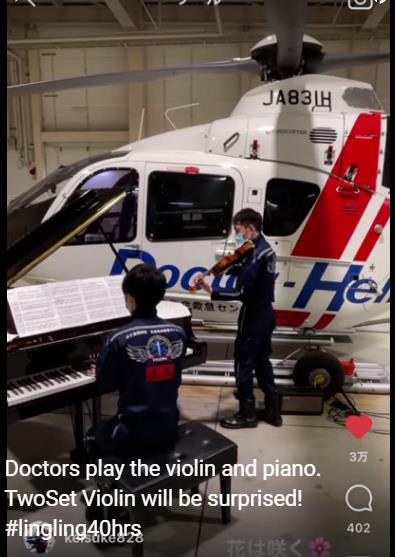
Two emergencyDocs playing violin and piano in the hangar.
web
wikipedia DE – wikipedia EN – wikipedia XY
youtube – vimeo – soundcloud
facebook – twitter – instagram – XING
work
Category : StringDocs
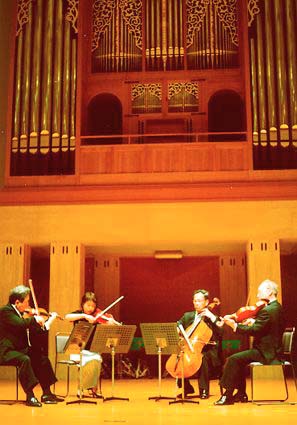
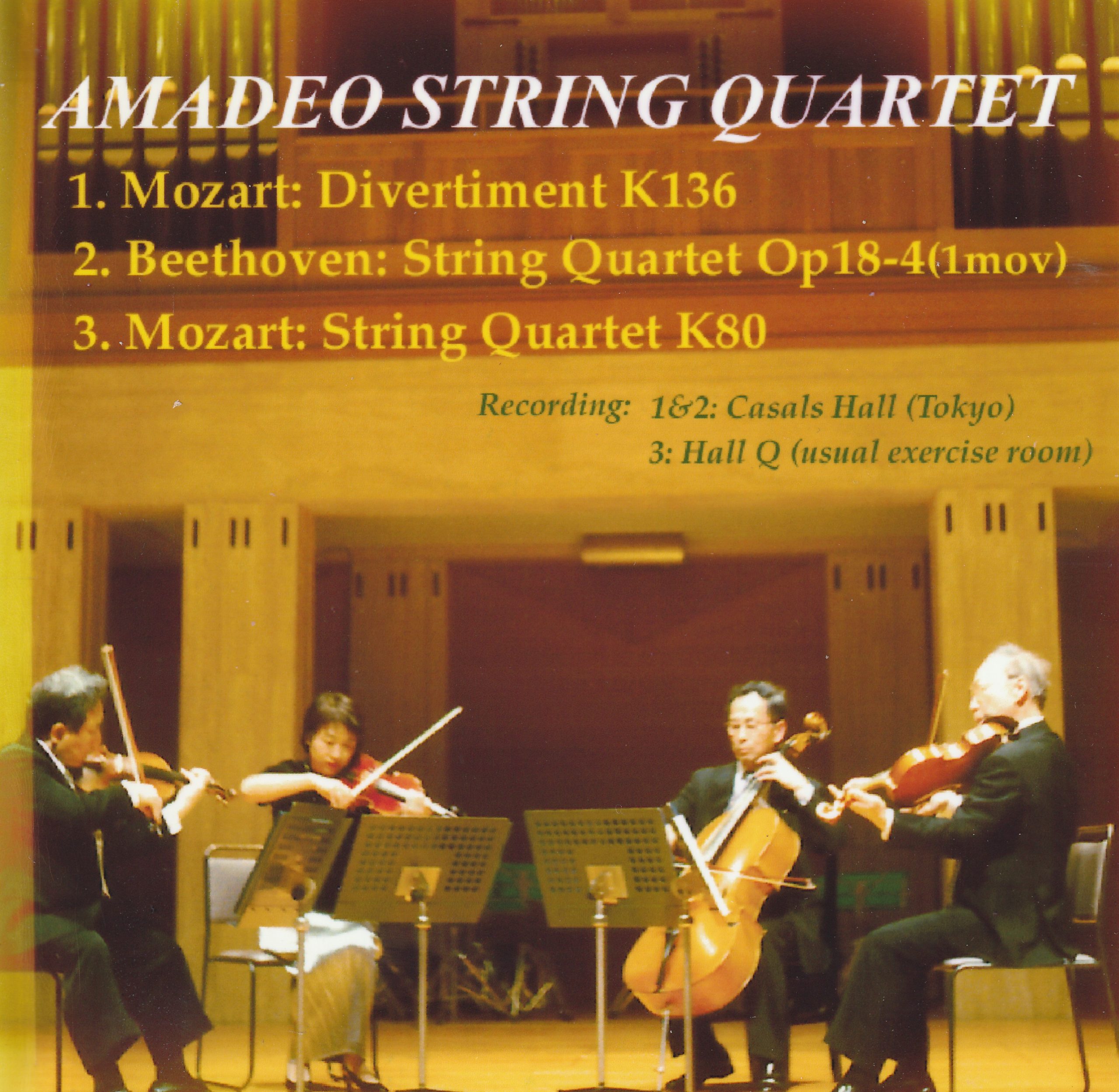
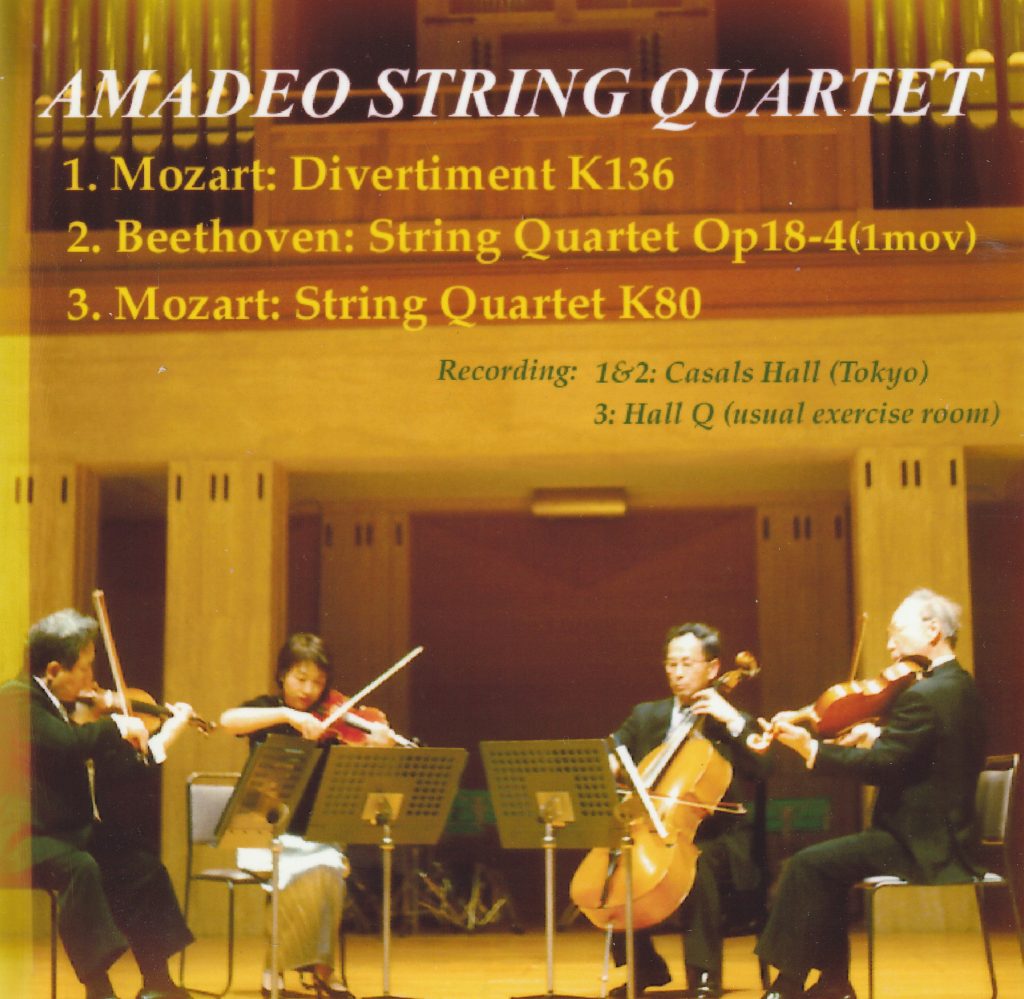
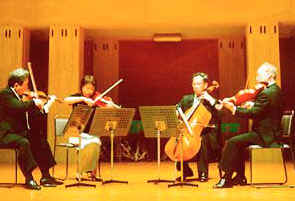
Violino I : H. MIMURA, Mr. ———— Medical doctor, surgeon
Violino II : M. KAWAMURA, Ms. ——- Violin instructor
Viola : T. NAITOH, Mr. ————– Medical doctor, general practice
Violoncello : M. TANABE, Mr. ——– Kurashiki Symphony (Director)
You must visit their excellent WebPresence! They have really been busy for a long time and have made a thorough research on Mozart´s String Quartetts and about his Travelling.
Listen to their wonderful policy:
Playing music does not mean to imitate the performances of the other players. It means “direct expression of all of ourselves”. That is true not only for professional but non-professional performance.
Fundamentally, music does not exist for small number of professional musicians. Most audience is non-professional music lovers. Some people says “I can not understand classic music”. However music is not the matter of understandable or not understandable. It is essentially pleasant or enjoyable thing and everyone could play their own music with no licenses. Professional musicians make money from their skillful playing technique, while non-professional musician makes money by other socially beneficial ways and could enjoy music purely. Which do you think can enjoy music really? However amateurs are short of the playing technique.
web
wikipedia
youtube – vimeo
facebook – twitter – instagram
work
Category : OrchestraDocs
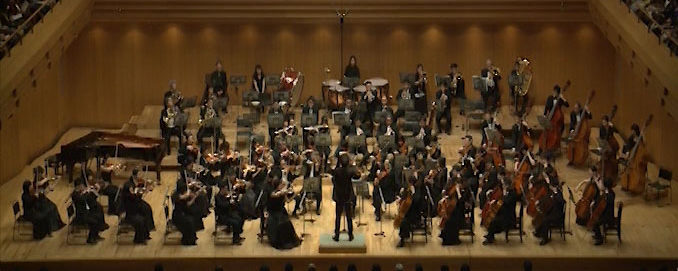
Doctors’ Orchestra of Japan is an amateur orchestra consisting of medical doctors and medical professionals. Since being formed in 1990, we have regular concerts at annual pace.
wikipedia
youtube – vimeo
facebook – twitter – instagram
work

