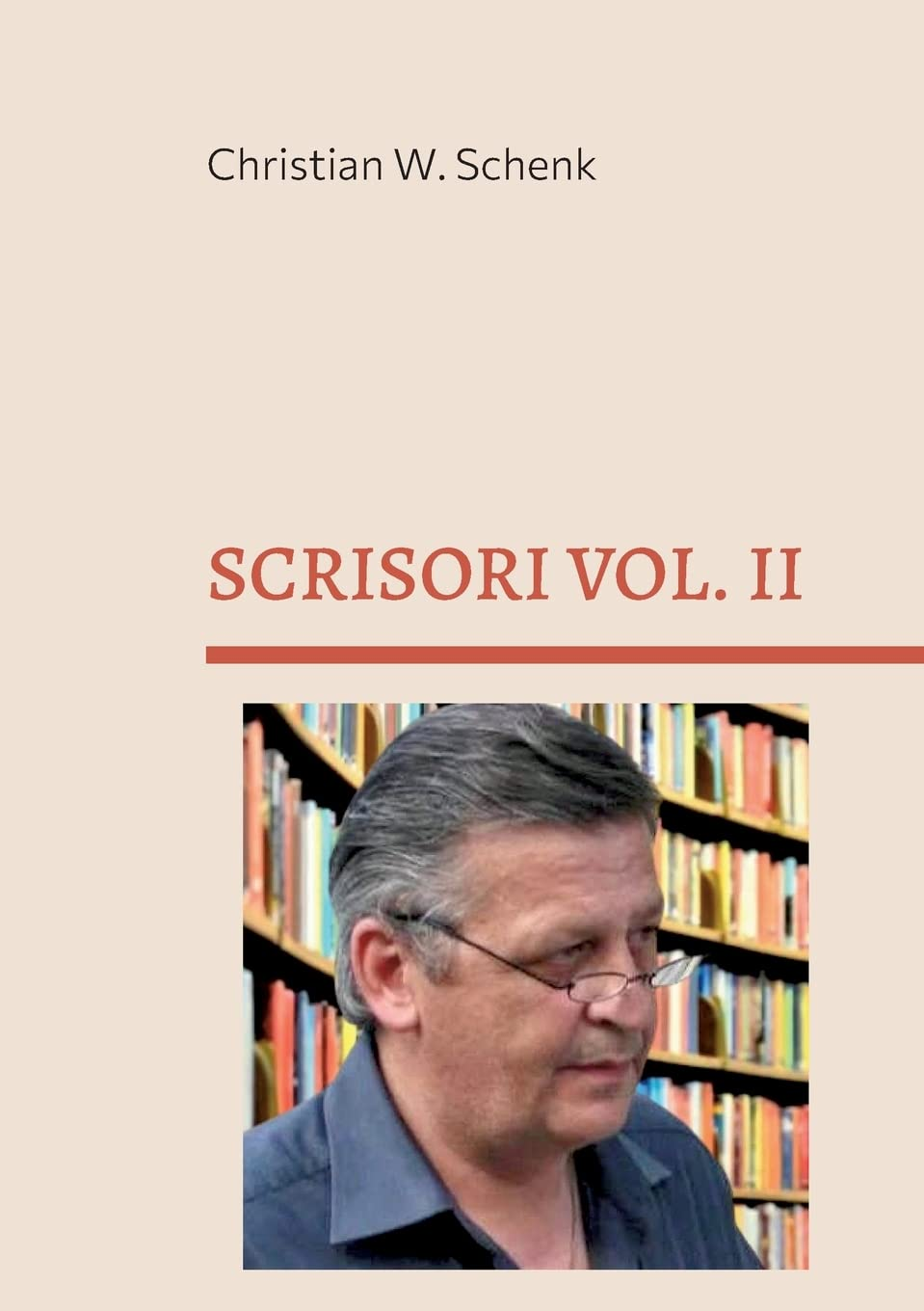
Christian Wilhelm Schenk

  • -

Christian Wilhelm Schenk

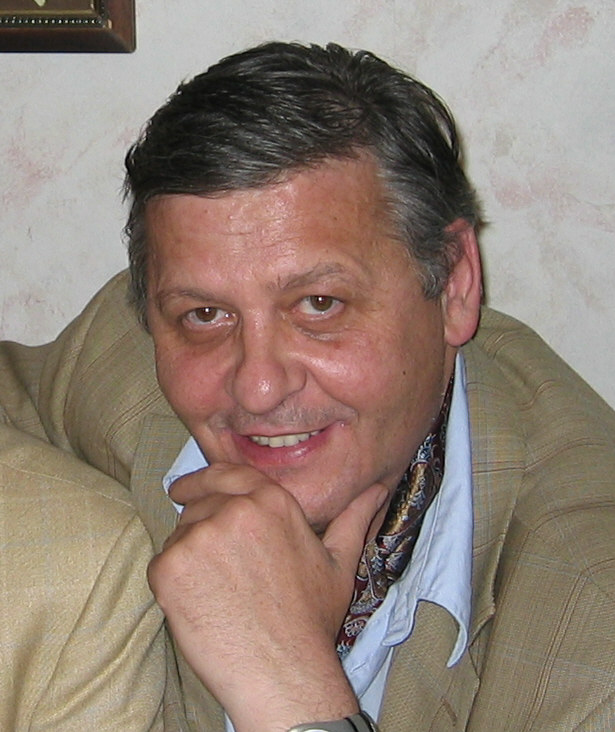
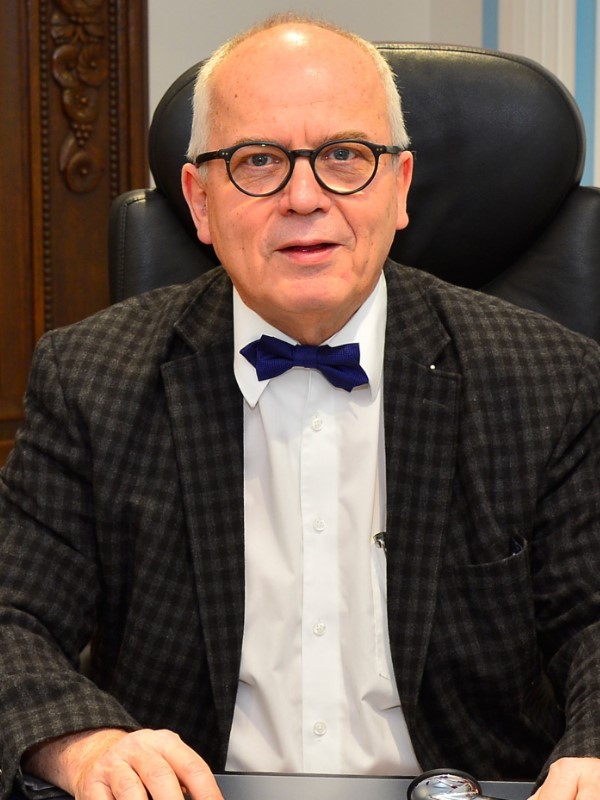
Christian Wilhelm Schenk (born November 11, 1951 in Brașov, People’s Republic of Romania) is a German physician, poet, essayist, translator, and publisher from the Transylvanian Saxon community.

Christian W. Schenk grew up in a small mining settlement near Brașov and was raised trilingually (German, Hungarian, and Romanian). His father is German, his mother Hungarian.

At the end of the 1950s, he made his first attempts at poetry, which led to his first publication in 1961: a poem in the children’s magazine Luminita (Bucharest) under the guidance of the Romanian poet Tudor Arghezi, who was his mentor from 1959 to 1965. His second mentor from 1964 to 1969 was the Transylvanian poet Vasile Copilu-Cheatră.

He attended elementary school in his hometown from 1958 to 1962 and in Wolkendorf from 1962 to 1966. Schenk attended high school in Zeiden, with interruptions, from 1971 to 1973. In between, he supported himself with odd jobs as a projectionist, weaver, or wage laborer. In 1974, he obtained his Abitur (university entrance qualification).

In 1976, Schenk left Romania and emigrated to Germany. Here, he had to retake the Abitur (university entrance qualification) in Wiehl in the Oberbergisches Land region in order to obtain university entrance qualifications in Germany. From 1977 to 1980, he first completed an apprenticeship as a dental technician in Koblenz and then studied medicine/dentistry at the Johannes Gutenberg University in Mainz from 1980 to 1986. In 1985, he received his doctorate in medicine from the same university with a thesis on “The Situation of Severely Disabled People in Working Life.” From 1986 to 1988, Schenk completed the mandatory years of training for health insurance accreditation in Lünen. Starting in 1988, he opened his own practice in Kastellaun. Today, Schenk lives in Boppard.

In 1986, as editor-in-chief of the quadrilingual magazine “Romanian Convergences,” of which he was editor-in-chief from 1984 to 1986, Schenk protested against the demolition of entire cities and cultural sites under dictator Nicolae Ceaușescu, which he described as “urbanization plans.” As a result, he was declared “persona non grata” in Romania, with a lifetime ban from entering the country. He continued to write and translate, but his work was recognized only in the West and among the diaspora. After 1989, he was rehabilitated. He received various awards from the government of the time, including the Presidential Certificate.

Through his memberships in the Association of German Writers, the Romanian Writers’ Association, the Union Mondiale des Écrivains Médecins, the American Romanian Academy of Arts and Sciences (ARA), the Romanian Writers’ Association of Physicians, the Academy of Sciences, Literature, and Culture in Bihor, the Hesperus Society, the Balkan Romance Studies Association, and the South-East European Society, Schenk has been striving for decades to deepen East-West cultural relations. The Dionysos Literature and Theater Publishing House (Kastellaun), which he founded, is also dedicated to this task.

For his outstanding contributions to East-West cultural relations and his own work, Schenk was nominated as an honorary citizen of the university city of Cluj-Napoca in 2000, and in 2006 as a “Knight of the Danubian Order” in Galați on the Danube.

https://de.wikipedia.org/wiki/Christian_W._Schenk

https://www.youtube.com/@dr.christianw.schenk9101/featured

https://www.linkedin.com/in/dr-christian-w-schenk-9921182b/?originalSubdomain=de

  • -

Hans-Henning Dulk

Henning Dulk spent his childhood in Berlin and lived near Düsseldorf as a teenager. He decided early on to become a veterinarian. However, he was expelled from high school for slapping a teacher after being disciplined. After graduating from boarding school, he studied veterinary medicine in Hanover. He worked as an assistant at a veterinary clinic in Dortmund. During this time, he married. With the goal of opening his own practice, he subsequently took on vacation replacements – before opening his own practice. He was ahead of others in dental cleaning and blood testing. Health problems made his career more difficult. In 2006, he sold his practice and retired. He lives with his wife on a farm in Müllenbach, built around 1780, which he bought in 1994 as a “junk property” and then renovated.

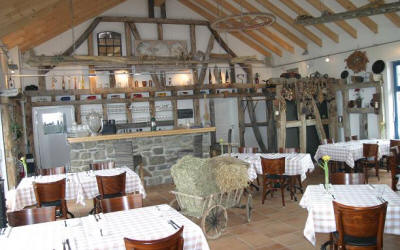
In the fourth episode of the current season, last Monday (September 22, 2008), Christian Rach stopped by the Dringshof restaurant in the Eifel village of Müllenbach. The owners are Marianne and Hans-Henning Dulk, who contacted the production company in November 2007. Their motivation was based on the expected marketing effect. The Dulk couple were not at all satisfied with the occupancy of their restaurant, which they opened in 2006. They had originally expected more from their concept of a somewhat more sophisticated restaurant. They know the area very well, although they previously ran a successful veterinary practice in Düsseldorf city center for thirty years. “We were simply fed up with the poshness,” says Hans-Henning Dulk about the decision to sell the practice and retire permanently to the Eifel, where the couple has owned a holiday home for many years.

They invested half a million euros in the new building, which also incorporated a demolished half-timbered house from the region. Although the house is located in a village of 500 inhabitants, a busy federal highway runs right past it, and the Nürburgring is only one and a half kilometers away. These were actually quite good conditions for the two career changers, who had always had extensive contact with the industry. Moreover, the foundation was right: “We were hard-working service providers for thirty years. An entrepreneurial spirit is definitely there.” Based on a market analysis in the region, they wanted to offer more than the usual schnitzel and chips fare and hired an ambitious young chef. The ambiance was enhanced with high-quality textiles. However, success was elusive. Only on weekends did the footfall improve, when short-term vacationers from the Rhineland cities found their way to the remote area.

After preliminary discussions, Christian Rach and his four-person team arrived in March 2008. Over the next five days, based on the restaurant tester’s recommendation, the concept was changed to more down-to-earth cuisine. The decor was also refined to position the restaurant in the direction of “country cuisine.” In retrospect, the Dulks are already satisfied with the Hamburg professional’s advice. “The idea of ​​enhancing the outdoor advertising with straw bales has already brought us new guests,” Dulk notes. The people from the Eifel region have not become regular visitors, and after the broadcast of the program, the Dulks fear the opposite effect. Because the actually realistic assessment of the tradition-loving locals came across on screen as more of a nasty resentment.

“Rach has done us a disservice, even though he had advised us to reach out more to these guests instead of focusing on the clientele at the nearby Nürburgring.” The local press in particular has been noticeably reserved so far. So the desired marketing effect has failed to materialize, at least locally. Perhaps, however, this or every fan of the show will one day be drawn to the Eifel region to visit the original location. However, the Hans-Henning Dulk are proud of one thing: “The cleaning operation that is usually required on the show was not necessary for us. As a veterinarian, no one needs to explain to me how important hygiene is.” They have since expanded the menu again, as the previously established regular audience was slightly disappointed after the changeover. They solved the problem with a rotating additional menu entitled “The Cook Recommends.”

Ultimately, the Dulks see both advantages and disadvantages in the whole operation. On the plus side, there are the partly good suggestions from Christian Rach and, of course, the filming itself, during which the star chef proved to be in control of the situation. During production, Rach really seems to be in charge, controlling every image and every scene and not allowing himself to be played with by an editor or production manager. The Dulks were not so impressed by the film crew’s constant efforts to stir up strong emotions. He himself bit his tongue several times during filming and also warned his colleague. At one point, however, she got worked up into a rage, which of course was promptly broadcast. The Dulks are really angry, however, about the anti-Eifel sentiment that was emphasized. Mr. Dulk announced that they would file a serious complaint again when the time came.

http://dirk-baranek.de/textarchiv/besuch-vom-restaurant-tester/

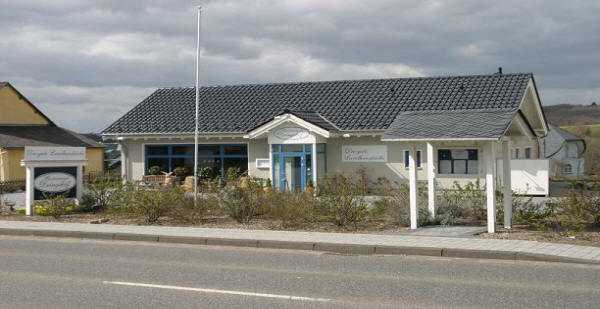
Marianne and Hans-Henning have fulfilled a dream: Instead of retiring, the veterinarian and his wife decided to open an upscale restaurant in a village in the Eifel region. “I worked in service during my studies,” Hans-Henning confidently explains when asked about any experience in the restaurant industry. Despite lacking basic knowledge, the Düsseldorf couple built a house near the Nürburgring and integrated their “Restaurant Dringshof” into it. The new building stands directly on a main road and appears plain and boring from the outside, but has been given an old-world, rustic feel inside.

The menu, however, is a bit more sophisticated: shrimp skewers with coconut rice or fried zander on crayfish ragout in Noilly Prat sauce. This is no easy task for the young, inexperienced Eifel chef Eva, especially since she has already failed at simpler dishes. It can happen that the rump steak ends up raw inside and out on the guest’s plate. In general, the Eifel residents are not so impressed by the fine dishes at the “Dringshof” and prefer to go to the competition. Thus, two years after opening, the restaurant is on the verge of closure. In their desperation, the unsuccessful Eifel innkeepers turned to Christian Rach.

The Hamburg-starred chef and gastronomy expert inspects everything on site and tests the food. His venison dish is also served raw and thus inedible. But the poorly prepared dishes aren’t the only reason for the “Dringshof’s miserable situation.” “As a Düsseldorf resident, you appreciate fine dining, but the rural Eifel population prefers hearty, home-style food,” explains Christian Rach, not only examining the menu but also thoroughly shaking up the chef, the owners, and the entire ambience. (Text: RTL) German TV premiere Mon. 22.09.2008 RTL

https://www.fernsehserien.de/rach-der-restauranttester/folgen/3×04-dringshof-in-muellenbach-315658

Hauptstr. 36

53520 Müllenbach


  • -

Margarethe Philipp

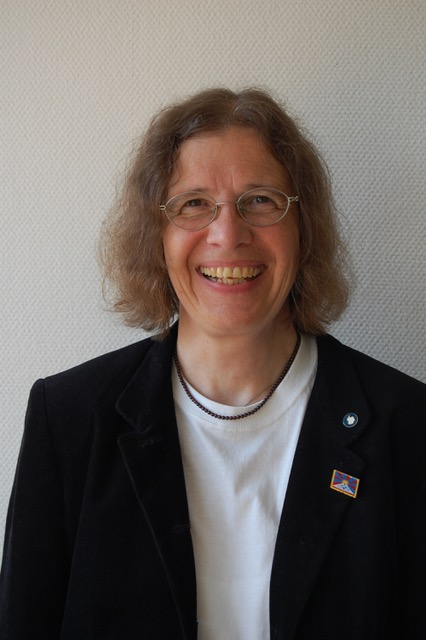
Margarethe Philipp, born in 1956, MD, is a specialist in neurology and psychiatry, a psychotherapist with a focus on depth psychology, and additional training in specialized psychotrauma therapy (DeGPT), PITT (Reddemann), and TRIMB. She is a founding member of the Working Group on Body-Oriented Methods in Psychotrauma Therapy (DeGPT).

During her continuing education in psychotherapy, she became acquainted with meditative dance and attended seminars with Ritu Bajracharya, Dimitris Barbaroussis, Ulli Bixa, Kyriakos Chamalidis, Drs. Hannelore and Ernst Eibach, Ulli Jobst-Brünsch, Krisana Kirchner, Bunu Shrestha, Eka Suschke, Prajwal Ratna Vajracharya, Dr. Maria-Gabriele Wosien, and other teachers and dancers.
By combining them with imagery, she adapted the dances for resource strengthening and therapeutic work.

Präsentation in TUT

Ärzte-Zeitung

choretaki


  • -

Björn Rodday

As singer he is in a sextett

Björn Rodday is a MultiTalentDoc singer, conductor of choirs, he is running the cultural center Sayner Hütte near Koblenz on the Rhine river.

In Ort Boppard he runs an Opera Studio Operiamo:

He is conducting the Landesjugendchor Rheinland-Pfalz (youth choir Rheinland-Pfalz)

Björn Rodday is engaged with charity projects:

Sayner Hütte

Operiamo

youtube short films

youtube sextett


  • -

Karl-Heinz Kienle

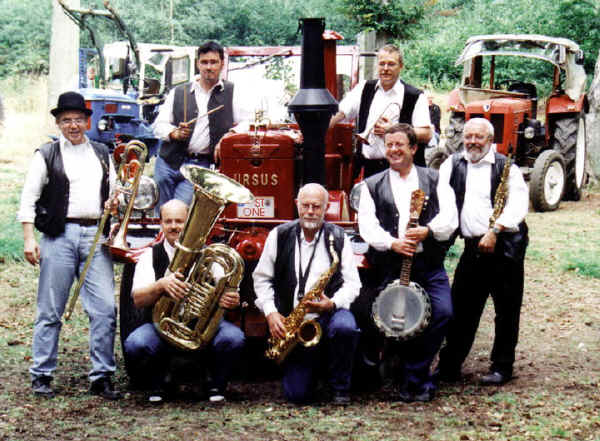
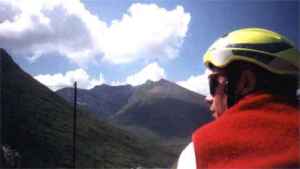
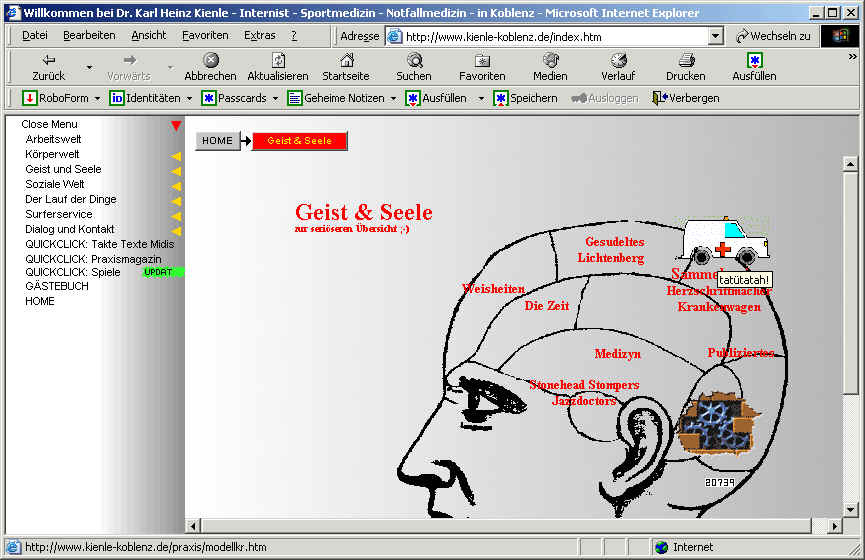
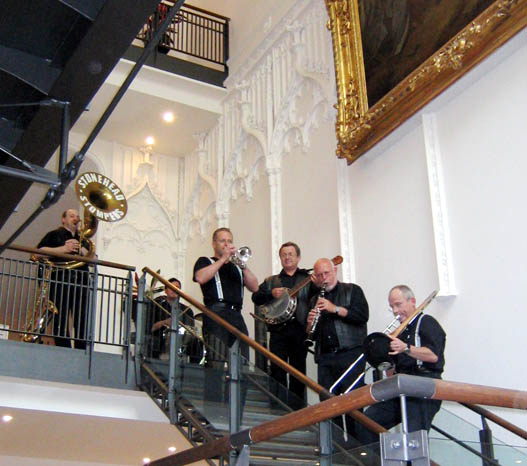
Kienle has practised long distance sports as marathon (30 kg. ago…) and has been leading on international level with diving. Besides his musical career in two Jazz bands as trombone player. And collecting severyl things – his doctors office is fully decorated with model ambulances and pace makers. He also loves to ride the tandem bike.

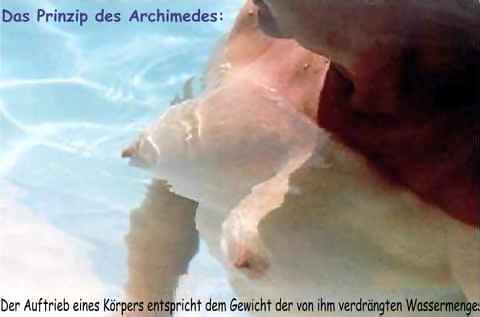
(DE): Sportmedizinisch kann er auf eine lange eigene Erfahrung in Ausdauersportarten zurückblicken, “Mein letzter Marathon ist leider mittlerweile dreißig Kilo her”, meint er mit einem Lächeln und einem Augenzwinkern. Besonderes Wissen hat er über alle Sportarten, die unter der Wasseroberfläche ausgeübt werden. 15 Jahre Nationalmannschaftsarzt und 7 Jahre Fachbereichsleiter Leistungs- und Wettkampfsport im Verband Deutscher Sporttaucher, mehrere  Jahre Chairman der Subcomission “Sportsmedicine” des Weltverbandes CMAS, dazu Publikationen im “Handbuch der Sporttraumatologie”, in “Tauchen noch sicherer” und bei unzähligen Kongressen – das kann ihm niemand nehmen.

web

wikipedia DE
wikipedia EN

youtube – vimeo

facebook – twitter – instagram

work