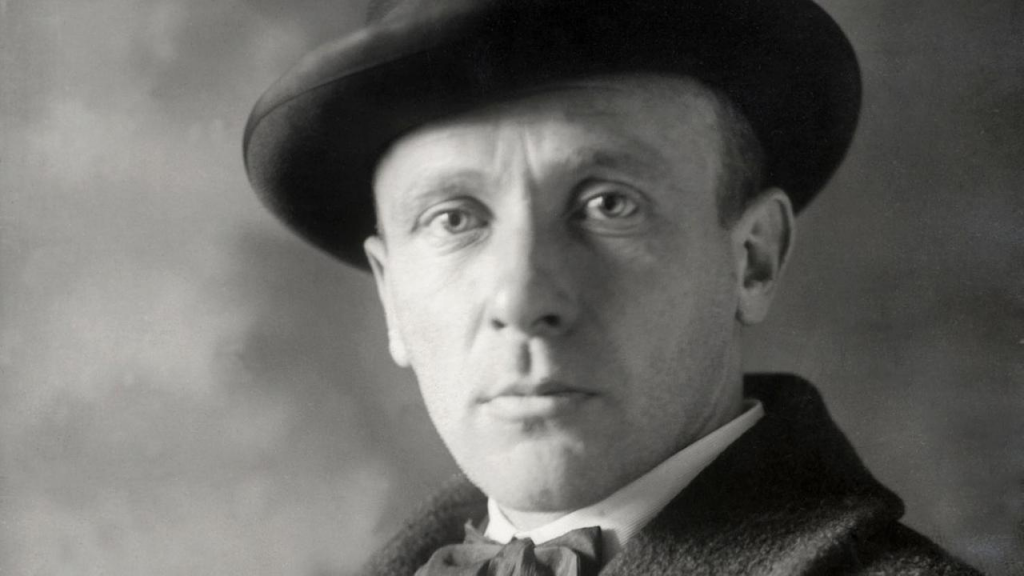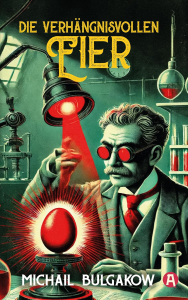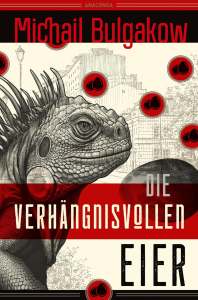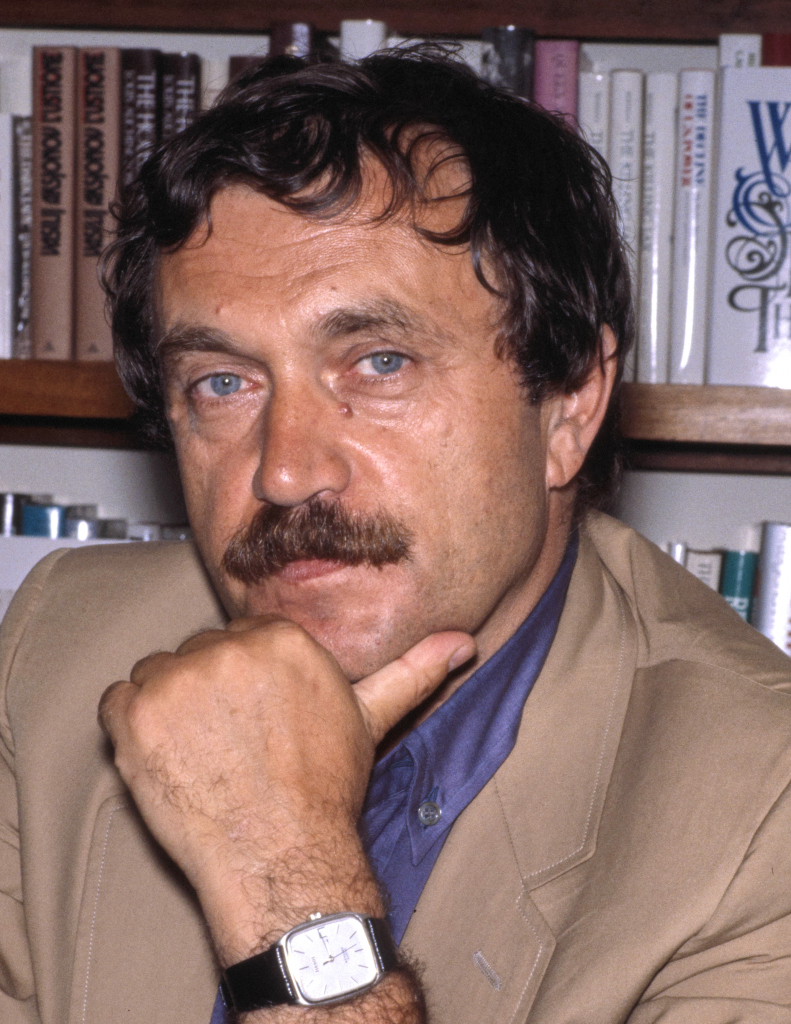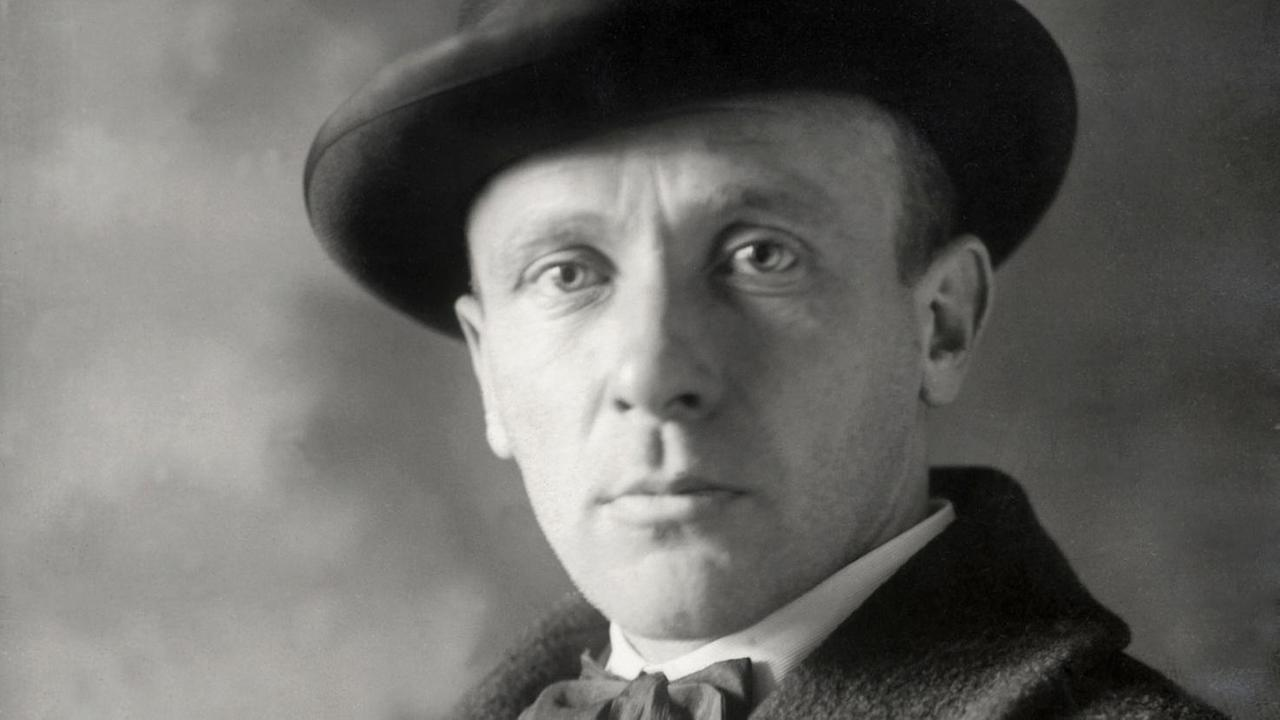
Michail Afanassjewitsch Bulgakow

  • -

Michail Afanassjewitsch Bulgakow

Mikhail Afanasyevich Bulgakov (Russian: Михаи́л Афана́сьевич Булга́ков, scientific transliteration: Mikhail Afanas’evič Bulgakov; May 3, 1891 in Kiev, Russian Empire – March 10, 1940 in Moscow, Soviet Union) was a Russian and Soviet writer. He is considered one of the great satirists of Russian literature. One of his major works is the novel The Master and Margarita, which was published posthumously in 1966 after heavy censorship. The excerpts were distributed as samizdat and thus contributed to his popularity.

Mikhail Bulgakov was born in 1891 to Afanasy Ivanovich Bulgakov, a lecturer at the Kyiv Theological Academy, and his wife Varvara Mikhailovna (née Pokrovskaya), and was baptized in the Podil Church of the Exaltation of the Holy Cross that same year. After graduating from the Kyiv First Gymnasium in 1909, he enrolled at the Medical Faculty of Kyiv University. In 1916, he received his medical degree and took up a rural position in the Smolensk Region before practicing medicine in the town of Vyazma. In 1913, he married Tatyana Nikolaevna Lappa (Russian: Татьяна Николаевна Лаппа).

At the end of October 1921, Bulgakov moved to Moscow and began working for several newspapers (Siren, Worker) and magazines (The Medical Worker, Russia, Rebirth). During this time, he published occasional prose pieces in the Berlin-based exile newspaper Am Vortag. Between 1922 and 1926, Siren printed more than 120 of his reports, essays, and columns. Bulgakov joined the All-Russian Writers’ Union in 1923.
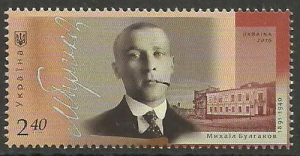
In 1924, he met Lyubov Yevgenyevna Belozerskaya (Russian: Любовь Евгеньевна Белозёрская), whom he married the following year. In 1928, the couple toured the Caucasus, visiting the cities of Tbilisi, Batumi, Vladikavkaz, and Gudermes. The premiere of Bagrovsky Island (Blood-Red Island) took place in Moscow that same year. During this time, the author developed the first ideas for The Master and Margarita and began work on a play about Molière entitled Cabal Svyatosh (Slavery of the Bigots). In 1929, he met Yelena Sergeyevna Shilovskaya, who became his third wife in 1932.

In the partly autobiographical novel The White Guard from 1924, Bulgakov uses the example of the Turbin family from Kyiv to describe the chaotic period of upheaval that followed the October Revolution and the collapse of the Russian Empire. Bulgakov’s play The Days of the Turbins, which premiered in Moscow on October 5, 1926, is also based on the novel. However, Bulgakov is better known for his grotesque depictions of everyday life in the young Soviet Union, often with fantastical or absurd elements—a typical form of social criticism in Russian-language literature since Gogol. The story “Heart of a Dog” was written in 1925 but was not published in the Soviet Union until 1987.
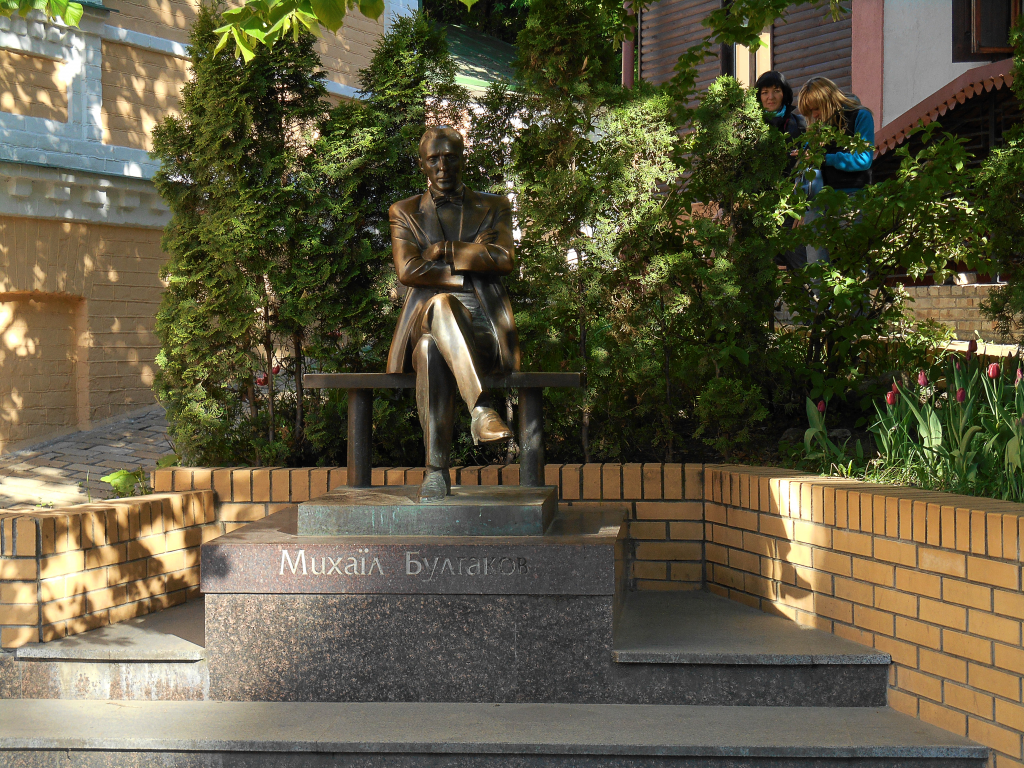
The Master and Margarita

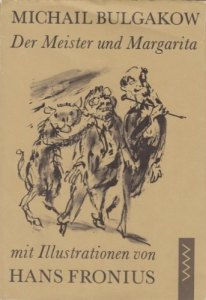
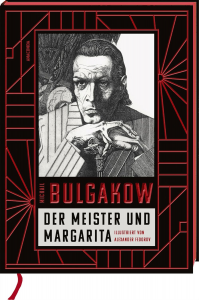
Bulgakov’s best-known work is The Master and Margarita, a satirical and grotesque take on the Faust motif, a journey through time. The work first appeared in print in 1966/67 in serialized form in the literary magazine Moskva, almost 30 years after the author’s death, in an abridged version. The unabridged version first appeared in book form in 1973. Shortly after its initial Soviet publication, the novel was published in 1968 in the German translation by Thomas Reschke in the GDR. In protest against Stalinism, during which the novel was written, he criticizes the dialectical materialism and militant atheism expressed in the Soviet Union.[3]

Some critics consider the book the best Russian novel of the 20th century. It was number 1 on the Spiegel bestseller list from April 29 to May 5, 1968.

https://www.deutschlandfunk.de/vor-125-jahren-geboren-der-sowjetische-schriftsteller-100.html

https://de.wikipedia.org/wiki/Michail_Afanassjewitsch_Bulgakow
https://en.wikipedia.org/wiki/Mikhail_Bulgakov


  • -

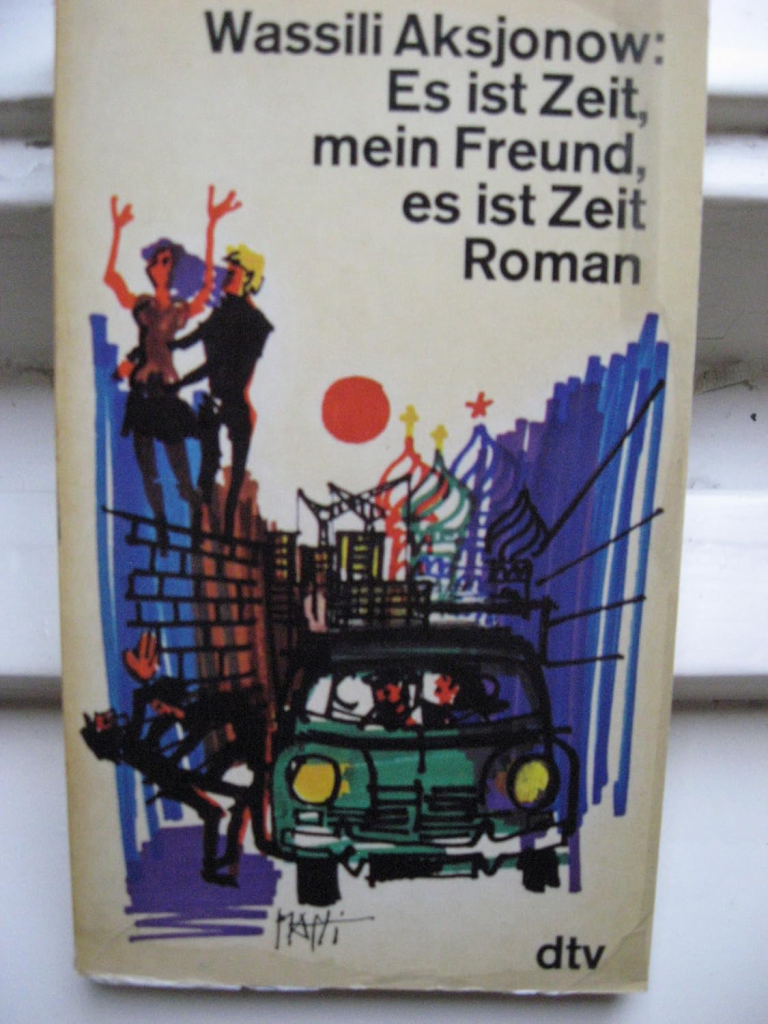
Wassili Pawlowitsch Aksjonow

Vasily Pavlovich Aksyonov (Russian: Василий Павлович Аксёнов, scientific transliteration: Vasilij Pavlovič Aksënov, born August 20, 1932 in Kazan; died July 6, 2009 in Moscow) was a Russian writer. He began his career in the Soviet Union and later had to emigrate to the United States.

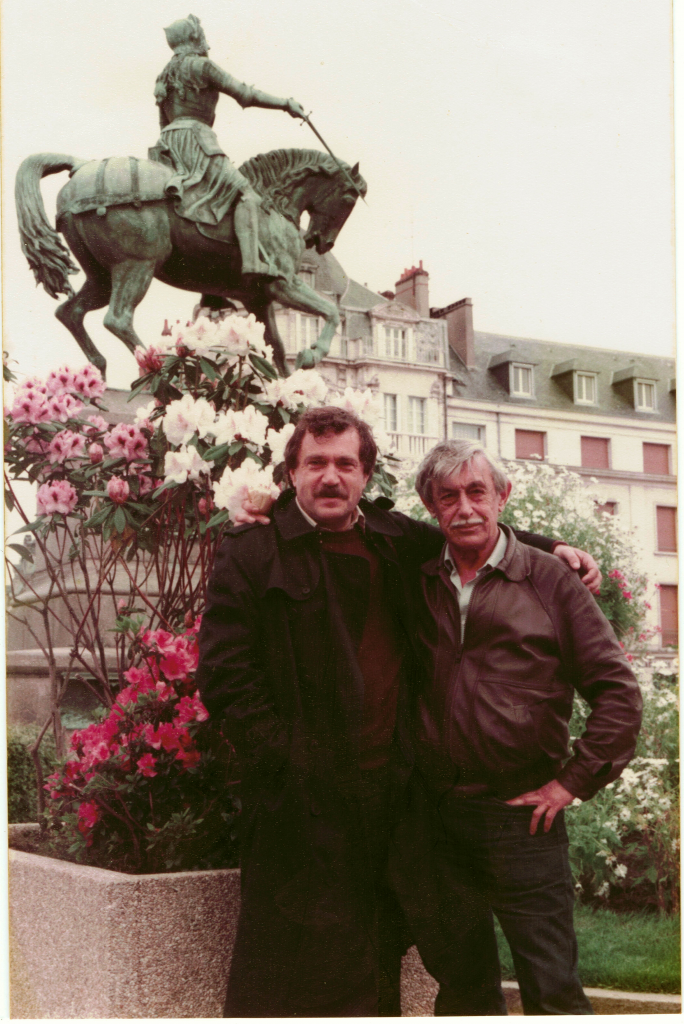
Wassili Aksjonow (left) with Viktor Nekrasov (in front of the equestrian statue of Joan of Arc, Place du Martroi, Orléans, 1983)

From 1956 to 1960, he worked as a doctor, but had already begun writing sketches and short stories while still a student. He published his first stories in the 1960s, which soon became very popular, especially among young readers. In 1979, he came under pressure for his collaboration on the underground literary almanac Metropol, along with Andrei Bitov, Fazil Iskander, Viktor Yerofeyev, and Yevgeny Popov.

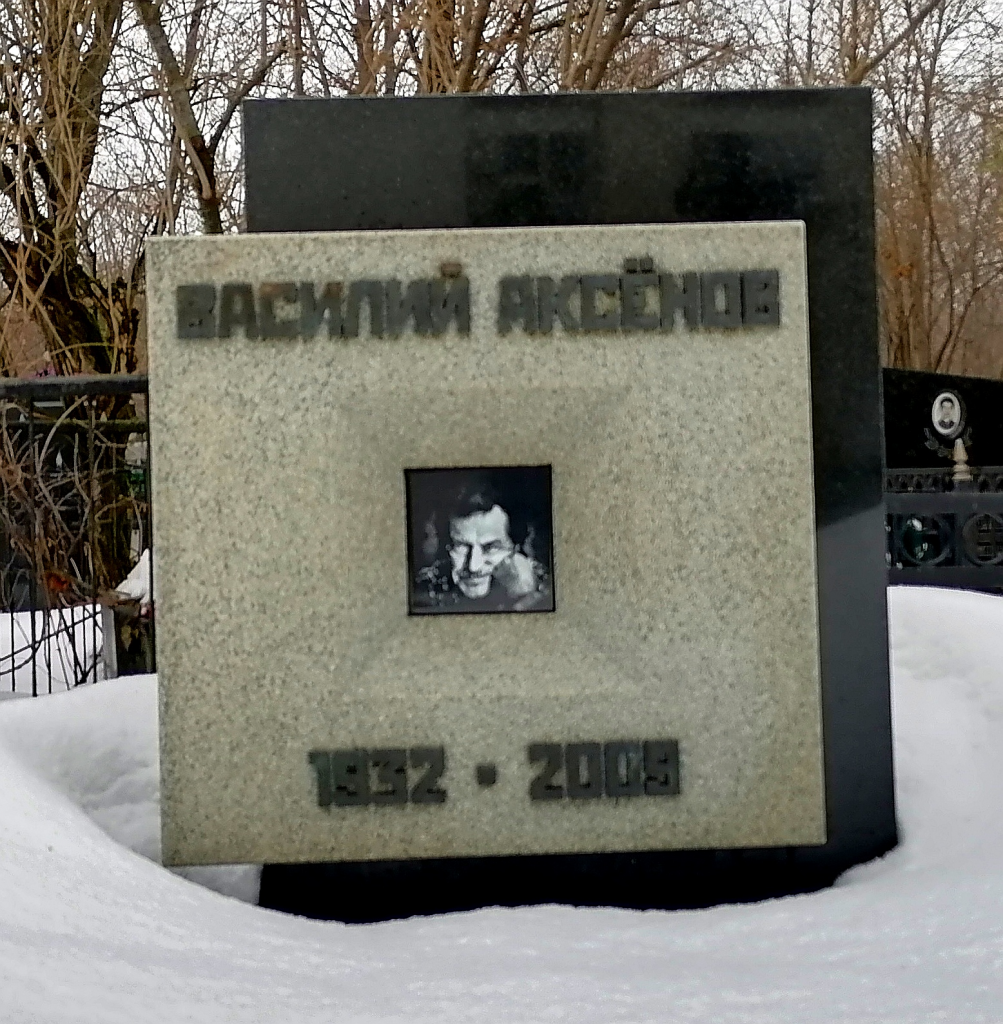
In 1980, Aksyonov accepted an invitation from an American university and took up permanent residence in the United States, where he continued his writing career. Until 2003, he taught as a professor of Russian at George Mason University in Fairfax, Virginia. In 2004, he moved to Biarritz. He spent the following years alternating between France and Moscow, where he died in July 2009.[2] His grave is in the Vagankovo ​​Cemetery in Moscow.

In 1980, Aksyonov accepted an invitation from an American university and took up permanent residence in the United States, where he continued his writing career. Until 2003, he taught as a professor of Russian at George Mason University in Fairfax, Virginia. In 2004, he moved to Biarritz. He spent the following years alternately in France and Moscow, where he died in July 2009.[2] His grave is in the Vagankovo ​​Cemetery in Moscow.

Aksyonov’s first stories appeared in the magazine Yunost, on whose editorial board he was a member.

In his works, Aksyonov processed his family’s experiences during the Stalin era. The thaw that began in the political and intellectual life of the USSR in the 1960s allowed him to address this topic.

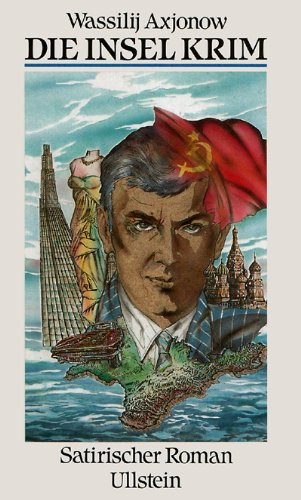
In 1981, while he was in exile, the novel The Island of Crimea (Остров Крым), written in 1979, was first published in English translation. It tells, among other things, how Crimea was “liberated” from the Moscow government through an invasion. In the English-speaking West, Aksyonov became known for his novel “The Burn” (Russian: “Ozhog,” 1975; German: “Gebrannt,” 1986) and the trilogy “Generations of Winter” (Russian: Московская сага, 1989–1993), works in which he explored the taboo subject of Stalinist persecution. “Generations of Winter” tells the story of the Gradov family of doctors from 1925 to 1953. The novel was adapted into a lavish television series in Russia in 2004.

For his 2004 novel “Voltarians and Voltarian Women,” Aksyonov received the $15,000 Booker Prize for Literature – Open Russia. Aksyonov’s books have been translated into several languages. Film adaptations of his books have been made in Russia and France. He has also written plays.

https://de.wikipedia.org/wiki/Wassili_Pawlowitsch_Aksjonow

https://en.wikipedia.org/wiki/Vasily_Aksyonov

Grave of Vasily Aksyonov in Moscow


  • -

Friedrich Joseph Laurentius Haass

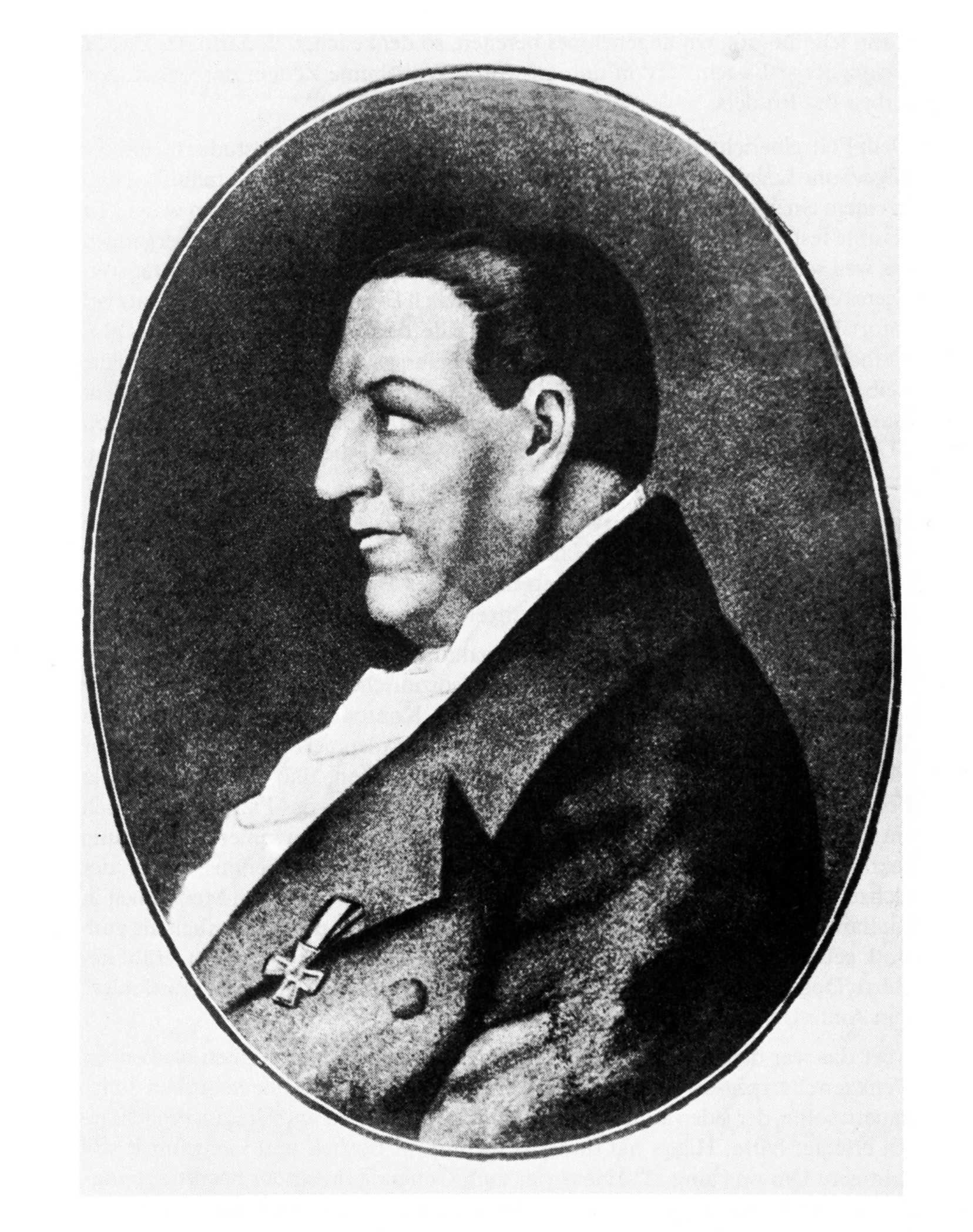
Dr. Friedrich Joseph Haass (Russian: Фёдор Петрович Гааз, Fyodor Petrovich Gaaz; 10 August 1780 – 28 August [O.S. 16 August] 1853) was the “holy doctor of Moscow”.[1][2] Born in Bad Münstereifel, as a member of Moscow’s governmental prison committee, he spent 25 years until the end of his life to humanize the penal system.[1] During the last nine years before his death, he spent all of his assets to run a hospital for homeless people. He died in Moscow. Twenty thousand people attended his funeral at the Vvedenskoye Cemetery, which was paid for by the state as he had no more money.

Haass, son of the pharmacist Peter Haass and grandson of the “surgeon on the Thurnmarkt” in Cologne, Wilhelm Anton Haass, studied German, philosophy and medicine after finishing school at the Ecole Centrale in Cologne, founded under Napoleon, and at the universities in Jena and Göttingen. In Göttingen he received his doctorate in medicine and surgery. In Vienna he trained as an ophthalmologist. One of his first patients as family doctor to the Russian Princess Varvara Alekseevna Repnin was her father, who suffered from a serious eye disease.[1] The latter recognized Haass’ talent and invited the young doctor to Russia. In 1806 he appeared in Moscow as Fyodor Petrovich Gaas. As early as 1807 he was appointed chief physician of the renowned Pavlovskaya Clinic (Paul’s Hospital).

From 1828, as a member of the Moscow Prison Protection Committee, he devoted himself for 25 years to caring for prisoners exiled to Siberia.[3] He was firmly convinced that man is good by nature because God created him in his own image. Therefore, a person who has strayed from the right path is nothing more than an unhappy, sick person who can only be healed through humanity. He learned this positive view of humanity primarily through Francis of Assisi and Francis de Sales, whose writings he counted among his favorite books, especially his main theological work, “Treatise on the Love of God.” In a letter to the philosopher Friedrich Wilhelm Joseph von Schelling dated December 31, 1843, he urgently recommended that he read the works of Saint Francis de Sales. In it, he calls Schelling “my beloved German teacher” and Francis de Sales “my beloved mentor and educator.” His will states that Haass was in possession of relics of Saint Francis de Sales, which he bequeathed to a Catholic church in Irkutsk.

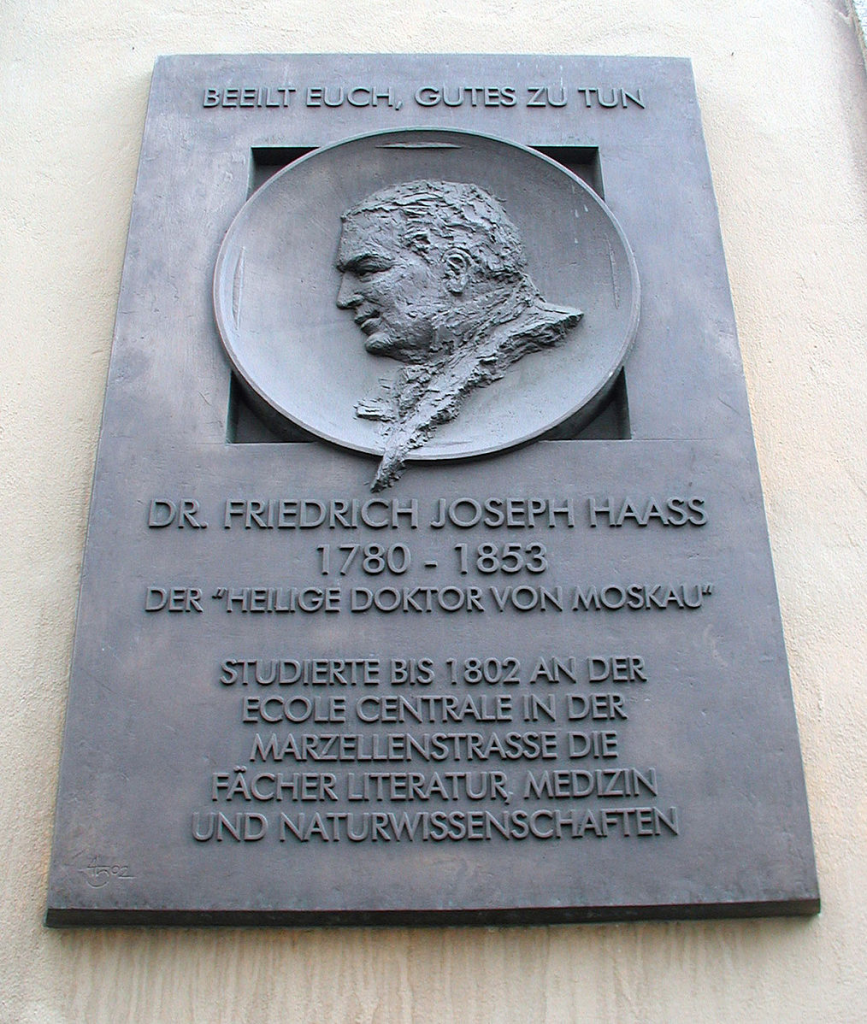
Gedenktafel für Friedrich-Joseph-Haass Memorial plaque for Friedrich-Joseph-Haass at the Archbishop’s General Vicariate building at Marzellenstrasse 32 in Cologne. Design: Herbert Halfmann, Düren. Height 140 cm. Erected in 2002.

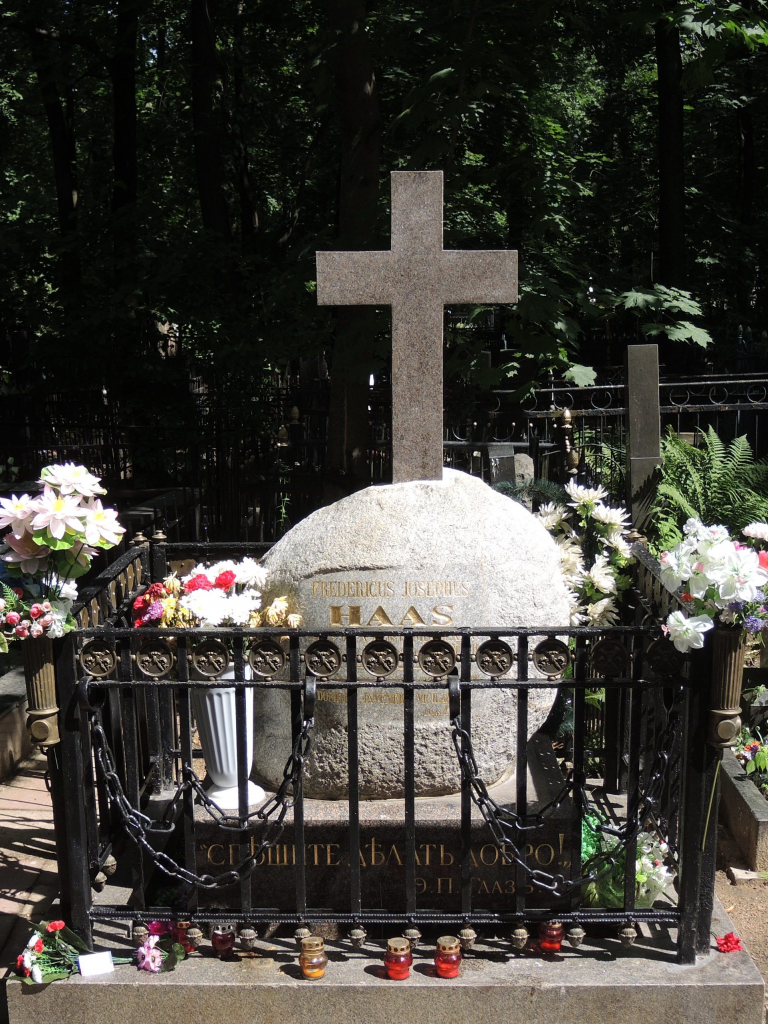
In 1836, he implemented a decree replacing prisoners’ heavy iron shackles with lighter, leather-lined ones that no longer rubbed their feet dry. These shackles are called Haass’s shackles. The oversized metal shackles on his grave are a reminder of this. In 1841, he wrote an ABC of Christian Decency […], which he had printed and distributed to deported criminals. In 1843, a police prisoner hospital for the homeless, later called the “Alexander Hospital,” was opened. It was financed entirely from Haass’s personal fortune and private donations. During the 1848 cholera epidemic in Moscow, he and the philanthropist Sofia Stepanovna Shcherbatova organized the Nikolskoye Community to provide assistance to the needy. Sisters of this community continued their work during the Crimean War.[4] Haass lived and worked in this hospital, popularly known as the “Haass Hospital” or “Haassovka,” until the end of his life.[5] At the end of July 1853, Haass fell ill and wrote a detailed will. He died on August 16, 1853, and was buried on August 19.[6] 20,000 people attended his funeral at Moscow’s Vvedenskoye Cemetery. The gravestone is inscribed in Latin and bears Haass’s quote in Russian: “Haste to do good.”

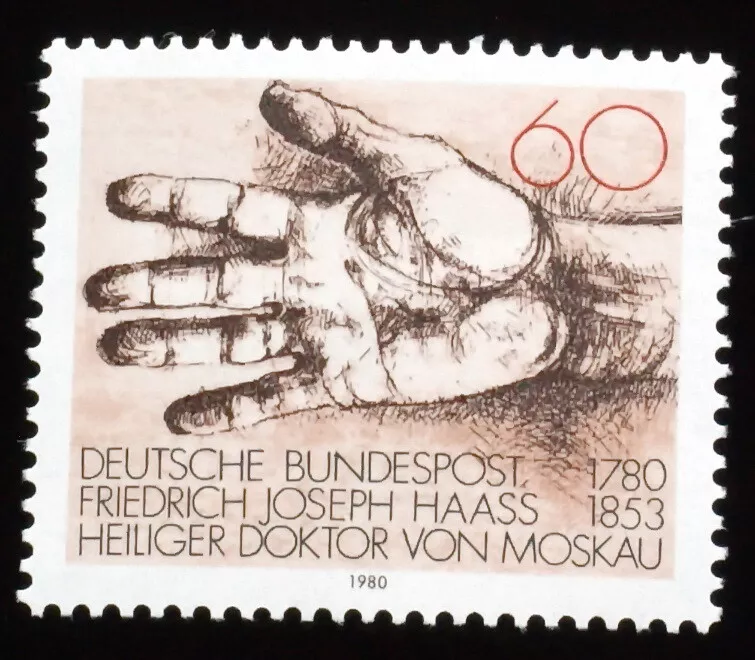
  • To mark the physician’s 200th birthday, the German Federal Post Office issued a commemorative stamp worth 60 pfennigs.
  • The German School Moscow has been named “German School Moscow – Friedrich Joseph Haass” since May 27, 1989.
  • The German-Russian Forum has awarded the Dr. Friedrich Joseph Haass Prize annually since 1995 to individuals who have made outstanding contributions to German-Russian relations. Award winners include Mikhail Sergeyevich Gorbachev and Egon Bahr.
  • The Russian Lev Zinovyevich Kopelev, a promoter of German-Russian reconciliation and himself a Gulag prisoner from 1947 to 1954, who lived in Cologne after his expatriation and until his death, wrote a book about Haass in 1984.
  • On April 16, 2016, an opera collage entitled Doctor Haas, consisting of 11 episodes, premiered at Moscow’s Helikon Opera. The composer was 27-year-old Alexei Sergumin, and the libretto was written by the writer Lyudmila Ulitskaya.

https://de.wikipedia.org/wiki/Friedrich_Joseph_Haass

https://en.wikipedia.org/wiki/Friedrich_Joseph_Haass


  • -

Anastasia Vasilyeva

Category : PianoDocs

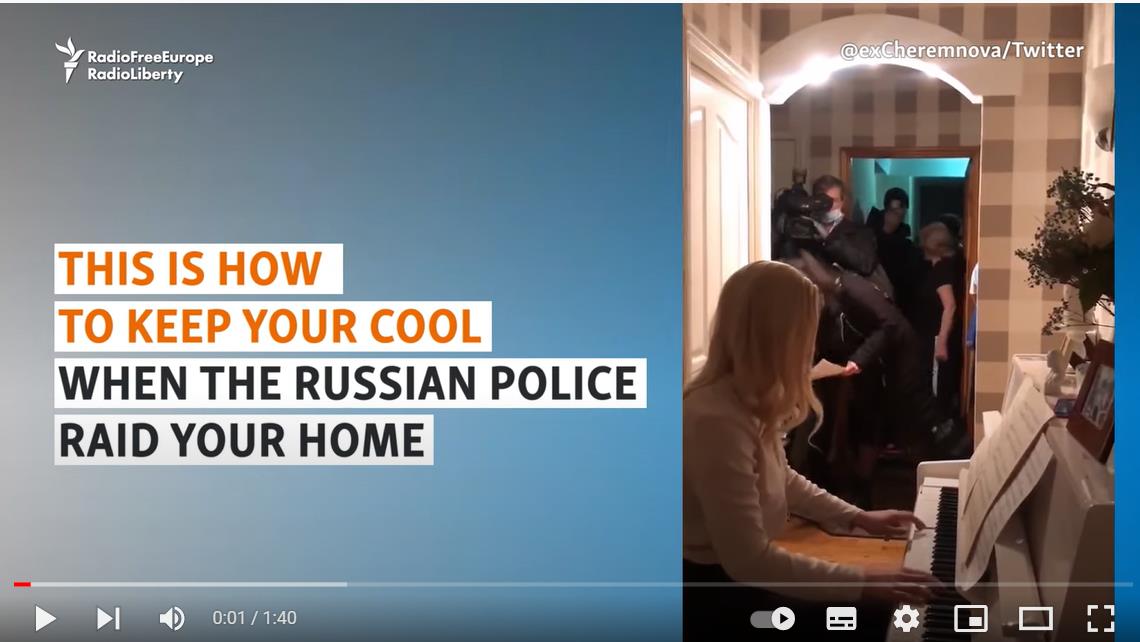
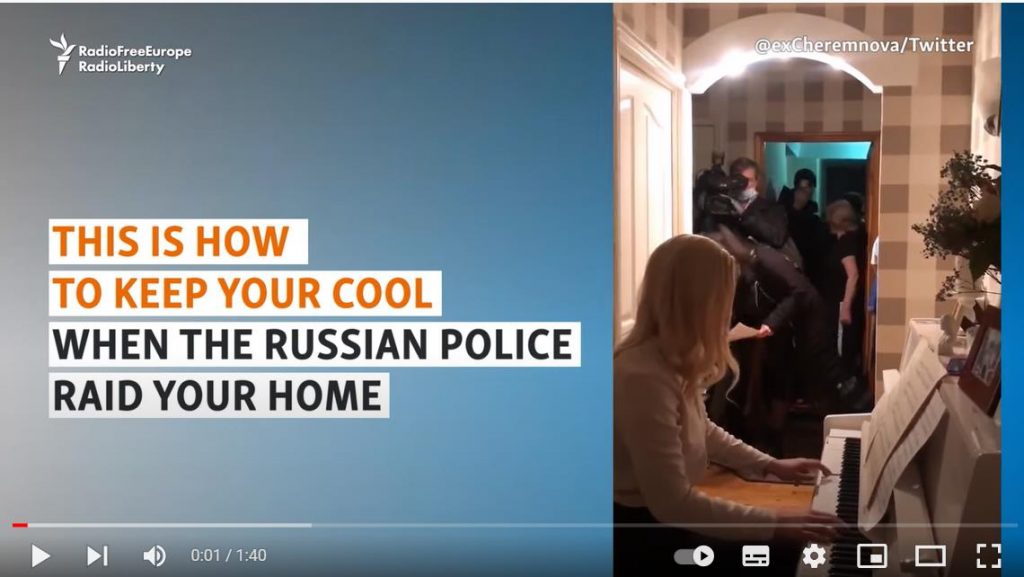
Anastasia publishes defects of the health system regarding the pandemy and becomes prosecuted. Here you see her playing the piano when she is being arrested.

web

wikipedia ES
wikipedia EN

youtube – vimeo

facebook – twitter – instagram

work