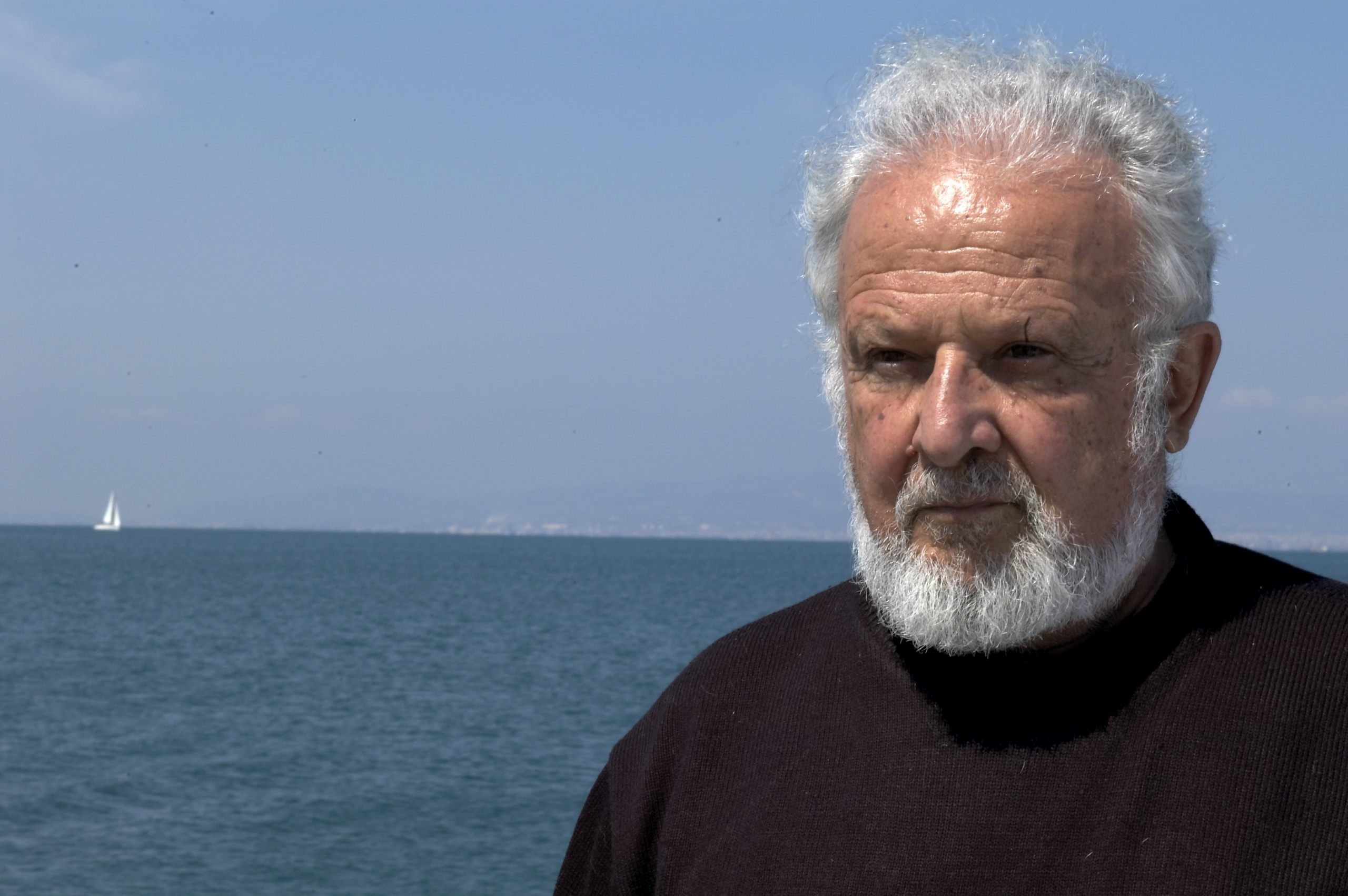
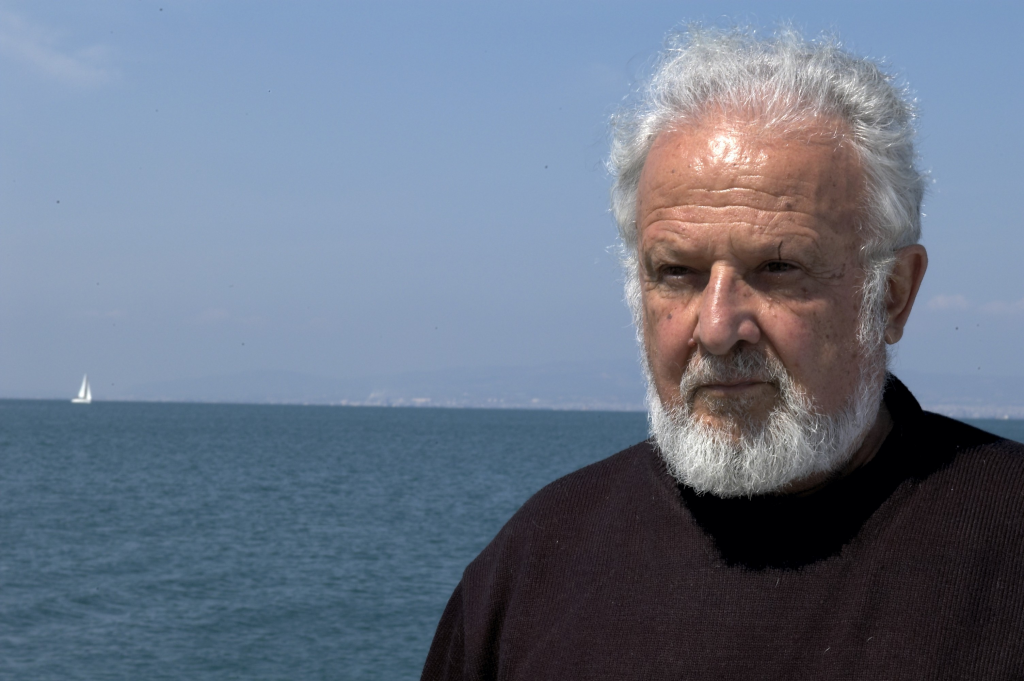
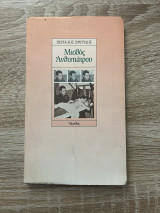
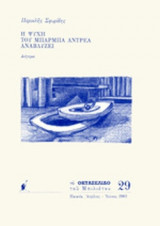
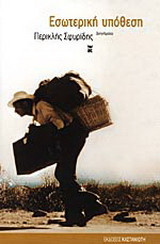
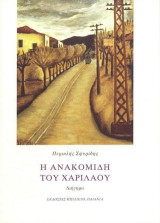
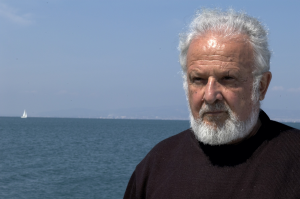
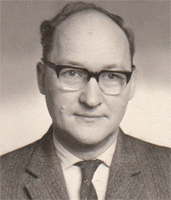
Periklis Sfyridis (born October 5, 1933, in Thessaloniki) is a contemporary Greek poet, prose writer, essayist, critic, and anthologist. His prose has been published in several languages.
Periklis Sfyridis was born in 1933 in Thessaloniki, where he lives. He graduated from the American College “Anatolia” in 1952. He studied medicine at the University of Thessaloniki (as a student of the Military Medical School) and worked as a cardiologist until 1994. From 1975 to 1981, he was president of the Thessaloniki Medical Association.
He appeared in letters in 1974 and worked closely with the literary magazine Diagonios. From 1985 to 1990, he edited Parafyada, an annual publication featuring unpublished anecdotal texts by Thessaloniki prose writers. From 1987 to 1996, he was the publishing consultant (content manager) for the magazine To Tram. In 1996, he organized the conference “Paramythia Thessaloniki” on the city’s prose from 1912 to 1995 and edited its proceedings. In 2001, he co-organized the conference “Poetry in Thessaloniki in the 20th Century” with the Department of Medieval and Modern Greek Studies at the Faculty of Philology, Faculty of Philosophy, Aristotle University of Thessaloniki, and the Thessaloniki Municipal Library, and edited its proceedings. In 2005, he organized the conference “Literary Nurseries in Thessaloniki: The City’s Literary Journals in the 20th Century and Their Editorships.” In 2008, he organized the fourth conference Criticism and Critics of Thessaloniki in the 20th Century at the Municipal Library of Thessaloniki, as part of the Demetrios Festival, and edited its proceedings (together with Sotiria Stavrakopoulou).
His short story “The Secret” is the basis for Tasos Psarras’ film “The Other Side”, the screenplay for which he wrote together with the director. Two other of his short stories have been made into television films. He also wrote the texts for the documentary series “Literature and Social Reality in Thessaloniki” by Tasos Psarras, which was broadcast by ET-3 in 1997, and for the same director’s “Literary Walks in Northern Greece” (these are the television/literary portraits of the following writers: Thanasis Markopoulos / Veria, Vasilis Karagiannis / Kozani, Lazaros Pavlidis / Kilkis, Sakis Totlis / Edessa, Vasilis Tsiambousis / Drama), a series that was broadcast repeatedly on state television in 1995.
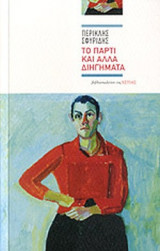
He has published two collections of poetry, fourteen short story collections, two novels, and a memoir about his spiritual journey. He has published studies on novelists, painters, and three anthologies on Thessaloniki’s prose writers, one of which has been translated into German and another into English. He has collaborated with most Greek literary magazines. His short stories have been translated into German, English, and Dutch, as have two of his books in the same language (Dutch): the short story collection First Hand and his novel Kidney Transplant. Over one hundred serious reviews and studies of his prose work have been published in individual volumes. In November 2007, he was honored by the Municipality of Thessaloniki for his prose and critical work. From 2009 to 2010, he was a member of the electoral committee of the Vafopoulio Cultural Center of Thessaloniki, responsible for speaking events. There he also created the literary series Vafopoulio Publications.
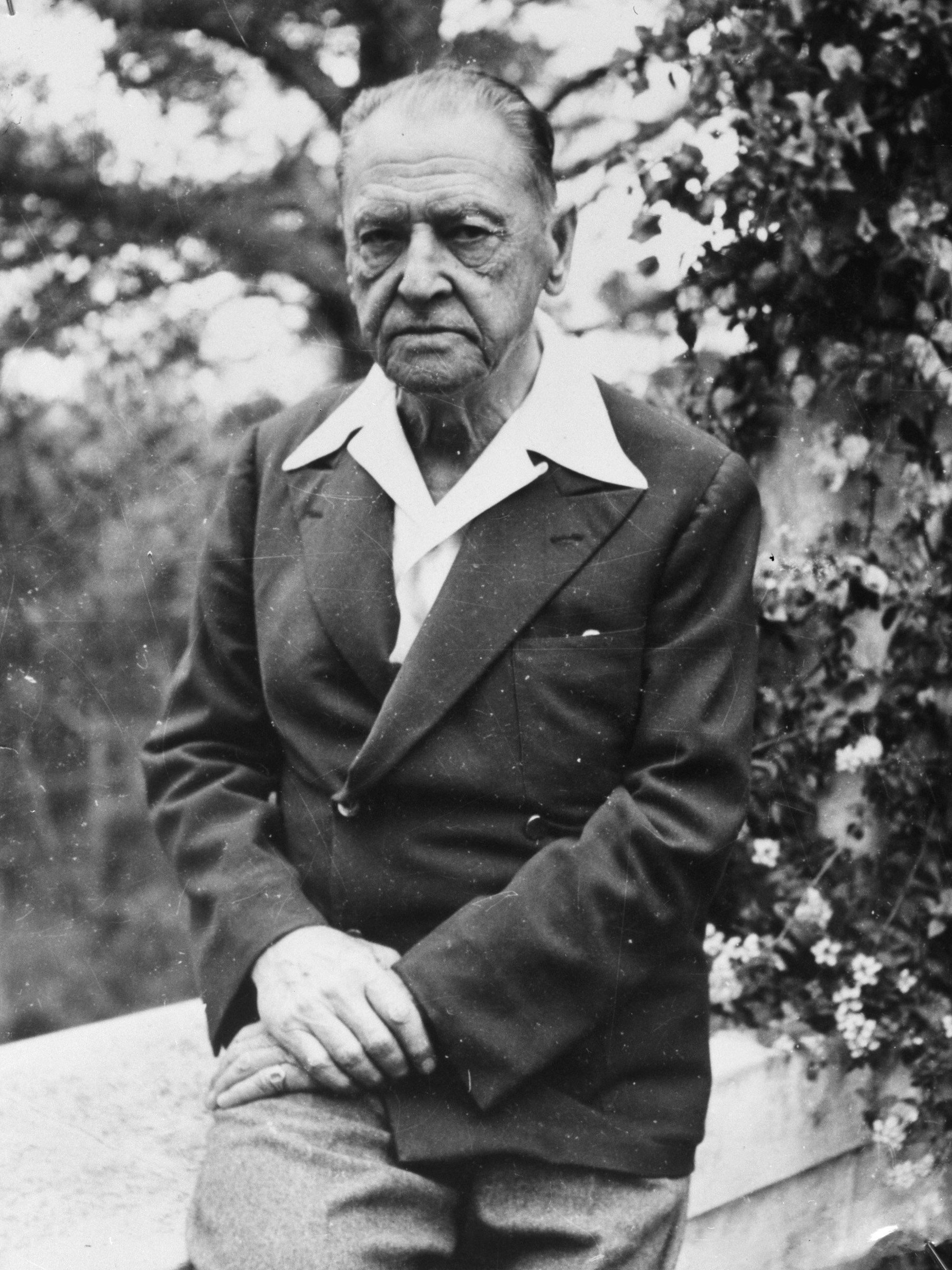
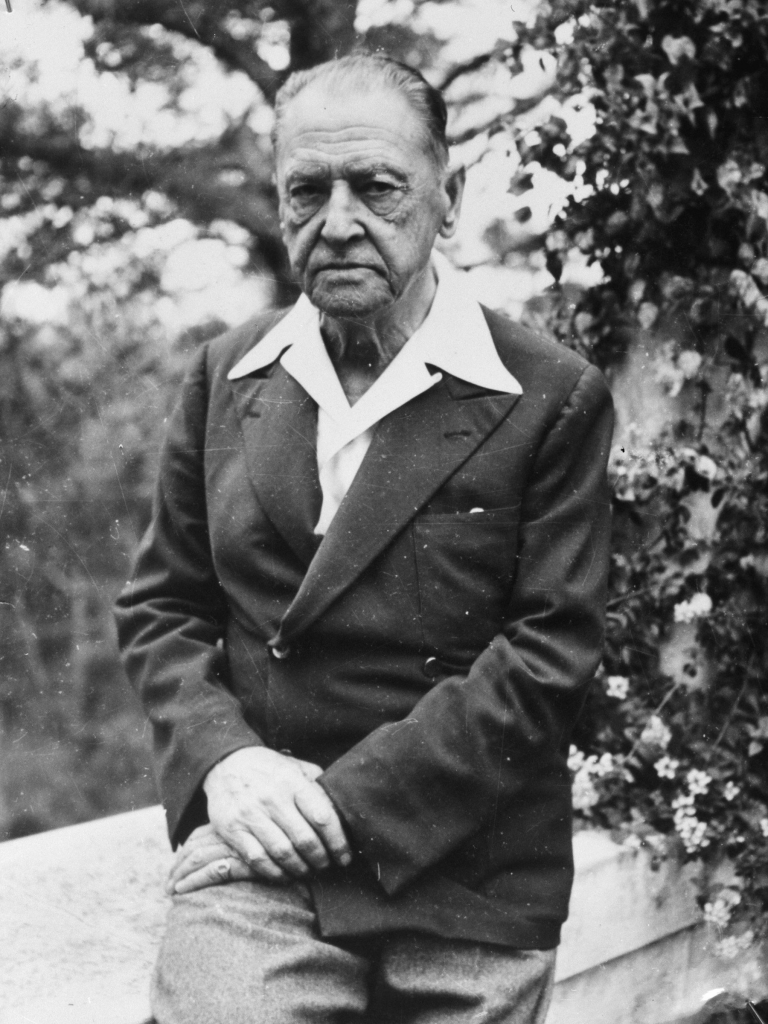
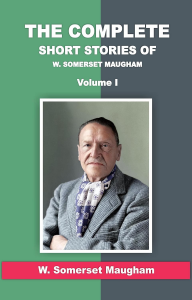
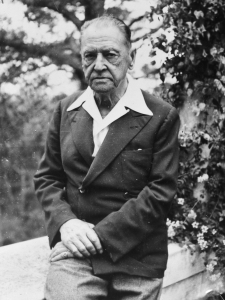
William Somerset Maugham [ˈsʌməsɪt mɔːm] (January 25, 1874 in Paris – December 16, 1965 in Saint-Jean-Cap-Ferrat near Nice), also known as W. Somerset Maugham, was an English novelist and playwright. He is one of the most widely read English-language authors of the 20th century.
William Somerset Maugham was the son of an English lawyer who worked for British clients in Paris. His older brother was the jurist Frederic Maugham. His parents died when he was still a child. As an orphan, he spent his youth under the supervision of a sanctimonious uncle and in boarding schools. He suffered from a stutter. He studied German, literature, and philosophy at the University of Heidelberg, and later medicine at King’s College London. Despite his passion for literature, Maugham successfully completed his medical studies in 1898—largely under pressure from his uncle.
William Somerset Maugham achieved early literary success with his first novel, Liza of Lambeth, published in 1897, and simultaneously caused a scandal. In the novel, Maugham processed experiences he had as a trainee doctor in the slums of London. The middle class considered it inappropriate to portray the world of the working class in such a naturalistic way.
The book was followed by years of self-determination as an author. At first, he worked as a playwright, writing plays such as The Circle, Our Betters, and The Constant Wife. In the early 20th century, four of his plays were performed simultaneously in London. His productivity was astonishing: he usually needed only a week to write each act and another week to edit the play. Later, he devoted himself to prose and wrote numerous novels and short stories.
Maugham’s most important work is generally considered to be the novel Of Human Bondage, an autobiographical story whose hero, Philip Carey, like Maugham, grows up as an orphan with his sanctimonious uncle and is handicapped by a clubfoot. Maugham himself stuttered.
In the English-speaking world, Maugham’s work is considered middle-brow literature, which, while easy to read and highly entertaining, nevertheless achieves a remarkable artistic and formal level.[2] A theme that repeatedly occupied Maugham in his dramatic and narrative work is adultery.
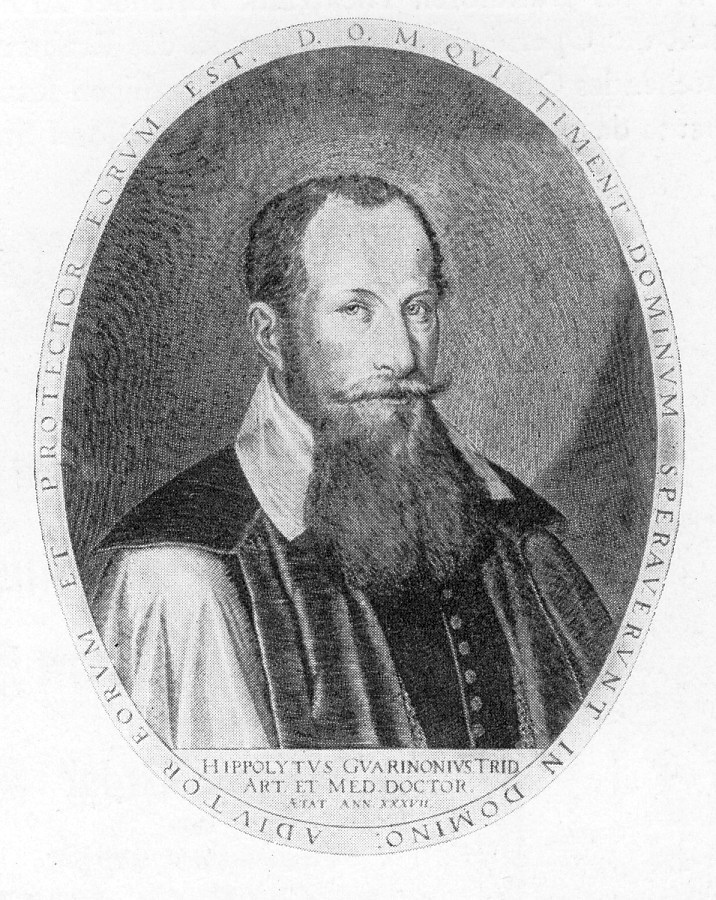
Hippolyt Guarinoni (also Ippolito Guarinoni and Hippolytus Guarinonius) (November 18, 1571 in Trento – May 31, 1654 in Hall in Tirol) was a physician and polymath who practiced in Hall. As a proponent of militant Catholicism, he was instrumental in the construction of St. Charles’s Church in Volders and founded the anti-Semitic Anderl von Rinn cult.
Hippolytus spent his childhood in Trento. He later moved with his father to Vienna and finally followed him to the court of Emperor Rudolf II in Prague in 1583, where he received a thorough and comprehensive education at the Jesuit Gymnasium there. The Jesuit education left a lasting impression on the inquisitive young man. From 1593 to 1597, Guarinoni studied medicine at the University of Padua; he also attended lectures in theology and philosophy.
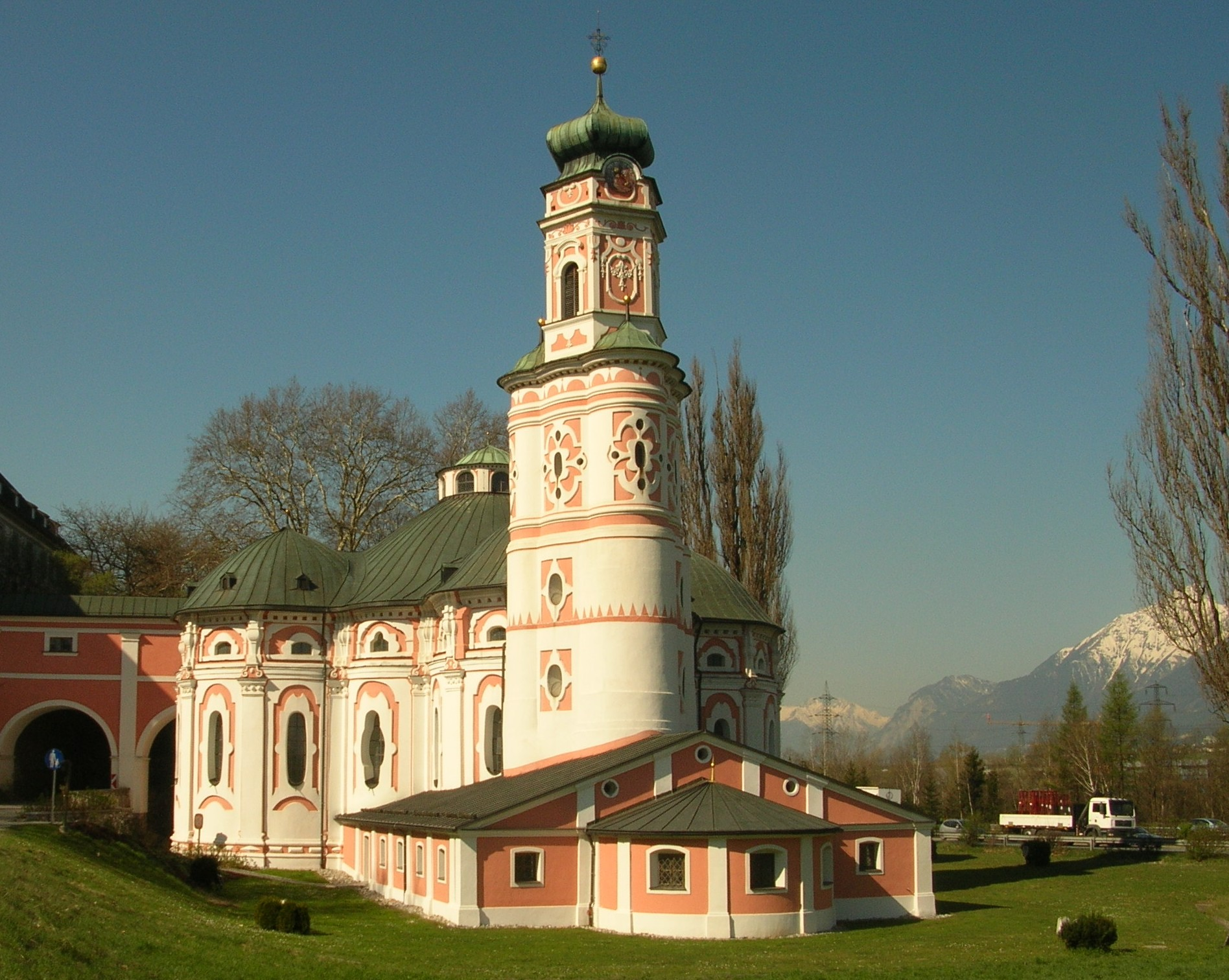
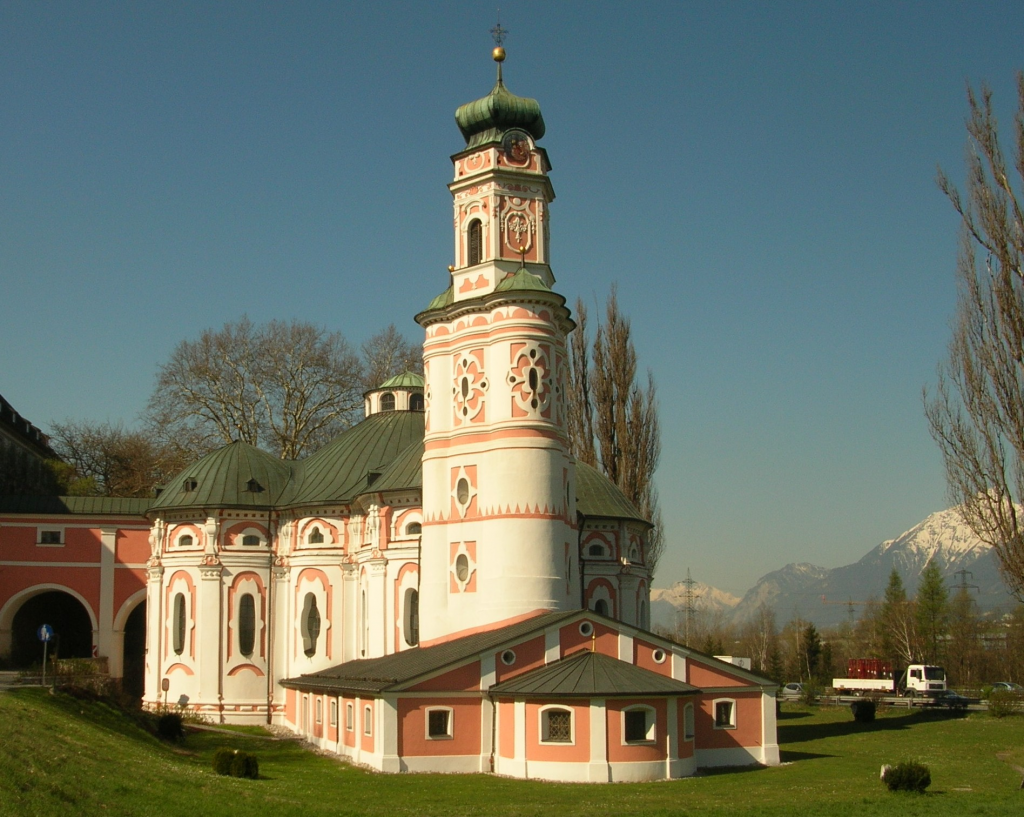
An outward symbol of Guarinoni’s religious zeal is St. Charles’s Church in Volders, which he had built according to his plans using his considerable fortune. The almost oriental-looking church – art historians describe its style as “Venetian Baroque” – is one of the most remarkable sacred buildings in Tyrol. Construction, whose floor plan is modeled on St. Peter’s Basilica in Rome, had to be repeatedly interrupted due to Guarinoni’s financial difficulties and was therefore only consecrated on July 25, 1654, 34 years after the laying of the foundation stone on April 2, 1620. Guarinoni did not live to see this joyous day, having died in Hall two months before the consecration. St. Charles’s Church also became his burial place. In front of the steps of the Epiphany Altar, a white marble plaque bearing the founder’s coat of arms indicates that Guarinoni, his wife, and two of his sons were laid to rest here, according to his last will.
Guarinoni also commissioned the construction of the chapel on the Stiftsalm in the Voldertal Valley and the Borgia Chapel in Volderwald (Tulfes). The chapel at the Volderer Wildbad (Wildbad) burned down several times, so the current building is only indirectly attributable to Guarinoni. Across the Inn Valley, he designed the plan for the Annenkirchlein church in Bad Baumkirchen.
Guarinoni is known in Tyrol not only for his architectural work, but even more so for his medical, religious, and rhetorical writings.
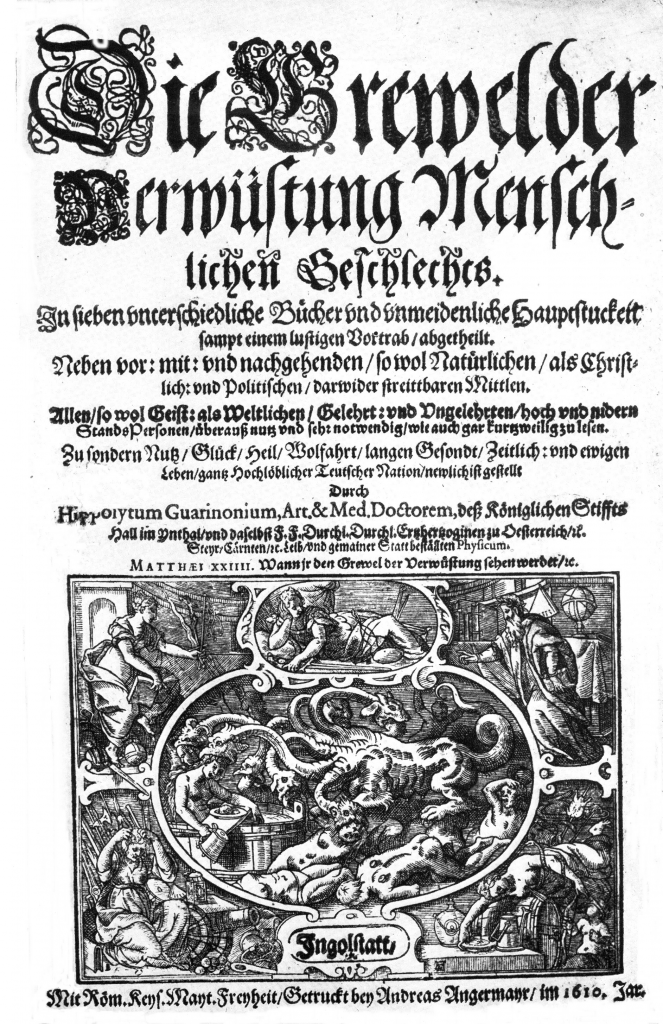
His most important work is Grewel der Verwüstung Menschenrechte (The Devastation of Human Sex), published in Ingolstadt in 1610. It is a voluminous tome whose prolixity in form and content defies clear classification. Among other things, Guarinoni deals with the following subjects in this work: “Doctor and Apothecary, Dück der Weiber. Dawung (digestion), Ebene (plains) and Birg (mountains), Eaters and Drinkers, English Comedians, Calendaric Foolishness, Anecdotes from Eulenspiegel, Foxtails, The Fencing Schools. Dog Law among the Germans, Jews and Heretics Like to Eat Meat. Praise of the Old Wives. Hymns of the Gerhaben (guardians), Marx and Lucas Brothers, Mill and Miller Fraud. The Nature of Geese and Women. Noodles and Plenten, Peasants’ Food. Predicants, Freßdeckanten, etc.” Guarinoni’s Grewel is also a treasure trove for German linguistics, especially for unusual provincial expressions, as it is a not inconsiderable source of provincial references of all kinds, rich in both genuine German proverbs and sayings, allusions, and similes.
The Botanist
A herbarium created by Guarinoni, which has been in the possession of the Ferdinandeum State Museum since 1876 through a donation from Wilten Abbey, is one of the oldest collections of its kind in Central Europe. Created between 1610 and 1630 in book form with a wooden cover and beveled edges, the collection begins with a 13-page Latin-German index and contains 633 pasted plants collected in the vicinity of Innsbruck on 106 pages.
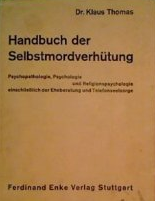
Klaus Thomas (* 31 January 1915 in Berlin; † 10 July 1992 in Malsburg-Marzell) was a German Protestant pastor, physician, and psychotherapist.
Klaus Thomas studied Protestant theology, philosophy, modern languages, psychology, psychotherapy, and medicine. During his studies, he was a member of the Arndt Berlin fraternity (in the Sonderhäuser Verband).[1] In 1940, he received his doctorate in philosophy from the Faculty of Philosophy at the Friedrich Wilhelm University of Berlin.[2] In 1947, he received his doctorate in medicine from the Faculty of Medicine at the Philipps University of Marburg under Ernst Kretschmer.[3] In 1964, he received his Doctor of Divinity (DD) in the USA, an honorary award for special theological services.
He worked as a student chaplain in Berlin and as a hospital chaplain in Marburg, later as a physician and psychotherapist in Berlin, as a senior teacher at the Schadow Gymnasium in Berlin, and as a lecturer at the Lessing University, at the Academy for Continuing Medical Education[4], and from 1956 until the construction of the Berlin Wall on August 13, 1961, at the Paulinum. Study and lecture tours have taken Klaus Thomas to over 100 countries.
He was also the regional chaplain of the Order of St. Luke for Germany, an international ecumenical working group of chaplains, physicians, psychologists, and lay people. The goal of the order is pastoral care for the sick through word and deed.[5] In the Berlin Association Register, this order has been operating since 1956 as the St. Luke Community (care for those weary of life) and, after the split of the Berlin Telephone Counseling Service, since 1961 as the St. Luke Order for Pastoral Care for the Sick and Care for Those Weary of Life – Circle of Friends
Klaus Thomas was the main disseminator of autogenic training according to Johannes Heinrich Schultz[10] and is considered his most important student.[11] Since 1972, he has directed the I. H. Schultz Institute for Psychotherapy, Autogenic Training and Hypnosis in Berlin, which he founded but which no longer exists today.
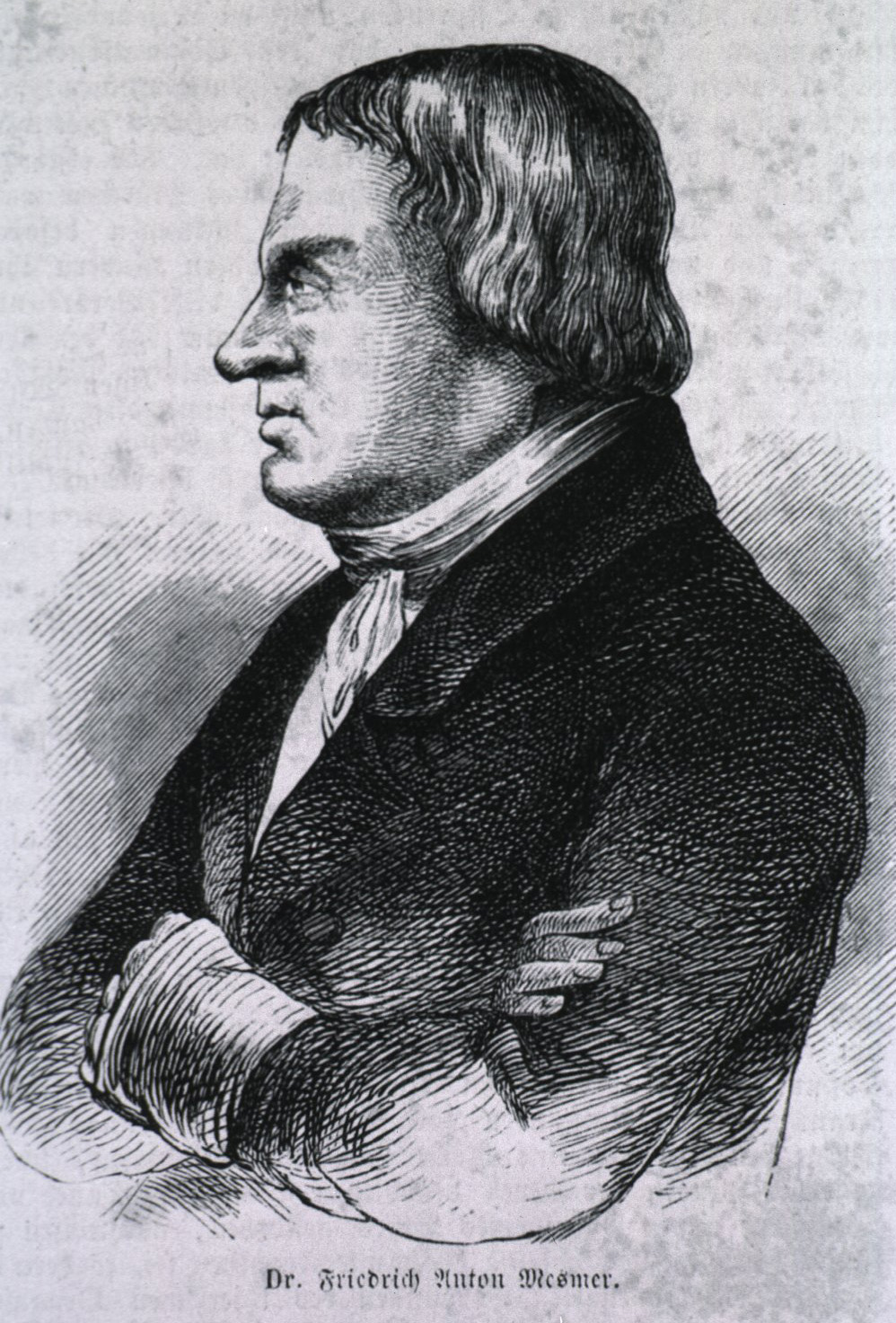
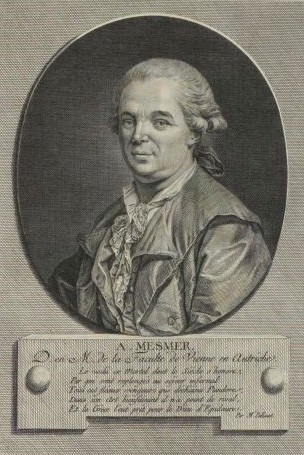
Franz Anton Mesmer (/ˈmɛzmər/MEZ-mər;[1] German: [ˈmɛsmɐ]; 23 May 1734 – 5 March 1815) was a German physician with an interest in astronomy. He theorized the existence of a process of natural energy transference occurring between all animate and inanimate objects; this he called “animal magnetism“, later referred to as mesmerism. Mesmer’s theory attracted a wide following between about 1780 and 1850, and continued to have some influence until the end of the 19th century.[2] In 1843, the Scottish doctor James Braid proposed the term “hypnotism” for a technique derived from animal magnetism; today the word “mesmerism” generally functions as a synonym of “hypnosis”. Mesmer also supported the arts, specifically music; he was on friendly terms with Haydn and Mozart.
Mesmer would often conclude his treatments by playing some music on a glass harmonica.
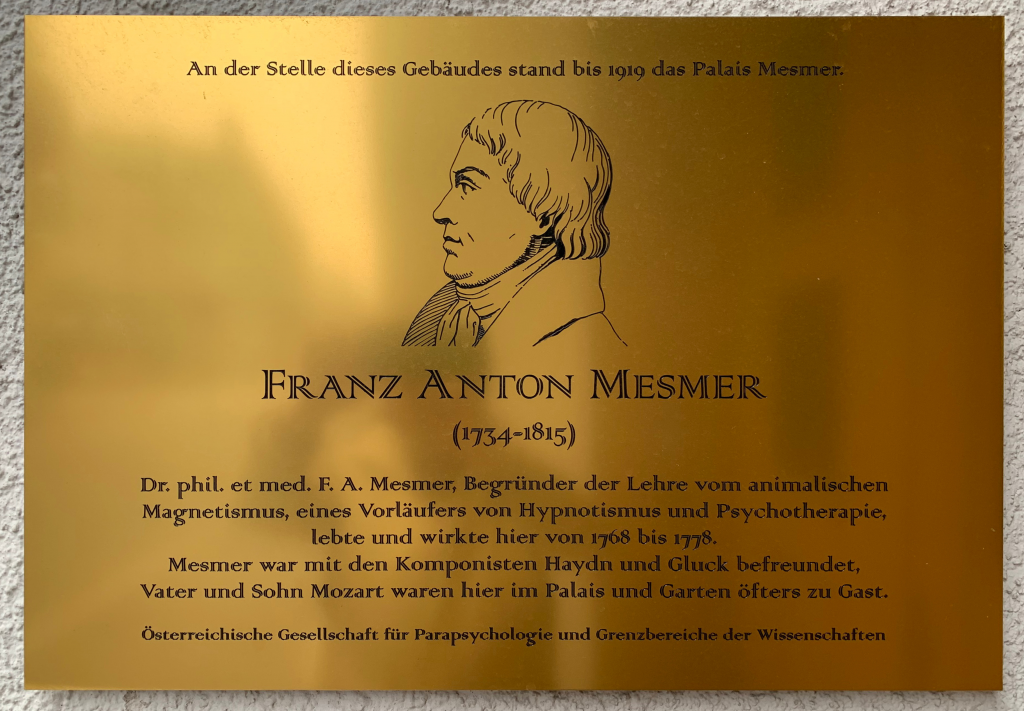
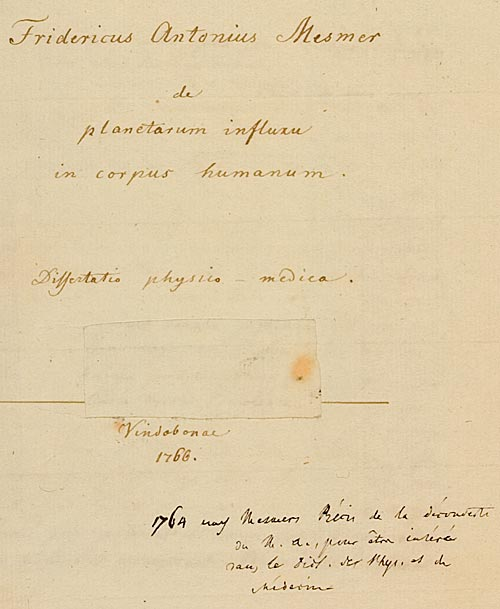
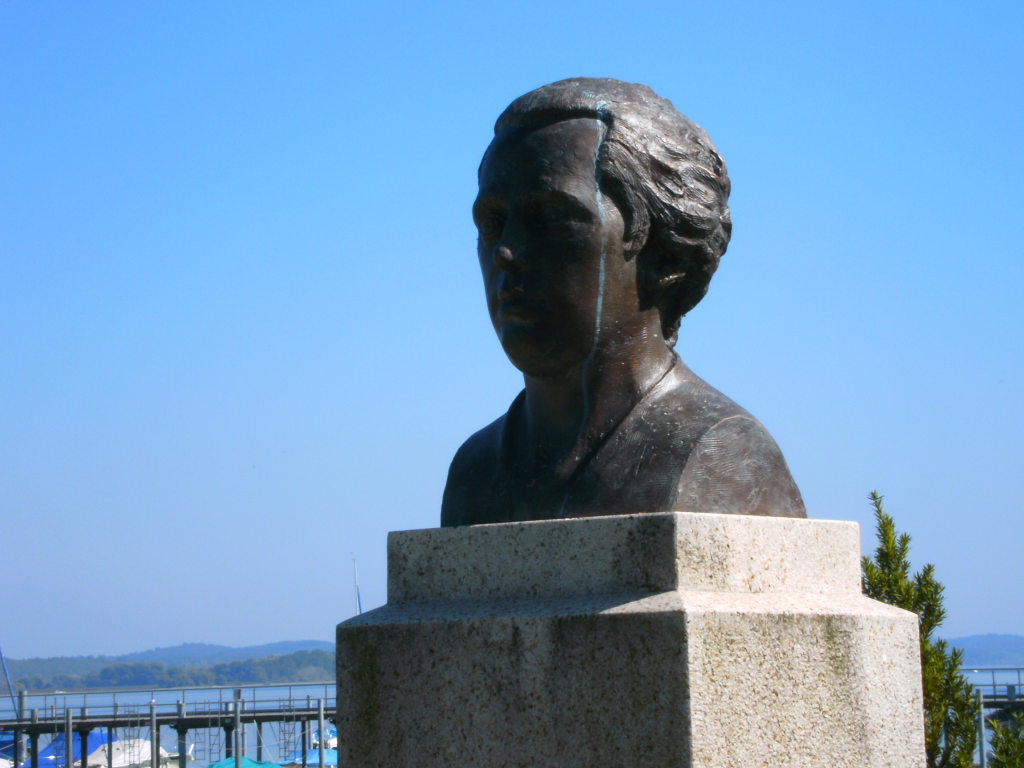
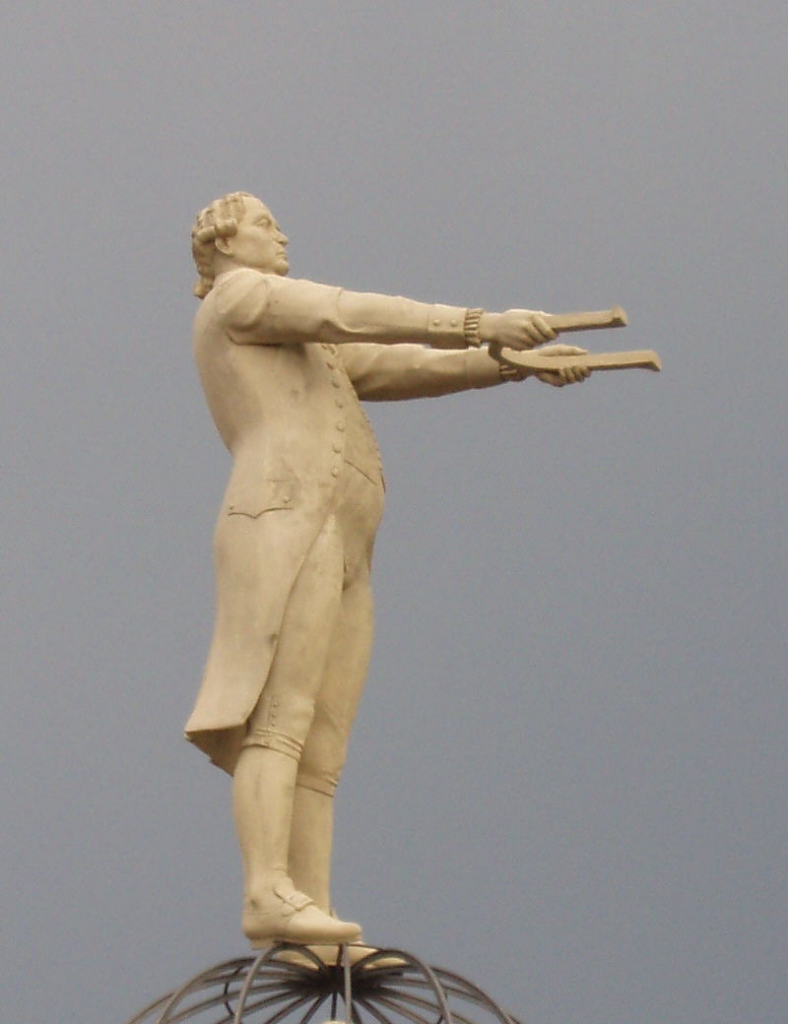
Glassharfe | glassharp in Film “Mesmer”Print of Franz Anton Mesmer (Musée de la Révolution française)Gedenktafel an der Stelle des Palais Mesmer in der Rasumofskygasse 29 in Wien-LandstraßeDe planetarum influxu in corpus humanumBüste Franz Anton Mesmer hergestellt im Jahr 2013 durch den Bildhauer Friedhelm Zilly in der Uferanlage beim Hafen in Moos (am Bodensee) Ortsteil Iznang. Profil.Mesmer. Plastik von Peter Lenk auf der Hafenmole von MeersburgFranz Anton Mesmer
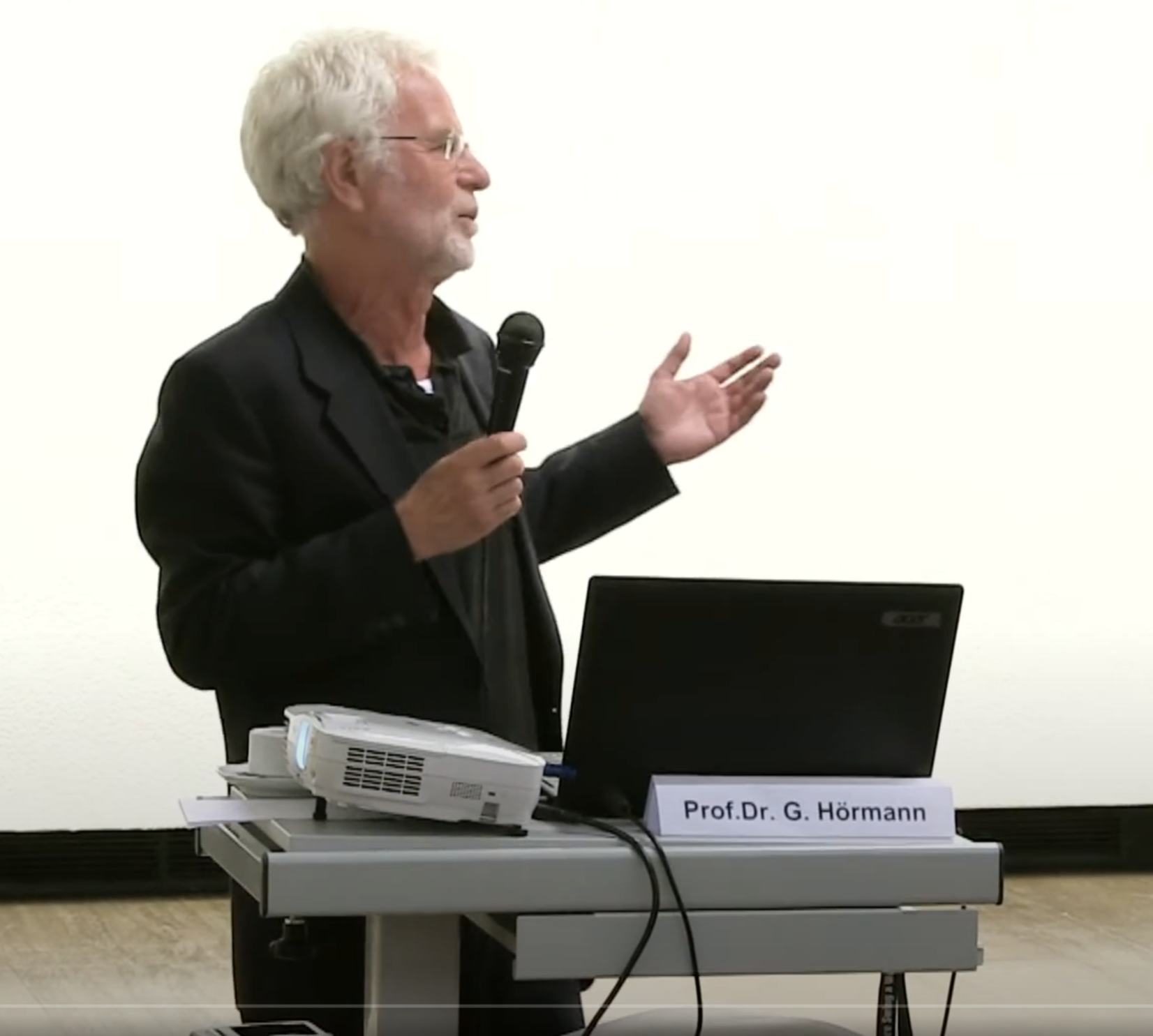
Georg Hörmann (born November 13, 1946 in Ulm) is a German psychologist, physician, psychotherapist, and retired professor of education at the Otto-Friedrich University in Bamberg.
After graduating from the Humboldt-Gymnasium Ulm in 1965, Hörmann studied secondary school teaching (philosophy, Latin, theology, and education), musicology (master’s degree), psychology (diploma), and human medicine. He earned the degrees of choirmaster (C-exam) at the Westphalian School of Music, a master’s degree in musicology (M.A.), and was organist at, among others, St. Peter’s Church in Münster. General examination in philosophy and pedagogy, first philological state examination for grammar schools in the subjects of Latin, theology, pedagogy, diploma in psychology, medical state examination, license to practice medicine, recognition to use the title of psychotherapist (Westphalia-Lippe Medical Association), doctorates at the Faculty of Philosophy, Medicine and the Faculty of Social and Behavioral Sciences (Dr. phil., Dr. med., Dr. rer. soc.) and habilitation in the field of educational science.
Member of the Forum for Borderline Sciences and Crop Circles:
We meet twice a year for our weekend conferences.
The exchange in the areas of crop circles, geomancy, radiesthesia, photography, light phenomena, natural beings, ancient and modern history, archaeology, philosophy of science, UFOs, extraterrestrials, and borderline sciences, with exciting lectures outside the mainstream, is always a tremendous enrichment for all participants, as is the case with our FGK projects at home and abroad.
Forum for Borderline Sciences and Crop Circles fgk@ewe.net
www.nuoviso.tv
His comment on this older video: My talk about HAARP is no longer relevant, as the facility is no longer officially operated and supported by the military. The University of Alaska is now in charge.
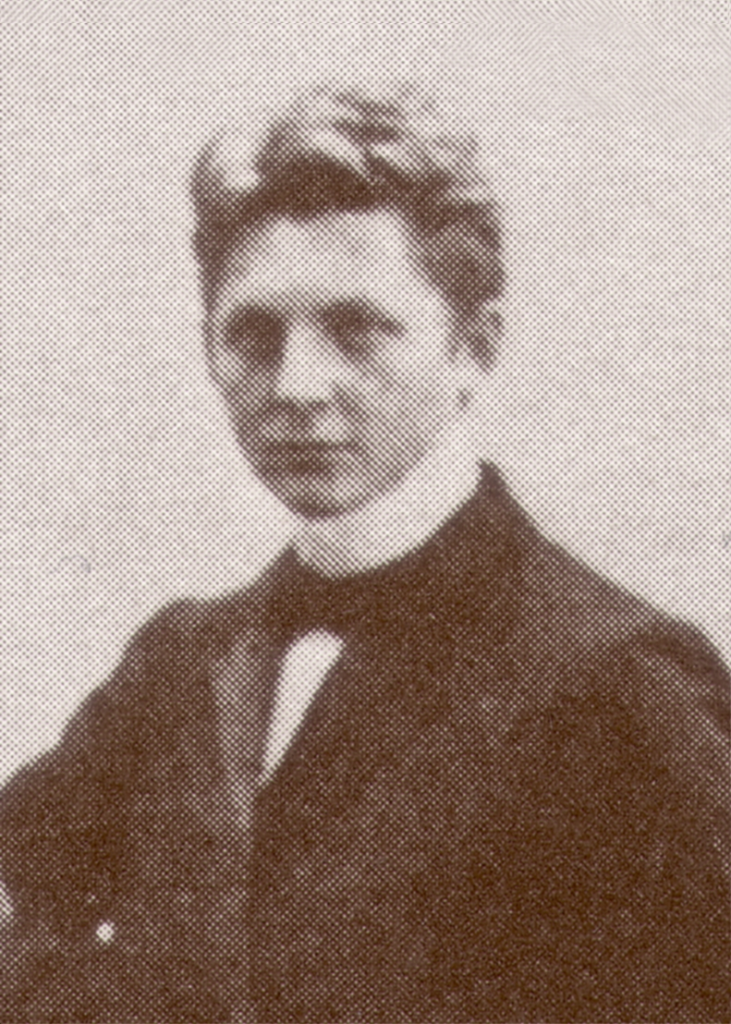
Born in Hemer, Westphalia, he studied art history and philosophy at the universities of Tübingen, Leipzig and Munich, then receiving his doctorate under Theodor Lipps with the dissertation “Gottfried Semper’s basic aesthetic views” in 1908. He then went to the Leipzig Conservatory in 1909 and received lessons in music theory and piano. Afterwards he went to London to pursue his desire of becoming a singer, however his voice was ultimately not good enough for an artistic career. During the First World War, he assisted a military surgeon and in 1913 he finally started studying medicine, receiving his training at the universities of Freiburg and Strasbourg. He completed his second doctorate (in medicine) in 1919 at the University of Heidelberg after an invitation from Karl Wilmanns, with the dissertation “The artistic capabilities of the mentally ill”.
In 1919 he became assistant to Karl Wilmanns at the psychiatric hospital of the University of Heidelberg. His task was to expand an earlier collection of art created by the mentally ill and started by Emil Kraepelin. When he left in 1921 the collection was extended to more than 5,000 works by about 450 “cases”.
The book is mainly concerned with the borderline between psychiatry and art, illness and self-expression. It represents one of the first attempts to analyse the work of the mentally ill.
After short stays at sanatoriums in Zürich, Dresden and Wiesbaden, he began a psychotherapy practice in Frankfurt in 1925, but without much success. He published a follow up project to his first book, titled “Bildnerei der Gefangenen” (Artistry of Prisoners) in 1926, however it was met with little success. He also wrote poems, which were published by a private publisher after his death. He continued to write numerous other books which were mainly on the field of psychotherapy. He approached psychology with an original method where he combined philosophy, anthropology and psychoanalysis. He went on to give lectures over radio, and he was a sought-after speaker home and abroad. He went to an invitation-based lecture tour of US universities in 1929. His original approach was well respected within the German community, however it was largely forgotten due to the dominant force of experimental psychology. His hopes to find a permanent position at a university were never fulfilled. Disillusioned by professional failures, and after three failed marriages, he moved in with an aunt in Munich and retreated from public life, making a living from giving lectures and writing essays. He died in 1933 in Munich after contracting typhus on a trip to Italy.
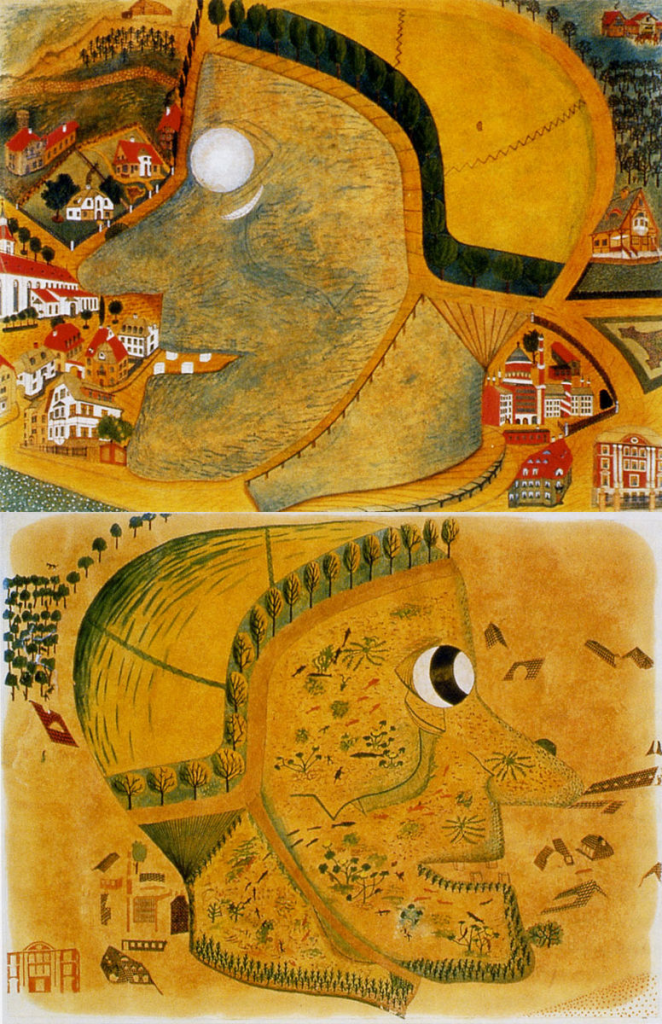
Aus der Sammlung Prinzhorn: August Natterer (Neter): „Hexenkopf“ (Vorder- u. Rückseite), ca. 1915
Shortly after his death the Prinzhorn Collection was stowed away in the attics of the university. In 1938 a few items were displayed in the Nazi propaganda exhibition Entartete Kunst (“Degenerate Art”). Since 2001 the collection has been on display in a former oratory of the University of Heidelberg.
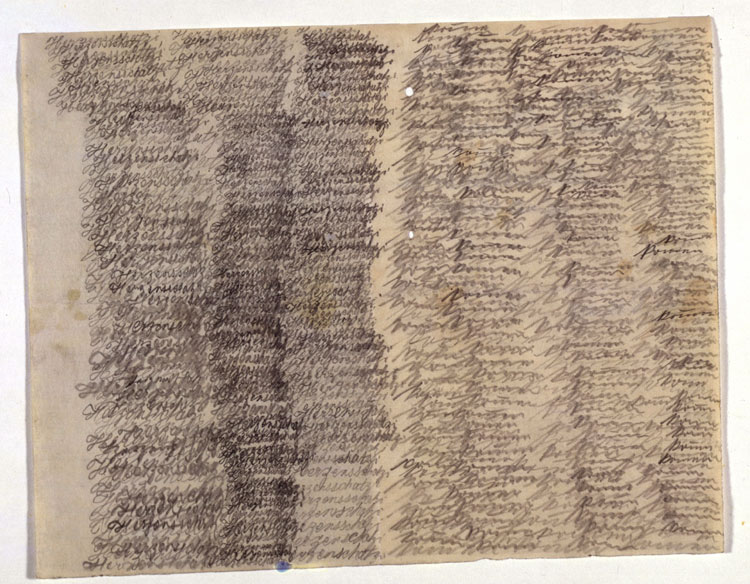
Brief der Psychiatriepatientin Emma Hauck 1909, von Prinzhorn als Beispiel für „Kritzeleien“ angeführt, Sammlung Prinzhorn
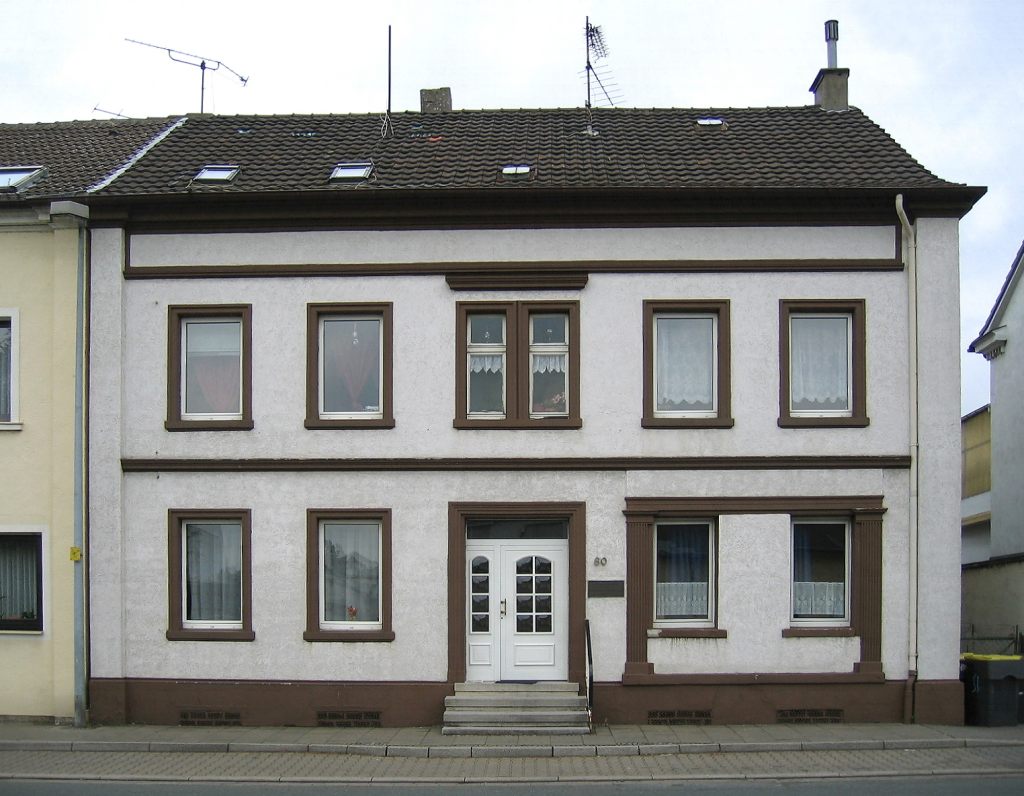
In Hans Prinzhorn’s hometown of Hemer, the municipal secondary school and the local specialized clinic for psychiatry and psychotherapy are named after him. A clinic for differentiated treatment options in compulsory and full-service settings, the clinic is sponsored by the Regional Association of Westphalia-Lippe. The clinic also serves as a training and continuing education institution. The Felsenmeer Museum, run by the Citizens’ and Local History Association, houses a Prinzhorn archive, largely filled with copies. The literary scholar Yukio Kotani, influenced by Ludwig Klages, campaigned to raise awareness of Prinzhorn’s work in Japan.
Al-Kindi was born in Kufa and educated in Baghdad.[7] He became a prominent figure in the House of Wisdom, and a number of Abbasid Caliphs appointed him to oversee the translation of Greek scientific and philosophical texts into the Arabic language. This contact with “the philosophy of the ancients” (as Hellenistic philosophy was often referred to by Muslim scholars) had a profound effect on him, as he synthesized, adapted and promoted Hellenistic and Peripatetic philosophy in the Muslim world.[8] He subsequently wrote hundreds of original treatises of his own on a range of subjects ranging from metaphysics, ethics, logic and psychology, to medicine, pharmacology,[9] mathematics, astronomy, astrology and optics, and further afield to more practical topics like perfumes, swords, jewels, glass, dyes, zoology, tides, mirrors, meteorology and earthquakes.
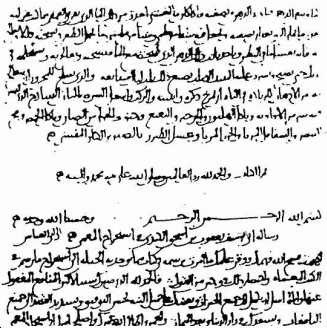
Die erste Seite al-Kindīs Manuskript über die Kryptanalyse
In the field of mathematics, al-Kindi played an important role in introducing Hindu numerals to the Islamic world, and their further development into Arabic numerals along with al-Khwarizmi which eventually was adopted by the rest of the world.[12] Al-Kindi was also one of the fathers of cryptography.[13][14] Building on the work of al-Khalil (717–786),[15] Al-Kindi’s book entitled Manuscript on Deciphering Cryptographic Messages gave rise to the birth of cryptanalysis, was the earliest known use of statistical inference,[16] and introduced several new methods of breaking ciphers, notably frequency analysis.[17][18] He was able to create a scale that would enable doctors to gauge the effectiveness of their medication by combining his knowledge of mathematics and medicine.
The central theme underpinning al-Kindi’s philosophical writings is the compatibility between philosophy and other “orthodox” Islamic sciences, particularly theology, and many of his works deal with subjects that theology had an immediate interest in. These include the nature of God, the soul and prophetic knowledge.[
Al-Kindi is credited with developing a method whereby variations in the frequency of the occurrence of letters could be analyzed and exploited to break ciphers (i.e. cryptanalysis by frequency analysis).[18] His book on this topic is Risāla fī Istikhrāj al-Kutub al-Mu’ammāh (رسالة في استخراج الكتب المعماة; literally: On Extracting Obscured Correspondence, more contemporarily: On Decrypting Encrypted Correspondence). In his treatise on cryptanalysis, he wrote:
One way to solve an encrypted message, if we know its language, is to find a different plaintext of the same language long enough to fill one sheet or so, and then we count the occurrences of each letter. We call the most frequently occurring letter the “first”, the next most occurring letter the “second”, the following most occurring letter the “third”, and so on, until we account for all the different letters in the plaintext sample. Then we look at the cipher text we want to solve and we also classify its symbols. We find the most occurring symbol and change it to the form of the “first” letter of the plaintext sample, the next most common symbol is changed to the form of the “second” letter, and the following most common symbol is changed to the form of the “third” letter, and so on, until we account for all symbols of the cryptogram we want to solve
Abū Bakr al-Rāzī, also known as Rhazes[a] (full name: أبو بکر محمد بن زکریاء الرازي, Abū Bakr Muḥammad ibn Zakariyyāʾ al-Rāzī),[b] c. 864 or 865–925 or 935 CE,[c] was a Persian physician, philosopher and alchemist who lived during the Islamic Golden Age. He is widely regarded as one of the most important figures in the history of medicine,[1] and also wrote on logic, astronomy and grammar.[2] He is also known for his criticism of religion, especially with regard to the concepts of prophethood and revelation. However, the religio-philosophical aspects of his thought, which also included a belief in five “eternal principles”, are fragmentary and only reported by authors who were often hostile to him.[3]
A comprehensive thinker, al-Razi made fundamental and enduring contributions to various fields, which he recorded in over 200 manuscripts, and is particularly remembered for numerous advances in medicine through his observations and discoveries.[4] An early proponent of experimental medicine, he became a successful doctor, and served as chief physician of Baghdad and Ray hospitals.[5][6] As a teacher of medicine, he attracted students of all backgrounds and interests and was said to be compassionate and devoted to the service of his patients, whether rich or poor.[7] Along with Thabit ibn Qurra (836–901), he was one of the first to clinically distinguish between smallpox and measles.[8]
Through translation, his medical works and ideas became known among medieval European practitioners and profoundly influenced medical education in the Latin West.[5] Some volumes of his work Al-Mansuri, namely “On Surgery” and “A General Book on Therapy”, became part of the medical curriculum in Western universities.[5]Edward Granville Browne considers him as “probably the greatest and most original of all the Muslim physicians, and one of the most prolific as an author”.[9] Additionally, he has been described as the father of pediatrics,[10][11] and a pioneer of obstetrics and ophthalmology.[12]
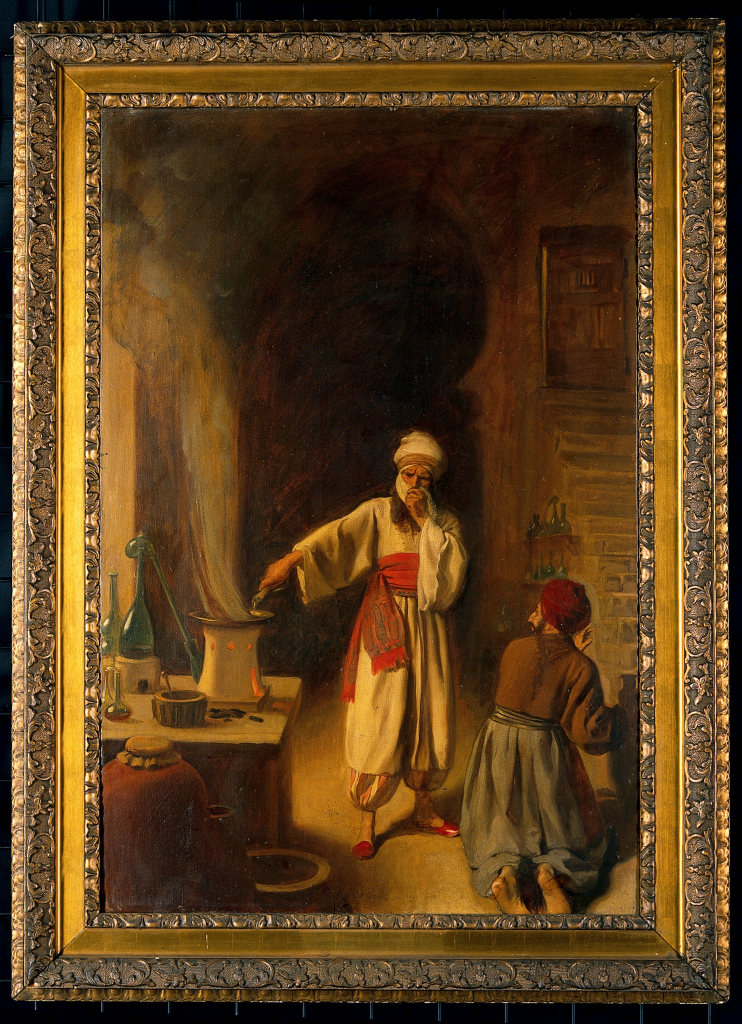
al-Razi in his laboratory (orientalist painting by Ernest Board, c. 1912)
Al-Razi was born in the city of Ray (modern Rey, also the origin of his name “al-Razi”),[13] into a family of Persian stock and was a native speaker of Persian language.[14] Ray was situated on the Great Silk Road that for centuries facilitated trade and cultural exchanges between East and West. It is located on the southern slopes of the Alborz mountain range situated near Tehran, Iran.
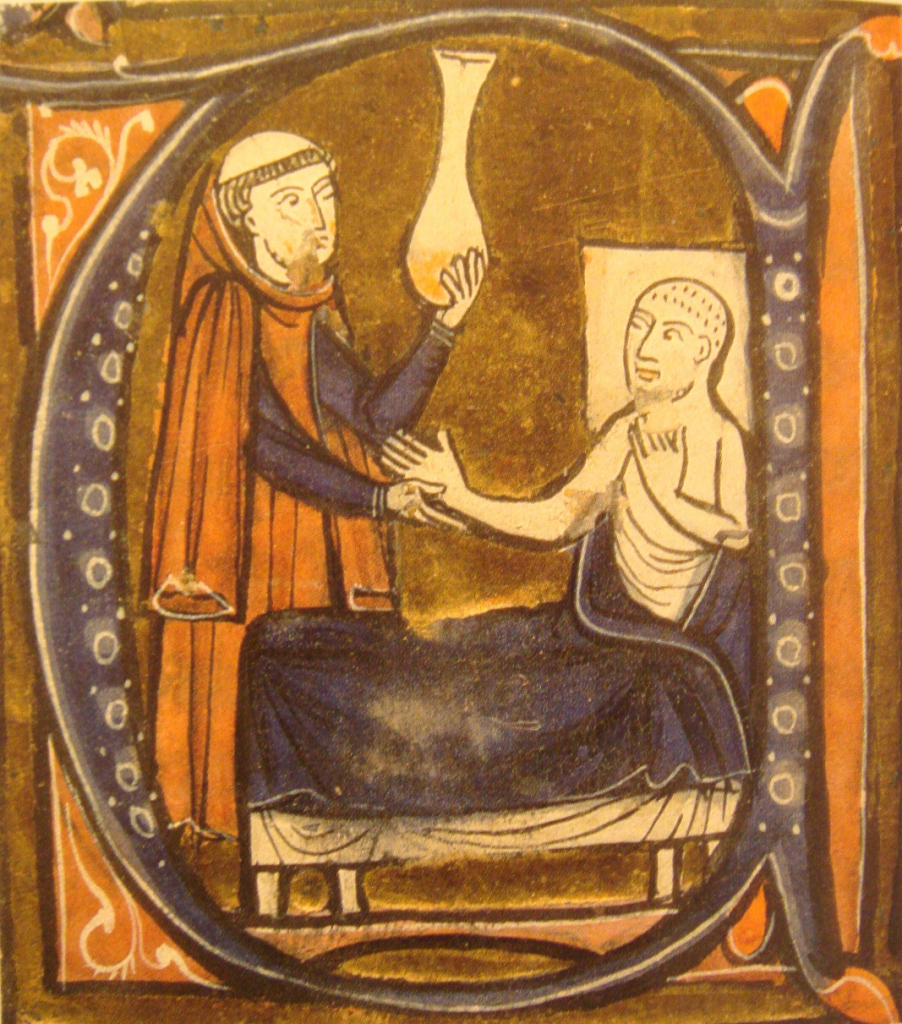
Depiction of al-Razi in a 13th-century manuscript of a work by Gerard of Cremona
In his youth, al-Razi moved to Baghdad where he studied and practiced at the local bimaristan (hospital). Later, he was invited back to Rey by Mansur ibn Ishaq, then the governor of Ray, and became a bimaristan’s head.[5] He dedicated two books on medicine to Mansur ibn Ishaq, The Spiritual Physic and Al-Mansūrī on Medicine.[5][15][16][17] Because of his newly acquired popularity as physician, al-Razi was invited to Baghdad where he assumed the responsibilities of a director in a new hospital named after its founder al-Muʿtaḍid (d. 902 CE).[5] Under the reign of Al-Mutadid’s son, Al-Muktafi (r. 902–908) al-Razi was commissioned to build a new hospital, which should be the largest of the Abbasid Caliphate. To pick the future hospital’s location, al-Razi adopted what is nowadays known as an evidence-based approach suggesting having fresh meat hung in various places throughout the city and to build the hospital where meat took longest to rot.[18]
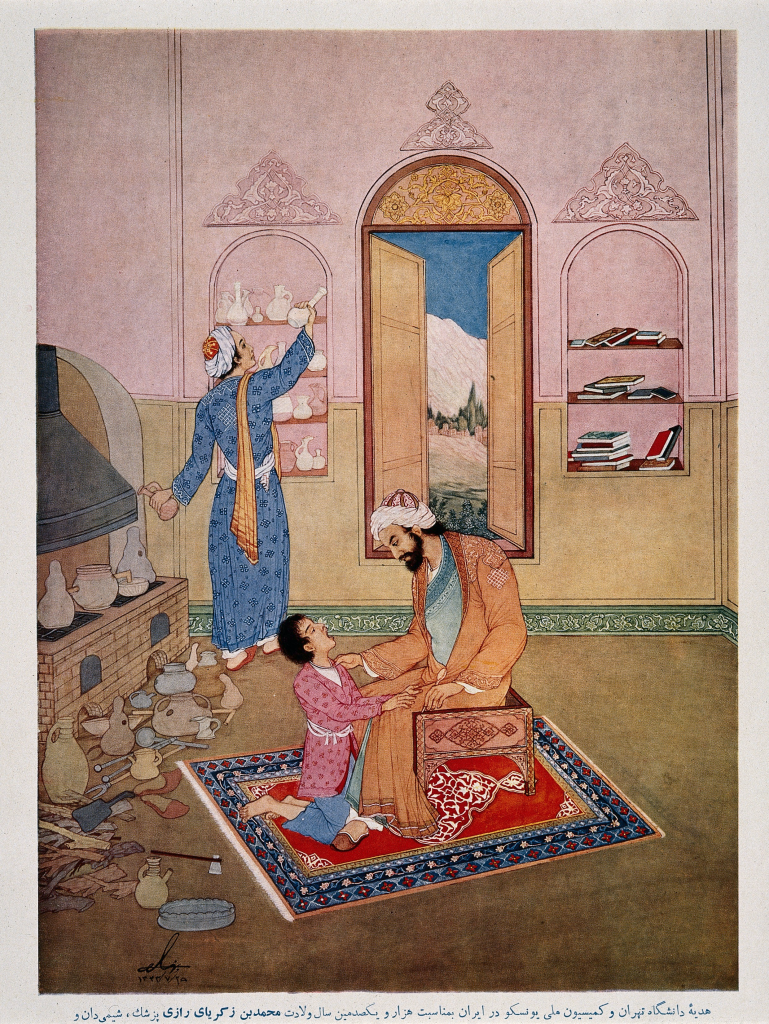
al-Razi examining a patient (miniature painting by Hossein Behzad, 1894–1968)
He spent the last years of his life in his native Rey suffering from glaucoma. His eye affliction started with cataracts and ended in total blindness.[19] The cause of his blindness is uncertain. One account mentioned by Ibn Juljul attributed the cause to a blow to his head by his patron, Mansur ibn Ishaq, for failing to provide proof for his alchemy theories;[20] while Abulfaraj and Casiri claimed that the cause was a diet of beans only.[21][22] Allegedly, he was approached by a physician offering an ointment to cure his blindness. Al-Razi then asked him how many layers does the eye contain and when he was unable to receive an answer, he declined the treatment stating “my eyes will not be treated by one who does not know the basics of its anatomy”.[23]
The lectures of al-Razi attracted many students. As Ibn al-Nadim relates in Fihrist, al-Razi was considered a shaikh, an honorary title given to one entitled to teach and surrounded by several circles of students. When someone raised a question, it was passed on to students of the ‘first circle’; if they did not know the answer, it was passed on to those of the ‘second circle’, and so on. When all students would fail to answer, al-Razi himself would consider the query. Al-Razi was a generous person by nature, with a considerate attitude towards his patients. He was charitable to the poor, treated them without payment in any form, and wrote for them a treatise Man La Yaḥḍuruhu al-Ṭabīb, or Who Has No Physician to Attend Him, with medical advice.[24] One former pupil from Tabaristan came to look after him, but as al-Biruni wrote, al-Razi rewarded him for his intentions and sent him back home, proclaiming that his final days were approaching.[25] According to Biruni, al-Razi died in Rey in 925 sixty years of age.[26] Biruni, who considered al-Razi his mentor, among the first penned a short biography of al-Razi including a bibliography of his numerous works.[26]
Ibn al-Nadim recorded an account by al-Razi of a Chinese student who copied down all of Galen‘s works in Chinese as al-Razi read them to him out loud after the student learned fluent Arabic in 5 months and attended al-Razi’s lectures.[27][28][29][30]
After his death, his fame spread beyond the Middle East to Medieval Europe, and lived on. In an undated catalog of the library at Peterborough Abbey, most likely from the 14th century, al-Razi is listed as a part author of ten books on medicine
Although al-Razi wrote extensively on philosophy, most of his works on this subject are now lost.[47] Most of his religio-philosophical ideas, including his belief in five “eternal principles”, are only known from fragments and testimonies found in other authors, who were often strongly opposed to his thought.
Al-Razi’s metaphysical doctrine derives from the theory of the “five eternals”, according to which the world is produced out of an interaction between God and four other eternal principles (soul, matter, time, and place).[49] He accepted a pre-socratic type of atomism of the bodies, and for that he differed from both the falasifa and the mutakallimun.[49] While he was influenced by Plato and the medical writers, mainly Galen, he rejected taqlid and thus expressed criticism about some of their views. This is evident from the title of one of his works, Doubts About Galen.