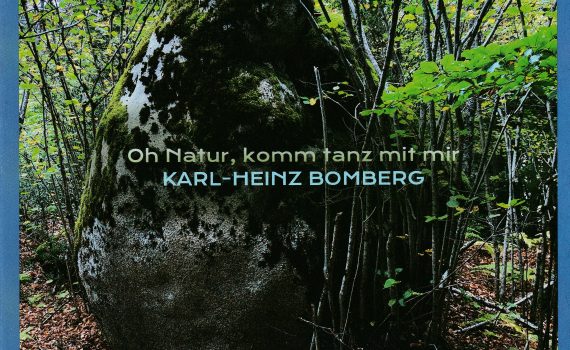
CD O nature, come and dance with me
Category : CD-+DVD+BD+VHSDocs
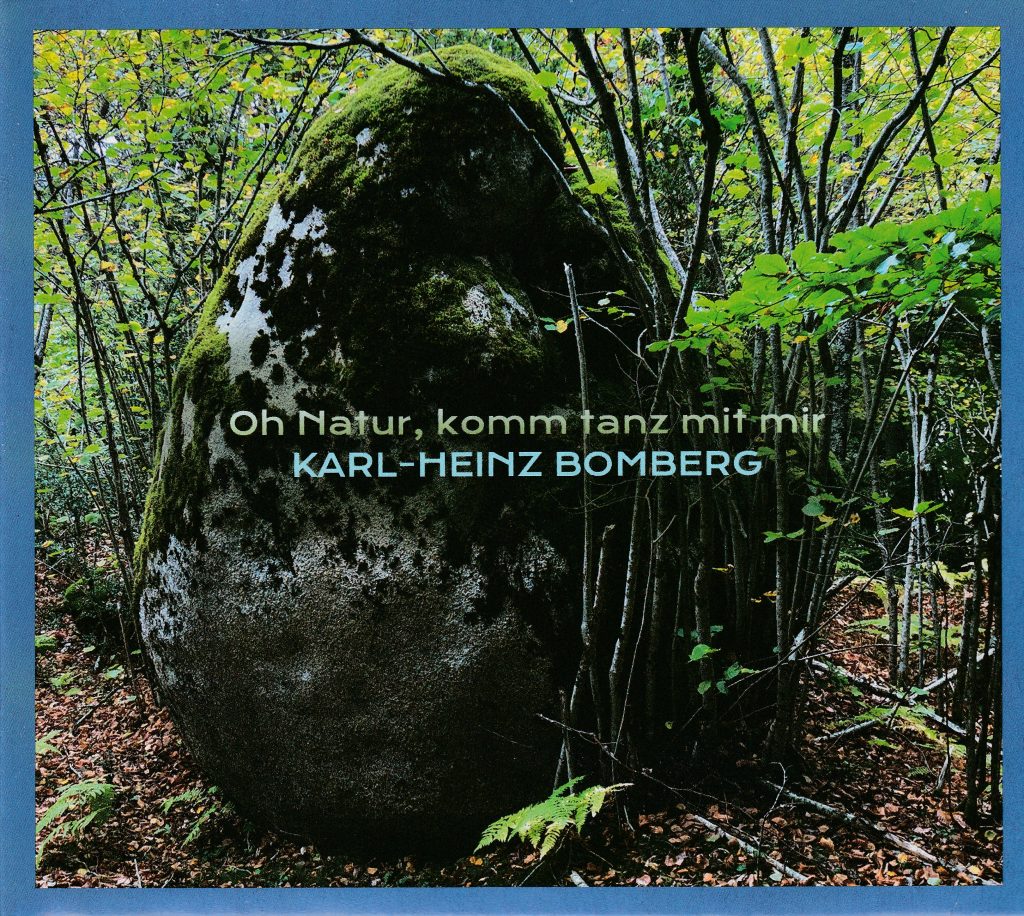
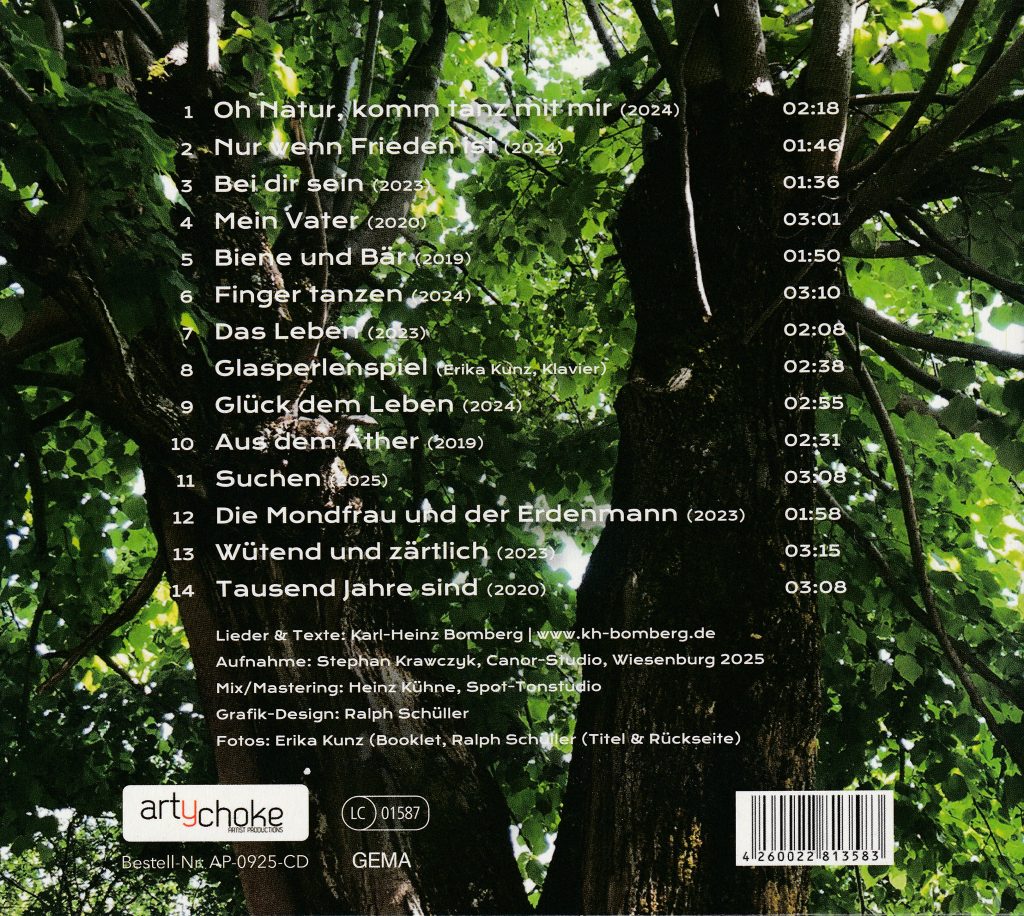
CD00212 Karl-Heinz Bomberg | Oh Natur, komm tanz mit mir | O nature, come and dance with me
Category : CD-+DVD+BD+VHSDocs
CD00212 Karl-Heinz Bomberg | Oh Natur, komm tanz mit mir | O nature, come and dance with me
Category : ComposerDocs , GuitarDocs , SingerDocs
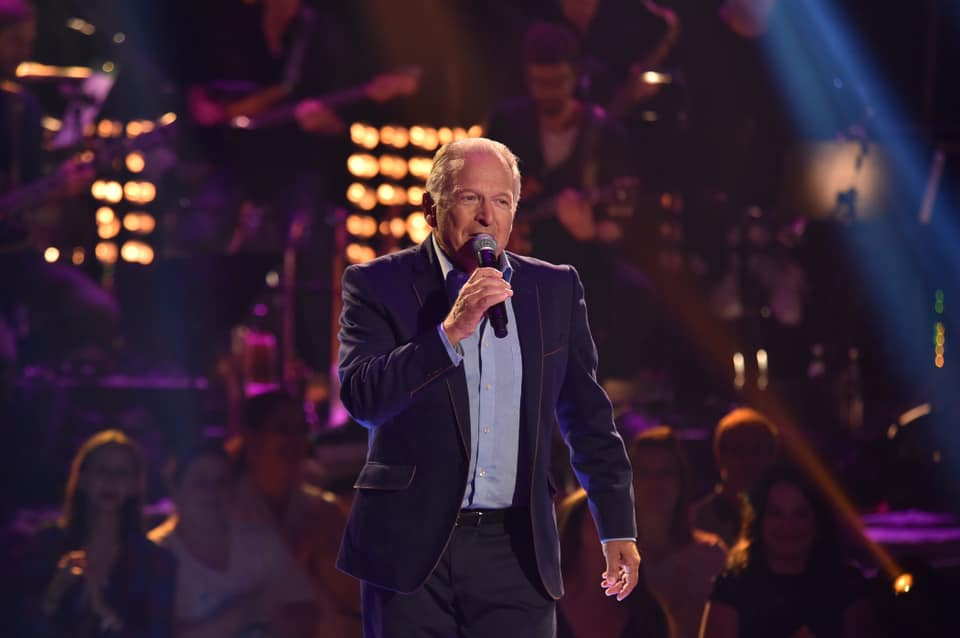
Rainer Bach (* December 14, 1947 in Bielefeld) is a German country singer and pedal steel guitarist. He was a founding member of the group Truck Stop, released solo albums, and worked as a dentist.
Rainer Bach began playing the piano at the age of seven. In April 1963, he discovered the Beatles and started learning to play the guitar, initially on an acoustic guitar. During his school years, he founded a beat band called The Misfits, which performed in front of audiences of up to 1000 people. After graduating from high school, the band broke up. Following his schooling, Bach joined the German Navy and served, among other places, on the Gorch Fock, whose choir he conducted in 1968. In 1971, he began studying dentistry in Hamburg.
In the autumn of 1972, he founded the band Truck Stop together with Günter “Cisco” Berndt, Burkhard “Lucius” Reichling, Erich Doll, Wolfgang “Teddy” Ibing, and Eckart Hofmann. He remained with the band for about ten years, singing and playing pedal steel guitar. He composed numerous hits, including their first chart success, “Ich möcht’ so gern Dave Dudley hör’n” (I’d really like to hear Dave Dudley), and the hit “Der wilde wilde Westen” (The Wild, Wild West) together with Erich Doll. In December 1983, he left the group because he was working as a dentist and needed more time for his patients. In addition to his work with Truck Stop, he also contributed as a steel guitarist to albums by Volker Lechtenbrink, Reinhard Mey, and Peter, Sue & Marc.
He opened his dental practice in Seevetal in 1982 and ran it until 2013. During this time, he composed music for other artists, among other things. He also wrote meditation music for a friend at the German Red Cross (DRK) health resort in Carolinensiel and composed the charity CD “I’d Really Like to Go to the Children’s Home” for their children’s center, the title track of which was based on the melody of “I’d Really Like to Hear Dave Dudley.”[2]
In 1992, he released his first solo album, “Auf meine Art” (My Way), through Dino Music; in 2014, his album “Ich bin nicht mehr der Alte” (I’m Not the Same Man Anymore) was released by DTM Musik. In addition to his solo albums, he is a member of the all-star country band Third Coast, which also included Nils Tuxen, Werner Becker, and Uwe Lost, among others.[3]
At the end of 2019, he participated in the second season of The Voice Senior and was eliminated in the sing-offs. His coach was Michael Patrick Kelly.
https://de.wikipedia.org/wiki/Rainer_Bach_(Musiker)
https://www.facebook.com/drrainerbach/?locale=de_DE

Category : FlyingDocs
Klaus Ohlmann (born June 29, 1952 in Neustadt an der Aisch) is a German dentist and glider pilot who has set several distance records in the Alps and the Andes. In 2003, he flew the second longest distance in cross-country soaring over a freely chosen course, covering 3008.8 km in 15 hours and 17 minutes in Argentina. [1] In 1996/1997, he won the Barron Hilton Cup in the Open Class.
He lives in La Bâtie-Montsaléon in the Hautes-Alpes department, where he operates a gliding center.
Klaus Ohlmann is a four-time world champion in gliding and, with over 60 world records, the most successful glider pilot of all time. The longest glider flight ever recorded, as well as the highest average speed ever achieved of 307 km/h on a 500 km course, have been listed in the Guinness Book of World Records for over a decade. Among these records is also the record for a free distance flight with up to three turning points: On January 21, 2003, he flew 3,009 km from Chapelco Airport in San Martín de los Andes, Argentina, in a Schempp-Hirth Nimbus 4 DM. Just two weeks earlier, on January 9, 2003, he had already broken Hans-Werner Grosse’s 30-year-old distance record with a flight of 2,247.6 km in a Schempp-Hirth Nimbus 4 DM in El Calafate, Argentina.
On February 1, 2014, he became the first glider pilot ever to fly over Mount Everest.

https://de.wikipedia.org/wiki/Klaus_Ohlmann

Category : ComposerDocs , EventDocs , SingerDocs

Tobee (* June 24, 1985 in Geislingen an der Steige; real name Tobias Riether[3]) is a German party pop singer, concert promoter, and dentist.
In his youth, Tobias Riether learned to play several instruments and took singing lessons. At 15, he founded a rock cover band, and at 18, he won a talent competition in party music and became the lead singer of a show band from Baden-Württemberg.
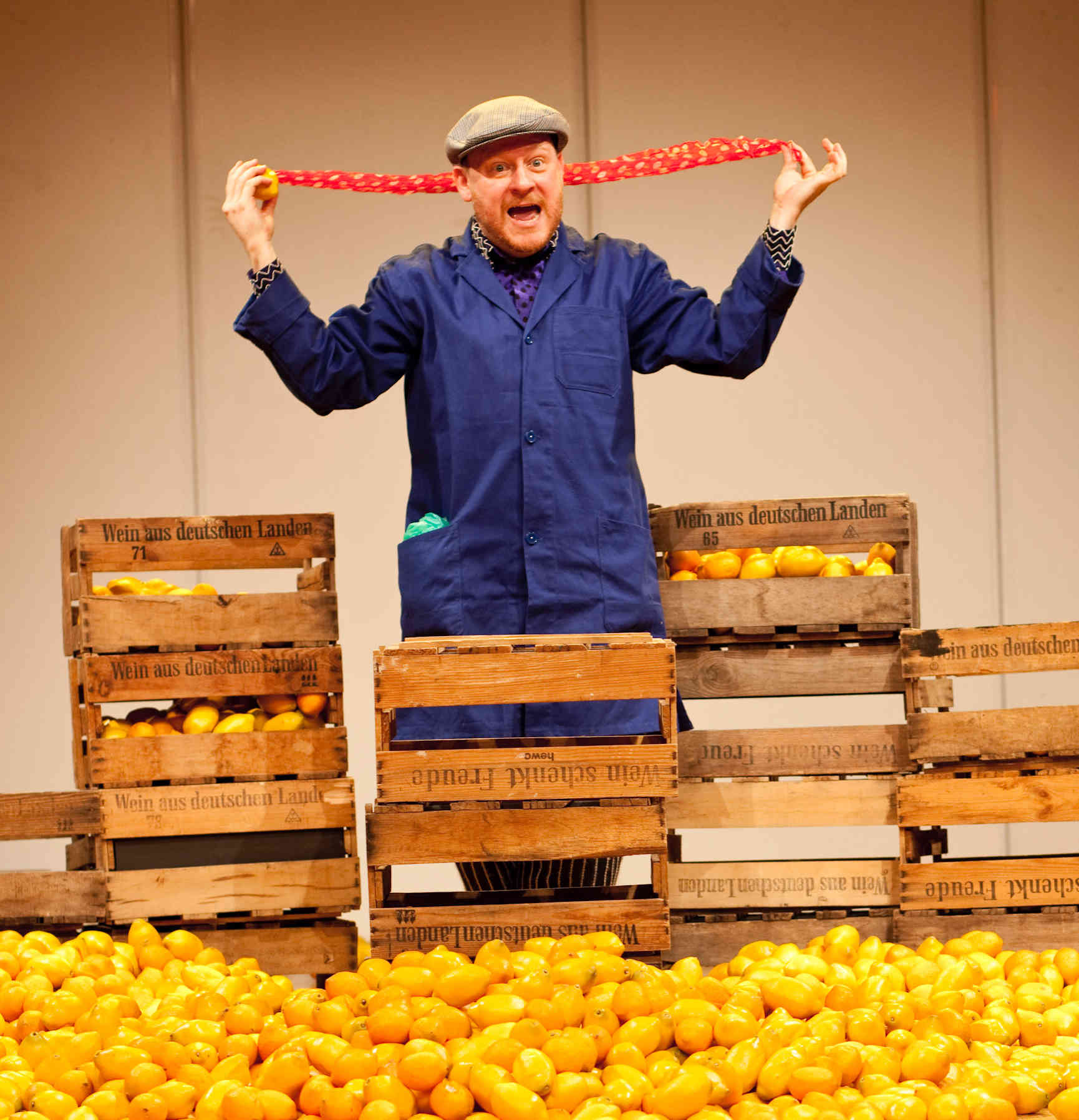
He achieved his first success in 2006 with his self-written song “Die Ina.” He found producers at Xtreme Sound in Cologne, who included the song on numerous party compilation albums. The following year, he had a hit with “Banane, Zitrone,” which landed on the Ballermann Hits compilation and led to him becoming a regular performer at the Bierkönig in Mallorca. Further hits followed, including remakes of “Lotusblume,” originally by The Flippers, “Westerland” by Die Ärzte, and “Eine weiße Rose” by the Kastelruther Spatzen.
In 2008, major label EMI signed Tobee and produced the song ’72, ’80, ’96, 2008 for the European Football Championship, which, at least in its title, was reminiscent of the hit ’54, ’74, ’90, 2006 by Sportfreunde Stiller for the Football World Cup two years earlier. This gave Riether his first chart hit, reaching number 70 in the German singles charts. Tobee has since become an established entertainer at both summer and winter parties.
In the summer of 2009, the singer had his second chart success together with Chris Andrews. Andrews’ 1969 hit “Pretty Belinda” was given a German chorus and an added element of a sinking inflatable boat, transforming it into a summer party hit.
In the summer of 2014, his single “Blau wie das Meer” (Blue like the Sea) was released, and since its release, he has had to deal with accusations of plagiarism. The single bears strong similarities to the song of the same name by the group Mr. Hurley & die Pulveraffen.
His song “Helikopter 117 (Mach’ den Hub Hub Hub),” released in December 2017, which entered the German single charts on March 8, 2019, received a gold record in October 2020 for 200,000 units sold and a platinum record in July 2023. It is a cover of the song “Medicopter Mainz17” (based on the television series Medicopter 117 – Every Life Counts), which became popular at the 2017 Medimeisterschaften (a medical student festival) and held the number one spot on the German Spotify Viral Charts for an extended period that year.[5][6][7]
In addition to his career as a singer, Tobee runs his own label, “Brainstall,” and is active as a producer for other artists, such as DJ Düse, Vroni, Daaan, and Danito Lopez.
https://www.youtube.com/@TobeeOfficial
Category : SingerDocs
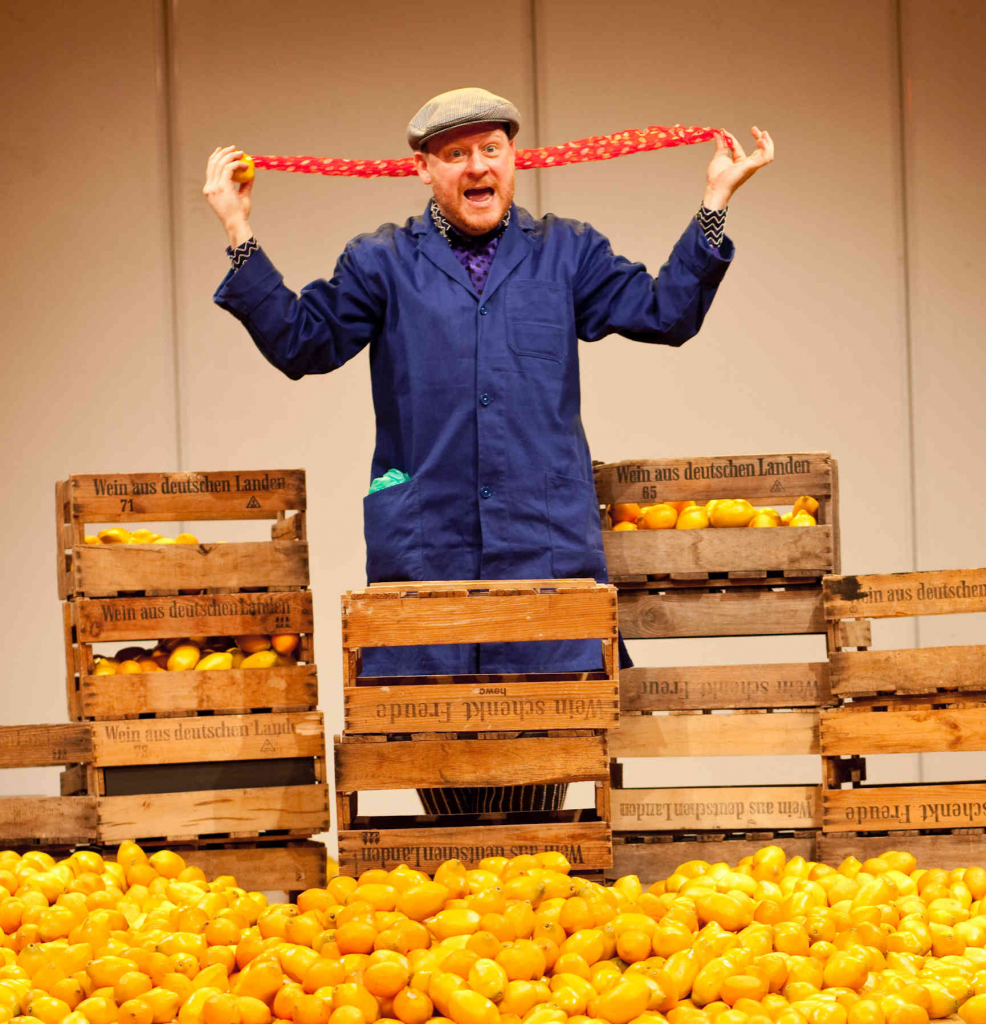
was born in Kempten/Allgäu.
While still studying pharmacy, he was accepted into the vocal class of Professor Monika Bürgener at the Würzburg University of Music and Performing Arts, where he completed the advanced training class with distinction in March 2002. Since then, he has worked freelance.
Sven Fürst now has an extensive concert schedule both in Germany and throughout Europe, working with orchestras such as the Nuremberg Symphony Orchestra, the Prague Philharmonic, and the Baden-Baden Symphony Orchestra. He has attended master classes with Prof. Ingeborg Hallstein, Prof. Richard Sigmund, and Prof. Helmut Deutsch, among others, and has participated in various CD productions and radio recordings. Sven Fürst is the first prize winner of the 1999 Armin Knab Competition, a finalist of the 2000 Joseph Suder Competition, a prize winner of the 2005 “Debut in Merano” competition, and a scholarship holder of the Richard Wagner Society in 2000. In 1999, he also took up a teaching position in singing at the University of Würzburg. In the 2001/02 season, he was a guest at the Mainfrankentheater Würzburg and is a member of the Cologne Young Chamber Opera, where he sang Papageno in The Magic Flute alongside the father in “Hansel and Gretel” and Dr. Falke in “Die Fledermaus.”
In the 2005/06 season, he appeared in Cologne as Guglielmo in a production of “Cosi fan tutte.”
In addition to the Merano Opera Summer of 2005, where he sang one of the leading roles in a revival of Flotow’s opera “The Miller of Merano,” he finally performed Dr. Bartolo in W.A. Mozart’s “The Marriage of Figaro” in a highly acclaimed production at the Pasinger Fabrik in Munich in the summer of 2006. A recording by Bayerischer Rundfunk took place in January 2007.
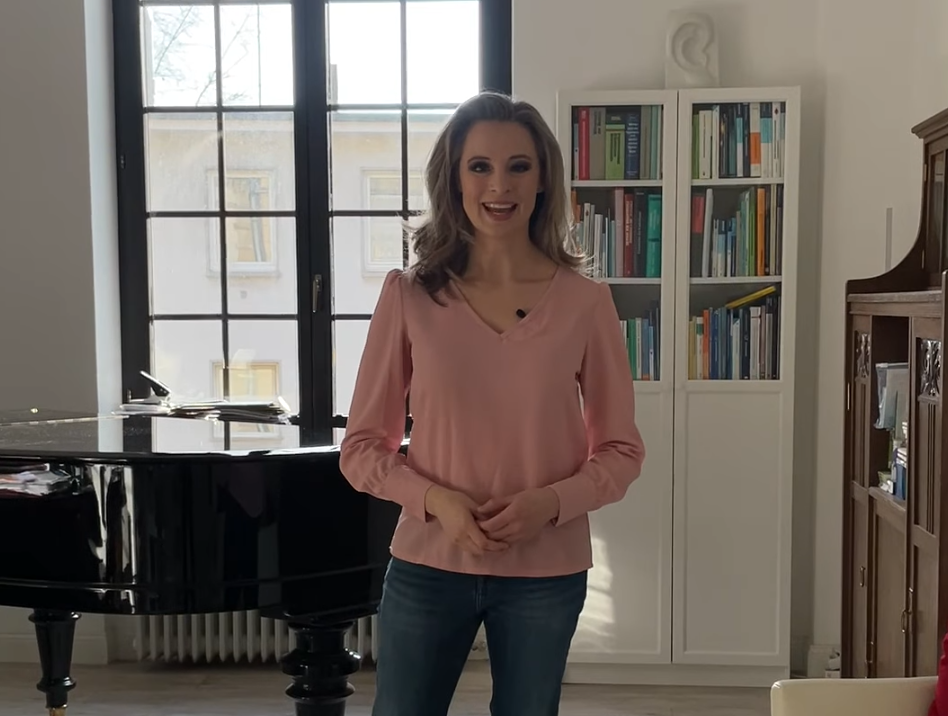
Category : ActorDocs , ComedyDocs , PianoDocs , SpeakerDocs , TV-doc
2010-2014
Host of the show “vigo TV”
since 2009
As an expert on ZDF, RTL, N24, Sat1, and HR for “Service:Gesundheit” and “Einfach gesund!”
2008
“Gesundheit!”, BR, working as an expert in nutritional medicine
2006-2007
“Die Sprechstunde” (The Consultation Hour), BR, Engagement: Nutrition Expert
2006-2007
“Weck Up” (SAT.1), Engagement as a Consulting Physician
Kokew impresses with her naturalness and freshness, as well as her excellent screen presence… (Logo Institute)
Member of the cabaret group “Comedizyniker” (KOMM-Kabarett) at the University Hospital Frankfurt; acting lessons
Anyma-channel https://www.youtube.com/channel/UC-OkCdkUZ3wPXQawjYuXs2g
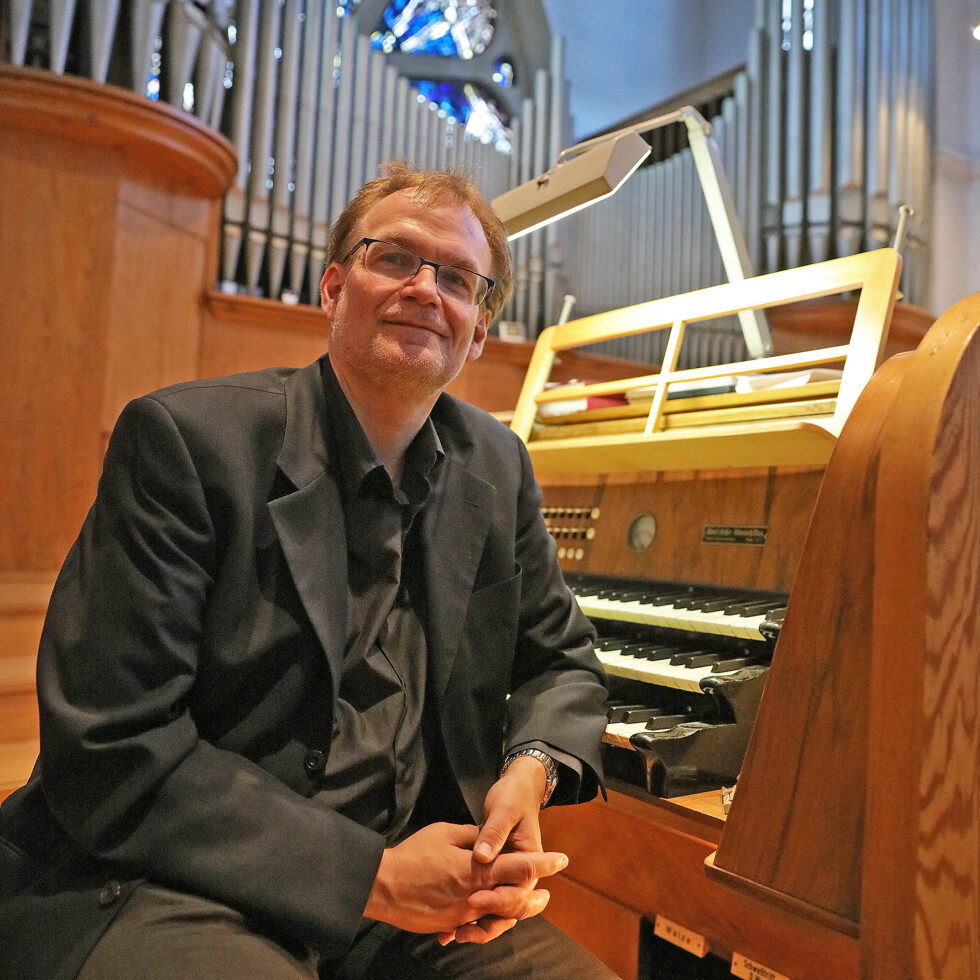
Category : CharityDocs , OrganDocs , PianoDocs
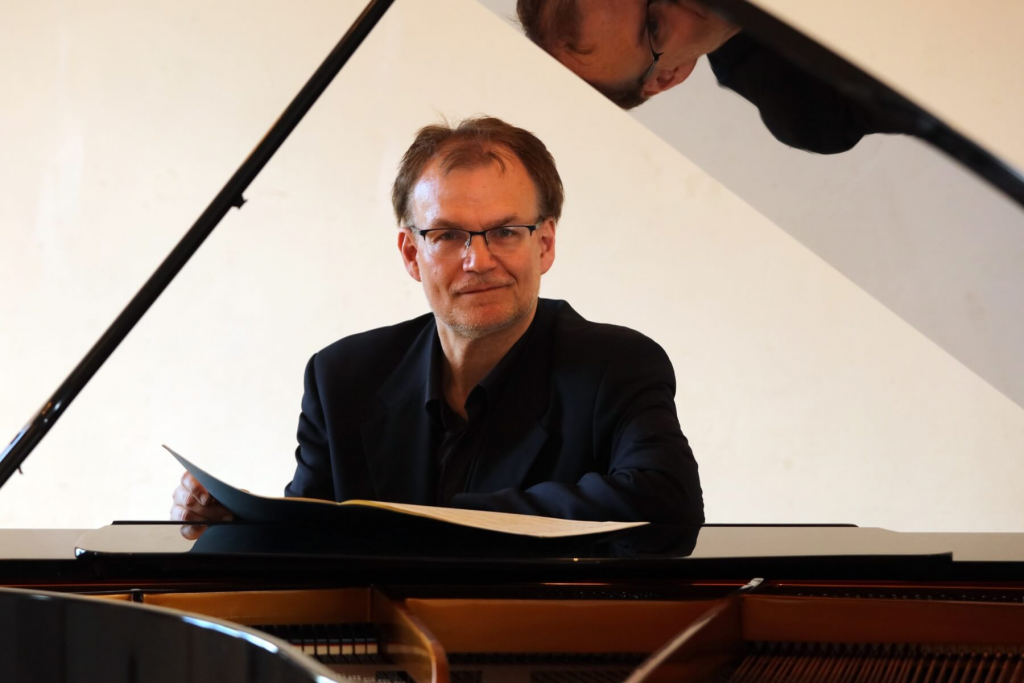
In addition to his work as a senior physician, Hans-Roman Kitterer leads an active musical life in and around Aalen as a pianist in the theater with solo and chamber music programs and on the organ solo or in ensembles such as here:
https://www.theateraalen.de/projekt/293-beethoven-252-vorsicht-ansteckend
Category : ComposerDocs , conductorDocs , PianoDocs
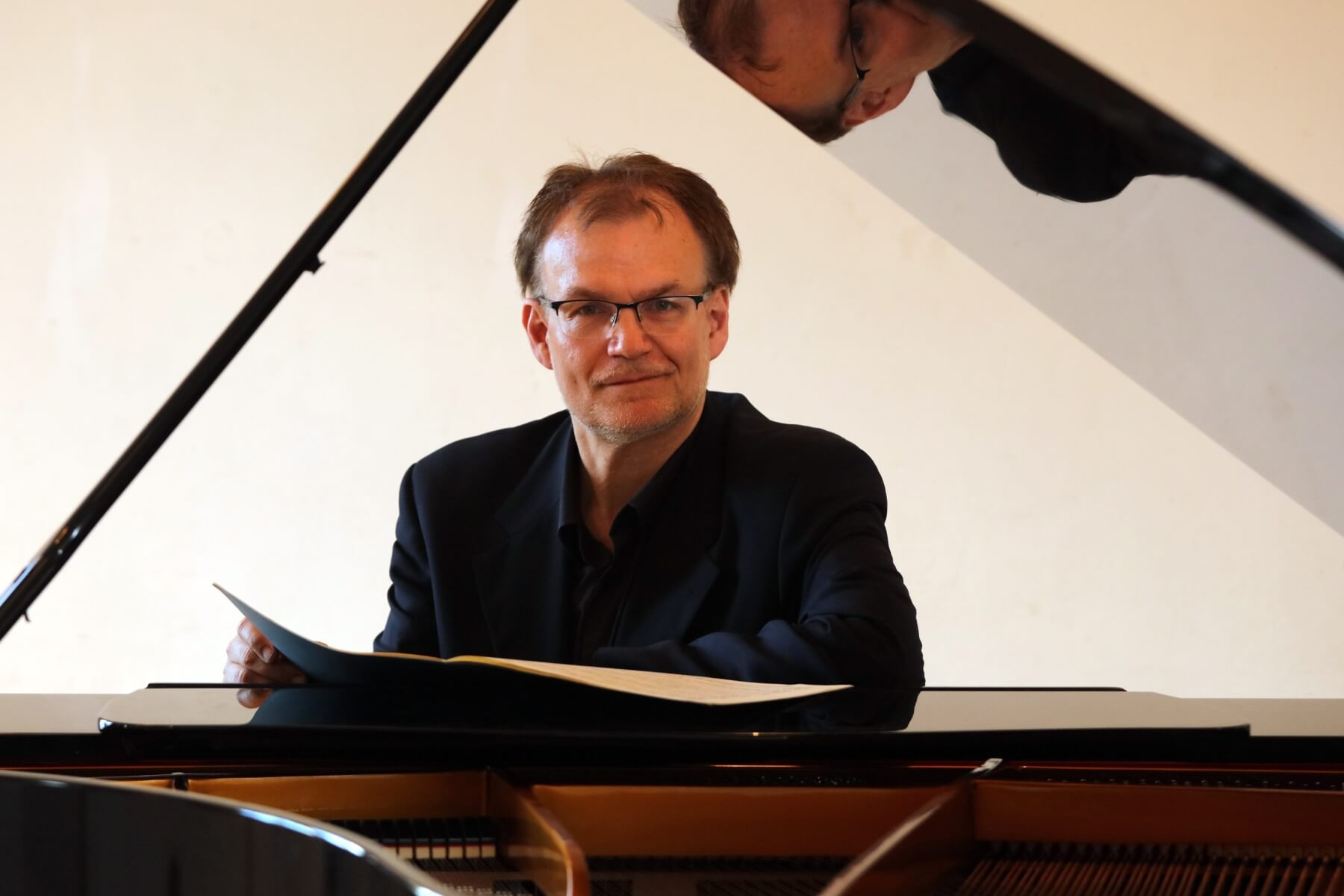
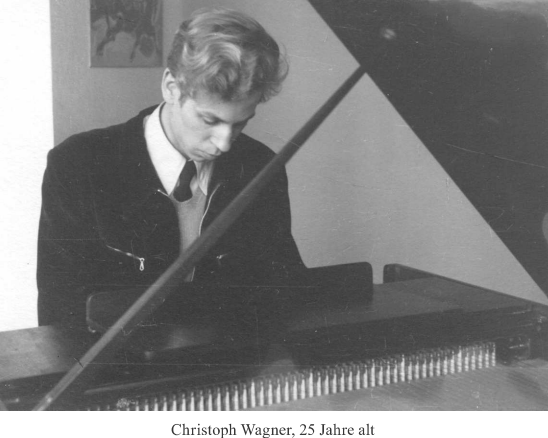
Few people know the musician Christoph Wagner. Anyone who listened to him improvise on the piano understood that it was this immediate proximity to music that motivated and drove him to create a science for musicians.
Born on May 20, 1931, in Marburg, Christoph Wagner grew up in Weilburg/Lahn in a culturally diverse and stimulating home. Despite only sporadic piano lessons due to the war, the boy soprano developed into a sensitive pianist who mastered the great works of piano and violin literature. Even as a young man, he was a sensitive chamber music partner and accompanist. From early childhood, improvisation was also second nature to him. Throughout his life, it remained a source of spiritual balance – later in a musical language that was partly reminiscent of Bach, but often also of Brahms or Schumann.
| 1958 – 1963 | Music studies in Detmold – majoring in conducting with Martin Stephani, piano with Renate Kretschmar-Fischer, composition with Günter Bialas |
Christoph Wagner’s longing for music was so constant that in 1958, after studying medicine (“out of reason”) and subsequently obtaining his doctorate, he began studying music with a major in conducting. In Detmold, he enjoyed a musically fulfilling time—but on the other hand, doubts crept in:
“The idea for a systematic investigation into the physiological foundations of music performance arose during my music studies, which followed my medical studies. Given the conceptual background of natural science, with its efforts to objectively validate insights and decisions as much as possible, it seemed strange that musical education relied solely on subjective experience, despite obvious contradictions in methods and results. Successes were admired, failures were usually explained away as a lack of talent, but their causes were not investigated. The increasing incidence of tendonitis and similar complaints remained consistently silent. It was obvious that many of my fellow students were unsure of themselves and suffered from self-doubt. As my studies progressed, it became increasingly clear to me that this dilemma could be significantly improved if the work of musicians and its physiological prerequisites were scientifically investigated. In 1963, at the end of his music studies in Detmold, he predicted to his then piano teacher Renate Kretschmar-Fischer while out for a walk: “There will be an institute dedicated to this task full-time.” – Eleven years later, the time had come.
Category : GuitarDocs , instrumentBuilderDocs , PianoDocs , StringDocs
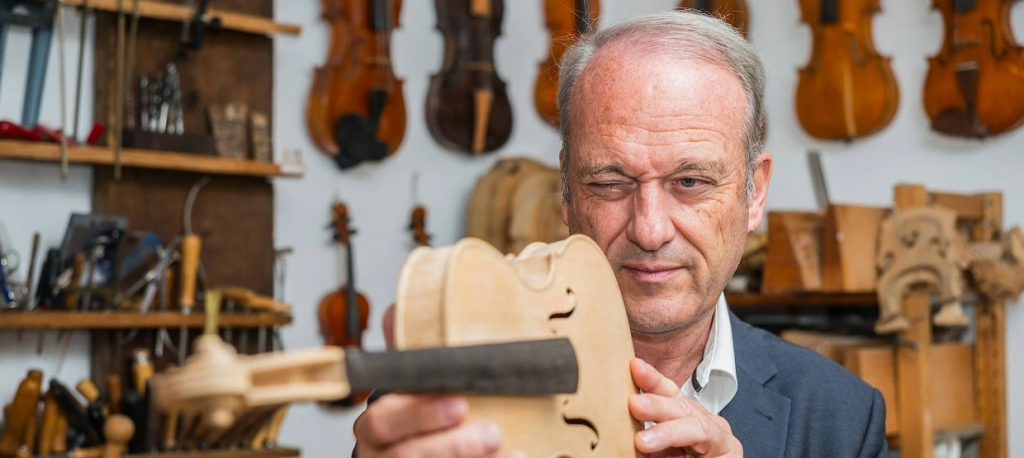
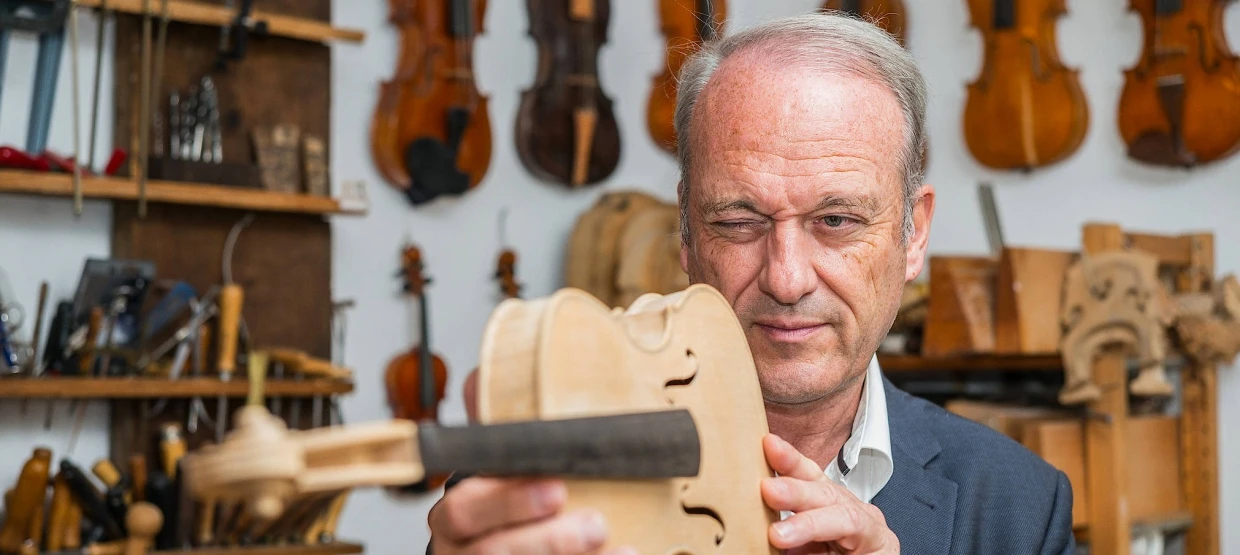
Jochen Blum (born January 22, 1959 in Ludwigshafen) is a German specialist in surgery and trauma surgery, professor of music physiology, and author of specialist books.
He is a co-founder and long-standing board member of the German Society for Music Physiology and Musicians’ Medicine (DGFMM).
Excerpt from an interview:
Back then, a violin maker and now chief physician for trauma surgery, orthopedics, and hand surgery, what motivated you to become a doctor—the decision to ultimately pursue a career in medicine?
It’s been around for a while; it was already an idea when I was at school. They’re two parallel worlds. I also studied instrument making during my school years.
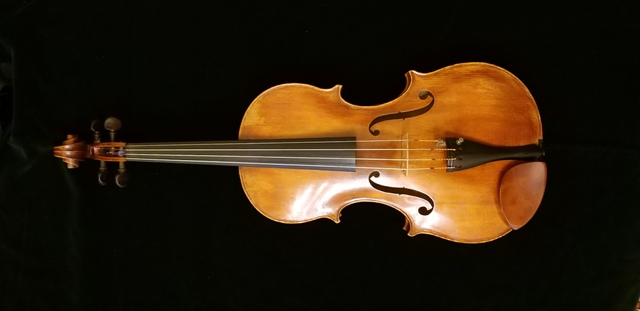
I trained with Stelio Rossi in Siena; this is what his instruments sound like:
Towards the end of this time, I also considered possibly going into music therapy, because I was an avid musician. However, I was already aware that working at a professional level, as a professional musician, was something I had a different view of. I didn’t necessarily want to eke out a life in the back row of a small orchestra, and I didn’t really have the skills to pursue a major solo career.
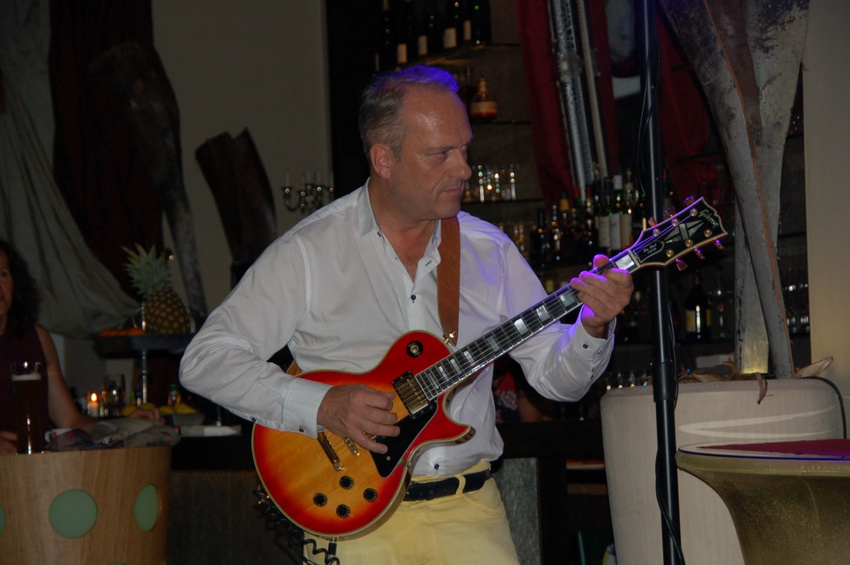
In addition to classical music, I did indeed play rock and jazz in bands, but that was simply for the joy of playing rather than the idea of making it a career. But I knew that after finishing school and graduating from high school, I didn’t want to immediately continue on to university the next day, so to speak, but rather wanted to deepen my knowledge of this practical area, and I had the opportunity to learn the craft of violin making from a luthier in Italy.
Although it was already clear to me back then that I wanted to go on to university again, and that’s exactly what happened. During my time as a violin maker, I had a few customers – in this case, they weren’t patients, but customers who wanted things changed – and I asked myself whether it wasn’t more of a medical problem that was bothering them. But of course it was all a bit vague, so I’d say the roots of both were there early on, but ultimately it developed in such a way that after completing my violin making training, I definitely wanted to study medicine, and I was then able to combine the two areas a bit later on.
https://www.medpertise.de/musikerkrankheiten-krankheitsbilder-prof-blum