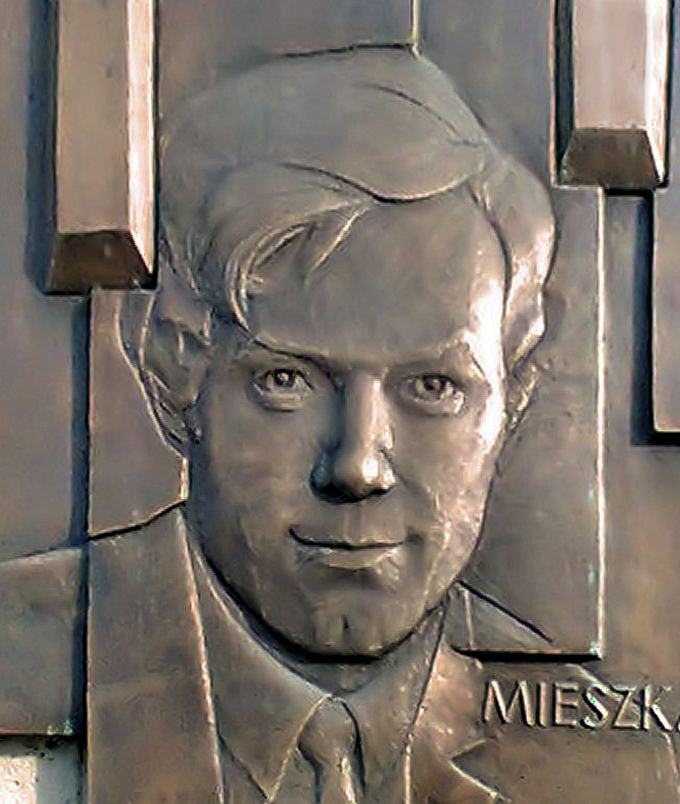
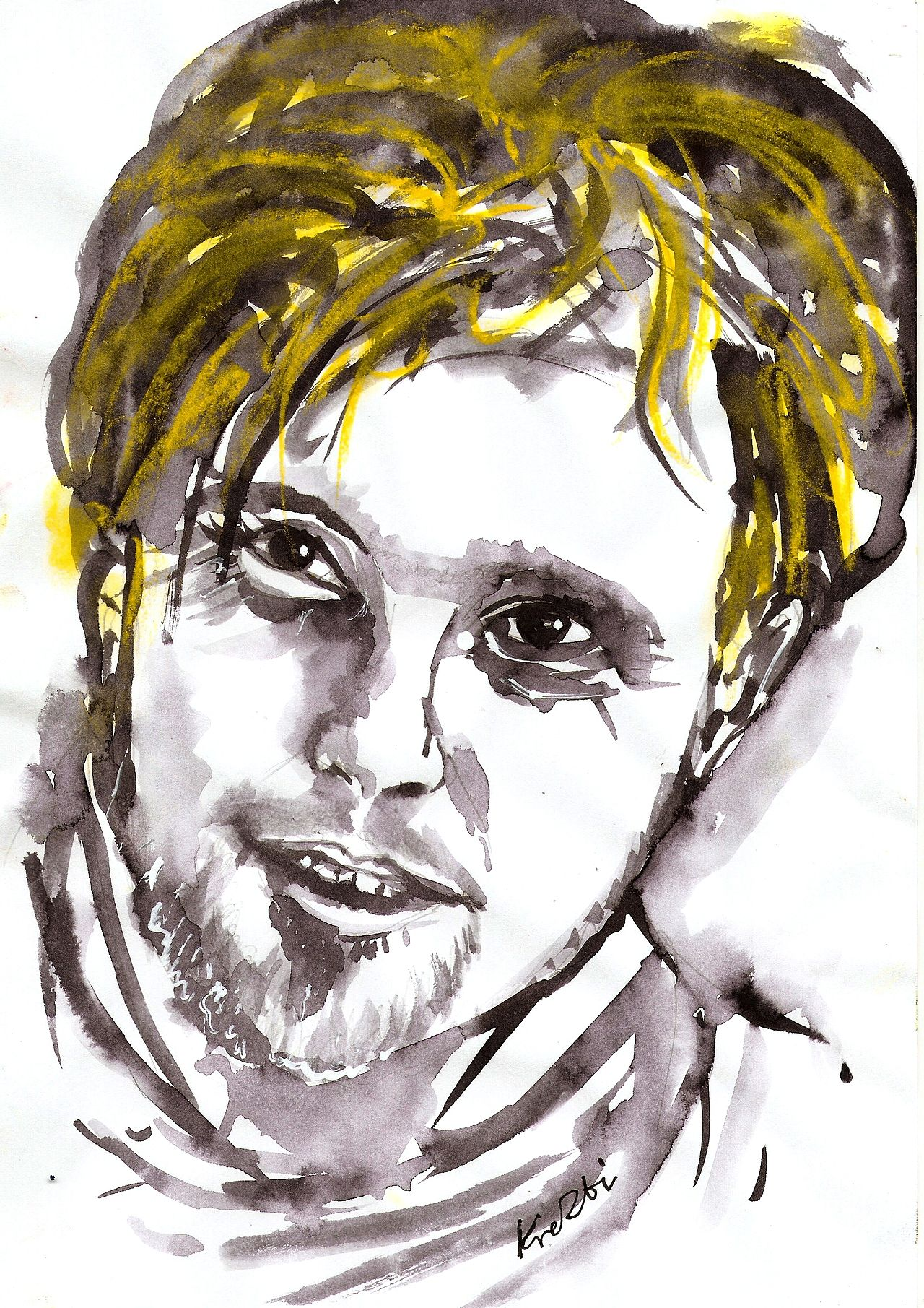
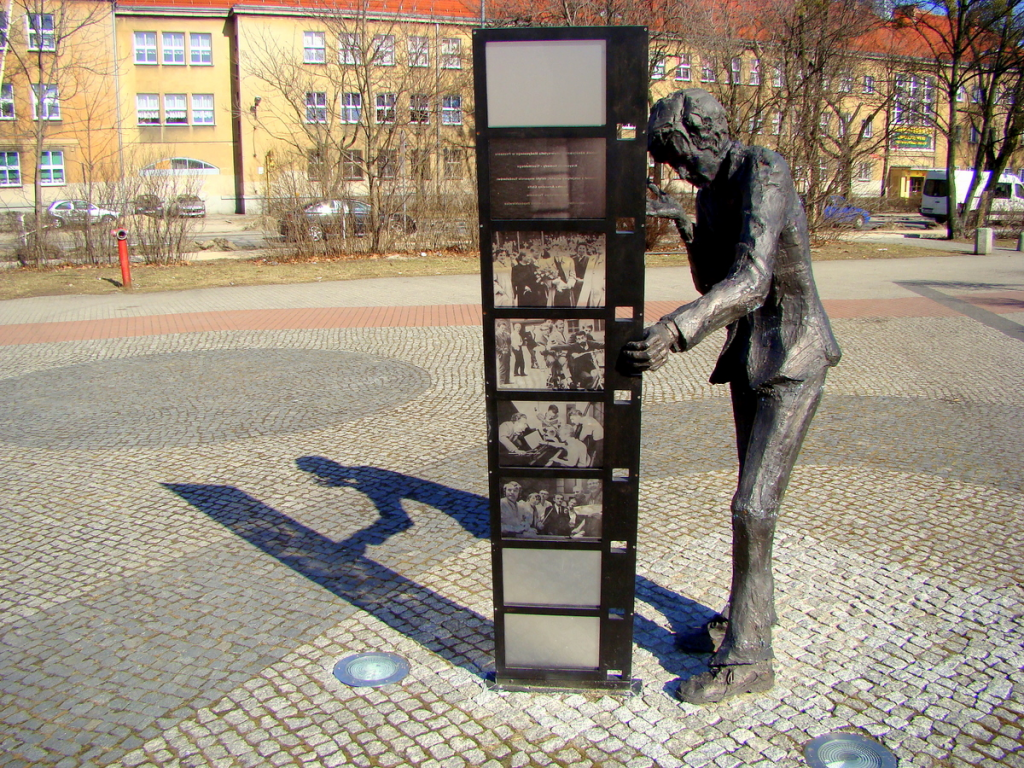
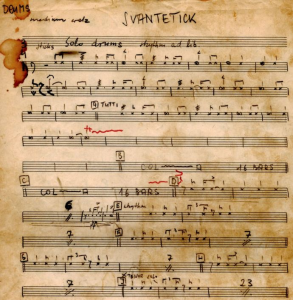
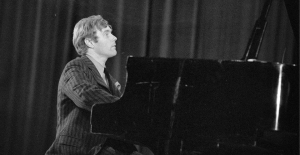
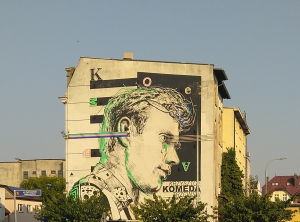
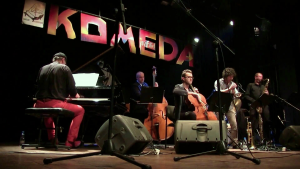
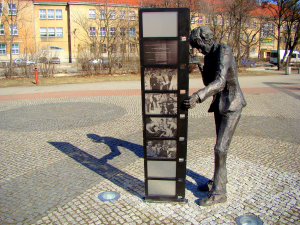
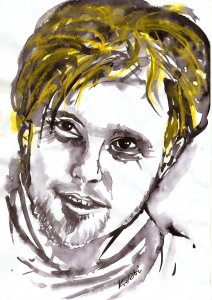
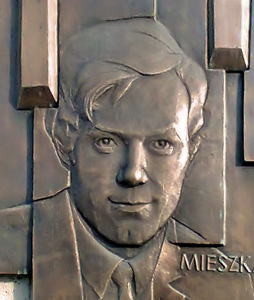
Krzysztof Komeda (born Krzysztof Trzciński; April 27, 1931 in Poznań – April 23, 1969 in Warsaw) was a Polish jazz pianist and composer of jazz and film music of international renown. According to Jan Wróblewski, Komeda occupies a similar musical rank in Poland to Chopin.
In his youth, he received piano lessons in Ostrów Wielkopolski (German: Ostrowo), where he lived from 1946 to 1951. Later, he became a student at the Conservatory in Poznań (piano lessons and music theory). He then decided to study medicine. His father, Mieczysław Trzciński, was a banker and took over the position of branch director of the National Bank of Poland in Poznań in December 1952. During his studies, he lived there with his parents from 1952 to 1956[2] and had his own piano.[3] As a student, he made contact with the Krakow underground jazz scene. They met in private apartments or nightclubs, the “catacombs of jazz”.[3] His interest in popular and dance music shifted from Dixieland to bebop and finally to contemporary jazz.
Komeda-Trzciński celebrated her first national success in August 1956 at the first jazz festival in Sopot with the Komeda Sextet. News of a jazz festival had spread like wildfire throughout Poland. The completely improvised event attracted approximately 30,000 to 50,000 young Poles, who spent the night on lawns, in parks, or in beach chairs.
The festival began with a parade similar to the New Orleans orchestra parades at Mardi Gras. The Komeda Sextet, in two boxes, symbolically buried the traditional Dixieland jazz and dance music. Since all the newspapers reported on the first free jazz festival, jazz music could no longer be banned from public view as easily as before.
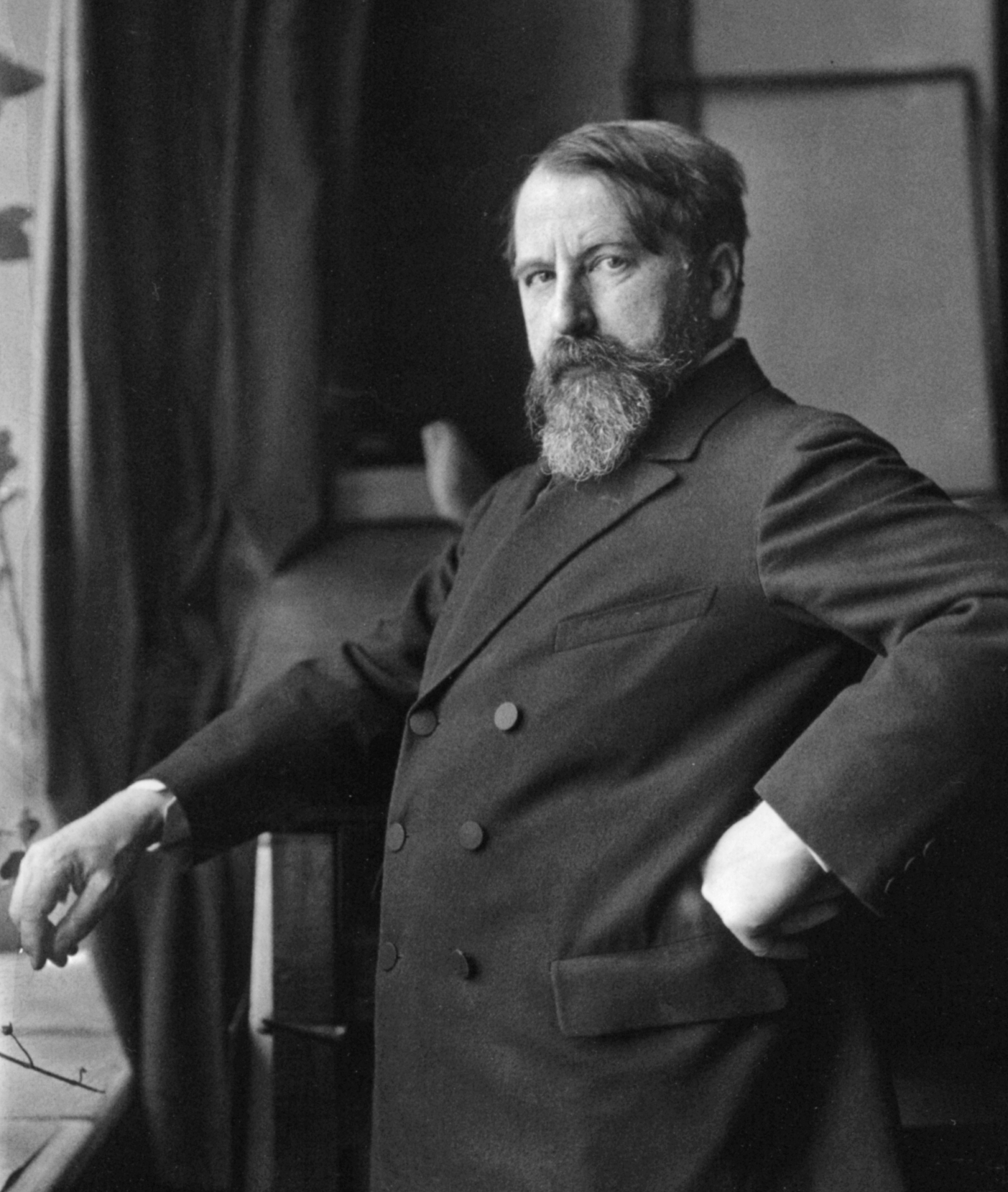
Arthur Schnitzler (May 15, 1862 in Vienna,[1] Austrian Empire; October 21, 1931, ibid.) was an Austrian physician, narrator, and playwright. He is considered one of the most important representatives of Viennese Modernism.
From 1871 to 1879, Arthur Schnitzler attended the Akademisches Gymnasium in the 1st district and graduated with honors on July 8, 1879.[2] Afterwards, at his father’s request, he studied medicine at the University of Vienna. On May 30, 1885, he received his doctorate in medicine. His younger brother Julius (1865–1939) also became a physician.
From 1885 to 1888 he worked as an assistant and secondary physician at the General Hospital of the City of Vienna in internal medicine and in the field of psychiatry and dermatology.[3] He then worked as his father’s assistant in the laryngological department of the polyclinic in Vienna until 1893. From 1886 to 1893 Schnitzler published on medical topics and wrote more than 70 articles, mostly reviews of specialist books, including as editor of the International Clinical Review founded by his father.[4] He authored one (only) scientific book publication: On functional aphonia and its treatment through hypnosis and suggestion (1889).
Although Schnitzler had been writing literary texts since childhood and made his literary debut in 1880 (Liebeslied der Ballerine in the magazine Der freie Landbote), his public literary activity only began to intensify in 1888, when he was in his mid-20s. He published poems, one-act plays, and short stories in the magazine An der Schönen Blauen Donau, edited by Fedor Mamroth and Paul Goldmann.[5] Around this magazine, but also in the Viennese coffee houses that Schnitzler frequented, including the Café Griensteidl, like-minded people began to gather who wanted to create a new, Austrian literary movement. The term “Jung Wien” soon became established for this, even though it did not describe a unified program and only partially shared aesthetic goals. Key figures with whom Schnitzler became friends around 1890/1891 were Hugo von Hofmannsthal, Hermann Bahr and Richard Beer-Hofmann.
In addition to this scandal, the publication of Reigen caused further controversy. First produced in 1900 as a private print in a small number of copies, it was freely published by Fritz Freund’s Viennese publishing house in 1903. The conversations it depicts before and after sexual intercourse between women and men from different social classes were denounced as pornography by Schnitzler’s opponents. The two themes of criticism of the army and eroticism, combined with Schnitzler’s obvious success, made him a popular target for anti-Semites.
Privately, Schnitzler documented several relationships with women in his diary for the period up to the age of 40, often conducted simultaneously without the partners’ knowledge. In particular, his largely platonic relationship with Olga Waissnix, the married landlady of the Thalhof (Reichenau an der Rax), as well as his relationships with Marie Glümer and Maria Reinhard, were considered more profound partnerships. Both Maria (often referred to in the diary as “Mizi I” and “Mizi II”), as well as others, hoped to legitimize their relationship through marriage. In Maria Reinhard’s case, this became even more pressing because she was pregnant with his child twice. The first child was stillborn, and she died of appendicitis during the second pregnancy.
His relationship with actress Olga Gussmann (1882–1970) led to a stabilization of his lifestyle. On August 9, 1902, she gave birth to their son, Heinrich Schnitzler. On August 26, 1903, the couple married. Their daughter, Lili, was born on September 13, 1909.[11] Schnitzler remained faithful for the duration of the marriage and ceased his promiscuous lifestyle.
From the beginning of the 20th century, the writer was one of the most frequently performed playwrights on German stages. With the outbreak of the First World War, interest in his works declined. This was also due to the fact that he was one of the few Austrian intellectuals who was not enthusiastic about warmongering and did not make any bellicose statements.
Reigen is Arthur Schnitzler’s most successful play for several decades. Largely unperformed during his lifetime at the author’s request, it describes in ten dialogues how a man and a woman talk to each other before and after sexual intercourse. In 1921, on the occasion of the premiere of the play Reigen, which led to a staged theater scandal in Berlin in 1920/1921 and then in Vienna, he was put on trial for causing public nuisance. The case was ultimately decided in the author’s favor by the Vienna Constitutional Court. After further performances in Vienna, however, Schnitzler asked his theater publisher in 1922 not to permit any more performances. His son only had the ban on performances lifted in 1982.
Während Schnitzler als jüdischer Autor in der Zeit des Nationalsozialismus verpönt war, setzte in der NIn the postwar period, a slow institutionalization as a classic began.[38]
In 1959/1960, the Arthur Schnitzler Courtyard in Vienna-Döbling (19th district) was named after him.
In 1971, a bust of Schnitzler by Sandor Jaray was unveiled at the Burgtheater in Vienna.
On May 13, 1982, a bust of Paul Peschke was unveiled in Vienna’s Türkenschanzpark (18th district).[39] The memorial was initiated by Viktor Anninger (1911–2004), who was a friend of Lili Schnitzler and frequented Schnitzler’s house at Sternwartestraße 71. Peschke, in turn, was the son-in-law of Ferdinand Schmutzer and, when he created the memorial, lived directly across from Schnitzler’s former residence in his father-in-law’s former house.
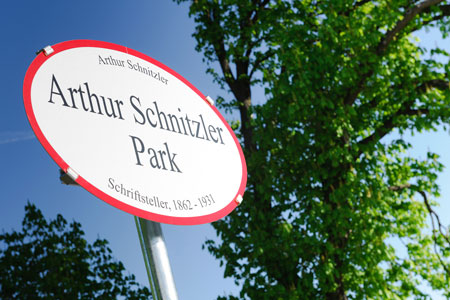
April 2012: The small park opposite the train station in Baden (Lower Austria) is named “Arthur Schnitzler Park.”[40]
May 6, 2017: Following a municipal council resolution from September 2016, the forecourt of the Volkstheater between Burggasse, Museumstraße, and Neustiftgasse in Vienna’s 7th district, Neubau, is named “Arthur Schnitzler Square.” The theater now uses the address Arthur Schnitzler Square 1, 1070 Vienna.
The Arthur Schnitzler Prize is awarded every four years by the Arthur Schnitzler Society. This prize is endowed with 10,000 euros by the Austrian Ministry of Education and the Cultural Department of the City of Vienna.
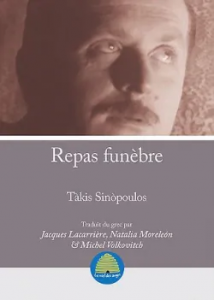
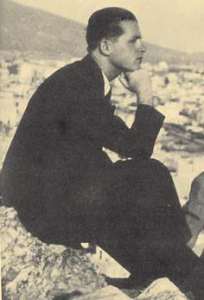
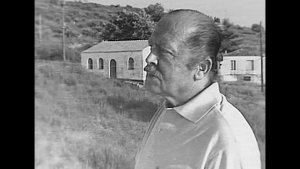
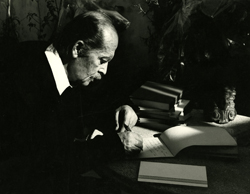
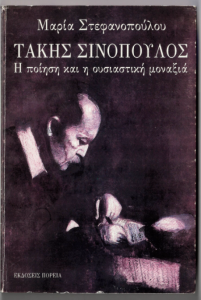
Takis Sinopoulos was born in 1917 in the Peloponnese. He served as a military doctor in the Greek Civil War from 1946 to 1949; his experiences of fratricide and excessive violence had a lasting impact on him and his work. He died in 1981 in Pyrgos in the Peloponnese.
He was born in Agolinitsa, the first-born son of philologist Giorgos Sinopoulos and Roussa-Veneta Argyropoulou. He studied medicine at the University of Athens, graduating in 1944. In 1934, under the pseudonym Argyros Roubanis, he published the poem “Betrayal” and the short story “The Revenge of a Modest Man” in the Pyrgio newspaper “Nea Imara”. In 1941, he was drafted as a medical sergeant in Loutraki. [3] During the occupation, he published translations of French poets and some essays on poetry. In 1942, he was briefly imprisoned by the Italians as a resistance fighter. During the civil war, he was a doctor in an infantry battalion. After the end of the civil war, he began working as a doctor in the capital. In 1951 he published his first collection of poems, entitled Metaihmio. He was a member of the editorial staff of Eighteen Texts, New Texts 1-2, Deposition ’73, and the journal The Continuation. He also collaborated with numerous journals (Nea Estia, Filologika Chronika, Odysseas (Pyrgou), Kochlias, Piraika Grammata, Anglohelleniki Epitheoresis, Kainouria Epochi, Zygos, Epochen, Tram, O Tachydromos, etc.). He belonged to the first post-war generation. He was particularly influenced by T.S. Eliot, Seferis, and Ezra Pound. In general, his poetry is lyrical, epigrammatic, and characterized by tragic self-awareness and pessimism. In his final years, a shift in the use of linguistic material toward an anti-poetic, aggressive, and often ironic discourse was observable. He donated a large part of his library to the University of Thessaloniki.
Sinopoulos spent his student years in Pyrgos and went to Athens to study medicine in 1934. He made his first appearance in the literary world in 1934 with the publication of the poem “Betrayal” and the short story “The Revenge of a Modest Man” in the Pyrgos newspaper “Nea Imera” under the pseudonym Argyros Roubanis. His first book of poetry, titled “Metaihmio,” was published in 1951. The first poem in this volume, “Elpinor,” was written in 1944.
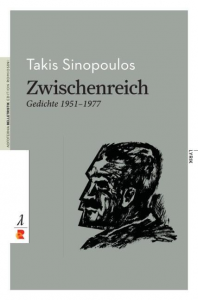
A pioneering figure of the “Generation of the 1950s,” Sinopoulos authored a number of poetry collections, essays, and book reviews throughout his creative career, which shaped the country’s intellectual life in the post-war years. He is a tragedian par excellence. The emphasis on the tragic “stigmatizes” his entire poetry, the drama, the decay, the death, the suffering and the alienation, and embodies the tragic historical events he experienced (the dictatorship of Metaxas, the war occupation, the civil war, the 1967 dictatorship, the coup and the invasion of Cyprus).
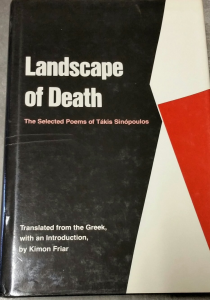
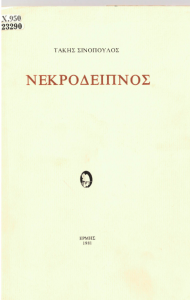
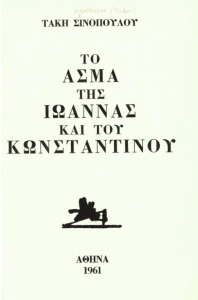
He also wrote the poetry collections “The Song of Joanna and Constantine,” which won the 1961 State Prize for Poetry, “Acquaintance with Max,” and “Night and Counterpoint,” as well as various studies and essays on the work of Seferis, such as “Strofi.” He was awarded the 2nd State Poetry Prize in 1962 for “The Song of Joanna and Constantine.”
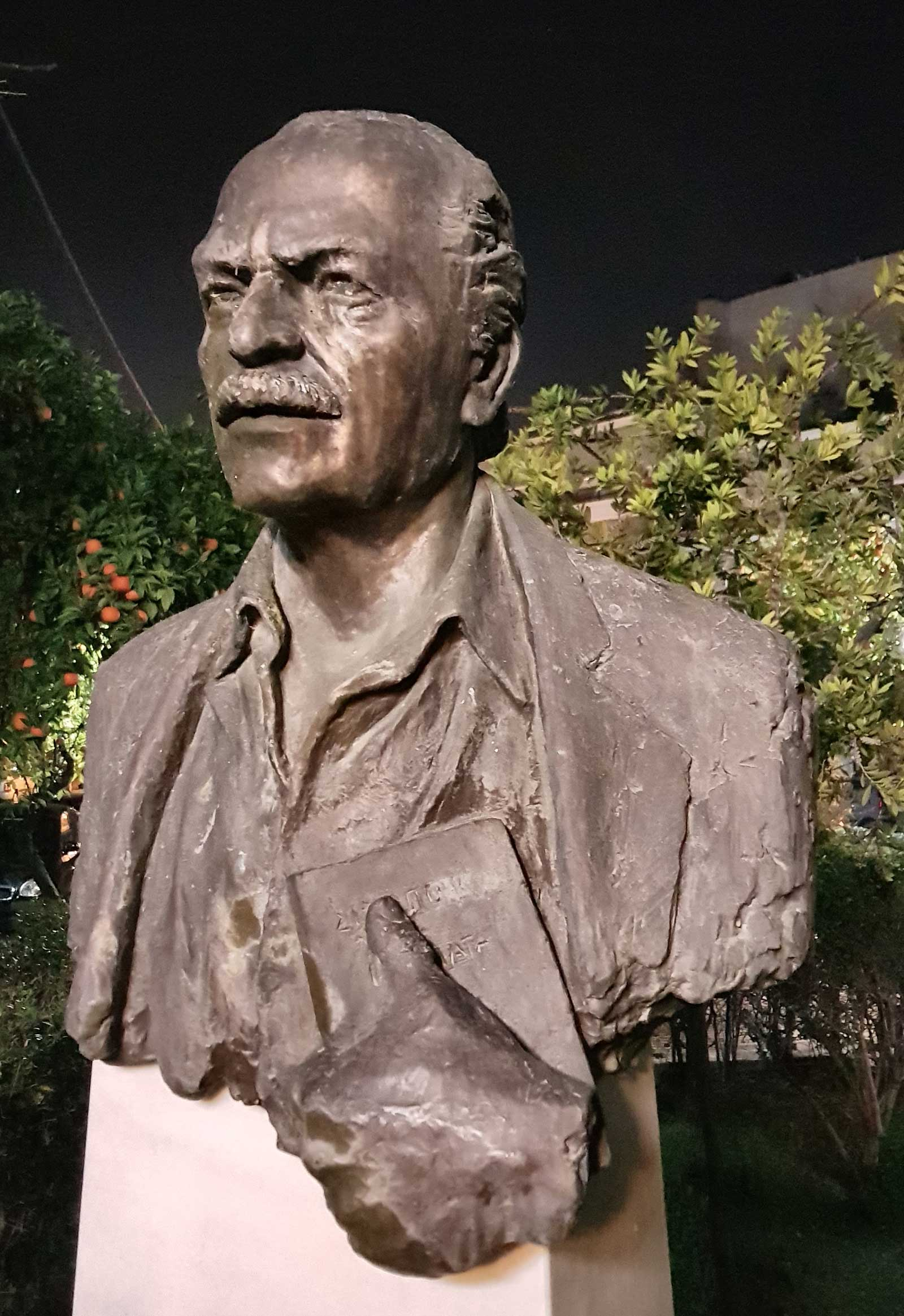
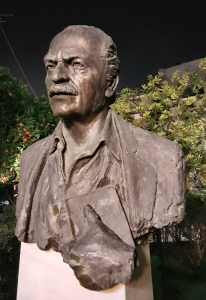
He died on April 25, 1981 (Easter Eve 1981) in Pyrgos. He was married to Maria Dotta, who in 1995 donated the house she lived in in the municipality of Nea Ionia to the Takis Sinopoulos Foundation as accommodation. A bust of the poet stands in the square in front of his house on Takis Sinopoulos Street in Perissos.
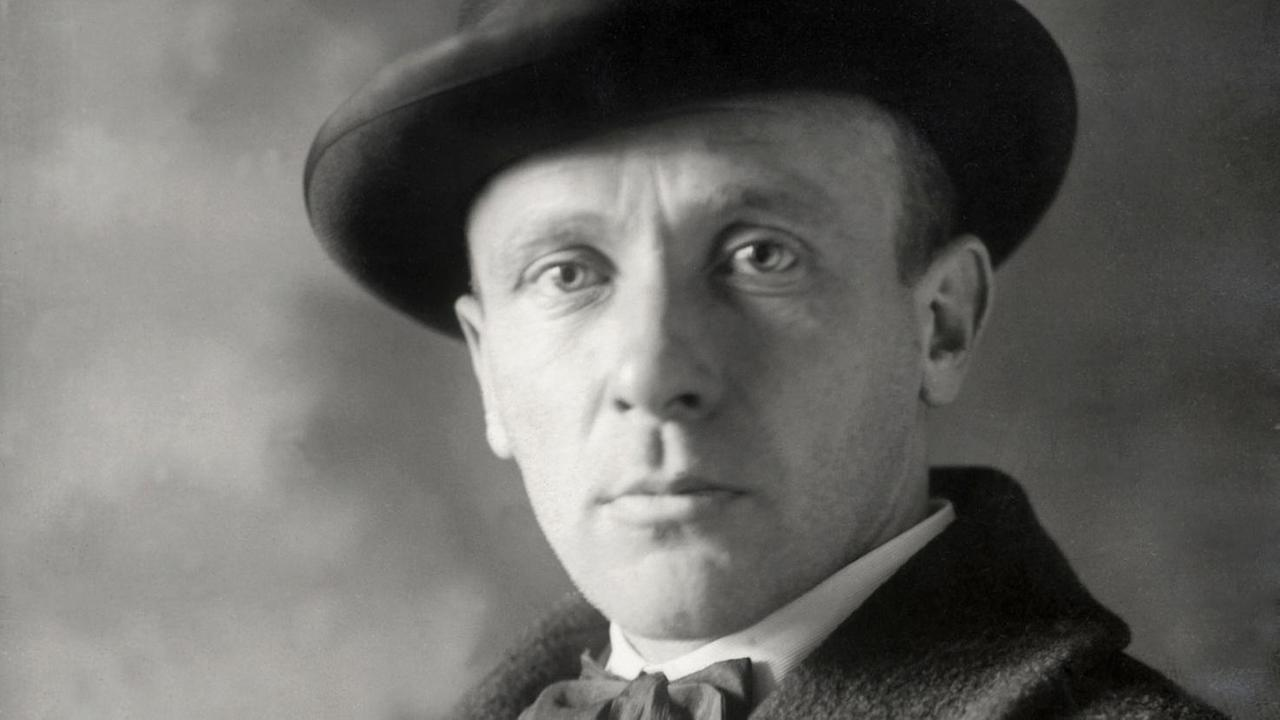
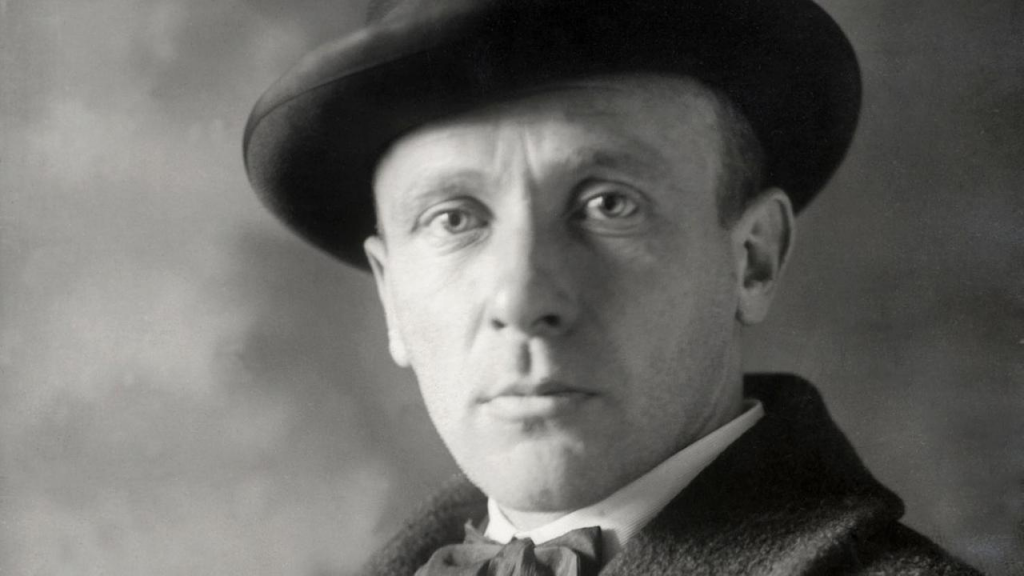
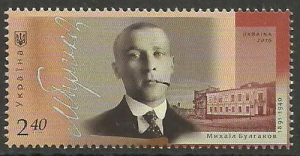
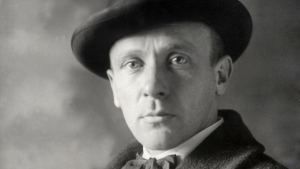
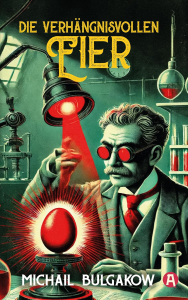
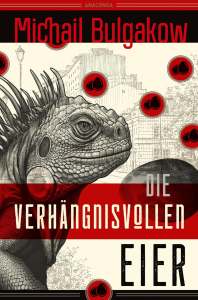
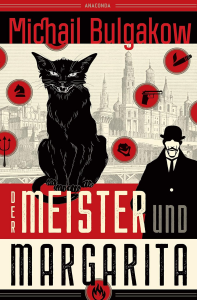
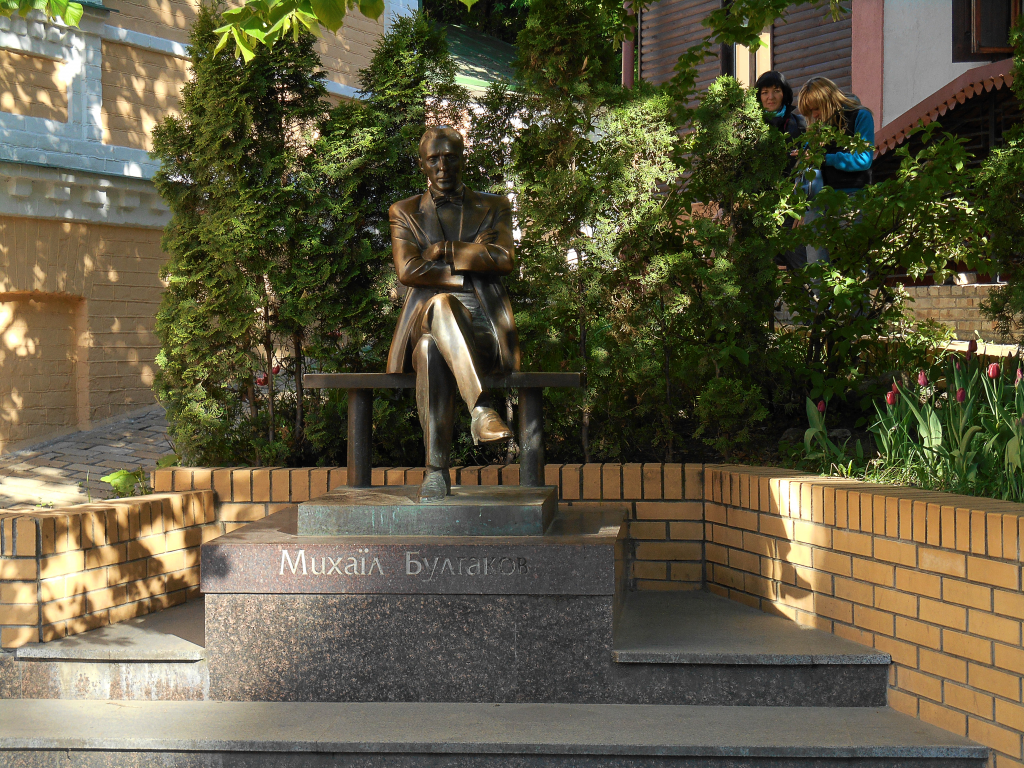
Mikhail Afanasyevich Bulgakov (Russian: Михаи́л Афана́сьевич Булга́ков, scientific transliteration: Mikhail Afanas’evič Bulgakov; May 3, 1891 in Kiev, Russian Empire – March 10, 1940 in Moscow, Soviet Union) was a Russian and Soviet writer. He is considered one of the great satirists of Russian literature. One of his major works is the novel The Master and Margarita, which was published posthumously in 1966 after heavy censorship. The excerpts were distributed as samizdat and thus contributed to his popularity.
Mikhail Bulgakov was born in 1891 to Afanasy Ivanovich Bulgakov, a lecturer at the Kyiv Theological Academy, and his wife Varvara Mikhailovna (née Pokrovskaya), and was baptized in the Podil Church of the Exaltation of the Holy Cross that same year. After graduating from the Kyiv First Gymnasium in 1909, he enrolled at the Medical Faculty of Kyiv University. In 1916, he received his medical degree and took up a rural position in the Smolensk Region before practicing medicine in the town of Vyazma. In 1913, he married Tatyana Nikolaevna Lappa (Russian: Татьяна Николаевна Лаппа).
At the end of October 1921, Bulgakov moved to Moscow and began working for several newspapers (Siren, Worker) and magazines (The Medical Worker, Russia, Rebirth). During this time, he published occasional prose pieces in the Berlin-based exile newspaper Am Vortag. Between 1922 and 1926, Siren printed more than 120 of his reports, essays, and columns. Bulgakov joined the All-Russian Writers’ Union in 1923.
In 1924, he met Lyubov Yevgenyevna Belozerskaya (Russian: Любовь Евгеньевна Белозёрская), whom he married the following year. In 1928, the couple toured the Caucasus, visiting the cities of Tbilisi, Batumi, Vladikavkaz, and Gudermes. The premiere of Bagrovsky Island (Blood-Red Island) took place in Moscow that same year. During this time, the author developed the first ideas for The Master and Margarita and began work on a play about Molière entitled Cabal Svyatosh (Slavery of the Bigots). In 1929, he met Yelena Sergeyevna Shilovskaya, who became his third wife in 1932.
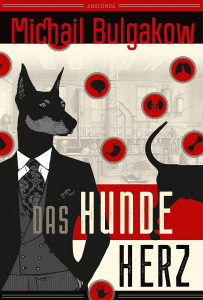
In the partly autobiographical novel The White Guard from 1924, Bulgakov uses the example of the Turbin family from Kyiv to describe the chaotic period of upheaval that followed the October Revolution and the collapse of the Russian Empire. Bulgakov’s play The Days of the Turbins, which premiered in Moscow on October 5, 1926, is also based on the novel. However, Bulgakov is better known for his grotesque depictions of everyday life in the young Soviet Union, often with fantastical or absurd elements—a typical form of social criticism in Russian-language literature since Gogol. The story “Heart of a Dog” was written in 1925 but was not published in the Soviet Union until 1987.
The Master and Margarita
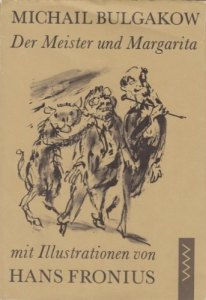
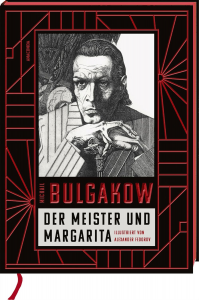
Bulgakov’s best-known work is The Master and Margarita, a satirical and grotesque take on the Faust motif, a journey through time. The work first appeared in print in 1966/67 in serialized form in the literary magazine Moskva, almost 30 years after the author’s death, in an abridged version. The unabridged version first appeared in book form in 1973. Shortly after its initial Soviet publication, the novel was published in 1968 in the German translation by Thomas Reschke in the GDR. In protest against Stalinism, during which the novel was written, he criticizes the dialectical materialism and militant atheism expressed in the Soviet Union.[3]
Some critics consider the book the best Russian novel of the 20th century. It was number 1 on the Spiegel bestseller list from April 29 to May 5, 1968.
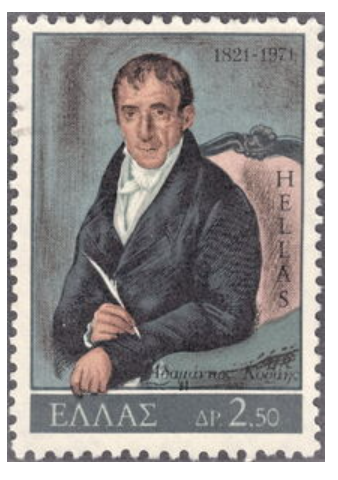
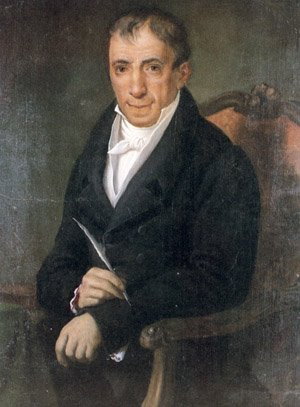
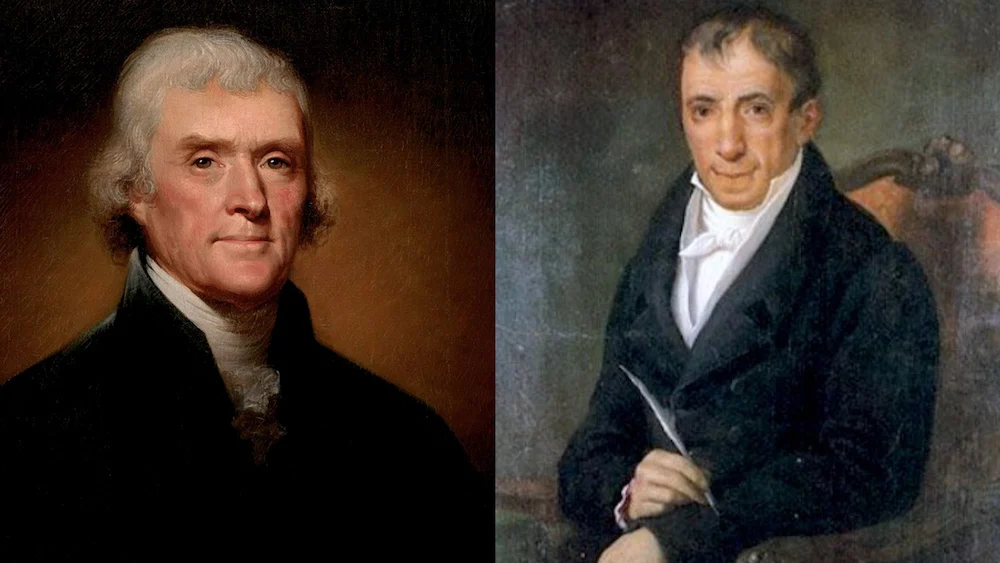
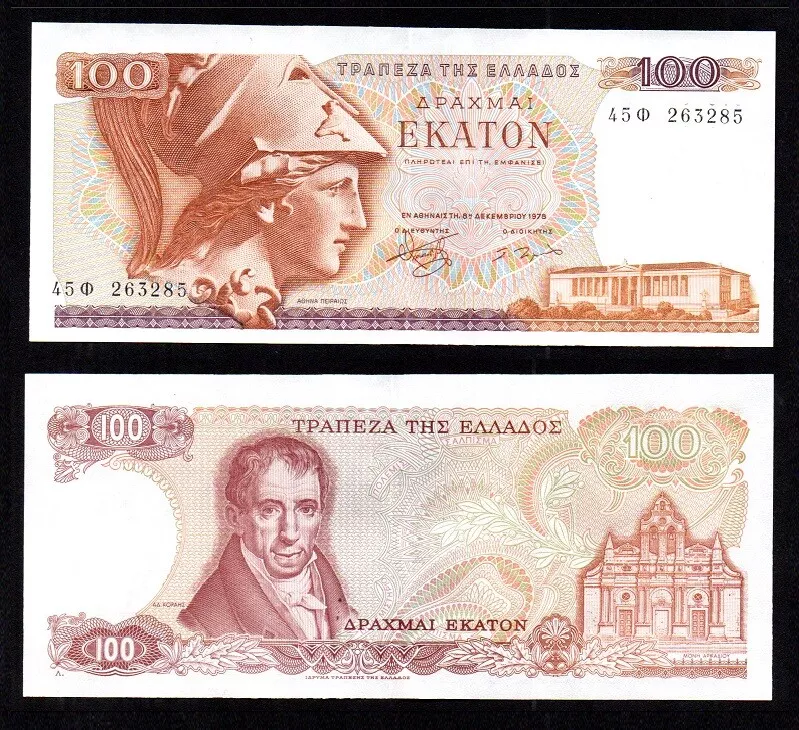
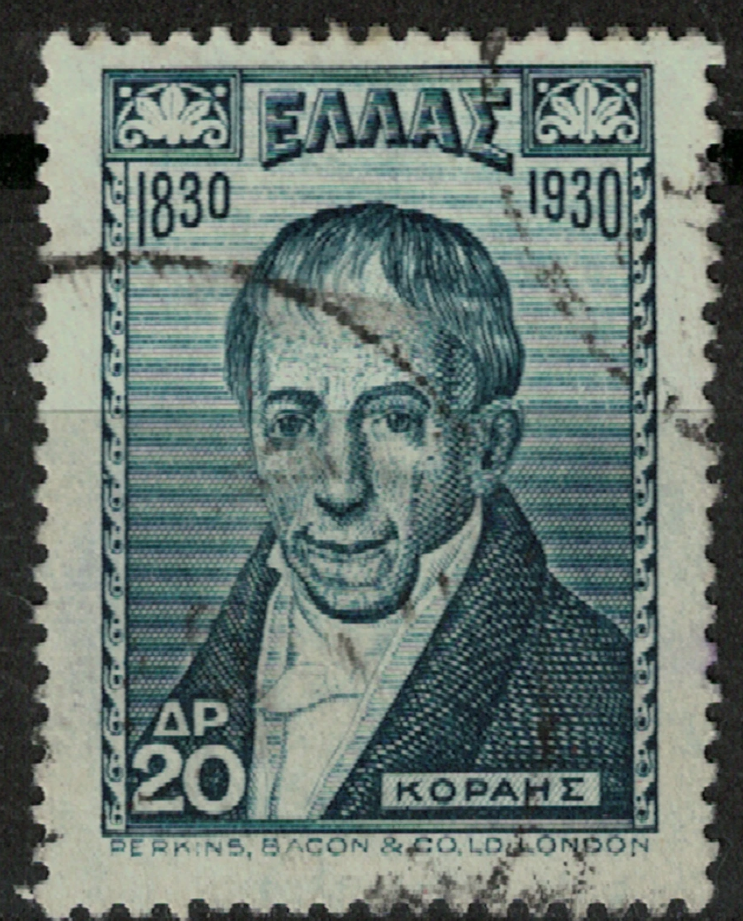
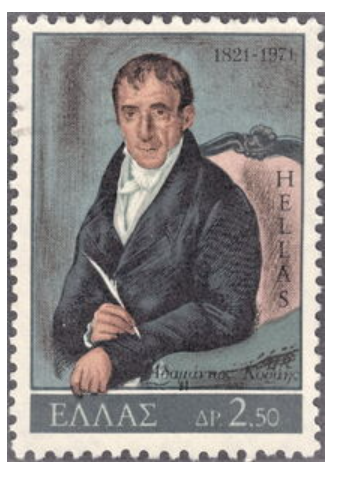
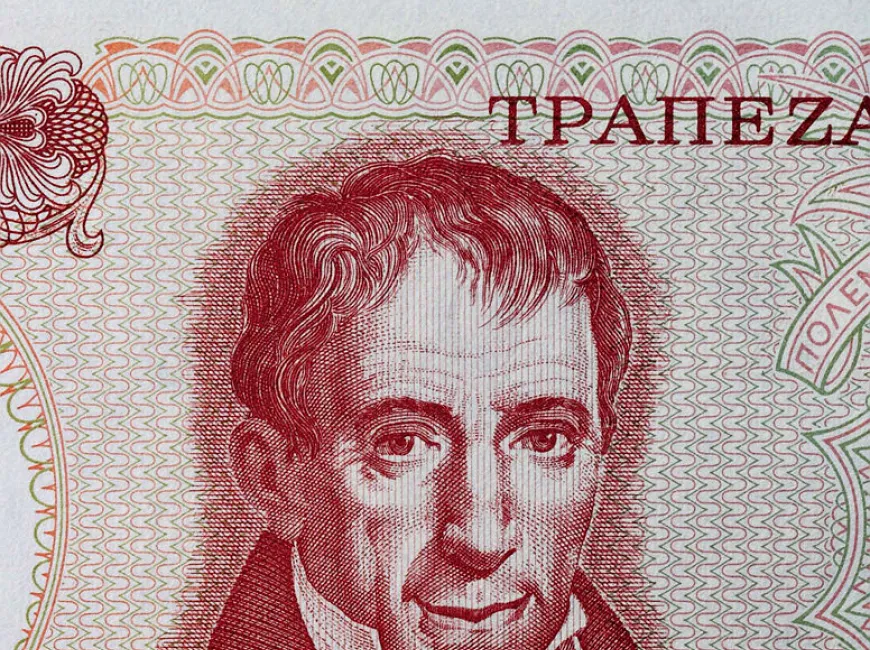
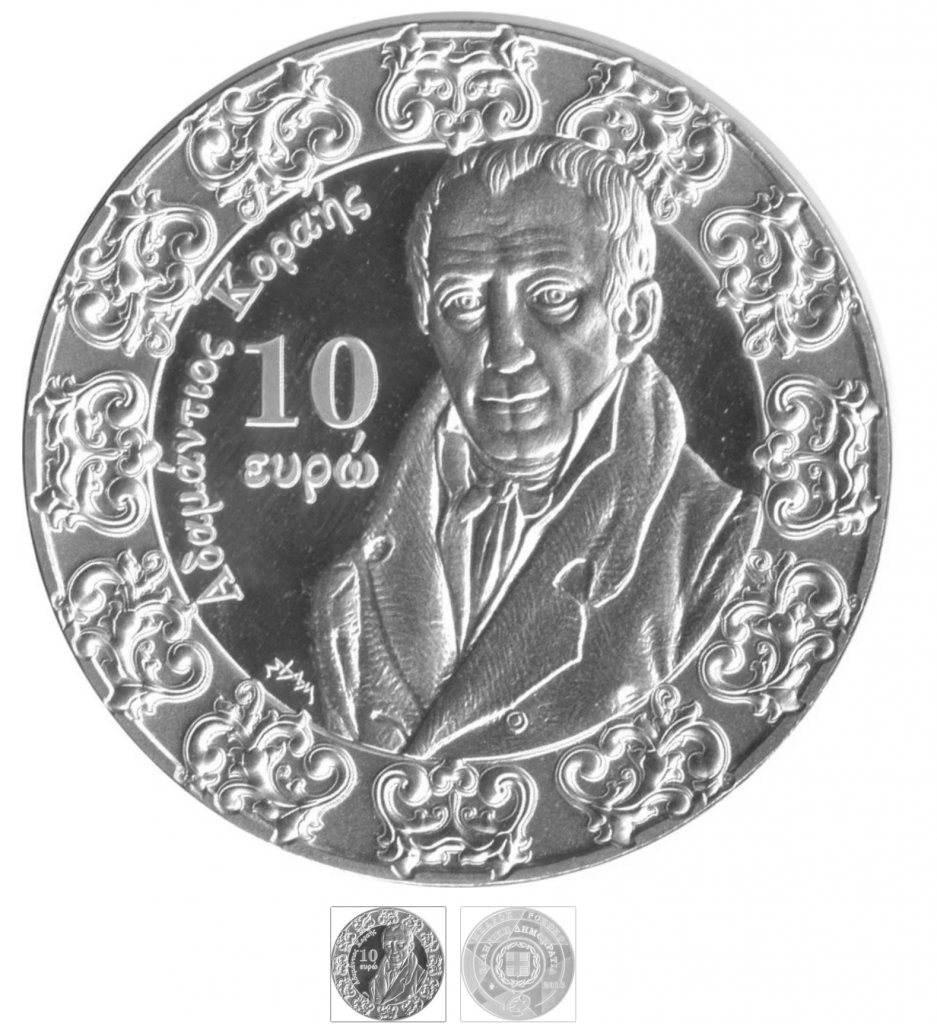
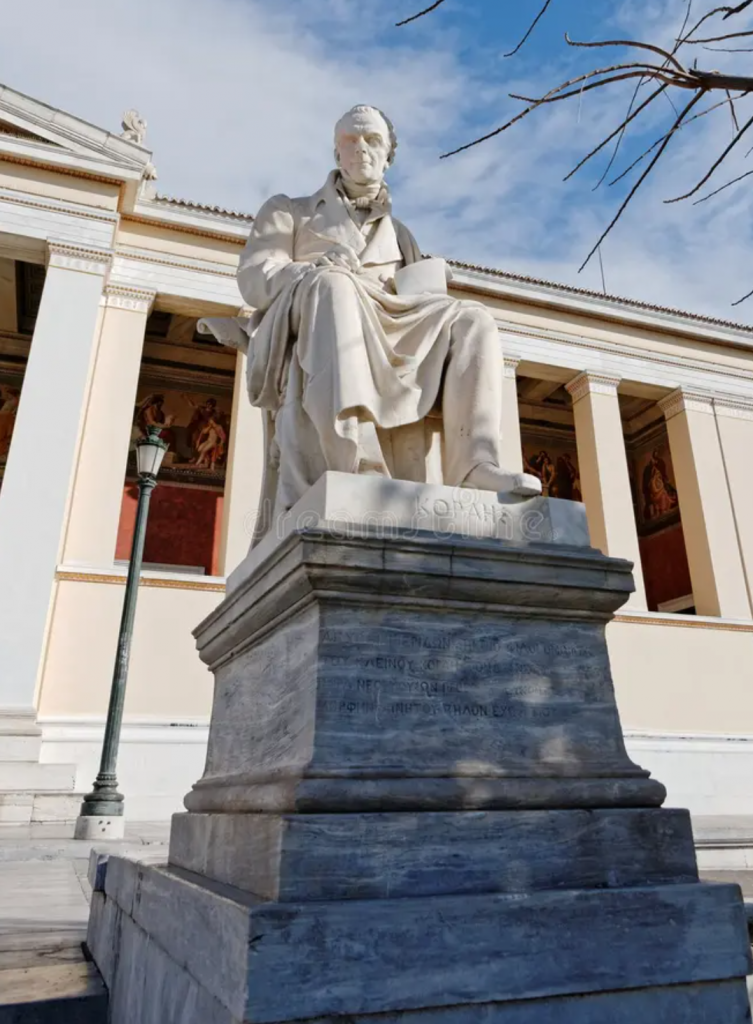
Adamantios Korais (Greek: Αδαμάντιος Κοραής – Adamántios Koraís, also Koraés; April 27, 1748 in Smyrna, Asia Minor, Ottoman Empire – April 6, 1833 in Paris) was a Greek scholar and writer. Korais is considered a reformer of Greek literature.
Korais was born in Smyrna, but his father came from the island of Chios, and Korais felt a strong connection to the island. Korais graduated from the Evangelical School of Smyrna and spent most of his life not in Greece, but in Western Europe. He devoted himself early on to the study of ancient and modern languages, and then, at his father’s wish, learned the trade of merchant in Amsterdam. From 1782 onwards, he studied medicine and natural history in Montpellier. In 1788, Korais settled in Paris to devote himself entirely to literature. Although he became a French citizen, he remained true to his Greek origins. Korais was interested in the church, schools, science, and politics. From Paris, he fought verbally and in writing for the spiritual rebirth of Greece.
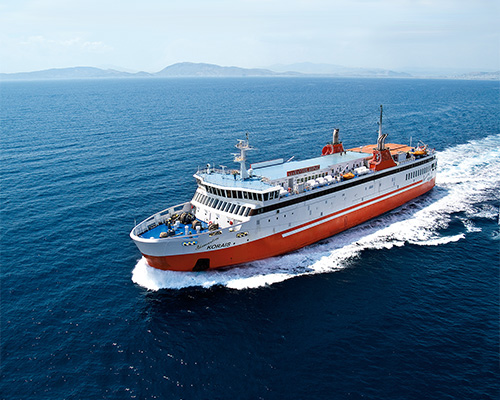
Adamantios Korais – Zante Ferries
His main goal was the development of a national, universal Greek language into a written language; the standards he established for this are still largely the authoritative ones today. Korais tried to raise Greek awareness of their historical heritage, their Hellenistic origins. He stated that general education was the key to an independent Greece. Above all, however, Korais is known for his decisive role in the Greek language question: He attempted to strike a balance between the antiquarian standard language and the popular language, and went down in Greek linguistic history as the inventor of the Katharevousa (= the pure; the purified popular language).
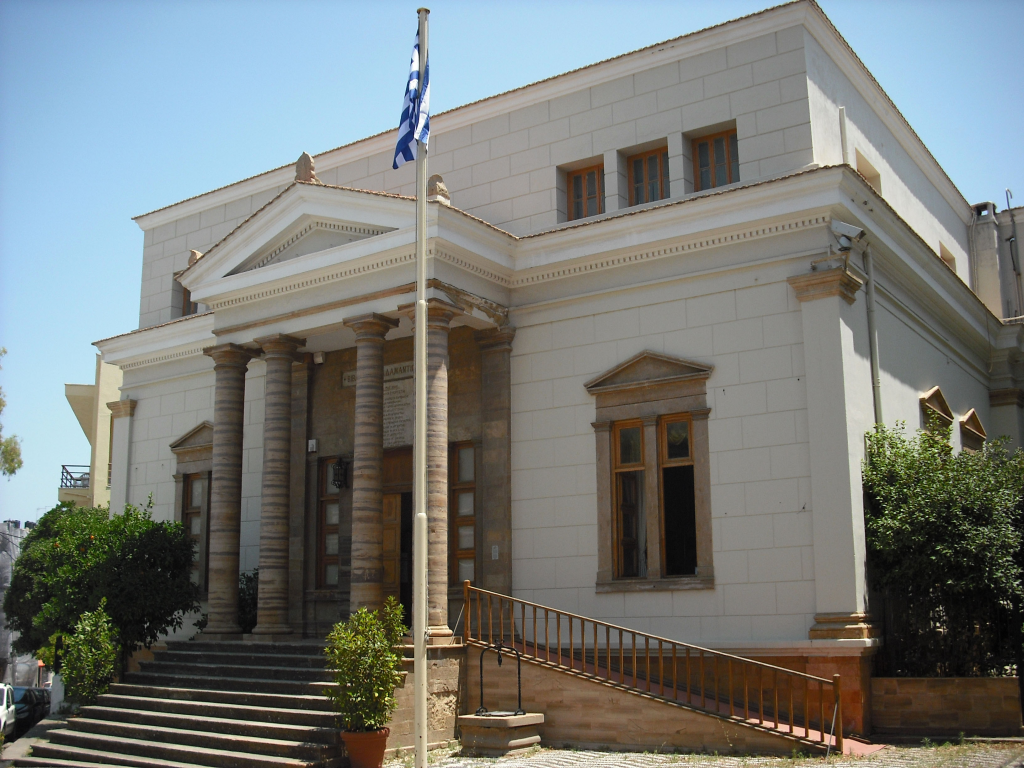
In his letters and publications, Korais criticized the Greek Orthodox Church, which dominated the lives of his countrymen in the Ottoman Empire. The church strictly opposed an independent Greece. Korais’s expertise in classical antiquity developed from his study of the works of ancient Greek writers. His marble bust adorns the Lyceum on the Greek island of Chios, to which Korais bequeathed his valuable library, the present Korais Library (Δημόσια Κεντρική Ιστορική Bιβλιοθήκη Χίου Κοραή), which bears his name.
Adamantios Korais died on April 6, 1833, in Paris and was buried in the Montparnasse Cemetery (Division 2). In 1877, at the request of King George I of Greece, he was reburied and now has an honorary grave in the First Cemetery of Athens. In 1895, a cenotaph was erected in his honor at the site of his grave in the Montparnasse Cemetery.
The chair of Byzantine and Modern Greek Studies at King’s College London, the Koraes Professor of Modern Greek and Byzantine History, Language and Literature, is named after him.
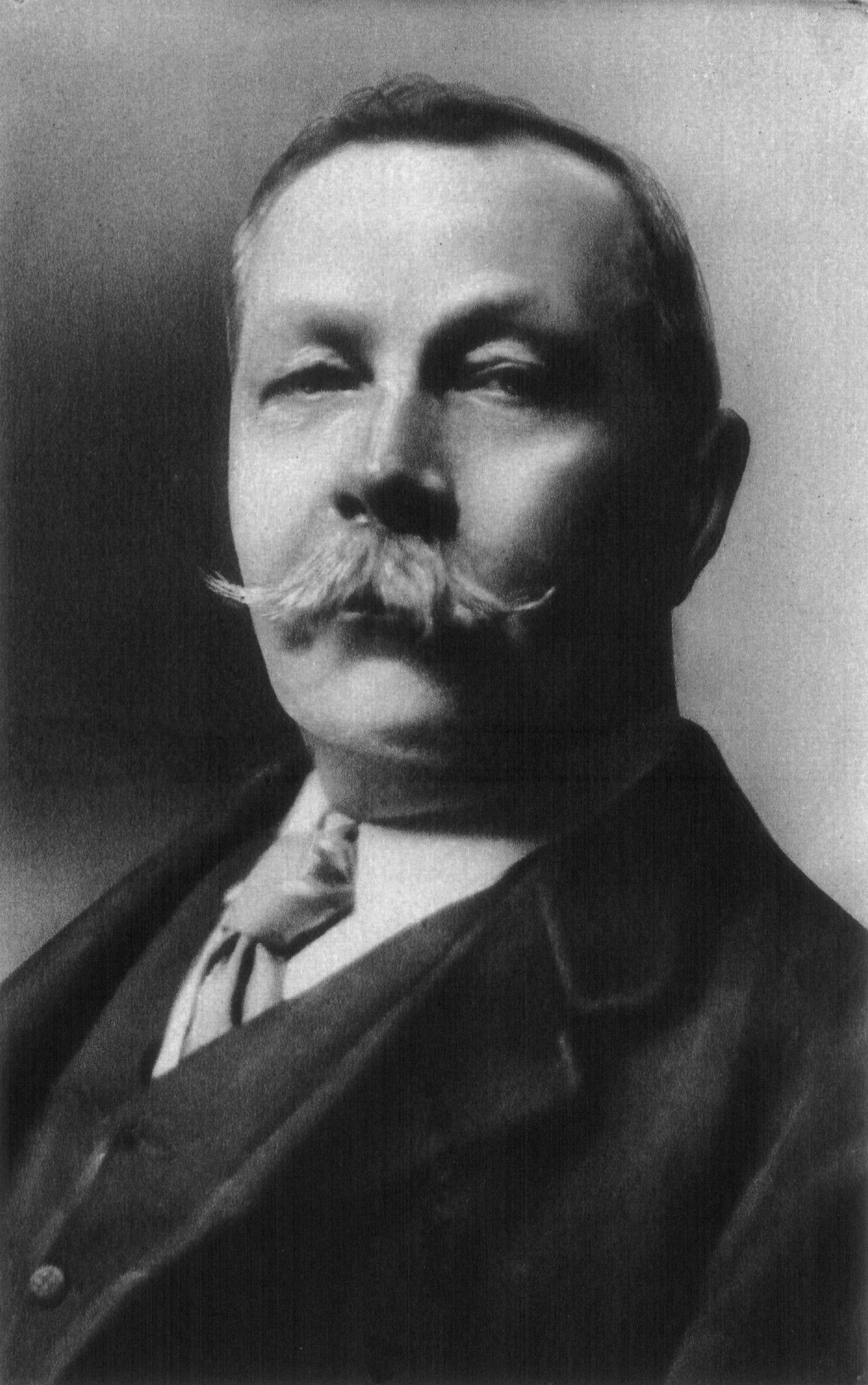
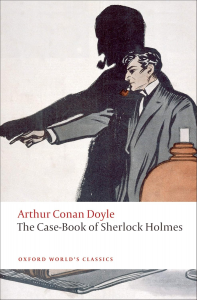
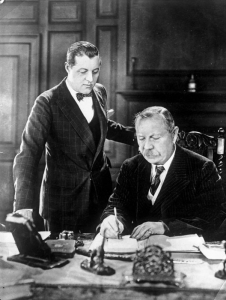
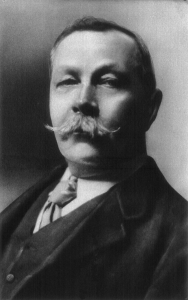
Sir Arthur Ignatius Conan Doyle (May 22, 1859 in Edinburgh, Scotland – July 7, 1930 in Crowborough, Sussex, England) was a British physician and author. He wrote about the adventures of Sherlock Holmes and his friend Dr. Watson. He is also known for the character Challenger from his novel The Lost World, which served as the basis for numerous films and a television series.
In 1880, Doyle traveled to the Arctic as a ship’s doctor on the whaler Hope, and a year later to West Africa on the Mayumba. From 1882 to 1890, he ran a medical practice in Southsea near Portsmouth. In his free time, he also wrote his first literary works. In 1883, while in Portsmouth, he wrote his first novel, The Narrative of John Smith (see below), which, however, remained unfinished and unpublished and was not published until 2011. In 1887, he published the first story about the detective Sherlock Holmes and his friend Dr. Watson: A Study in Scarlet.
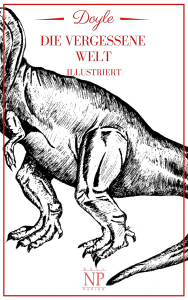
In the following period, Conan Doyle created his second very popular character, Professor Challenger. The Lost World, in which she first appears, was published in 1912 and is considered his best-known novel alongside the Sherlock Holmes series. Doyle’s texts published during the First World War sometimes take a critical look at Germany at the time. In October 1918, a few months before the official end of the war, his son Kingsley died of the Spanish flu. Doyle then began to devote himself increasingly to science fiction novels in the tradition of Jules Verne, as well as to spiritualism and mysticism, and also undertook lecture tours (including to the USA and South Africa).
Among other things, he made the so-called Cottingley Fairies famous – fake photos of fairies in whose authenticity he firmly believed, made into a film in 1997 in The Fairy Garden. His public controversy with the magician Harry Houdini made headlines.[6] The friendship between Doyle and Houdini broke down due to differing ideas about spiritualism – Doyle accepted various mediums as genuine and believed that Houdini himself had supernatural abilities, while Houdini himself said that he never experienced a séance in his life whose effects he could not have imitated with magic tricks.
The deductive and criminal analysis method is characteristic of Doyle’s characters. He, himself a physician, created the role of Dr. Watson. He endowed Sherlock Holmes with characteristics of his teacher at the University of Edinburgh, Joseph Bell. The criminalistic methods described by Doyle in his novels, such as fingerprinting, were ahead of the police methods of their time. This is especially true of the fundamentally scientifically oriented methodology of crime investigation.
In 1890, his novel The Firm of Girdlestone (1890) was published, painting a picture of his hometown of Edinburgh in the age of imperialism. Father and son Girdlestone & Co. operate a lucrative African trade with poorly maintained sailing ships.
That same year, Doyle moved to London. From 1891 onward, he was able to earn a living through writing, following the publication of his first detective story, A Scandal in Bohemia, in The Strand Magazine that same year.
In 1893, Conan Doyle decided to end the life of his protagonist Holmes, as the regular writing of new Holmes stories took up too much of his time and he wanted to concentrate his literary work on other works. This led to protests from his audience.[1] The author’s mother, an avid reader of the stories, tried in vain to dissuade him from the plan. In the story “The Final Problem,” Sherlock falls from the Reichenbach Falls near Meiringen in Switzerland during a fight with his adversary, Professor Moriarty, and is pronounced dead by Watson.
In the same year, Doyle became Master of the Phoenix No. 257 Masonic Lodge in Portsmouth.
In March 1893, Doyle became the first Briton to complete a day’s cross-country skiing. In commemoration of this achievement, the UK Antarctic Place-Names Committee named the Doyle Glacier in Antarctica after him in 1959.
On March 23, 1894, in a daring attempt, he crossed the Maienfelder Furgga from Davos to Arosa on skis, accompanied by two locals, brothers Tobias and Johann Branger. The event helped popularize skiing in England. It was recreated a good century later by the Austrian Broadcasting Corporation (ORF) in a television film based on Conan Doyle’s article “An Alpine Pass on ‘Skiing’,” published in Strand Magazine in December 1894.
Doyle played football as a goalkeeper for the amateur Portsmouth Association Football Club. He used the pseudonym A.C. Smith. He was also a keen cricketer and was capped ten times by the famous Marylebone Cricket Club (MCC) in the first team between 1899 and 1907. As a golfer, he was captain of Crowborough Beacon Golf Club, East Sussex, in 1910. He also initiated the construction of the golf course at Davos during his stays there from 1893 to 1895.
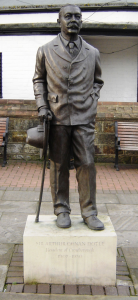
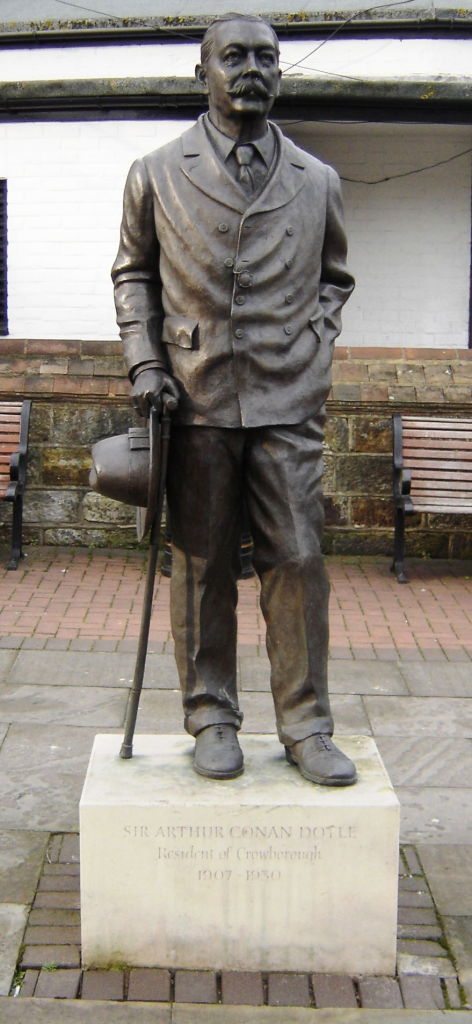
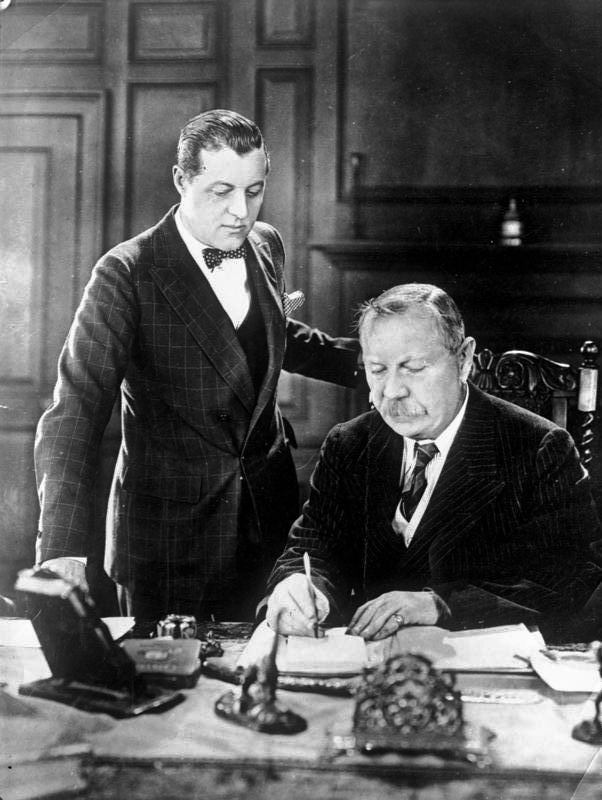
At the 1908 London Olympic Games, Arthur Conan Doyle reported on the marathon for the Daily Mail newspaper. Dorando Pietri was the first to cross the finish line, but because judges and doctors helped him across the finish line, the runner was disqualified. Doyle’s detailed and emotional report in the Daily Mail of July 25, 1908, about the weakened Italian’s finish, and a letter to the editor published at the same time as his article, in which Doyle appealed for donations for Pietri, are the basis of one of the most well-known myths of the modern Olympic Games. Doyle’s great commitment led to the widespread, but untrue, legend that Doyle himself helped Pietri across the finish line. Dr. Michael Bulger, who can be seen in one photograph as an assistant, was often mistaken for Doyle. A memorial to Sir Conan Doyle has stood at Cloke’s Corner in Crowborough since April 14, 2001. The bronze statue was created by sculptor David Cornell and funded by the Conan Doyle Statue Trust with grants from Crowborough Town Council and private donations. To finance the bronze casting, Cornell commissioned a limited edition of a scaled-down model.
In 2023, the Venezuelan frog Caligophryne doylei was named after Conan Doyle.
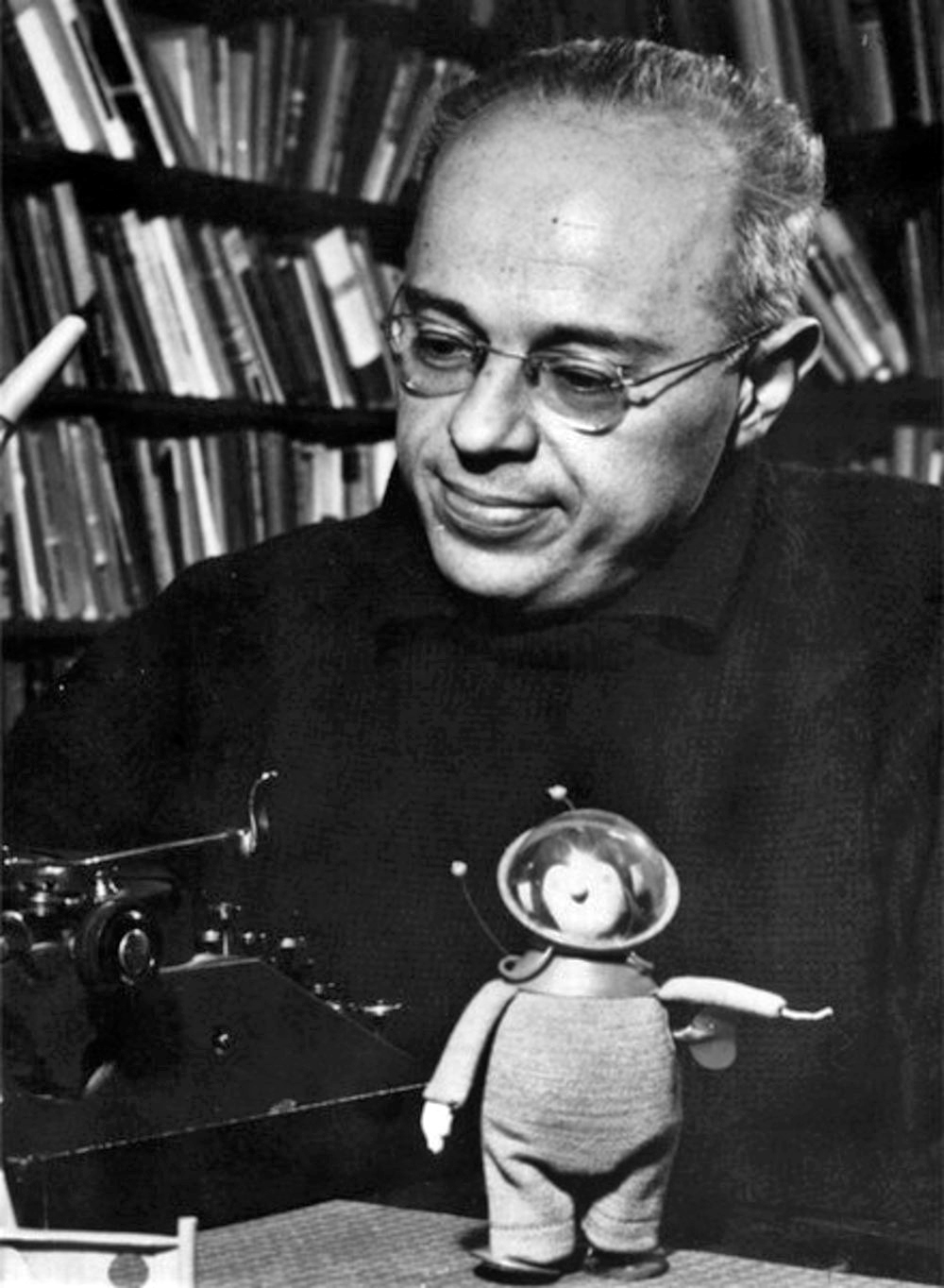
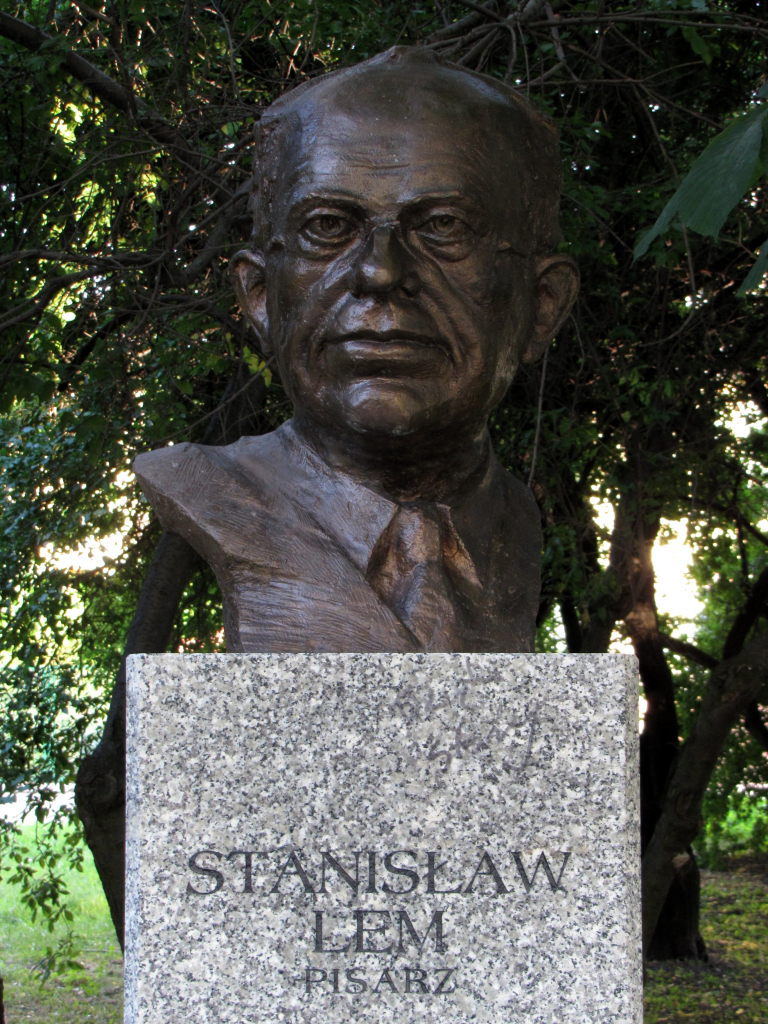
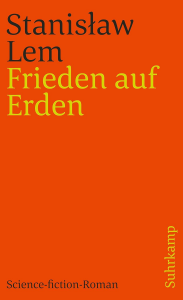
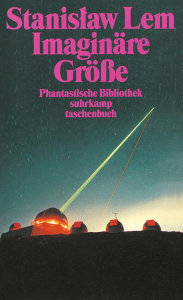
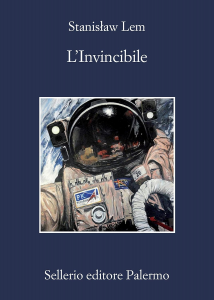
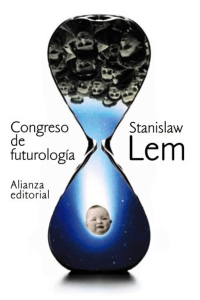
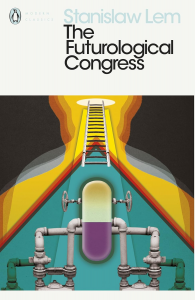
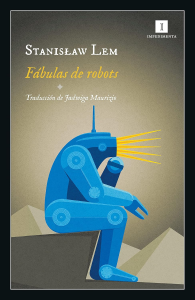
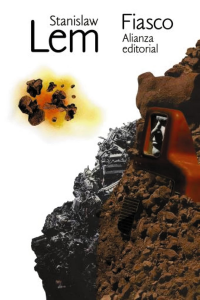
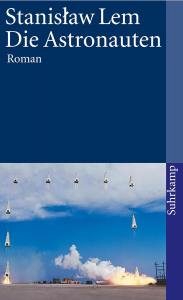
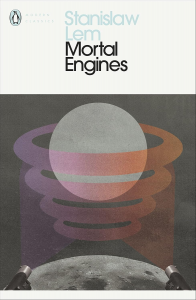
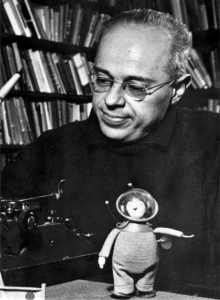
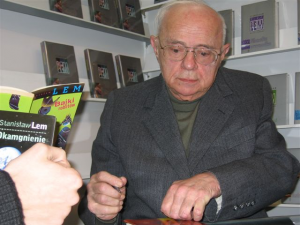
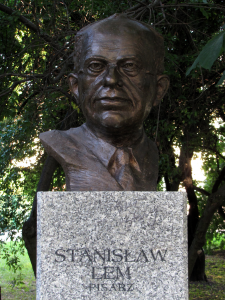
Stanisław Herman Lem (also known as Stanislaw Lem, pronunciation: [staˈɲiswaf lɛm]; September 12, 1921 in Lwów, Poland – March 27, 2006 in Kraków) was a Polish writer, best known as a science fiction author, philosopher, and essayist. Lem’s works have been translated into 57 languages and sold more than 45 million copies. He is one of the most widely read science fiction authors, although he did not like to call himself that because of the complexity of his work. Due to the numerous puns and neologisms, his works are considered difficult to translate.
Lem is considered a brilliant visionary and utopian who conceived numerous complex technologies decades before their actual development. As early as the 1960s and 1970s, he wrote on topics such as nanotechnology, neural networks, and virtual reality. A recurring theme is the philosophical and ethical aspects and problems of technological developments, such as artificial intelligence, human-like robots, and genetic engineering. In many of his works, he employed satire and humor, often subtly exposing the hubris of the belief in human superiority based on faith in technology and science. Some of his works also contain gloomy and pessimistic aspects regarding the long-term survival of humanity. He frequently addressed attempts by humans to communicate with extraterrestrial intelligences, which he addressed as a major failure in one of his best-known novels, Solaris.
In the 2000s, the multifaceted Lem became a critic of the internet and the information society—something he had predicted, in part—because they turned users into “information nomads” who merely “hop incoherently from stimulus to stimulus.” “It is proving increasingly difficult to bring together different sources and perspectives to obtain a well-rounded, complete picture of a subject.”
Stanisław Lem was born into a Polish-Jewish family of doctors. His father, Samuel Lem, was an ENT doctor; the satirist Marian Hemar was his cousin.[2]
Lem had a sheltered childhood. He studied medicine at the University of Lviv from 1940 until the German occupation of Lviv in 1941. His studies were interrupted by World War II. Lem was able to conceal his Jewish origins with forged papers; most of his family perished in the Holocaust.
“It took Hitler to help me realize I was Jewish.”
During the war, he worked as an assistant mechanic and welder for a German company that recycled scrap metal. He helped the resistance against Nazism. When Poland was liberated from the Nazis by the Red Army towards the end of the war and the country came under the Soviet Union’s sphere of influence, he continued his studies in Lviv. In 1945, after his hometown fell to the Soviet Union, he was forced to move to Kraków.
He resumed his medical studies for the third time at the Jagiellonian University in Kraków. Between 1948 and 1950, he worked at the Konservatorium Naukoznawcze as a research assistant to Mieczysław Choynowski on problems of applied psychology. At the same time, he met the editor of the Tygodnik Powszechny, Jerzy Turowicz, who, along with Choynowski, became a formative figure. Wisława Szymborska was also among his friends at the time. His first literary attempts also occurred during this period, and he began writing stories in his free time, including the plays Yacht “Paradise” (with his friend Roman Husarski) and Korzenie. Drrama wieloaktowe, an anti-Stalinist satire, which was only rediscovered after Lem’s death and published in 2009. In 1948, he wrote his first novel, Szpital Przemienienia (The Wanderings of Dr. Stefan T.), which could not be published until eight years later due to censorship.[4] It was also during this time that he met his future wife, Barbara Leśniak, a radiologist, whom he married in 1953.[5]
Lem received a certificate confirming that he had fully completed his studies. However, in his final exam, he refused to give answers in the spirit of Lysenkoism, because he rejected it. This refusal allowed him to avoid a career as a military doctor, as the examiners failed him for it.
Since he was also unable to practice medicine, he worked in research and increasingly focused on writing.
Lem was a polyglot: he mastered Polish, Latin (from medical school), German, French, English, Russian, and Ukrainian.[6] Lem claimed that his IQ was tested at 180 in school.[7]
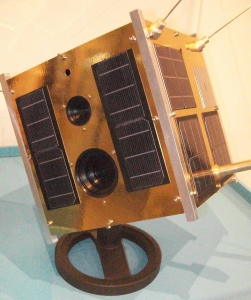
In 2013, the Polish research satellite Lem, named after him, was launched into Earth orbit by a Russian-Ukrainian Dnepr launch vehicle as part of the international BRITE project. In German-speaking countries, the Stanisław Lem Way in Halle-Neustadt is dedicated to him.
The Polish Sejm declared 2021 the Year of Stanisław Lem.[23] The dedication is divided between Lem, Stefan Wyszyński, Cyprian Norwid, Krzysztof Kamil Baczyński, Tadeusz Różewicz, and the Constitution of May 3. The first Lem video game, The Invincible, was released in the same year.[24]
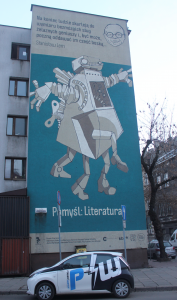
The Komet Lem Festival took place in Darmstadt from October 2016 to March 2017.[25] The festival, organized by the Philosophical Institute of the Technical University of Darmstadt, the German Polish Institute, and the State Theater, was dedicated to Stanisław Lem with various events such as readings, plays, and film screenings, as well as musical interpretations of Lem’s works. The exhibition Lem’s Animal Life after Mróz consisted of drawings by illustrator Daniel Mróz based on Lem’s worlds.[26]
J. Doyne Farmer called Lem the “Poet Laureate of Artificial Life” for his achievements.
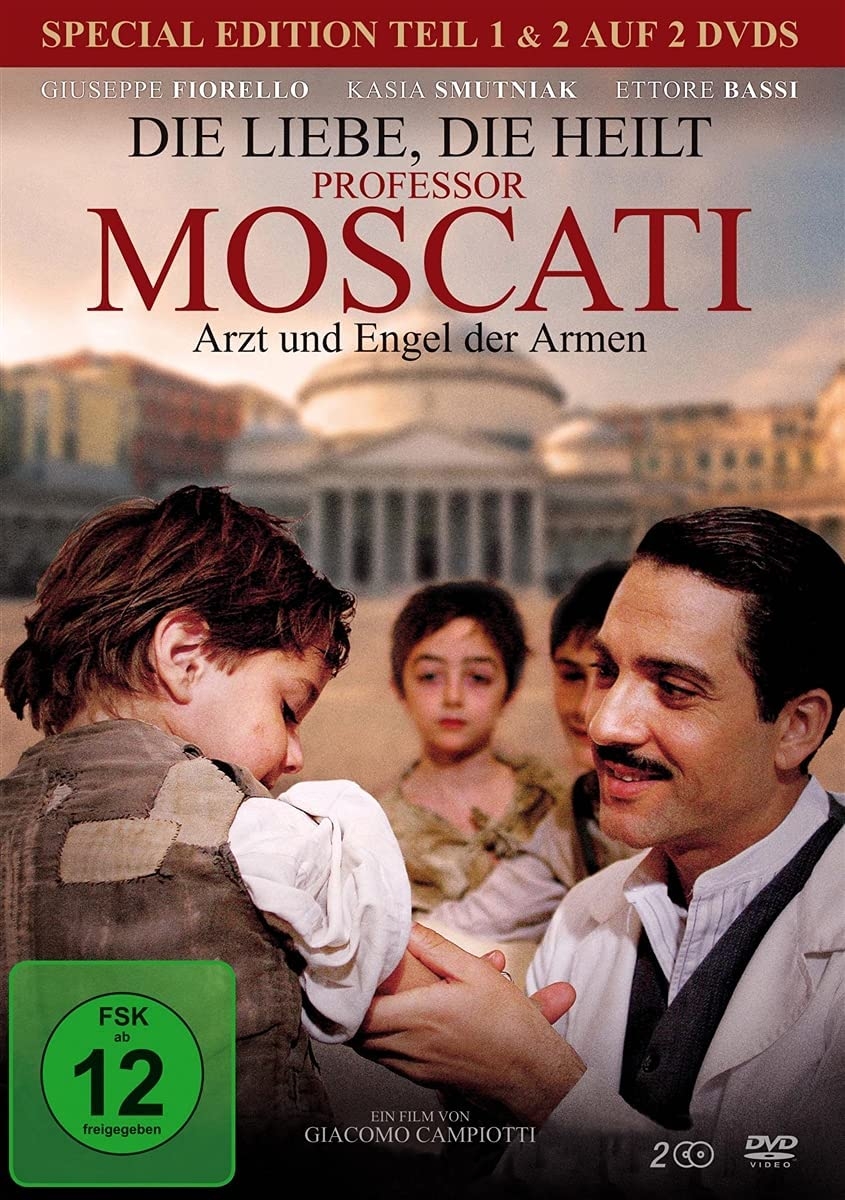
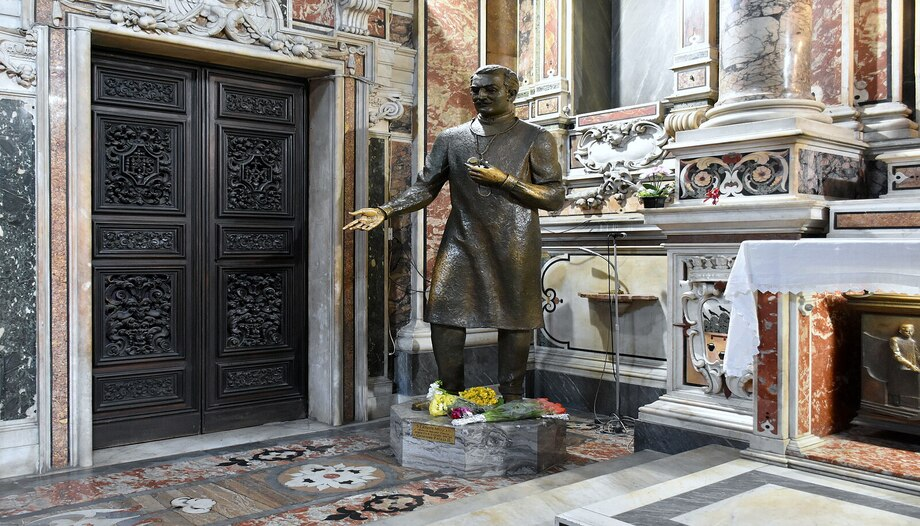
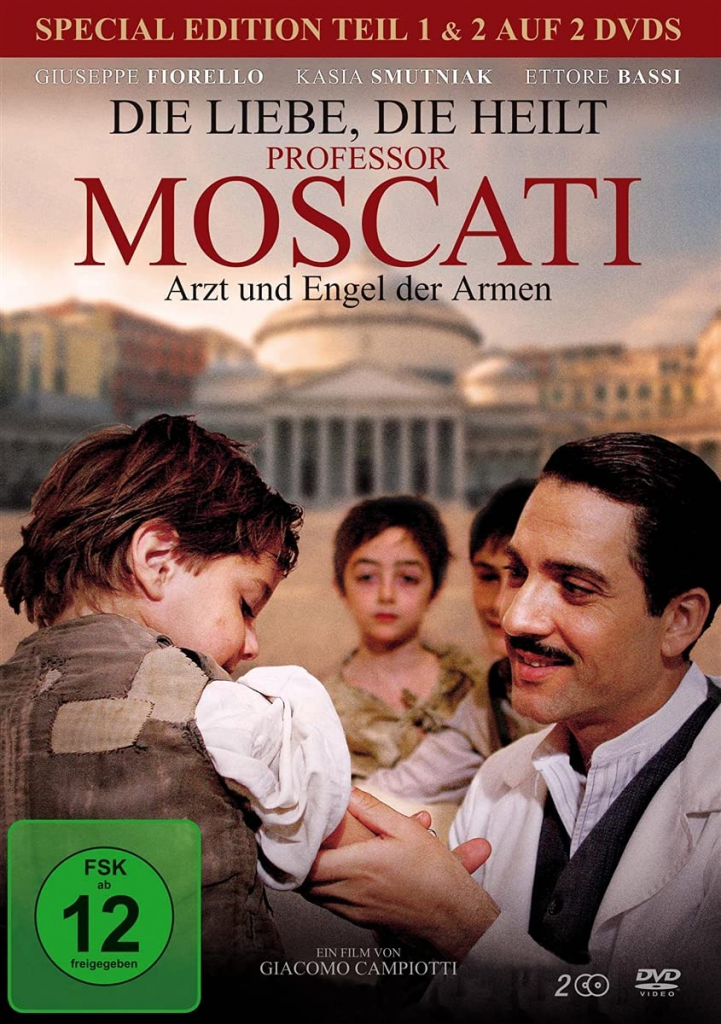
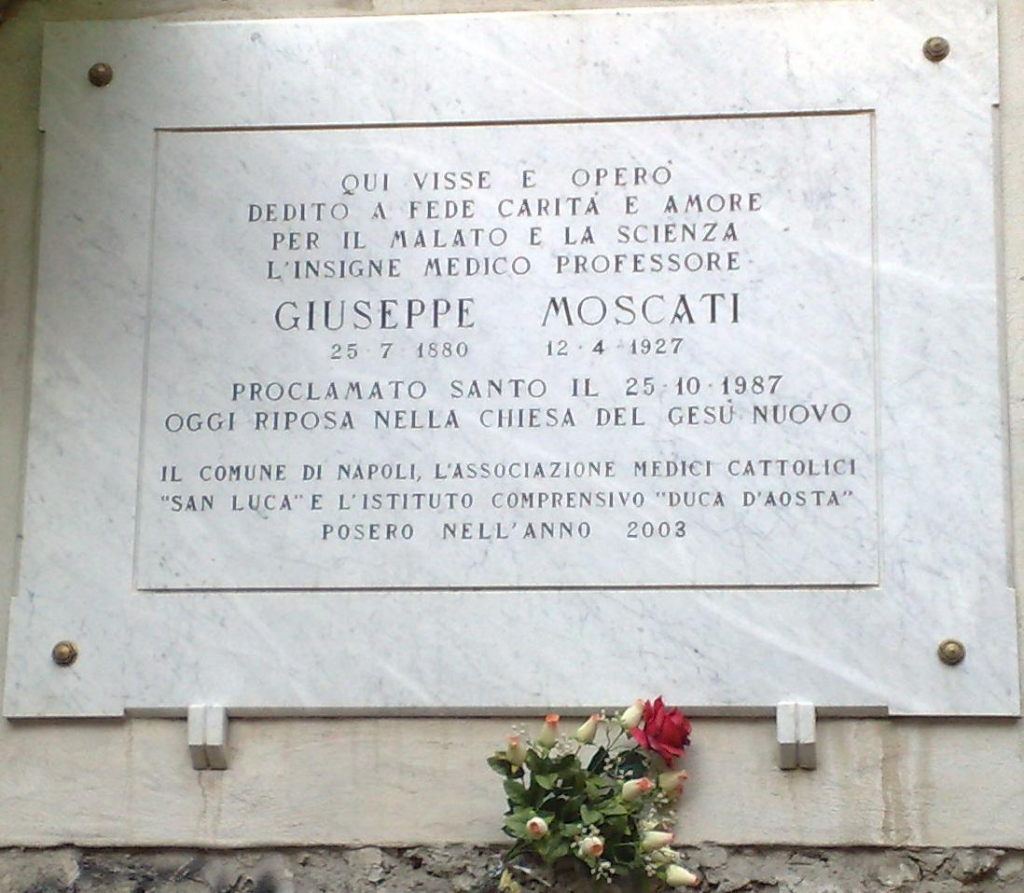
Saint Giuseppe Moscati, also known as Joseph Moscati (July 25, 1880 in Benevento near Avellino; April 12, 1927 in Naples) was an Italian physician, scientist, and university professor. He was beatified by Pope Paul VI in 1975 and canonized by Pope John Paul II in 1987. The Catholic Church celebrates his feast day on April 12, while the Archdioceses of Naples and Amalfi-Cava de’ Tirreni celebrate it separately on November 16. Moscati was one of the first physicians to use insulin to treat diabetes.
Joseph Moscati (1880-1927) came from an Italian aristocratic family and was a renowned physician – that sounds like a life worthy of a serial, full of luxury, money, and beautiful women. But this saint chose a very different path early on and pledged eternal chastity before even beginning his medical studies in Naples. Joseph completed his doctorate in 1903 and was soon forced to prove his humanitarian commitment: in 1906, Mount Vesuvius erupted. The young doctor organized the evacuation of a hospital and provided emergency aid. Just five years later, Naples was struck by a cholera epidemic, and Joseph worked around the clock caring for the sick. In 1914, the First World War broke out, during which Joseph treated approximately 3,000 soldiers. Beyond the great catastrophes of world events, he took special care of the poor. Not only did he accept little or no remuneration from them, but he often paid for medication out of his own pocket. The popular physician died after a short illness on April 12, 1927, in Naples. Pope John Paul II canonized Joseph Moscati in 1987.
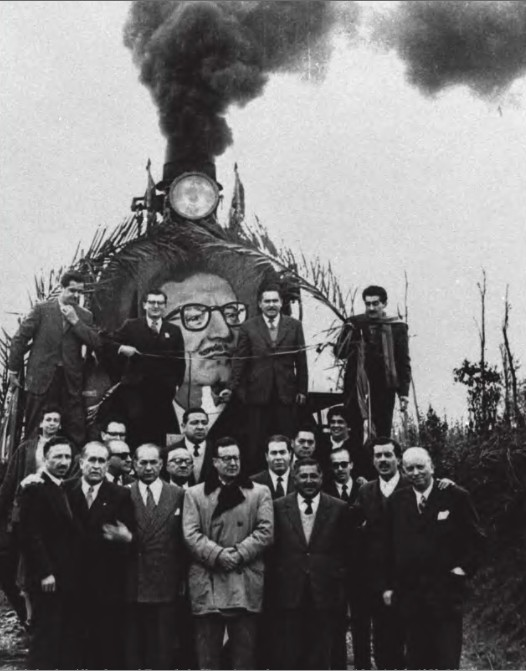
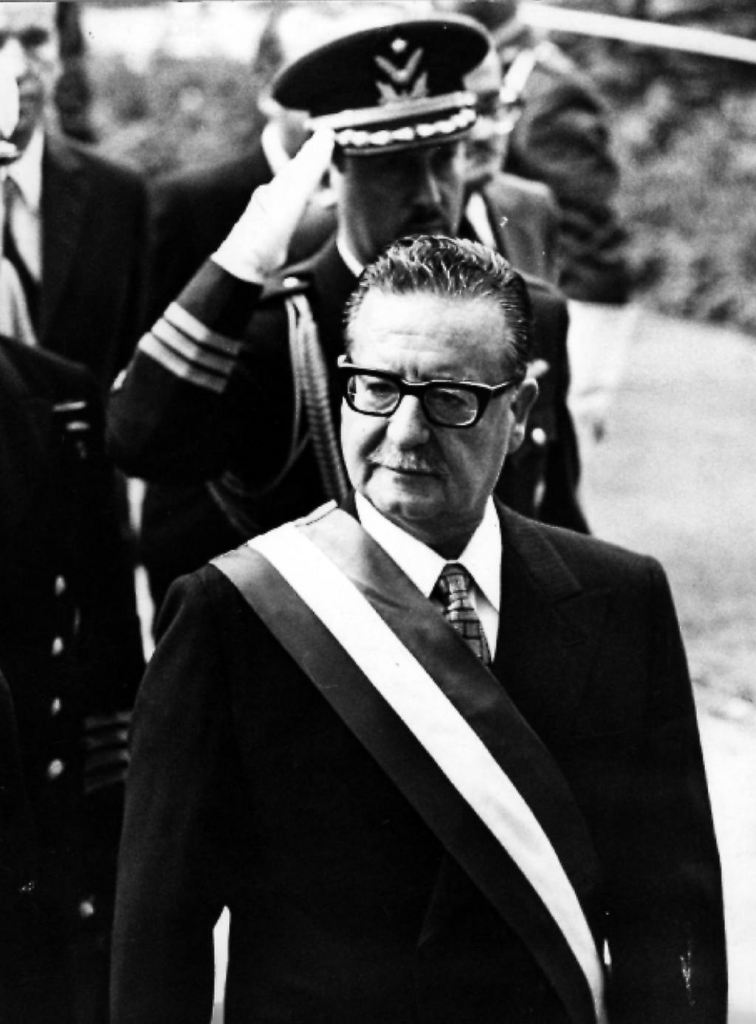
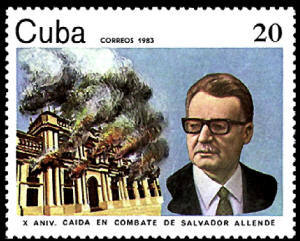
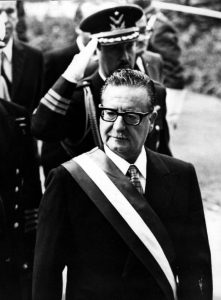
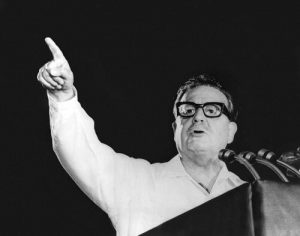
Salvador Guillermo Allende Gossens [salβaˈðoɾ ɣiˈjeɾmo aˈjende ˈɣosens] (June 26, 1908 in Valparaíso – September 11, 1973 in Santiago de Chile) was a Chilean physician and politician. He served as President of Chile from 1970 to 1973. His presidency was an attempt to establish a socialist society in Chile through democratic means. Allende was overthrown in a military coup in 1973, during which he committed suicide.
Allende became politically active in the late 1920s as a medical student at the University of Chile. He participated in protests against the dictatorship of Colonel Carlos Ibáñez del Campo and was elected vice president of the Federation of Chilean Students (FECH). In 1929, he joined both the Freemasons[5] and the group “Avance” (“Forward”).[6] In both organizations, he made important contacts for his later political career.
After the suppression of an uprising against the Ibáñez dictatorship led by Marmaduque Grove, Allende was arrested but later released. Shortly thereafter, he became secretary of the Socialist Party, founded in 1933, for the Valparaíso region.
In 1952, Allende ran for president for the first time, but only finished fourth. In 1954, he served as Deputy President of the Senate. In 1958, he was again the presidential candidate of the left-wing alliance Frente de Acción Popular (FRAP), but narrowly lost to the businessman Jorge Alessandri Rodríguez, who was supported by the right-wing parties. In 1964, he ran for president again, but was decisively defeated by the Christian Democrat Eduardo Frei. The reasons for this final electoral defeat were the last-minute support of the conservative parties for the more progressive Frei, as well as the massive support of the Christian Democrats by the CIA.[7]
In 1966, Allende was elected President of the Senate. In 1968, calls for his resignation followed his personal protection of the survivors of Che Guevara’s guerrilla force in Bolivia. In the same year he condemned the Soviet invasion of Prague.
Namegiving
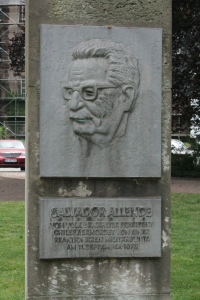
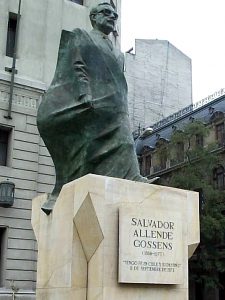
After the end of the military dictatorship in Chile, Allende’s body was transported from Valparaíso, where he had been buried behind closed doors after the coup, to Santiago de Chile and interred in the main cemetery. Several hundred thousand people attended the funeral. A statue of Allende stands next to the presidential palace, La Moneda.
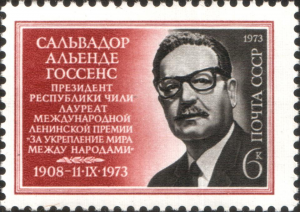
After his death, Salvador Allende was honored primarily in the socialist countries of Europe. In the Berlin district of Köpenick, the Salvador Allende Quarter is named after him. There is also an Allende Quarter in Wittenberge (Brandenburg). In the university town of Greifswald, in the GDR, the vocational school of the VEB Kombinat Ingenieur-Tief- und Verkehrsbau Rostock (State Industrial Estate Combine) bore the name Dr. Salvador Allende. An “Allende Memorial Stone” stood in the schoolyard. This educational institution was closed after the fall of the Berlin Wall. Two of the former buildings were converted into student housing and prop storage for the theater, in front of which the memorial stone is located. In Jena, a square in the Lobeda-Ost district, and streets in Bautzen, Chemnitz, Ludwigsfelde, Magdeburg, Neubrandenburg, Rostock, Frankfurt (Oder), Waltershausen, Weimar, Wittenberge, and Zwickau are named after Allende.
In Bernburg (Saale) in Saxony-Anhalt, the then new residential area on Kirschberg was named Dr. Salvador Allende Settlement in 1973, and a memorial plaque was erected at the corner of Dr. John Rittmeister Street, which was “stored indefinitely” in 2007.[33] The secondary school in Klötze (Saxony-Anhalt) bears the name “Dr. Salvador Allende,”[34] as does a primary school in Chemnitz.[35] A primary school in Rheinsberg (Brandenburg)[36] bore his name until 2018.[37]
In the Federal Republic of Germany, the former Bornplatz in the Hanseatic City of Hamburg was renamed Allende-Platz in 1983. It is located next to the grounds of the University of Hamburg, in the immediate vicinity of the former Talmud Torah School. In Oer-Erkenschwick, the Socialist Youth of Germany – The Falcons – has called its educational facility the Salvador Allende House since it opened in the late 1970s. There is also a Salvador Allende Street in Berlin, Bremen, and Frankfurt am Main. In Berlin, there is also the Salvador Allende Quarter.
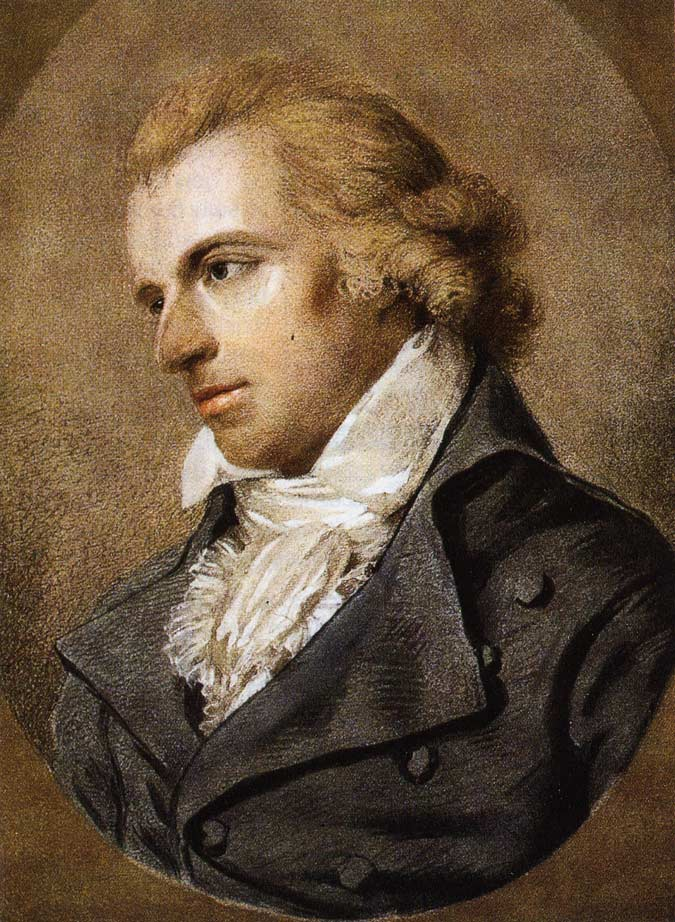
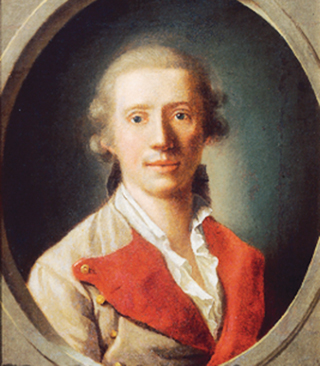
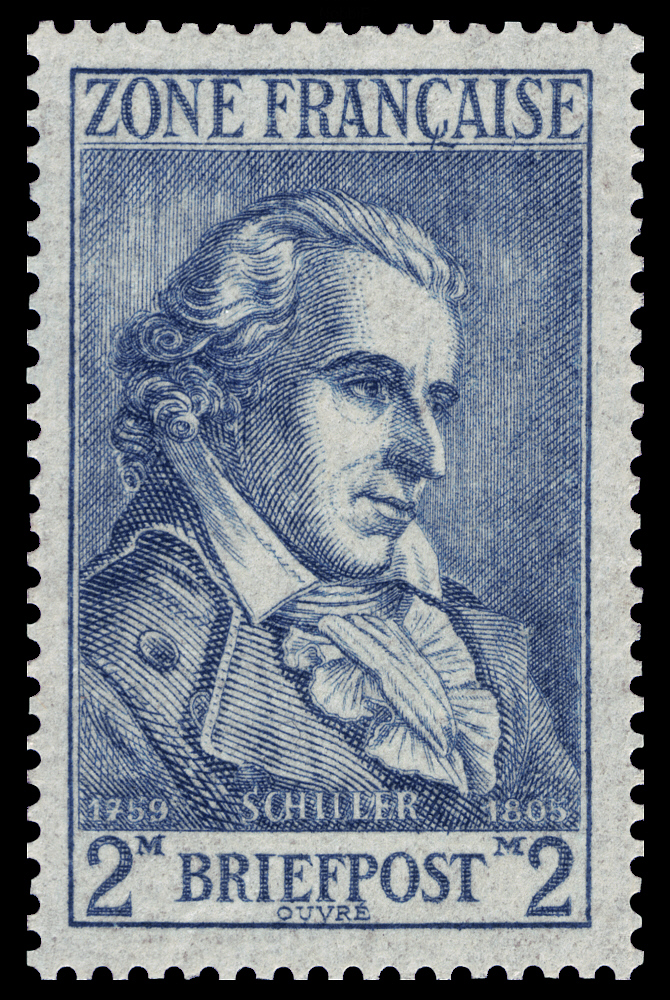
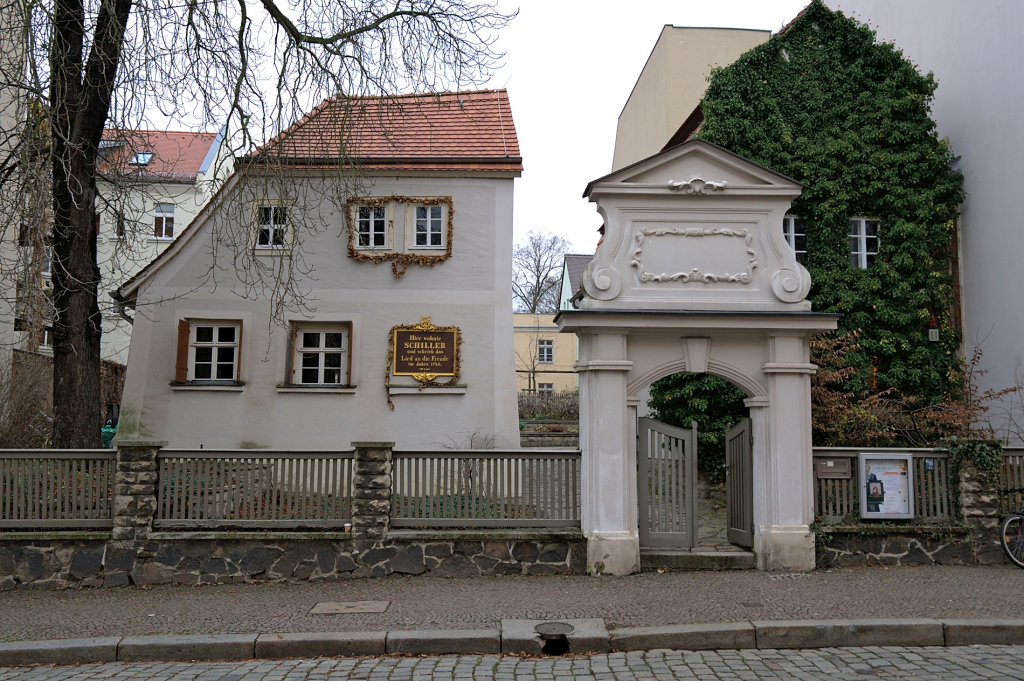
He was born in Marbach to a devoutly Protestant family. Initially intended for the priesthood, in 1773 he entered a military academy in Stuttgart and ended up studying medicine. His first play, The Robbers, was written at this time and proved very successful. After a brief stint as a regimental doctor, he left Stuttgart and eventually wound up in Weimar. In 1789, he became professor of History and Philosophy at Jena, where he wrote historical works.
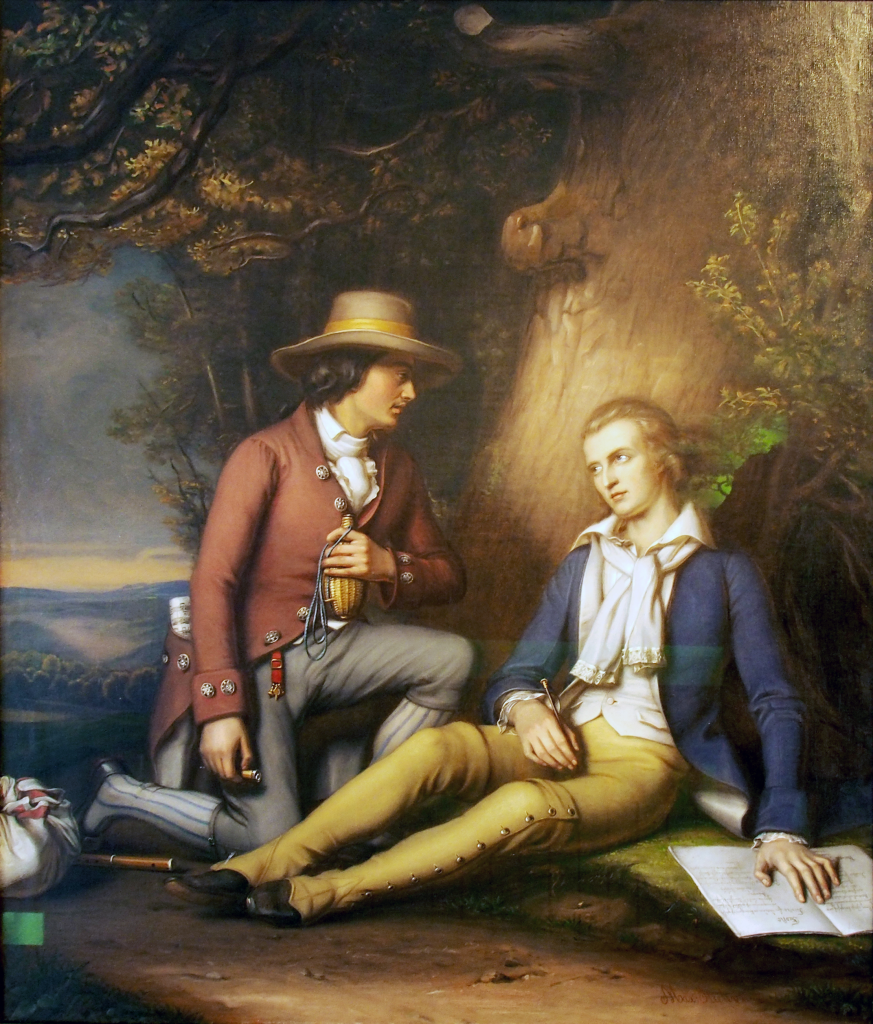
Schiller auf der Flucht mit seinem Freund Andreas Streicher
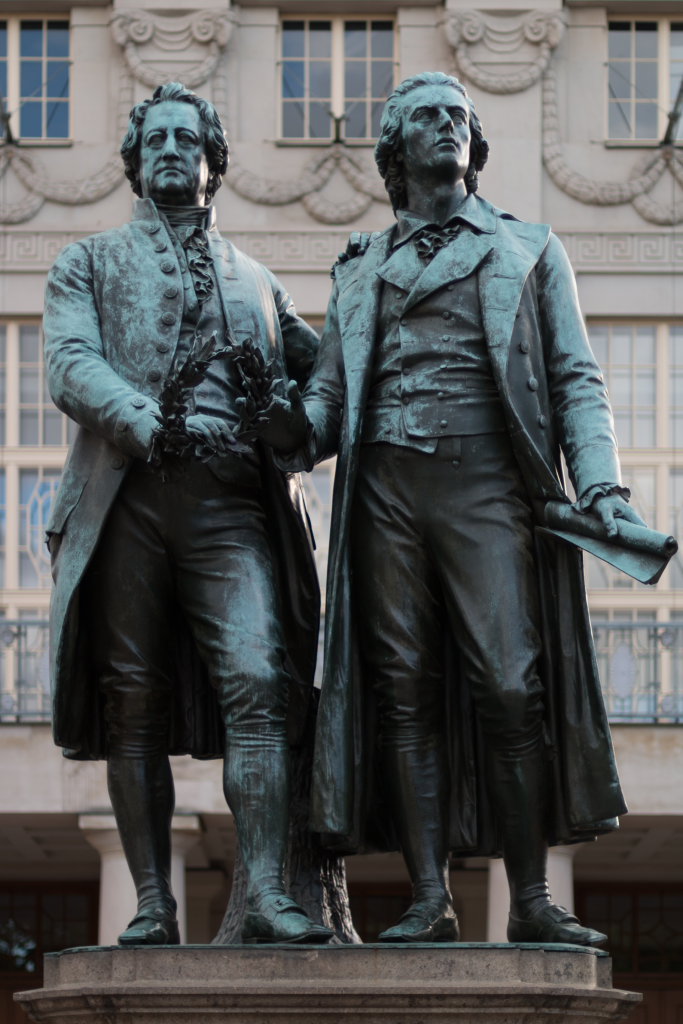
During the last seventeen years of his life (1788–1805), Schiller developed a productive, if complicated, friendship with the already famous and influential Johann Wolfgang von Goethe. They frequently discussed issues concerning aesthetics, and Schiller encouraged Goethe to finish works that he had left as sketches. This relationship and these discussions led to a period now referred to as Weimar Classicism. Together they founded the Weimar Theater.
They also worked together on Xenien, a collection of short satirical poems in which both Schiller and Goethe challenge opponents of their philosophical vision.
Schiller returned with his family to Weimar from Jena in 1799. Goethe convinced him to return to playwriting. He and Goethe founded the Weimar Theater, which became the leading theater in Germany. Their collaboration helped lead to a renaissance of drama in Germany.
For his achievements, Schiller was ennobled in 1802 by the Duke of Saxe-Weimar, adding the nobiliary particle “von” to his name.[12] He remained in Weimar, Saxe-Weimar until his death at 45 from tuberculosis in 1805.