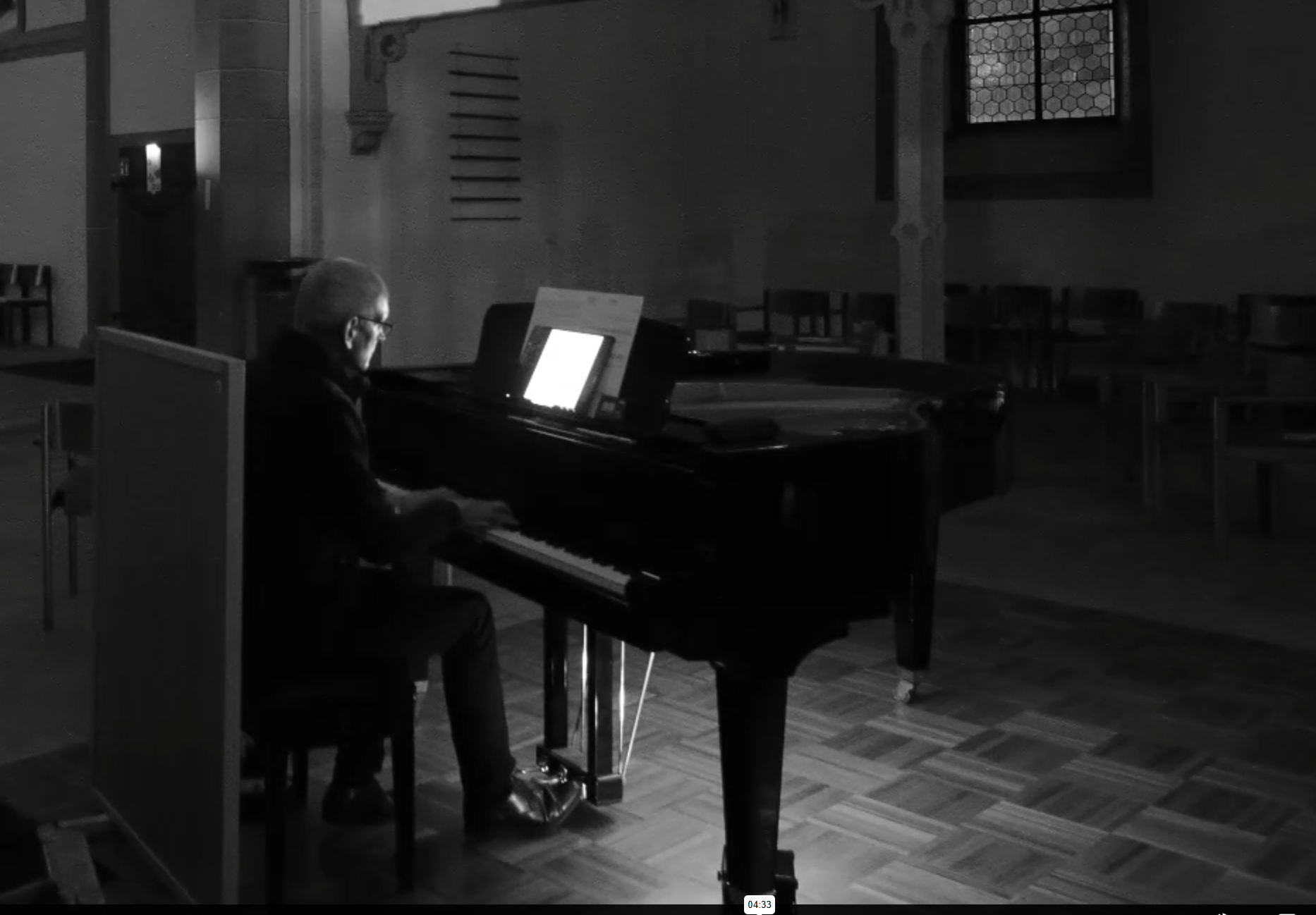
Friday, April 18, 2025, 3 p.m. Xenia Preiseberger, Thomas Scherb, Wolfgang Heilmann (piano) Kurt-Laurenz Theinert (light installation) Angela Fabian, Dietmar Zoller (liturgy)
Erik Satie’s “Vexations” is a very short work. However, the composer demands that the piece be repeated 840 times. The three pianists alternate every two hours, and the church will be open all night. It is possible to enter and leave the church at any time. In addition to the music and the two services, a slowly changing light installation bathes the Marktkirche in a new glow and illustrates the events. At the hour of death (Good Friday, 3 p.m.), the music fades into silence.
District Cantor Wolfgang Heilmann invites you to this musical-liturgical experiment on Maundy Thursday and Good Friday. Good Friday, a new imposition every year. This man on the cross. The world’s suffering is concentrated on him. Again and again the question of “why.” Endurance and compassion, vigil and prayer. That is the task.
Precisely this liminal experience is also intended to be conveyed by the liturgical format. The two services with Holy Communion in the Marktkirche Bad Bergzabern on Maundy Thursday (April 17, 7 p.m.) and Good Friday (April 18, 10 a.m.) will be unusual, disconcerting, reduced, and set to music by Erik Satie (1866-1925).
The doctor and medical journalist Thomas Scherb returned late but very successfully to his youthful profession as a pianist.
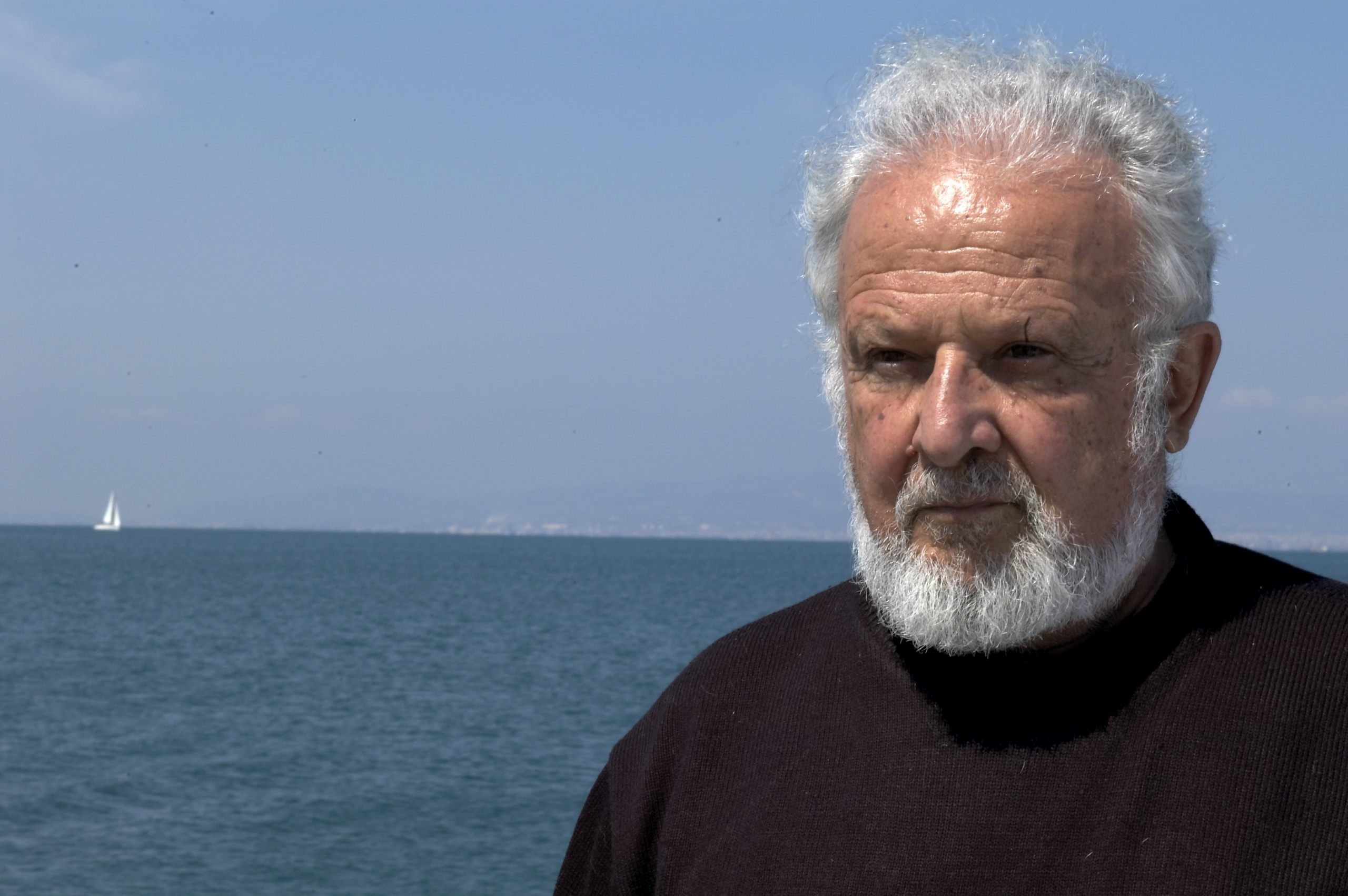
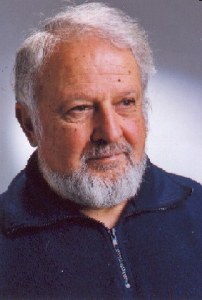
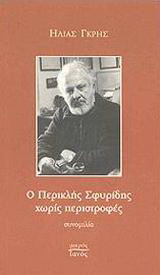
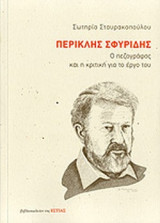
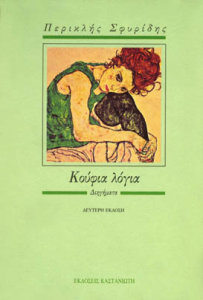
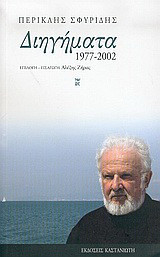
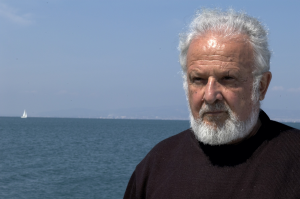
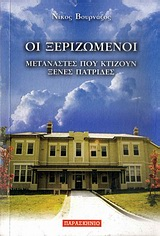
Periklis Sfyridis (born October 5, 1933, in Thessaloniki) is a contemporary Greek poet, prose writer, essayist, critic, and anthologist. His prose has been published in several languages.
Periklis Sfyridis was born in 1933 in Thessaloniki, where he lives. He graduated from the American College “Anatolia” in 1952. He studied medicine at the University of Thessaloniki (as a student of the Military Medical School) and worked as a cardiologist until 1994. From 1975 to 1981, he was president of the Thessaloniki Medical Association.
He appeared in letters in 1974 and worked closely with the literary magazine Diagonios. From 1985 to 1990, he edited Parafyada, an annual publication featuring unpublished anecdotal texts by Thessaloniki prose writers. From 1987 to 1996, he was the publishing consultant (content manager) for the magazine To Tram. In 1996, he organized the conference “Paramythia Thessaloniki” on the city’s prose from 1912 to 1995 and edited its proceedings. In 2001, he co-organized the conference “Poetry in Thessaloniki in the 20th Century” with the Department of Medieval and Modern Greek Studies at the Faculty of Philology, Faculty of Philosophy, Aristotle University of Thessaloniki, and the Thessaloniki Municipal Library, and edited its proceedings. In 2005, he organized the conference “Literary Nurseries in Thessaloniki: The City’s Literary Journals in the 20th Century and Their Editorships.” In 2008, he organized the fourth conference Criticism and Critics of Thessaloniki in the 20th Century at the Municipal Library of Thessaloniki, as part of the Demetrios Festival, and edited its proceedings (together with Sotiria Stavrakopoulou).
His short story “The Secret” is the basis for Tasos Psarras’ film “The Other Side”, the screenplay for which he wrote together with the director. Two other of his short stories have been made into television films. He also wrote the texts for the documentary series “Literature and Social Reality in Thessaloniki” by Tasos Psarras, which was broadcast by ET-3 in 1997, and for the same director’s “Literary Walks in Northern Greece” (these are the television/literary portraits of the following writers: Thanasis Markopoulos / Veria, Vasilis Karagiannis / Kozani, Lazaros Pavlidis / Kilkis, Sakis Totlis / Edessa, Vasilis Tsiambousis / Drama), a series that was broadcast repeatedly on state television in 1995.
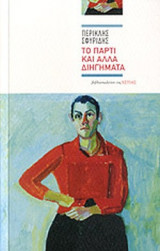
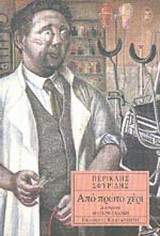
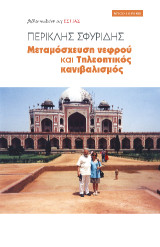
He has published two collections of poetry, fourteen short story collections, two novels, and a memoir about his spiritual journey. He has published studies on novelists, painters, and three anthologies on Thessaloniki’s prose writers, one of which has been translated into German and another into English. He has collaborated with most Greek literary magazines. His short stories have been translated into German, English, and Dutch, as have two of his books in the same language (Dutch): the short story collection First Hand and his novel Kidney Transplant. Over one hundred serious reviews and studies of his prose work have been published in individual volumes. In November 2007, he was honored by the Municipality of Thessaloniki for his prose and critical work. From 2009 to 2010, he was a member of the electoral committee of the Vafopoulio Cultural Center of Thessaloniki, responsible for speaking events. There he also created the literary series Vafopoulio Publications.
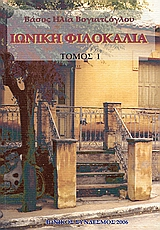
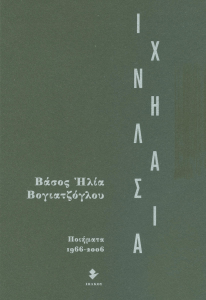
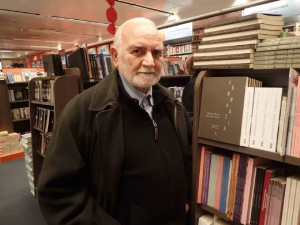
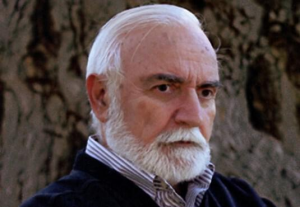
Vasos Vogiatzoglou, son of Elias, was born in 1935 in Nea Ionia, Attica. He is a pediatrician and member of the Doctors of the World organization, a researcher of the history and folk culture of the Greeks of Asia Minor, a poet, onomasticologist, and essayist.
His parents were refugees from Sparta (Isparta) in Pisidia. He studied medicine at the University of Athens and specialized in pediatrics. She provides voluntary pediatric care for children in the women’s prisons of Korydallos and Thebes.
Vasos Ilias Vogiatzoglou was born in 1935 in Nea Ionia, Attica. He is from Sparta, Greece, Asia. He is a pediatrician and an active member of the humanitarian organization “Doctors of the World.” They provide voluntary pediatric care for children in the women’s prisons of Korydallos and Thebes. As a researcher of the history and popular culture of the Greeks of Asia Minor, a poet, onomasticologist, and essayist, he has a particular interest in the philosophical essay. He has published 37 books and collaborated with numerous newspapers and magazines in Greece and Cyprus.
Since 2006, he has been director of the Kyklos School of Philosophical and Social Science Research in his hometown. He has received numerous honors and awards for his literary and humanitarian work, including one from the Academy of Athens in 1986 for his contribution to the study of Hellenism in Asia Minor. He is a full member of the National Society of Greek Writers, the Greek Onomatological Society, the Society of Medical Writers, and the Greek Society of Christian Letters.
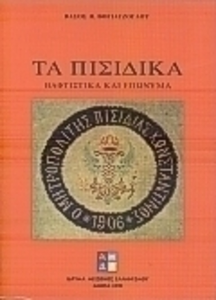
In addition to poetry, he studied the history and folklore of Hellenism in Asia Minor and published the studies Pisidia in Asia Minor (1978), Presences (1979), Neighborhoods of the Infidels (1981), Sparta in Asia Minor (1986), Surnames in Asia Minor: Turkish and Turkish Surnames in Greece (1992), Giannis and Giorgis (1994), Alaya in Asia Minor (1995) and Pisidian Baptismal and Surnames (1998).
Weitere Projekte
He has also published the aesthetic study The Faces of Janus (1991), the translation of the Psalms of David The Book of Psalms (1992), the travelogue about Mount Athos The Bells of Pantocrator (1992) and The Book of Job (2007); his short stories, chronicles, studies and essays have been published in magazines in Athens and Nicosia and his poems have been translated into Romanian and Polish.
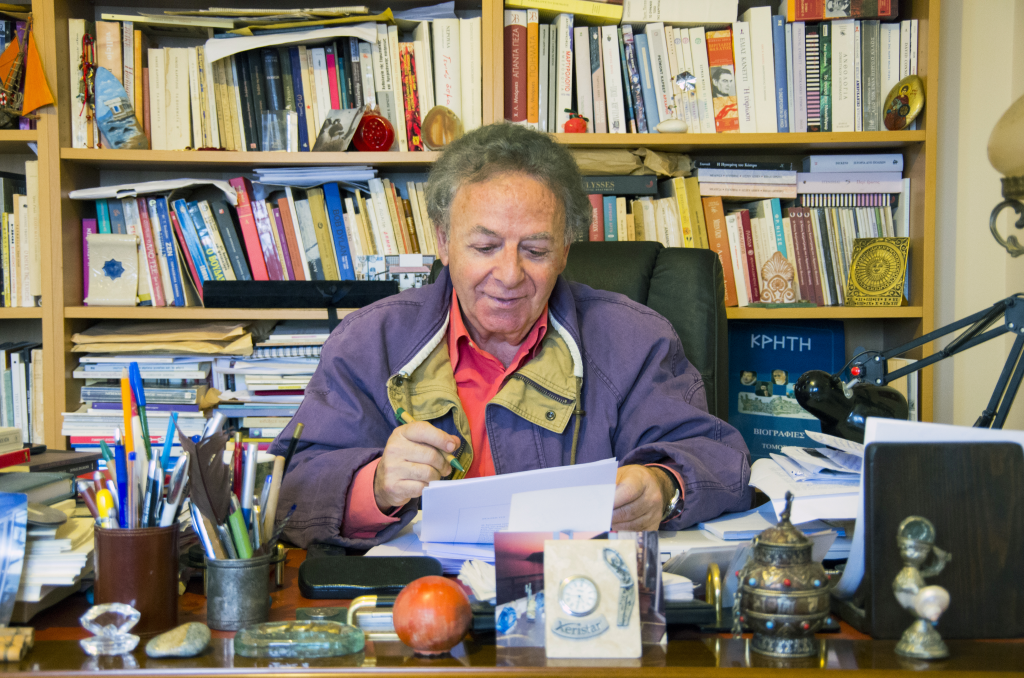
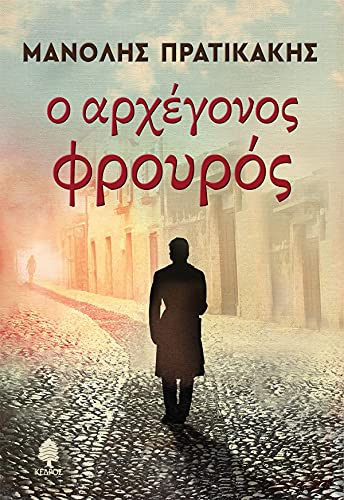
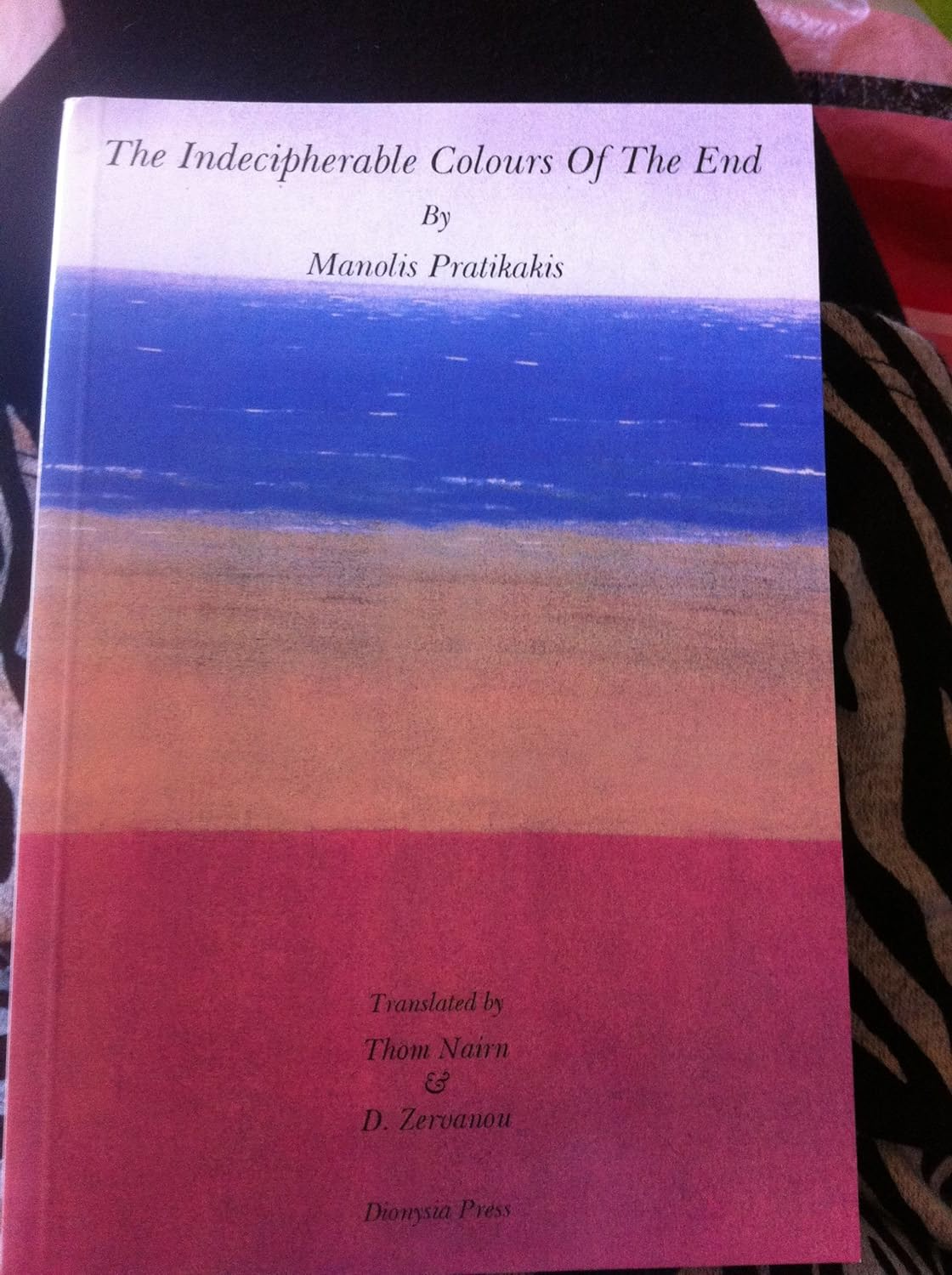
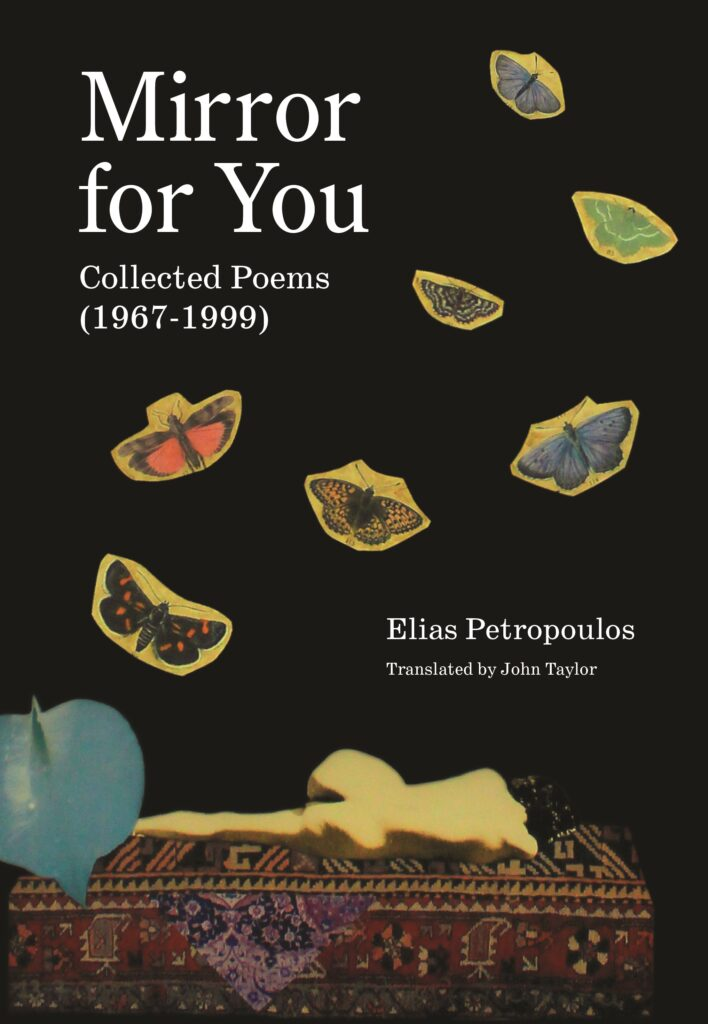
Manolis Pratikakis (Greek: Μανόλης Πρατικάκης; born 1943) is a Greek poet. He studied medicine at the University of Athens and is a practicing neurologist and psychiatrist. His first volume of poetry was published in 1974; he is one of the so-called “Genia tou 70,” a literary term for Greek authors who began publishing their works in the 1970s, particularly towards the end of the Greek military junta of 1967-1974 and during the early years of the “Metapolitefsi.” He received the Greek National Book Prize in 2003 for his collection of poems “To νερό.”
Selected poetry
Ποίηση 1971-1974 (Poetry 1971-1974), 1974
Οι παραχαράκτες (The Counterfeiters), 1976
Λιβιδώ (Libido), 1978
Η παραλοϊσμένη (The Demented), 1980
Γενεαλογία (Genealogy), 1984
Το νερό (The Water), 2002
Ποιήματα 1984-2000 (Poems 1984-2000), 2003
He is considered an important modern Greek poet. His writings first appeared in journals around 1970. He has written numerous collections of poems, critical texts, short stories, and articles. His poems have been translated into many languages. He has contributed to Greek and foreign anthologies and journals and participated in numerous conferences. In 1999, he was nominated for the European Prize for Literature for his work “The Assumption and Resurrection of the Bodies of Dominic.” Poems from his collection “Libido” were set to music by composer Yannis Markopoulos and released on a CD titled “Unseen Pulse.” Recently, the same composer wrote a symphonic work entitled “The Symphony of Healing,” based on the poetry collections “Genealogy,” “The Lekythos,” and “Left Quietly in the Grass,” which had its world premiere at the Concert Hall. In 2003, he received the State Poetry Award [3] for his collection of poems “The Water.” In 2012, he received an award from the Athens Academy for his body of work.
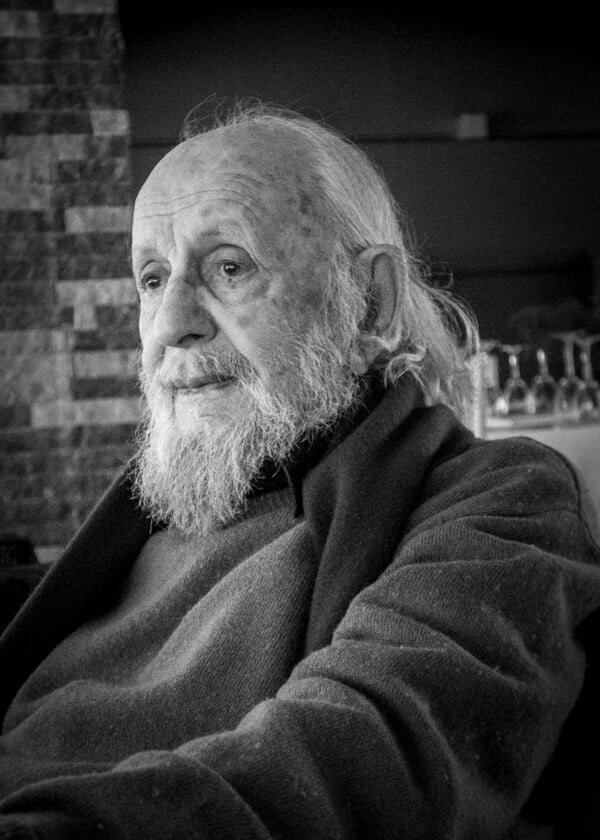
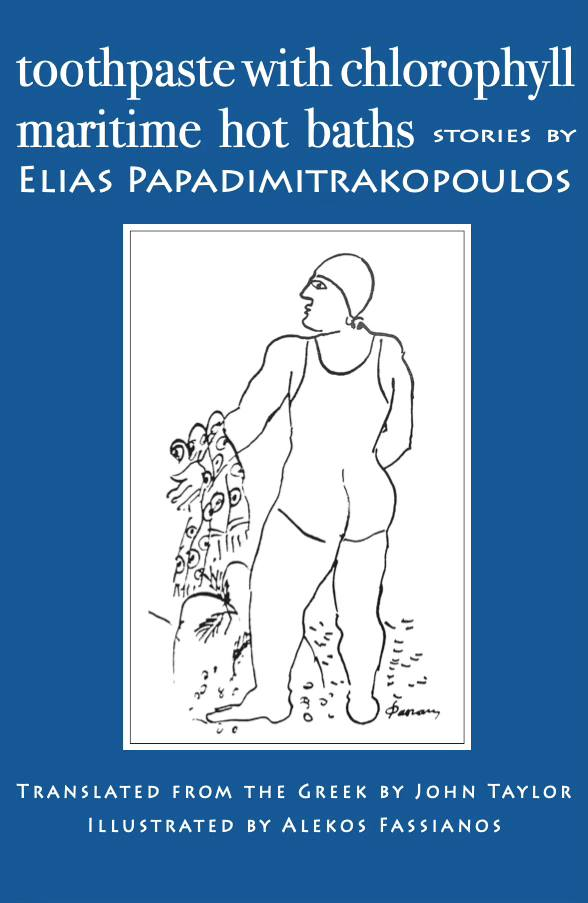
Elias H. Papadimitrakopoulos (Pyrgos, Ilia, August 23, 1930 – Athens, November 29, 2024) was a Greek novelist, prose writer, and military doctor.
He was born in Pyrgos, Elis, where he spent his childhood and youth. After the death of his father, a lawyer, in 1943, his family faced difficult times. As he later wrote, he studied at the Military Medical Faculty of the University of Thessaloniki from 1949 to 1955 out of necessity.
From 1959 to 1968 he served in Kavala. There he first appeared in mail advertising with the short story “O frakasanes”, which he published under a pseudonym in the Kavala magazine Argo in 1962. He also collaborated with the magazines Skapti Yli (Kavala), Tachydromos (Kavala), Dialogos (Thessaloniki), Dialogos (Lechenia), Anti, Harti, Chroniko and To Tetarto. In addition, he served for many years as editor-in-chief of the journal Medical Review of the Armed Forces. He retired from the army in 1983 with the rank of senior chief surgeon.
His work, considered part of Greek post-war literature, is characterized by linguistic simplicity, subtle irony, and tender nostalgia for the difficult years of youth. He was recognized in 1995 with the short story award from the magazine Diavázo.
He occasionally wrote articles for the newspapers Kathimerini and Eleftherotypia and also edited books by lesser-known authors such as Homer Pellas (1921–1962). [5] He is also responsible for the first critical presentation of the work of Nikos Kachtitsis in Greece, which appeared in a private publication in 1974. His most recent works are the short story collection The Treasure of the Nightingales (2009) and the story Symtopia of a Plane Tree (2010).
In 2007, the documentary film “House by the Sea” was made about him, directed by Lefteris Xanthopoulos.
His short stories have also been translated into French.
He died on November 29, 2024, at the age of 94. His body was buried in the 1st Cemetery of Pyrgos.
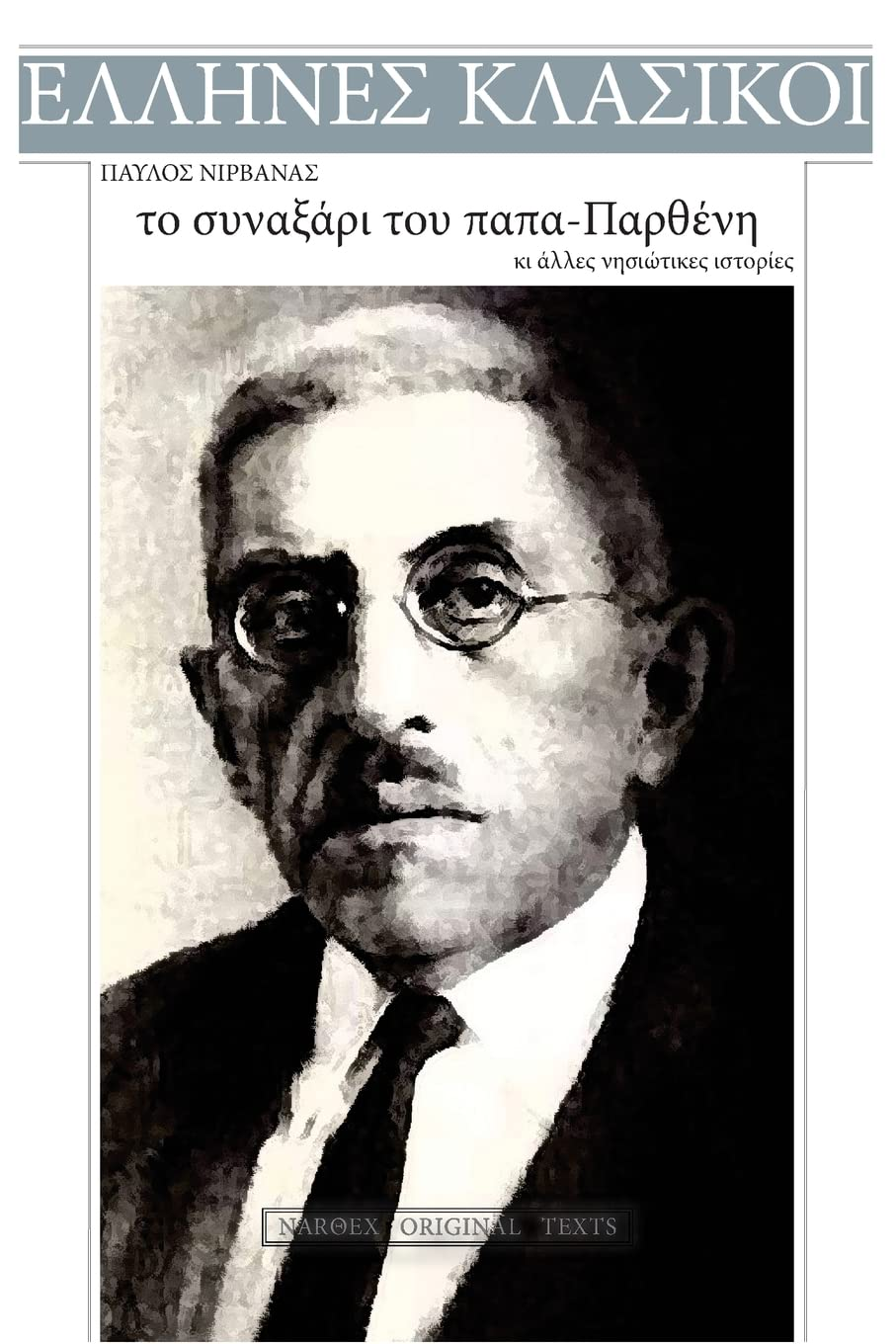
Pavlos Nirvanas (Greek: Parasloός Niρβάνας, * 1866 in Mariupol, Russian Empire; † 28 November 1937 in Athens, Greece) was a Greek writer whose real name was Petros K. Apostolidis.
Nirvanas’ father came from Skopelos, his mother from Chios. As a child, Pavlos Nirvanas moved from his then Russian hometown to Greece and lived in Piraeus. He studied medicine at the University of Athens and graduated in 1890. He joined the Navy and rose to the rank of senior physician (γενικός αρχίατρος). He left the service in 1922. He also worked as a journalist and was a member of the Academy of Athens from 1928. Although not born on Skopelos himself, he considered the Aegean island his home throughout his life.
https://www.youtube.com/watch?v=oCW4O7uO0BI
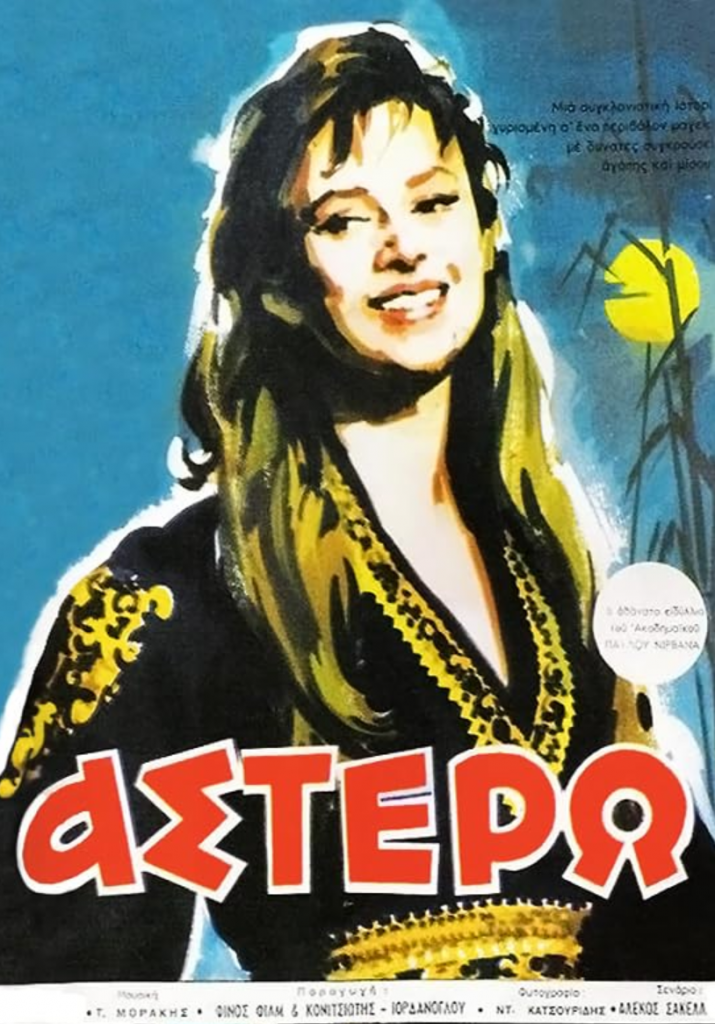
In a village in the Peloponnese, on the slopes of Mount Helmos, lives Astero, the beloved daughter of Lord Mitros, who falls in love with his son Thymios. However, Grandfather Mitros decides to marry his son to the rich Tselingo girl Maro, and Astero to the wealthy landowner Thanos. His wife Stamatina also contributes to this with her machinations. On their wedding day, however, Astero loses his mind and runs away, while Thymios goes off to search for her. Thymios’ father is filled with remorse, especially when the village elders remind him that he owes everything he has created to the Asteros estate, which he has exploited…
Pavlos Nirvanas explored almost all genres of literature: he wrote short stories, dramas, poems, essays, critiques, novels, satires, and contemporary historical texts; he also worked as a translator. He published his first volume of poetry in 1884. Of literary-historical significance, however, are less the poems in Nirvanas’s oeuvre than the richness of the work itself and certain individual works, such as the Linguistic Autobiography (Γλωσσική Αυτοβιογραφία) from 1905, in which Nirvanas takes a position on the Greek linguistic dispute.
In a first-person narrative, he describes the career of a young man who increasingly succumbs to the fascination of the standard language and rises to become an extremely atticized scholar. Even though his learned speeches are understood by few, he is admired for his expressive abilities. Only the encounter with some beautiful girls from the people makes him doubt his linguistic world view, because instead of ῥῖ�ες (rínes), ὄμματα (ómmata), ὦτα (óta) and χεῖρες (chíres) – in German something like: heads, faces, facial bays… –[1] he suddenly only sees in his mind their delicate μύτες (mýtes), μάτια (mátja), αυτιά (aftjá) and χέρια (chérja) – completely “natural” noses, eyes, ears and hands – and as a result he turns away from the madness of the standard language.
Pavlos Nirvanas was awarded for his literary work in 1923.
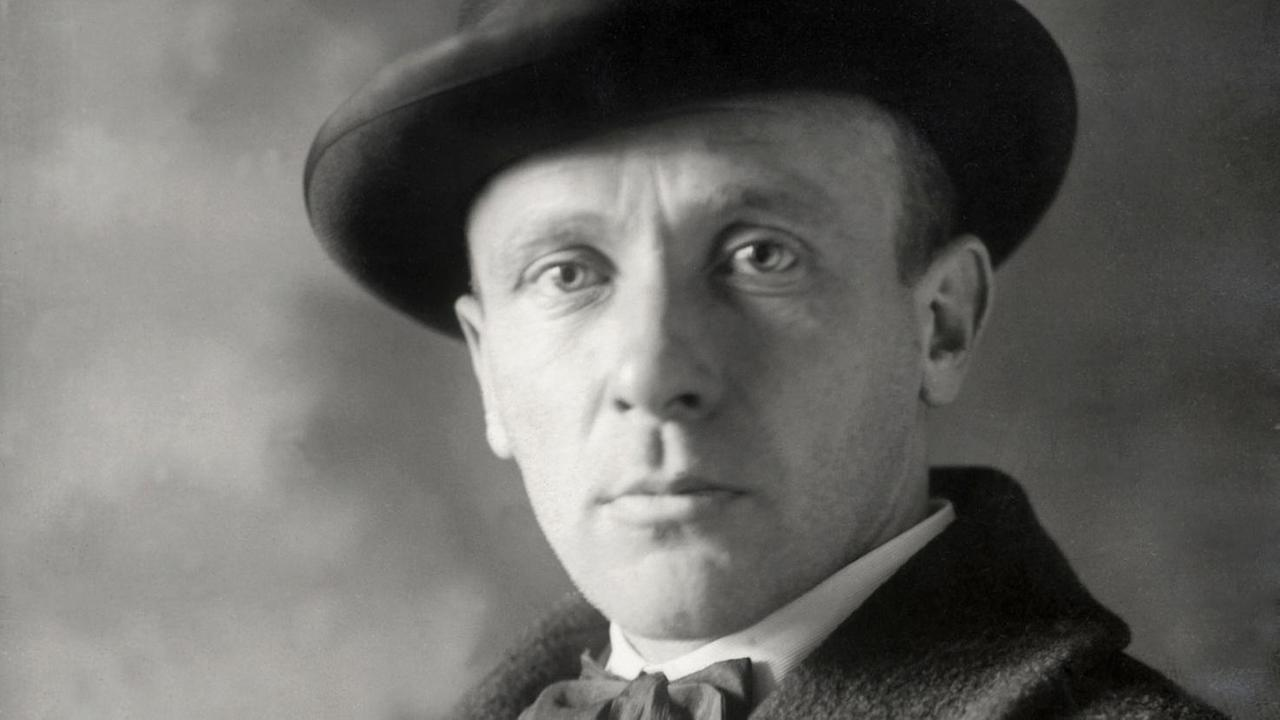
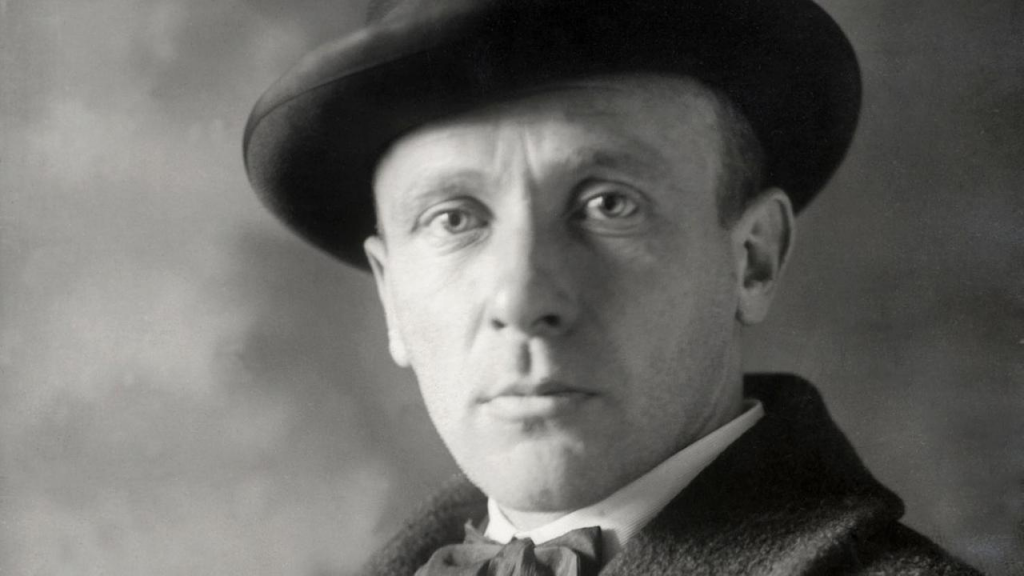
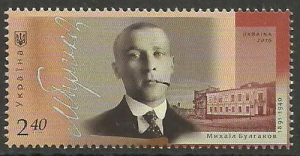
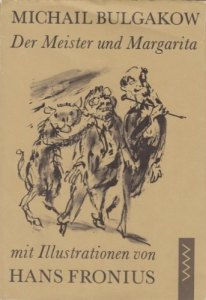
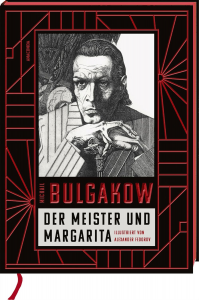
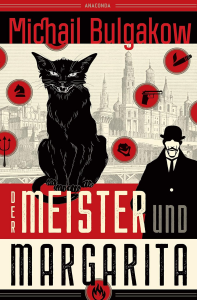
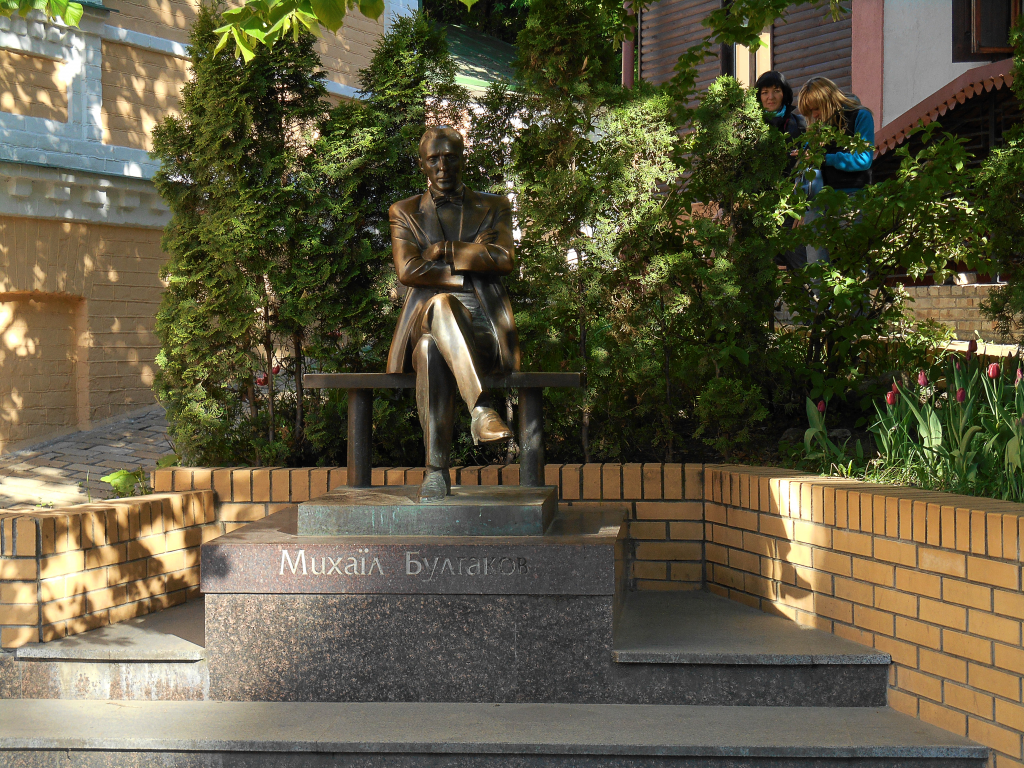
Mikhail Afanasyevich Bulgakov (Russian: Михаи́л Афана́сьевич Булга́ков, scientific transliteration: Mikhail Afanas’evič Bulgakov; May 3, 1891 in Kiev, Russian Empire – March 10, 1940 in Moscow, Soviet Union) was a Russian and Soviet writer. He is considered one of the great satirists of Russian literature. One of his major works is the novel The Master and Margarita, which was published posthumously in 1966 after heavy censorship. The excerpts were distributed as samizdat and thus contributed to his popularity.
Mikhail Bulgakov was born in 1891 to Afanasy Ivanovich Bulgakov, a lecturer at the Kyiv Theological Academy, and his wife Varvara Mikhailovna (née Pokrovskaya), and was baptized in the Podil Church of the Exaltation of the Holy Cross that same year. After graduating from the Kyiv First Gymnasium in 1909, he enrolled at the Medical Faculty of Kyiv University. In 1916, he received his medical degree and took up a rural position in the Smolensk Region before practicing medicine in the town of Vyazma. In 1913, he married Tatyana Nikolaevna Lappa (Russian: Татьяна Николаевна Лаппа).
At the end of October 1921, Bulgakov moved to Moscow and began working for several newspapers (Siren, Worker) and magazines (The Medical Worker, Russia, Rebirth). During this time, he published occasional prose pieces in the Berlin-based exile newspaper Am Vortag. Between 1922 and 1926, Siren printed more than 120 of his reports, essays, and columns. Bulgakov joined the All-Russian Writers’ Union in 1923.
In 1924, he met Lyubov Yevgenyevna Belozerskaya (Russian: Любовь Евгеньевна Белозёрская), whom he married the following year. In 1928, the couple toured the Caucasus, visiting the cities of Tbilisi, Batumi, Vladikavkaz, and Gudermes. The premiere of Bagrovsky Island (Blood-Red Island) took place in Moscow that same year. During this time, the author developed the first ideas for The Master and Margarita and began work on a play about Molière entitled Cabal Svyatosh (Slavery of the Bigots). In 1929, he met Yelena Sergeyevna Shilovskaya, who became his third wife in 1932.
In the partly autobiographical novel The White Guard from 1924, Bulgakov uses the example of the Turbin family from Kyiv to describe the chaotic period of upheaval that followed the October Revolution and the collapse of the Russian Empire. Bulgakov’s play The Days of the Turbins, which premiered in Moscow on October 5, 1926, is also based on the novel. However, Bulgakov is better known for his grotesque depictions of everyday life in the young Soviet Union, often with fantastical or absurd elements—a typical form of social criticism in Russian-language literature since Gogol. The story “Heart of a Dog” was written in 1925 but was not published in the Soviet Union until 1987.
The Master and Margarita
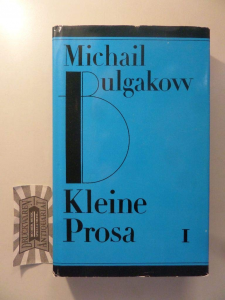
Bulgakov’s best-known work is The Master and Margarita, a satirical and grotesque take on the Faust motif, a journey through time. The work first appeared in print in 1966/67 in serialized form in the literary magazine Moskva, almost 30 years after the author’s death, in an abridged version. The unabridged version first appeared in book form in 1973. Shortly after its initial Soviet publication, the novel was published in 1968 in the German translation by Thomas Reschke in the GDR. In protest against Stalinism, during which the novel was written, he criticizes the dialectical materialism and militant atheism expressed in the Soviet Union.[3]
Some critics consider the book the best Russian novel of the 20th century. It was number 1 on the Spiegel bestseller list from April 29 to May 5, 1968.
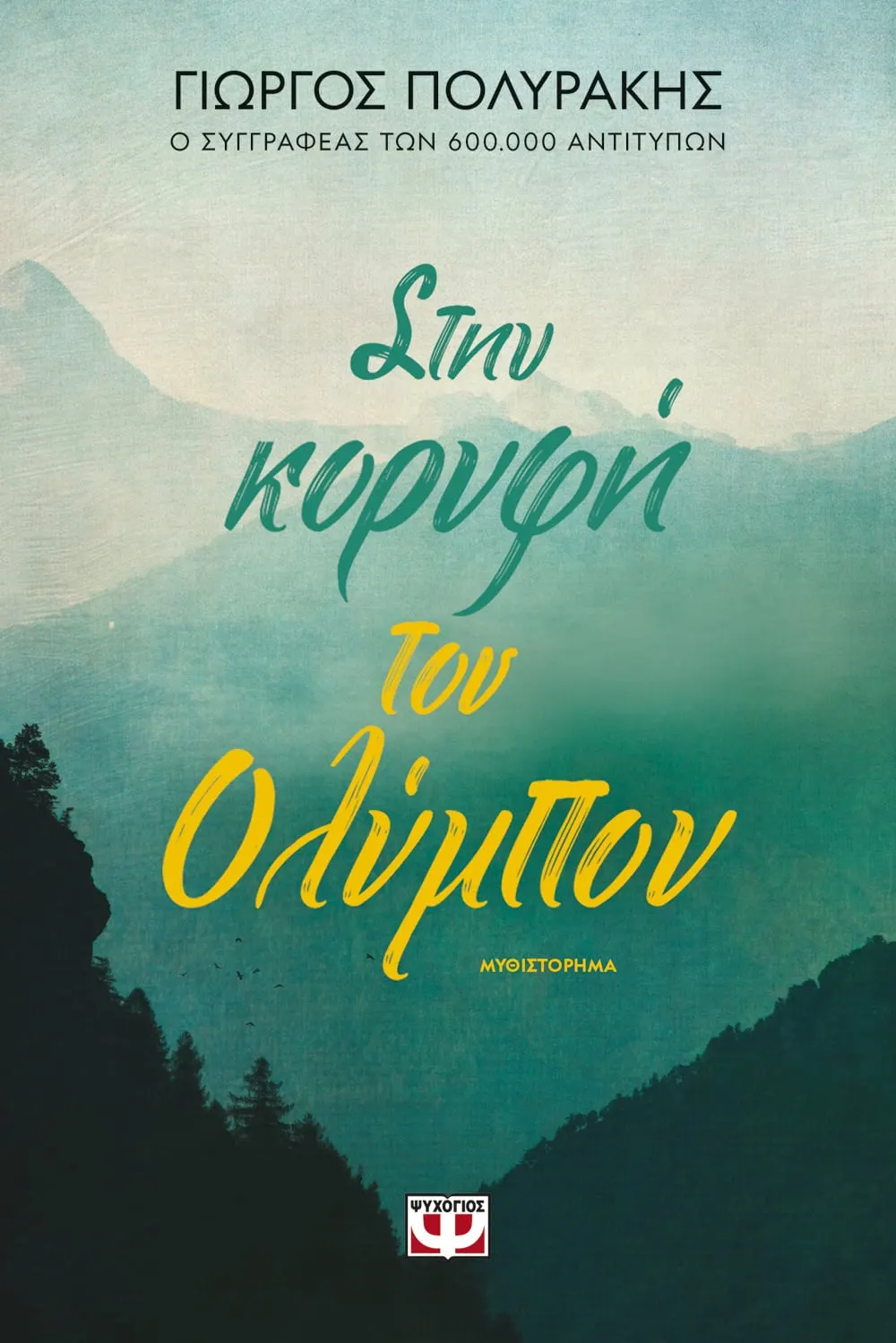
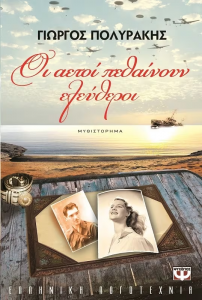
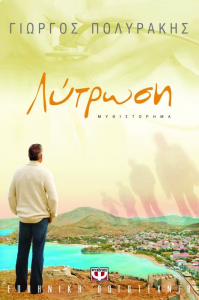
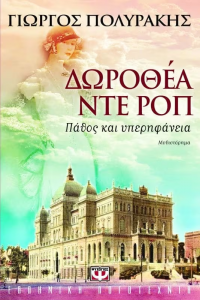
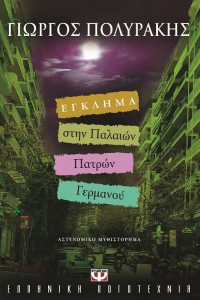
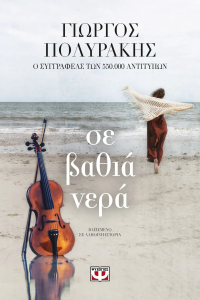
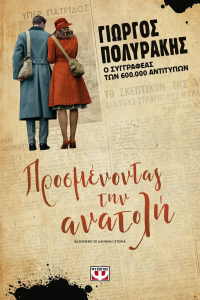
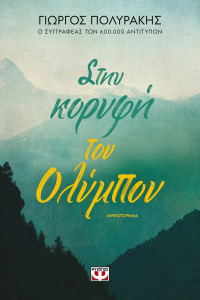
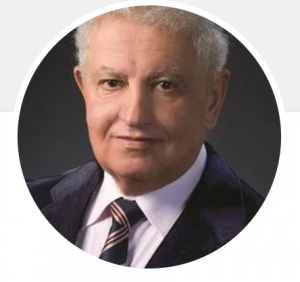
George Polyrakis was born in Sfakia, Crete. He studied military medicine and received his doctorate from the Aristotle University of Thessaloniki. He trained as a surgeon and subsequently specialized in vascular surgery at Hammersmith Hospital in London. He currently works as a surgeon in Thessaloniki, where he lives.
He has published 83 scientific articles in Greek and foreign medical journals, given dozens of presentations at medical conferences, and participated in the organization of numerous conferences. He is a member of the Hellenic Surgical Society, the Surgical Society of Northern Greece, the Medical Society of Thessaloniki, the Society of Physician Writers, and the Society of Writers of Northern Greece, and was a member of the International College of Surgeons.
During his studies, he worked as an amateur journalist in Chania and wrote two plays that were performed at student performances. During his studies, he wrote another play that was performed by students during Student Week.
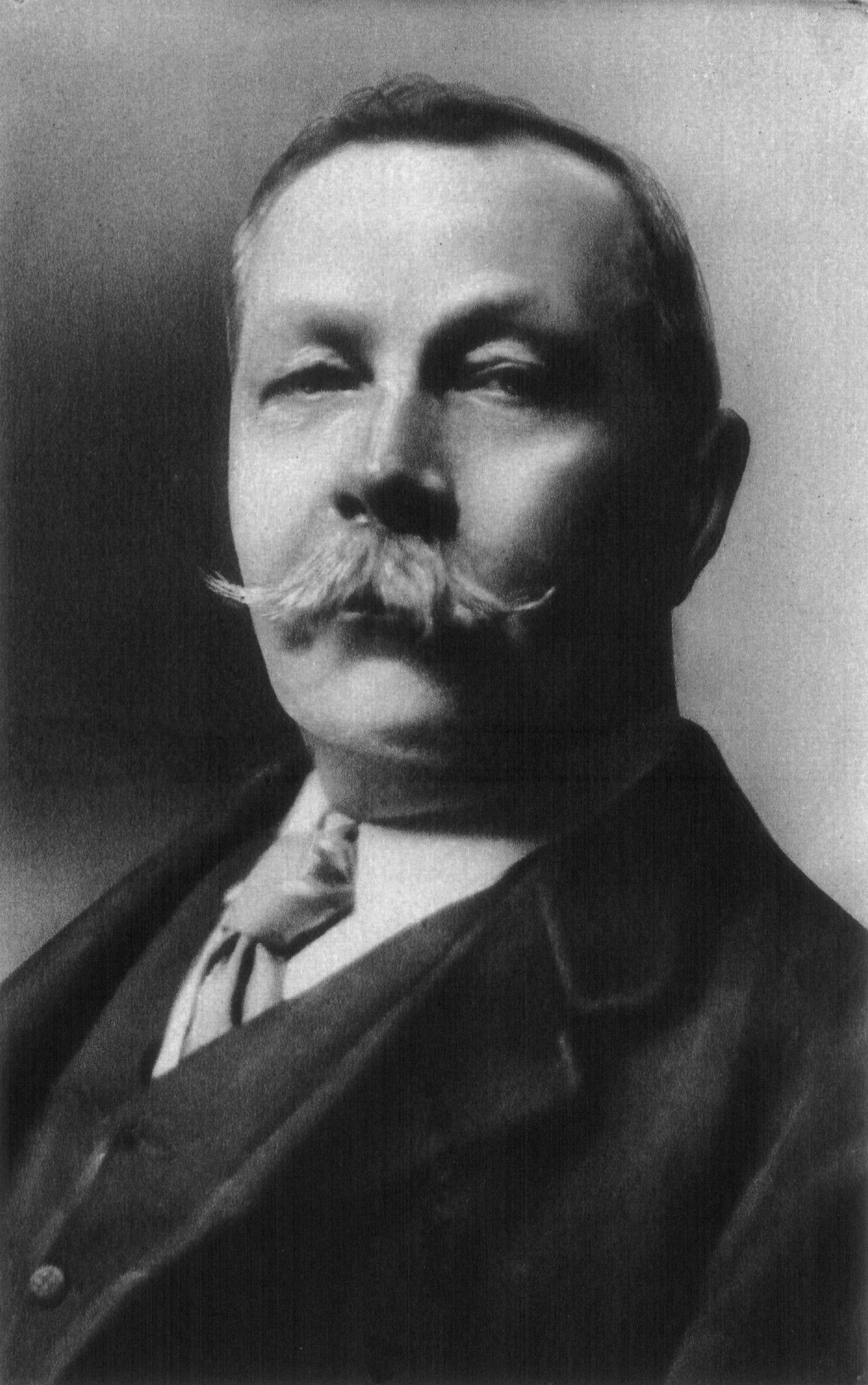
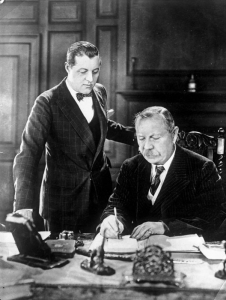
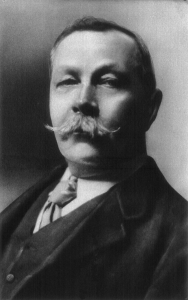
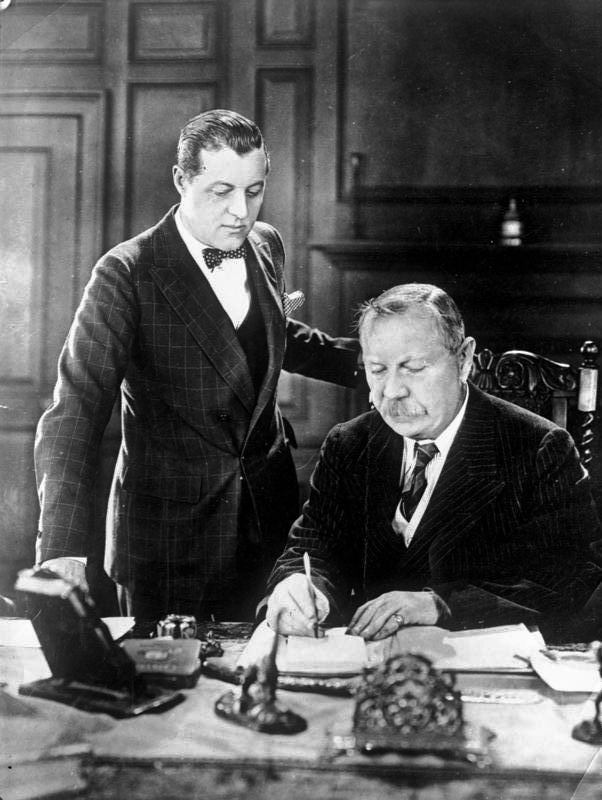
Sir Arthur Ignatius Conan Doyle (May 22, 1859 in Edinburgh, Scotland – July 7, 1930 in Crowborough, Sussex, England) was a British physician and author. He wrote about the adventures of Sherlock Holmes and his friend Dr. Watson. He is also known for the character Challenger from his novel The Lost World, which served as the basis for numerous films and a television series.
In 1880, Doyle traveled to the Arctic as a ship’s doctor on the whaler Hope, and a year later to West Africa on the Mayumba. From 1882 to 1890, he ran a medical practice in Southsea near Portsmouth. In his free time, he also wrote his first literary works. In 1883, while in Portsmouth, he wrote his first novel, The Narrative of John Smith (see below), which, however, remained unfinished and unpublished and was not published until 2011. In 1887, he published the first story about the detective Sherlock Holmes and his friend Dr. Watson: A Study in Scarlet.
In the following period, Conan Doyle created his second very popular character, Professor Challenger. The Lost World, in which she first appears, was published in 1912 and is considered his best-known novel alongside the Sherlock Holmes series. Doyle’s texts published during the First World War sometimes take a critical look at Germany at the time. In October 1918, a few months before the official end of the war, his son Kingsley died of the Spanish flu. Doyle then began to devote himself increasingly to science fiction novels in the tradition of Jules Verne, as well as to spiritualism and mysticism, and also undertook lecture tours (including to the USA and South Africa).
Among other things, he made the so-called Cottingley Fairies famous – fake photos of fairies in whose authenticity he firmly believed, made into a film in 1997 in The Fairy Garden. His public controversy with the magician Harry Houdini made headlines.[6] The friendship between Doyle and Houdini broke down due to differing ideas about spiritualism – Doyle accepted various mediums as genuine and believed that Houdini himself had supernatural abilities, while Houdini himself said that he never experienced a séance in his life whose effects he could not have imitated with magic tricks.
The deductive and criminal analysis method is characteristic of Doyle’s characters. He, himself a physician, created the role of Dr. Watson. He endowed Sherlock Holmes with characteristics of his teacher at the University of Edinburgh, Joseph Bell. The criminalistic methods described by Doyle in his novels, such as fingerprinting, were ahead of the police methods of their time. This is especially true of the fundamentally scientifically oriented methodology of crime investigation.
In 1890, his novel The Firm of Girdlestone (1890) was published, painting a picture of his hometown of Edinburgh in the age of imperialism. Father and son Girdlestone & Co. operate a lucrative African trade with poorly maintained sailing ships.
That same year, Doyle moved to London. From 1891 onward, he was able to earn a living through writing, following the publication of his first detective story, A Scandal in Bohemia, in The Strand Magazine that same year.
In 1893, Conan Doyle decided to end the life of his protagonist Holmes, as the regular writing of new Holmes stories took up too much of his time and he wanted to concentrate his literary work on other works. This led to protests from his audience.[1] The author’s mother, an avid reader of the stories, tried in vain to dissuade him from the plan. In the story “The Final Problem,” Sherlock falls from the Reichenbach Falls near Meiringen in Switzerland during a fight with his adversary, Professor Moriarty, and is pronounced dead by Watson.
In the same year, Doyle became Master of the Phoenix No. 257 Masonic Lodge in Portsmouth.
In March 1893, Doyle became the first Briton to complete a day’s cross-country skiing. In commemoration of this achievement, the UK Antarctic Place-Names Committee named the Doyle Glacier in Antarctica after him in 1959.
On March 23, 1894, in a daring attempt, he crossed the Maienfelder Furgga from Davos to Arosa on skis, accompanied by two locals, brothers Tobias and Johann Branger. The event helped popularize skiing in England. It was recreated a good century later by the Austrian Broadcasting Corporation (ORF) in a television film based on Conan Doyle’s article “An Alpine Pass on ‘Skiing’,” published in Strand Magazine in December 1894.
Doyle played football as a goalkeeper for the amateur Portsmouth Association Football Club. He used the pseudonym A.C. Smith. He was also a keen cricketer and was capped ten times by the famous Marylebone Cricket Club (MCC) in the first team between 1899 and 1907. As a golfer, he was captain of Crowborough Beacon Golf Club, East Sussex, in 1910. He also initiated the construction of the golf course at Davos during his stays there from 1893 to 1895.
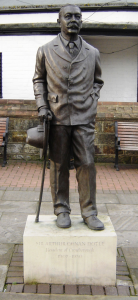
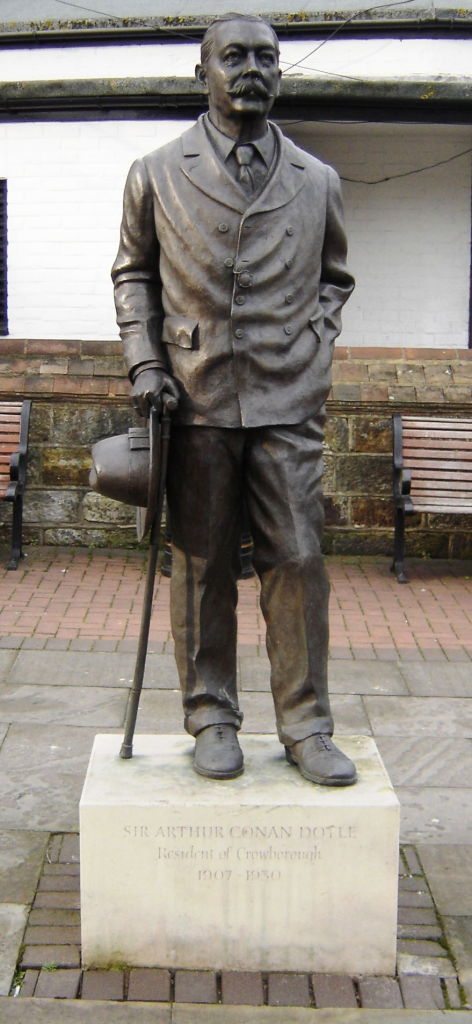
At the 1908 London Olympic Games, Arthur Conan Doyle reported on the marathon for the Daily Mail newspaper. Dorando Pietri was the first to cross the finish line, but because judges and doctors helped him across the finish line, the runner was disqualified. Doyle’s detailed and emotional report in the Daily Mail of July 25, 1908, about the weakened Italian’s finish, and a letter to the editor published at the same time as his article, in which Doyle appealed for donations for Pietri, are the basis of one of the most well-known myths of the modern Olympic Games. Doyle’s great commitment led to the widespread, but untrue, legend that Doyle himself helped Pietri across the finish line. Dr. Michael Bulger, who can be seen in one photograph as an assistant, was often mistaken for Doyle. A memorial to Sir Conan Doyle has stood at Cloke’s Corner in Crowborough since April 14, 2001. The bronze statue was created by sculptor David Cornell and funded by the Conan Doyle Statue Trust with grants from Crowborough Town Council and private donations. To finance the bronze casting, Cornell commissioned a limited edition of a scaled-down model.
In 2023, the Venezuelan frog Caligophryne doylei was named after Conan Doyle.
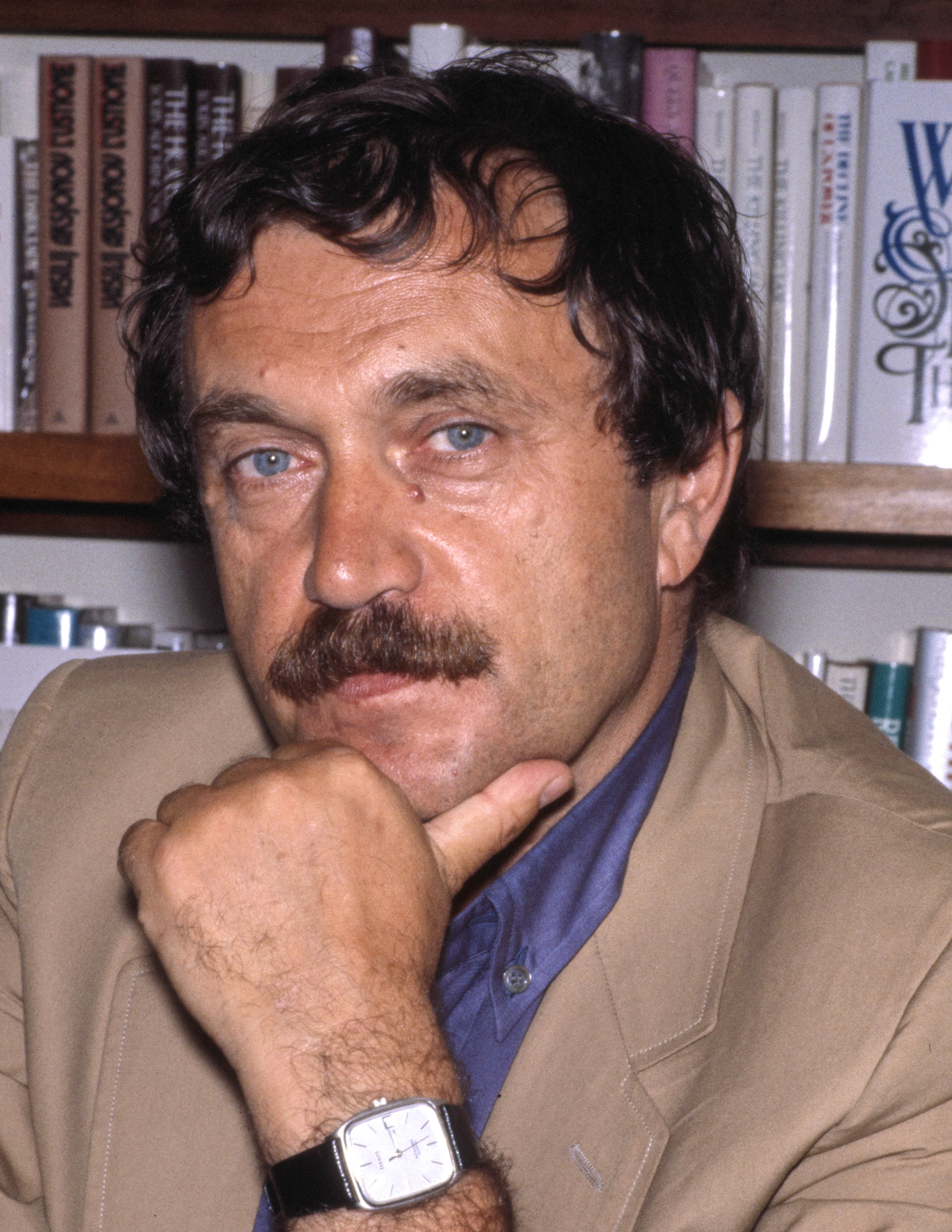
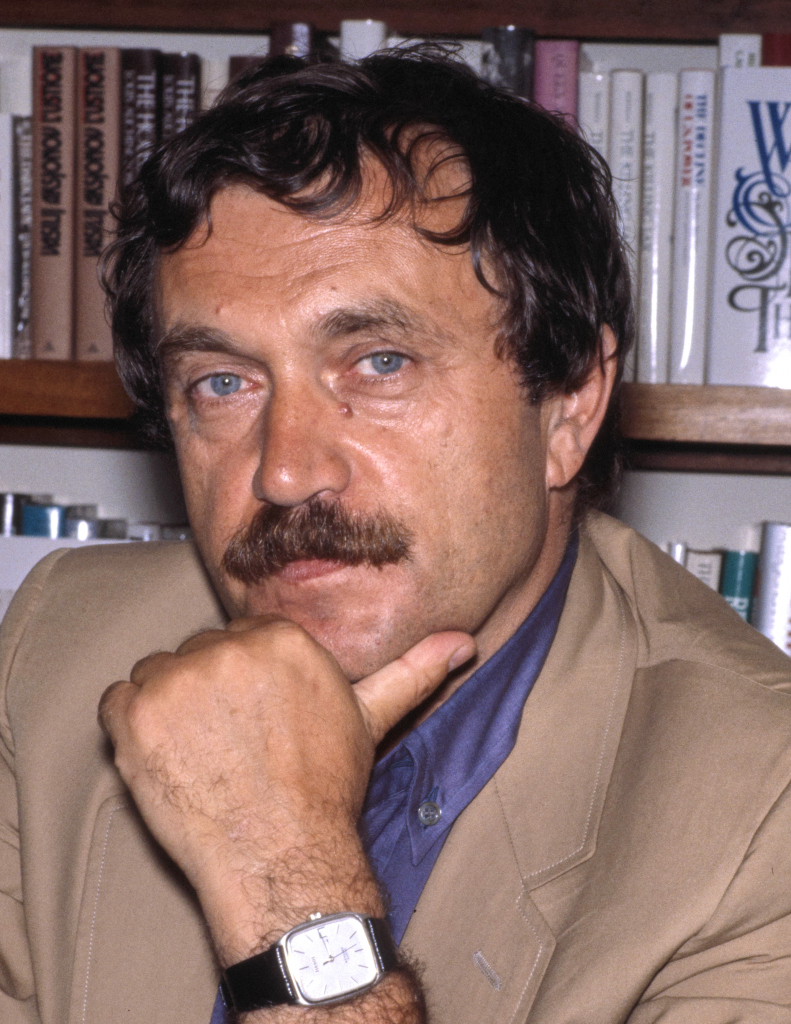
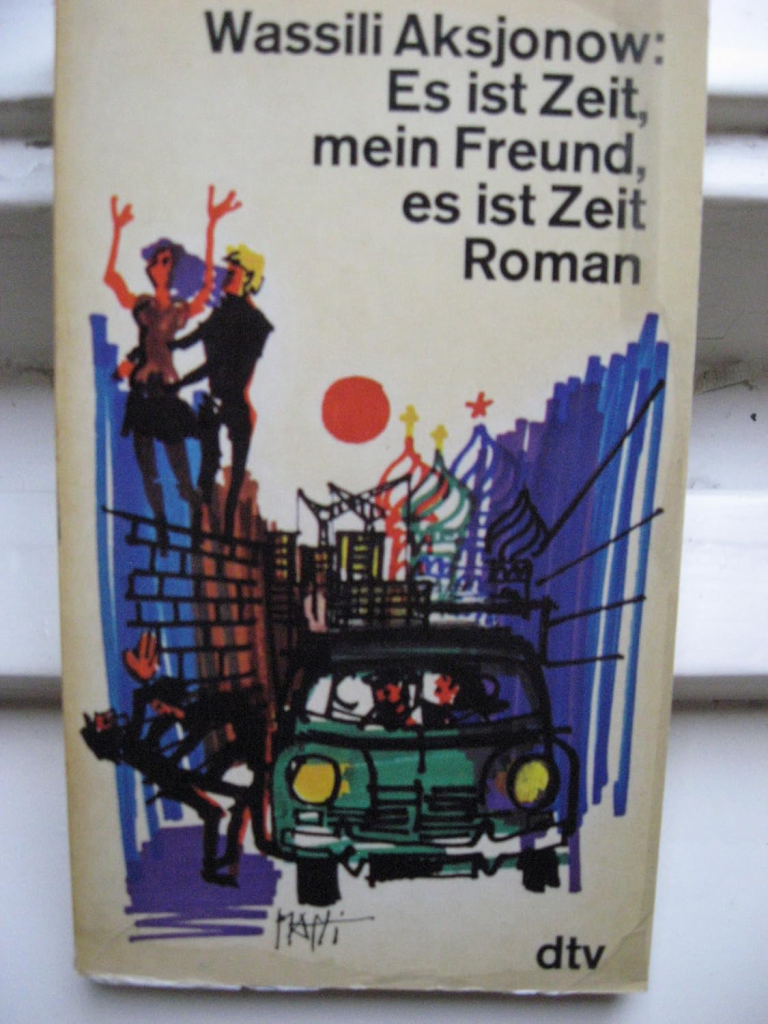
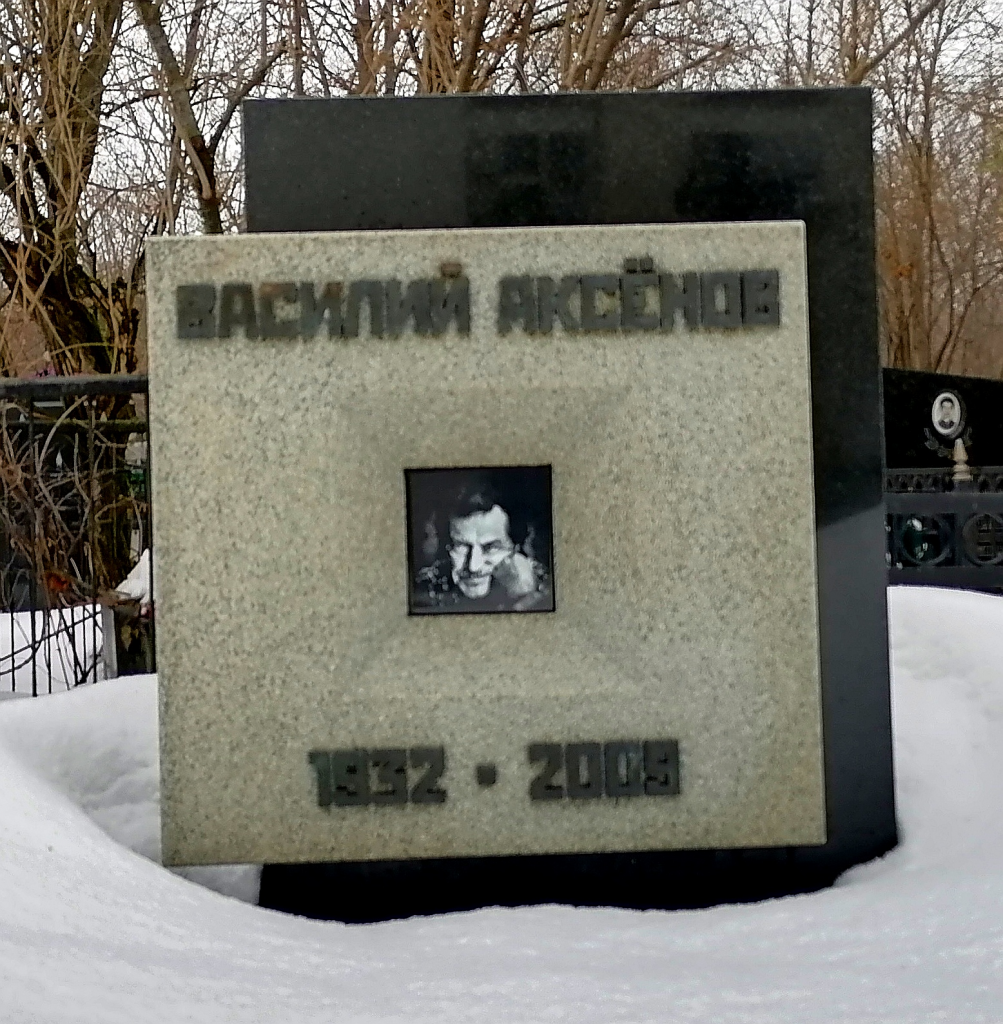
Vasily Pavlovich Aksyonov (Russian: Василий Павлович Аксёнов, scientific transliteration: Vasilij Pavlovič Aksënov, born August 20, 1932 in Kazan; died July 6, 2009 in Moscow) was a Russian writer. He began his career in the Soviet Union and later had to emigrate to the United States.
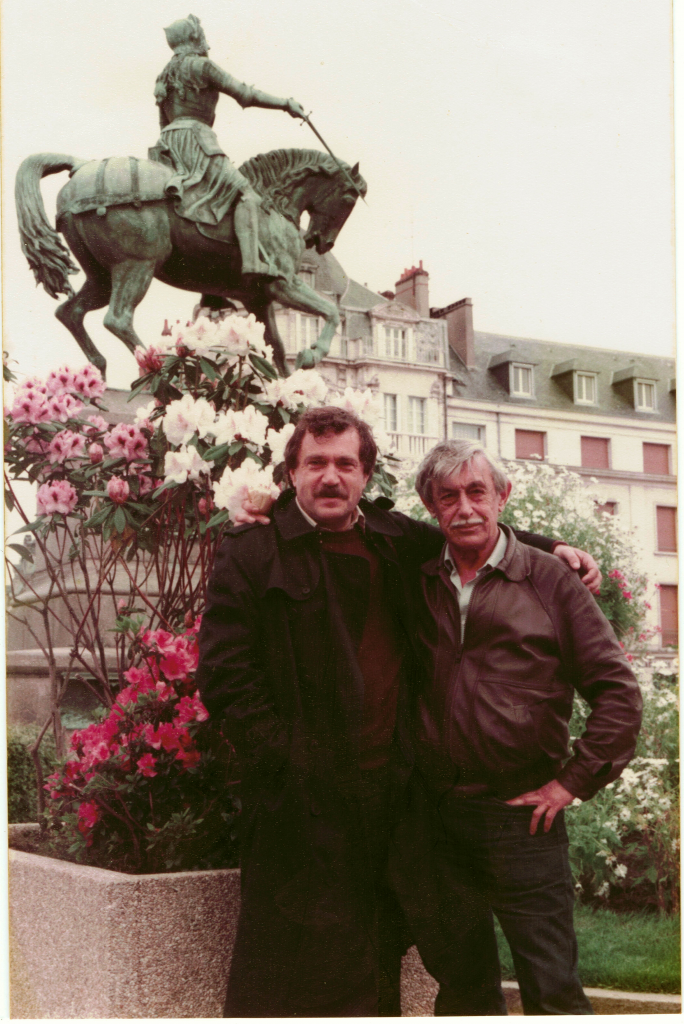
Wassili Aksjonow (left) with Viktor Nekrasov (in front of the equestrian statue of Joan of Arc, Place du Martroi, Orléans, 1983)
From 1956 to 1960, he worked as a doctor, but had already begun writing sketches and short stories while still a student. He published his first stories in the 1960s, which soon became very popular, especially among young readers. In 1979, he came under pressure for his collaboration on the underground literary almanac Metropol, along with Andrei Bitov, Fazil Iskander, Viktor Yerofeyev, and Yevgeny Popov.
In 1980, Aksyonov accepted an invitation from an American university and took up permanent residence in the United States, where he continued his writing career. Until 2003, he taught as a professor of Russian at George Mason University in Fairfax, Virginia. In 2004, he moved to Biarritz. He spent the following years alternating between France and Moscow, where he died in July 2009.[2] His grave is in the Vagankovo Cemetery in Moscow.
In 1980, Aksyonov accepted an invitation from an American university and took up permanent residence in the United States, where he continued his writing career. Until 2003, he taught as a professor of Russian at George Mason University in Fairfax, Virginia. In 2004, he moved to Biarritz. He spent the following years alternately in France and Moscow, where he died in July 2009.[2] His grave is in the Vagankovo Cemetery in Moscow.
Aksyonov’s first stories appeared in the magazine Yunost, on whose editorial board he was a member.
In his works, Aksyonov processed his family’s experiences during the Stalin era. The thaw that began in the political and intellectual life of the USSR in the 1960s allowed him to address this topic.
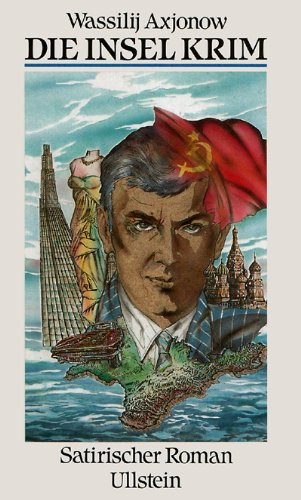
In 1981, while he was in exile, the novel The Island of Crimea (Остров Крым), written in 1979, was first published in English translation. It tells, among other things, how Crimea was “liberated” from the Moscow government through an invasion. In the English-speaking West, Aksyonov became known for his novel “The Burn” (Russian: “Ozhog,” 1975; German: “Gebrannt,” 1986) and the trilogy “Generations of Winter” (Russian: Московская сага, 1989–1993), works in which he explored the taboo subject of Stalinist persecution. “Generations of Winter” tells the story of the Gradov family of doctors from 1925 to 1953. The novel was adapted into a lavish television series in Russia in 2004.
For his 2004 novel “Voltarians and Voltarian Women,” Aksyonov received the $15,000 Booker Prize for Literature – Open Russia. Aksyonov’s books have been translated into several languages. Film adaptations of his books have been made in Russia and France. He has also written plays.