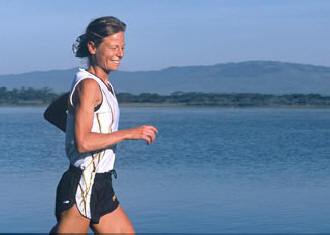
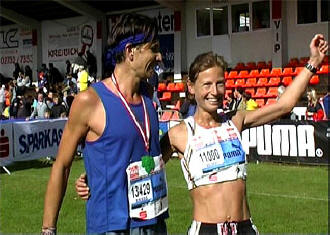
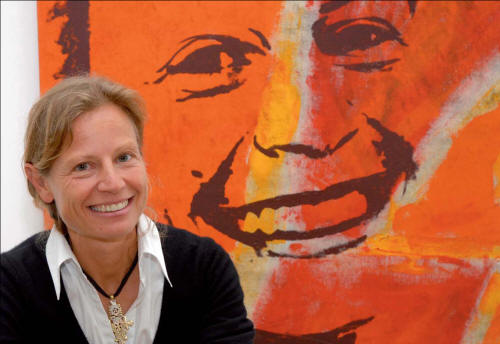
Dagmar Rabensteiner (born June 15, 1963 in Innsbruck) is a former Austrian long-distance runner.
As an elementary school student, she walked the seven-kilometer route from Sadrach, a district of Innsbruck, to school in the city center every day. As a high school student, she undertook climbing and ski tours, and later, with her husband and young son, she embarked on multi-week trips and trekking tours through jungles in Indonesia or into the highlands of Kashmir, all the way to the base of Mount Everest. She didn’t start running until she was 27.
At the age of 30, the medical doctor ran her first marathon in 3:28 hours. After recognizing her talent for the sport, she continually improved and in 1997, she finished sixth in the Florence Marathon with a time of 2:55:19, breaking the three-hour mark for the first time.
Competitive training led to further improvements. In 1999, she finished sixth in the Vienna City Marathon in 2:49:33 hours and won the Graz Marathon in 2:41:46 hours. In 2000, she became Austrian marathon champion, finishing sixth overall in the Vienna City Marathon in 2:39:08, won the Wachau Marathon half marathon, and then broke Carina Lilge-Leutner’s nearly 17-year-old national record by finishing third in the Amsterdam Marathon with a time of 2:35:42. A week later, she became Austrian half marathon champion in Salzburg.
She set her record by finishing third in the 2002 Vienna City Marathon in 2:35:42, beating the time limit for the marathon at the European Athletics Championships in Munich, where she finished 15th.
In 2003, she ran her third national marathon record, finishing tenth in the Berlin Marathon with a time of 2:34:35. However, she missed qualifying for the 2004 Olympic Games by 1:35 minutes, and so she retired from competitive sport after this race. She continues to run up to 150 kilometers per week, achieving sporting successes such as winning the half marathon at the 2004 Regensburg Marathon and finishing 14th (second in the 40-49 age group) at the 2005 Comrades Marathon over 89 km.
Dagmar Rabensteiner has been married to lawyer and entrepreneur Peter Rabensteiner since 1983; they have a son born in the same year. She is a specialist in internal medicine and a sports doctor, runs a practice in Vienna, and was the official race doctor at the Vienna City Marathon and the Austrian Women’s Run from 2004 to 2008.
Uhlenbruck’s family wasn’t supposed to know that their Gerd was running, because to them he was ill (sarcoidosis). So he chose Urbach’s GSV Porz, a slightly out-of-town club, as his club. He has completed 36 marathons and a 100km race, which he ran on his birthday. Twice he finished the 42.195km in the age group 70. His personal best of 3:18 hours is astonishing considering his lung history. Once (1984), he even became German Marathon Champion for cross-country doctors and pharmacists. He demonstrated athletic versatility by taking runner-up titles for cycling doctors, both in the road and time trial categories.
From Reader to Writer
“The aphorism condenses the quintessence of an experience into the sentence of an insight.”
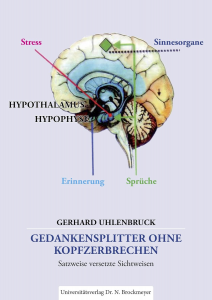
During his hospital stay, Gerhard Uhlenbruck wanted to set himself a task to combat giving up, not only physically; he sought a challenge for body and mind. While he gained physical fitness with his “therapy of small steps,” he kept himself mentally fit with a “therapy of small sentences.” He began writing poems, exploring “life, love, and the love of life.” They were published in 1975 under the pseudonym Gerhard Günther (“Not Forever”).
Subsequently, he presented himself entirely as an aphorist. The number of his “rich fragments of thought” has risen astronomically over the decades. Whether medical aphorisms or sports aphorisms, with which he launched a new genre, Uhlenbruck was not only the most prolific writer of this genre, but also impressed with his quality and originality. “An insightful understanding of human nature emerges everywhere, which, despite all social criticism, does not result in cynicism or pessimism, but rather expresses hope for a better order of this fragile world” (Prof. Dr. Wolfgang Mieder).
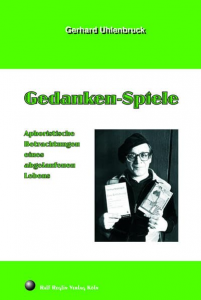
Dozens of volumes of his aphorisms have been published since 1977, including “An Educated Sick Person,” “Blows to One’s Neighbor,” and “The Smarter One Doesn’t Give Up.” His flashes of inspiration, thought-provoking ideas, and observations can be found in satirical and specialist magazines, on calendar pages, and in illustrated books. H.-H. alone contains 1,000 volumes of aphorisms. Skupys’ “The Complete Handbook of Quotations from A to Z” (2004) included over 300 of his witty remarks. In recognition, the Narrenakademie (Fools’ Academy) in Dülken awarded him the title of “Dr. humoris causa” in 2001. The German Aphorism Archive in Hattingen elected him its honorary chairman. Finally, in 2017, he was awarded the Lehrer-Welsch Language Prize for Literature in Cologne.
Uhlenbruck also addressed running in countless aphorisms. It’s difficult to choose just one. “In the end, a marathon just drags on and on,” might particularly appeal to marathon runners. Running therapists might appreciate the following statements: “Running as therapy: What moves you internally can be processed through external movement.” “Running is psychotherapy without psychotherapists – with the help of your legs.” Or: “Running is the only therapy that costs nothing, except time! A one-person company like the AOK: Everything free of charge!”
Like running, for Uhlenbruck, laughter was medicine, a stress reliever, and an immune fitness booster. And because his interest in humor knew no bounds, he participated, whenever his time permitted, in an amateur drama group at the adult education center (VHS) and in the book project “Humor as Cologne Philosophy” (Cologne 2003). He also spoke perfect Cologne dialect.
Athletic Awards
Uhlenbruck began his athletic career in high school, first as a boxer, then as a runner. He was:
German Physicians’ Marathon Champion
German Physicians’ Cycling Runner-up (road race & time trial).
Citations of his Aphorisms (naturally in German):
Manche halten einen ausgefüllten Terminkalender für ein ausgefülltes Leben.
Zeitungsenten bringen die Leser zum Schnattern.
Die ungeschminkte Wahrheit bringt immer Farbe ins Gesicht.
Wenn man Spaß an einer Sache hat, dann nimmt man sie auch ernst.
Frisch gesagt ist halb gewonnen.
Wir sind alles Nichtsnutze, das heißt, wir tun nichts, was uns nichts nützt.
Neidhammel = Ehrgeizige Schafe.
Man empfindet es oft als ungerecht, daß Menschen, die Stroh im Kopf haben, auch noch Geld wie Heu besitzen.
Inzwischen wissen wir, was uns noch blüht – nämlich immer weniger!
Das wirklich Rührende an der Liebe ist der Kochlöffel.
Karrieristen = Leute, welche andere vor ihren Karren spannen.
Auf dem Gipfel des Erfolgs steht auch ein Kreuz: für die Leichen, über die man gegangen ist. (Als Betriebsrat/Sozialpolitiker/Manager wissen Sie, wovon ich rede. Von der Rücksichtslosigkeit. Vom Egoismus. Als Christ sage ich: Wer sich so verhält, kann kein Christ sein. Denn das Christentum kreist im Kern um den einen Satz, der da lautet: “Liebe deinen Nächsten wie dich selbst!”)
An Karneval maskiert man sich, damit man die Maske fallen lassen kann.
Unsere Leistungsgesellschaft ist nicht eine Gesellschaft, in der nur Leistung gilt, sondern eine, welche bestimmt, was Leistung ist und wer sie leisten darf.
Manches wäre anders in der Welt, wenn man an manchen Dingen nichts verdienen würde.
Fanatiker lassen sich schon aus Überzeugung nicht überzeugen.
Ehrgeiz schafft viel, sogar einen selbst.
Sein Pferdefuß bestand darin, daß er nicht beschlagen war.
Wir sind ein Volk der Denker, denn wir denken immer daran, was andere wohl von uns denken.
Eine Änderung des Bewußtseins verändert unbewußt auch das Sein.
Guter Rat ist teuer, schlechter Rat kann teuer zu stehen kommen.
Man muß sich dauernd beherrschen, um die Beherrschung nicht zu verlieren.
Das Geheimnis des Autos: Man ist in seinen eigenen vier Wänden.
Erst haben die Menschen das Atom gespalten, jetzt spaltet das Atom die Menschen.
Aller Anfang ist leicht – wenn man ihn mit dem Ende vergleicht.
Zwischenmenschliche Beziehungen sind “mit Abstand” die besten.
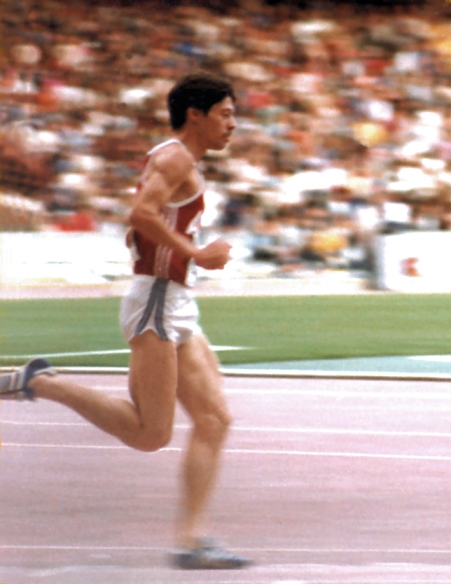
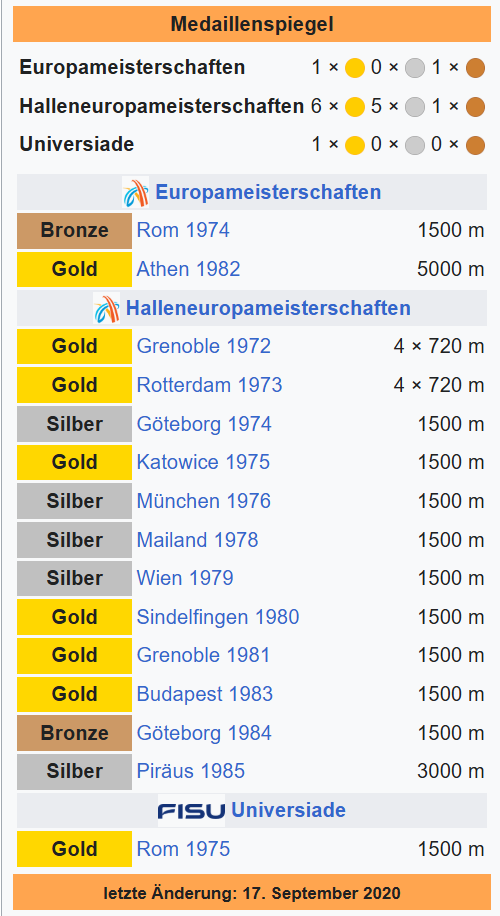
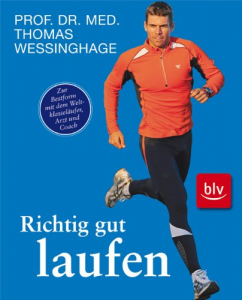
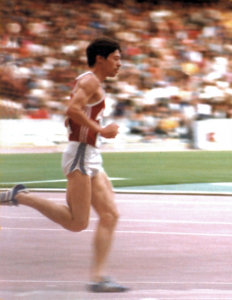
Because he was already thirty at the time, and had been an international-level runner for a decade, this victory was a long-awaited one for him. He admitted that he decided to run the 5,000 metres instead of the 1,500 metres, because he lost to Ovett and Coe so often in the shorter distance. The fairly slow pace of the 1982 European Athletics Championships 5,000-metre final favoured Wessinghage, because he was in top form – having set a European record at 2,000 metres shortly before the Championships – and because he was the fastest 1,500-metre runner in the final, having run that distance in 3 minutes 31.6 seconds in 1980.
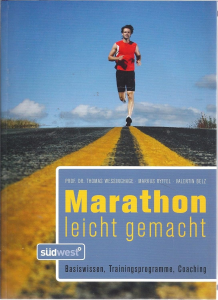
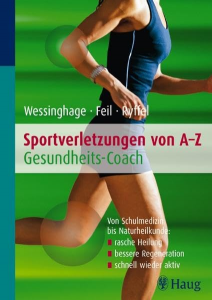
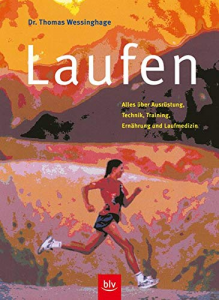
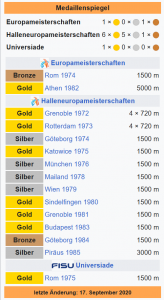
He won the German championship title 22 times. The European Championship over 5000 meters, which he won in 1982, was his greatest success. In 1979, he won the World Cup over 1500 meters in Montreal, in 1975 the European Cup over 1500 meters in Nice, and in 1983 the 5000 meters in London. He set German and European records, of which the German records over 1500 and 2000 meters (4:52.20 min) still stand.
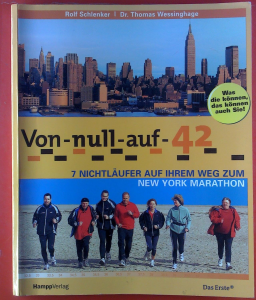
In his marathon debut in Berlin in 1989, Wessinghage ran a time of 2:26 h.
Thomas Wessinghage was German champion 22 times, particularly in the 1500 meters. His greatest success, however, was in the 5000 meters. He won gold in this event at the 1982 European Championships in Athens. Wessinghage also competed at the 1972 Olympic Games in Munich and the 1976 Olympic Games in Montreal.
All achievements at a glance:
22-time German Champion
1972: Olympic Participant
1975: European Indoor Champion (1500 m)
1976: Olympic Participant
1977: World Record with the German 4×1500-meter relay team (Wessinghage, Harald Hudak, Michael Lederer, and Karl Fleschen), valid until September 4, 2009
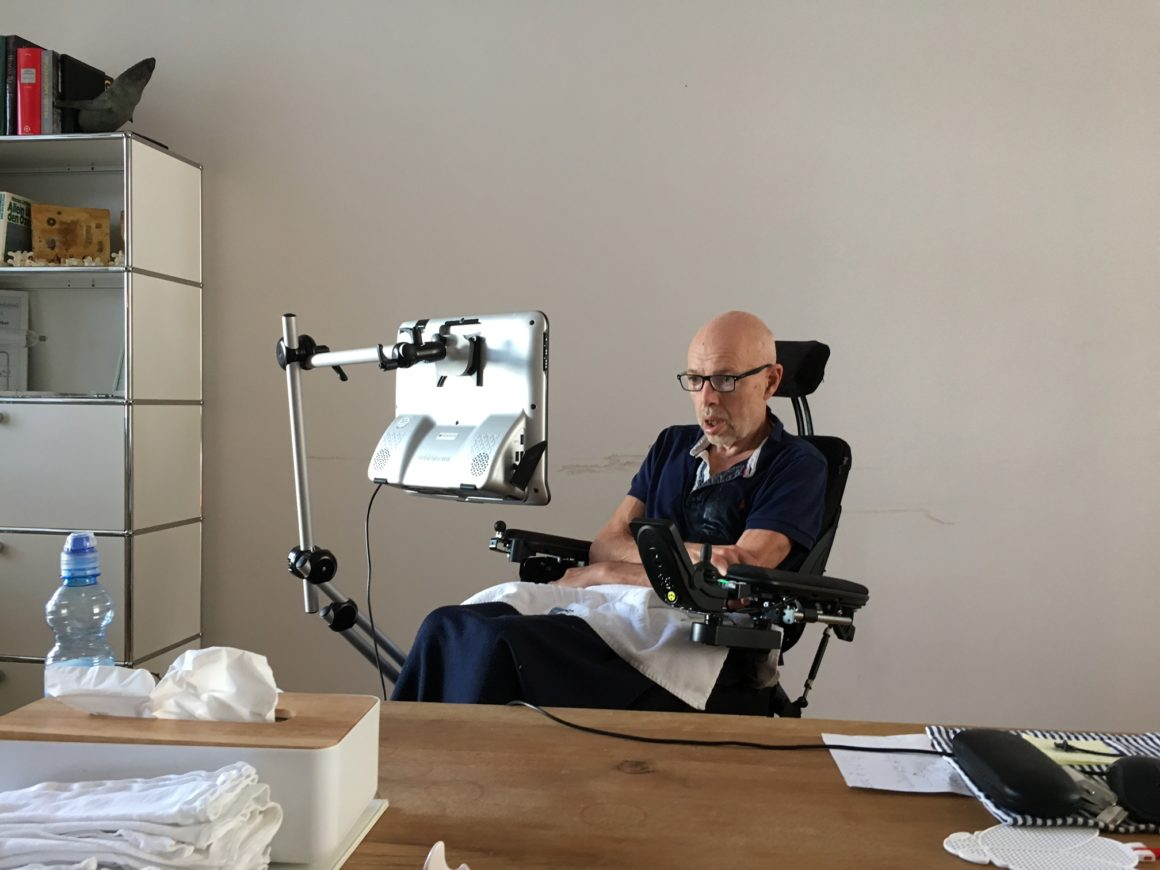
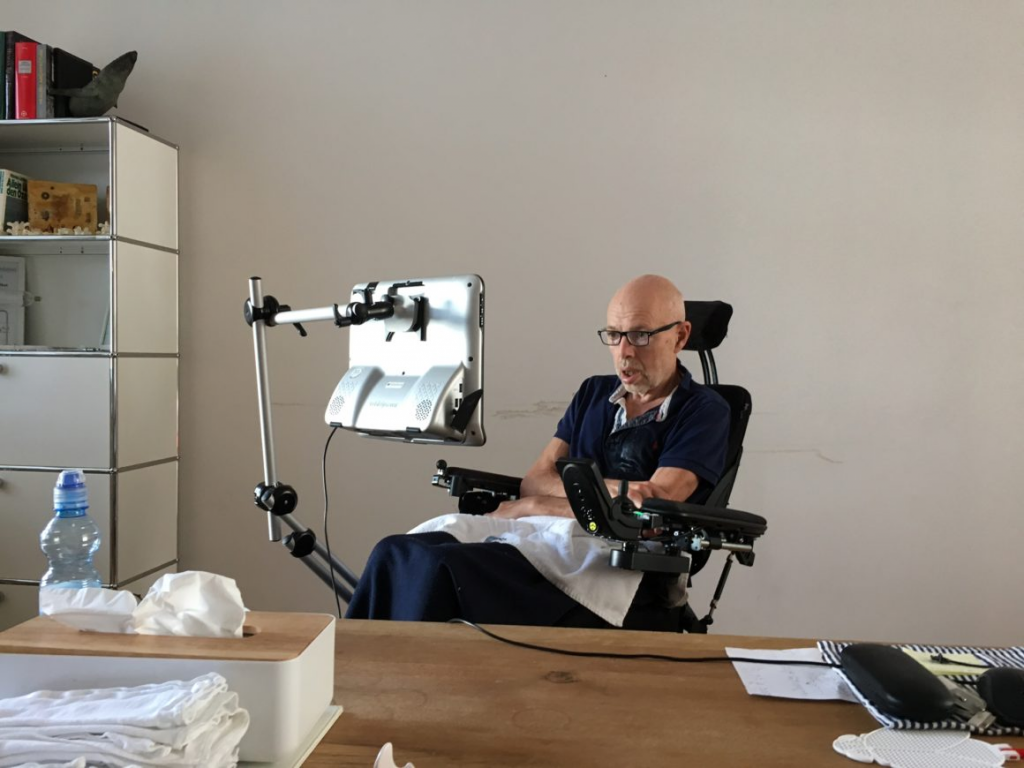
I’ve been ill since 2014, unfortunately with a rarer form of ALS with extreme spasticity and bulbar symptoms.
Unfortunately, I can no longer speak or swallow. I’m quadriplegic and anarthric, and can no longer move anything. Despite this, I still find quality of life.
I used to be an extreme athlete and did crazy things. I’m both a doctor and a patient myself. I made the diagnosis myself. I live in a normal family, and we have a young daughter. My wife is a nurse and takes care of her. We try to live and live as normally as possible. Unfortunately, I can no longer work and now I write books. Writing is tedious and exhausting. I have a good computer with infrared light control, and I write with my eyes. Not as fast anymore, but better than nothing. I founded a small publishing house for literature and art and support young artists and authors.
Das Leben ist anders als früher auch aber immer noch lebenswert.
Endurance sports for 10 years:
More than 30 marathons (personal best 3:09), 5x Ironman, Marathon des Sables (250-kilometer ultramarathon through the Sahara), Climbing Mount Kilimanjaro Race Across America (5,000-kilometer non-stop cycling race across the USA from west to east); Trans-Australia non-stop by bike, 4,200 km in 7 days
and various other events
Ironman Klagenfurt Trans-Europe Tour Dragon Run Siebengebirge/Germany Race Across Germany (by bike from Flensburg to Oberammergau in 48 hours)
Other sports:
Diving, tennis, paragliding, sailing, skiing (and recently motorcycling and taekwondo)
Jürgen Reul trained as a police officer and subsequently worked for the police.
Ernst van Aaken (16 May 1910, in Emmerich – 2 April 1984, in Schwalmtal-Waldniel) was a German sports physician and athletics trainer. Van Aaken became known as the “Running Doctor” and was the founder of the training method called the Waldnieler Dauerlauf (German: “Waldniel endurance run”). He is generally recognized as the founder of the long slow distance method of endurance training.
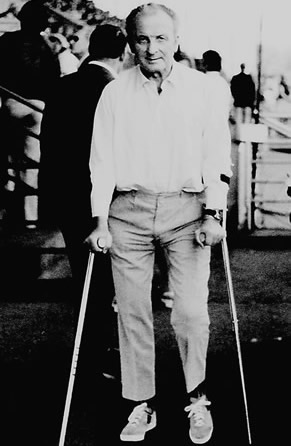
As a sports physician, trainer and advocate of new developments he directed himself fanatically to distance running and the training of “pure endurance” (“reine Ausdauer”) with high mileage in the training program. He was an opponent of the method of interval training that prevailed until the mid-1960s. In the early 1960s, van Aaken trained, among others, the German athlete Harald Norpoth, who won silver in the 1964 Olympic Games in Tokyo in the 5000 meters. In 1972 Van Aaken was hit by a car during his own training, which cost him both legs. Since this accident he moved in a wheelchair and became also a champion for disabled sports and wheelchair racing. He also held countless lectures, including in the United States and Japan, and organized running races, especially marathons for women, besides ultra running events
Van Aaken stated that human beings were able to reach the age of 100, if they would not live so “hopelessly unbiologically”. In the “biologic” life style that he advocated, sports played an important role, especially the development of endurance. He lauded a daily endurance run for everybody, also for women, elders and children, combined with moderate eating and drinking. He also held the opinion that the female sex would eventually perform better in endurance events than the male, if all social barriers were dealt with that currently enhinder this. To propagate his ideas, he wrote a number of books, the most famous titled Programmiert für 100 Lebensjahre (“Programmed for lifespan 100”).
an Aaken was an early proponent of women’s running.[3]
In 1967, van Aaken asked Anni Pede, a 27-year-old middle-distance runner and mother of two also from West Germany, and Monika Boers, a 19-year-old from the Netherlands, to participate in a marathon organized by his running club in Waldniel.[4][nb 1] According to German sports historian Karl Lennartz, journalists skeptical of 13-year-old Maureen Wilton‘s recent world best in Toronto, Ontario, Canada asked van Aaken if women and teenagers were capable of such a performance.[4] Mocked and derided for claiming that faster times were indeed possible, van Aaken chose Pede and Boers to prove himself correct.[4] Although the German Athletic Association (Deutscher Leichtathletik-Verband) did not yet officially permit women to run, race officials did allow the two women to start 30 meters behind the men.[4] Pede came in third, her 3:07:26.2 set a new world best, and Boers finished in 3:19:36.3.[4]
Van Aaken had tested this before in women’s cross country races which had no distance limit for women. He had all the support of the regional track & field association of which he was the women’s spokesman which facilitated his tasks to further women’s athletics
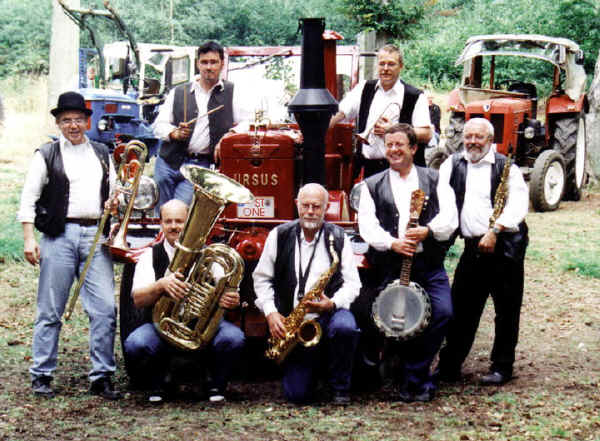
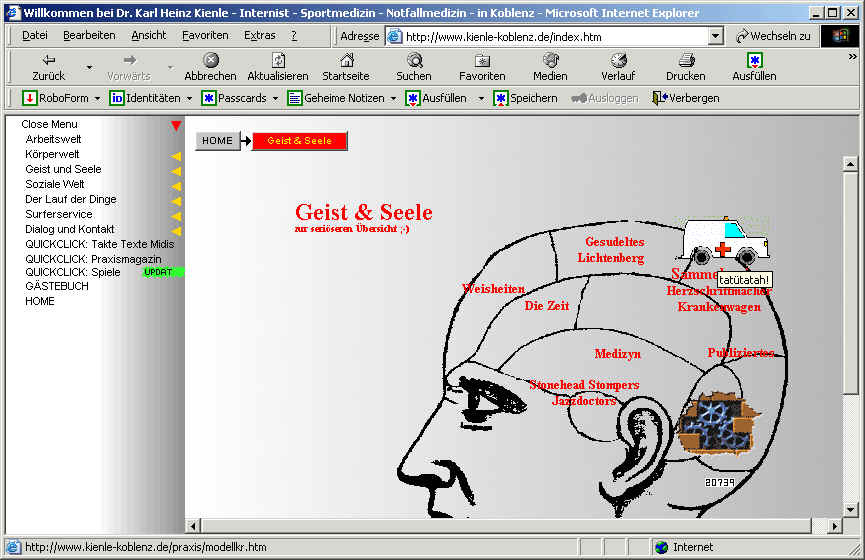
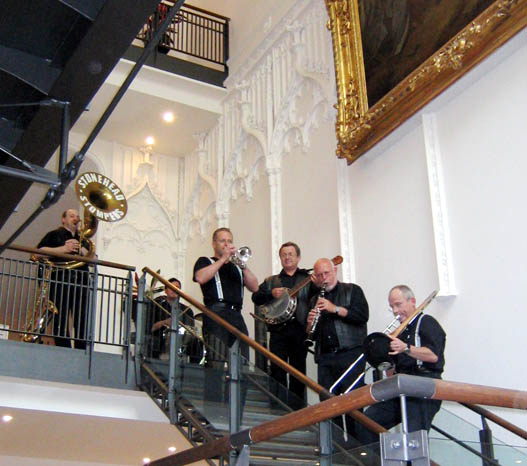
Kienle has practised long distance sports as marathon (30 kg. ago…) and has been leading on international level with diving. Besides his musical career in two Jazz bands as trombone player. And collecting severyl things – his doctors office is fully decorated with model ambulances and pace makers. He also loves to ride the tandem bike.
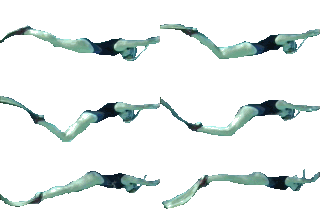
(DE): Sportmedizinisch kann er auf eine lange eigene Erfahrung in Ausdauersportarten zurückblicken, “Mein letzter Marathon ist leider mittlerweile dreißig Kilo her”, meint er mit einem Lächeln und einem Augenzwinkern. Besonderes Wissen hat er über alle Sportarten, die unter der Wasseroberfläche ausgeübt werden. 15 Jahre Nationalmannschaftsarzt und 7 Jahre Fachbereichsleiter Leistungs- und Wettkampfsport im Verband Deutscher Sporttaucher, mehrere Jahre Chairman der Subcomission “Sportsmedicine” des Weltverbandes CMAS, dazu Publikationen im “Handbuch der Sporttraumatologie”, in “Tauchen noch sicherer” und bei unzähligen Kongressen – das kann ihm niemand nehmen.
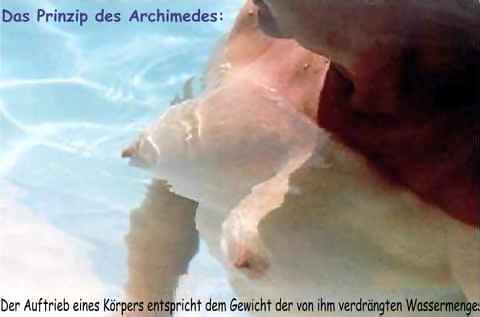
Kineles band 01collecting pace makersgoing by tandemdivingDivingSo erklärt Kienle das archimedische Prinzipcollecting ambulance modelsKineles band 02
Date of birth: 07.04.1974 Place of birth: Berlin (Germany) Place of living: Berlin
Between school and university I worked for several months as a volunteer for the Missionaries of Charity (Mother Teresa) in the slums of Calcutta (India) . The strong impressions encouraged me to study Medicine…
1993: I started studying medicine at the Humboldt University of Berlin (Germany) 2003: Specialization in Sports Medicine 2004: Specialization in Nutritional Medicine 2004: PhD thesis under Prof. Dr. M. Obladen Department of Neonatology, Rudolph-Virchow Klinikum Berlin Study of minerals and trace elements in 10 infants with extremely low birth weight of less than 1000g 2006: Certification for Travel-and Tropical Medicine 2007: Specialization in General Medicine
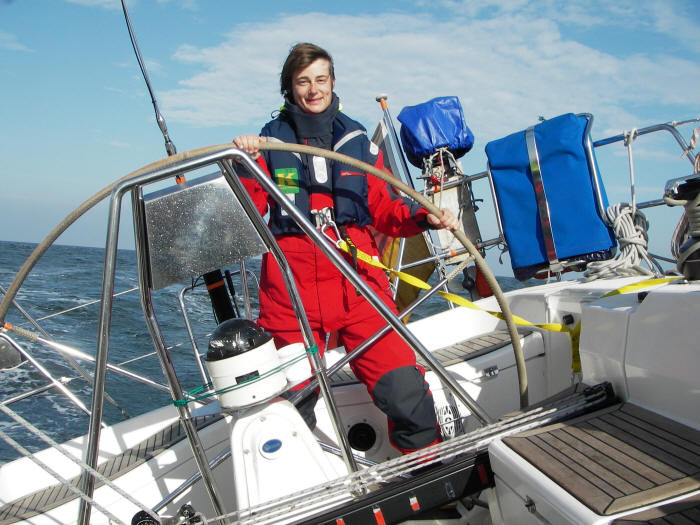
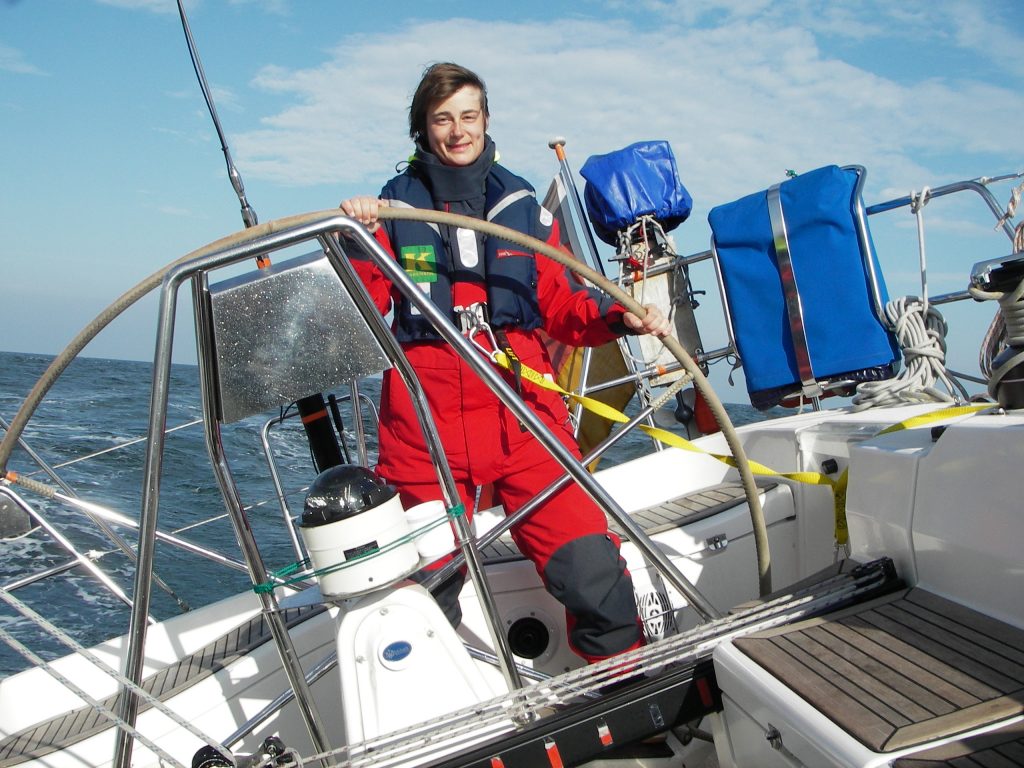
My main hobby is sailing:
Since my early childhood I have been sailing on the river Havel in Berlin. My passion for sailing has been passed on to me by my parents and grandparents. Since 1985: Member of “Segler-Verein Stößensee Berlin”
My highlights in offshore sailing:
1985: Hamburg – Reykjavik (Island)- Faeroe Islands – Shetlands – Hamburg 1989: Hamburg – North-Cape (Norway) – Hamburg (I did single-handed nightshifts in the age of 15) 1992: My twin sister and I celebrated our 18th birthday together in a heavy storm on the Atlantic Ocean on our way to Madeira (my parents and a few dolphins were our guests…) 1999: Crossed the South Atlantic in 29 days from Buenos Aires – Cape Town as a crewmember on board the 18m sailing yacht of the famous German sailor “Manfred Kerstan” 2006: Became member of the first German ladies-only team for the transatlantic race “HSH Nordbank blue-race” from Newport (USA) – Hamburg (Germany) My Job: helmsman, navigation, medicine on board, fitness trainer of the team
My highlights in racing:
2000: 10th place, European Championship, Laser-II, Travemünde (Germany) 2003: 17th place, World Championship, Laser-II class, Hoorn, (Netherlands) 2003/ 2005: 1st place, German open, Laser-II class, Warnemünder Woche 2006: HSH Nordbank pre blue race, X-482 class, as Co-Skipper in a ladies-only team 2006: 1st place, Berlin Yardstick Masters, Esse class, Berlin
….and I also have some other Hobbies:
Music 1987: I started playing Violin in a school orchestra since 2002: Member in the “Junges Sinfonie-Orchester Berlin-Spandau” Running 1996, 2003 and 2005: Ran the Berlin Marathon [Aalburg, Dr. Melanie 04:16:32 Berlin Marathon]