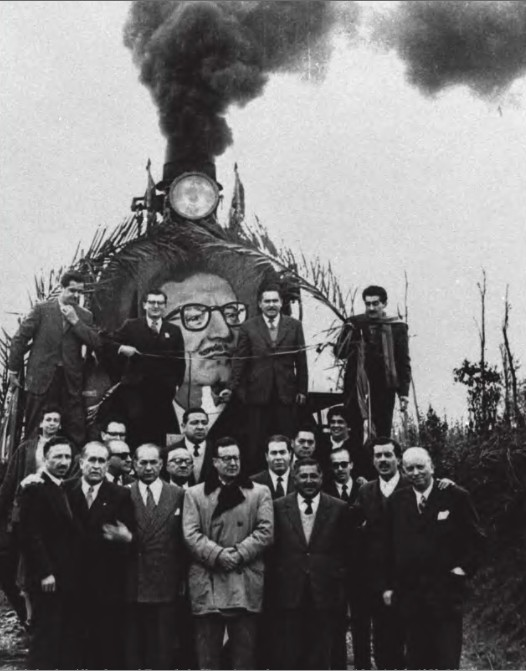
Salvador Allende

  • -

Salvador Allende

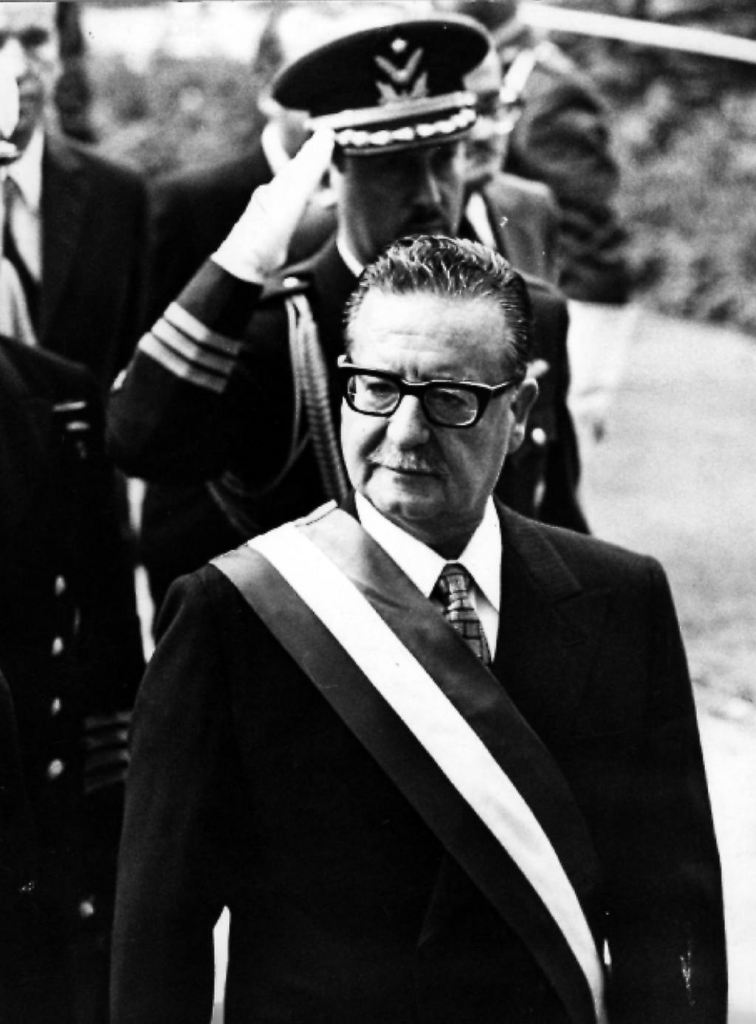
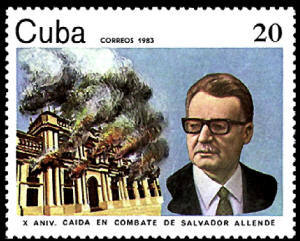
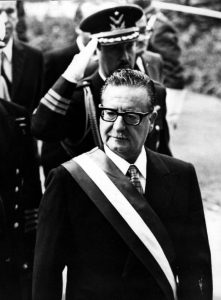
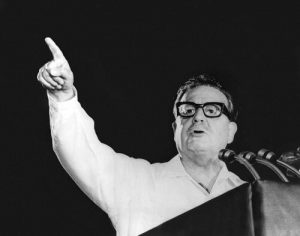
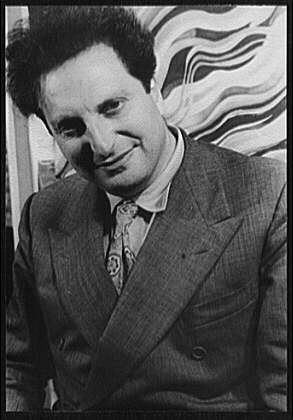
Salvador Guillermo Allende Gossens [salβaˈðoɾ ɣiˈjeɾmo aˈjende ˈɣosens] (June 26, 1908 in Valparaíso – September 11, 1973 in Santiago de Chile) was a Chilean physician and politician. He served as President of Chile from 1970 to 1973. His presidency was an attempt to establish a socialist society in Chile through democratic means. Allende was overthrown in a military coup in 1973, during which he committed suicide.

Allende became politically active in the late 1920s as a medical student at the University of Chile. He participated in protests against the dictatorship of Colonel Carlos Ibáñez del Campo and was elected vice president of the Federation of Chilean Students (FECH). In 1929, he joined both the Freemasons[5] and the group “Avance” (“Forward”).[6] In both organizations, he made important contacts for his later political career.

After the suppression of an uprising against the Ibáñez dictatorship led by Marmaduque Grove, Allende was arrested but later released. Shortly thereafter, he became secretary of the Socialist Party, founded in 1933, for the Valparaíso region.
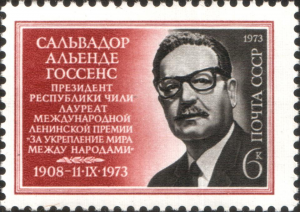
In 1952, Allende ran for president for the first time, but only finished fourth. In 1954, he served as Deputy President of the Senate. In 1958, he was again the presidential candidate of the left-wing alliance Frente de Acción Popular (FRAP), but narrowly lost to the businessman Jorge Alessandri Rodríguez, who was supported by the right-wing parties. In 1964, he ran for president again, but was decisively defeated by the Christian Democrat Eduardo Frei. The reasons for this final electoral defeat were the last-minute support of the conservative parties for the more progressive Frei, as well as the massive support of the Christian Democrats by the CIA.[7]

In 1966, Allende was elected President of the Senate. In 1968, calls for his resignation followed his personal protection of the survivors of Che Guevara’s guerrilla force in Bolivia. In the same year he condemned the Soviet invasion of Prague.

Namegiving

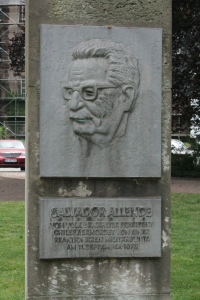
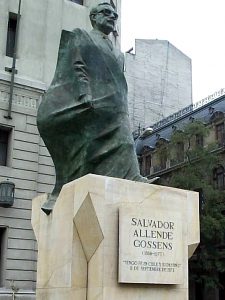
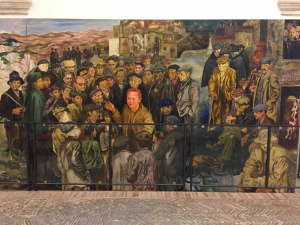
After the end of the military dictatorship in Chile, Allende’s body was transported from Valparaíso, where he had been buried behind closed doors after the coup, to Santiago de Chile and interred in the main cemetery. Several hundred thousand people attended the funeral. A statue of Allende stands next to the presidential palace, La Moneda.

After his death, Salvador Allende was honored primarily in the socialist countries of Europe. In the Berlin district of Köpenick, the Salvador Allende Quarter is named after him. There is also an Allende Quarter in Wittenberge (Brandenburg). In the university town of Greifswald, in the GDR, the vocational school of the VEB Kombinat Ingenieur-Tief- und Verkehrsbau Rostock (State Industrial Estate Combine) bore the name Dr. Salvador Allende. An “Allende Memorial Stone” stood in the schoolyard. This educational institution was closed after the fall of the Berlin Wall. Two of the former buildings were converted into student housing and prop storage for the theater, in front of which the memorial stone is located. In Jena, a square in the Lobeda-Ost district, and streets in Bautzen, Chemnitz, Ludwigsfelde, Magdeburg, Neubrandenburg, Rostock, Frankfurt (Oder), Waltershausen, Weimar, Wittenberge, and Zwickau are named after Allende.

In Bernburg (Saale) in Saxony-Anhalt, the then new residential area on Kirschberg was named Dr. Salvador Allende Settlement in 1973, and a memorial plaque was erected at the corner of Dr. John Rittmeister Street, which was “stored indefinitely” in 2007.[33] The secondary school in Klötze (Saxony-Anhalt) bears the name “Dr. Salvador Allende,”[34] as does a primary school in Chemnitz.[35] A primary school in Rheinsberg (Brandenburg)[36] bore his name until 2018.[37]

In the Federal Republic of Germany, the former Bornplatz in the Hanseatic City of Hamburg was renamed Allende-Platz in 1983. It is located next to the grounds of the University of Hamburg, in the immediate vicinity of the former Talmud Torah School. In Oer-Erkenschwick, the Socialist Youth of Germany – The Falcons – has called its educational facility the Salvador Allende House since it opened in the late 1970s. There is also a Salvador Allende Street in Berlin, Bremen, and Frankfurt am Main. In Berlin, there is also the Salvador Allende Quarter.
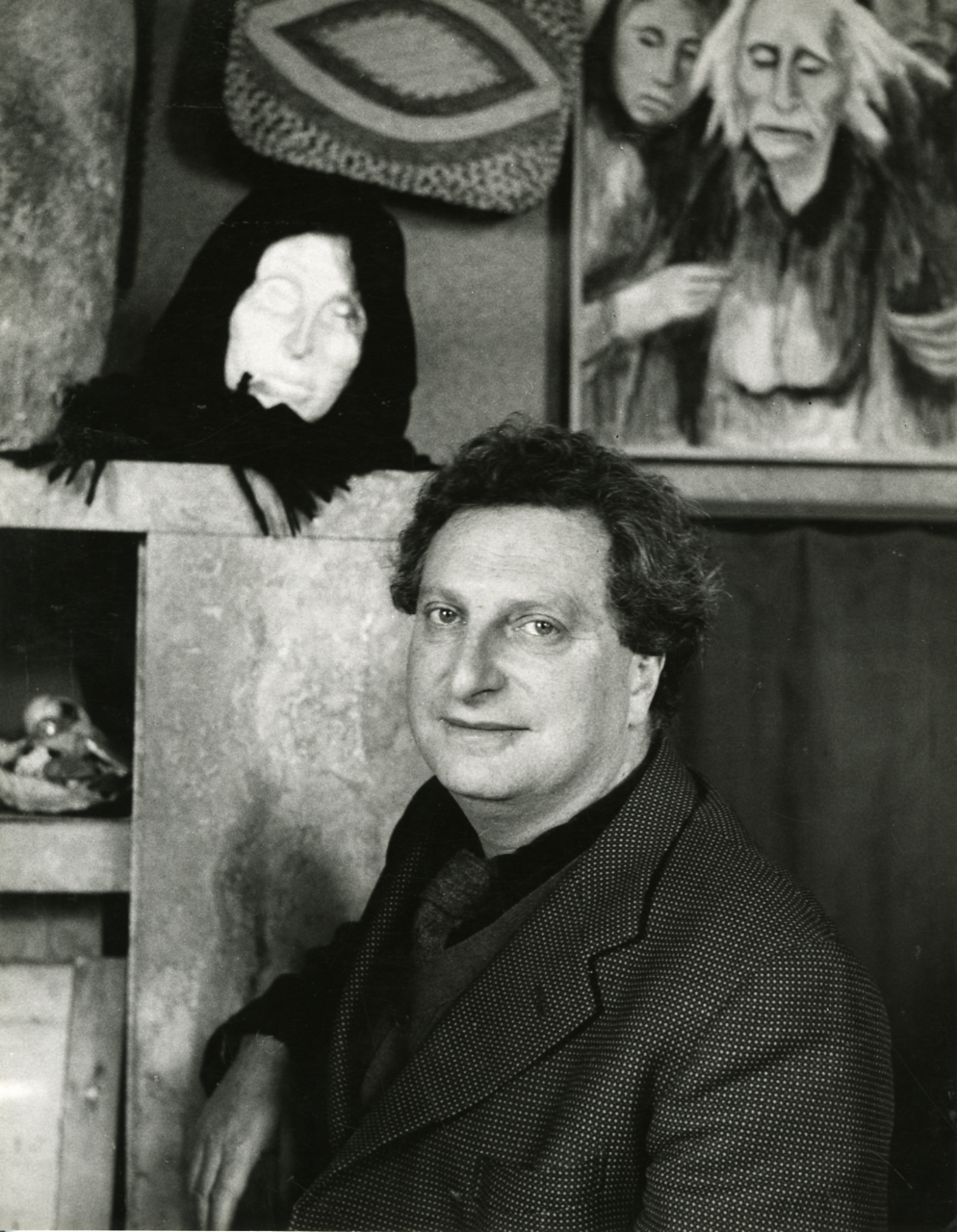
https://de.wikipedia.org/wiki/Salvador_Allende

https://en.wikipedia.org/wiki/Salvador_Allende


  • -

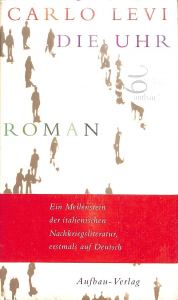
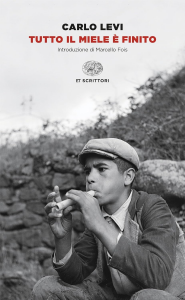
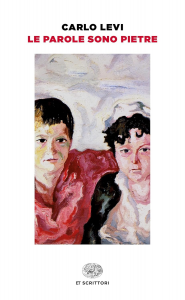
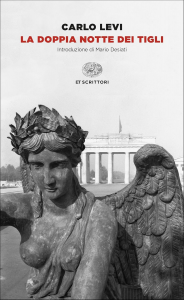
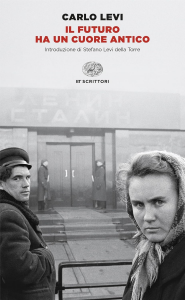
Carlo Levi

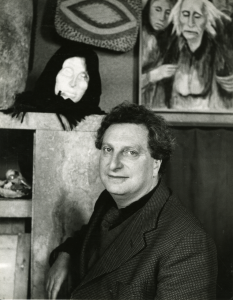
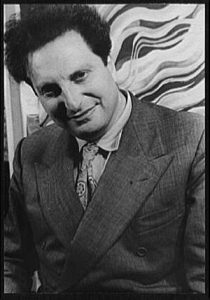
Graziadio Carlo Levi or Carlo Lèvi (born November 29, 1902 in Turin; died January 4, 1975 in Rome) was an Italian writer, painter, doctor and politician.

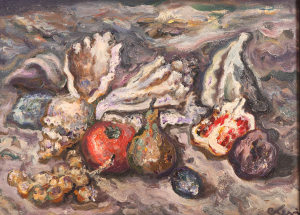
Carlo Levi came from an upper-class, assimilated Jewish family; his parents were Ercole Levi and Annetta Treves. In 1917 or 1918, he enrolled to study medicine at the University of Turin, graduating in 1924.[1] Although he worked as an assistant doctor at a Turin clinic from 1924 to 1928, he never practiced as a regular doctor, as he was more interested in politics and painting, to which he devoted himself intensively from 1923 onwards.[2] He became a member of the Rivoluzione liberale (“Liberal Revolution”) group led by Piero Gobetti, spent some time in Paris, and took part in the 1929 exhibition Sei pittori di Torino (“Six Turin Painters”).

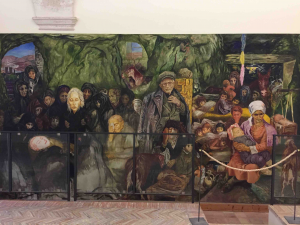
Because he had founded the anti-fascist group Giustizia e Libertà (“Justice and Freedom”) together with Carlo and Nello Roselli in 1929 and led it together with Leone Ginzburg, Levi was imprisoned in Rome for two months in the spring of 1934 and exiled to the southern Italian region of Lucania (now Basilicata) in May 1935. There, after some time in the small town of Grassano, he spent the period from September 1935 to May 1936 in the village of Aliano, where, due to the poverty of the inhabitants, he practiced as a doctor without pay and with limited resources. Until the provincial administration forbade this too and treatments could only be carried out in secret. On the side, he painted people and landscapes and explored the customs of the inhabitants, especially magic and superstition.

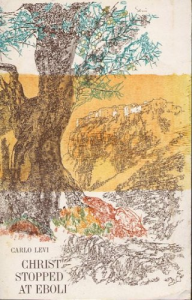
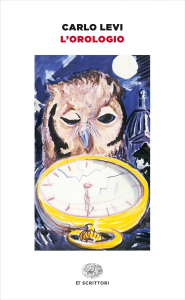
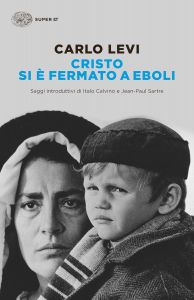
After his early release in 1936 through a general amnesty proclaimed by the fascist state to celebrate the annexation of Abyssinia during the Abyssinian War, Levi went into exile and took over the leadership of the Justice and Liberation group from Paris. In 1941, he returned to Italy, was arrested and imprisoned in Florence. After the fall of Mussolini, he was released, sought refuge in the Palazzo Pitti, and there, in 1943/1944, wrote his book Cristo si è fermato a Eboli (published in 1945, see below), in which he recorded his memories of his time in Aliano, choosing the slightly coded name Gagliano for Aliano.

After the end of the Second World War, Levi moved to Rome, where he lived and worked from then on in the Villa Strohl-Fern[3] and for some time as editor of the magazine Italia libera, which belonged to the Partito d’Azione (“Party of Action”). He continued to paint (his paintings were exhibited in various European countries and in the USA) and wrote more books (see below). In 1963, he was elected to the Senate as an independent on the Communist Party list, where he remained until 1972.

Carlo Levi died of pneumonia in a Roman hospital in 1975. In accordance with his express testamentary wish, he was buried in the cemetery of Aliano, which was one of his favorite places to stay during his exile there.

https://de.wikipedia.org/wiki/Carlo_Levi

https://en.wikipedia.org/wiki/Carlo_Levi


  • -

Margaret Chan

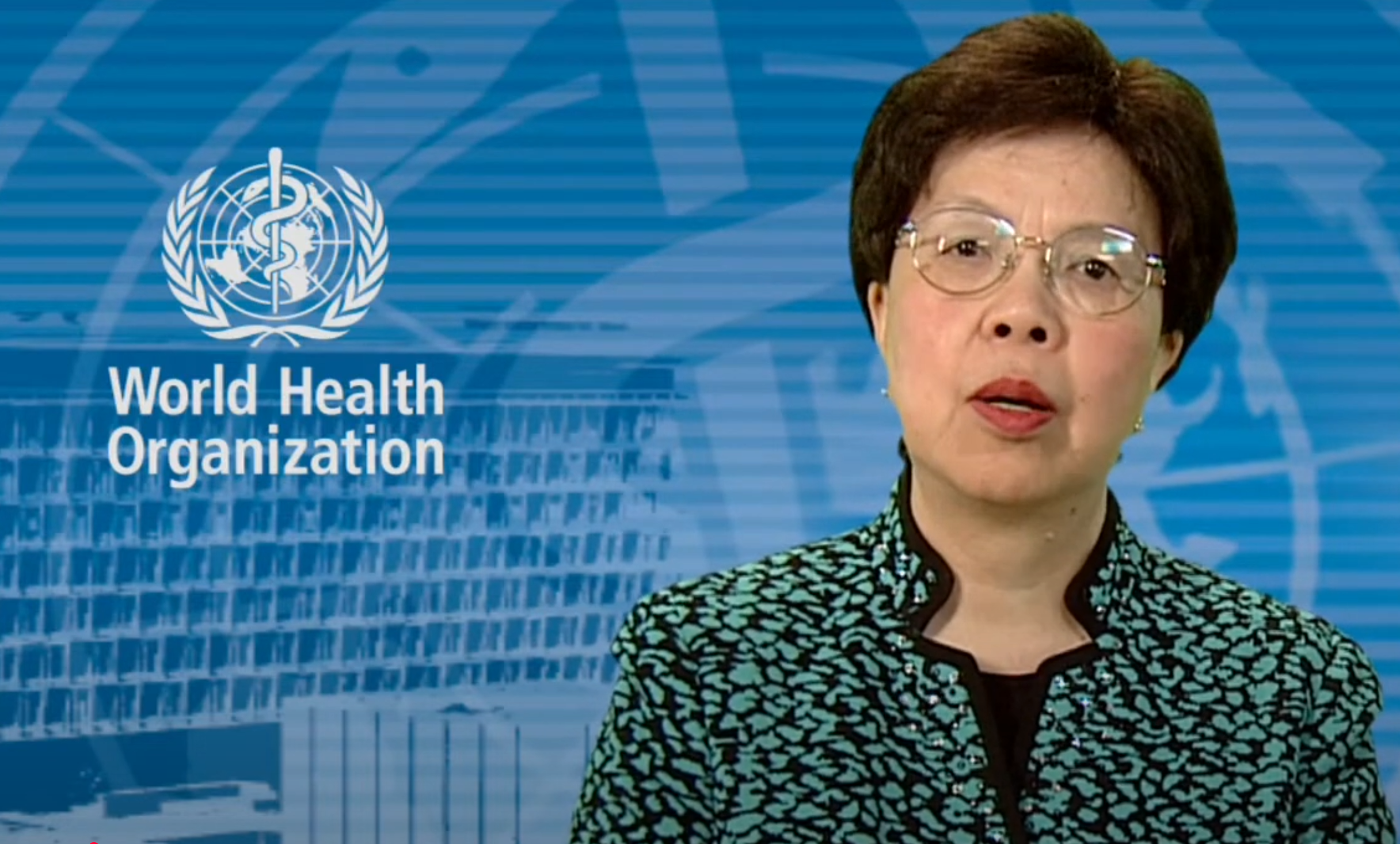
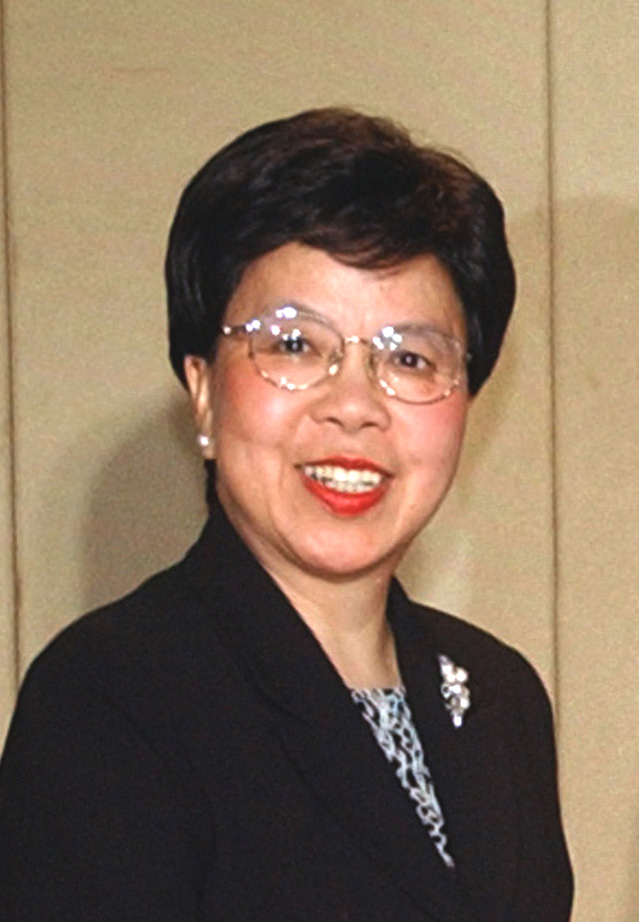
Margaret Chan Fung Fu-chun (Chinese: 陳馮富珍/陈冯富珍; born 1947 in Hong Kong) was Director-General of the World Health Organization from 2006 to 2017 (in May 2012 she was elected for a second term until June 30, 2017). She was the first Chinese woman to head a UN specialized agency.

Biografie

Margaret Chan completed her medical studies at the Canadian University of Western Ontario. After returning to Hong Kong, she joined the health department of the then British Crown Colony in 1978. From 1994 to 2003, she was Director of Health in the Hong Kong government. In this role, she was also responsible for combating the H5N1 avian flu (1997) and SARS in 2003, the outbreak of which claimed nearly 300 lives in Hong Kong. She was criticized by the public and parliament for her hesitant stance in combating SARS.[2] On the other hand, a commission of experts appointed by the government concluded that she could not be held responsible for the mismanagement.

That same year, she left her post to accept a position at the WHO as Director of the Department for the Protection of the Human Environment. In 2005, she became Director of the WHO Department of Communicable Disease Surveillance and Control and Deputy to the Director-General for Pandemic Influenza.

She was heavily criticized for her agreement to classify the 2009/10 swine flu, caused by the H1N1 influenza A virus, as a pandemic, as the criteria for a pandemic were lowered for that virus.[4] Members of the Council of Europe also criticized Chan, most notably the German physician and politician Wolfgang Wodarg (SPD), a member of the Parliamentary Assembly of the Council of Europe.[5] The WHO rejected the accusations of hasty action.

https://de.wikipedia.org/wiki/Margaret_Chan


  • -

Hans Michael Schulz

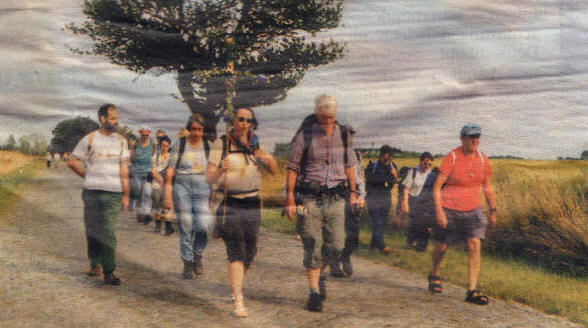
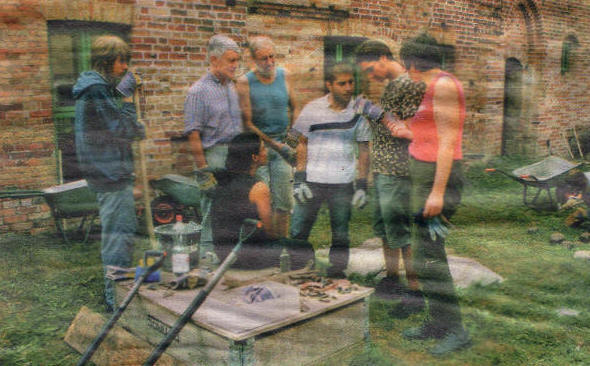
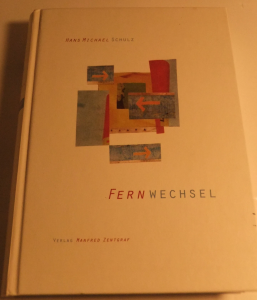
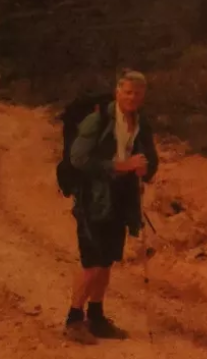
When Hans Michael Schulz packs his backpack, the journey is the destination: pilgrimages run like a common thread through the life of the former chief physician of Nordhorn. With 30 people between the ages of 17 and 77, he hiked the path of the “Swedish Birgitta” through the Mecklenburg countryside, praying, remaining silent, singing, and also working on projects. They covered distances of 20 to 25 kilometers each day. It all began in the spring of 1994, when he left his hospital for six months to walk to Santiago de Compostela – almost 3,500 kilometers. He recorded his impressions in his book “Fernwechsel,” which is now out of print. He enjoys it: times of walking, observing, reflecting, and praying – interspersed with interesting conversations with his fellow hikers.

At the beginning is farewell, and at the end is arrival. The author, a physician and head of a department of internal medicine, bids farewell to his wife in familiar surroundings. This is reminiscent of farewell scenes in world literature, such as Hector, who embraces Andromache for the last time before the battle with Achilles, or Siegfried, who bids farewell to the ominous Kriemhild “with loving kisses.” But unlike in the epics, in which the heroes face certain death, a new life is revealed to the author on a seventeen-week march from Nordhorn to Santiago de Compostela.

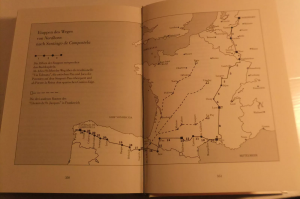
The book is an account of this 3,500-kilometer pilgrimage, which leads via Aachen, Trier, Cluny, Lyon, Arles, Toulouse, across the Pyrenees to Logroño, Burgos, and Leon, finally ending in the city of Santiago. The Christian conviction that the Church can still be a guide for all who are searching and willing to discover sets the tone for the daily notes. The pilgrim is less interested in the beauty of the churches and monasteries along the Way of St. James described in the usual guidebooks; he visits them all, but only to seek in them “a stage in the ascent of human consciousness” and strength to cope with the present. And on his arduous pilgrimage, the author succeeds in experiencing the path itself, the diverse nature, and the art in the churches as “Christ’s message of redemption.” The reader who embarks on such a search for clues will be able to exclaim at the end with Hans Michael Schulz: “Each time I was gripped anew. And this and everything else on the way here was far more than I had expected. – Basta!”

https://www.faz.net/aktuell/feuilleton/reise/rezension-sachbuch-europa-11295147.html


  • -

Carl Claus Hagenbeck

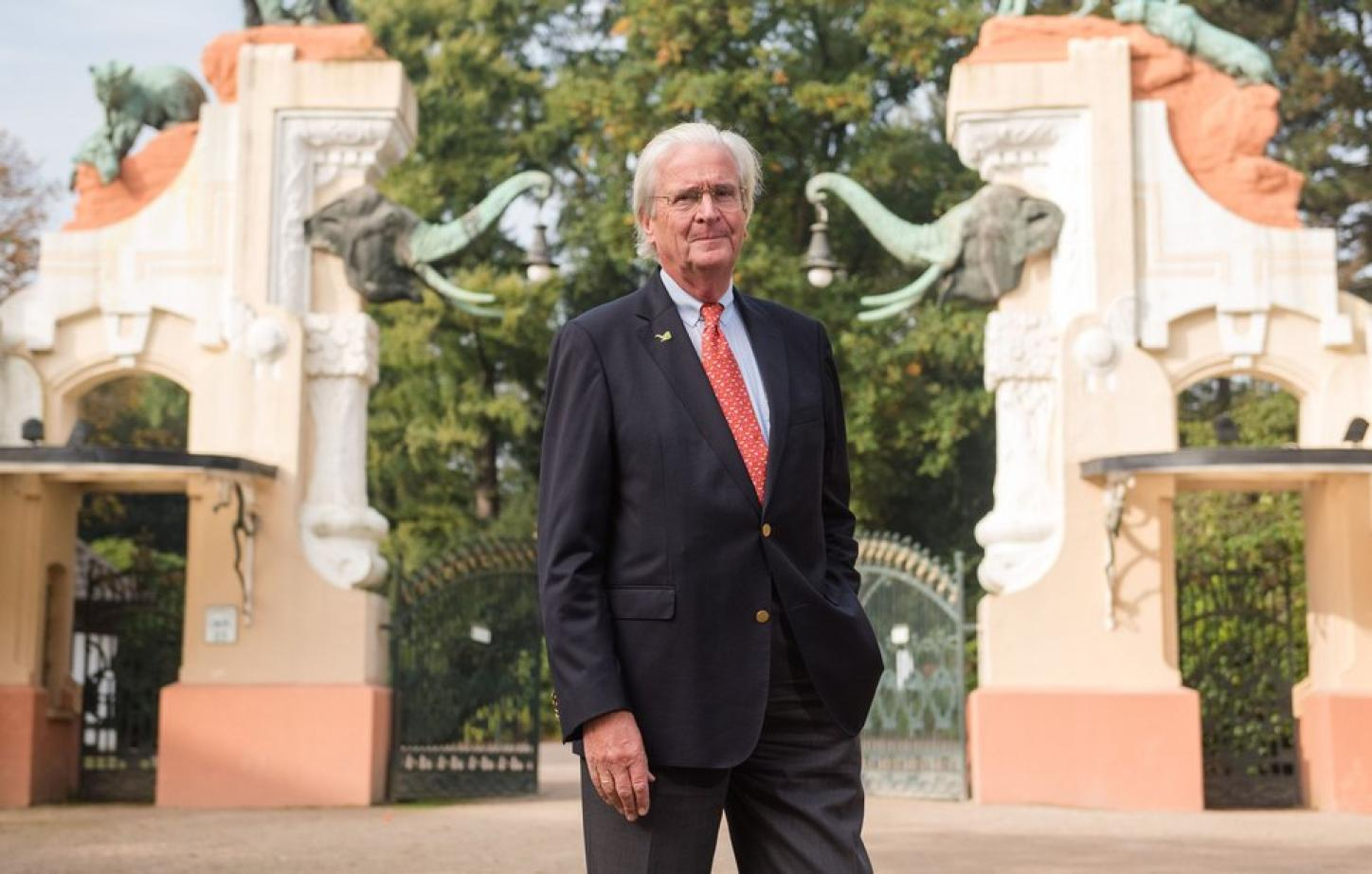
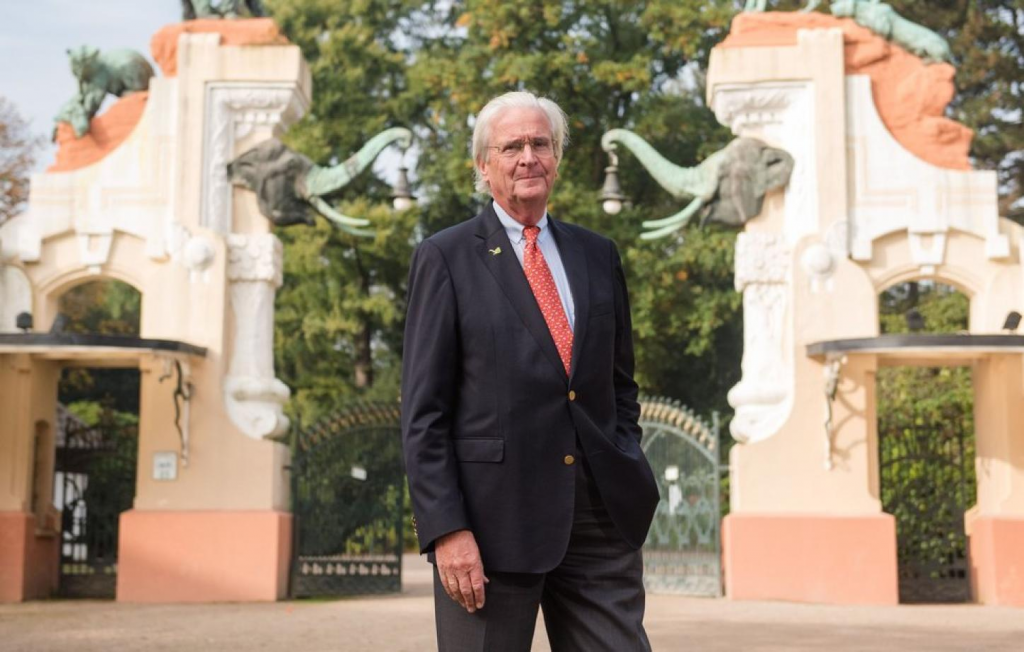
Carl Claus Hagenbeck (born 1 November 1941 in Hamburg) is a German veterinarian and former zoo director.

From 1962 to 1967 he studied veterinary medicine at the Hannover Veterinary School and received his doctorate in veterinary medicine. Hagenbeck is married and has two daughters. From 1977 to 1982 he was junior director of the Hagenbeck Zoo in Hamburg,[1] which he then directed from 1982 to 2004. Between 1982[2] and 1989 he directed the zoo together with his third cousin from the Lorenz Hagenbeck family, Caroline Hagenbeck (1959–2005),[3] and from 1989 onwards with her husband Joachim Weinlig-Hagenbeck (* 1956).

Carl Claus Hagenbeck was born as the son of Carl-Heinrich Hagenbeck (1911–1977); his grandfather was the Hamburg Zoo director Heinrich Hagenbeck (1875–1945), and his great-grandfather was the zoo founder Carl Hagenbeck.

In 1998, Carl Claus Hagenbeck founded the Hagenbeck Zoo Foundation together with Caroline Hagenbeck.[1] He handed over the position of zoo director to his son-in-law Stephan Hering-Hagenbeck (* 1967) in 2004.[4] From 2012[5] until the beginning of April 2015, he was once again managing director of the zoo together with Joachim Weinlig-Hagenbeck.[6] A falling out developed between the two.[4] Stephan Hering-Hagenbeck and Friederike Hagenbeck initially succeeded him, but in June 2015, Carl Claus Hagenbeck’s daughter Bettina[4] joined the management instead of Hering-Hagenbeck.

https://www.hagenbeck.de

1962Abitur
1962-1967Studium der Veterinärmedizin an der Tierärztlichen Hochschule Hannover mit Promotion zum Dr. med. vet.
1970Prokurist und Tierarzt der Firma Carl Hagenbeck
1971Einrichtung und Leitung des Delfinariums
1972-1979Modernisierung der Infrastruktur des Tierparks
1977-1982Juniorchef des Tierparks Hagenbeck in Hamburg-Stellingen
1982-2004Chef des Tierparks Hagenbeck
1997Hamburger Denkmalschutzamt erklärt die Gesamtanlage des Tierparks als schützenswert
1998150-jähriges Jubiläum des Tierparks
1998Gründung der Stiftung Tierpark Hagenbeck (zus. mit Caroline Hagenbeck)
2004Ablösung als Chef des Tierparks durch Joachim Weinlig-Hagenbeck und Stephan Hering-Hagenbeck
2012Rückkehr in die Geschäftsführung nach Differenzen innerhalb der Eigentümerfamilie

https://de.wikipedia.org/wiki/Carl_Claus_Hagenbeck

https://www.shz.de/deutschland-welt/kindernachrichten/artikel/carl-claus-hagenbeck-ein-leben-im-und-fuer-den-zoo-20988898


  • -

Klaus Zehnder-Tischendorf

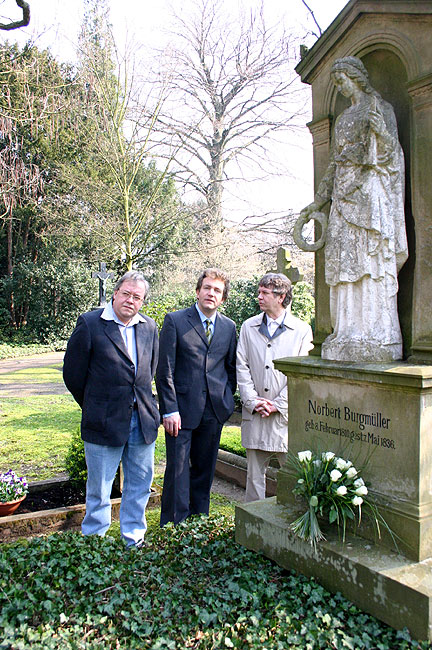
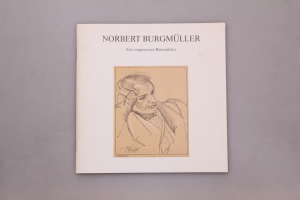
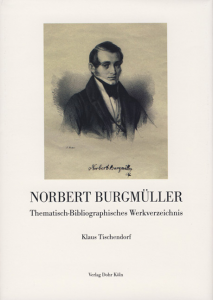
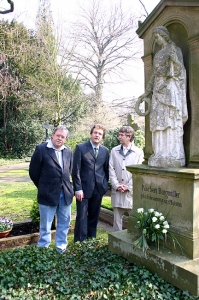
On this day, Klaus Zehnder-Tischendorf (*22. Januar 1957 in Cologne, died 14. November 2014 in Cologne) and others founded the “Norbert Burgmüller Society e.V. Düsseldorf” was founded in the Düsseldorf City Museum. The driving force behind the project is the pianist Tobias Koch, Düsseldorf, and the Burgmüller researchers Dr. Klaus Martin Kopitz, Berlin, and Dr. Klaus Zehnder-Tischendorf, Cologne. The management is taken over by the Dirk Franke Concert Agency, Düsseldorf. Also present at the founding meeting were: Elisabeth von Leliwa, dramaturge of the Tonhalle Düsseldorf; Hannelore Köhler, sculptor; Jutta Scholl, director of the music libraries of the city of Düsseldorf; Peter Haseley, director of the Clara Schumann Music School Düsseldorf; Prof. Oskar Gottlieb Blarr, composer; Alexander Nitzberg, poet; Alfred Lessing, musician and musicologist; Prof. Peter-Christoph Runge, chamber singer and honorary member of the Deutsche Oper am Rhein; Dr. Ernst Sell, physician and collector of musical first editions and keyboard instruments; Regine Müller, arts editor of the Rheinische Post; Natascha Plankermann, journalist; and Manfred Hill. Chairman of the Municipal Music Association of Düsseldorf, founded in 1818.

The society’s goal is to promote and disseminate the work of Norbert Burgmüller through publications, concerts, and exhibitions. With 2010 (the composer’s 200th birthday) in mind, the society intends to prepare for the commemorative year and document the composer’s work through the publication of editions and recordings. The society will provide ongoing information about its work on a website currently under development.

Norbert Burgmüller was the son of the first music director of the city of Düsseldorf, Johann August Franz Burgmüller, and a member of the Musikverein.

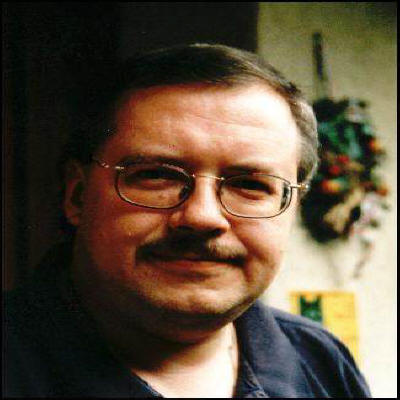
Klaus Zehnder-Tischendorf, born in Cologne in 1957, graduated from high school and studied library science. He spent three years at the Cologne University Library Center (DFG research project). Studied human medicine in Essen. Since 1989, he has practiced medicine in Switzerland and completed his doctorate in forensic medicine in Basel. He has practiced as a general practitioner in Zofingen, Aargau, since 1998. He has lived in Cologne again since 2005.

Interests

Lesser-known music from Joseph Martin Kraus to Theodor Kirchner and Julius Röntgen to Leo Ornstein; musicians’ autographs; fantasy literature; chess; painting; cultural history; computer-assisted conversion of music into moving images; flora and fauna.

Bibliography by Klaus Zehnder-Tischendorf on Norbert Burgmüller and his circle:

Norbert Burgmüller. Leben und Werk.
        Köln 1980.

        Norbert Burgmüller (1810-1836). Ein vergessener Romantiker, aus Anlass seines 150.
        Todestages am 7. Mai 1986.
        Düsseldorf 1986.

        Norbert Burgmüller.
        (in: Correspondenz. Mitteilungen der Robert-Schumann-Gesellschaft e.V. Düsseldorf, V.)
        Düsseldorf 1986, S. 8-11.

        Norbert Burgmüller. Zur Eröffnung der Gedenkausstellung.
        Vortrag in der Raiffeisenbank Düsseldorf am 6.5.1986. Mskr.

        Einführung zu ausgewählten Liedern und Klavierwerken. AULOS Preciosa 68539.
        Viersen 1986.

        Fast verklungene Romantik: Norbert Burgmüller (1810-1836).
        (in: Schweizerische Ärztezeitung, LXXX, Nr.31.)
        Basel 1999, S. 1914-1917.

       „Welch meisterliches Gebilde…“. Die Rhapsodie in h-moll op.13 (1834) von Norbert
        Burgmüller (1810-1836). Eine Werkmonographie.
        Zofingen 2000.

        “Was in der Dinge Lauf jetzt missklingt tönt einst in ewigen Harmonien.” Der Düsseldorfer
        Städtische Musikdirektor August Burgmüller als Begleiter der Sängerin Angelica Catalani.
        (in: Düsseldorfer Jahrbuch 2000, Beiträge zur Geschichte des Niederrheins, Bd. LXXI.)
        Düsseldorf 2001, S. 243-257.

        Vorwort zum Erstdruck des Allegretto (Ständchen) o. op.
        Genf 2001.

        Norbert Burgmüller (1810-1836) – Der Rheinische Schubert. (Der Kleine Lauschangriff.)
        (in: Klassik Heute, Jg. 4, Heft 8.)
        München 2001, S. 42f.

        Vorwort zur Neuedition der Klaviersonate f-moll op.8
        Düsseldorf 2001.

        Vorwort zur Neuedition Sämtlicher Lieder.
        Düsseldorf 2001.

        Grabbes Oper “Der Cid”. Neue Erkenntnisse zur Vertonung von Norbert Burgmüller.
        (in: Ich aber wanderte und wanderte – Es blieb die Sonne hinter mir zurück. Grabbe-
        Jahrbuch 2000/2001. 19./20. Jg.)
        Detmold 2002, S. 140-146.

        Vorwort zur Neuedition ausgewählter Klavierwerke von Friedrich und Norbert Burgmüller.
        Düsseldorf 2002.

        Vorwort zum Reprint der Sinfonie Nr.1 c-moll op.2.
        München 2002.

        Vorwort zum Reprint des Trauermarsches a-moll op.103 von Felix Mendelssohn-Bartholdy.
        München 2002.

        Vorwort zum Reprint der Ouvertüre f-moll op.5.
        München 2003.

        Vorwort zum Reprint der 4 Entr’Actes op.17.
        München 2003.


  • -

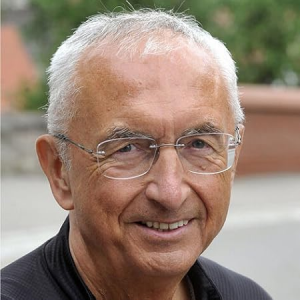
Peter Konopka

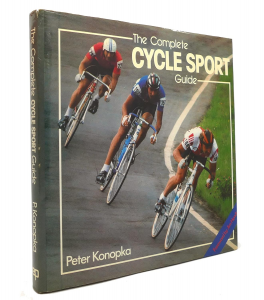
Dr. Peter Konopka is an internist, sports physician, and director of his own yoga school in Augsburg. In addition to his professional work as a senior physician in internal medicine at Augsburg Hospital, he was an active racing cyclist and, for twelve years, served as a sports physician for the German national road and cyclo-cross teams at training camps and stage races, as well as at a total of 16 World Championships and Olympic Games. In 1991, his Indian yoga teacher, Jonas Remedios, appointed him as his successor as director of his yoga school in Augsburg.

In addition to his professional activities, he was an active racing cyclist. With cycling world champion Rudi Altig as national coach, he served for twelve years as a sports physician for the German national road cycling teams, providing support at training camps and stage races, as well as at world championships and the Olympic Games. He was also trained as a yoga teacher by his Indian yoga teacher, Jonas Remedios, and in 1991, he was appointed his successor as director of his yoga school in Augsburg.

watch the video with youtube automatic translation to your language…

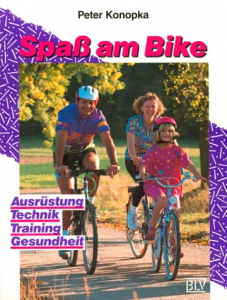
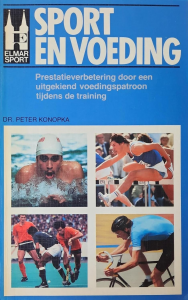
Dr. Peter Konopka was a senior physician in internal medicine at Augsburg Hospital until 2003. Always active in sports, he opened his own yoga school in Augsburg in 1991. Konopka began using these Far Eastern exercises, proven over 5,000 years, as early as 1972, when he first discovered yoga as an effective treatment for spinal problems in cyclists. His lectures, publications, and columns in professional media are countless. He also regularly contributes articles and provides valuable tips in our magazine “Health on a Grand Scale.”

He taught Haich-Yesudian Yoga https://www.youtube.com/watch?v=1wEnHowy_ew

https://www.facebook.com/yoga.konopka.augsburg/?locale=de_DE

https://www.linkedin.com/in/peter-konopka-57588a1aa/?originalSubdomain=de


  • -

Hannes Lindemann

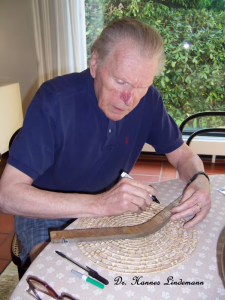
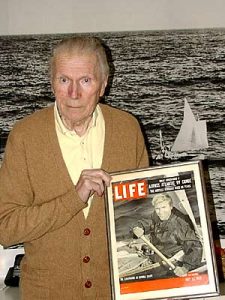
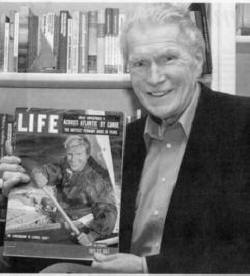
Hans-Günther[1] “Hannes” Lindemann (* 28 December 1922 – † 17 April 2015[2]) was a German physician, sailing pioneer, canoeist and author who became known for his Atlantic crossings in very small boats.

Interview with WDR5 on his 90th birthday in 2012 and report.

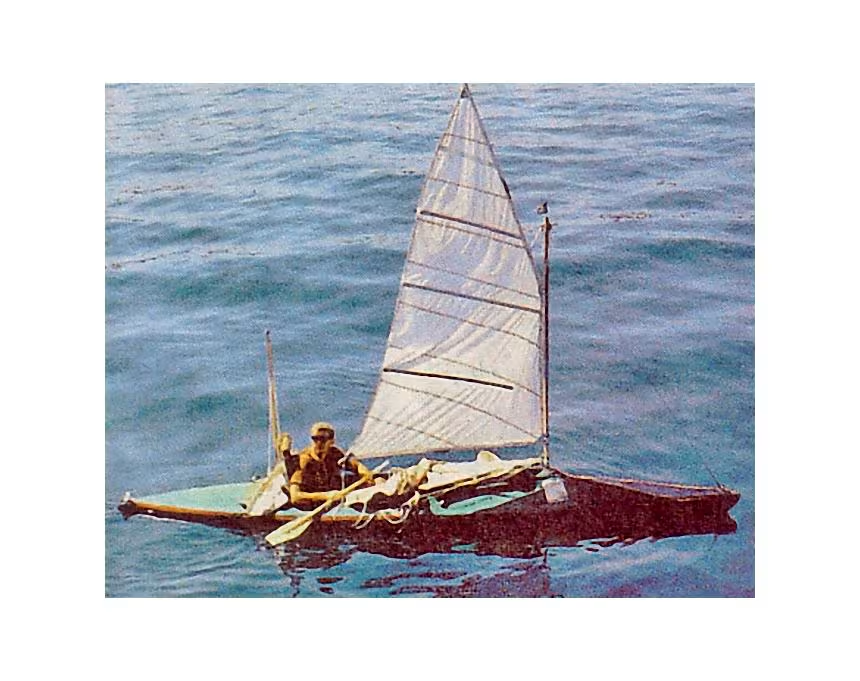
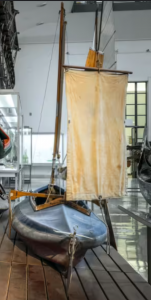
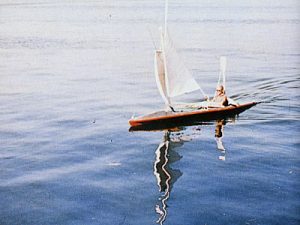
From 1955 onwards, he conducted several self-experiments to test the ability of a shipwrecked sailor to survive on the high seas under extreme psychological and physical stress. In 1955, he sailed the Atlantic in a dugout canoe, the Liberia, measuring 7.70 m x 0.70 m and weighing approximately 600 kg, specially built in Liberia. The following year, he sailed in an even smaller folding canoe (5.20 m x 0.87 m, 27 kg), the Liberia III.

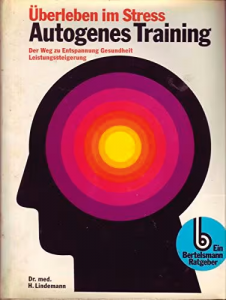
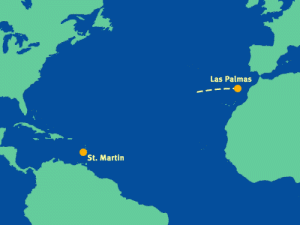
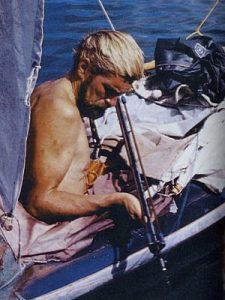
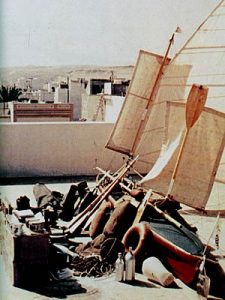
Lindemann equipped a standard two-seater Klepper folding boat of the Aerius II type with 60 cans of food, 96 cans of milk and 72 cans of beer, and 3 liters of water and crossed the Atlantic from the Canary Islands to St. Martin in the Netherlands Antilles. Although he carried a sextant for navigation, a floating anchor for rest breaks, and fishing tackle, he did not use a stove and ate the fish he caught raw. Lindemann cast doubt on Alain Bombard’s theory, which was discussed at the time, that shipwrecked sailors could meet their drinking water needs solely from salt water or the flesh of caught fish: he survived only by supplementing his supplies with collected rainwater. During the 72 days of the Atlantic crossing, he lost 25 kilograms of body weight and survived several hurricanes and two capsizes. He attributed his success to careful mental preparation for his journey through autogenic training and autosuggestion.
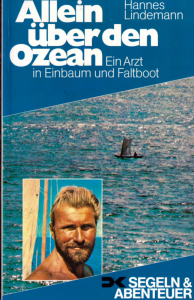
Lindemann subsequently enjoyed success as an author: “Alone Across the Ocean” is a logbook-like account of his first voyages. “One Man, One Boat, Two Continents” describes the experiences of a third Atlantic crossing in 1960 and summarizes conversations with African statesmen and with Albert Schweitzer, with whom he worked for a time as a doctor in Lambaréné (Gabon). He wrote several works on the subject of autogenic training, worked as a health educator for the German Red Cross, and taught at the University of Bonn on the topics of autogenic training and mental hygiene. His guidebooks have appeared in numerous editions.

Hannes Lindemann last lived in Bonn-Bad Godesberg. Wolfgang Ellenberger once had a telephone conversation with him.

https://de.wikipedia.org/wiki/Hannes_Lindemann

https://www.yacht.de/yachten/klassiker/hannes-lindemann-mit-dem-faltboot-ueber-den-atlantik


  • -

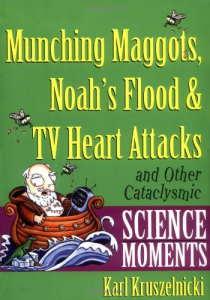
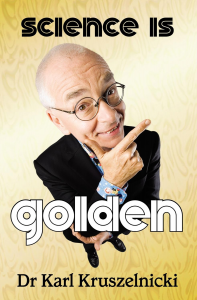
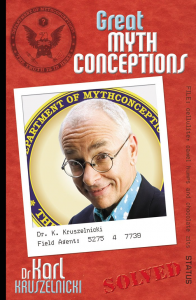
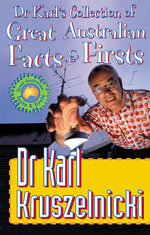
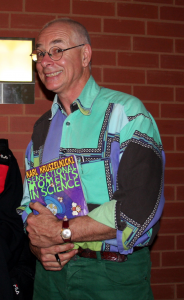
Karl Kruszelnicki

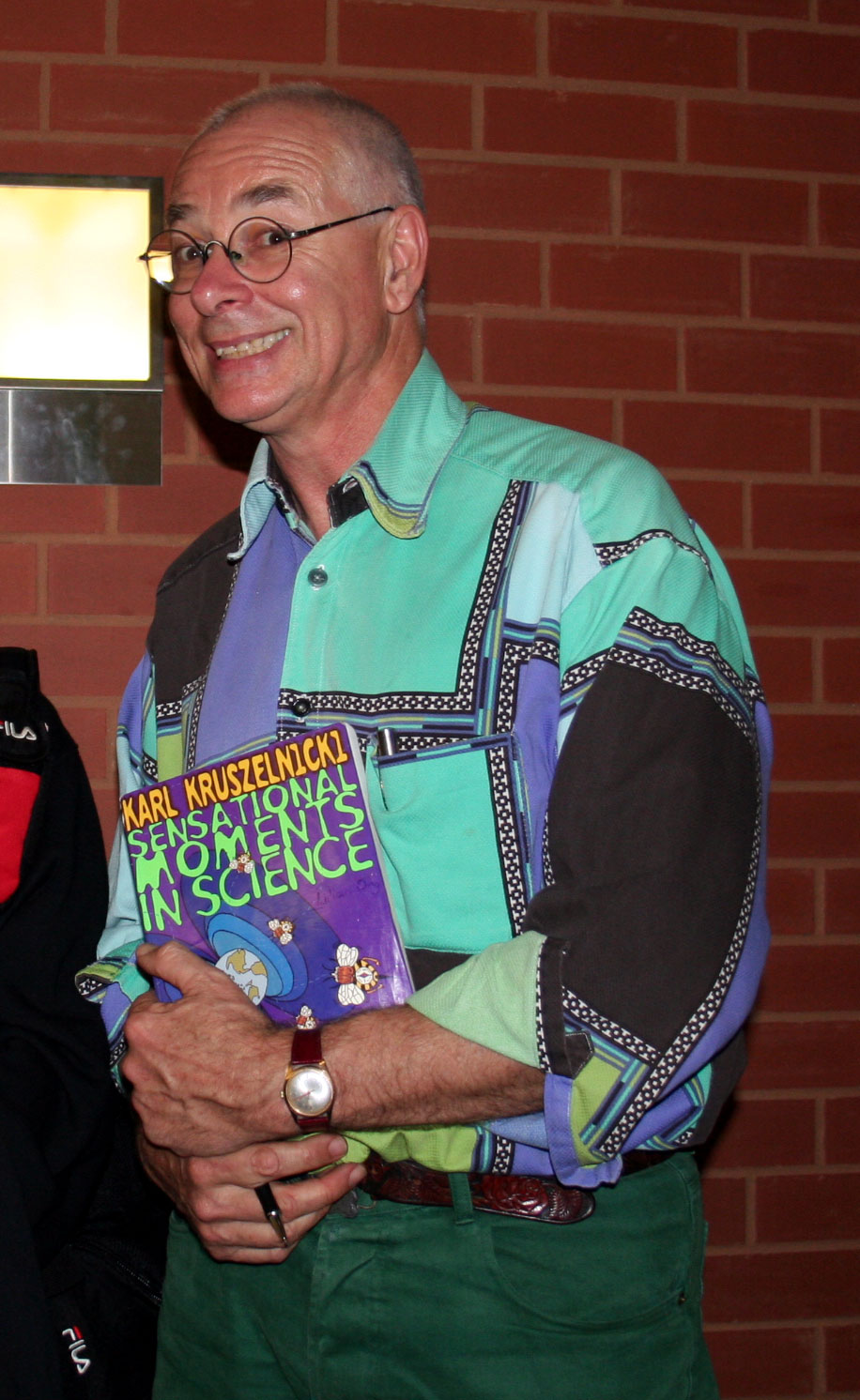
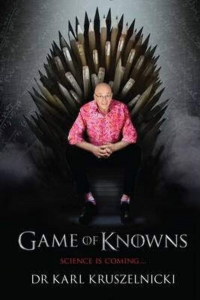
Karl Sven Woytek Sas Konkovitch Matthew Kruszelnicki AM (born 1948), often referred to as Dr Karl,[2] is an Australian science communicator and populariser,[2] who is known as an author and a science commentator on Australian radio, television, and podcasts.

Kruszelnicki is the Julius Sumner Miller Fellow in the Science Foundation for Physics at the School of PhysicsUniversity of Sydney.

Kruszelnicki was awarded a Master of Biomedical Engineering degree at the University of New South Wales. He completed his Bachelor of Medicine and Bachelor of Surgery degrees at Sydney University in 1986.

After primary school, Kruszelnicki’s first job was ditch digger in the Wollongong suburb of Dapto.[11] He also worked as a filmmaker, car mechanic, TV weatherman and as roadie for Slim DustyBo Diddley and Chuck Berry.[12] While working as a taxi driver in Sydney, he was beaten unconscious after picking up a passenger trying to escape a group of men.[1]

Kruszelnicki presented the first series of Quantum (replaced by Catalyst) in 1985. As a science communicator and presenter, he appears on the Seven Network’s Weekend Sunrise and on ABC TV. From early 2008 to 2010 he co-hosted a TV series called Sleek Geeks with Adam Spencer.
Kruszelnicki presented a program on ABC TV in January 2025 titled Dr Karl’s How Things Work.[16]

Kruszelnicki does a number of weekly radio shows and podcasts. His hour-long show on ABC radio station Triple J has been going on in one form or another since 1981; this weekly science talkback show, Science with Dr Karl, is broadcast on Thursday mornings from 11:00 am to midday and attracts up to 300,000 listeners; it is also available as a podcast.[17]

Kruszelnicki also often helps with other science and education Triple J promotions such as the Sleek Geek Week roadshow with Adam Spencer and Caroline Pegram. He and Adam Spencer released the Sleek Geeks podcast regularly until December 2015.[18] Also, Since 2016, he has hosted the podcast Shirtloads of Science.[19][20]

For many years, until March 2020, Kruszelnicki appeared on a live weekly late-night link-up on BBC Radio 5 Live‘s Up All Night, usually with Rhod Sharp, answering science questions.[21] In 2017, he hosted Dr. Karl’s Outrageous Acts of Science on Discovery Channel (Australia).[22]
Kruszelnicki writes a regular column for Australian Geographic magazine, called ‘Need to Know’, which is republished as a blog on the magazine’s website.[23] He has also written for the Sydney Morning Herald‘s Good Weekend magazine.[24]

In 1981, he appeared on an Australian radio documentary about death and near-death experiences that aired on the ABCAnd When I Die, Will I Be Dead?[25] It was adapted into a book in 1987.
Politics

Kruszelnicki was an unsuccessful candidate for the Australian Senate in the 2007 Australian federal election. He was placed number two on the Climate Change Coalition ticket in New South Wales.[27]

In 2015, Kruszelnicki appeared in an Australian Government advertising campaign for the recently published intergenerational report. He had previously agreed to do the campaign, believing it would be a “non-political, bipartisan, independent report.” After its publication, however, he backed away from the campaign, describing it as “flawed”. “How can you possibly have a report that looks at the next 40 years and doesn’t mention climate change? It should have acknowledged that climate change is real and we cause it and it will be messy.”

https://www.abc.net.au/news/karl-kruszelnicki/8462002

https://en.wikipedia.org/wiki/Karl_Kruszelnicki


  • -

Gerhard Kittel

Gerhard Kittel (* March 4, 1925 in Berolzheim, North Baden; † November 9, 2011 in Marloffstein) was a German otolaryngologist, phoniatrist, and pediatric audiologist who, as a university professor in Erlangen, played a key role in establishing the field in Germany and Europe.

Gerhard Kittel also wrote poems and poetry, but his early work was lost in the turmoil of World War II. He subsequently published texts and books, especially after his retirement, including a poetry series published by Specht-Verlag. He was a member of the German Federal Association of Doctor-Writers.

He wrote a poem for the European Congress of Doctor-Writers in October 2002 in Bad Säckingen, Southern Germany:

Gerhard KittelEuropalied“rough” english translation:
Schwestern, Brüder, reicht die Hand,Brothers, sisters take your hand
lasst vergessen Streit und Leid,let´s forget quarrels and suffering
schätzet euer Vaterland,estimate your own country
stärkt Europas Einigkeit.and enforce Europe´s unity.
Lebt in Freiheit ohne Krieg,Live in freedom without war,
haltet Neid für immer fern,hold away jealousy forever,
ist Europa selbst schon Sieg,is Europe already a victory
leuchtet auf der Zukunft Stern.the star of future is gleaming.
Seht den Kontinent im Licht,See the continent in the light
fühlt und denkt und handelt recht,feel, think and act in the right way,
rächet das Vergang´ne nicht,do not revenge the past things
keiner sei des Anderen Knecht!nobody be the knight of the other!

https://de.wikipedia.org/wiki/Gerhard_Kittel_(Mediziner)