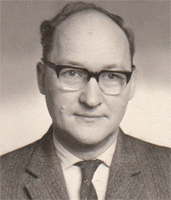
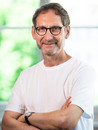
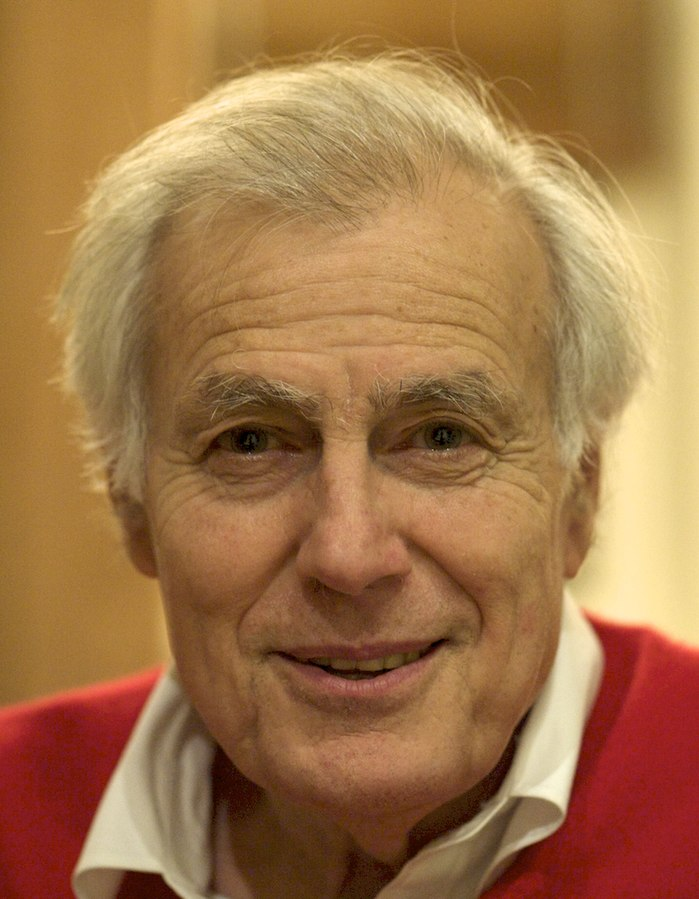
Klaus Thomas (* 31 January 1915 in Berlin; † 10 July 1992 in Malsburg-Marzell) was a German Protestant pastor, physician, and psychotherapist.
Klaus Thomas studied Protestant theology, philosophy, modern languages, psychology, psychotherapy, and medicine. During his studies, he was a member of the Arndt Berlin fraternity (in the Sonderhäuser Verband).[1] In 1940, he received his doctorate in philosophy from the Faculty of Philosophy at the Friedrich Wilhelm University of Berlin.[2] In 1947, he received his doctorate in medicine from the Faculty of Medicine at the Philipps University of Marburg under Ernst Kretschmer.[3] In 1964, he received his Doctor of Divinity (DD) in the USA, an honorary award for special theological services.
He worked as a student chaplain in Berlin and as a hospital chaplain in Marburg, later as a physician and psychotherapist in Berlin, as a senior teacher at the Schadow Gymnasium in Berlin, and as a lecturer at the Lessing University, at the Academy for Continuing Medical Education[4], and from 1956 until the construction of the Berlin Wall on August 13, 1961, at the Paulinum. Study and lecture tours have taken Klaus Thomas to over 100 countries.
He was also the regional chaplain of the Order of St. Luke for Germany, an international ecumenical working group of chaplains, physicians, psychologists, and lay people. The goal of the order is pastoral care for the sick through word and deed.[5] In the Berlin Association Register, this order has been operating since 1956 as the St. Luke Community (care for those weary of life) and, after the split of the Berlin Telephone Counseling Service, since 1961 as the St. Luke Order for Pastoral Care for the Sick and Care for Those Weary of Life – Circle of Friends
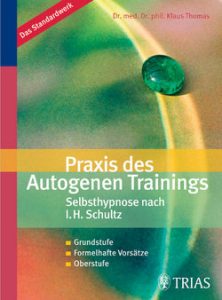
Klaus Thomas was the main disseminator of autogenic training according to Johannes Heinrich Schultz[10] and is considered his most important student.[11] Since 1972, he has directed the I. H. Schultz Institute for Psychotherapy, Autogenic Training and Hypnosis in Berlin, which he founded but which no longer exists today.
Funny that there are so many docs writing novels or poems… I too! As for me: I’m MD (specialized in hearing disorders), psychologist, statistician and theologist (you surely don’t believe it, but it’s true). – I wrote several novels, however, all of them in German. Among those published there is one dealing with a specifically medical subject: “The Dissection Course” – a kind of thriller.
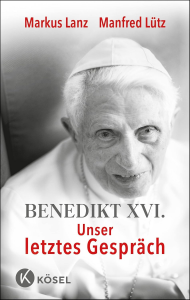
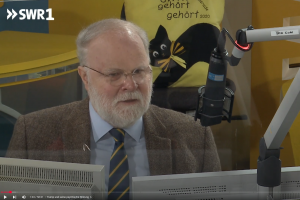
Manfred Lütz (born March 18, 1954 in Bonn) is a German psychiatrist, psychotherapist, Roman Catholic theologian, Vatican advisor, and author. He headed the Alexianer Hospital in Cologne from 1997 to 2019.[1]
Lütz studied medicine, philosophy, and Catholic theology in Bonn and Rome. He obtained his medical license in 1979 and his diploma in Catholic theology in 1982. During his studies, he became a member of the KDStV Bavaria Bonn in the CV.
Social Commitment
Manfred Lütz founded the inclusive youth group “Brücke-Krücke” in Bonn in 1981, in which disabled and non-disabled young people and young adults from Bonn and the surrounding area work together without professional supervision.[3][5] Since then, Lütz has volunteered for the initiative,[6] which is affiliated with the Catholic Youth Agency in Bonn. He organizes annual trips and participates in events. The group includes approximately 200 disabled and non-disabled people.
Church and Vatican Advisor
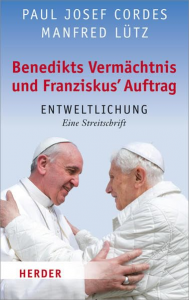
Pope John Paul II appointed Lütz a consultant to the Congregation for the Clergy in 2003.[7] In the same year, he organized a congress in the Vatican on the topic of “Abuse of Children and Young People by Catholic Priests and Religious.”[3] From 2006, he was part of the Pastoral Office’s working group in the Archdiocese of Cologne, responsible for processing and investigating cases of sexual abuse of minors by clergy and lay people in pastoral ministry.[8] Lütz himself served under three popes until 2016 as a member of the Pontifical Council for the Laity.[9] He contributed as an advisor to the creation of the Youth Catechism, Youcat.[10] He was a corresponding member of the Pontifical Academy for Life from the beginning of the 2000s, and a full member from 2004, to whose board he was appointed in March 2005 for a term until 2010.[12] After the restructuring of the Academy as part of the Curia reform, he was reappointed as a full member by Pope Francis in 2017 and is considered a supporter of the opening and renewal of the body implemented by the Pope.[13]
Pope Francis appointed him a member of the Dicastery for Laity, Family and Life on October 6, 2018.
Author and Media Presence
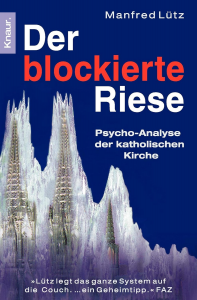
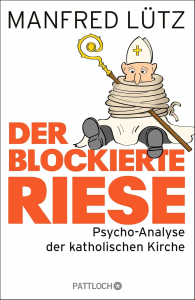
After his essay “The Blocked Giant: Psycho-Analysis of the Catholic Church” (1999), which received primarily internal attention, Manfred Lütz has been active as an author for a wider audience since 2002 and has gained greater recognition through several bestsellers.[2][3][9][16] In his books, he addresses general topics of lifestyle and modern culture, religion, and the conditions in the Catholic Church and psychiatry from the perspective of a psychotherapist, sometimes with humor and satirical slant. Manfred Lütz has also been active and in demand for many years as a lecturer, speaker, and interviewee. Lütz has also occasionally performed as a cabaret artist since 2006.[17] He has frequently participated in television programs as a discussion partner on psychiatric and psychotherapeutic topics and took part in prominent talk shows as a church expert in the run-up to the conclaves of 2005 and 2013.[18][19][20] In March 2013, he accompanied the live broadcasts of the papal election at the 2013 conclave and the subsequent events of the inauguration of the new pope in Rome as a commentator for ZDF and Phoenix.
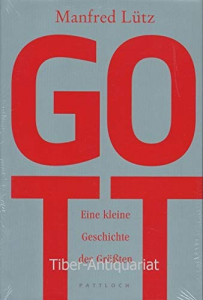
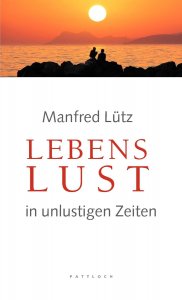
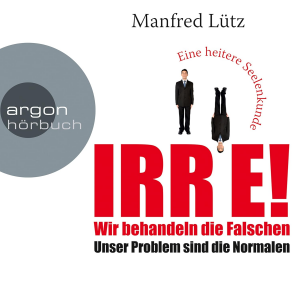
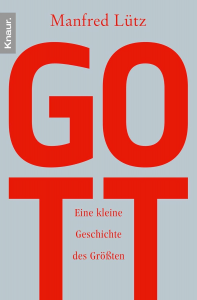
Manfred Lütz’s best-known book is entitled “Crazy! We Treat the Wrong People. Our Problem Are the Normal People” (2009), the paperback edition of which spent 106 weeks on the Spiegel bestseller list.[22] In 2013, it resulted in a television show with the Cologne cabaret artist Jürgen Becker.[23] His book “Bluff: The Falsification of the World” (2012) was also at the top of the Spiegel bestseller list.[16] Other frequently cited books are “Lust for Life: Against Diet Sadists, Health Craze, and the Fitness Cult” (2002), “God: A Short History of the Greatest” (2007), and “How You Will Inevitably Become Happy: A Psychology of Success” (2015). In 2016, he published a volume of conversations with the Auschwitz survivor Jehuda Bacon. His 2018 book The Scandal of Scandals was one of Herder Verlag’s two best-selling titles in 2018.
In various articles, for example in the Frankfurter Allgemeine Zeitung (FAZ), Lütz emphasized in 2010 that abuse by Catholic priests was worse than any other abuse, but at the same time rejected the idea of scapegoating the church and ignoring the social context of the 1970s. He sees the left-wing scene as the cause of the abuse. On the contrary, he argues that the “structures of the church are even helpful” when it comes to solving cases of abuse.[25] Society as a whole bears responsibility here.[26] In 2018, he commented on the so-called “MHG study”[27][28] published by the German Bishops’ Conference, calling it “spectacularly unsuccessful.”
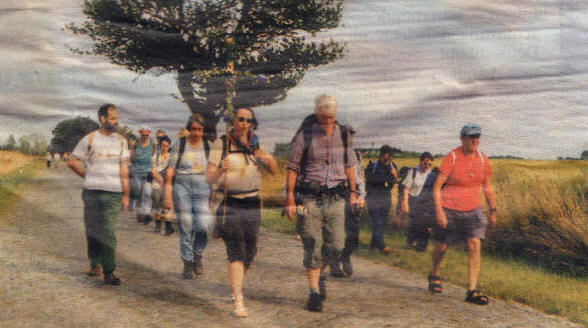
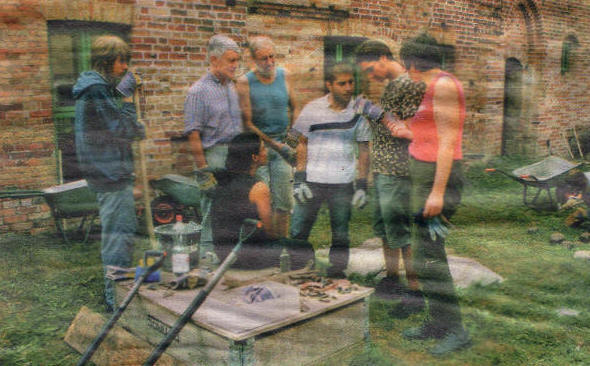
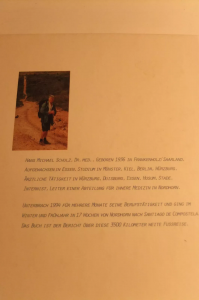
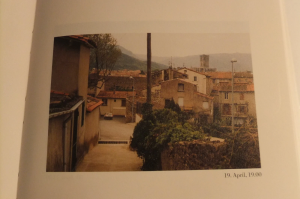
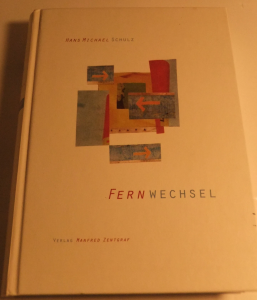
When Hans Michael Schulz packs his backpack, the journey is the destination: pilgrimages run like a common thread through the life of the former chief physician of Nordhorn. With 30 people between the ages of 17 and 77, he hiked the path of the “Swedish Birgitta” through the Mecklenburg countryside, praying, remaining silent, singing, and also working on projects. They covered distances of 20 to 25 kilometers each day. It all began in the spring of 1994, when he left his hospital for six months to walk to Santiago de Compostela – almost 3,500 kilometers. He recorded his impressions in his book “Fernwechsel,” which is now out of print. He enjoys it: times of walking, observing, reflecting, and praying – interspersed with interesting conversations with his fellow hikers.
At the beginning is farewell, and at the end is arrival. The author, a physician and head of a department of internal medicine, bids farewell to his wife in familiar surroundings. This is reminiscent of farewell scenes in world literature, such as Hector, who embraces Andromache for the last time before the battle with Achilles, or Siegfried, who bids farewell to the ominous Kriemhild “with loving kisses.” But unlike in the epics, in which the heroes face certain death, a new life is revealed to the author on a seventeen-week march from Nordhorn to Santiago de Compostela.
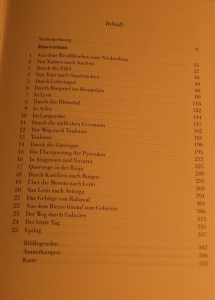
The book is an account of this 3,500-kilometer pilgrimage, which leads via Aachen, Trier, Cluny, Lyon, Arles, Toulouse, across the Pyrenees to Logroño, Burgos, and Leon, finally ending in the city of Santiago. The Christian conviction that the Church can still be a guide for all who are searching and willing to discover sets the tone for the daily notes. The pilgrim is less interested in the beauty of the churches and monasteries along the Way of St. James described in the usual guidebooks; he visits them all, but only to seek in them “a stage in the ascent of human consciousness” and strength to cope with the present. And on his arduous pilgrimage, the author succeeds in experiencing the path itself, the diverse nature, and the art in the churches as “Christ’s message of redemption.” The reader who embarks on such a search for clues will be able to exclaim at the end with Hans Michael Schulz: “Each time I was gripped anew. And this and everything else on the way here was far more than I had expected. – Basta!”
Barner studied medicine and mathematics and earned doctorates in both subjects. “As a researcher at the helm of a globally active company, he knows exactly how important science is for the economy,” said Andreas Schlüter, Secretary General of the Stifterverband, according to a statement.
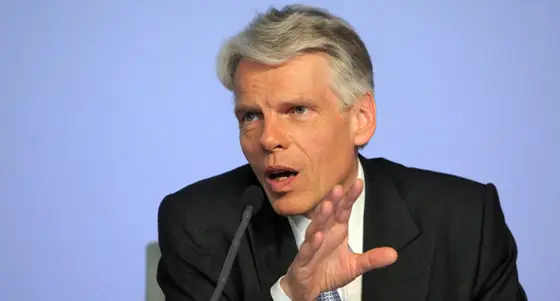
Andreas Barner (born February 10, 1953 in Freiburg im Breisgau) is a German physician and mathematician. From 2009 to 2016, he was Chairman of the Board of Directors of Boehringer Ingelheim.
Barner studied medicine at the University of Freiburg and mathematics at the Swiss Federal Institute of Technology in Zurich, completing both degrees with doctorates.
After a year as a medical intern, he moved to the pharmaceutical industry and initially held various positions in the research department of the then Ciba-Geigy AG in Basel, Switzerland.
In 1992, Barner joined Boehringer Ingelheim, Ingelheim am Rhein (Germany), where he took over the management of the Medical Division, which includes global clinical research, registration, information and biometrics, and drug safety. Since July 1, 1999, he has been a member of the Executive Board, responsible for the Pharmaceutical Research, Development, and Medical Division. In 2009, he also assumed the role of Spokesperson of the Executive Board.
On June 30, 2016, Barner stepped down as Chairman of the Executive Board and joined the Shareholders’ Committee of Boehringer Ingelheim.
Barner holds positions in several scientific and industrial associations. Since June 2013, he has been President of the Stifterverband für die Deutsche Wissenschaft (Donors’ Association for the Promotion of Sciences and Humanities in Germany).[2] Barner is also a member of the Senate of the Max Planck Society[3] and a member of the Executive Board of the German Research Foundation (DFG).
He was also Chairman of the Board of the German Association of Research-Based Pharmaceutical Companies (VFA) until 2007.[4][5] He was also a member of the Executive Board of the Federation of German Industries (BDI)[6] and the Association of the Chemical Industry (VCI).[7] In 2007, he was appointed to the German Council of Science and Humanities by the German Federal President.
Barner has been a member of the Presidium of the German Evangelical Church Congress since 2008.[9] He chaired the 35th German Evangelical Church Congress in Stuttgart in 2015 as President.[10] In November 2015, he was elected as a member of the Council of the EKD[11] and re-elected in 2021.
From 2016, Barner served as Chairman of the Board of Trustees and Managing Director of the Fazit Foundation, which, as majority shareholder, controls the Frankfurter Allgemeine Zeitung. In July 2019, he swapped roles with Karl Dietrich Seikel in the Fazit Foundation and the Supervisory Board. He is now Chairman of the Supervisory Board of the Frankfurter Allgemeine Zeitung.
Since 2017, Barner has been Chairman of the Board of the Gutenberg Foundation, which supports the Gutenberg Museum in Mainz.
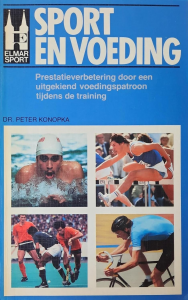
Dr. Peter Konopka is an internist, sports physician, and director of his own yoga school in Augsburg. In addition to his professional work as a senior physician in internal medicine at Augsburg Hospital, he was an active racing cyclist and, for twelve years, served as a sports physician for the German national road and cyclo-cross teams at training camps and stage races, as well as at a total of 16 World Championships and Olympic Games. In 1991, his Indian yoga teacher, Jonas Remedios, appointed him as his successor as director of his yoga school in Augsburg.
In addition to his professional activities, he was an active racing cyclist. With cycling world champion Rudi Altig as national coach, he served for twelve years as a sports physician for the German national road cycling teams, providing support at training camps and stage races, as well as at world championships and the Olympic Games. He was also trained as a yoga teacher by his Indian yoga teacher, Jonas Remedios, and in 1991, he was appointed his successor as director of his yoga school in Augsburg.
watch the video with youtube automatic translation to your language…
Dr. Peter Konopka was a senior physician in internal medicine at Augsburg Hospital until 2003. Always active in sports, he opened his own yoga school in Augsburg in 1991. Konopka began using these Far Eastern exercises, proven over 5,000 years, as early as 1972, when he first discovered yoga as an effective treatment for spinal problems in cyclists. His lectures, publications, and columns in professional media are countless. He also regularly contributes articles and provides valuable tips in our magazine “Health on a Grand Scale.”
Charles Bell was born in Edinburgh on 12 November 1774,[2] as the fourth son of the Reverend William Bell, a clergyman of the Episcopal Church of Scotland. Charles’s father died in 1779 when he was five years old, and so his mother had a unique influence on his early life, teaching him how to read and write.[1] In addition to this, his mother also helped Charles’s natural artistic ability by paying for his regular drawing and painting lessons from David Allan, a well-known Scottish painter.
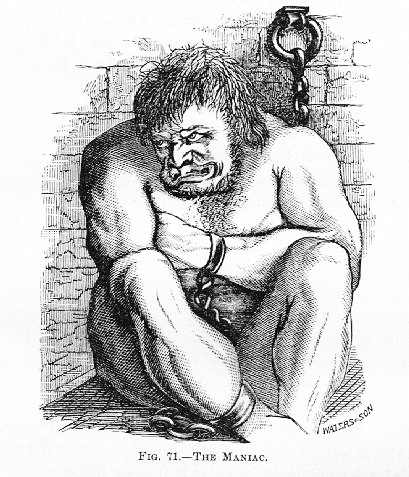
The Maniac – Charles Bell
While at the university, Bell attended the lectures of Dugald Stewart on the subject of spiritual philosophy. These lectures had considerable impact on Bell, for some of Stewart’s teachings can be traced in Bell’s later works in a passage on his Treatise on the Hand.[1] In addition to classes on anatomy, Bell took a course on the art of drawing in order to refine his artistic skill.
While developing his talents as a surgeon, Bell’s interests forayed into a field combining anatomy and art. His inherent talent as an artist came to the fore when he helped his brother complete a four-volume work called The Anatomy of the Human Body. Charles Bell completely wrote and illustrated volumes 3 and 4 in 1803, as well as publishing his own set of illustrations in a System of Dissections in 1798 and 1799.[6] Furthermore, Bell used his clinical experience and artistic eye to develop the hobby of modelling interesting medical cases in wax. He proceeded to accumulate an extensive collection that he dubbed his Museum of Anatomy, some items of which can still be seen today at Surgeon’s Hall.
Bell’s phenomenon: A normal defense mechanism—upward and outward movement of the eye which occurs when an individual closes their eyes forcibly. It can be appreciated clinically in a patient with paralysis of the orbicularis oculi (e.g. Guillain–Barré syndrome or Bell’s palsy), as the eyelid remains elevated when the patient tries to close the eye.[24][25]
Bell–Magendie law or Bell’s Law: States that the anterior branch of spinal nerve roots contain only motor fibers and the posterior roots contain only sensory fibers.[26]
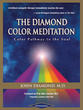
John Diamond (9 August 1934 – 25 April 2021) was a physician and author on holistic health and creativity
Diamond married three times. His first wife was Suzanne Gurvich, with whom he had three children, Ian, Kathie, and Peter. In the 1970s he married Betty Peele, and in 1994 the opera singer Susan Burghardt.[2] For many years, Diamond played drums in a jazz band which he founded, named the Diamond Jubilators. The band performed in hospitals and nursing homes.[2][1] He enjoyed photography and painting in the final years of his life.
ohne John Diamond, aber sicher ähnlich hat es MIT ihm geklungen! without John Diamond, but it surely sounded similarly WITH him!
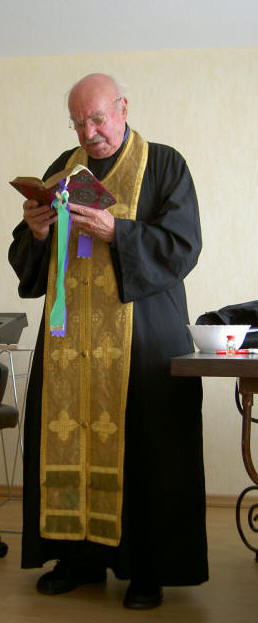
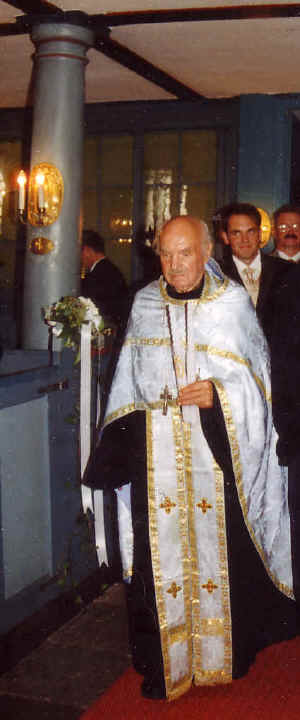
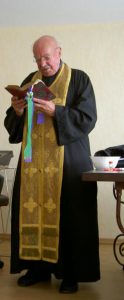
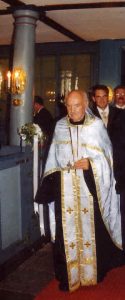
Born on August 23, 1923, in Söcking above Starnberg on Lake Starnberg. Enrolled in elementary school in 1929 in Krusemark in the Altmark region, later in Thielbeer (0-3552) near Arendsee. Enrolled in high school in 1935 at the Walddörferschule in Hamburg-Volksdorf. Graduated from high school in the spring of 1942. Drafted into the army in 1942 and, after four months, sent to the Russian front between Vitebsk and Smolensk. Taken prisoner by the Russians in 1944. Returned to Hamburg-Volksdorf on November 9, 1945. Began studying philosophy in 1946 and medicine in 1948. Ordained a priest of the Russian Orthodox Church in exile in 1950 (April 7; Annunciation, also Good Friday). Married Ruth Domsch on February 12, 1950. As a priest, I first served at St. Prokop’s Episcopal Church in Hamburg, later as a pastor at the Wentorf emigration camp. Since 1975, I have been a pastor in Lübeck at the small church of Blessed Prokop. In Hamburg, I hold services in German on the first weekend of every month. Baptisms, weddings, and funerals in Schleswig-Holstein and Hamburg.
State examination in 1952. Over the next few years, he worked at the Ebenezer Hospital in Hamburg, later as a substitute, and in the surgical and psychiatric university clinics of Eppendorf Hospital.
From February 9, 1961, he worked part-time at the Port and Airport Medical Service in Hamburg, Seewartenstrasse 9a. His contract was extended on October 16, 1962, and again on February 1, 1963. From April 1, 1964, he worked full-time. His contract was extended again on January 1, 1966. He received his doctorate on April 30, 1968 (“Social Hygiene Surveys on the Problem of Seafarers’ Leisure Time”). He was promoted to civil servant on July 1, 1967. In 1968, he visited the North Sea ports on behalf of the WHO: Amsterdam, Rotterdam, London, Liverpool, Oslo, Gothenburg, and Copenhagen. On 1 November 1971, senior medical officer in the port and airport medical service.
December 19, 1978, Medical Director of the Port and Airport Medical Service and the Central Advisory Center for the Monitoring of Prostitution of Both Sexes in the Greater Hamburg Area. Worked there from 1978 to August 31, 1988, simultaneously as Deputy Director of the Port and Airport Medical Service. From August 31, 1988 to August 31, 1990, Director of the Port and Airport Medical Service as a scientific employee. From January 1, 1977, worked in the company medical service of the Hapag-Lloyd Group, partly as head of the company medical service, partly as a doctor in the company medical service, and also continued in the company medical service of Hapag-Lloyd AG beyond August 31, 1990 (until March 31, 1996). To date: As an Orthodox priest, he has held services in Lübeck, Schleswig-Holstein, and Hamburg; Lectures on the world of Orthodoxy in the Federal Republic of Germany and, after 1980, also in Mecklenburg-Western Pomerania. As a doctor, he provided advanced training for ship officers and fumigation technicians on hygiene and current medical issues (organ transplantation, genetic engineering, AIDS). Died 2005
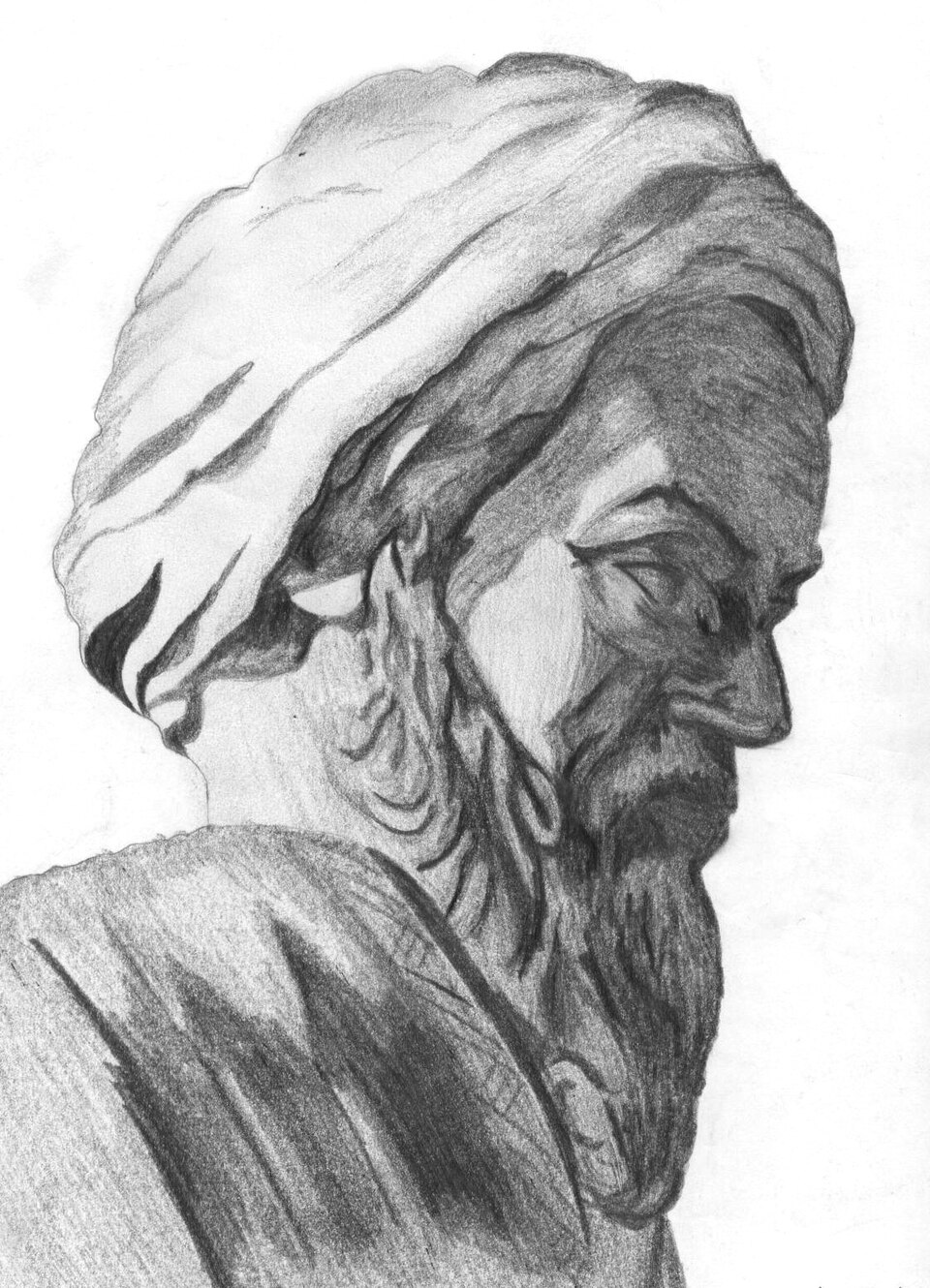
Abū Bakr al-Rāzī, also known as Rhazes[a] (full name: أبو بکر محمد بن زکریاء الرازي, Abū Bakr Muḥammad ibn Zakariyyāʾ al-Rāzī),[b] c. 864 or 865–925 or 935 CE,[c] was a Persian physician, philosopher and alchemist who lived during the Islamic Golden Age. He is widely regarded as one of the most important figures in the history of medicine,[1] and also wrote on logic, astronomy and grammar.[2] He is also known for his criticism of religion, especially with regard to the concepts of prophethood and revelation. However, the religio-philosophical aspects of his thought, which also included a belief in five “eternal principles”, are fragmentary and only reported by authors who were often hostile to him.[3]
A comprehensive thinker, al-Razi made fundamental and enduring contributions to various fields, which he recorded in over 200 manuscripts, and is particularly remembered for numerous advances in medicine through his observations and discoveries.[4] An early proponent of experimental medicine, he became a successful doctor, and served as chief physician of Baghdad and Ray hospitals.[5][6] As a teacher of medicine, he attracted students of all backgrounds and interests and was said to be compassionate and devoted to the service of his patients, whether rich or poor.[7] Along with Thabit ibn Qurra (836–901), he was one of the first to clinically distinguish between smallpox and measles.[8]
Through translation, his medical works and ideas became known among medieval European practitioners and profoundly influenced medical education in the Latin West.[5] Some volumes of his work Al-Mansuri, namely “On Surgery” and “A General Book on Therapy”, became part of the medical curriculum in Western universities.[5]Edward Granville Browne considers him as “probably the greatest and most original of all the Muslim physicians, and one of the most prolific as an author”.[9] Additionally, he has been described as the father of pediatrics,[10][11] and a pioneer of obstetrics and ophthalmology.[12]
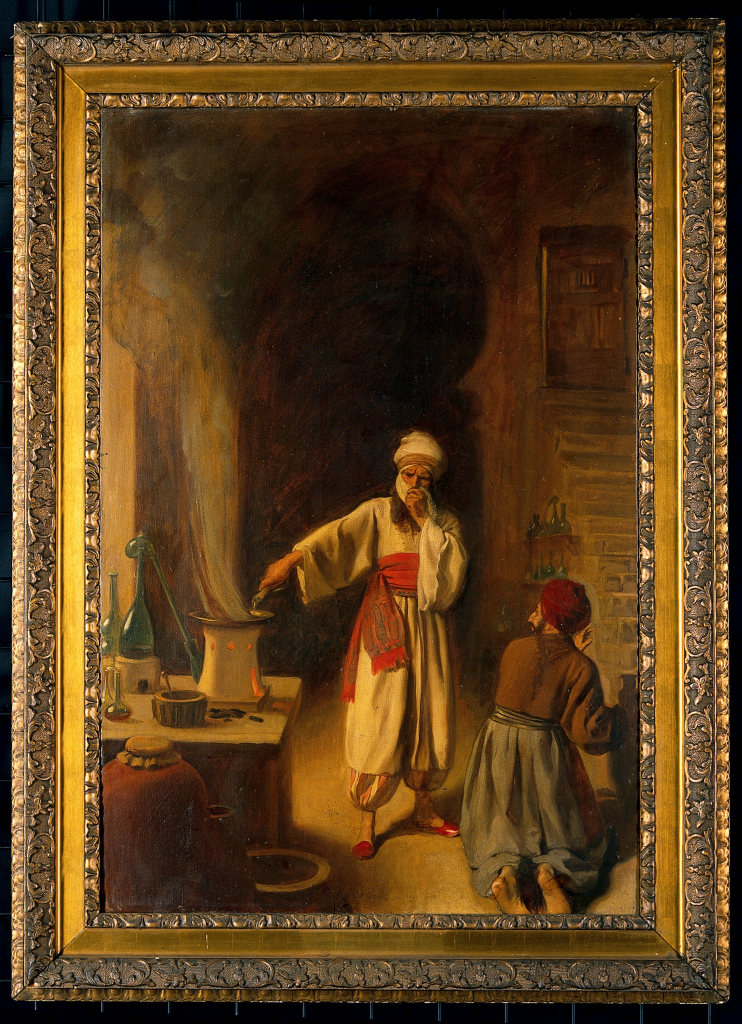
al-Razi in his laboratory (orientalist painting by Ernest Board, c. 1912)
Al-Razi was born in the city of Ray (modern Rey, also the origin of his name “al-Razi”),[13] into a family of Persian stock and was a native speaker of Persian language.[14] Ray was situated on the Great Silk Road that for centuries facilitated trade and cultural exchanges between East and West. It is located on the southern slopes of the Alborz mountain range situated near Tehran, Iran.
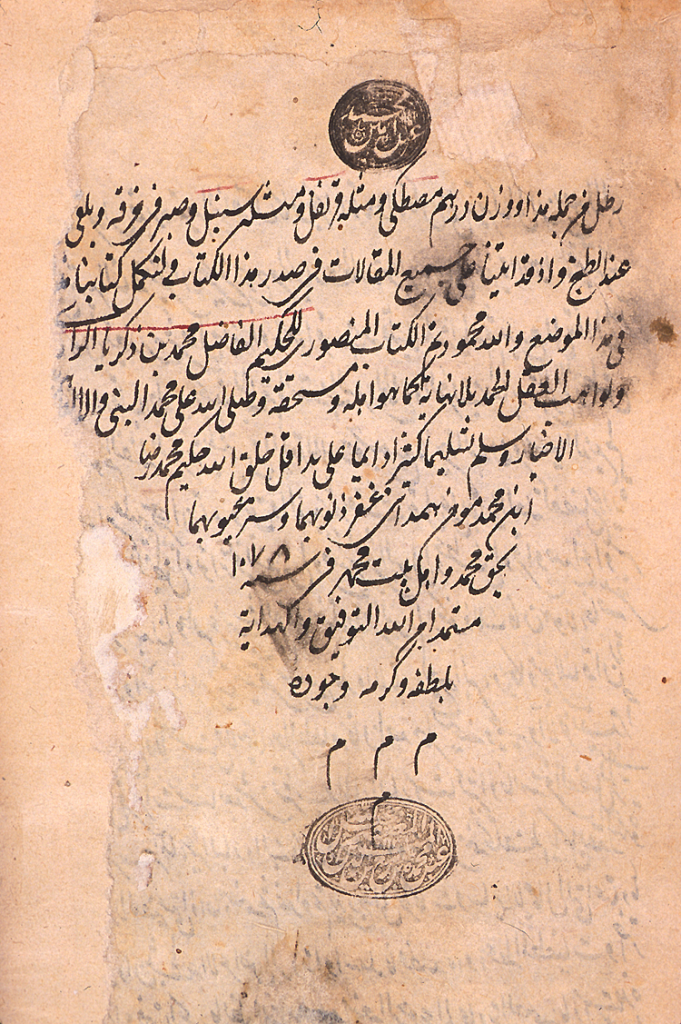
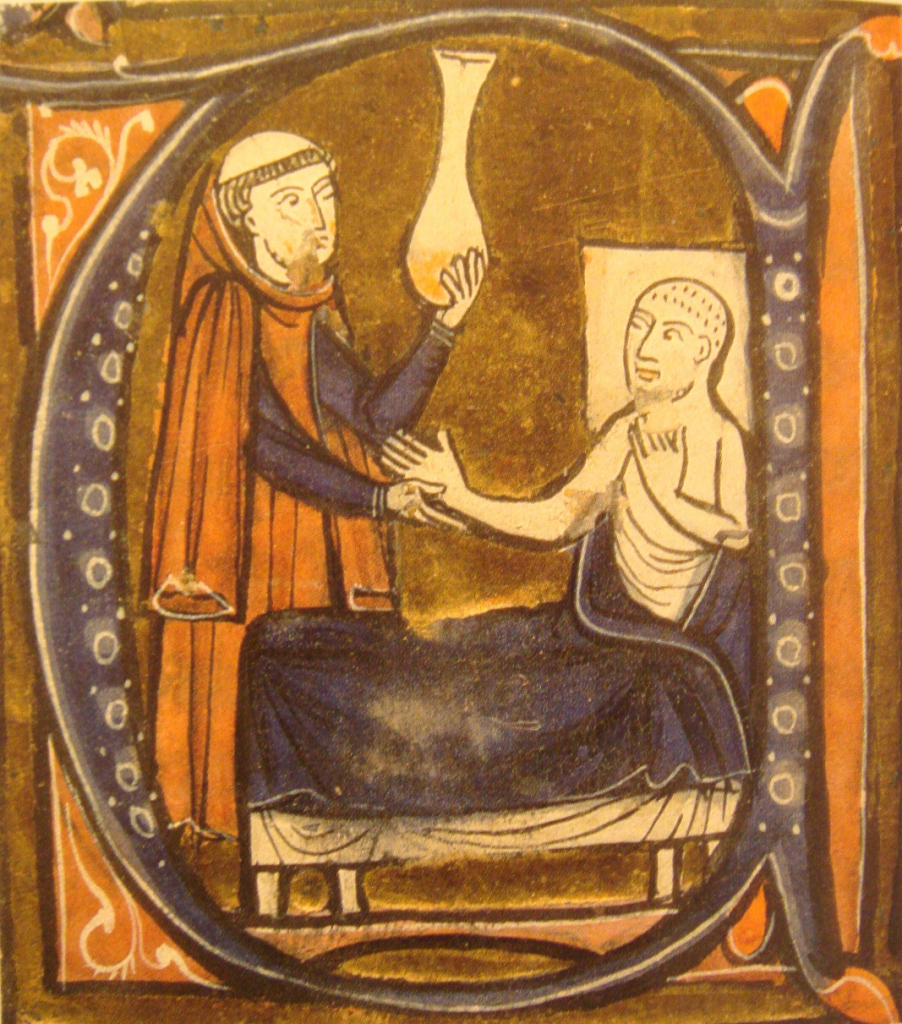
Depiction of al-Razi in a 13th-century manuscript of a work by Gerard of Cremona
In his youth, al-Razi moved to Baghdad where he studied and practiced at the local bimaristan (hospital). Later, he was invited back to Rey by Mansur ibn Ishaq, then the governor of Ray, and became a bimaristan’s head.[5] He dedicated two books on medicine to Mansur ibn Ishaq, The Spiritual Physic and Al-Mansūrī on Medicine.[5][15][16][17] Because of his newly acquired popularity as physician, al-Razi was invited to Baghdad where he assumed the responsibilities of a director in a new hospital named after its founder al-Muʿtaḍid (d. 902 CE).[5] Under the reign of Al-Mutadid’s son, Al-Muktafi (r. 902–908) al-Razi was commissioned to build a new hospital, which should be the largest of the Abbasid Caliphate. To pick the future hospital’s location, al-Razi adopted what is nowadays known as an evidence-based approach suggesting having fresh meat hung in various places throughout the city and to build the hospital where meat took longest to rot.[18]
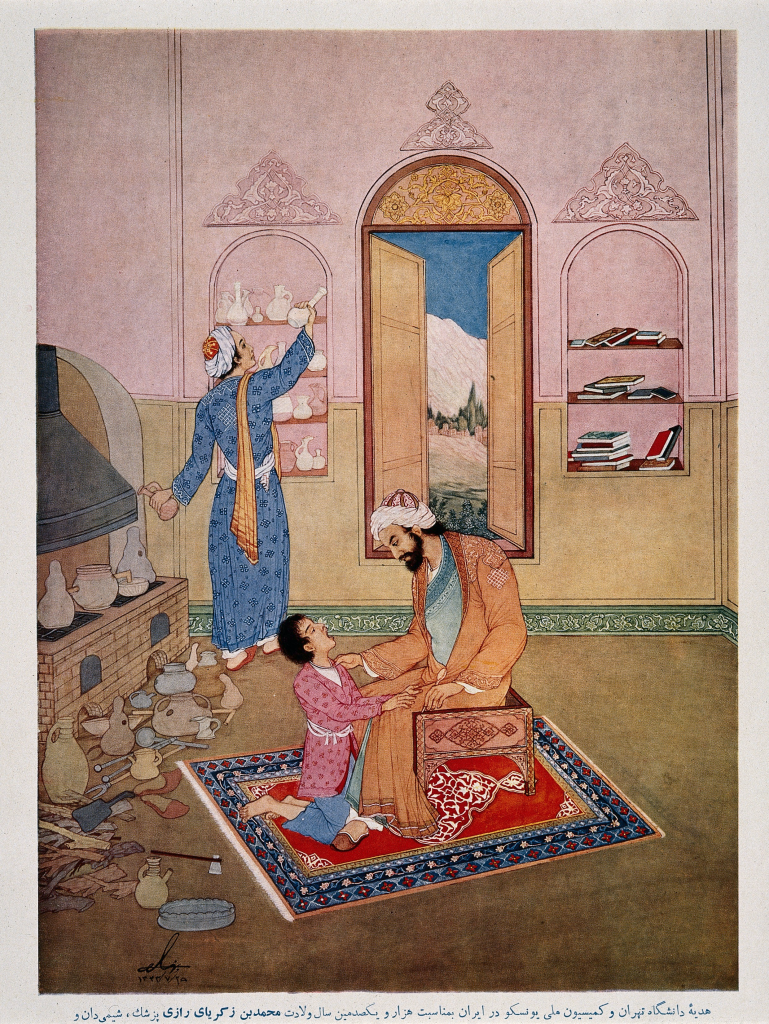
al-Razi examining a patient (miniature painting by Hossein Behzad, 1894–1968)
He spent the last years of his life in his native Rey suffering from glaucoma. His eye affliction started with cataracts and ended in total blindness.[19] The cause of his blindness is uncertain. One account mentioned by Ibn Juljul attributed the cause to a blow to his head by his patron, Mansur ibn Ishaq, for failing to provide proof for his alchemy theories;[20] while Abulfaraj and Casiri claimed that the cause was a diet of beans only.[21][22] Allegedly, he was approached by a physician offering an ointment to cure his blindness. Al-Razi then asked him how many layers does the eye contain and when he was unable to receive an answer, he declined the treatment stating “my eyes will not be treated by one who does not know the basics of its anatomy”.[23]
The lectures of al-Razi attracted many students. As Ibn al-Nadim relates in Fihrist, al-Razi was considered a shaikh, an honorary title given to one entitled to teach and surrounded by several circles of students. When someone raised a question, it was passed on to students of the ‘first circle’; if they did not know the answer, it was passed on to those of the ‘second circle’, and so on. When all students would fail to answer, al-Razi himself would consider the query. Al-Razi was a generous person by nature, with a considerate attitude towards his patients. He was charitable to the poor, treated them without payment in any form, and wrote for them a treatise Man La Yaḥḍuruhu al-Ṭabīb, or Who Has No Physician to Attend Him, with medical advice.[24] One former pupil from Tabaristan came to look after him, but as al-Biruni wrote, al-Razi rewarded him for his intentions and sent him back home, proclaiming that his final days were approaching.[25] According to Biruni, al-Razi died in Rey in 925 sixty years of age.[26] Biruni, who considered al-Razi his mentor, among the first penned a short biography of al-Razi including a bibliography of his numerous works.[26]
Ibn al-Nadim recorded an account by al-Razi of a Chinese student who copied down all of Galen‘s works in Chinese as al-Razi read them to him out loud after the student learned fluent Arabic in 5 months and attended al-Razi’s lectures.[27][28][29][30]
After his death, his fame spread beyond the Middle East to Medieval Europe, and lived on. In an undated catalog of the library at Peterborough Abbey, most likely from the 14th century, al-Razi is listed as a part author of ten books on medicine
Although al-Razi wrote extensively on philosophy, most of his works on this subject are now lost.[47] Most of his religio-philosophical ideas, including his belief in five “eternal principles”, are only known from fragments and testimonies found in other authors, who were often strongly opposed to his thought.
Al-Razi’s metaphysical doctrine derives from the theory of the “five eternals”, according to which the world is produced out of an interaction between God and four other eternal principles (soul, matter, time, and place).[49] He accepted a pre-socratic type of atomism of the bodies, and for that he differed from both the falasifa and the mutakallimun.[49] While he was influenced by Plato and the medical writers, mainly Galen, he rejected taqlid and thus expressed criticism about some of their views. This is evident from the title of one of his works, Doubts About Galen.