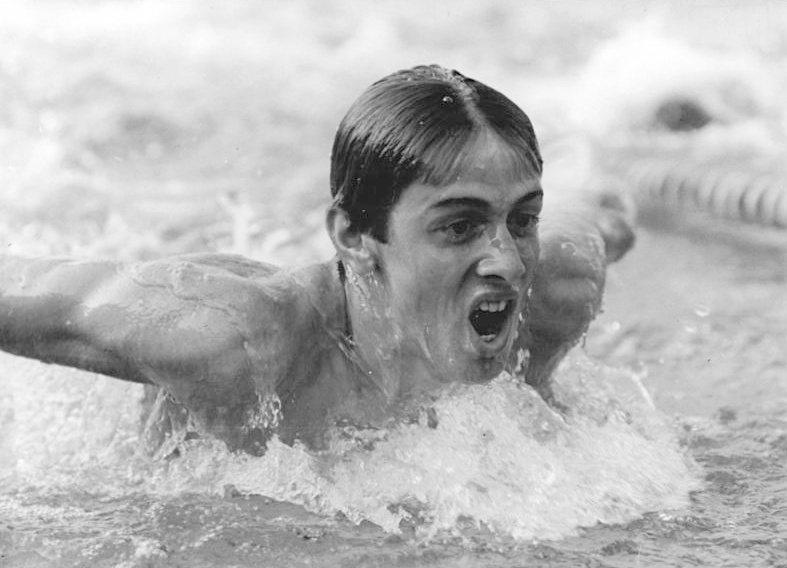
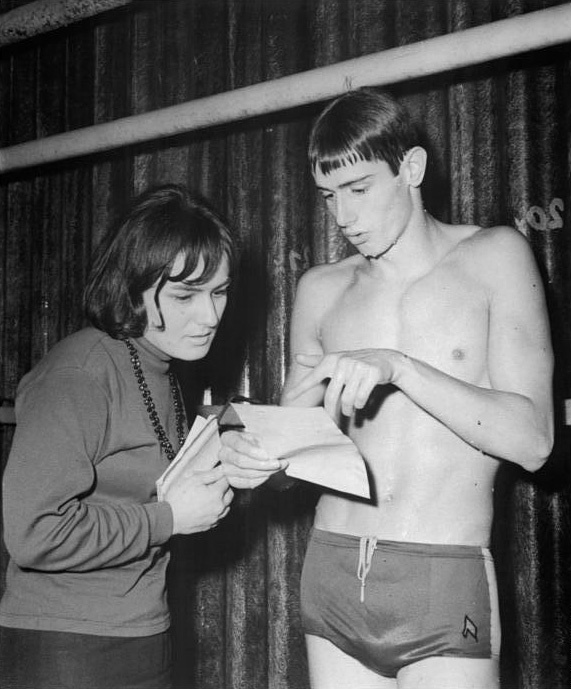
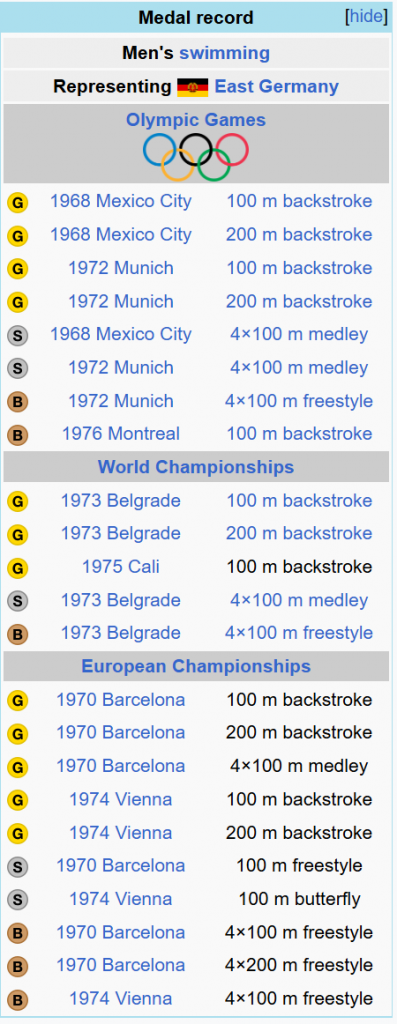
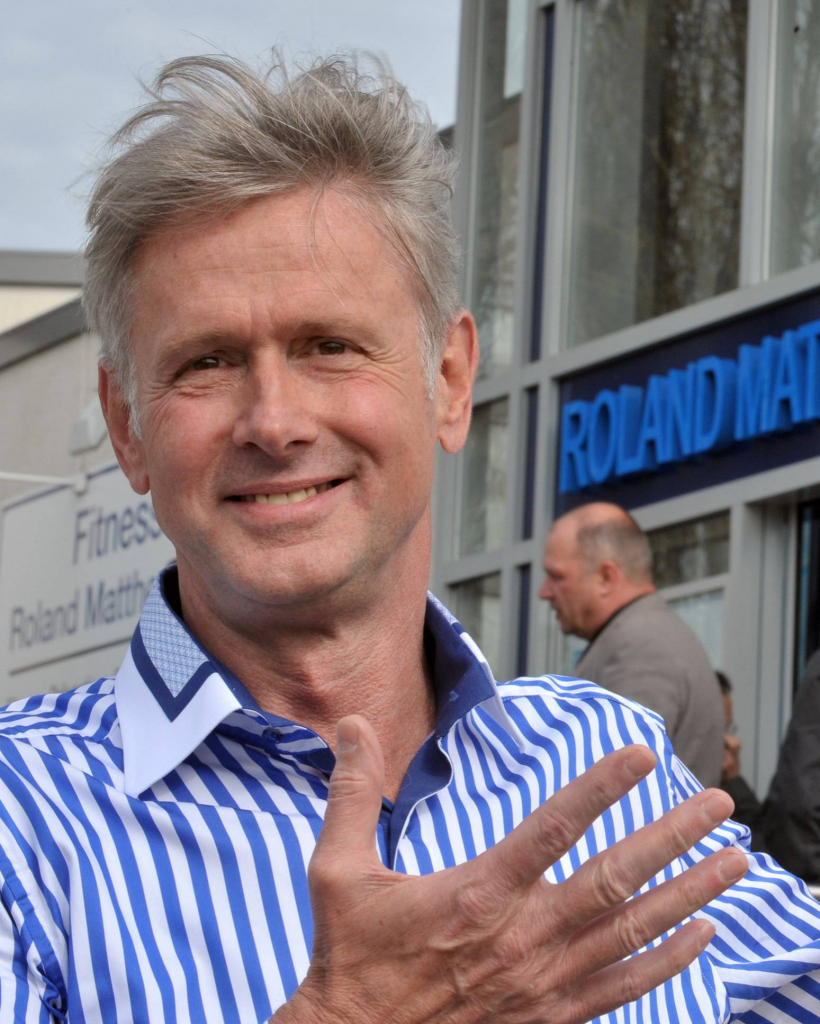
Roland Matthes (* 17 November 1950 in Pößneck; † 20 December 2019 in Wertheim[1]) was a German swimmer, world record holder and four-time Olympic champion and is considered one of the most successful and popular athletes in the GDR.
Matthes studied sports science from 1970 to 1977 and graduated with a degree in sports teaching. From 1978 to 1984, he studied medicine in Jena. Matthes worked as an orthopedic surgeon in Marktheidenfeld. From 1985 to 1989, he was a member of the IOC Medical Commission.
From 1978 to 1982, he was married to Olympic swimming champion Kornelia Ender.
On April 6, 2011, the Erfurt Südschwimmhalle (South Swimming Pool) was renamed “Roland Matthes Swimming Pool” in his presence.
Roland Matthes died in December 2019 at the age of 69 after a short, serious illness.
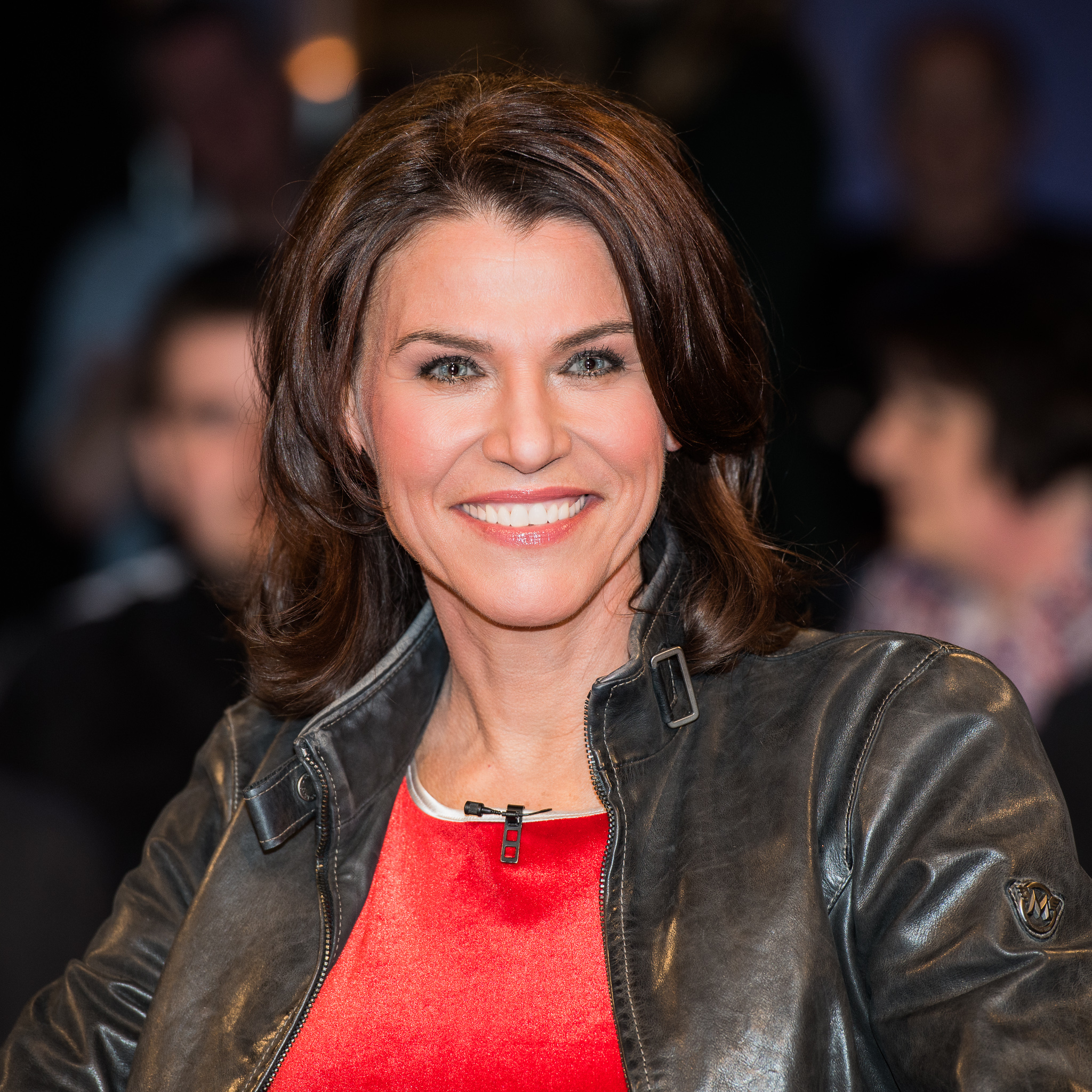
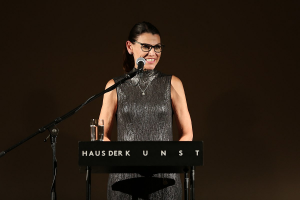
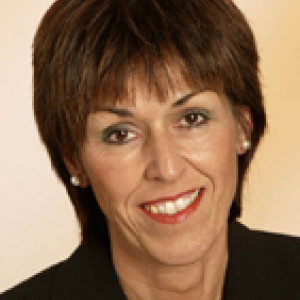
Marion Brigitta Kiechle (formerly Kiechle-Schwarz; born April 4, 1960 in Oberkirch) is a German physician, scientist, author, and former politician (CSU). Since October 2000, she has been Director of the Gynaecology Clinic at the Klinikum rechts der Isar of the Technical University of Munich and holds the Chair of Gynecology and Obstetrics.
On March 21, 2018, Markus Söder appointed her to his cabinet as Bavarian Minister of Science. Kiechle is chair of the Bavarian Bioethics Commission and deputy chair of the Central Ethics Committee for Stem Cell Research. Initially independent, she joined the CSU in April 2018 and, on the 21st of that month, was placed in the hopeless fifth place on the Upper Bavaria district list for the 2018 Bavarian state election. After the end of the legislative period in November 2018, she left the government and returned to TUM.
Engagement
Since 2021, Marion Kiechle has been chairwoman of the board of trustees for the Hospice House of Life project in Munich. Since February 2023, she has been a member of the administrative advisory board of FC Bayern Munich.
Privates
Since April 2010, she has been married to television journalist and sports commentator Marcel Reif, her fourth wife. Before that, she was married to a special education teacher and two doctors.
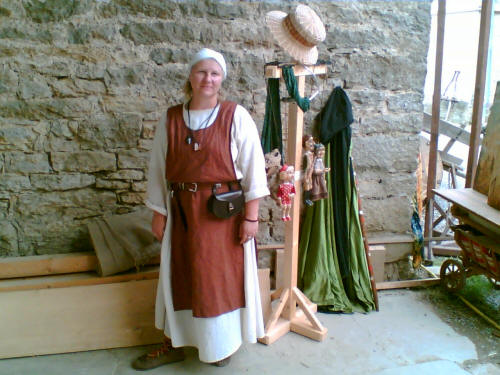
She participates as an emergency doctor at the “Histotainment” park www.Adventon.de in Osterburken, southern Germany, where thousands of visitors attend historical medieval events. Most visitors are dressed in medieval costumes and live on the park’s grounds, creating a unique atmosphere. The name Adventon means “the coming medieval city”: the plan is to build a complete medieval city with many houses, offering a perfect depiction of the period. More photos can be found on the Adventon website.
Barner studied medicine and mathematics and earned doctorates in both subjects. “As a researcher at the helm of a globally active company, he knows exactly how important science is for the economy,” said Andreas Schlüter, Secretary General of the Stifterverband, according to a statement.
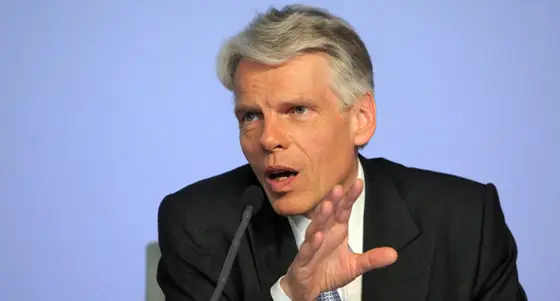
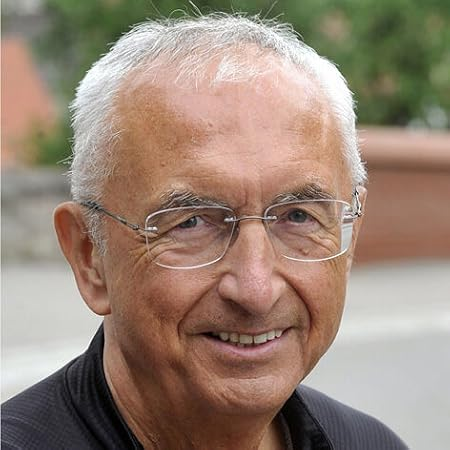
Andreas Barner (born February 10, 1953 in Freiburg im Breisgau) is a German physician and mathematician. From 2009 to 2016, he was Chairman of the Board of Directors of Boehringer Ingelheim.
Barner studied medicine at the University of Freiburg and mathematics at the Swiss Federal Institute of Technology in Zurich, completing both degrees with doctorates.
After a year as a medical intern, he moved to the pharmaceutical industry and initially held various positions in the research department of the then Ciba-Geigy AG in Basel, Switzerland.
In 1992, Barner joined Boehringer Ingelheim, Ingelheim am Rhein (Germany), where he took over the management of the Medical Division, which includes global clinical research, registration, information and biometrics, and drug safety. Since July 1, 1999, he has been a member of the Executive Board, responsible for the Pharmaceutical Research, Development, and Medical Division. In 2009, he also assumed the role of Spokesperson of the Executive Board.
On June 30, 2016, Barner stepped down as Chairman of the Executive Board and joined the Shareholders’ Committee of Boehringer Ingelheim.
Barner holds positions in several scientific and industrial associations. Since June 2013, he has been President of the Stifterverband für die Deutsche Wissenschaft (Donors’ Association for the Promotion of Sciences and Humanities in Germany).[2] Barner is also a member of the Senate of the Max Planck Society[3] and a member of the Executive Board of the German Research Foundation (DFG).
He was also Chairman of the Board of the German Association of Research-Based Pharmaceutical Companies (VFA) until 2007.[4][5] He was also a member of the Executive Board of the Federation of German Industries (BDI)[6] and the Association of the Chemical Industry (VCI).[7] In 2007, he was appointed to the German Council of Science and Humanities by the German Federal President.
Barner has been a member of the Presidium of the German Evangelical Church Congress since 2008.[9] He chaired the 35th German Evangelical Church Congress in Stuttgart in 2015 as President.[10] In November 2015, he was elected as a member of the Council of the EKD[11] and re-elected in 2021.
From 2016, Barner served as Chairman of the Board of Trustees and Managing Director of the Fazit Foundation, which, as majority shareholder, controls the Frankfurter Allgemeine Zeitung. In July 2019, he swapped roles with Karl Dietrich Seikel in the Fazit Foundation and the Supervisory Board. He is now Chairman of the Supervisory Board of the Frankfurter Allgemeine Zeitung.
Since 2017, Barner has been Chairman of the Board of the Gutenberg Foundation, which supports the Gutenberg Museum in Mainz.
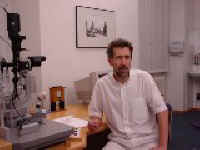
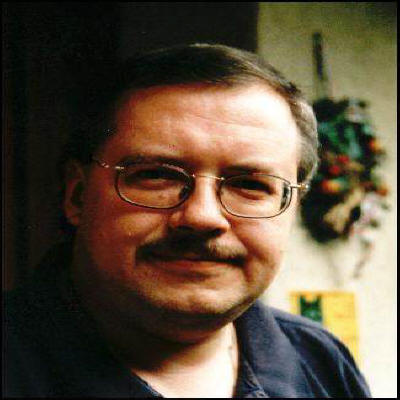
Incidentally, ophthalmologist Dr. Martin Nowak from Michelfeld near Schwäbisch Hall set a mathematical record on February 18, 2005: The 47-year-old doctor discovered the largest known prime number to date, with exactly 7,816,230 digits.
A standard computer completed the task. This computer is part of the worldwide Great Internet Mersenne Prime Search (GIMPS) network based in Orlando, Florida, in which tens of thousands of computers search for prime numbers.
The computer in the basement of Nowak’s eye center discovered the 42nd Mersenne prime number on February 18 after a computing time of 50 days – while Nowak was sleeping, treating patients, or cycling. The computer usually only controls an information display for patients, calculating prime numbers in the background. The idea behind the GIMPS project is to use free computing capacity to solve complex problems.
Nowak was enthusiastic about the idea, which he learned about in 1999. He first began calculating prime numbers with a computer; today, there are 24. At first, he was completely oblivious to his historic discovery. It wasn’t until an email from Orlando alerted him to his success. “At first, I didn’t even know which screen to look at,” Nowak recalls. After installing the small, free program, he barely paid any attention to it: “I didn’t really follow it.”
Nowak describes himself as an amateur mathematician. “I have a basic understanding of numbers, and I’m interested in their application in technical drawing.” Advanced mathematics, including calculus and mathematical proofs, however, aren’t his thing. He much prefers cycling across Europe or playing the piano.
No one knows whether there actually are other Mersenne numbers. Prime numbers go back to the French monk Marin Mersenne (1588-1648). They have the formula (2 to the power of n) – 1.
Nowak’s newly discovered Mersenne number has over half a million more digits than the previous prime number record. Written on graph paper, it forms a strip 39 kilometers long.
Martin also participated in the doctors’ piano courses.
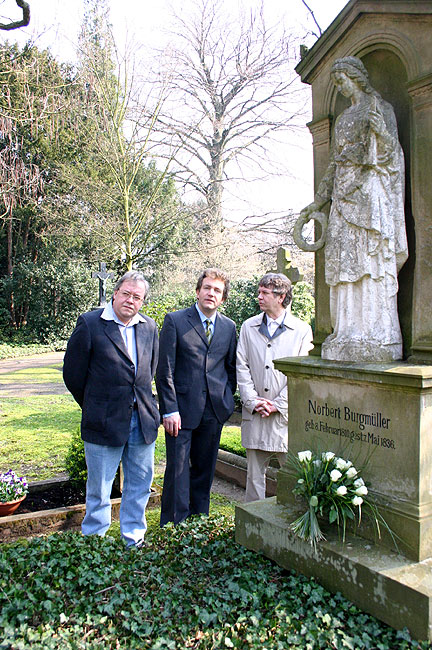
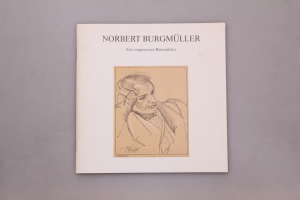
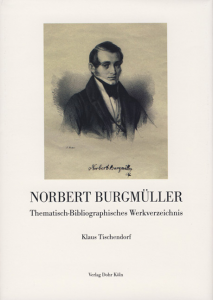
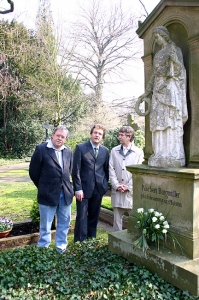
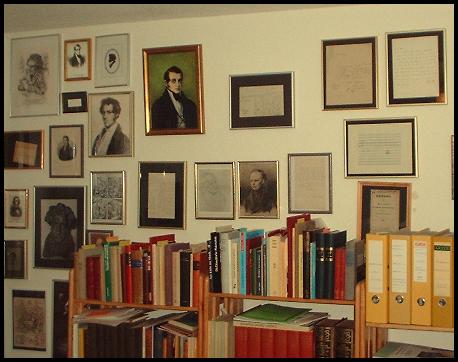
On this day, Klaus Zehnder-Tischendorf (*22. Januar 1957 in Cologne, died 14. November 2014 in Cologne) and others founded the “Norbert Burgmüller Society e.V. Düsseldorf” was founded in the Düsseldorf City Museum. The driving force behind the project is the pianist Tobias Koch, Düsseldorf, and the Burgmüller researchers Dr. Klaus Martin Kopitz, Berlin, and Dr. Klaus Zehnder-Tischendorf, Cologne. The management is taken over by the Dirk Franke Concert Agency, Düsseldorf. Also present at the founding meeting were: Elisabeth von Leliwa, dramaturge of the Tonhalle Düsseldorf; Hannelore Köhler, sculptor; Jutta Scholl, director of the music libraries of the city of Düsseldorf; Peter Haseley, director of the Clara Schumann Music School Düsseldorf; Prof. Oskar Gottlieb Blarr, composer; Alexander Nitzberg, poet; Alfred Lessing, musician and musicologist; Prof. Peter-Christoph Runge, chamber singer and honorary member of the Deutsche Oper am Rhein; Dr. Ernst Sell, physician and collector of musical first editions and keyboard instruments; Regine Müller, arts editor of the Rheinische Post; Natascha Plankermann, journalist; and Manfred Hill. Chairman of the Municipal Music Association of Düsseldorf, founded in 1818.
The society’s goal is to promote and disseminate the work of Norbert Burgmüller through publications, concerts, and exhibitions. With 2010 (the composer’s 200th birthday) in mind, the society intends to prepare for the commemorative year and document the composer’s work through the publication of editions and recordings. The society will provide ongoing information about its work on a website currently under development.
Norbert Burgmüller was the son of the first music director of the city of Düsseldorf, Johann August Franz Burgmüller, and a member of the Musikverein.
Klaus Zehnder-Tischendorf, born in Cologne in 1957, graduated from high school and studied library science. He spent three years at the Cologne University Library Center (DFG research project). Studied human medicine in Essen. Since 1989, he has practiced medicine in Switzerland and completed his doctorate in forensic medicine in Basel. He has practiced as a general practitioner in Zofingen, Aargau, since 1998. He has lived in Cologne again since 2005.
Interests
Lesser-known music from Joseph Martin Kraus to Theodor Kirchner and Julius Röntgen to Leo Ornstein; musicians’ autographs; fantasy literature; chess; painting; cultural history; computer-assisted conversion of music into moving images; flora and fauna.
Bibliography by Klaus Zehnder-Tischendorf on Norbert Burgmüller and his circle:
Norbert Burgmüller. Leben und Werk. Köln 1980.
Norbert Burgmüller (1810-1836). Ein vergessener Romantiker, aus Anlass seines 150. Todestages am 7. Mai 1986. Düsseldorf 1986.
Norbert Burgmüller. (in: Correspondenz. Mitteilungen der Robert-Schumann-Gesellschaft e.V. Düsseldorf, V.) Düsseldorf 1986, S. 8-11.
Norbert Burgmüller. Zur Eröffnung der Gedenkausstellung. Vortrag in der Raiffeisenbank Düsseldorf am 6.5.1986. Mskr.
Einführung zu ausgewählten Liedern und Klavierwerken. AULOS Preciosa 68539. Viersen 1986.
Fast verklungene Romantik: Norbert Burgmüller (1810-1836). (in: Schweizerische Ärztezeitung, LXXX, Nr.31.) Basel 1999, S. 1914-1917.
„Welch meisterliches Gebilde…“. Die Rhapsodie in h-moll op.13 (1834) von Norbert Burgmüller (1810-1836). Eine Werkmonographie. Zofingen 2000.
“Was in der Dinge Lauf jetzt missklingt tönt einst in ewigen Harmonien.” Der Düsseldorfer Städtische Musikdirektor August Burgmüller als Begleiter der Sängerin Angelica Catalani. (in: Düsseldorfer Jahrbuch 2000, Beiträge zur Geschichte des Niederrheins, Bd. LXXI.) Düsseldorf 2001, S. 243-257.
Vorwort zum Erstdruck des Allegretto (Ständchen) o. op. Genf 2001.
Norbert Burgmüller (1810-1836) – Der Rheinische Schubert. (Der Kleine Lauschangriff.) (in: Klassik Heute, Jg. 4, Heft 8.) München 2001, S. 42f.
Vorwort zur Neuedition der Klaviersonate f-moll op.8 Düsseldorf 2001.
Vorwort zur Neuedition Sämtlicher Lieder. Düsseldorf 2001.
Grabbes Oper “Der Cid”. Neue Erkenntnisse zur Vertonung von Norbert Burgmüller. (in: Ich aber wanderte und wanderte – Es blieb die Sonne hinter mir zurück. Grabbe- Jahrbuch 2000/2001. 19./20. Jg.) Detmold 2002, S. 140-146.
Vorwort zur Neuedition ausgewählter Klavierwerke von Friedrich und Norbert Burgmüller. Düsseldorf 2002.
Vorwort zum Reprint der Sinfonie Nr.1 c-moll op.2. München 2002.
Vorwort zum Reprint des Trauermarsches a-moll op.103 von Felix Mendelssohn-Bartholdy. München 2002.
Vorwort zum Reprint der Ouvertüre f-moll op.5. München 2003.
Vorwort zum Reprint der 4 Entr’Actes op.17. München 2003.
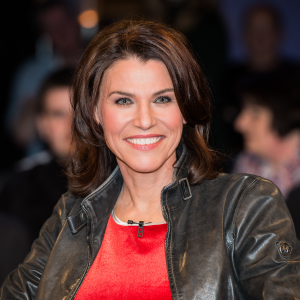
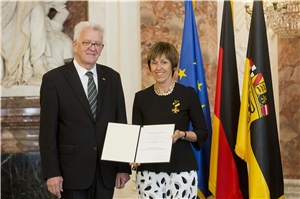
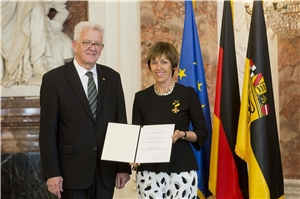
Monika Stolz (born March 24, 1951 in Worms) is a German politician of the Christian Democratic Union (CDU). She was a member of the Baden-Württemberg state parliament from 2001 to 2016 and Baden-Württemberg’s Minister of Labor and Social Affairs from 2006 to 2011.
After studying economics in Freiburg, Monika Stolz worked as a research associate at the Konrad Adenauer Foundation from 1974 to 1977. From 1976 to 1983, she studied human medicine in Giessen, Würzburg, and Bonn, received her doctorate in 1984, and worked as a physician.
Since retiring from politics in 2016, Stolz has been involved in a variety of volunteer activities. She is chair of the Abuse Commission (“Sexual Abuse Commission,” KsM) of the Diocese of Rottenburg-Stuttgart[1] and was also appointed by the Bishop of Rottenburg to chair the Diocesan Caritas Council, which acts as the ecclesiastical supervisory body of the German Caritas Council Association.[2] Stolz is also active on the board of trustees of the St. Elisabeth Foundation[3] (Bad Waldsee), the Central Committee of German Catholics, the Broadcasting Council of the Southwest Broadcasting Corporation, and other advisory boards.[4]
Monika Stolz is Roman Catholic, married, and the mother of four children.
From 1989, Stolz served as a city councilor in Ulm, chairing the CDU municipal council group from 1991 to 1999, and as a local councilor in the Ulm district of Unterweiler from 1989 to 2004.
In 2001, Stolz was elected to the Baden-Württemberg state parliament with a direct mandate for constituency 64 – Ulm, and served until 2016. She served as deputy chair of the CDU parliamentary group from July 2004 to October 2005. She did not run in the 2016 state election.
From October 2005 to January 2006, Stolz served as Political State Secretary in the State Ministry of Culture, Youth, and Sport. Following Andreas Renner’s resignation as Minister of Labor and Social Affairs, she was appointed as his successor by Prime Minister Günther Oettinger and held the ministerial post from 2006 until the Kretschmann government came to power in 2011.
In 2008, she refused to deliver a welcoming address at the Christopher Street Day in Stuttgart, citing, among other things, the event’s chosen motto: “I believe” in her written rejection to the organizers.
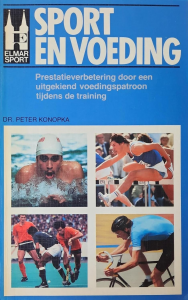
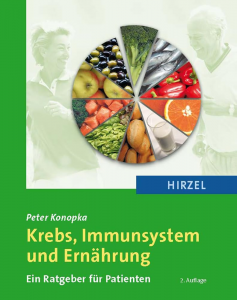
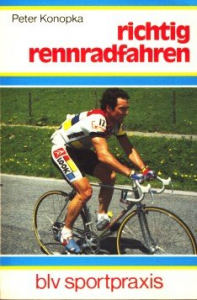
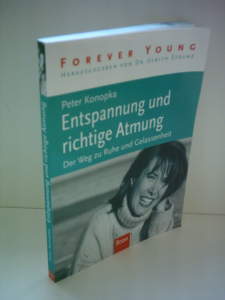
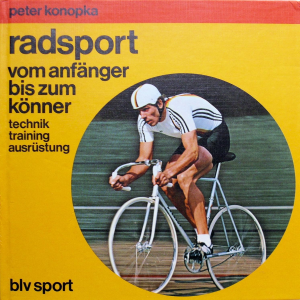
Dr. Peter Konopka is an internist, sports physician, and director of his own yoga school in Augsburg. In addition to his professional work as a senior physician in internal medicine at Augsburg Hospital, he was an active racing cyclist and, for twelve years, served as a sports physician for the German national road and cyclo-cross teams at training camps and stage races, as well as at a total of 16 World Championships and Olympic Games. In 1991, his Indian yoga teacher, Jonas Remedios, appointed him as his successor as director of his yoga school in Augsburg.
In addition to his professional activities, he was an active racing cyclist. With cycling world champion Rudi Altig as national coach, he served for twelve years as a sports physician for the German national road cycling teams, providing support at training camps and stage races, as well as at world championships and the Olympic Games. He was also trained as a yoga teacher by his Indian yoga teacher, Jonas Remedios, and in 1991, he was appointed his successor as director of his yoga school in Augsburg.
watch the video with youtube automatic translation to your language…
Dr. Peter Konopka was a senior physician in internal medicine at Augsburg Hospital until 2003. Always active in sports, he opened his own yoga school in Augsburg in 1991. Konopka began using these Far Eastern exercises, proven over 5,000 years, as early as 1972, when he first discovered yoga as an effective treatment for spinal problems in cyclists. His lectures, publications, and columns in professional media are countless. He also regularly contributes articles and provides valuable tips in our magazine “Health on a Grand Scale.”
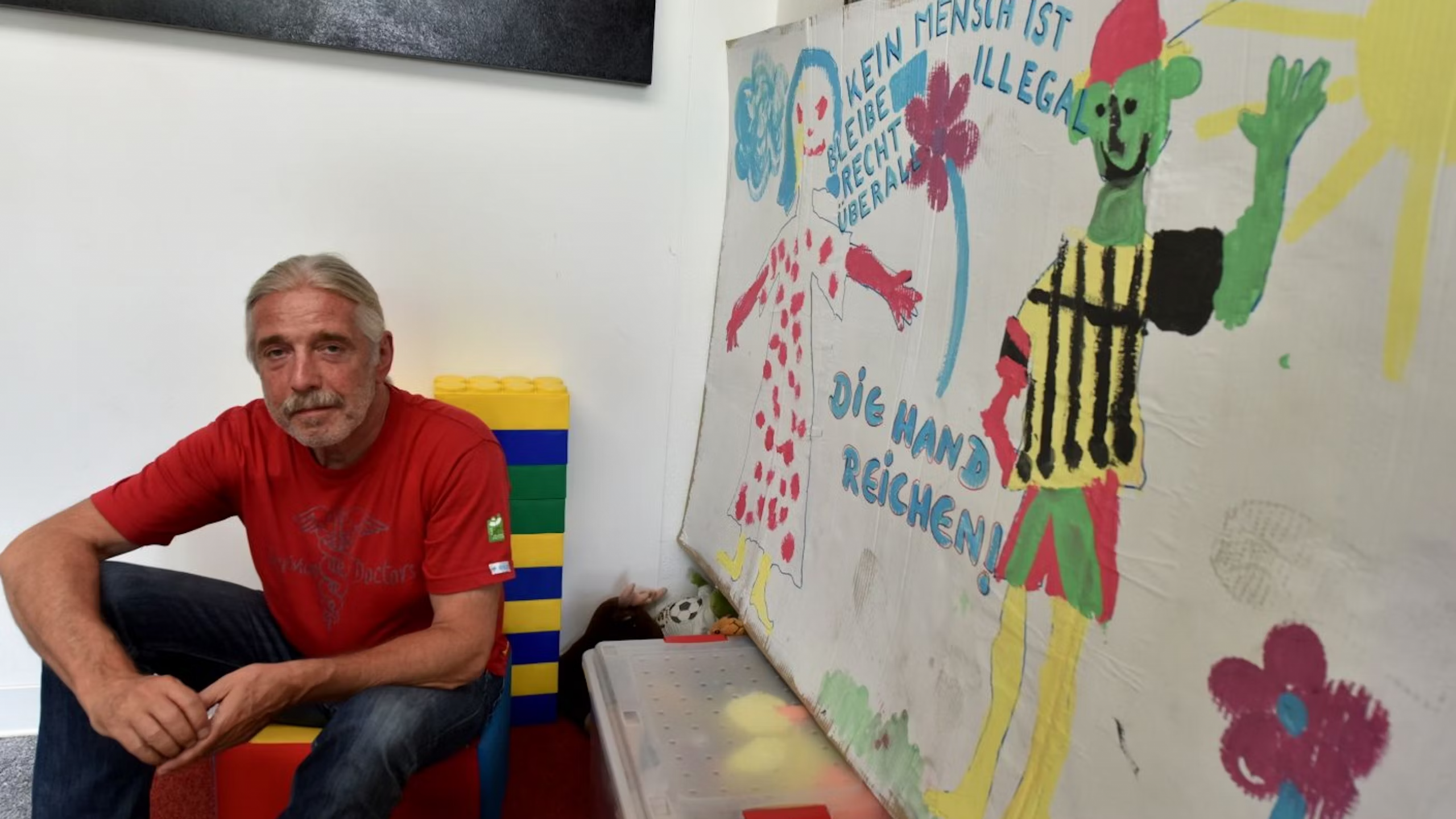
Andreas Sliwka is a gynecologist, psychotherapist, and yoga instructor in Unterföhring. He also holds consultations for refugees. Sliwka has traveled to crisis areas repeatedly.Foto: Catherina Hess
Multiple deployments as a doctor in various crisis areas in the Third World – in the Congo after the genocide in Rwanda, in the jungle clinic on Mindanao (Philippines), and most recently several deployments as a ship’s doctor in sea rescue operations off the coast of Libya – are expressions of my self-image as a physician.
My own search led me to the Eastern wisdom teachings. Training as a yoga teacher with my own yoga school for 10 years was an important step on this path. I currently practice Zen meditation according to the Soto school.
Wegmarken
My interest in philosophy and art arose in my youth. A milestone in this regard was Fritjof Capra’s book “Wendezeit” (The Turning Point) during my medical studies. He successfully established a connection between quantum physics and Eastern wisdom teachings, which has accompanied me throughout my life. About 20 years ago, Ken Wilber’s “Integral Theory” initiated a further development in my thinking. Integral Theory emerged from transpersonal psychology, a psychological development in the USA that integrated the spiritual aspects of human existence into psychotherapy. This form of therapy now also has a firm foothold in Germany (for example, at the Heiligenfeld Psychosomatic Clinic).