She has worked as a coach and trainer for many years and has studied communication psychology, clarification support, and coaching. She performs as a speaker and comedian and provides supervision.
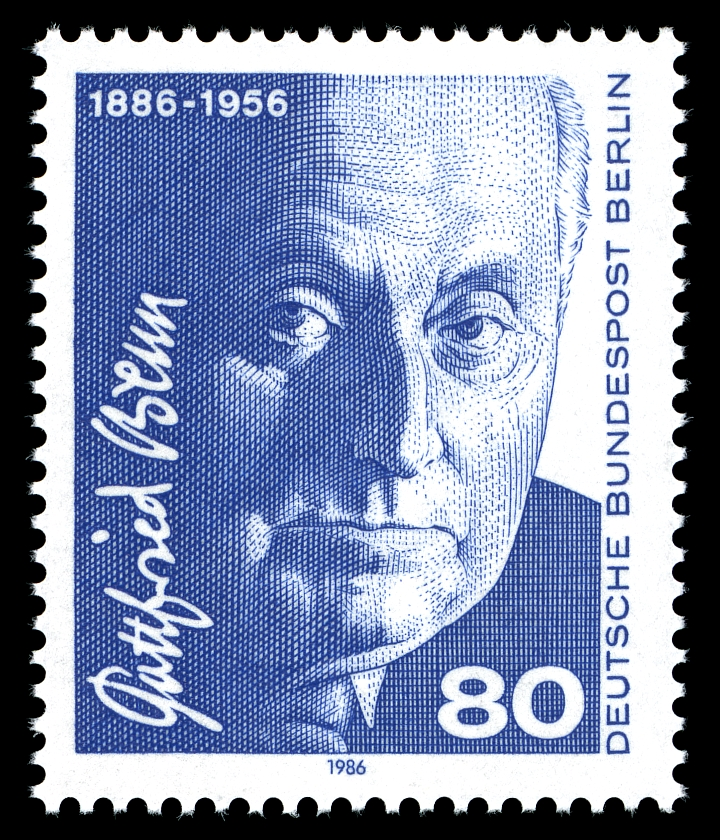
Gottfried Benn (May 2, 1886 in Mansfeld near Putlitz, Prignitz; July 7, 1956 in Berlin) was a German poet, essayist, and physician. He grew up as the son of a theologian in a rectory. After abandoning his theology studies, he successfully completed his medical studies. In 1912, his first volume of poetry, Morgue and Other Poems, was published. It caused a scandal due to its drastic choice of themes and casual expression and immediately made the author known as a representative of the newly emerging Expressionist poetry.
With the novella volume Brains, published in 1916, he made a significant contribution to Expressionist short prose. From then on, he pursued the civilizational critique of the Morgue poems in his essayistic work. In The Modern Self, he devoted himself to the question of the position of the individual in society.
Gottfried Benn is considered one of the most important German poets of modern literature. He first entered the literary scene as an Expressionist with his Morgue poems, which radically broke with conventional poetic traditions and strongly reflected impressions from his work as a doctor. Dissections and cancer and maternity wards are described with seemingly dispassionate nuance, and romantic titles like “Little Aster” arouse expectations that are then blatantly disappointed.
The rights to the work are now held by Klett-Cotta Verlag.
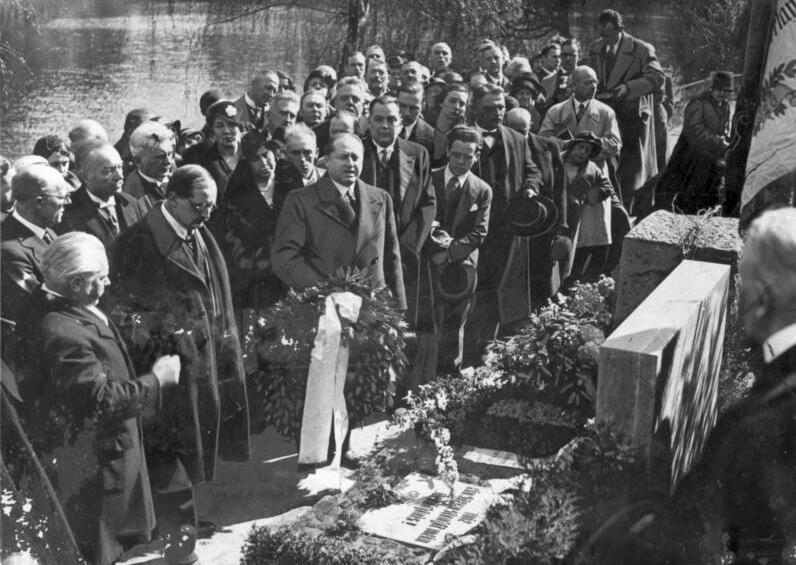
Gottfried Benn lays a wreath on the grave of Arno Holz on behalf of the Poets’ Academy (1933), photo from the Federal Archives
From the beginning, Benn wrote essayistic, poetically avant-garde, and autobiographical prose works. After 1945, he surprised the public with the novel Phenotype, on which he had been working since at least 1944.
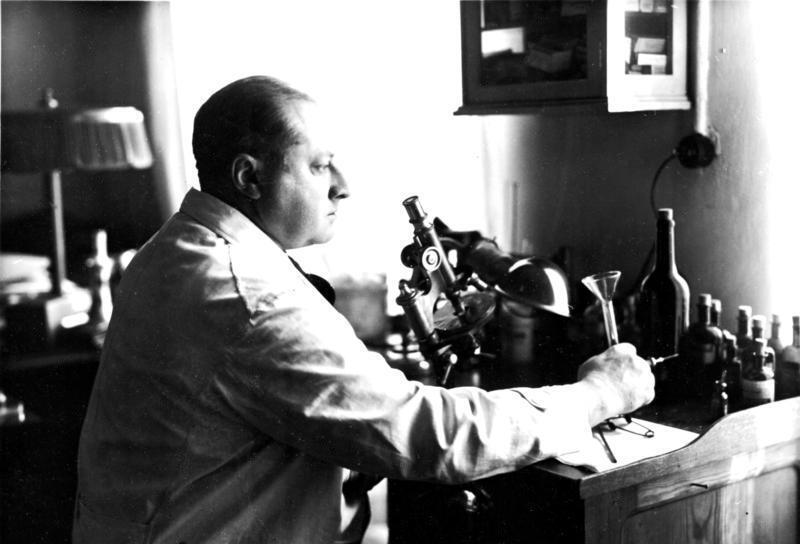
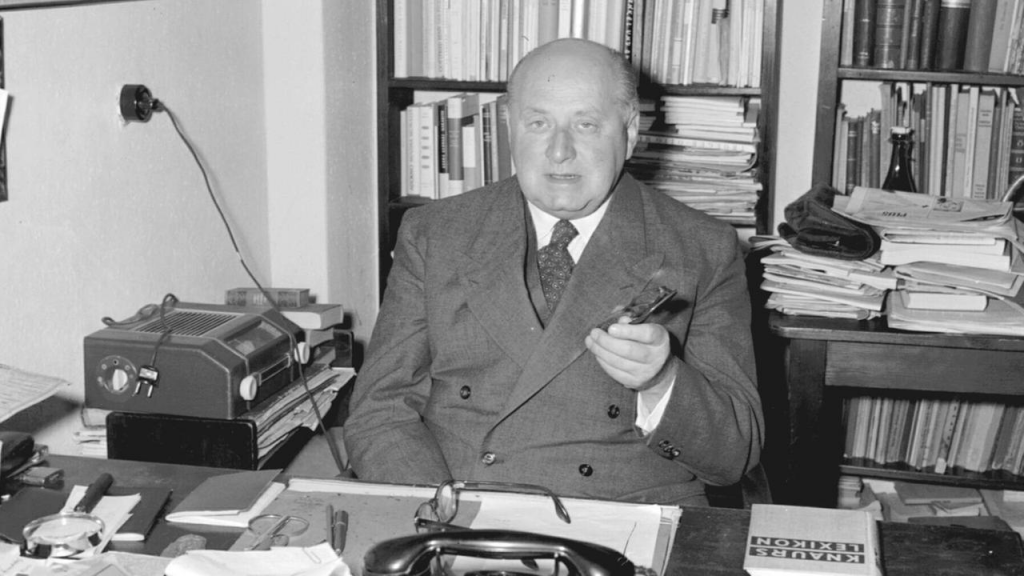
Dr. Gottfried Benn in his Berlin office on August 18, 1953. (imago / United Archives International)
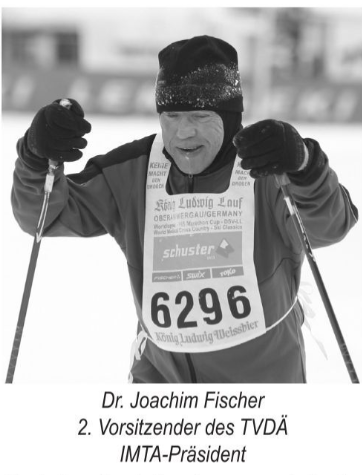
Joachim Fischer was president of the DTU German Triathlon Union, is involved in his local Heinatverein and in the Sterkel Society.
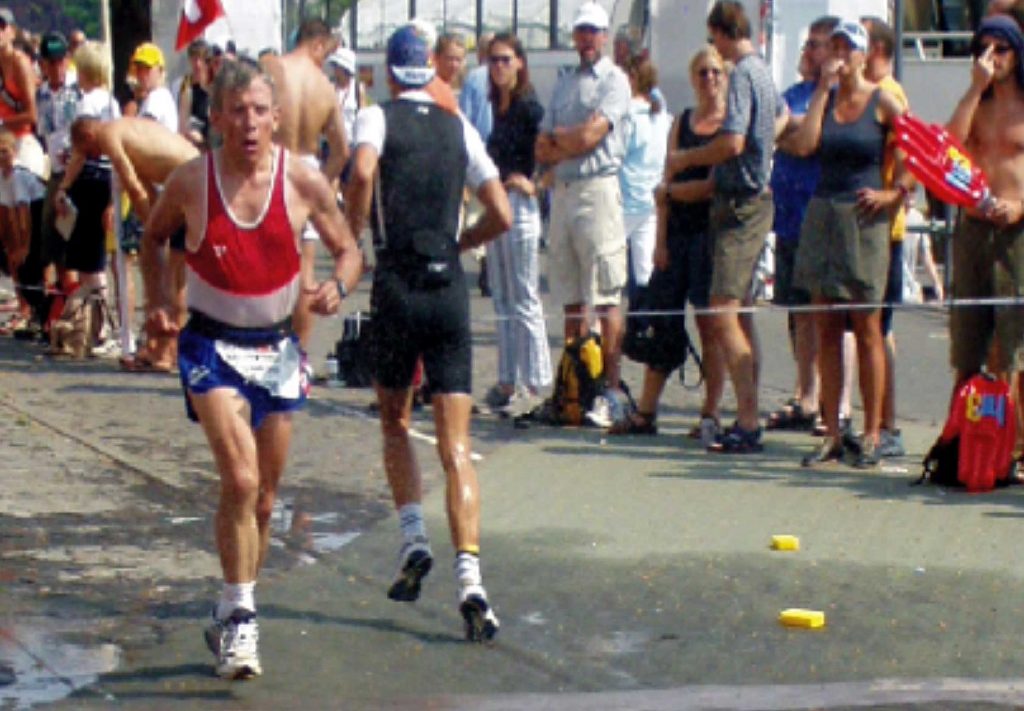
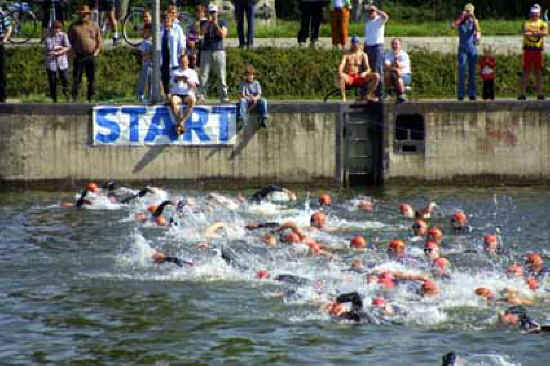
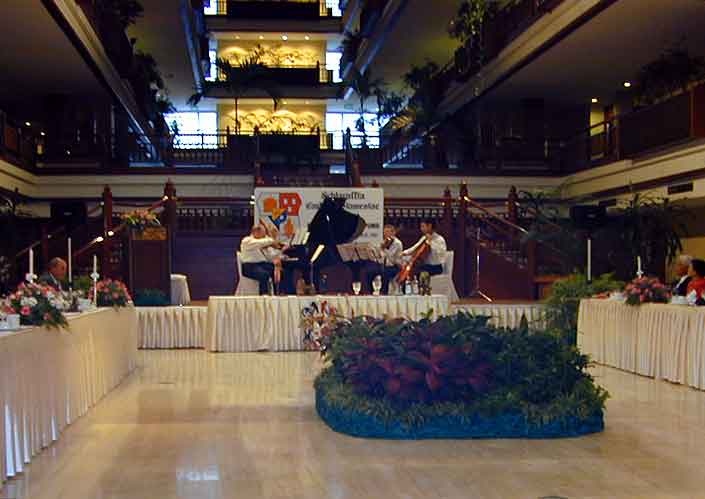
Dr. Fischer at the IronMan in Frankfurt! photo: Prof. Neumann from LeipzigTriathlon start in Regensburg august 12, 2001In Bangkog Dr. Fischer played in a Mendelssohn Piano Quartet with his colleagues during a nice festivity!https://hug-heigenbruecken.de/#ueber-uns
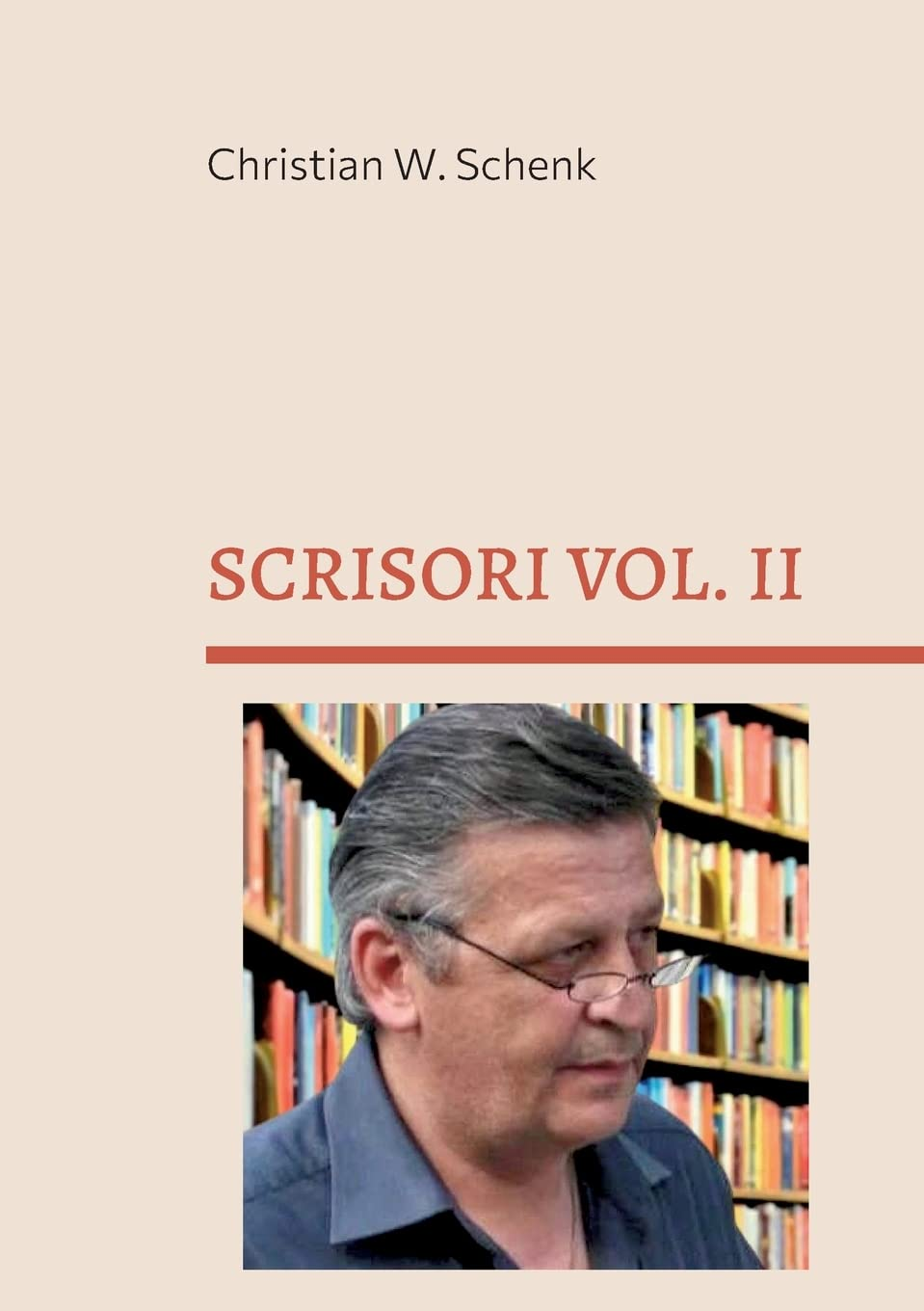
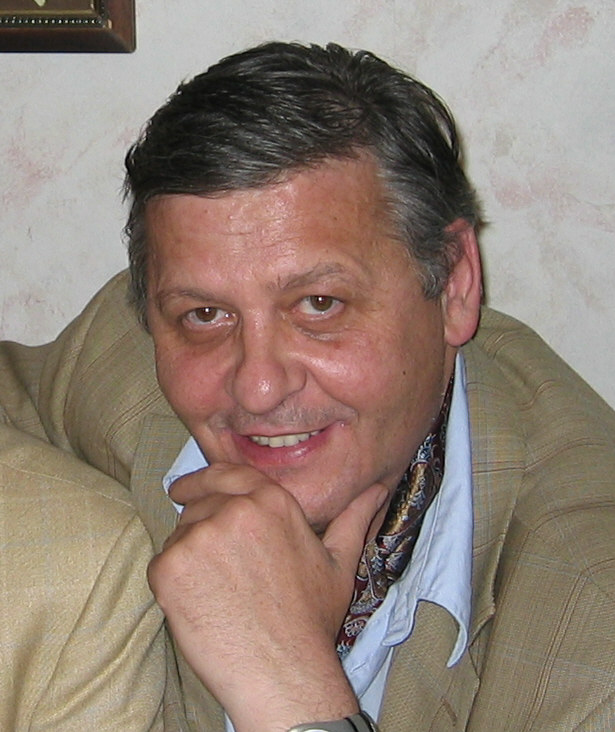
Christian Wilhelm Schenk (born November 11, 1951 in Brașov, People’s Republic of Romania) is a German physician, poet, essayist, translator, and publisher from the Transylvanian Saxon community.
Christian W. Schenk grew up in a small mining settlement near Brașov and was raised trilingually (German, Hungarian, and Romanian). His father is German, his mother Hungarian.
At the end of the 1950s, he made his first attempts at poetry, which led to his first publication in 1961: a poem in the children’s magazine Luminita (Bucharest) under the guidance of the Romanian poet Tudor Arghezi, who was his mentor from 1959 to 1965. His second mentor from 1964 to 1969 was the Transylvanian poet Vasile Copilu-Cheatră.
He attended elementary school in his hometown from 1958 to 1962 and in Wolkendorf from 1962 to 1966. Schenk attended high school in Zeiden, with interruptions, from 1971 to 1973. In between, he supported himself with odd jobs as a projectionist, weaver, or wage laborer. In 1974, he obtained his Abitur (university entrance qualification).
In 1976, Schenk left Romania and emigrated to Germany. Here, he had to retake the Abitur (university entrance qualification) in Wiehl in the Oberbergisches Land region in order to obtain university entrance qualifications in Germany. From 1977 to 1980, he first completed an apprenticeship as a dental technician in Koblenz and then studied medicine/dentistry at the Johannes Gutenberg University in Mainz from 1980 to 1986. In 1985, he received his doctorate in medicine from the same university with a thesis on “The Situation of Severely Disabled People in Working Life.” From 1986 to 1988, Schenk completed the mandatory years of training for health insurance accreditation in Lünen. Starting in 1988, he opened his own practice in Kastellaun. Today, Schenk lives in Boppard.
In 1986, as editor-in-chief of the quadrilingual magazine “Romanian Convergences,” of which he was editor-in-chief from 1984 to 1986, Schenk protested against the demolition of entire cities and cultural sites under dictator Nicolae Ceaușescu, which he described as “urbanization plans.” As a result, he was declared “persona non grata” in Romania, with a lifetime ban from entering the country. He continued to write and translate, but his work was recognized only in the West and among the diaspora. After 1989, he was rehabilitated. He received various awards from the government of the time, including the Presidential Certificate.
Through his memberships in the Association of German Writers, the Romanian Writers’ Association, the Union Mondiale des Écrivains Médecins, the American Romanian Academy of Arts and Sciences (ARA), the Romanian Writers’ Association of Physicians, the Academy of Sciences, Literature, and Culture in Bihor, the Hesperus Society, the Balkan Romance Studies Association, and the South-East European Society, Schenk has been striving for decades to deepen East-West cultural relations. The Dionysos Literature and Theater Publishing House (Kastellaun), which he founded, is also dedicated to this task.
For his outstanding contributions to East-West cultural relations and his own work, Schenk was nominated as an honorary citizen of the university city of Cluj-Napoca in 2000, and in 2006 as a “Knight of the Danubian Order” in Galați on the Danube.
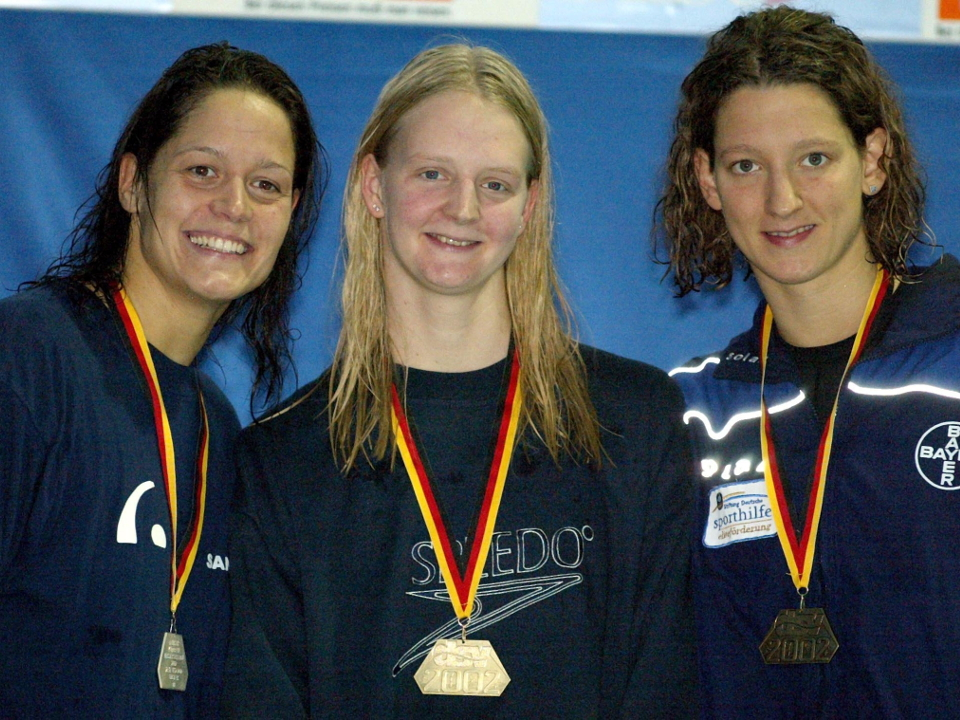
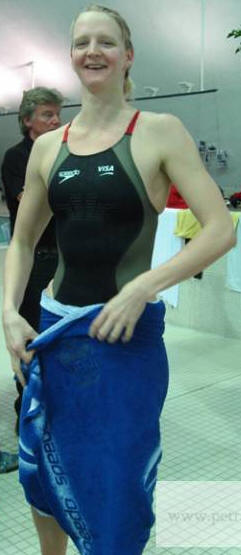
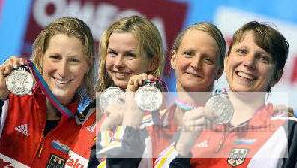
Petra Dallmann (center, next to Sandra Völker, left, and Antje Buschschulte, right) was supported by Sporthilfe for nine years and subsequently joined the Sporthilfe Alumni Club. Today, she works as a specialist in psychiatry and psychotherapy and has created “ATHLETES IN MIND,” a digital mental health offering for competitive athletes. (Photo: picture alliance)
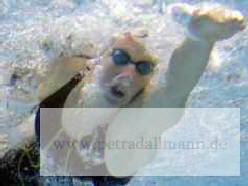
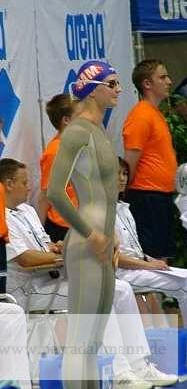
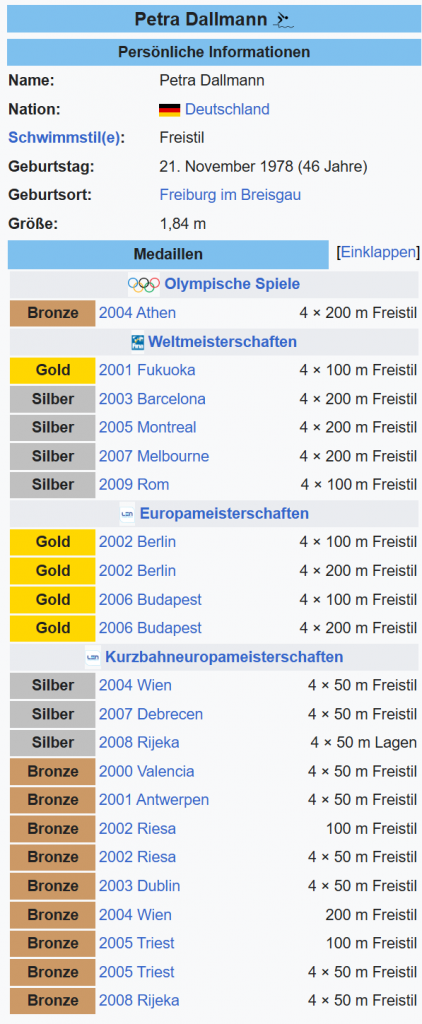
Petra Dallmann (born November 21, 1978 in Freiburg im Breisgau) is a former German swimmer.
Her swimming career began at SV Neptun Umkirch e. V.
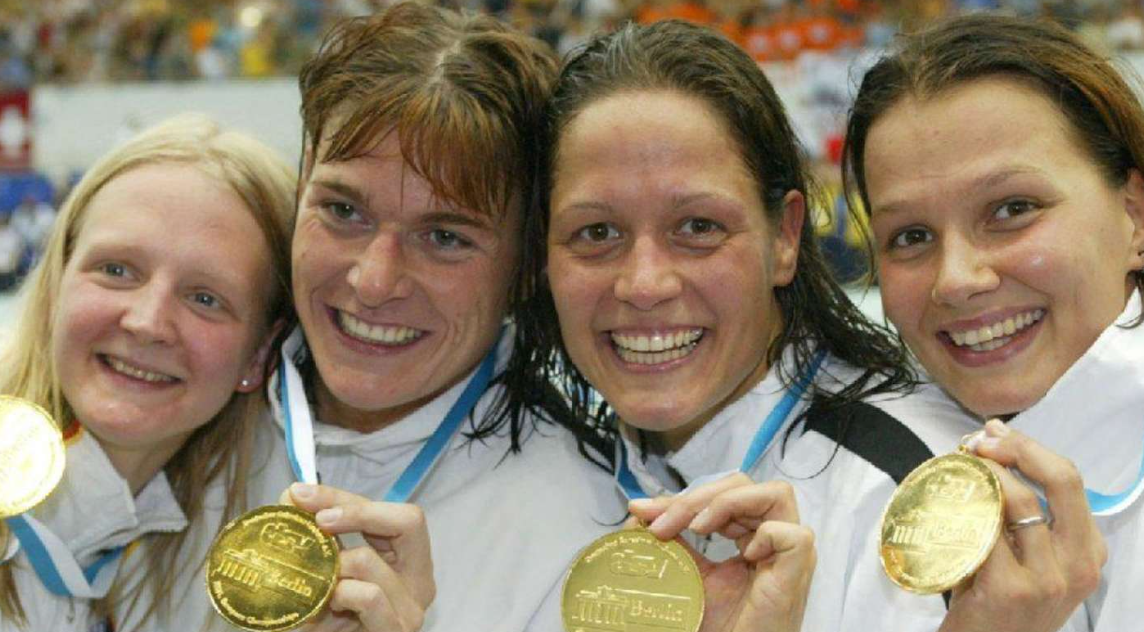
Her specialty was the 100-meter and 200-meter freestyle, which is why she often swam for the German national team in the freestyle relay. In 2001, Dallmann became world champion with the 4×100-meter relay team (Petra Dallmann, Antje Buschschulte, Katrin Meißner, and Sandra Völker), and in 2004 at the Olympic Games in Athens, she won the bronze medal with the 4×200-meter relay team (Franziska van Almsick, Petra Dallmann, Antje Buschschulte, and Hannah Stockbauer).
For this, she and her relay team received the Silver Laurel Leaf on March 16, 2005.
She also won four European Championship titles and became German champion in the 200-meter freestyle in 2005. After the 2009 World Championships in Rome, where she won another silver medal with the 4 x 100-meter relay, she retired.
Dallmann, who is 1.84 meters tall, competed for SV Nikar Heidelberg. She studied medicine at the University of Heidelberg and has been a doctor since 2006. She is a specialist in psychiatry and psychotherapy and chief physician of the Libermenta Klinik Schloss Freudental.
In March 2023, she spoke with former professional cyclist Dominik Nerz in an interview on Deutschlandfunk about eating disorders in (top-level) sport.
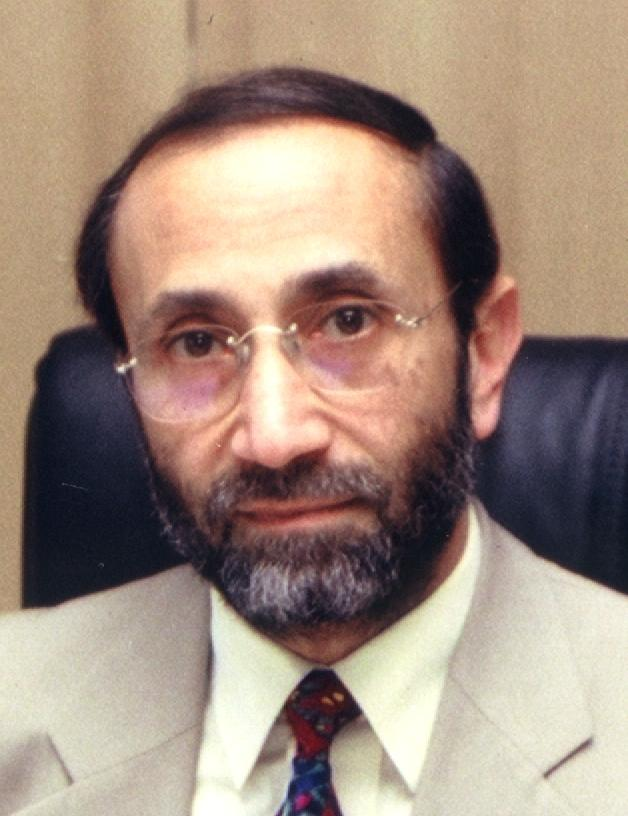
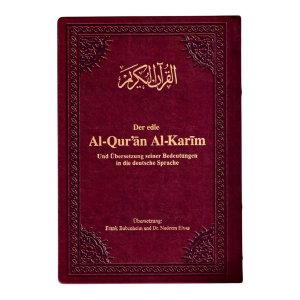
Nadeem Elyas (Arabic: Nadīm Ilyās; born September 1, 1945 in Mecca) is a Saudi Arabian Islamic scholar and physician. He served as chairman of the Central Council of Muslims in Germany from 1994 to 2006.
Elyas is a Sunni Muslim of Hanafi persuasion. Elyas left Saudi Arabia in 1964, studied medicine and Islamic studies in Germany, and practiced as a gynecologist. He lives in Eschweiler (North Rhine-Westphalia), is married, and has four children, including the comedian Ususmango, who became known as part of the comedy ensemble RebellComedy.
He was Secretary General of the Union of Muslim Student Organizations in Europe and spokesman for the Islamic Center Aachen, which is under surveillance by the Federal Office for the Protection of the Constitution.[2][3] He is a founding member and board member of the Islamic Cooperation Council in Europe and a partner in working groups and advisory boards such as the Islamic-Christian Working Group, the Intercultural Council and the Round Table of Religions. Between 1993 and 1996, he trained his later successor, Aiman Mazyek, in his Islamic studies program.[4] The “Islamic Charter”[5] – a declaration of principles by the Central Council of Muslims in Germany (ZMD) on the relationship between Muslims and the state and society – was presented to the public under his chairmanship. In the 2005 kidnapping of the German archaeologist Susanne Osthoff, Elyas offered to exchange her for the hostage.
Born in 1945 in Mecca, Saudi Arabia, living in Germany since 1964. Medical studies in Frankfurt, specialist training in gynecology, obstetrics, and cytology in Bad Soden, Krefeld, and Aachen. Parallel studies in Islamic studies.
Functions: Former Chairman of the Central Council of Muslims in Germany (ZMD) since 1995 and long-time spokesperson for the preliminary committee of the Islamic Working Group in Germany. Former Secretary General of the Union of Muslim Student Organizations in Europe (UMSO). Council member of the Islamic Center Aachen (IZA). Founding and board member of the Islamic Cooperation Council in Europe. Initiator of the nationwide Open Mosque Day. General Commissioner of the Islamampavillon at EXPO 2000 in Hanover.
Member of the Intercultural Council in Germany. Member of the Supporters’ Circle of the Alliance for Democracy and Tolerance. Member of the Alliance for Tolerance and Civil Courage Member of the Forum Against Racism and the Network Against Racism
Member of the Advisory Board for Overcoming Xenophobia, Racism, and Violence – Working Group of Christian Churches in Germany (ACK) Member of the Ecumenical Preparatory Committee for the Week of Foreign Citizens Co-initiator and member of the Mainz Round Table of Religions Member of the Christians and Muslims Discussion Group at the Central Committee of German Catholics Co-founder of the Abrahamic Forums in Germany
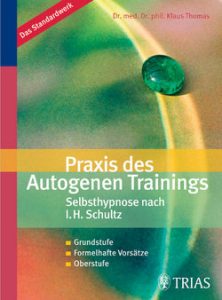
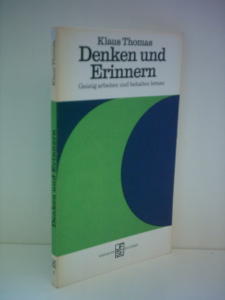
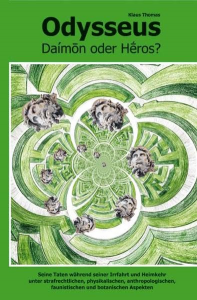
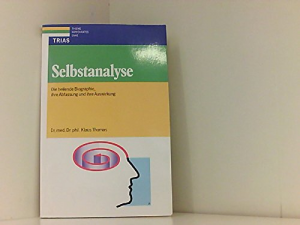
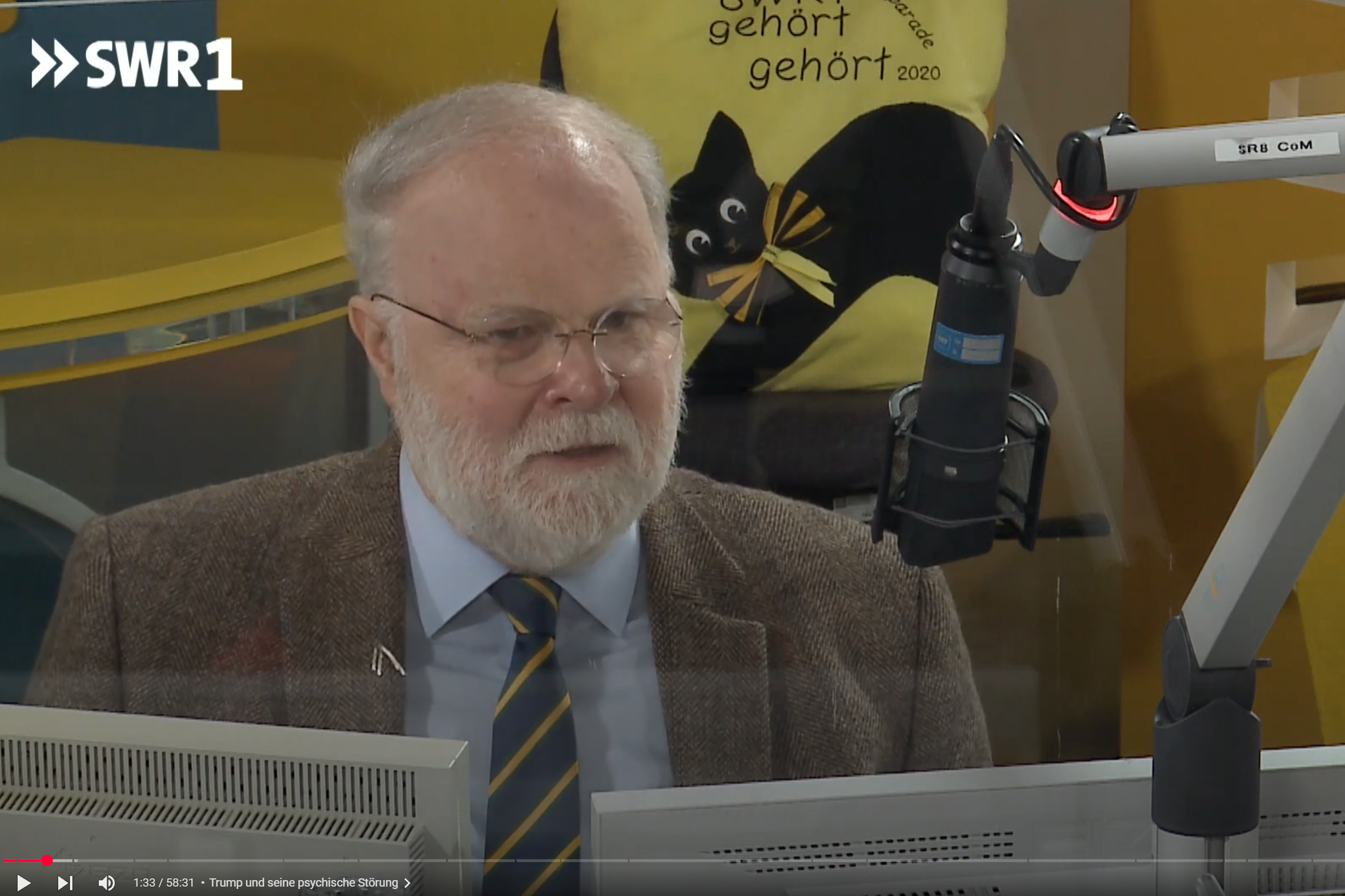
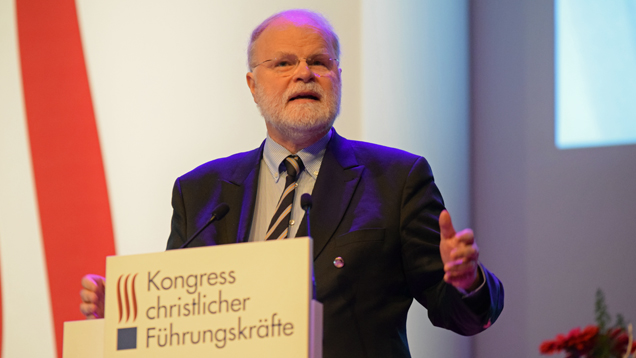
Klaus Thomas (* 31 January 1915 in Berlin; † 10 July 1992 in Malsburg-Marzell) was a German Protestant pastor, physician, and psychotherapist.
Klaus Thomas studied Protestant theology, philosophy, modern languages, psychology, psychotherapy, and medicine. During his studies, he was a member of the Arndt Berlin fraternity (in the Sonderhäuser Verband).[1] In 1940, he received his doctorate in philosophy from the Faculty of Philosophy at the Friedrich Wilhelm University of Berlin.[2] In 1947, he received his doctorate in medicine from the Faculty of Medicine at the Philipps University of Marburg under Ernst Kretschmer.[3] In 1964, he received his Doctor of Divinity (DD) in the USA, an honorary award for special theological services.
He worked as a student chaplain in Berlin and as a hospital chaplain in Marburg, later as a physician and psychotherapist in Berlin, as a senior teacher at the Schadow Gymnasium in Berlin, and as a lecturer at the Lessing University, at the Academy for Continuing Medical Education[4], and from 1956 until the construction of the Berlin Wall on August 13, 1961, at the Paulinum. Study and lecture tours have taken Klaus Thomas to over 100 countries.
He was also the regional chaplain of the Order of St. Luke for Germany, an international ecumenical working group of chaplains, physicians, psychologists, and lay people. The goal of the order is pastoral care for the sick through word and deed.[5] In the Berlin Association Register, this order has been operating since 1956 as the St. Luke Community (care for those weary of life) and, after the split of the Berlin Telephone Counseling Service, since 1961 as the St. Luke Order for Pastoral Care for the Sick and Care for Those Weary of Life – Circle of Friends
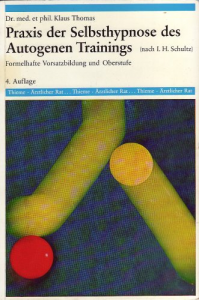
Klaus Thomas was the main disseminator of autogenic training according to Johannes Heinrich Schultz[10] and is considered his most important student.[11] Since 1972, he has directed the I. H. Schultz Institute for Psychotherapy, Autogenic Training and Hypnosis in Berlin, which he founded but which no longer exists today.
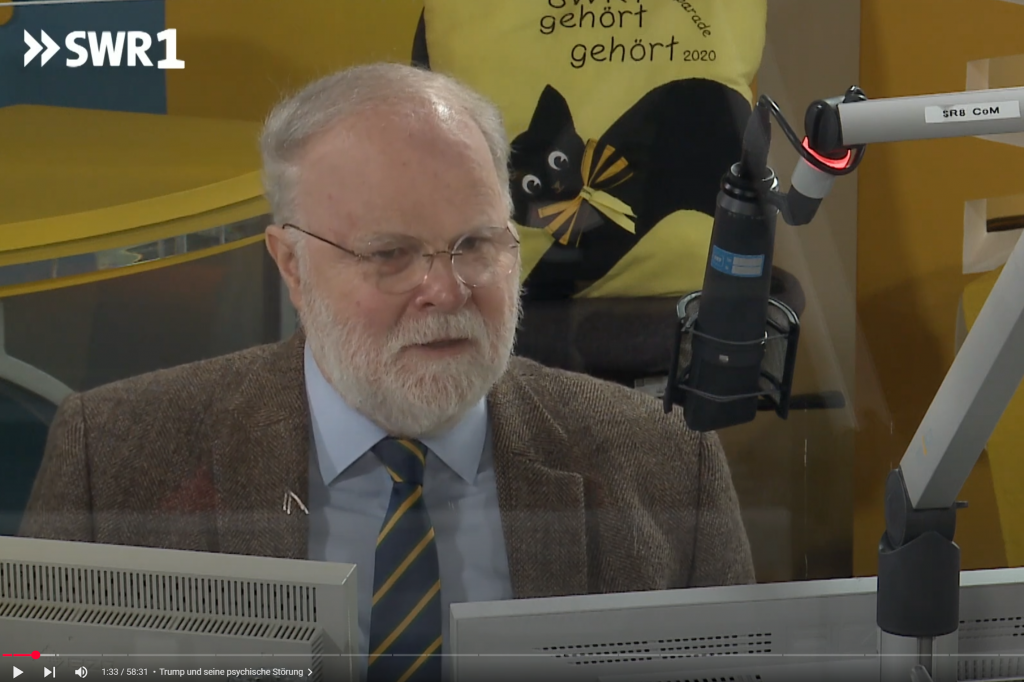
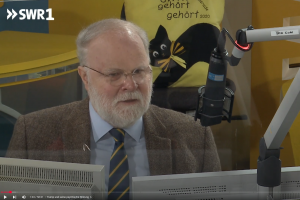
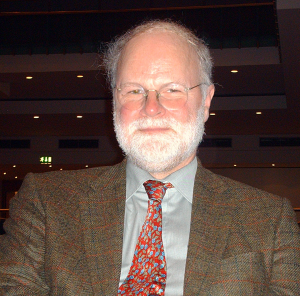
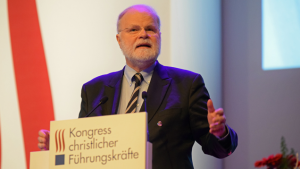
Manfred Lütz (born March 18, 1954 in Bonn) is a German psychiatrist, psychotherapist, Roman Catholic theologian, Vatican advisor, and author. He headed the Alexianer Hospital in Cologne from 1997 to 2019.[1]
Lütz studied medicine, philosophy, and Catholic theology in Bonn and Rome. He obtained his medical license in 1979 and his diploma in Catholic theology in 1982. During his studies, he became a member of the KDStV Bavaria Bonn in the CV.
Social Commitment
Manfred Lütz founded the inclusive youth group “Brücke-Krücke” in Bonn in 1981, in which disabled and non-disabled young people and young adults from Bonn and the surrounding area work together without professional supervision.[3][5] Since then, Lütz has volunteered for the initiative,[6] which is affiliated with the Catholic Youth Agency in Bonn. He organizes annual trips and participates in events. The group includes approximately 200 disabled and non-disabled people.
Church and Vatican Advisor
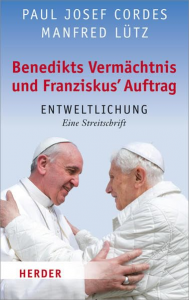
Pope John Paul II appointed Lütz a consultant to the Congregation for the Clergy in 2003.[7] In the same year, he organized a congress in the Vatican on the topic of “Abuse of Children and Young People by Catholic Priests and Religious.”[3] From 2006, he was part of the Pastoral Office’s working group in the Archdiocese of Cologne, responsible for processing and investigating cases of sexual abuse of minors by clergy and lay people in pastoral ministry.[8] Lütz himself served under three popes until 2016 as a member of the Pontifical Council for the Laity.[9] He contributed as an advisor to the creation of the Youth Catechism, Youcat.[10] He was a corresponding member of the Pontifical Academy for Life from the beginning of the 2000s, and a full member from 2004, to whose board he was appointed in March 2005 for a term until 2010.[12] After the restructuring of the Academy as part of the Curia reform, he was reappointed as a full member by Pope Francis in 2017 and is considered a supporter of the opening and renewal of the body implemented by the Pope.[13]
Pope Francis appointed him a member of the Dicastery for Laity, Family and Life on October 6, 2018.
Author and Media Presence
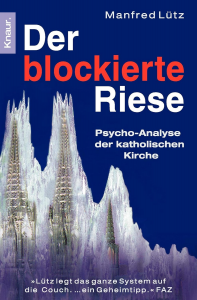
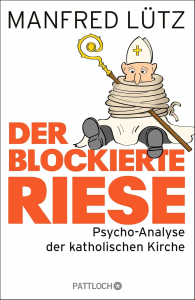
After his essay “The Blocked Giant: Psycho-Analysis of the Catholic Church” (1999), which received primarily internal attention, Manfred Lütz has been active as an author for a wider audience since 2002 and has gained greater recognition through several bestsellers.[2][3][9][16] In his books, he addresses general topics of lifestyle and modern culture, religion, and the conditions in the Catholic Church and psychiatry from the perspective of a psychotherapist, sometimes with humor and satirical slant. Manfred Lütz has also been active and in demand for many years as a lecturer, speaker, and interviewee. Lütz has also occasionally performed as a cabaret artist since 2006.[17] He has frequently participated in television programs as a discussion partner on psychiatric and psychotherapeutic topics and took part in prominent talk shows as a church expert in the run-up to the conclaves of 2005 and 2013.[18][19][20] In March 2013, he accompanied the live broadcasts of the papal election at the 2013 conclave and the subsequent events of the inauguration of the new pope in Rome as a commentator for ZDF and Phoenix.
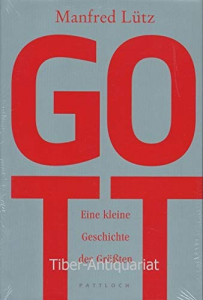
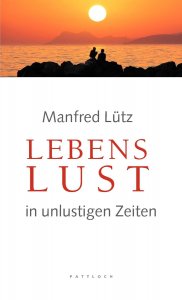
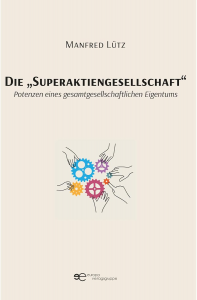
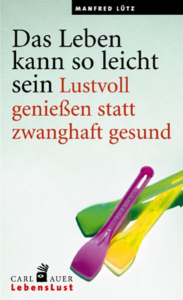
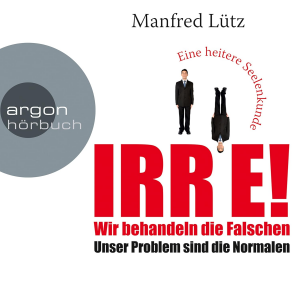
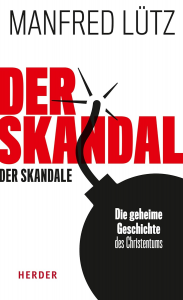
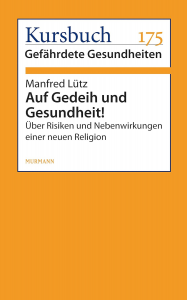
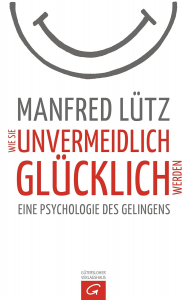
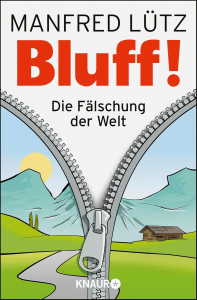
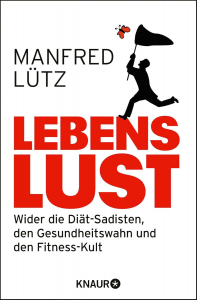
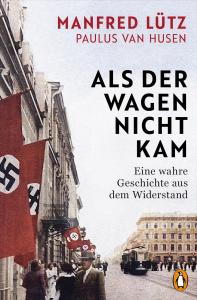
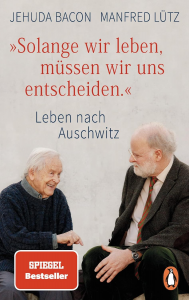
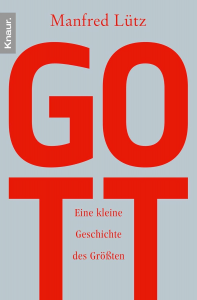
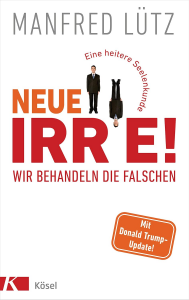
Manfred Lütz’s best-known book is entitled “Crazy! We Treat the Wrong People. Our Problem Are the Normal People” (2009), the paperback edition of which spent 106 weeks on the Spiegel bestseller list.[22] In 2013, it resulted in a television show with the Cologne cabaret artist Jürgen Becker.[23] His book “Bluff: The Falsification of the World” (2012) was also at the top of the Spiegel bestseller list.[16] Other frequently cited books are “Lust for Life: Against Diet Sadists, Health Craze, and the Fitness Cult” (2002), “God: A Short History of the Greatest” (2007), and “How You Will Inevitably Become Happy: A Psychology of Success” (2015). In 2016, he published a volume of conversations with the Auschwitz survivor Jehuda Bacon. His 2018 book The Scandal of Scandals was one of Herder Verlag’s two best-selling titles in 2018.
In various articles, for example in the Frankfurter Allgemeine Zeitung (FAZ), Lütz emphasized in 2010 that abuse by Catholic priests was worse than any other abuse, but at the same time rejected the idea of scapegoating the church and ignoring the social context of the 1970s. He sees the left-wing scene as the cause of the abuse. On the contrary, he argues that the “structures of the church are even helpful” when it comes to solving cases of abuse.[25] Society as a whole bears responsibility here.[26] In 2018, he commented on the so-called “MHG study”[27][28] published by the German Bishops’ Conference, calling it “spectacularly unsuccessful.”