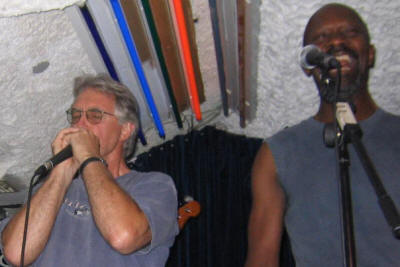
The idea was simpel and genial: Doctors from all over Germany meet one week at different places in Germany to make music with a Symphony Orchestra. With an announcement in the “Deutsches Ärzteblatt” it began in 1989. It´s a wonderful story up to now. The General Practitioner Dr. Dieter Pöller from Munich founded the orchestra.
a couple of months ago you have asked me to report about my hobbies. That is a little risky because I am helping many prejudices by that…..
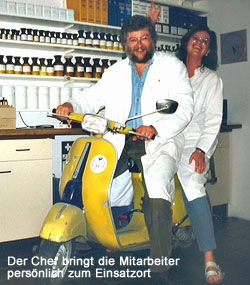
Besides my professions as pharmacist, art dealer and setting up game-automates I am active in the politics for my profession as pharmacist (as delegate of the Bavarian pharmacist chamber and regional president of the nationwide association of “active pharmacists”).
In some associations like “wine brethren” and “aviation club” I am in the presidency.
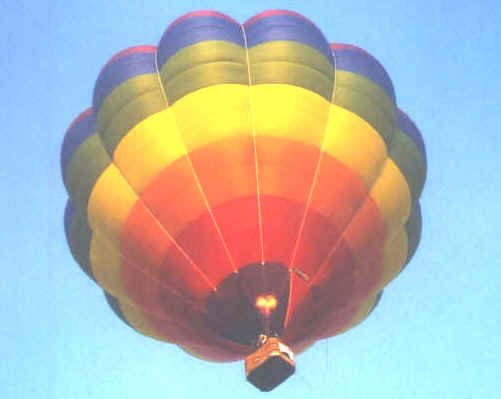
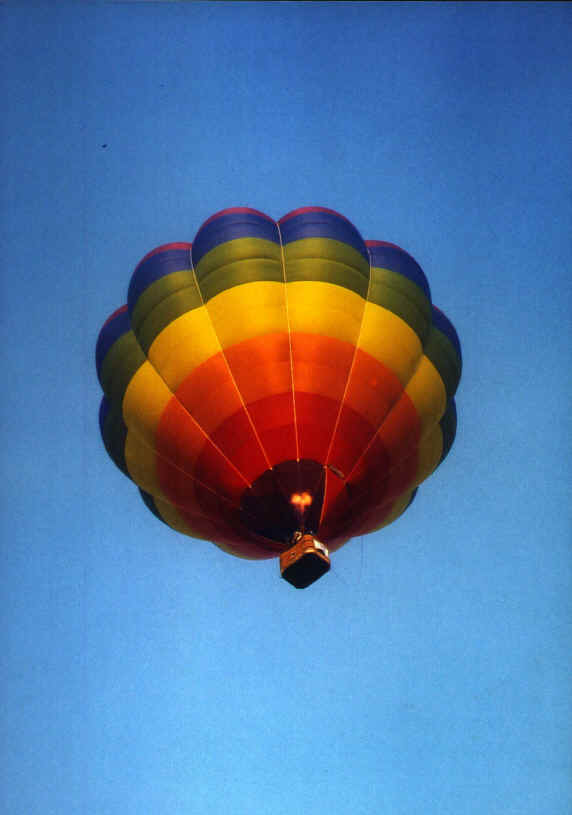
In principle that would do, but the day has 24 hours! So I go fishing and hunting, go by boat and go flying my balloon (see picture).
Also I fly airplanes and shoot “Vorderlader”, drive bycicle and play golf.
Under the aspect of time that goes very wel because my wife Hanne participates in all of these hobbies apart from flying.
But my favourite hobby is music! I have bought several instruments and try to play “jagdhorn“, trombone, trumpet, clarinet, saxophone, “Hackbrett“, “Zither“, double bass, hornpipes, drumset, violin, a self-constructed harmonika, electric organ and last not least piano.
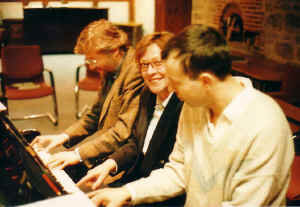
Regular highlights of my little life are the games of chess with my 12-year-old son Michael having a (big) glass of wine and playing four hands with my little boy.
Sorry that this letter took so long although I have sufficiently time, but in the beginning I did not find the picture with my balloon…..
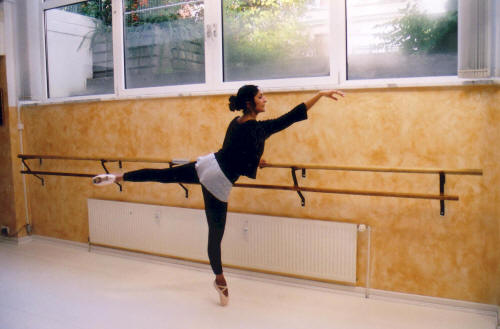
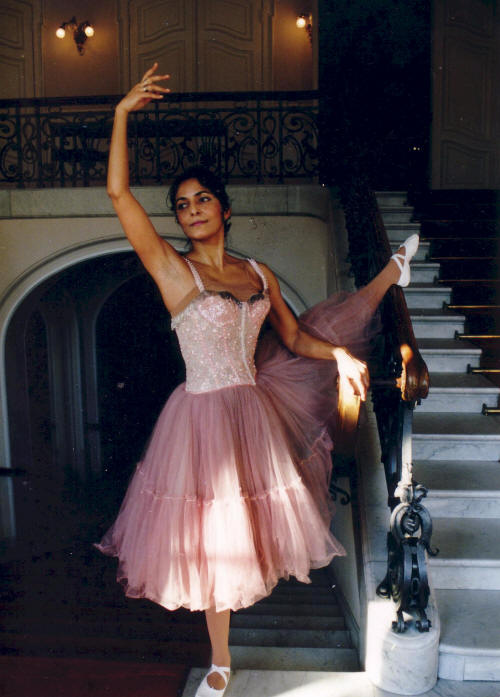
Born 1958 in Hamburg. Classical ballett education with a russian teacher (Ludmilla Maltschanova, former solist in Riga and Opera of Hamburg) and with Jane Ibn, teacher from the Royal ballett school in London. Advanced courses in the Centre international de Dance in Cannes (Rosella Hightower) and in the Broadway Dance Center New York. Theater Practice in the Opera of Hamburg and other theaters. Exam in elementary dance practice of the royal ballett academy. Teacher of Anatomy and Diet at the Academy of Dance Arts in Hamburg and invention of a new method of teaching ballett profis calling “anatomic corrections”. Performing as a dancer in several theaters in hamburg.
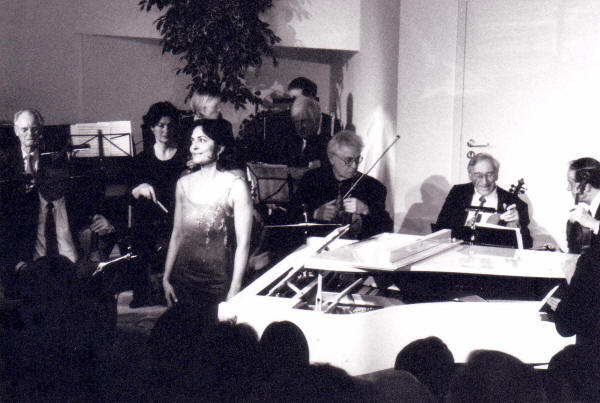
Starting piano playing at the age of five, after ten years of private lessons master lessons at the Musikhochschule Hamburg. Concerts as a child with great success, then with breaks again playing and starting a soloist career as concert pianist since one year.
Studying medicin at the university of hamburg and promotion. Working in the fields of internal medicin, psychiatry and legal medicine, five years work and research at the University of Eppendorf in Hamburg on the field of legal medicine and pathology, a series of 25 medical publications. Since 1994 expert of psychiatry for the court of justice and since 2004 also psychotherapist for behavioral therapy.
Joachim Gardemann is a passionate hobby astronomer and a watercolour illustrator in his international Red Cross missions.
His Red Cross working experience as health delegate, health coordinator, paediatrician and senior medical officer with IFRC or ICRC is covering emergency missions in Tanzania (1995 and 1998), Macedonia (1999), Iran (2003), Sudan (2004), Sri Lanka (2005), the Peoples Republic of China (2008) and Haiti (2010), additionally he has teaching and research experiences in Serbia (2002), Macedonia (2003), Mongolia (2002) and Ethiopia (2007).
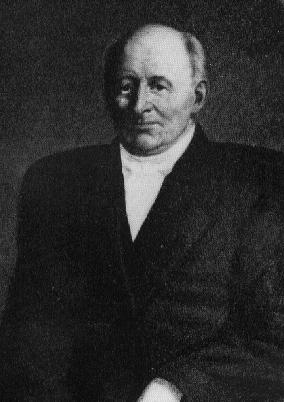
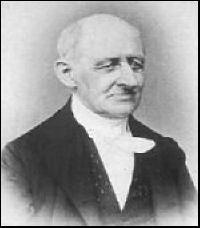
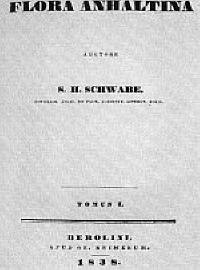
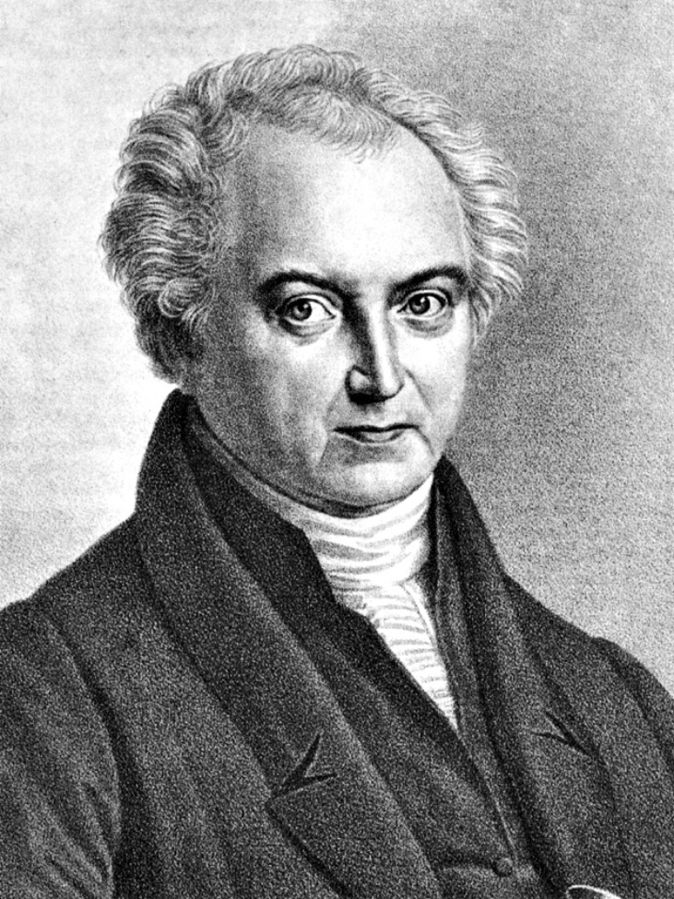
Samuel Heinrich Schwabe (25 October 1789 – 11 April 1875) a German astronomer remembered for his work on sunspots. He also wasBotaniker. His official botanic short code is „Schwabe“.
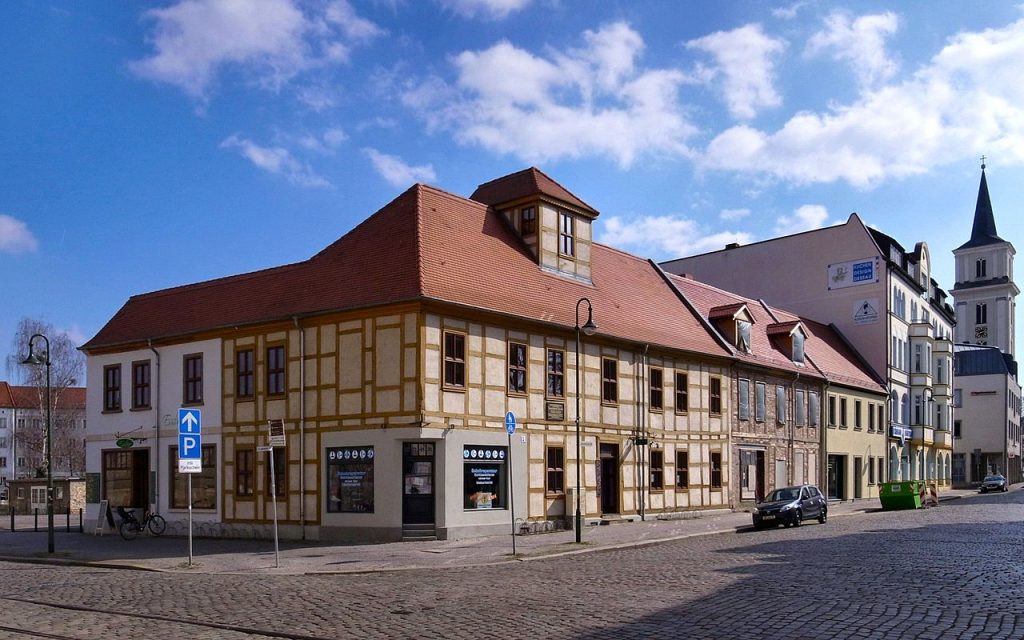
He studied pharmacy, chemistry, botanics and physics in Berlin. Coming back to Dessau in 1811 he ran the pharmacy of his grandfather. After selling the pharmacy in 1829 he dedicated himself to science and lived in the Schwabehaus.
Schwabe was born at Dessau. At first an apothecary, he turned his attention to astronomy, and in 1826 commenced his observations on sunspots. Schwabe was looking for a possible planet inside the orbit of Mercury. Because of the proximity to the Sun, it would have been very difficult to observe such a planet, and Schwabe believed one possibility to detect a new planet might be to see it as a dark spot when passing in front of the Sun. For 17 years, from 1826 to 1843, on every clear day, Schwabe would scan the Sun and record its spots trying to detect any new planet among them. He did not find any planet but noticed the regular variation in the number of sunspots and published his findings in a short article entitled “Solar Observations during 1843”.[1] In it he made the suggestion of a probable ten-year period (i.e. that at every tenth year the number of spots reached a maximum). This paper at first attracted little attention, but Rudolf Wolf who was at that time the director of Bern observatory, was impressed so he began regular observations of sunspots. Schwabe’s observations were afterwards utilized in 1850 by Alexander von Humboldt in the third volume of his Kosmos.[2] The periodicity of sunspots is now fully recognized; and to Schwabe is thus due the credit of one of the most important discoveries in astronomy.
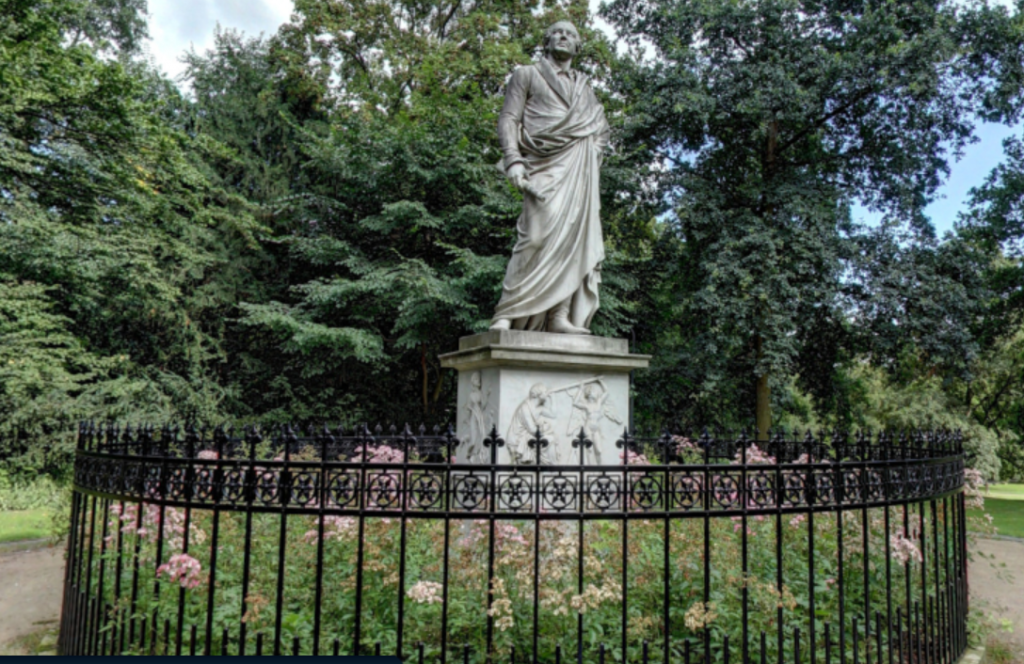
On 28 March 1802, Olbers discovered and named the asteroidPallas. Five years later, on 29 March 1807, he discovered the asteroid Vesta, which he allowed Carl Friedrich Gauss to name. As the word “asteroid” was not yet coined, the literature of the time referred to these minor planets as planets in their own right. He proposed that the asteroid belt, where these objects lay, was the remnants of a planet that had been destroyed. The current view of most scientists is that tidal effects from the planet Jupiter disrupted the planet-formation process in the asteroid belt. On 6 March 1815, Olbers discovered a periodic comet, now named after him (formally designated 13P/Olbers). Olbers’ paradox, described by him in 1823 (and then reformulated in 1826), states that the darkness of the night sky conflicts with the supposition of an infinite and eternal static universe.
Olbers was deputed by his fellow citizens to assist at the baptism of Napoleon II of France on 9 June 1811. He was a member of the corps legislatif in Paris 1812–13. He died in Bremen aged 81. He was twice married, and one son survived him. Olbers’ paradox, the argument that the dark sky at night shows that stars cannot be evenly distributed through infinite space, is named for him, though others had also advanced it.
Ships were named after him (DE):
Olbers war außerdem der Name verschiedener Segelschiffe: Eine in Archangelsk gebaute Fregatte wurde 1829 von F. C. Delius & Co. in Bremen erworben und 1837 abgewrackt. Ein 1838 in Grohn gebauter Segler des gleichen Eigners, das Vollschiff Olbers (1851), havarierte 1848. Später trug eine Dreimastbark der Kaiserlichen Marine den Namen des Astronomen.
Olbers streets in Berlin, Bremen, Hannover, Lilienthal and other places.
Multitalent, several media of publication: CD-productions, books, graphics, radio broadcastings, essays in press media, lecturing with scenical acting etc.
exhibition with graphics:
Essen, Hamburg, Gütersloh, Köln, Bonn, Osnabrück, Karsruhe, Bremen, Dortmund, Salzburg, Berlin, Düsseldorf, Solingen, Bad Godesberg etc.
publications of essays etc.:
SWF, WDR III, Dtsch, Allgemeines Sonntagsblatt (Hamburg), F A Z (Frankfurt), ärztl. Reise und Kulturmagazin (München), Generalanzeiger (Bonn), Neue Zürcher Zeitung (Zürich), Renovation (Regensburg), Deutsches Ärzteblatt (Köln), Medical Tribune (Wiesbaden), Hellweg Radio, DOM (Paderborn), „Kult” (Goldbach), „Die Kribbe”(Bonn ), “Medizin+Kunst” (München), Radio Sauerland, “Das Gedicht” (München). “Unsere Kirche” (Bielefeld).,Anthologie – Zeitschrift “Kurtzgeschichten”, Erasmus-Magazin (Universität Rotterdam), Der Allgemeinarzt.
numerous (also scenical) readings:
1997 participation at 10th NRW-Author meeting “Haus der Geschichte” (Bonn). one act piece „Der Regenbogen” (Scenical reading Schauspielhaus Bonn).
Selected Lyrics & Prosa by Hans Claßen and Mathias Knoll Rezitator: Hans Theopold is reading
Konturen
Poesie and Prosa
ISBN 3-930271-88-5
In den Wind geschrieben
New poesia and prosa
ISBN 3-930271-30-3
Bergschäden
short prosa and lyrics
ISBN 3-930271-02-X
A 45 Längs der Autobahn und anderswo
Literarische Fahrten
ISBN 3-933749-37-9
Poetischer Frühling im Sauerland
Polen erlesen
ISBN 3-932037-04-9
Kürschners Deutscher Literatur – Kal. 02 – 03
keine Angaben
ISBN 3-598-23585-2
Landschaft, Lyrik, Literatur.Wort-Bild-Kontraste
Lyrik & Prosa
ISBN 3-8311-0491-3
Tastengeflüster
Kurzgeschichten
ISBN 3-89906-752-5
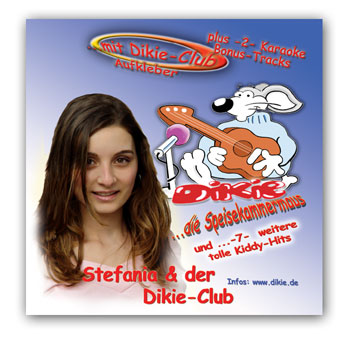
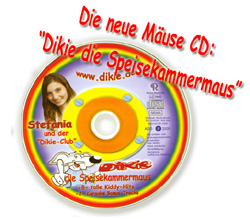
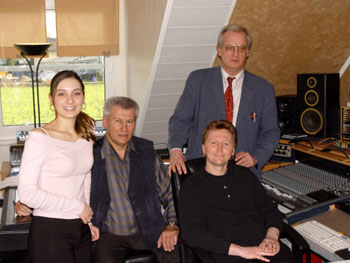
Promotion team of Dikie-the food-locker-mouse
from left: Stefania (Sängerin), Laszlo Püski, (Musiklehrer, Produktion) Robert Josek (Arrangeur,Tontechnik, Produktion) Dr. Mathias Knoll (Idee, Text, Produktion
on the volcano
click on covers to read some extracts in Amazon and order there.
flight afraidness
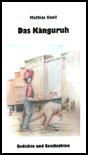
the cangoroo
click on covers to read some extracts in Amazon and order there.
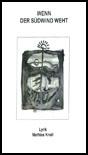
if the south wind blows…
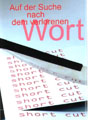
on the search for the lost word
click on covers to read some extracts in Amazon and order there.
Abitur in Mannheim wishing to become art teacher 1950 art lessons at Kunsthalle Mannheim (Ursula Krebs) 1951 art lessons at Volkshochschule Mannheim (Walter Stallwitz) 1960-1961 “Freie Akademie Mannheim” class Paul Berger-Bergner 1983 Medical degree with doctorate degree
specialisation for obstetrics 1975 to 2005 working in own office in Neckargemünd art lessons with Glyn Forster in Dossenheim Yearly classes at European Art Academy Trier and artist association Artefact in Bonn
1998 own Atelier in Langenzell free-lance professionals since January 2006
1974 Studium der Biologie, Bonn, Rheinische Friedrich-Wilhelms-Universität 1976 Studium der Medizin, Bonn, Rheinische Friedrich-Wilhelms-Universität mit Examen 1981 1982 Beginn der Assistenzarzt-Tätigkeit in den Fächern Innere Medizin und Chirurgie 1982 Promotion im Fachbereich Medizin, Medizinische Mikrobiologie 1985 Niederlassung als Ärztin in einer Gemeinschaftspraxis 1999 – 2005 Studium im Studiengang freie Kunst an der Kunstakademie Münster, bei Paul Isenrath und Guillaume Bijl 2015 Beendigung der ärztlichen Praxistätigkeit