Samuel Heinrich Schwabe
Category : AstronomicDocs , BotanicDocs
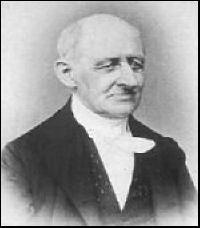
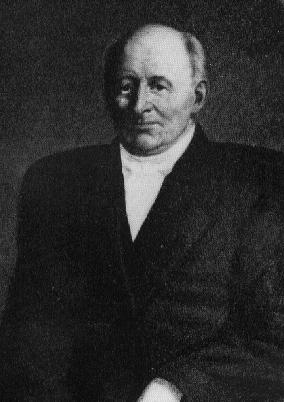
Samuel Heinrich Schwabe (25 October 1789 – 11 April 1875) a German astronomer remembered for his work on sunspots. He also was Botaniker. His official botanic short code is „Schwabe“.
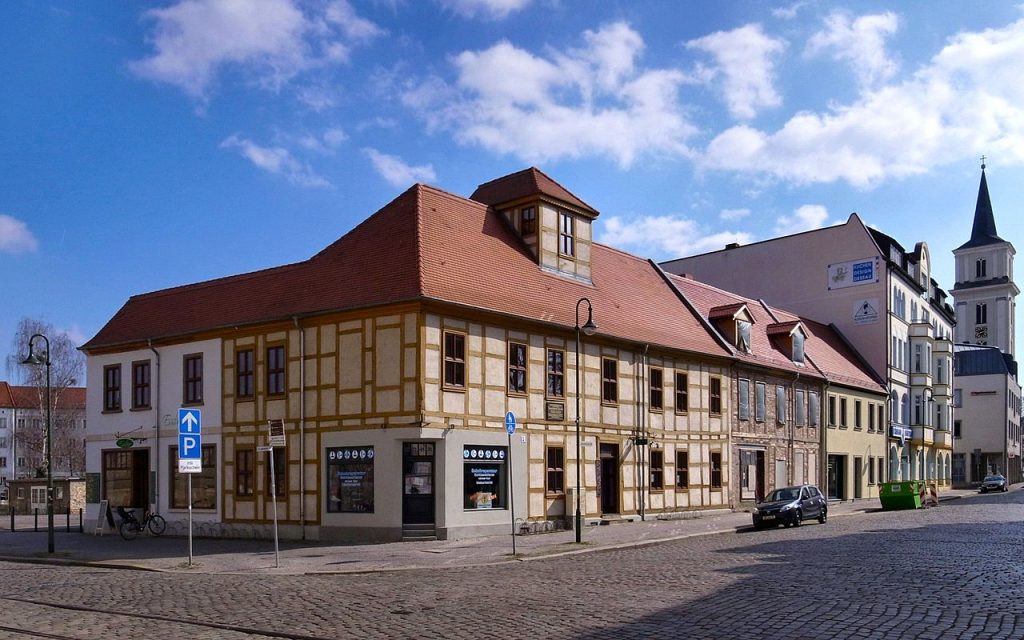
He studied pharmacy, chemistry, botanics and physics in Berlin. Coming back to Dessau in 1811 he ran the pharmacy of his grandfather. After selling the pharmacy in 1829 he dedicated himself to science and lived in the Schwabehaus.
Schwabe was born at Dessau. At first an apothecary, he turned his attention to astronomy, and in 1826 commenced his observations on sunspots. Schwabe was looking for a possible planet inside the orbit of Mercury. Because of the proximity to the Sun, it would have been very difficult to observe such a planet, and Schwabe believed one possibility to detect a new planet might be to see it as a dark spot when passing in front of the Sun. For 17 years, from 1826 to 1843, on every clear day, Schwabe would scan the Sun and record its spots trying to detect any new planet among them. He did not find any planet but noticed the regular variation in the number of sunspots and published his findings in a short article entitled “Solar Observations during 1843”.[1] In it he made the suggestion of a probable ten-year period (i.e. that at every tenth year the number of spots reached a maximum). This paper at first attracted little attention, but Rudolf Wolf who was at that time the director of Bern observatory, was impressed so he began regular observations of sunspots. Schwabe’s observations were afterwards utilized in 1850 by Alexander von Humboldt in the third volume of his Kosmos.[2] The periodicity of sunspots is now fully recognized; and to Schwabe is thus due the credit of one of the most important discoveries in astronomy.
In 1857 Schwabe was awarded the Gold Medal of the Royal Astronomical Society.
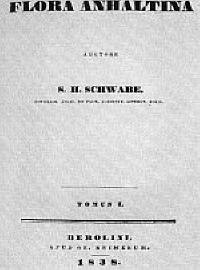
1838 he published Flora Anhaltina, a standard work about the flora of his country Anhalt. Remarkable is his Herbarium.
In 1841 he married Ernestine Amalie Moldenhauer.
A moon crater is named Schwabe after him.