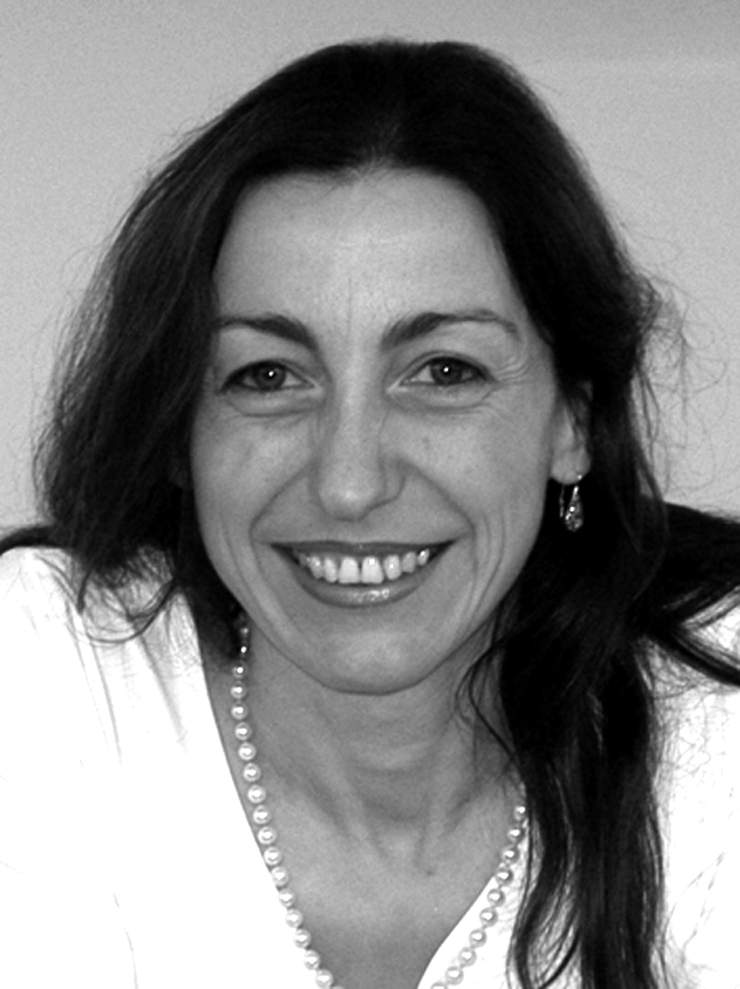
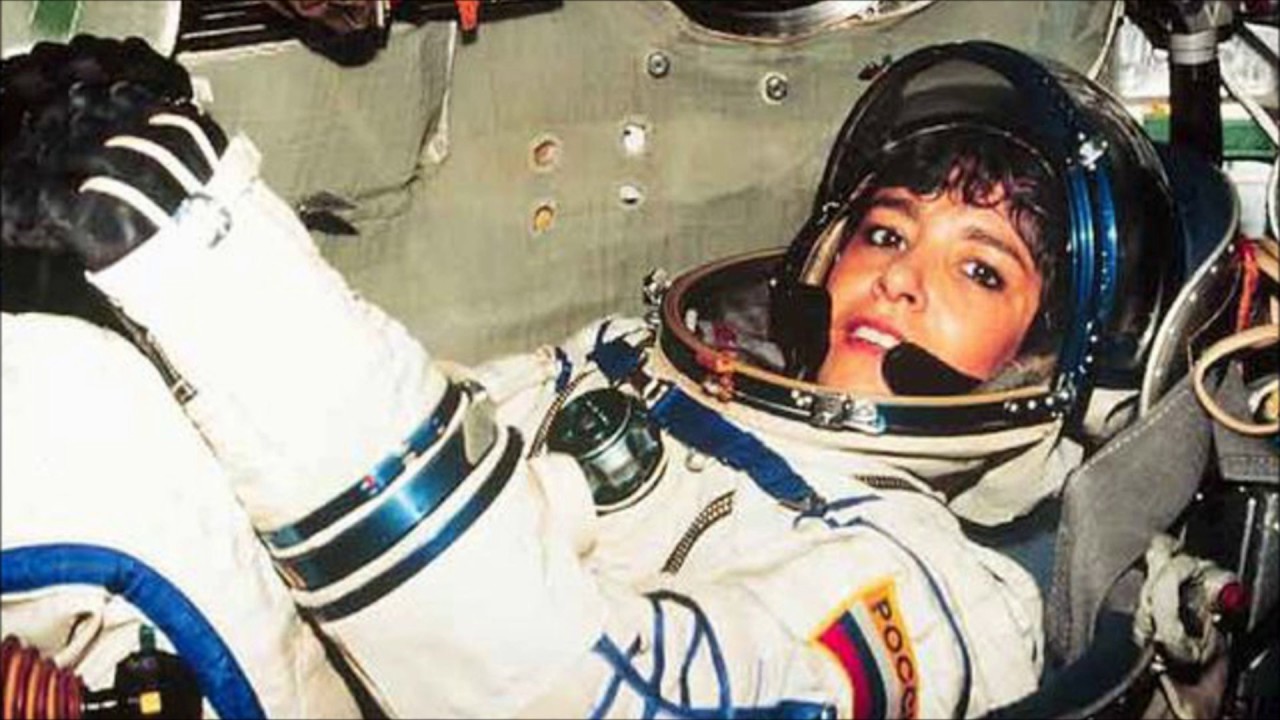
Isabella Vértes-Schütter (* 22. April1962 in Hamburg) is a German actress and politician in the senate of Hamburg
Isabella Vértes-Schütter is daughter of the opera singer Helga Pilarczyk. She is widow – her husband Friedrich Schütter was director of the Ernst-Deutsch-Theater in Hamburg – they have two children. Already during school she took acting lessons from Annemarie Marks-Rocke. After the Abitur she studied medicine and studied acting. She wasinvolved with the Hammoniale – Festival der Frauen in the Kampnagel Fabrik. Later she played at the Ernst Deutsch Theater and Thalia Theater (Hamburg). In 1994 she became director of the Hammoniale – Festival der Frauen. Since 1995 Isabella Vértes-Schütter is dierector of the Ernst Deutsch Theaters following her deceased husband.
Isabella Vértes-Schütter is member of the SPD political party. She got mandates in the parliament of Hamburg in 2011 and 2015 and 2020.
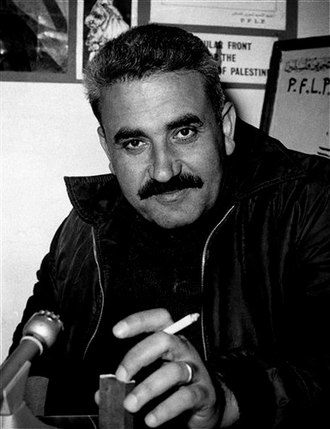
Habash was born in Lydda (today’s Lod) to an Eastern Orthodox Palestinian family in 1926.[4][5] As a child, he sang in the church choir.[6] Habash, a medical student at the American University of Beirut, was visiting his family during the 1948 Arab–Israeli war. In July 1948, the Israeli Defence Force captured Lydda from Jordanian and Arab Liberation Army forces, resulting in all of the town’s Arab residents leaving and the death of Habash’s sister. Habash and his remaining family became refugees and were not allowed to return home.
Political thinkers who were influences on Habash at this period included Constantin Zureiq, whose lectures at AUB on ‘Arab nationalism and the Zionist danger’ in the late 1940s and early 1950s Habash had attended, and Sati’ al-Husri an Arab Muslim intellectual who emphasized national cohesiveness, territorial patriotism, and loyalty to the state, and gave priority to Arab unity over Islamic unity.[7]
In 1951, after graduating first in his class from medical school, Habash worked in refugee camps in Jordan and ran a clinic with Wadie Haddad in Amman. He firmly believed that the state of Israel should be ended by all possible means, including political violence.[8] In an effort to recruit the Arab world to this cause, Habash founded the Arab Nationalist Movement (ANM) in 1951 and aligned the organization with Gamal Abdel Nasser‘s Arab nationalist ideology.
He was implicated in the 1957 coup attempt in Jordan, which had originated among Palestinian members of the National Guard. Habash was convicted in absentia, after having gone underground when Hussein of Jordan proclaimed martial law and banned all political parties. In 1958 he fled to Syria (then part of the United Arab Republic), but was forced to return to Beirut in 1961 by the tumultuous breakup of the UAR.
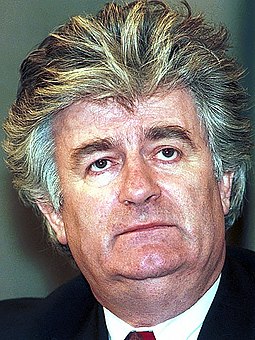
Trained as a psychiatrist, he co-founded the Serb Democratic Party in Bosnia and Herzegovina and served as the first president of Republika Srpska from 1992 to 1996. He was a fugitive from 1996 until July 2008, after having been indicted for war crimes by the ICTY.[3] The indictment concluded there were reasonable grounds for believing he committed war crimes, including genocide against Bosniak and Croat civilians during the Bosnian War (1992–1995).[3] While a fugitive, he worked at a private clinic in Belgrade, specializing in alternative medicine and psychology, under an alias.[4]
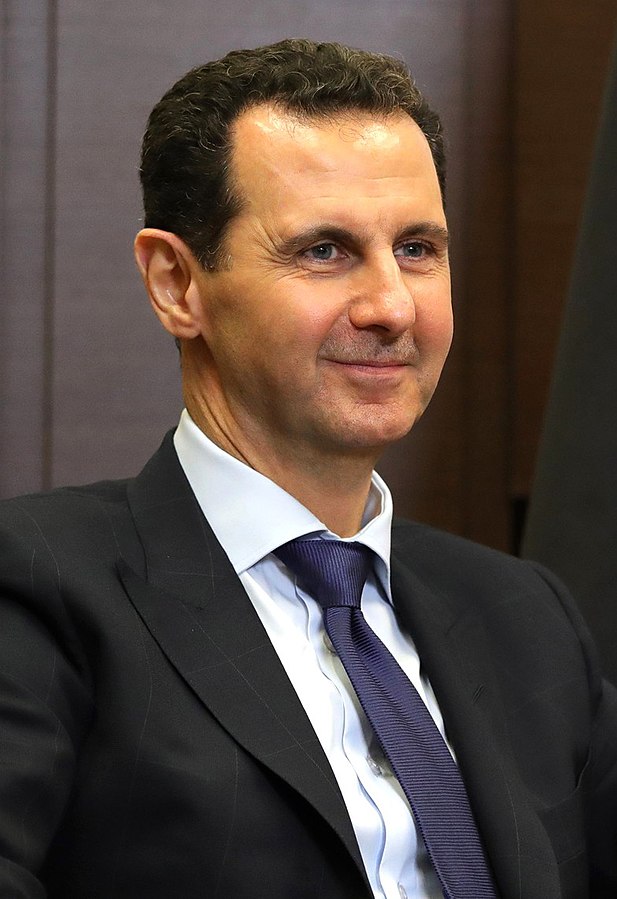
Political scientists have characterised the Assad family’s rule of Syria as a personalist dictatorship.[b] On 17 July 2000, Assad became president, succeeding his father, who died in office on 10 June 2000. In the 2000 and 2007 elections, he received 97.29% and 97.6% support, respectively.[c]On 16 July 2014, Assad was sworn in for another seven-year term after another election gave him 88.7% of the vote.[d] The election was held only in areas controlled by the Syrian government during the country’s ongoing civil war and was criticised by the United Nations (UN).[21][22] Assad was re-elected in 2021 with over 95% of the vote in national election. Throughout his leadership, human rights groups have characterized Syria’s human rights situation as poor. The Assad government describes itself as secular,[23] while some political scientists write that his regime exploits sectarian tensions in the country.[24][25]
a couple of months ago you have asked me to report about my hobbies. That is a little risky because I am helping many prejudices by that…..
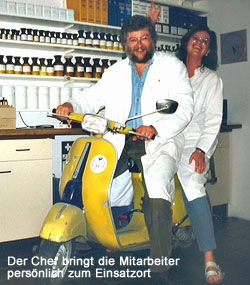
Besides my professions as pharmacist, art dealer and setting up game-automates I am active in the politics for my profession as pharmacist (as delegate of the Bavarian pharmacist chamber and regional president of the nationwide association of “active pharmacists”).
In some associations like “wine brethren” and “aviation club” I am in the presidency.
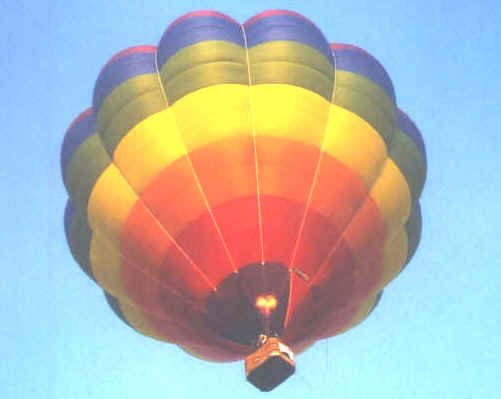
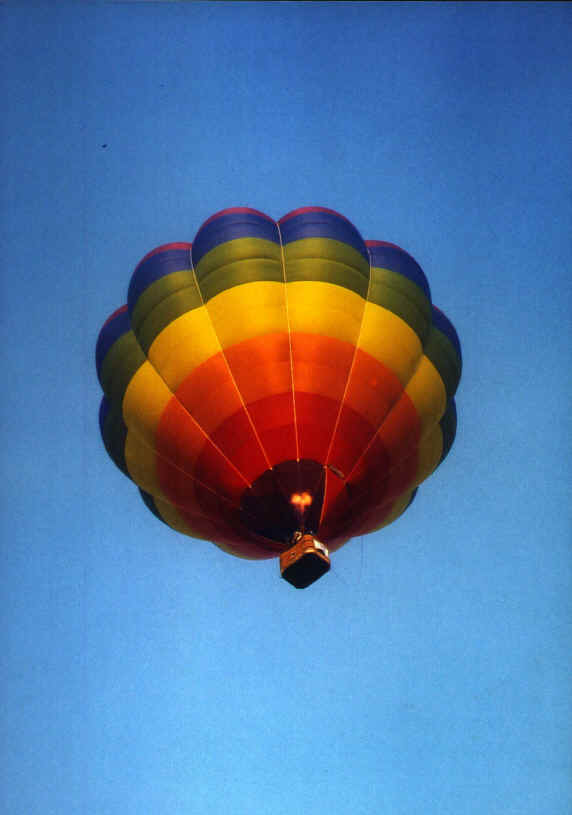
In principle that would do, but the day has 24 hours! So I go fishing and hunting, go by boat and go flying my balloon (see picture).
Also I fly airplanes and shoot “Vorderlader”, drive bycicle and play golf.
Under the aspect of time that goes very wel because my wife Hanne participates in all of these hobbies apart from flying.
But my favourite hobby is music! I have bought several instruments and try to play “jagdhorn“, trombone, trumpet, clarinet, saxophone, “Hackbrett“, “Zither“, double bass, hornpipes, drumset, violin, a self-constructed harmonika, electric organ and last not least piano.
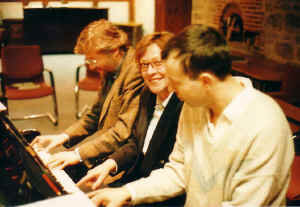
Regular highlights of my little life are the games of chess with my 12-year-old son Michael having a (big) glass of wine and playing four hands with my little boy.
Sorry that this letter took so long although I have sufficiently time, but in the beginning I did not find the picture with my balloon…..
Some time before 1514, Copernicus wrote an initial outline of his heliocentric theory known only from later transcripts, by the title (perhaps given to it by a copyist), Nicolai Copernici de hypothesibus motuum coelestium a se constitutis commentariolus—commonly referred to as the Commentariolus. It was a succinct theoretical description of the world’s heliocentric mechanism, without mathematical apparatus, and differed in some important details of geometric construction from De revolutionibus; but it was already based on the same assumptions regarding Earth’s triple motions. The Commentariolus, which Copernicus consciously saw as merely a first sketch for his planned book, was not intended for printed distribution. He made only a very few manuscript copies available to his closest acquaintances, including, it seems, several Kraków astronomers with whom he collaborated in 1515–30 in observing eclipses. Tycho Brahe would include a fragment from the Commentariolus in his own treatise, Astronomiae instauratae progymnasmata, published in Prague in 1602, based on a manuscript that he had received from the Bohemian physician and astronomer Tadeáš Hájek, a friend of Rheticus. The Commentariolus would appear complete in print for the first time only in 1878.[45]
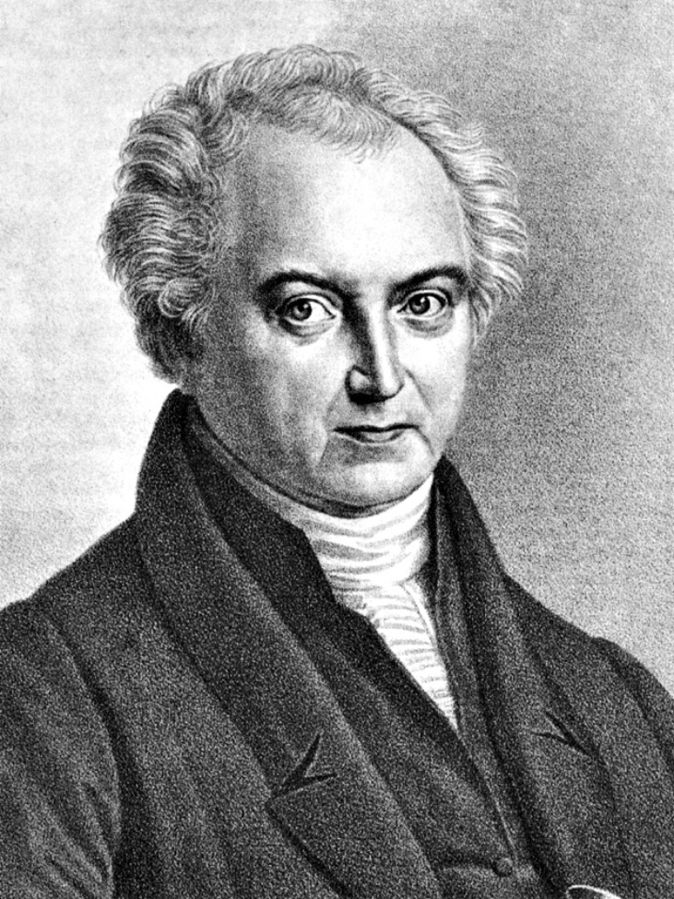
On 28 March 1802, Olbers discovered and named the asteroidPallas. Five years later, on 29 March 1807, he discovered the asteroid Vesta, which he allowed Carl Friedrich Gauss to name. As the word “asteroid” was not yet coined, the literature of the time referred to these minor planets as planets in their own right. He proposed that the asteroid belt, where these objects lay, was the remnants of a planet that had been destroyed. The current view of most scientists is that tidal effects from the planet Jupiter disrupted the planet-formation process in the asteroid belt. On 6 March 1815, Olbers discovered a periodic comet, now named after him (formally designated 13P/Olbers). Olbers’ paradox, described by him in 1823 (and then reformulated in 1826), states that the darkness of the night sky conflicts with the supposition of an infinite and eternal static universe.
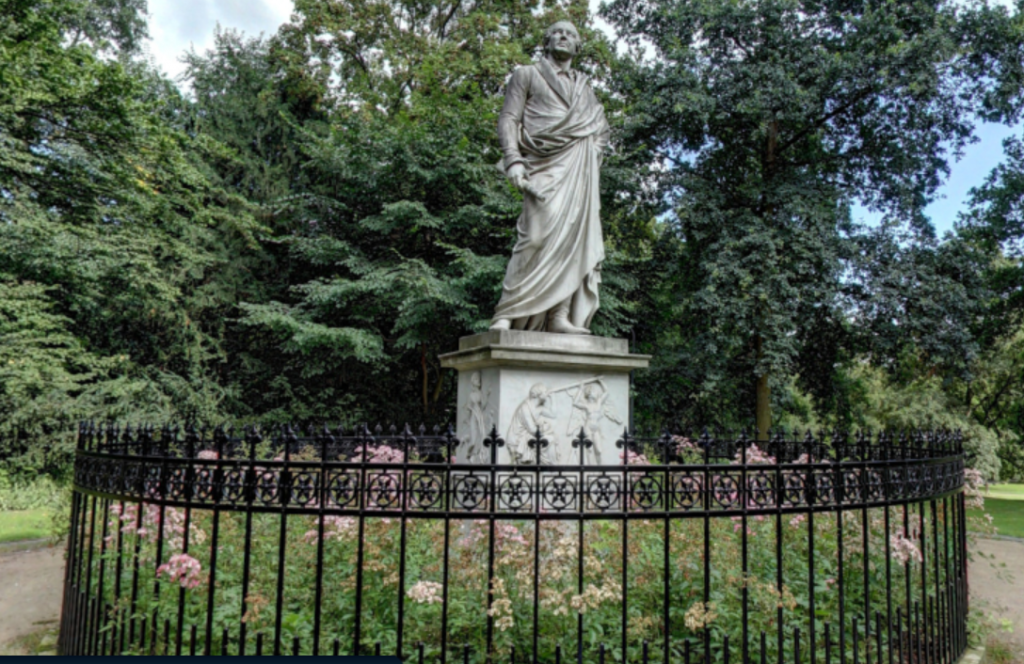
Olbers was deputed by his fellow citizens to assist at the baptism of Napoleon II of France on 9 June 1811. He was a member of the corps legislatif in Paris 1812–13. He died in Bremen aged 81. He was twice married, and one son survived him. Olbers’ paradox, the argument that the dark sky at night shows that stars cannot be evenly distributed through infinite space, is named for him, though others had also advanced it.
Ships were named after him (DE):
Olbers war außerdem der Name verschiedener Segelschiffe: Eine in Archangelsk gebaute Fregatte wurde 1829 von F. C. Delius & Co. in Bremen erworben und 1837 abgewrackt. Ein 1838 in Grohn gebauter Segler des gleichen Eigners, das Vollschiff Olbers (1851), havarierte 1848. Später trug eine Dreimastbark der Kaiserlichen Marine den Namen des Astronomen.
Olbers streets in Berlin, Bremen, Hannover, Lilienthal and other places.
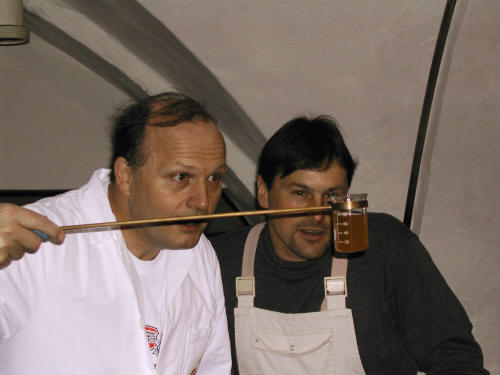
Josef grew up in a musical farmers family in the Steiermark/Austria.
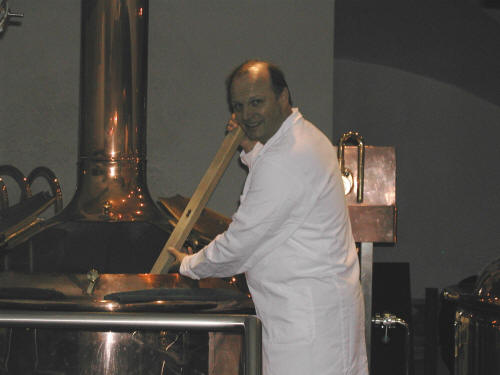
Later he was a professional beer brewer
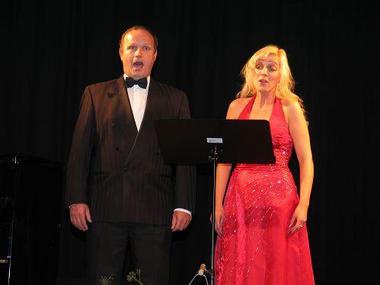
and then studied medicine and singing in Graz. He specialized as general practitioner in Graz/Austria and Leoben/Austria. He studied singing at the conservatory of Graz (Mag. Schmaranz) and at the music academy of Graz (Sologesang with Prof. Suttheimer and Liedgesang with Prof. Zeller). Opera Drama classes with Prof. Pöppelreiter, contracted for Don Carlos at the Graz Opera House.
Master class student of Walter Berry, manager of the cultural platform “Die Kuppel” in the Graz country hospital from 1987 to 1991. Member of the organisation “artists make music for ill people in the Steiermark”. Regular concerts as Baritone. Then he specialized in ear nose and throat doctor in Salzburg/Austria with Prof. Albegger, later even for occupational medicine in 1996/96.
Since 1996 he is ear nose and throat doctor in Neumarkt on Wallersee/Austria and also the medical doctor of the Salzburg Music festival.
He runs memberships in several important societies around voice and music therapy and founded the Austrian Voice Institute which organises congresses and speeches internationally. His professional focus is working with voice professionals (teachers and singers etc.)