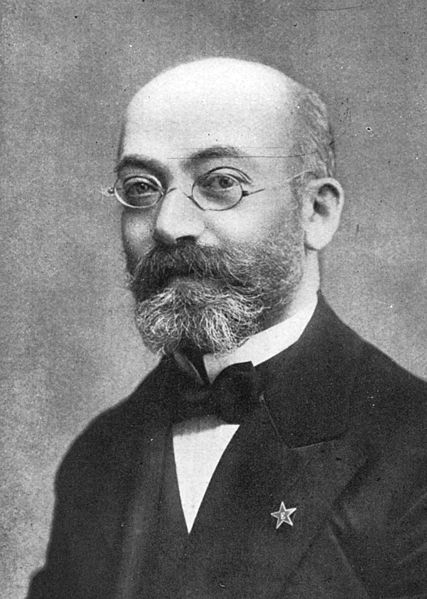
Ludwik Lejzer Zamenhof
Category : inventorDocs , philosophyDocs , TeacherDocs
L. L. Zamenhof[a] (15 December 1859 – 14 April 1917)[b] was an ophthalmologist who lived for most of his life in Warsaw. He is best known as the creator of Esperanto, the most widely used constructed international auxiliary language.[1][2]
Zamenhof first developed the Esperanto language in 1873 while still in school. He grew up fascinated by the idea of a world without war and believed that this could happen with the help of a new international auxiliary language.[3] The language would be a tool to gather people together through neutral, fair, equitable communication.[4] He successfully formed a community that continues today despite the World Wars of the 20th century,[5] attempts to reform the language, and more modern IALs (the only other language like it at the time was Volapük). Additionally, Esperanto has developed like other languages: through the interaction and creativity of its users.[6]
In light of his achievements, and his support of intercultural dialogue, UNESCO selected Zamenhof as one of its eminent personalities of 2017, on the 100th anniversary of his death.[7][8] As of 2019, there are a minimum of 2 million people speaking Esperanto, including an estimated 1,000 native speakers.[9][10]

