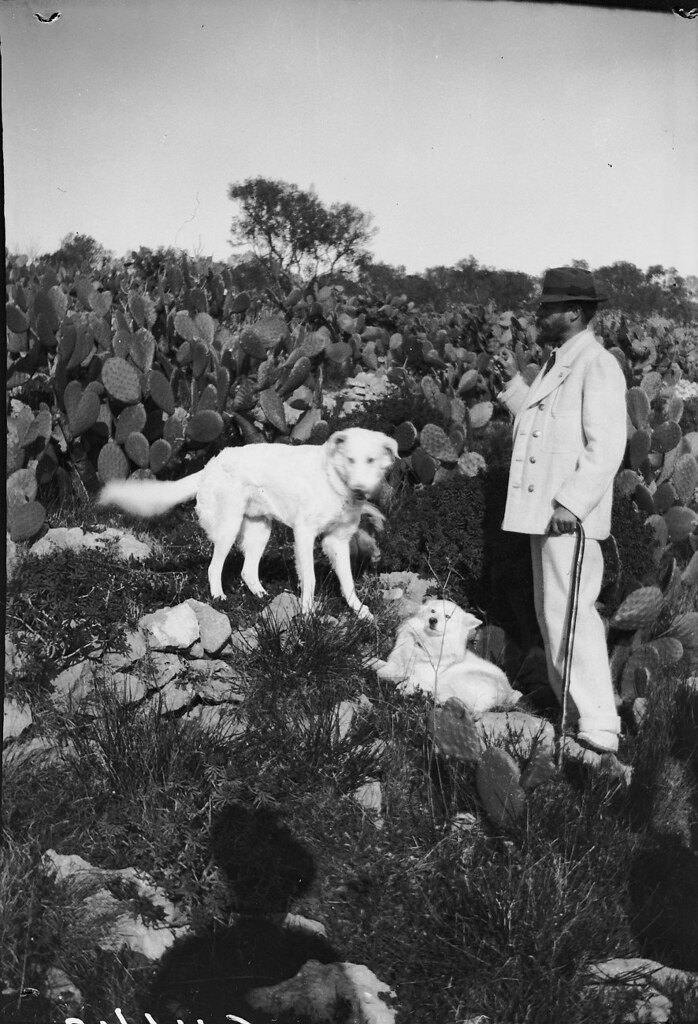
Axel Munthe
Category : AnimalDocs , architectDocs , BotanicDocs , CollectorDocs , museumDocs , OrnithologyDocs , sculptureDocs , WriterDocs
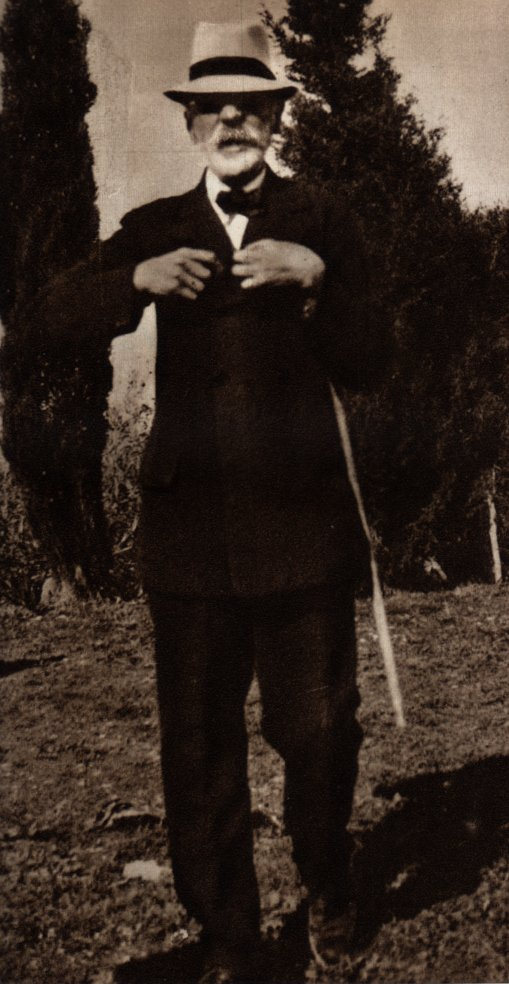
Axel Martin Fredrik “Puck” Munthe [ˌakːsəl ˈmɵnːtə] (October 31, 1857 in Oskarshamn – February 11, 1949 in Stockholm) was a Swedish physician and author.
Beruf und Leben
Axel Munthe was born in 1857, the son of a pharmacist. He studied medicine in Uppsala, Montpellier, and Paris.
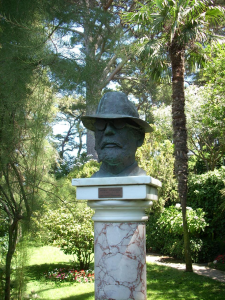
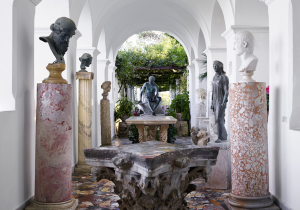
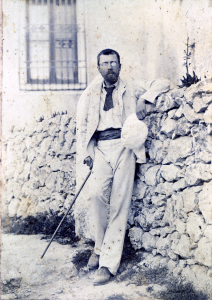
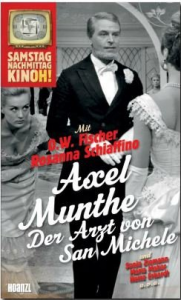
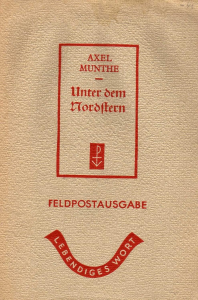
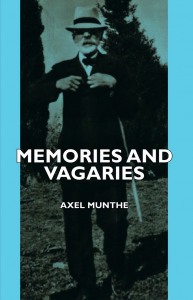
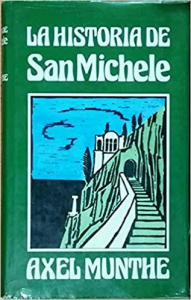

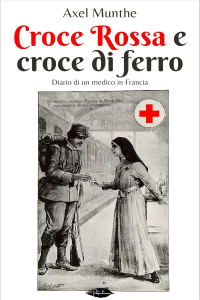
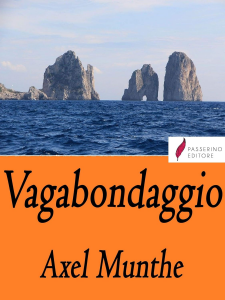

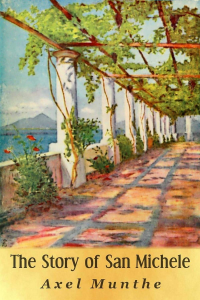
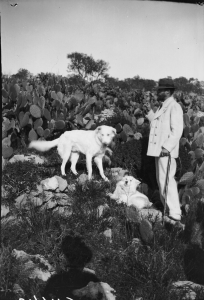
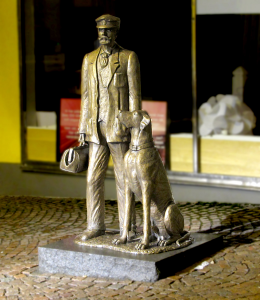
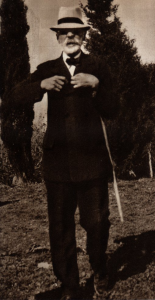
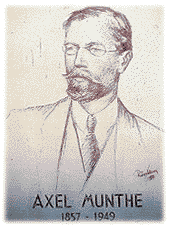
In 1880 he began practicing medicine in Paris and Rome. Over the years he worked in Naples, London and Stockholm. During his student years in Paris he was particularly impressed by the work of Jean-Martin Charcot. Even in later years his special interest lay in psychiatry. His professional career shows several outward breaks. For example, he worked as a doctor for the lower classes of society while simultaneously or shortly thereafter running a fashionable medical practice. In Rome, for example, he set up his practice in the Keats-Shelley House on the Spanish Steps, which had previously been inhabited by the poet John Keats and others. From 1908 Munthe was personal physician to the Swedish Queen Victoria, a Princess of Baden by birth, who regularly stayed in Munthe’s neighborhood on Capri until her death. At his Villa San Michele in Anacapri, he was visited by Henry James, Oscar Wilde, Rainer Maria Rilke, and Curzio Malaparte. The house, with its magnificent garden and sweeping views over the sea, has served as a museum since the 1950s.
At the age of 22 (the youngest in France), he received his doctorate in medicine from the Sorbonne and soon became one of the most successful physicians of his time. He was considered a miracle worker. His patients included members of the upper classes and nobility of Europe and America, but he also worked among the poor in Paris, Rome, and Naples.
The newspaper report on his work in cholera-stricken Naples in the autumn of 1884 made him instantly famous. However, he was not a professional writer, and his real success did not come until 45 years later. “The Story of San Michele” was published in 1929 and became one of the most successful books of the 20th century. It was written in English, translated into numerous other languages, and is still being reprinted today.
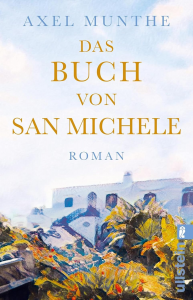
Axel Munthe became internationally known through his memoirs, The Book of San Michele, published in 1929 and translated into numerous languages. However, biographical elements are mixed with fantasy to the point of inseparability; for example, Bengt Jangfeldt and Thomas Steinfeld demonstrated numerous differences between the author’s real and “autobiographical” life in their Munthe biographies, published in 2003 and 2007, respectively.
Although Munthe was not an architect, he had one of Europe’s most famous villas built on Capri: the Villa San Michele, which experts describe as a masterpiece of architecture.
He was a passionate Anglophile, but his favorite philosopher was Schopenhauer, his favorite poet was Heine, and his favorite composers were Schubert, Wagner, Schumann, and Hugo Wolf. And despite his republican outlook on life, his most important patient was not only of royal descent and German origin, but also strongly German-oriented.
Munthe died in 1949 in his last residence, located in a side wing of the Royal Palace in Stockholm.

