Spielautomaten Neue Spiele: Die Symbole im Online-Slot King Cashalot sind königlich und es gibt ein gemeinsames Thema Gold, das die Opulenz eines mittelalterlichen Festes widerspiegelt.
Mobil Casino Ohne Einzahlung - Das Bet365 Online Casino hat einen 15-fachen Durchspielbonus, mit dem Sie das Bonusgeld und die Ersteinzahlung erhalten.
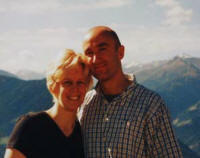
Björn Migge (* 1963) is a German physician and author of specialist books on coaching.
Migge first studied astrophysics, then medicine at the Johannes Gutenberg University in Mainz, where he received his doctorate in 1995 with a study on otosclerosis.[1] Until the end of 2003, he worked as a physician and lecturer at the University Hospital of Zurich. Since 2003, he has specialized in coaching and psychotherapy and hypnotherapy. Migge teaches clinical hypnosis at the Ruhr University Bochum. Migge has published several specialist books on coaching.
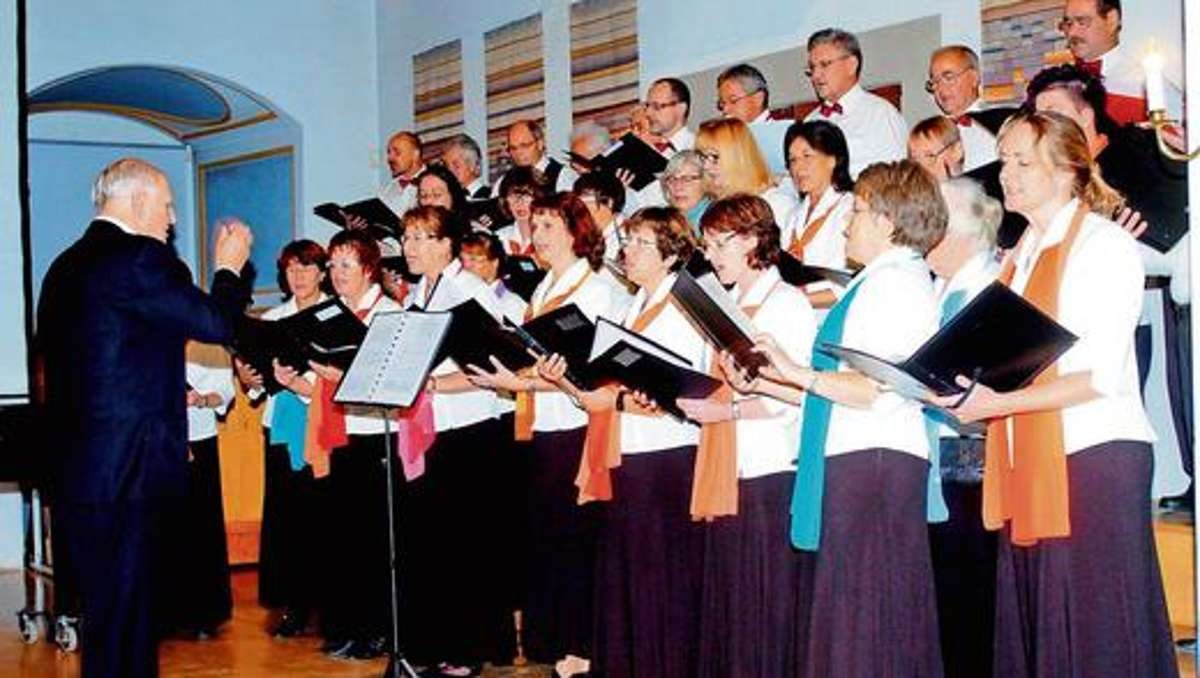
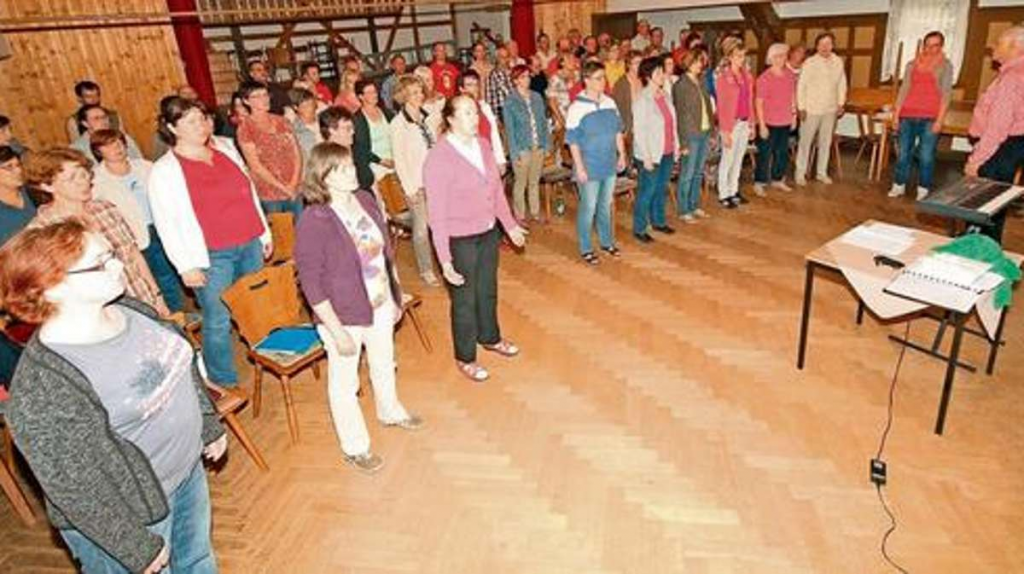
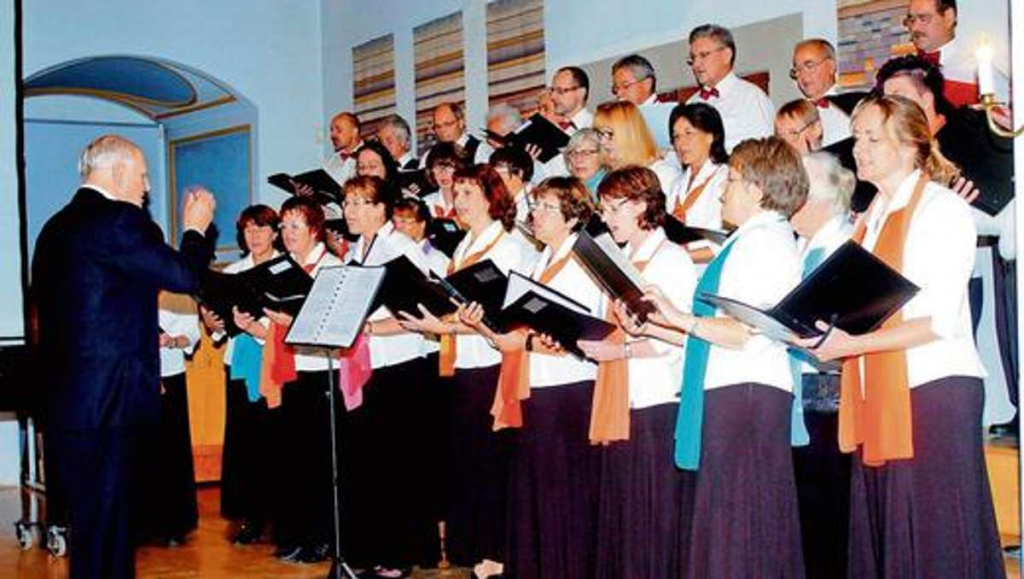
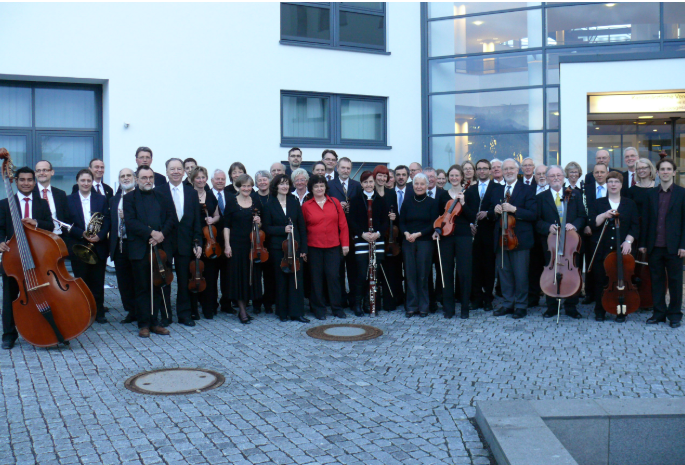
The Thuringian Doctors’ Orchestra is comprised of music-loving doctors, nurses, and members of other medical professions. The orchestra was founded in 1997 and is currently conducted by Joan Pagès Valls, artistic director of the Belvedere Music High School in Weimar.
The orchestra will perform for the first time in Meiningen’s Stadtkirche (City Church). It will perform Franz Schubert’s Symphony in B minor (“Unfinished”), a Concertino for Trombone by Ferdinand David, and a work by the Meiningen composer Wolfgang Hocke.
Al-Kindi was born in Kufa and educated in Baghdad.[7] He became a prominent figure in the House of Wisdom, and a number of Abbasid Caliphs appointed him to oversee the translation of Greek scientific and philosophical texts into the Arabic language. This contact with “the philosophy of the ancients” (as Hellenistic philosophy was often referred to by Muslim scholars) had a profound effect on him, as he synthesized, adapted and promoted Hellenistic and Peripatetic philosophy in the Muslim world.[8] He subsequently wrote hundreds of original treatises of his own on a range of subjects ranging from metaphysics, ethics, logic and psychology, to medicine, pharmacology,[9] mathematics, astronomy, astrology and optics, and further afield to more practical topics like perfumes, swords, jewels, glass, dyes, zoology, tides, mirrors, meteorology and earthquakes.
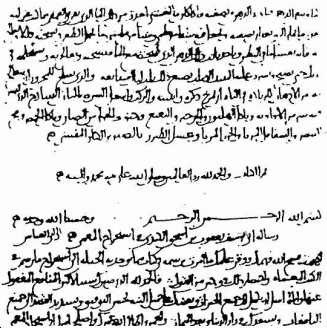
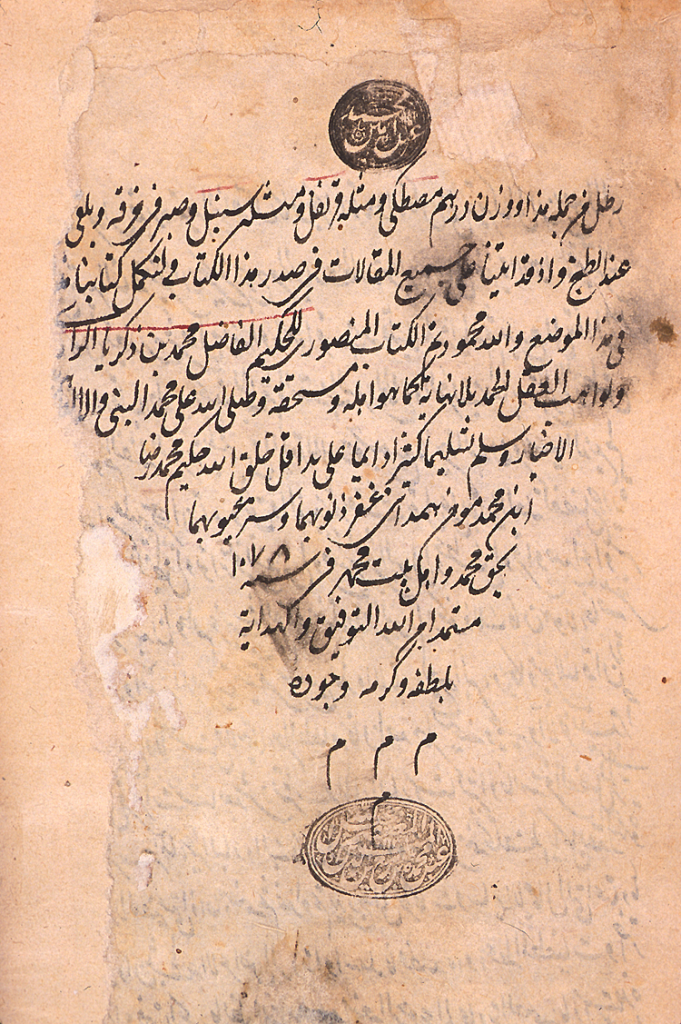
Die erste Seite al-Kindīs Manuskript über die Kryptanalyse
In the field of mathematics, al-Kindi played an important role in introducing Hindu numerals to the Islamic world, and their further development into Arabic numerals along with al-Khwarizmi which eventually was adopted by the rest of the world.[12] Al-Kindi was also one of the fathers of cryptography.[13][14] Building on the work of al-Khalil (717–786),[15] Al-Kindi’s book entitled Manuscript on Deciphering Cryptographic Messages gave rise to the birth of cryptanalysis, was the earliest known use of statistical inference,[16] and introduced several new methods of breaking ciphers, notably frequency analysis.[17][18] He was able to create a scale that would enable doctors to gauge the effectiveness of their medication by combining his knowledge of mathematics and medicine.
The central theme underpinning al-Kindi’s philosophical writings is the compatibility between philosophy and other “orthodox” Islamic sciences, particularly theology, and many of his works deal with subjects that theology had an immediate interest in. These include the nature of God, the soul and prophetic knowledge.[
Al-Kindi is credited with developing a method whereby variations in the frequency of the occurrence of letters could be analyzed and exploited to break ciphers (i.e. cryptanalysis by frequency analysis).[18] His book on this topic is Risāla fī Istikhrāj al-Kutub al-Mu’ammāh (رسالة في استخراج الكتب المعماة; literally: On Extracting Obscured Correspondence, more contemporarily: On Decrypting Encrypted Correspondence). In his treatise on cryptanalysis, he wrote:
One way to solve an encrypted message, if we know its language, is to find a different plaintext of the same language long enough to fill one sheet or so, and then we count the occurrences of each letter. We call the most frequently occurring letter the “first”, the next most occurring letter the “second”, the following most occurring letter the “third”, and so on, until we account for all the different letters in the plaintext sample. Then we look at the cipher text we want to solve and we also classify its symbols. We find the most occurring symbol and change it to the form of the “first” letter of the plaintext sample, the next most common symbol is changed to the form of the “second” letter, and the following most common symbol is changed to the form of the “third” letter, and so on, until we account for all symbols of the cryptogram we want to solve
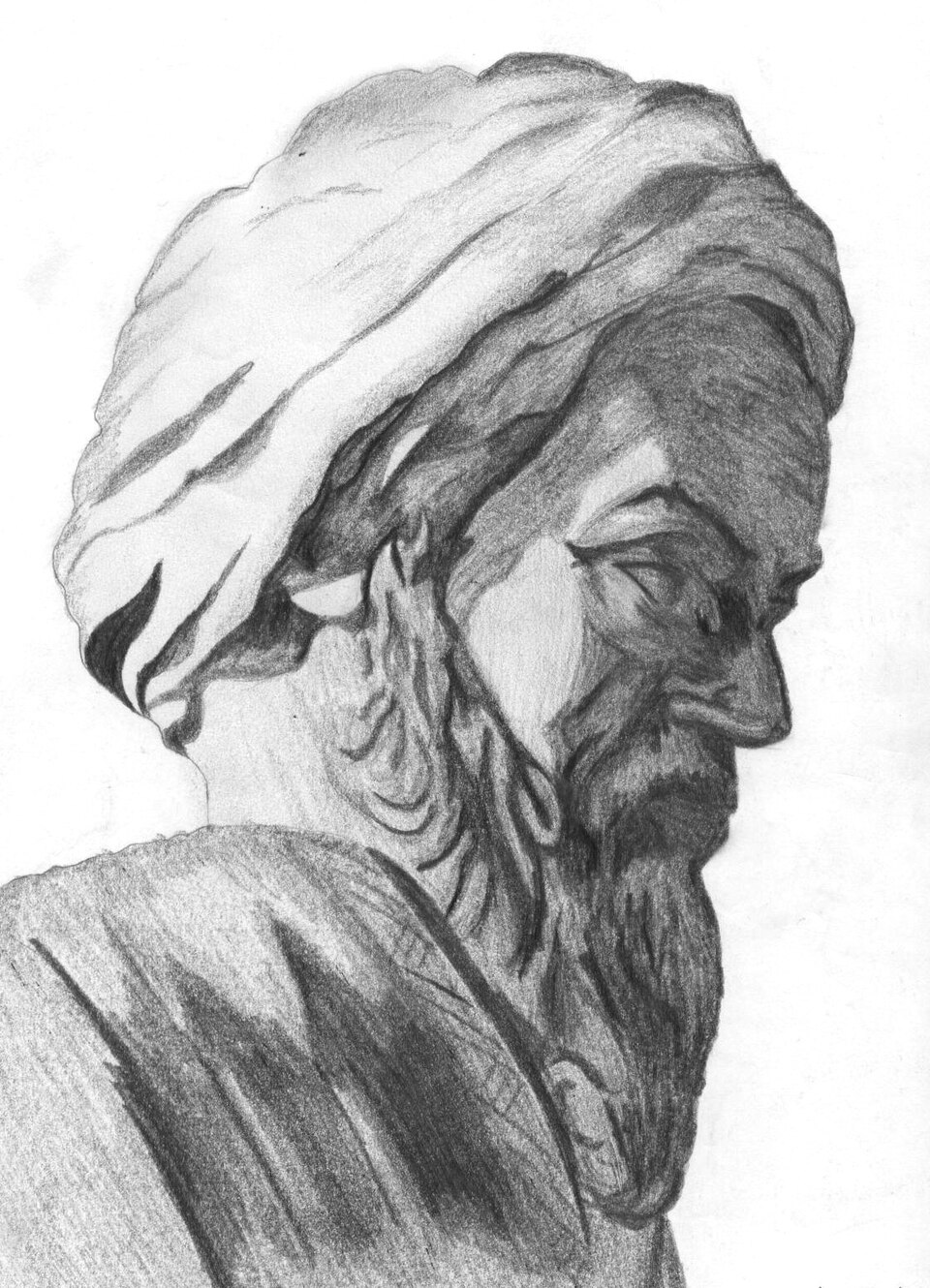
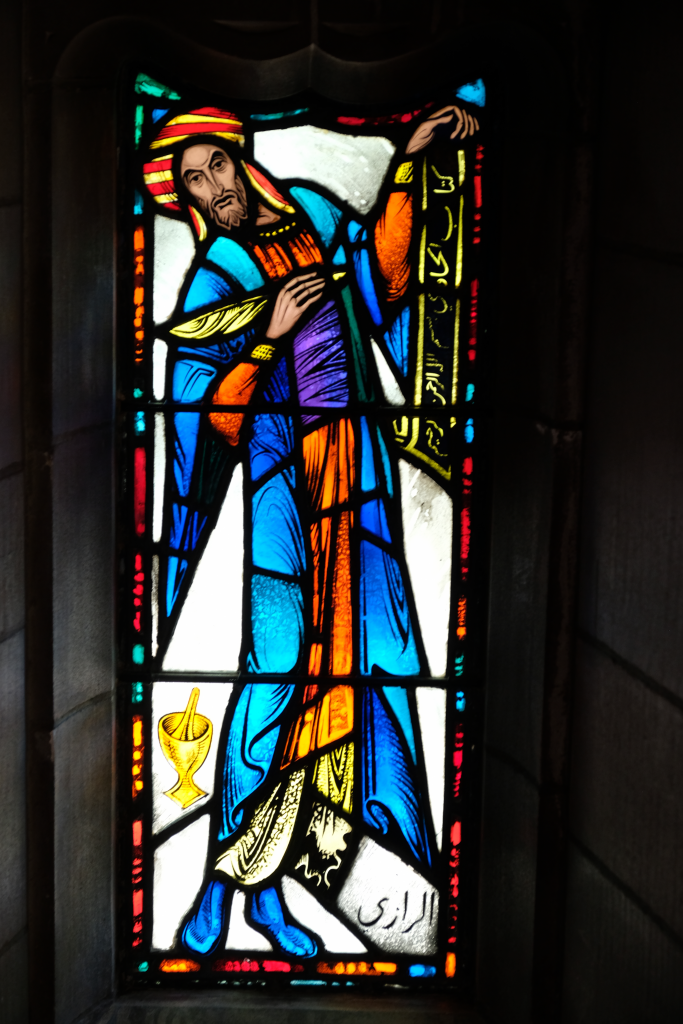
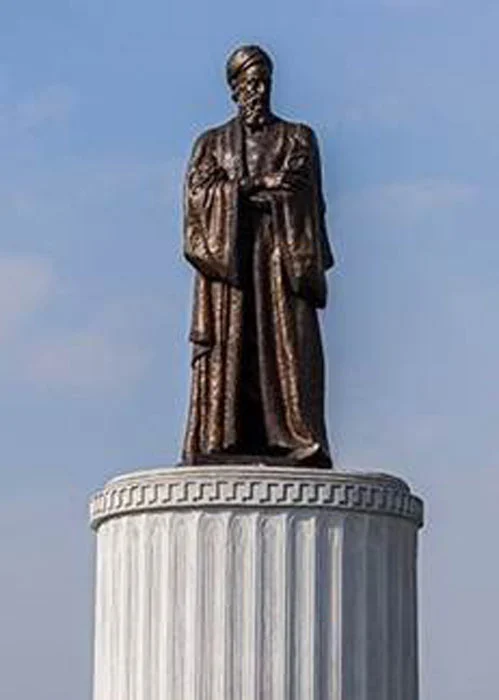
Abū Bakr al-Rāzī, also known as Rhazes[a] (full name: أبو بکر محمد بن زکریاء الرازي, Abū Bakr Muḥammad ibn Zakariyyāʾ al-Rāzī),[b] c. 864 or 865–925 or 935 CE,[c] was a Persian physician, philosopher and alchemist who lived during the Islamic Golden Age. He is widely regarded as one of the most important figures in the history of medicine,[1] and also wrote on logic, astronomy and grammar.[2] He is also known for his criticism of religion, especially with regard to the concepts of prophethood and revelation. However, the religio-philosophical aspects of his thought, which also included a belief in five “eternal principles”, are fragmentary and only reported by authors who were often hostile to him.[3]
A comprehensive thinker, al-Razi made fundamental and enduring contributions to various fields, which he recorded in over 200 manuscripts, and is particularly remembered for numerous advances in medicine through his observations and discoveries.[4] An early proponent of experimental medicine, he became a successful doctor, and served as chief physician of Baghdad and Ray hospitals.[5][6] As a teacher of medicine, he attracted students of all backgrounds and interests and was said to be compassionate and devoted to the service of his patients, whether rich or poor.[7] Along with Thabit ibn Qurra (836–901), he was one of the first to clinically distinguish between smallpox and measles.[8]
Through translation, his medical works and ideas became known among medieval European practitioners and profoundly influenced medical education in the Latin West.[5] Some volumes of his work Al-Mansuri, namely “On Surgery” and “A General Book on Therapy”, became part of the medical curriculum in Western universities.[5]Edward Granville Browne considers him as “probably the greatest and most original of all the Muslim physicians, and one of the most prolific as an author”.[9] Additionally, he has been described as the father of pediatrics,[10][11] and a pioneer of obstetrics and ophthalmology.[12]
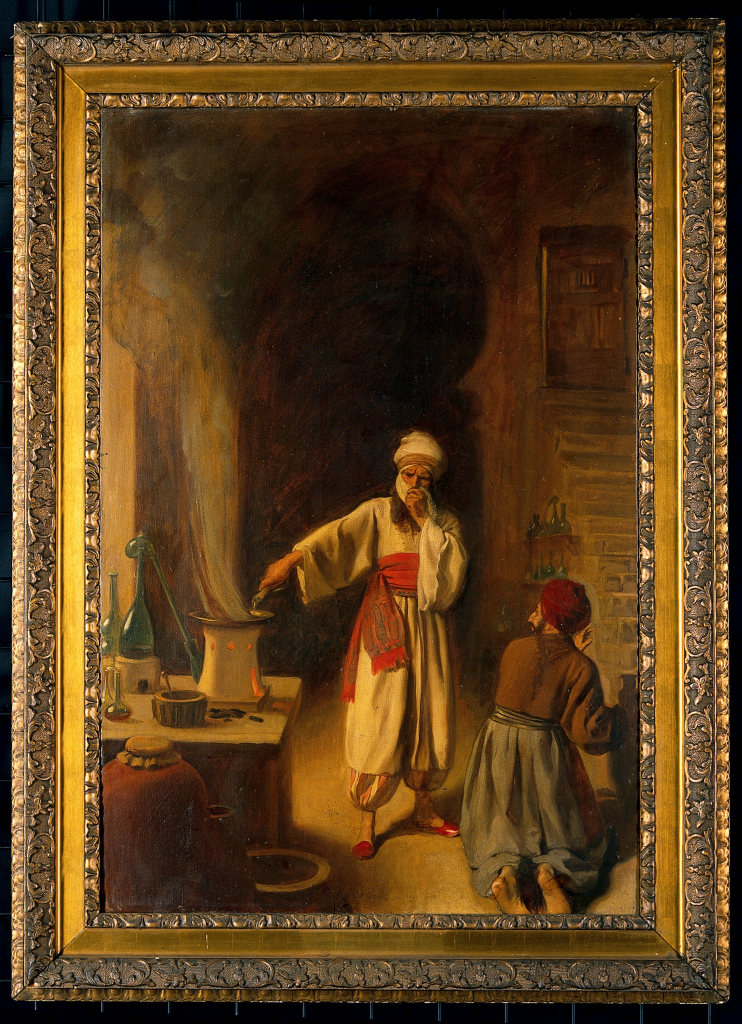
al-Razi in his laboratory (orientalist painting by Ernest Board, c. 1912)
Al-Razi was born in the city of Ray (modern Rey, also the origin of his name “al-Razi”),[13] into a family of Persian stock and was a native speaker of Persian language.[14] Ray was situated on the Great Silk Road that for centuries facilitated trade and cultural exchanges between East and West. It is located on the southern slopes of the Alborz mountain range situated near Tehran, Iran.
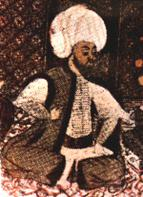
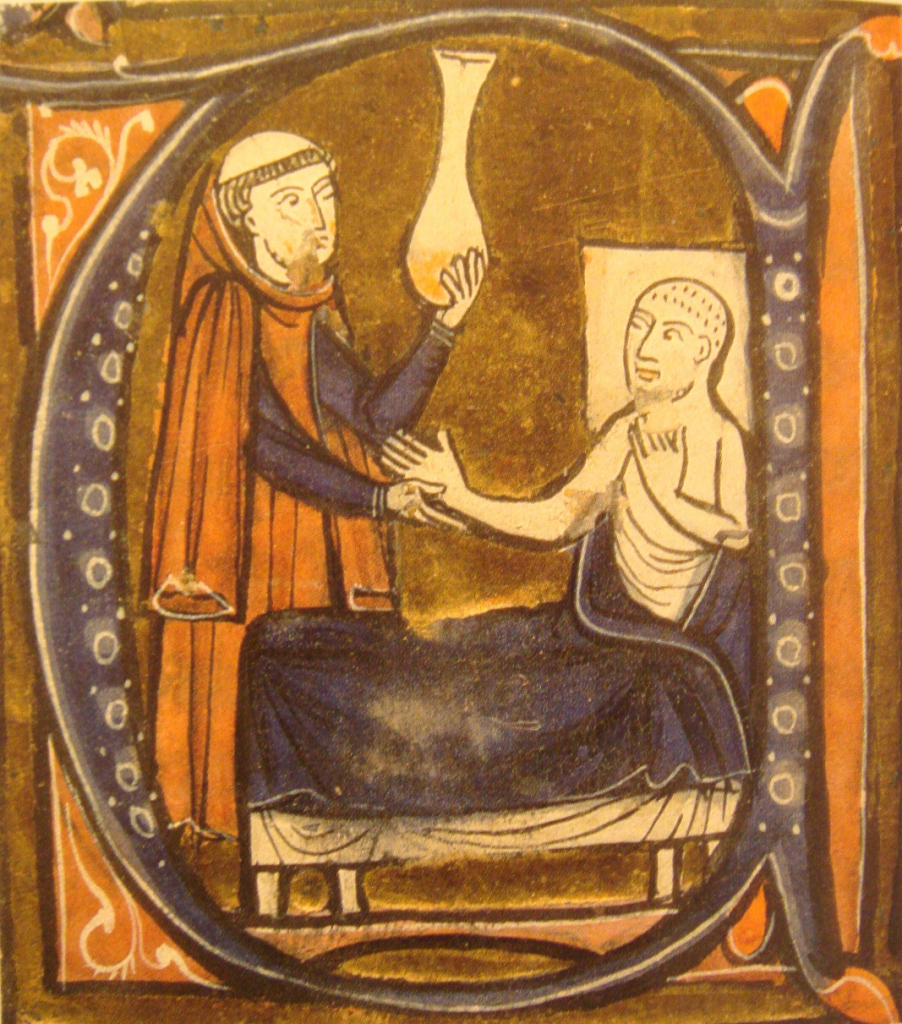
Depiction of al-Razi in a 13th-century manuscript of a work by Gerard of Cremona
In his youth, al-Razi moved to Baghdad where he studied and practiced at the local bimaristan (hospital). Later, he was invited back to Rey by Mansur ibn Ishaq, then the governor of Ray, and became a bimaristan’s head.[5] He dedicated two books on medicine to Mansur ibn Ishaq, The Spiritual Physic and Al-Mansūrī on Medicine.[5][15][16][17] Because of his newly acquired popularity as physician, al-Razi was invited to Baghdad where he assumed the responsibilities of a director in a new hospital named after its founder al-Muʿtaḍid (d. 902 CE).[5] Under the reign of Al-Mutadid’s son, Al-Muktafi (r. 902–908) al-Razi was commissioned to build a new hospital, which should be the largest of the Abbasid Caliphate. To pick the future hospital’s location, al-Razi adopted what is nowadays known as an evidence-based approach suggesting having fresh meat hung in various places throughout the city and to build the hospital where meat took longest to rot.[18]
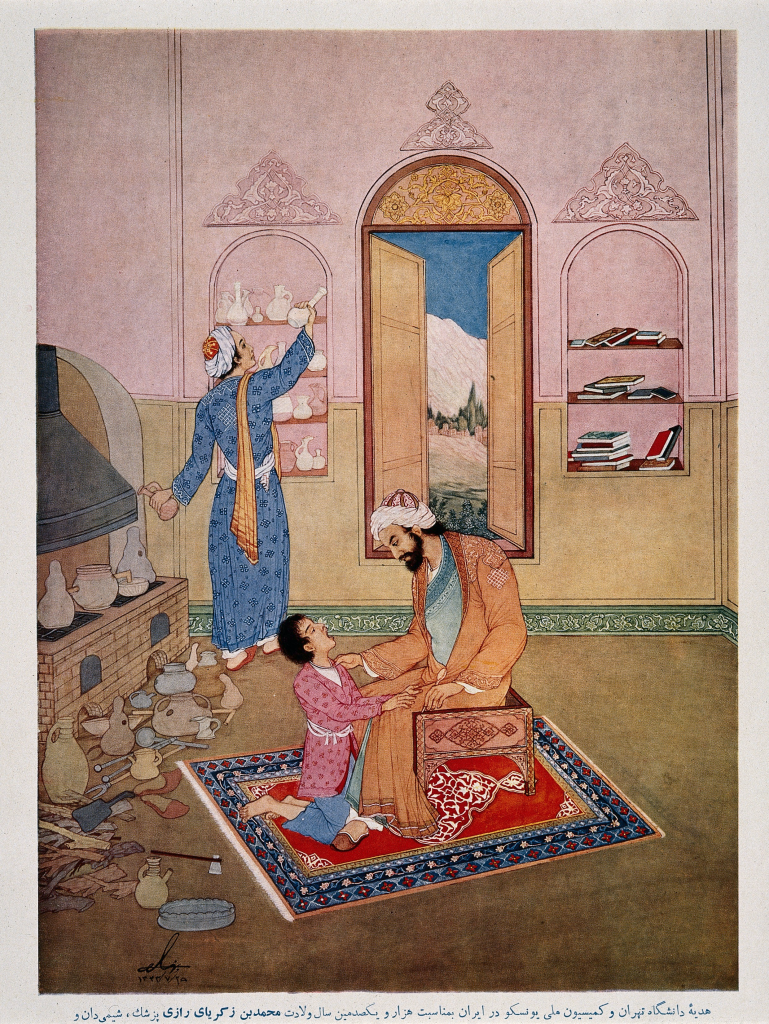
al-Razi examining a patient (miniature painting by Hossein Behzad, 1894–1968)
He spent the last years of his life in his native Rey suffering from glaucoma. His eye affliction started with cataracts and ended in total blindness.[19] The cause of his blindness is uncertain. One account mentioned by Ibn Juljul attributed the cause to a blow to his head by his patron, Mansur ibn Ishaq, for failing to provide proof for his alchemy theories;[20] while Abulfaraj and Casiri claimed that the cause was a diet of beans only.[21][22] Allegedly, he was approached by a physician offering an ointment to cure his blindness. Al-Razi then asked him how many layers does the eye contain and when he was unable to receive an answer, he declined the treatment stating “my eyes will not be treated by one who does not know the basics of its anatomy”.[23]
The lectures of al-Razi attracted many students. As Ibn al-Nadim relates in Fihrist, al-Razi was considered a shaikh, an honorary title given to one entitled to teach and surrounded by several circles of students. When someone raised a question, it was passed on to students of the ‘first circle’; if they did not know the answer, it was passed on to those of the ‘second circle’, and so on. When all students would fail to answer, al-Razi himself would consider the query. Al-Razi was a generous person by nature, with a considerate attitude towards his patients. He was charitable to the poor, treated them without payment in any form, and wrote for them a treatise Man La Yaḥḍuruhu al-Ṭabīb, or Who Has No Physician to Attend Him, with medical advice.[24] One former pupil from Tabaristan came to look after him, but as al-Biruni wrote, al-Razi rewarded him for his intentions and sent him back home, proclaiming that his final days were approaching.[25] According to Biruni, al-Razi died in Rey in 925 sixty years of age.[26] Biruni, who considered al-Razi his mentor, among the first penned a short biography of al-Razi including a bibliography of his numerous works.[26]
Ibn al-Nadim recorded an account by al-Razi of a Chinese student who copied down all of Galen‘s works in Chinese as al-Razi read them to him out loud after the student learned fluent Arabic in 5 months and attended al-Razi’s lectures.[27][28][29][30]
After his death, his fame spread beyond the Middle East to Medieval Europe, and lived on. In an undated catalog of the library at Peterborough Abbey, most likely from the 14th century, al-Razi is listed as a part author of ten books on medicine
Although al-Razi wrote extensively on philosophy, most of his works on this subject are now lost.[47] Most of his religio-philosophical ideas, including his belief in five “eternal principles”, are only known from fragments and testimonies found in other authors, who were often strongly opposed to his thought.
Al-Razi’s metaphysical doctrine derives from the theory of the “five eternals”, according to which the world is produced out of an interaction between God and four other eternal principles (soul, matter, time, and place).[49] He accepted a pre-socratic type of atomism of the bodies, and for that he differed from both the falasifa and the mutakallimun.[49] While he was influenced by Plato and the medical writers, mainly Galen, he rejected taqlid and thus expressed criticism about some of their views. This is evident from the title of one of his works, Doubts About Galen.
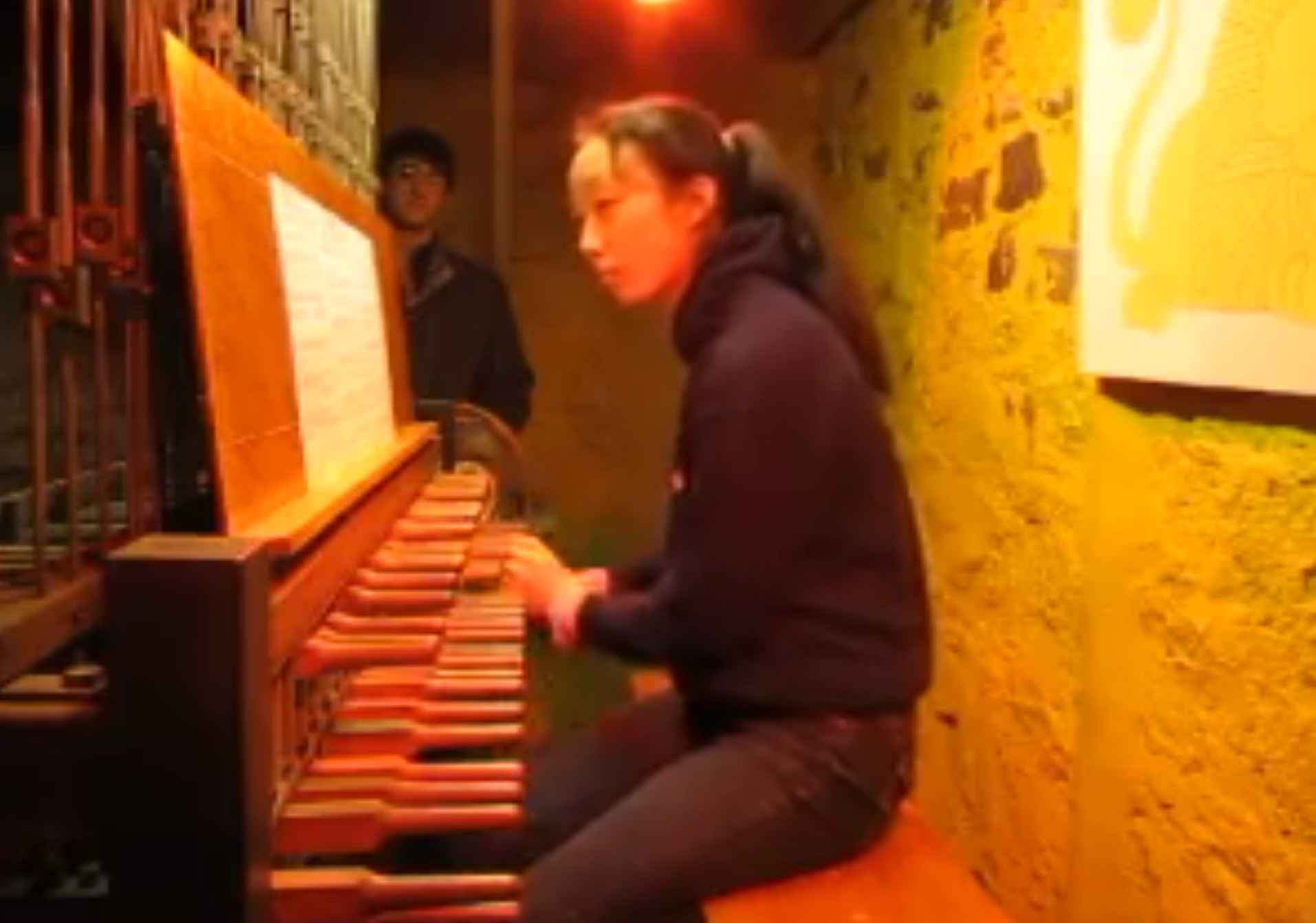
What are your interests outside of medicine? I like to play the carillon. I haven’t made it to the Duke Chapel carillon yet, but I hope to sometime. I also like traveling with family, and watching shows with my fiancé in our free time.
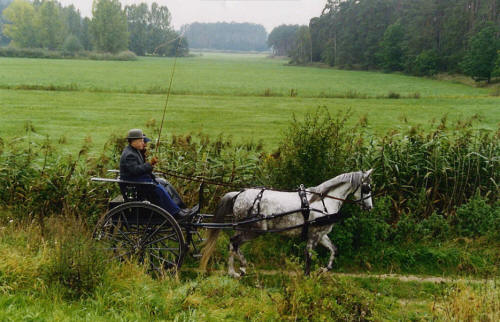
In northern Switzerland, near Solothurn, lies the village of Nennigkofen, where the family doctor takes his leisurely rides in his carriage. That looks like fun!
Organist and carillonist Grace Chan is a PhD Candidate at the Sydney Conservatorium of Music researching organ and carillon performance/ culture in Australia. Grace has performed on all three carillons Australia. She was a carillon student at the National Carillon, Canberra from 2018-2022. In July 2019, she was invited to perform the world premiere of an Australian carillon work at the Palau de la Generalitat Carillon, Barcelona. Grace has performed for Sydney University Graduation ceremonies and special occasions for the Faculty of Medicine. As a practicing medical doctor, she has had a longstanding interest in community wellbeing.
Grace Chan is the carillonist of the University of Sydney. As organ player she gives impressive recitals as well.
Canada’s dominion carilloneur says her students practise in the Peace Tower and their mistakes are broadcast to Parliament Hill. Andrea McCrady has been playing the bell instrument since 1971. (Oct. 13, 2018)
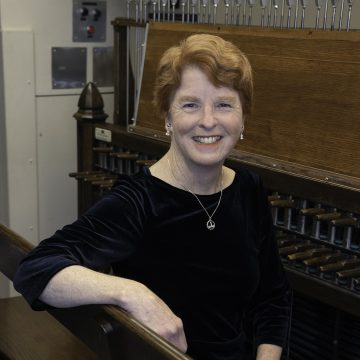
Dr. Andrea McCrady was appointed Dominion Carillonneur of the Peace Tower Carillon in 2008. She began playing the carillon in 1971 at Trinity College, Hartford, CT (B.A., 1975). While in Europe on a post-graduate fellowship, she studied at the carillon schools in the Netherlands, Belgium, and France. During medical school at McGill University, Montreal, she was carillonneur at St. Joseph’s Oratory, followed by her hospital residency in Toronto, where she played at the University of Toronto and the Canadian National Exhibition. From 1990-2008, she coordinated the carillon program at the Cathedral of St. John the Evangelist in Spokane, WA, where she also practiced family medicine. In 2008, she retired from medicine upon receiving a Bachelor of Music magna cum laude from the University of Denver. She joined the faculty of Carleton University in Ottawa in 2012 as instructor in the first carillon studies programme in Canada.
Dr. McCrady served for many years on the board of the Guild of Carillonneurs in North America (GCNA), and as its President from 1988-89. She has co-chaired the GCNA Ronald Barnes Memorial Grant Fund and the Heritage Music Committee. She served as secretary of the World Carillon Federation (WCF), 1990 – 1996, and has given presentations or recitals for the 1996, 2002, 2014, 2021 and 2023 WCF congresses.