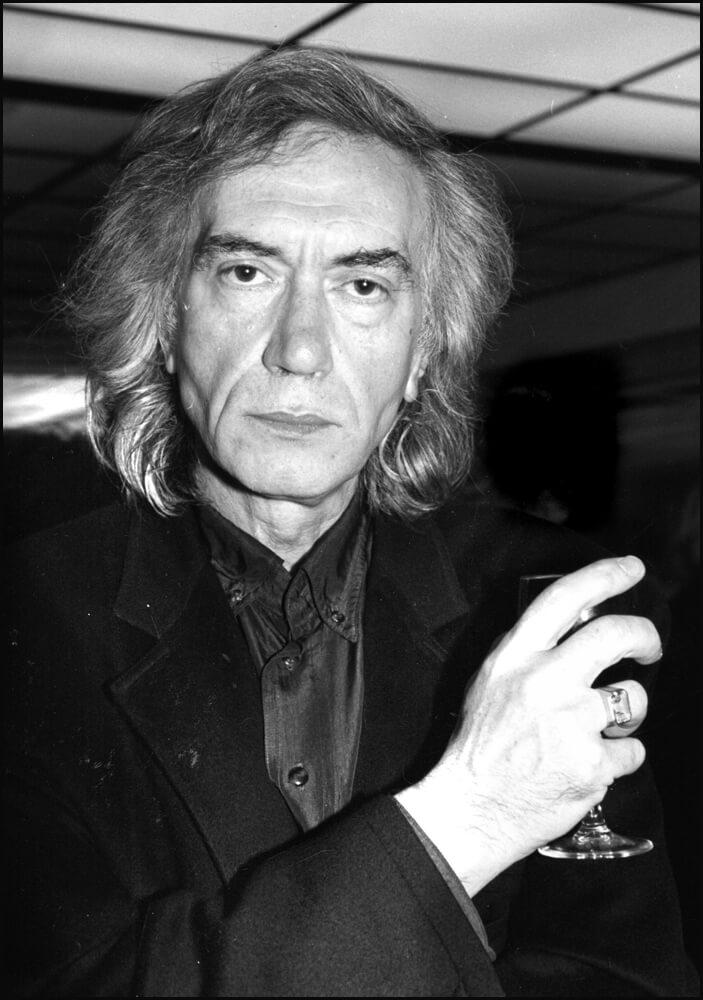
Giorgos Chimonas
Category : TranslatorDocs , WriterDocs
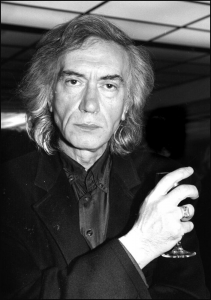
Giorgos Chimonas (Kavala, March 17, 1938 – Paris, February 27, 2000) was a Greek prose writer, translator and psychiatrist who became known and distinguished in the field of Greek literature in the 1960s.
Giorgos Himonas was born in Kavala in 1938 and grew up in Thessaloniki. There he studied medicine. He continued his studies in Paris, specializing in psychiatry and neurolinguistics. After completing his studies, he returned to Greece and lived in Athens.
In 1960, he published his first book, Peisistratos. He worked in prose, translation, and essay writing. He was married to the playwright Loula Anagnostaki, and together they had a son, the writer Thanasis Heimonas. He died on February 27, 2000, in Paris at the age of 61. He was buried in the First Cemetery of Athens.
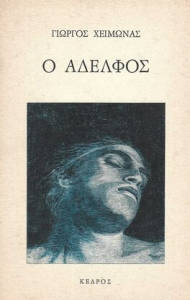
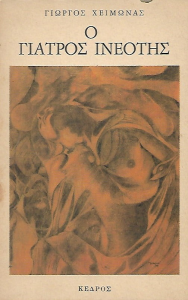
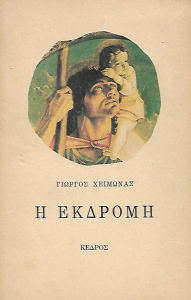
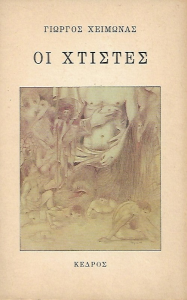
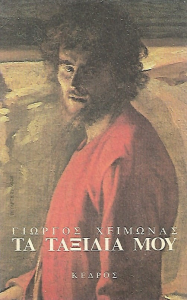
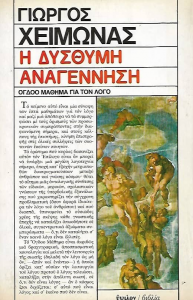
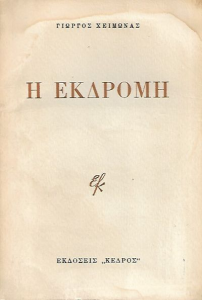
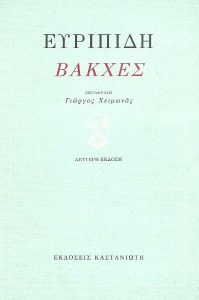
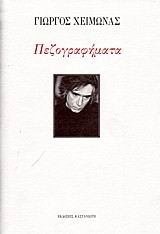
His writings explore the inner aspects of consciousness in a psychoanalytic manner and are characterized by their modern style and many elements borrowed from the anti-novel, such as a flat writing style and the absence of dialogue. Professor Linos Politis describes him as “a writer who is not easy to understand.”
https://www.hartismag.gr/hartis-30/afierwma/o-giwrgos-xeimwnas-metaxy-monternismoy-kai-metamonternoy
There is no doubt, in my opinion, that Giorgos Himonas embodies the purest and at the same time sharpest modernist spirit of modern Greek prose. His wild imagination, his fragmentary syntax, his broken words, the incessant, dreamlike flow of his sentences, but also his paranoid, demented, or even inherently aphasic expression. These characterize his work from the first moment to the last page, not only subverting numerous narrative conventions but also establishing a permanent and profound literary experimentation on his part.
[2] From whatever perspective we view his work and however we understand his language, his images, and his human forms, Heimonas is a convinced modernist who subjects things to multiple tests: from overcoming sequence, rational expression, and regulated (universally accepted and recognizable) meaning to disrupting the inductive order, but also releasing the unconscious with the consequent displacement and burial of the subject. There are certainly not many prose writers in post-war Greece who adhere so passionately to the dictates of formalism. Himonas transforms his texts into a mirror of his writing workshop, taking care to place all materials on a free-floating trajectory. Metaphorical transcendences and historical references, delusional monologues and an inner concentration laden with the speeches and phrases of others (on an ego inflamed by archaic passions and mystical fears or visions), incessant reversals and relapses of an always pretentious plot, unexpected (imaginary and apocalyptic) explosions of an apparently diffuse and perforated plot, surprising metonymies, and games of dazzling reflections through the intense interweaving of identities and heteroidentities make Heimonas’s prose resemble a lonely island in the vast sea, a literary act identified with a relentless struggle—the struggle to eliminate any regularity of meaning, to deprive its reception and acceptance of any legitimacy. And such an attitude naturally results in writing emerging as a concept without any genre label and assuming its function as a completely reduced and at the same time autonomous means of investigating the conditions of the production and creation of art in a regime of complete questioning.

