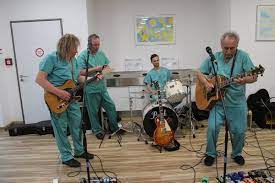
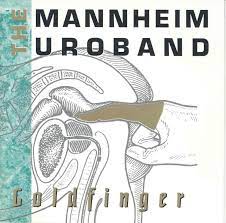
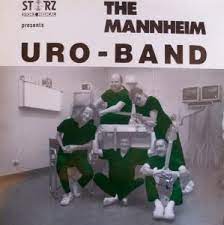
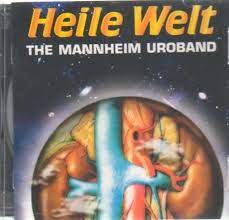
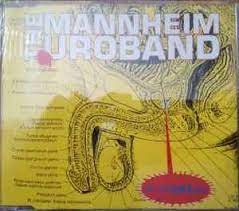
The Mannheim Uroband consists of the urologists Priv.-Doz. Dr. med. Jens Rassweiler (Leadgitarre, Gesang, Mundharmonika), Priv.-Doz. Dr. med. Reinhold Tschada (Bass), Dr. med. Stefan Forster (Gesang, Akustikgitarre), Dr. med. Mathias Löbelenz (Gitarre) und Dr. med. Tim Jaeger (Schlagzeug, Gesang). Their music is about their everyday-life in a humorous way – thus they make it possible to sing and rock about tabu themes……
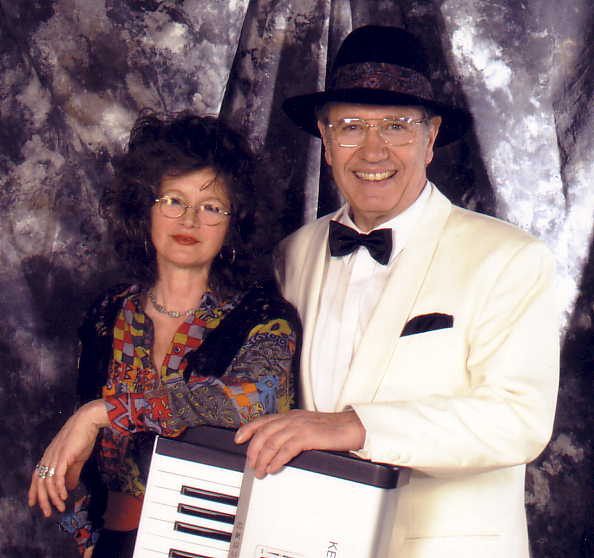
He played Dinner Music, Jazz-Time, Wedding music, wine parties, carnevalistic parties, open air for every kind of event the right music on measure for 48 years!
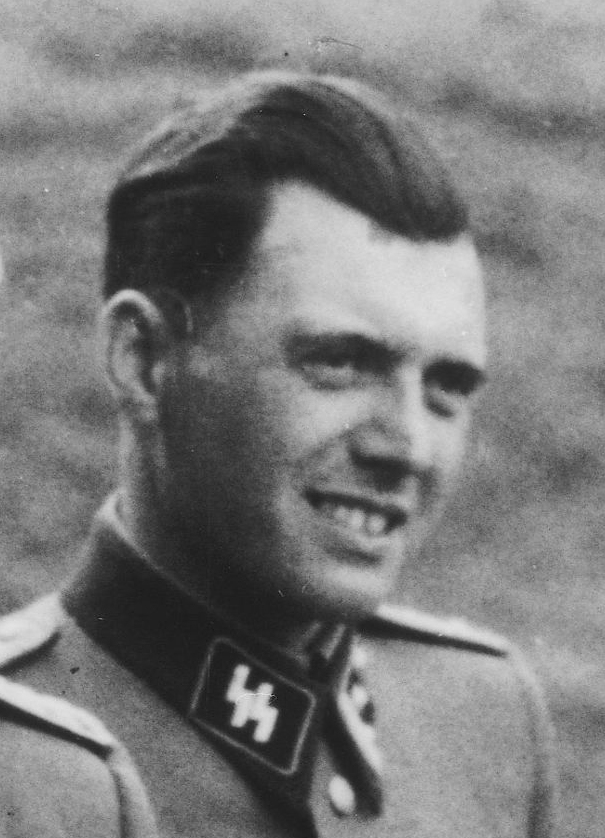
Before the war, Mengele received doctorates in anthropology and medicine, and began a career as a researcher. He joined the Nazi Party in 1937 and the SS in 1938. He was assigned as a battalion medical officer at the start of World War II, then transferred to the Nazi concentration camps service in early 1943 and assigned to Auschwitz, where he saw the opportunity to conduct genetic research on human subjects. His experiments focused primarily on twins, with no regard for the health or safety of the victims.[3][4]
After the war, Mengele fled to Argentina in July 1949, assisted by a network of former SS members. He initially lived in and around Buenos Aires, then fled to Paraguay in 1959 and Brazil in 1960, all the while being sought by West Germany, Israel, and Nazi hunters such as Simon Wiesenthal, who wanted to bring him to trial. Mengele eluded capture in spite of extradition requests by the West German government and clandestine operations by the Israeli intelligence agency Mossad. He drowned in 1979 after suffering a stroke while swimming off the coast of Bertioga, and was buried under the false name of Wolfgang Gerhard.[2] His remains were disinterred and positively identified by forensic examination in 1985.
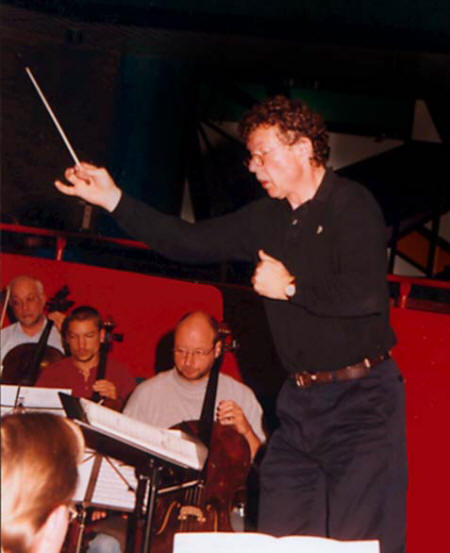
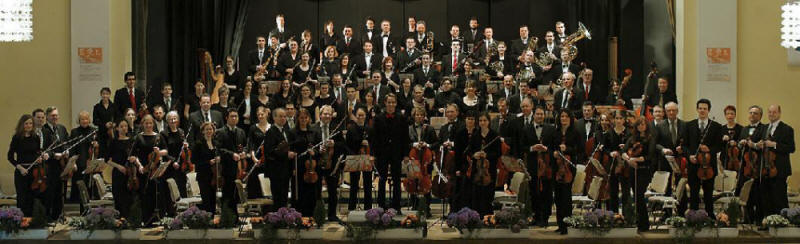
Gert Feser is conducting the “ensemble con brio”, one of the leading amateur orchestras in Würzburg/Germany. He is medical doctor and professor for music therapy and understands making music as a fountain for joy and prevention of diseases and protection of human spirit and creativity. Thus his rehearsals are often making the participants enthusiastic…..
Feser has studied with Prof. Reinartz at the Würzburg music academy and passed his exam as conductor. He took classes with Sergiu Celibidache in Bologna and with Michael Gielen in Frankfurt. In 1970 he received a prize of the “Deutscher Musikrat”. Now he holds master classes in Germany, France and Italy.
(EN:) born in 1976 in Fulda he got music lessons at age 5. With 8 he began studying Cello at the local music school, then he did a lot with chamber music and worked himself into orchestra literature. His autodidactical conducting abilities were completed by studies with KMD Gunther-Martin Göttsche and Prof. Peter Winkler. After his “Abitur” (about high school degree) he wrote music critics and conducted a lot of sacred music recitals with amateur ensembles. Then he founded the Fulda Symphony Orchestra together with Karsten Aßmann, Dorothea Heller and Albert Flügel in 1999. For his cultural work he got the “Paul-Harris-Fellow” award by the local Rotary club. From 1997 to 2003 he studied medicine in Würzburg/Germany, since 2004 he is scientific assistant at the neuro-surgical university hospital Würzburg.
Sir Jeffrey Philip TateCBE (28 April 1943 – 2 June 2017) was an English conductor of classical music. Tate was born with spina bifida and had an associated spinal curvature. After studying medicine at the University of Cambridge and beginning a medical career in London, he switched to music and worked under Georg Solti at the Royal Opera House, Covent Garden, before making his conducting debut in 1979 at the Metropolitan Opera, New York. He held conducting appointments with the English Chamber Orchestra, Rotterdam Philharmonic Orchestra and Hamburg Symphony Orchestra, among others, and was the first person to be appointed principal conductor of the Royal Opera House. He was knighted for his services to music in 2017.
In private life, Tate was partners with Klaus Kuhlemann, a German geomorphologist, whom he met when conducting at Cologne from 1977.
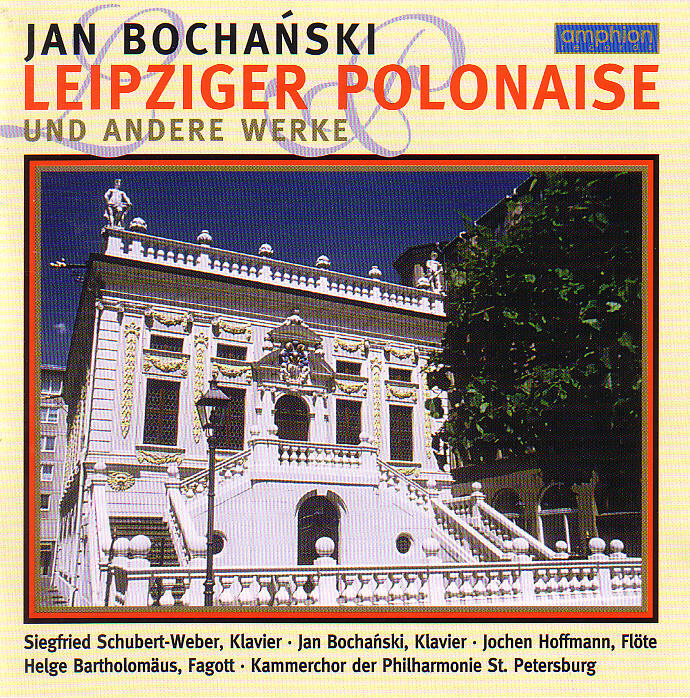
his CD “Leipzig Polonaise”, one of his major compositions.
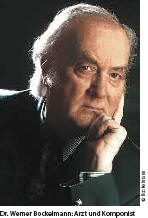
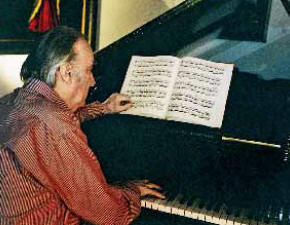
Jan Bochański (natural name Werner Bockelmann) was born in St. Wendel/Saar/Germany as son of a doctor family (5th generation). After World War II he was in Melsungen/Germany where he got rare piano lessons and did not have composition but made his first attempts to compose. 1947 to 1953 he studied medicine and law in Homburg/Saar, Paris and Heidelberg. After his MD, thesis and specialisation in ophthalmology he worked scientifically and got severyl patents atz the Battelle-Institute. He settled as ophthalmologist in Oberursel/Germany, later in Frankfurt (Main).
He was active Rallye-driver (seven participation at the “Tour d’Europe”), motor journalist and wrote a book about eye-glasses-cardriving, he was free lance for several car magazines and radio stations. Since 1975 he regularly writes compositions, mainly piano works in form of variations, dances and character pieces.