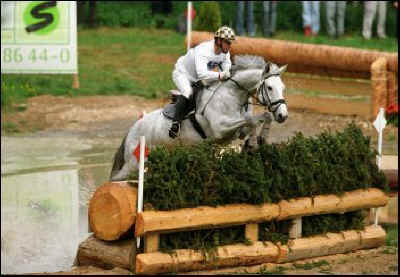
Bei den Olympischen Spielen in Peking 2008 wurde Hinrich Romeike Olympiasieger im Einzel- und gewann zusammen mit Ingrid Klimke, Andreas Dibowski, Peter Thomsen und Frank Ostholt die Goldmedaille im Mannschaftswettbewerb. Zuvor waren seine größten Erfolge der Mannschaftssieg bei den Weltreiterspielen 2006 in Aachen sowie der 5. Platz im Einzel- und der 4. Platz im Mannschaftswettbewerb bei den Olympischen Spielen 2004 in Athen. Die genannten Erfolge erreichte er mit seinem Pferd Marius, einem 1994 geborenen Holsteiner Schimmelwallach (von Condrieu xx).[1] Marius ist 2023 gestorben. Nachdem Marius in den Jahren 2009 bis 2011 verletzungsbedingt nicht wieder am Turniersport teilnehmen konnte, gab Romeike im März 2012 das Ende von Marius’ sportlicher Laufbahn bekannt. Zu einem Start Romeikes bei den Olympischen Spielen 2012 kam es daher nicht.[2]
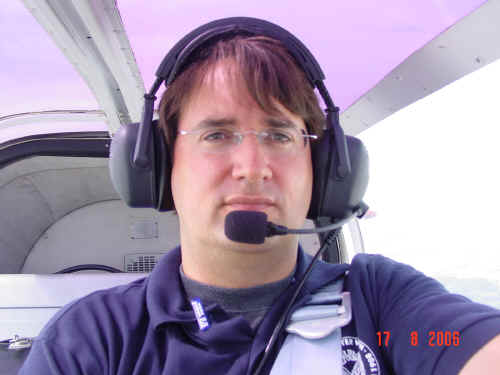
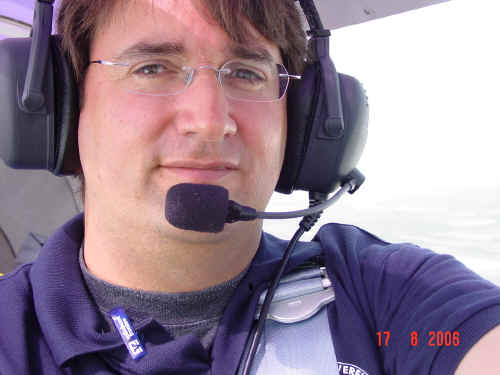
Anamnesis: Study of medicine in Cologne, Heidelberg and Mannheim, doctorate degree in Heidelberg in ginecology. Clinical work at University Hospital Heidelberg, Mannheim and Aschaffenburg (all ginecology, 2,5 years). In the year 2000 exit of curative medicine because of inhuman working conditions – change to the software industry and consulting services (medical software, therapy planning systems for hospitals, process oriented systems (bedding, guide lines, workflow). Ever since satisfied consultor. In 2001 beginning to fly at the Frankfurt (Main)-Egelsbach association EDFE. Had been flying models as pupil and student for over 10 years.
Addictions: flying, flying, flying – models, PPL-A-flying, UL-flying. 180 hrs of experience with 380 starts and landings. In the last 3 months I have made re-entry in model flying (I cannot miss it…).
Social anamnesis: Married since 2003 and a cute little daughter.
Allergies: bureaucracy and politics.
Acute actual diseases: expensive but just payable consortium for a one-engine Morane 880 B positioned in Worms/Germany.
Therapy: Thinking of flying daily and as soon as weather is fine hurry to next airport.
Prognosis: Fine. Will stick to flying until medical will separate me or maybe the budget….
Therapy targets: Keeping and getting more contacts with other FlyingDocs in Germany and world-wide who suffer from the same illness but have a lot of fun with it!
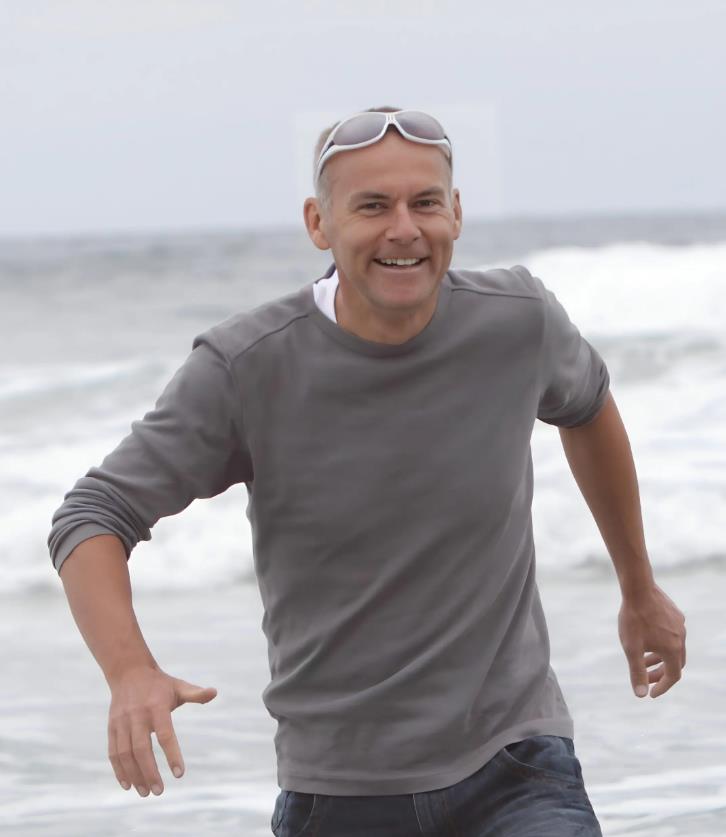
In 2003, after a career in scientific research and upper management, the former marathon runner decided – after 20 years of a sedentary lifestyle – to reconnect with a serious sport.[1]
In 2008, after having successfully competed in several long-distance cycling events,[1] he finished the Race Across America in 10 days, 22 hours and 56 minutes to cover a distance of 3.000 miles between Oceanside, California, and Annapolis, Maryland. Out of 27 solo-participants he finished in seventh position. Nehls devised a new regenerative strategy and rested for a total of over 90 hours, several times more than his competitors.[2][3] He wrote a book about his experience called “Herausforderung Race Across America” (“Challenge Race Across America”) and produced a DVD called ‘Du musst nicht siegen, um zu gewinnen. (English translation: “You need no victory to be a winner”) on his own.
Since 2011, Nehls has published several books on the necessary behavioral changes required for healthy aging from an evolutionary history point of view. First “The Methuselah-Strategy” then with Alzheimer-Lüge (English translation: “The Alzheimer’s Lie”) and Alzheimer ist heilbar (English translation: “Alzheimer’s can be cured”) two books about Alzheimer’s disease, in which he presents his theory about the development of this special form of dementia from evolutionary history of life and systems biology point of view.
Michael Nehls’s book, The Indoctrinated Brain, has sparked considerable controversy for its bold claims about the effects of mRNA COVID-19 vaccines on human cognition and autonomy. Nehls suggests that these vaccines, among other modern pressures, are part of a global assault manipulating the human mind, aiming to facilitate increased governmental control over individuals. His theories align with broader conspiratorial narratives, which have been disseminated through various platforms known for hosting such content.[8]
Nehls’s work was featured in a discussion with Tucker Carlson, where he outlined his views on the manipulation of human memory and cognition through fear, suggesting a deliberate effort to control the populace.[9] Furthermore, Nehls’s theories have been cited by conspiratorial outlets such as Infowars in an article called “Molecular Geneticist Explains How mRNA Vaccines Were Designed to Conquer the Human Mind”, further associating his work with fringe narratives.
Moreover, The Indoctrinated Brain was published by Skyhorse Publishing, a company that has a record of publishing works with conspiratorial angles. Skyhorse Publishing has built a reputation for taking on authors that other houses avoid, including figures who have propagated misinformation, including false theories about coronavirus vaccines.[10] This backdrop places Nehls’s work within a specific context of controversial literature.
While Nehls’s hypotheses have found support among certain circles, including endorsements in his book from figures like Naomi Wolf and Stephanie Seneff, they have not been widely accepted by the mainstream scientific community. Leading health organizations, including the World Health Organization (WHO) and the Centers for Disease Control and Prevention (CDC), continue to support the safety and efficacy of COVID-19 vaccines, countering claims that they are tools for government manipulation.
The discussion around The Indoctrinated Brain exemplifies the tension between fringe theories and established scientific consensus, highlighting the challenges in public health communication and the fight against misinformation in the age of COVID-19.
Klaus-Gregor Eichhorn is Anesthesist in Chemnitz and film director. He has produced several films which are nicely presented on his web site.
Born in Karl-Marx-Stadt. Grown up in Chemnitz. Practikum @ Michael Roth, MdB. Direction assistant @ Städtisches Theater Chemnitz. Studies of direction @ Filmakademie Baden-Württemberg. Stopped this study to become MD. Lives in Chemnitz and Leipzig.
Michael Verhoeven stems from a theatre and film family, the son of the German film director Paul Verhoeven (1901-1975, not to be confused with the Dutch film director of the same name) and actress Doris Kiesow (1902-1973), brother of actress Lis Verhoeven (1931-2019) who had been married to (and divorced from) actor Mario Adorf – and therefore uncle to actress Stella Maria Adorf.
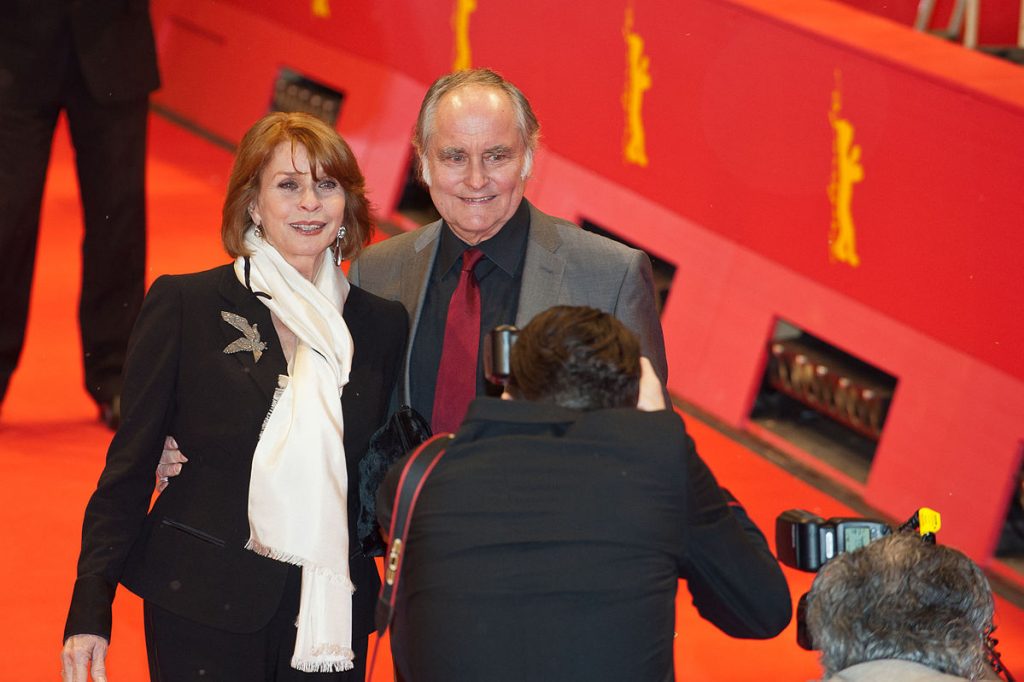
Michael Verhoeven married Austrian actress Senta Berger in 1966 and stayed with her until his death in 2024 – in what is considered one of the longest-running scandal-free marriages in show business. Their sons are screenwriter/director/actor Simon Verhoeven (born 1972) and producer/actor Luca Verhoeven (born 1979). Verhoeven and Berger met at the Berlinale in 1960 and played together in front of the camera in the 1963 film Jack and Jenny, where he was supposed to kiss her in one scene. The two fell in love during filming. The couple had two sons, Simon Vincent (born 1972) and Luca Paul (born 1979). The children followed in their parents’ footsteps: Simon Verhoeven is a director and screenwriter, whereas Luca Verhoeven is a producer. Both sons started out as actors and also work in the family business Sentana Filmproduktion.
Verhoeven died in the presence of his family at his Grünwald home on 22 April 2024 at the age of 85 after a short, serious illness.[2]
As a young adult, however, Verhoeven decided to study medicine against the wishes of his parents, who encouraged him to continue his acting career. He obtained his doctorate in 1969 with a thesis on psychiatric masking of brain tumors with special consideration of misleading findings and worked as a doctor for several years – including in the USA, where he had followed his wife Senta Berger, who was acting in Hollywood films in the 1960s alongside stars like Charlton Heston, Dean Martin, Frank Sinatra, Richard Widmark, John Wayne, Kirk Douglas, and Yul Brynner.
Verhoeven’s political and experimental 1970 anti-Vietnam War film o.k. was entered into the 20th Berlin International Film Festival, but led to a scandal[6] that forced the collapse of the festival without the awarding of any prizes:[7] The then jury president George Stevens felt offended and threatened to remove the experimental film from the program because of its supposed anti-American invective[8]. The Berlinale regulations were subsequently reformed. Later that year o.k. went on to win the German Film Award in Gold. For its 50th anniversary, MoMA conducted a special screening in 2021[9].
In the 1970s, Verhoeven worked increasingly for television, including directing one of the first episodes of Germany’s longest running crime procedural series Tatort (for which he would direct another episode 33 years later in 2005). After becoming a father for the first time in 1972, he wrote and directed the anarchic children’s series Krempoli in 1975, in which he played a smaller part and also cast his father Paul Verhoeven and his sister Lis Verhoeven alongside Senta Berger. In 1980, he made the television film Die Ursache with Otto Sander. In the same year his theatrical release Sunday Children (Sonntagskinder) got screened at the Cannes Film Festival in 1980.
In 1982, he wrote, directed and co-produced the story of the resistance fighters against the Nazi regime, the siblings Hans and Sophie Scholl, in Die weiße Rose (The White Rose). The German Foreign Office banned official screenings abroad when Verhoeven refused to remove a critical commentary from the credits. The film won Silver at the German Film Awards. Based on the true story essay book “A Case of Resistance and Persecution, Passau 1933-39,” by Anja Romus, he wrote and directed The Nasty Girl ( Das schreckliche Mädchen) in 1990, which won the Silver Bear for Best Director at the 40th Berlinale, the BAFTA for Best Foreign Language Film, Best Foreign Language Film at the 56th New York Film Critics Circle Award, and gained an Oscar nomination for Best Foreign Language Film at the 63rd Academy Awards. These two films cemented his international reputation as an important political voice in European film. Along with his adaptation of George Tabori‘s memoireMy Mother’s Courage [de] (with music by his son Simon Verhoeven who also played a supporting part), and the documentary Der unbekannte Soldat (The Unknown Soldier), Verhoeven was praised for his relentless examination of the Nazi regime in Germany and its aftermath.
Promoting The Nasty Girl in the US in 1990, Verhoeven explained his interest in rememberence culture or rather the lack thereof: “The danger is that we will really forget. But we are very rich right now, and it could happen that we become not quite so rich. Many social problems will show up with the so-called reunification, and with the social problems it could be that Germans again look for enemies. This is what I am scared of. We know so little about Eastern Germany, and the eastern people also don’t know too much about our history. What they were told in school is even more wrong than what we were told.”[10]
Verhoeven became a professor at the Filmakademie Baden-Württemberg in Ludwigsburg in the 1990s, passing on his knowledge to the next generation of filmmakers. For decades, Verhoeven also ran movie theaters in Berlin: the Toni at Antonplatz and the Olympia Filmtheater in Prenzlauer Berg until he sold the properties in the late 2010s.
Together with wife Senta Berger he was awarded the Federal Cross of Merit in 1999 as well as the Bavarian Order of Merit in 2002. In 2005, Verhoeven received the Marion Samuel Prize, which honors particularly effective ways of combating the forgetting, suppression and relativization of the crimes committed by Germans during the Nazi era[13]. In 2006 he got an Honorary Lifetime Award from the Bavarian Film Awards[14].
In 2000, Verhoeven made his first documentary: Der Fall Liebl– Ein Bayer in Togo, about a late repatriate who was unfamiliar with German bureaucracy and was threatened with deportation. In 2006, after seven years of work, his second documentary The Unknown Soldier about reactions to the Wehrmacht exhibition was released. In his 2008 documentary Human Failure (Menschliches Versagen), Verhoeven dealt with the question of the extent to which the German civil population profited from the confiscation of Jewish assets during the Nazi era. The film was screened at the Jerusalem Film Festival[15]. In his 2011 documentary The Second Execution of Romell Broom (Die zweite Hinrichtung – Amerika und die Todesstrafe), made in collaboration with Bayerischer Rundfunk, Verhoeven took on the subject of Capital punishment, following the death sentence for Romell Broom, found guilty for rape and murder, and his execution on September 15, 2009 in Lucasville, Ohio, which failed 18 times and was finally aborted[16].
However, Verhoeven was no stranger to light entertainment, most notably with his 1989 – 2002 television series Die schnelle Gerdi (Fast Gerdi) which starred Senta Berger as a smart and self-reliant Munich cab driver.
His last directorial and screenwriting work, Let’s go!, was adapted in 2014 from the autobiographical novel Von Zuhause wird nichts erzählt by Laura Waco about her Jewish family in post-war Munich.
In 2015, Verhoeven co-produced Welcome to Germany (Willkommen bei den Hartmanns) written, directed and co-producted by son Simon Verhoeven, in which Senta Berger played the leading role. This sharp-tongued comedy about the 2015 refugee crisis became the most successful German cinema film of the year (3.8 million viewers) and won the German Film Award, the Bavarian Film Award for Best Production as well as the Audience Award, the Peace Prize of German Film, the Goldene Leinwand, and the Bambi Award, among others.
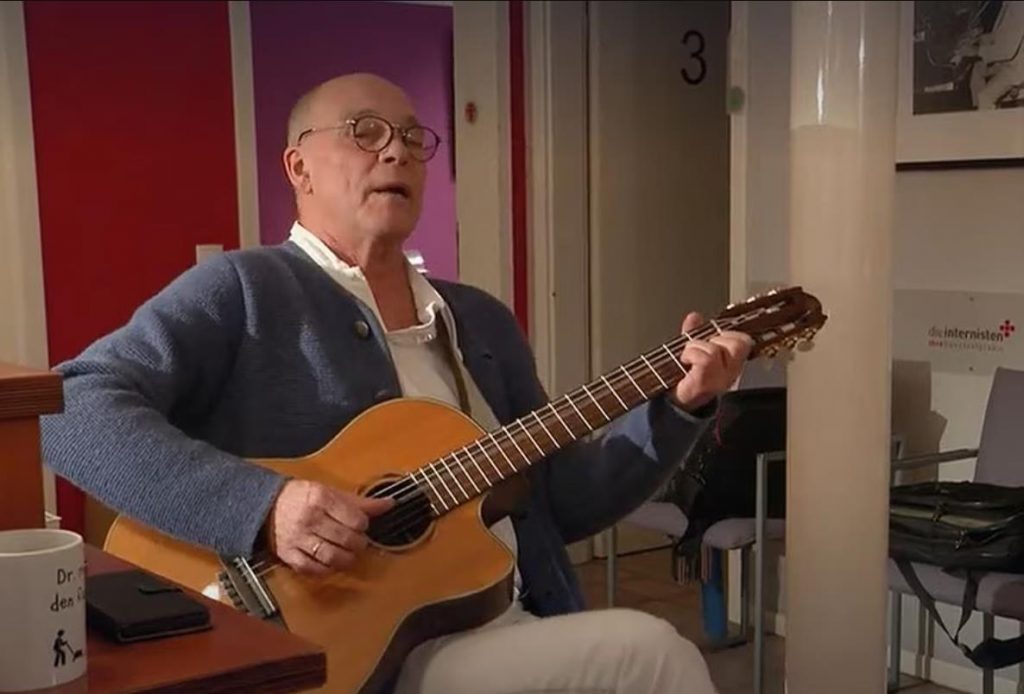
Ludger Iske is running an ioffice for internal medicine in 2024 – but he gives concerts as well in the waiting rooms of his office an others as a wonderful music therapy.
In a song he says: „Wir wünschen wunderbare Jahre, die besten Zeiten, die ihr haben wollt – von allen Lieben nur die Wahre, den Bauch voll Freude und ein Herz aus Gold; und wenn es läuft bei euch und leuchtet – dann haben wir ja nicht alles falsch gemacht: so stehts im großen Buch verzeichnet – wir haben euch schließlich auf den Weg gebracht!“ he expresses his hope for a good creation of the future.
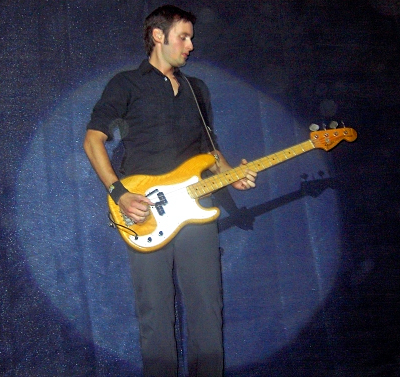
Mark Tavassol (* 18. February1974 in Bremen) is a German musician, composer, songwriter, singer, music producer and MD. He got well-known as bass player and guitarist of the band Gloria.
Tavassol is son of an Iranian father and a German mother and lived in Teheran in his first years. After the Abitur he studied medicine in Hamburg and got his degree in 2001.
He joineed the band “Wir sind Helden” and he works in several TV productions as in a late-night-show.
His humanitarian engagement is for several organisations:
2007 Brandenburg made the second place in the Transsibiria-Rallye.
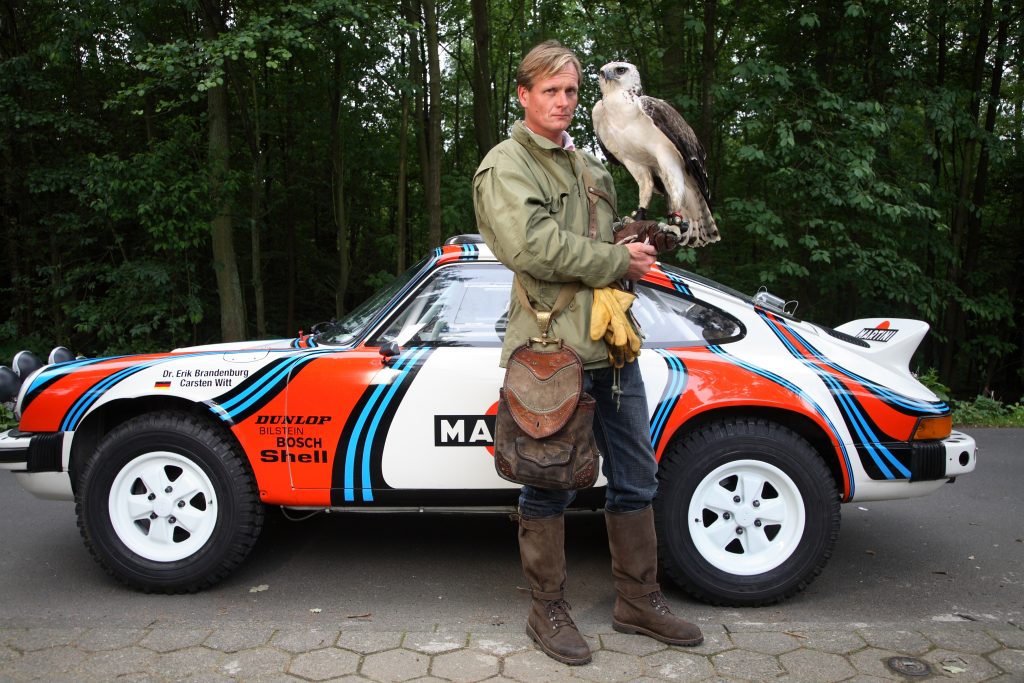
He is also FalconerDoc and drives with the eagle in the Porsche to flying places….
This fighting eagle is my co-pilote when I go for chase, the co-pilot seat is taken out and he is sitting in a big wooden box filling half of the 911 …..tough, what?? kind regards
Driver profile Transsibiria Rallye (DE): Name, Vorname: Dr. Brandenburg, Erik Alter: 40 Wohnort: Hamburg, Deutschland Geburtsort: Hamburg, Deutschland Beruf: Arzt Fahrzeug: Porsche 911 Safari Team: Dr. Brandenburg Racing Beifahrer: Preuss, Stephan Rallye-Erfahrung: Gewinner des Marlboro Adventure-Teams, USA, 1989 Camel Trophy Syberia, Sieger des ”Best Drivers Awards”, Zweiter Platz Gesamtklassement 1990 Camel Trophy Malaysia, Urwald, 1993 Zahlreiche nationale Rallyes, Auto und Enduro Rallye-Erfolge: Art der Vorbereitung: Zwei Jahre Arbeit am Wagen…! Grund der Teilnahme: Um das Land und tolle gleichgesinnte Kameraden kennen zu lernen. Selbsteinschätzung: Wir beißen…!!! Wir brauchen keinen Schlaf! Adrenalin pur und Kameradschaft! Hobbys: Falkenjagd mit Beizvogel und Adler, Rallye-Sport und Katamaran-Wettbewerbe Motto: Lasst uns Spaß haben, nette Leute treffen und Natur erleben! Kommentar: Auf geht’s! Danke an Richard Schalber und seine Crew