Im Falle von Einzahlungen werden Sie in der Regel mit Soforttransaktionen behandelt.
Auf diese Weise können Sie mehr darüber erfahren, wie der Slot funktioniert.
Casino Las Vegas neunkirchen
Casino Bonus Spiele
Speziell für Spieler bietet diese Website eine große Auswahl an Boni und Promotionen.
Slots Um Echtgeld
In diesem Teil unseres Ocean Online Casino Testberichts möchten wir Ihnen einige zusätzliche Details zum Casino, dem Unternehmen dahinter und dem Kundensupport-Team geben.
Scatter Slots Hack Deutsch
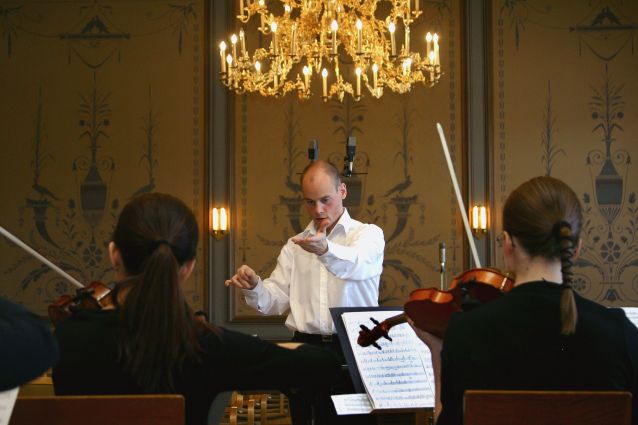
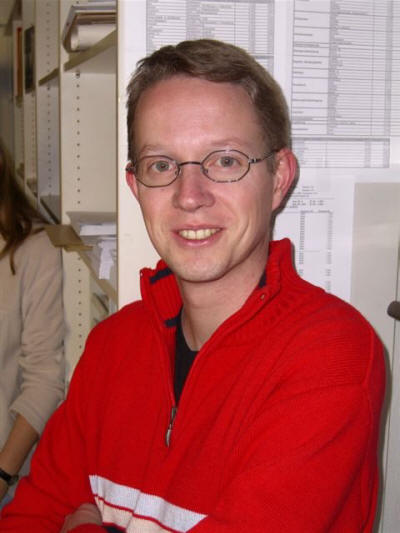
Harri Hyppölä is ConductorDoc and founder of the Finnish Tahdistinorkesteri in Kuopio/Finland.
Facharzt für Innere Medizin und Akutmedizin, LT, Dozent Harri Hyppölä arbeitet im Zentralkrankenhaus Mikkeli. Er ist von der Position des Chefarztes der Notaufnahme von Kysi beurlaubt. Hyppölä ist auch als Dirigent des Tahdistin-Orchesters bekannt.
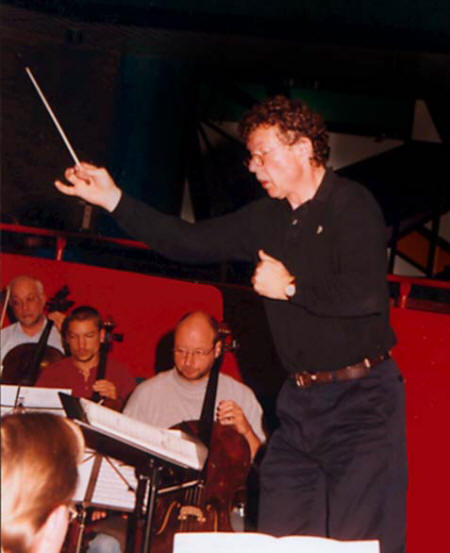
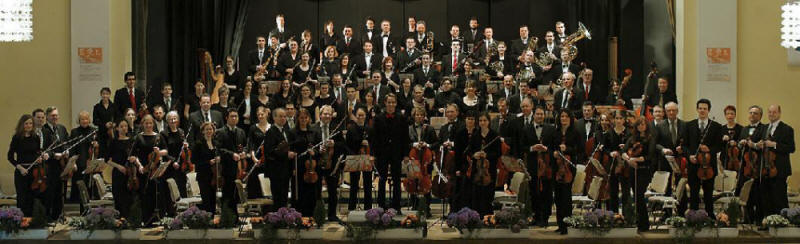
Gert Feser is conducting the “ensemble con brio”, one of the leading amateur orchestras in Würzburg/Germany. He is medical doctor and professor for music therapy and understands making music as a fountain for joy and prevention of diseases and protection of human spirit and creativity. Thus his rehearsals are often making the participants enthusiastic…..
Feser has studied with Prof. Reinartz at the Würzburg music academy and passed his exam as conductor. He took classes with Sergiu Celibidache in Bologna and with Michael Gielen in Frankfurt. In 1970 he received a prize of the “Deutscher Musikrat”. Now he holds master classes in Germany, France and Italy.
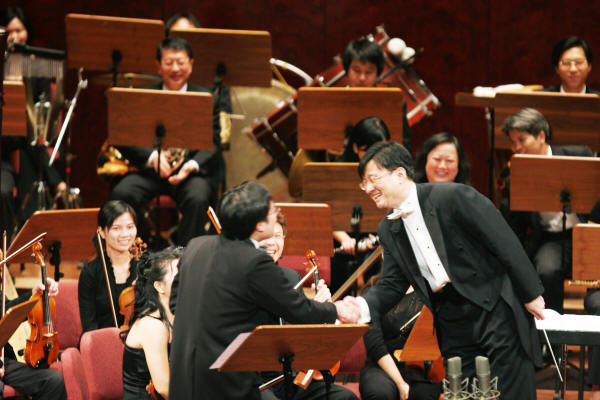
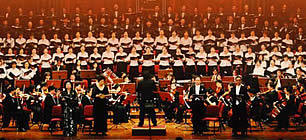
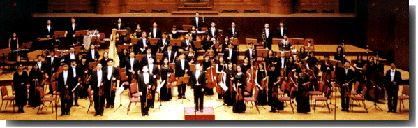
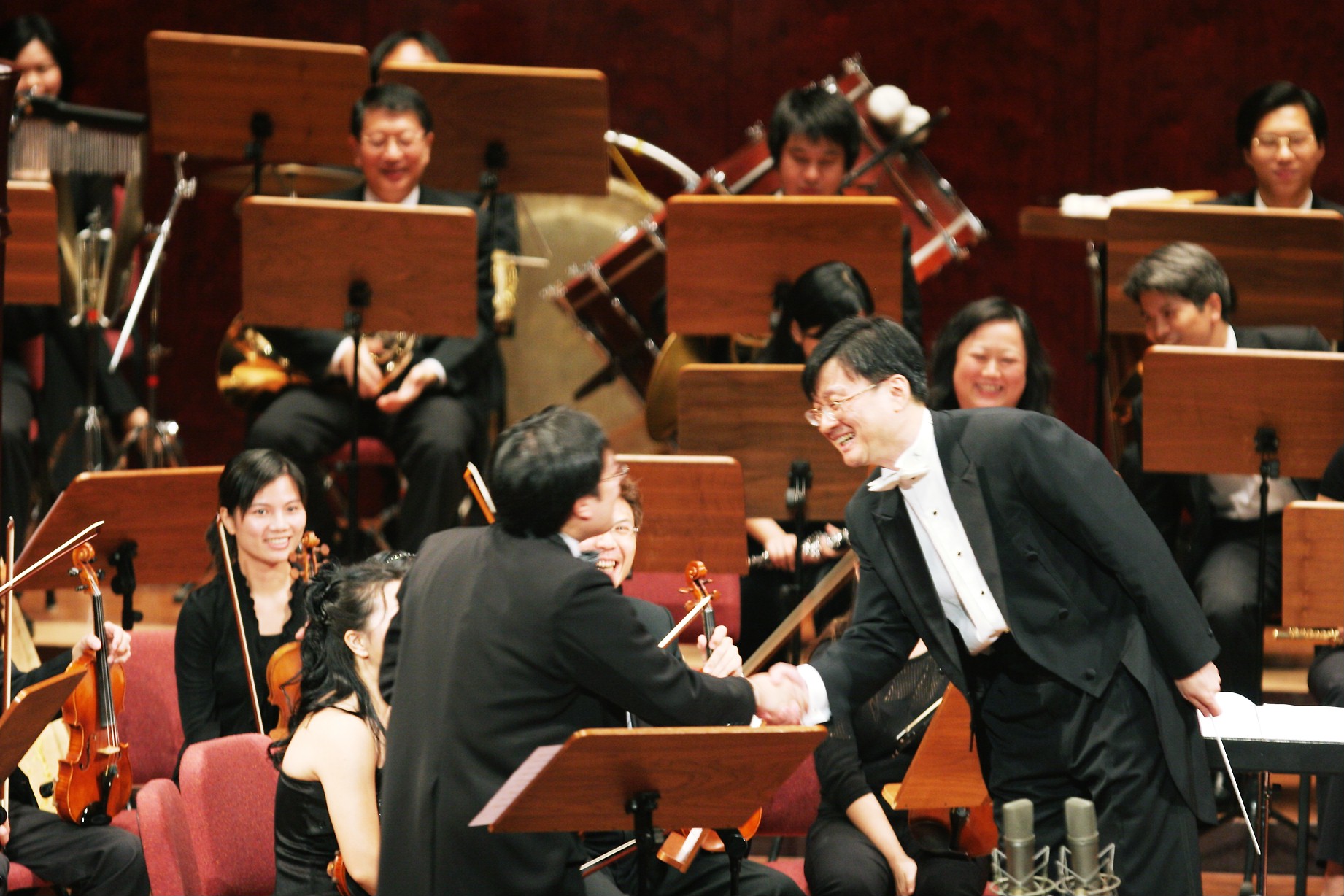
Ching-Hong Kao is conductor of the PCOT – Physician Chamber Orchestra of Taiwan and other orchestras. He wrote a letter:
Dear Wolfgang
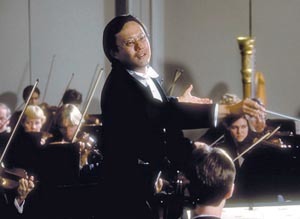
Thank you for your regular news letters. I just finished a 3-year master program of orchestra conducting at the Soochow University in Taipei, and keep working with my ‘Physicians’ Chamber Orchestra of Taiwan’ and the ‘Taipei Civic Symphony Orchestra’. Of course, I am still a busy ophthalmologist, specialized in ocular plastic and reconstructive surgery. Music makes me a quite colorful life.
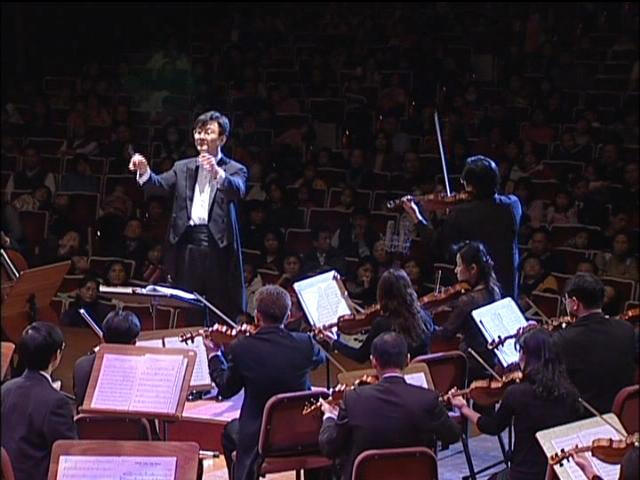
In 1991, a group of physicians and health care professionals, talented and dedicated, began the “Physicians’ Chamber Orchestra of Taiwan “. Since then, they have given more than one hundred concerts around the island, including regular performances in the Taipei National Concert Hall. In 1999 this chamber orchestra expanded to form the Taipei Civic Symphony Orchestra. In their 2001 French concert tour, the proceeds benefited the ‘Vie et Espoir’ association, a children cancer fundation. Each year, the TCSO programs four to six regular concerts at the National Concert Hall. The conductors who used to collaborate with the TCSO include Leader Wang, Shu-Si Chen, Chan Wang, Wei-Ming Hwang, Mark Graveson, Chih-Huei Huang, and Tien-Chi Ling.
Dr. Kim Chang, Dentist, concert master, PCOT and TCSO | Dr. KAO Ching-Hong (violin and director of PCOT, Ophtalmologist)Dr. Hanchih Cheng, pianist and percussionist PCOTChing-Hong KAO
(EN:) born in 1976 in Fulda he got music lessons at age 5. With 8 he began studying Cello at the local music school, then he did a lot with chamber music and worked himself into orchestra literature. His autodidactical conducting abilities were completed by studies with KMD Gunther-Martin Göttsche and Prof. Peter Winkler. After his “Abitur” (about high school degree) he wrote music critics and conducted a lot of sacred music recitals with amateur ensembles. Then he founded the Fulda Symphony Orchestra together with Karsten Aßmann, Dorothea Heller and Albert Flügel in 1999. For his cultural work he got the “Paul-Harris-Fellow” award by the local Rotary club. From 1997 to 2003 he studied medicine in Würzburg/Germany, since 2004 he is scientific assistant at the neuro-surgical university hospital Würzburg.
Sir Jeffrey Philip TateCBE (28 April 1943 – 2 June 2017) was an English conductor of classical music. Tate was born with spina bifida and had an associated spinal curvature. After studying medicine at the University of Cambridge and beginning a medical career in London, he switched to music and worked under Georg Solti at the Royal Opera House, Covent Garden, before making his conducting debut in 1979 at the Metropolitan Opera, New York. He held conducting appointments with the English Chamber Orchestra, Rotterdam Philharmonic Orchestra and Hamburg Symphony Orchestra, among others, and was the first person to be appointed principal conductor of the Royal Opera House. He was knighted for his services to music in 2017.
In private life, Tate was partners with Klaus Kuhlemann, a German geomorphologist, whom he met when conducting at Cologne from 1977.
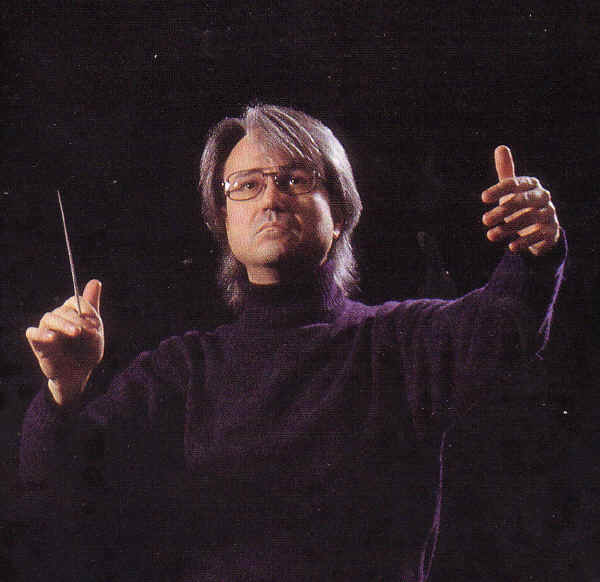
During his international career as Lied accompanist and chamber musician he was partner of leading Lied singers and leading instrumentalists.
He studied conducting with Wilfried Boettcher in Basel. Master classes with Leonard Bernstein and Sergiu Celibidache completed his studies.
He was chief conductor of the symphony orchestra Dornach/Switzerland. His career began in Italy where he became first maestro and artistic vice director. Later he spent a long time in South Korea as director of the Masan Symphony Orchestra and guest conductor of the Seoul Philharmonic Orchestra. In Finland he got in touch with the contemporary music scene and took up several works in his repertoire. He conducted “Aida” on the Opera Festival of Savonlinna and gave master classes of Lied and chamber music. He regularly worked with finnish orchestras. He also was guest conductor of the Budapest philhamronic orchestra and of the Opera Budapest.
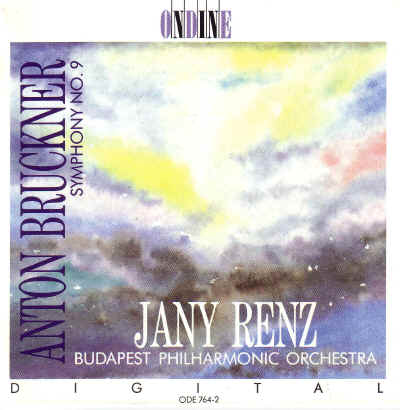
In 1991 a recording of the 9th symphony of Bruckner was published with the Budapest Philharmonic Orchestra (ODE 764-2 www.ondine.fi ) which became the best sold version of this work in the USA in that year (and the best sold classical CD at all in August).
From 1990 to 1994 he was general music director in Freiberg/germany. As guest conductor he worked in other theaters, like in Darmstadt with “Falstaff” of Giuseppe Verdi. The success of his CD produced him invitations in the USA as in Portland, Pittsburgh, Philadelphia and New York.
PRESS
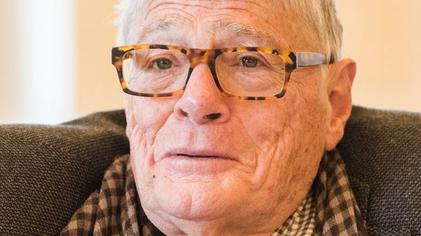
Jany Renz heißt der Dirigent, der das Kunststück fertiggebracht hat, das Orchester zu einer so mitreissenden Leistung zu führen. Es gelang ihm eine packende Wiedergabe von Dvoráks Symphonie “Aus der Neuen Welt”, emphatisch, spontan, vital und dennoch präzise, beherrscht und kontrolliert, von hohem Ernst und starkem interpretatorischem Willen.
(Basler Zeitung, Switzerland)
In Mozart´s last piano concerto KV 595, Jany Renz figured not only as soloist but also as conductor. In this he performed a double task which has sometimes proved too exacting for many othe rinternational celebrities. But with the swiss Jany Renz it was a sheer joy to hear and see. His sovereign virtuosity and natural zest in playing did not stand in the way of a Mozart performance marked by the lucidity and delicacy of chamber music and crowned by a slow movement that was touchingly beautiful in its humility and unworldliness.
(Portland Press Herald, USA)
With a clear and quite unassuming baton, and with a punctilious constancy of tempo, Jany Renz gave a performance of convincing unity, lending an abundance of sound and dynamics to the strictly maintained great lines while shaping them with a lot of fince nuances, in which the orchestra followed him with astonishing precision and remarkable culture of sound.
(The New York Times, USA)
Jany Renz´s creative impulse, which found compelling expression in the extreme prescicion of baton technique, afforded him ideal scope with the orchestra and Anton Bruckner´s “Seventh” received an overpowering performance.
(EN:) Wong pursued his first degree in Toronto at the Royal Conservatory of Music, where he graduated with a degree in piano performance. While there, he also studied composition, tuba and violin.
After obtaining his music degree, Wong moved on to Harvard to pursue a second degree in medicine. Wong was a Magna Cum Laude graduate of the applied mathematics program at Harvard and later graduated from Harvard Medical School with honors in ophthalmology, neurology and psychiatry. He completed a one year internship in Internal Medicine and then began an ophthalmology residency at Manhattan Eye and Ear Hospital in 1989.
His humanitarian work has brought him to Tibet, China, and Amman, Jordan to restore sight in refugees.
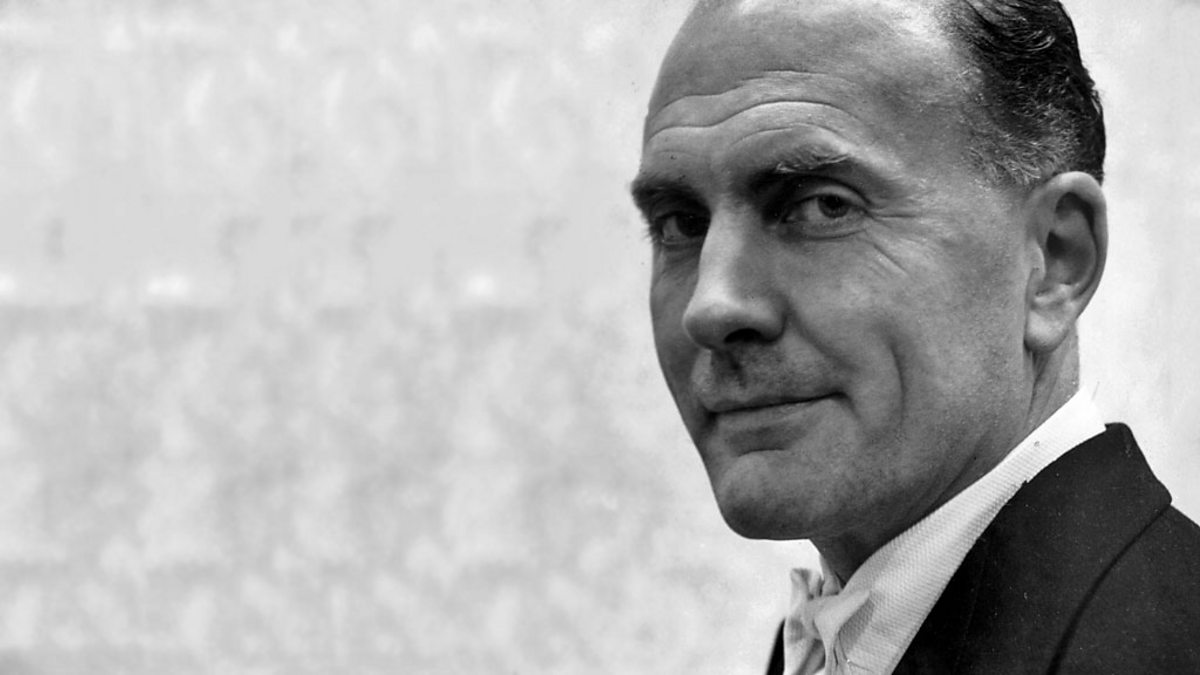
Louis Boyd NeelO.C. (19 July 1905 – 30 September 1981) was an English, and later Canadian conductor and academic. He was Dean of the Royal Conservatory of Music at the University of Toronto. Neel founded and conducted chamber orchestras, and contributed to the revival of interest in baroque music and in the 19th and 20th Century string orchestra repertoire.
Neel was born in Blackheath, London, and wanted to be a pianist as a child.[2] His mother, Ruby Le Couteur, was a professional accompanist, and his father was an engineer.[3]
Neel attended Osborne Naval College and then Dartmouth, and was commissioned in the Royal Navy. Soon after he was commissioned, the armed forces underwent a drastic reduction (the so-called ‘Geddes Axe‘), and Neel left the navy to study medicine at Caius College, Cambridge. He qualified in 1930, and became House Surgeon and Physician at Saint George’s Hospital, London, and Resident Doctor at King Edward VII’s Hospital, London.[4][5]
In 1930, while practising medicine, Neel studied music theory and orchestration at the Guildhall School of Music.[6]
For Neel, at this stage, music was still a hobby. He conducted amateur groups and formed an orchestra of young professionals, whom he recruited in 1932 from the Royal Academy of Music and the Royal College of Music.[7] The Boyd Neel London String Orchestra (later the Boyd Neel Orchestra) made its debut at the Aeolian Hall, London, on 22 June 1933. The programme included the first performance in England of Respighi’sSuite of Ancient Airs and Dances and the premiere of a new suite by occasional composer Julian Herbage. After the concert, Neel returned to his surgery and delivered a baby.[8] The second concert, at the same venue, took place on 24 November 1933, and included the first performance in England of the Serenade for Strings by Wolf-Ferrari. On 18 December 1933 the orchestra was invited to broadcast by the BBC for the first time.[9] When Decca offered Neel and the orchestra a contract, he left medicine to devote himself full-time to music.[4]
On 16 February 1934 the orchestra performed a concert of chamber works by Ernest Bloch at the Aeolian Hall, conducted by the composer.[10] Neel conducted the first music heard in the new Glyndebourne opera house in 1934, in private performances, at John Christie‘s invitation.[4] Among the Boyd Neel Orchestra’s early releases in 1936 were the first recordings of Vaughan Williams’sFantasia on a Theme by Thomas Tallis and Britten’sSimple Symphony.[11] The following year, Neel and his orchestra were invited to the Salzburg Festival, for which Neel commissioned Britten’s Variations on a Theme of Frank Bridge.[4] In 1939 Boyd Neel commissioned John Ireland‘s three movement Concertino Pastorale for string orchestra, first played at the Canterbury Festival on 14 June 1939. It was subsequently recorded in February 1940.[12] The orchestra toured Great Britain and Europe until the outbreak of war.[13][14]