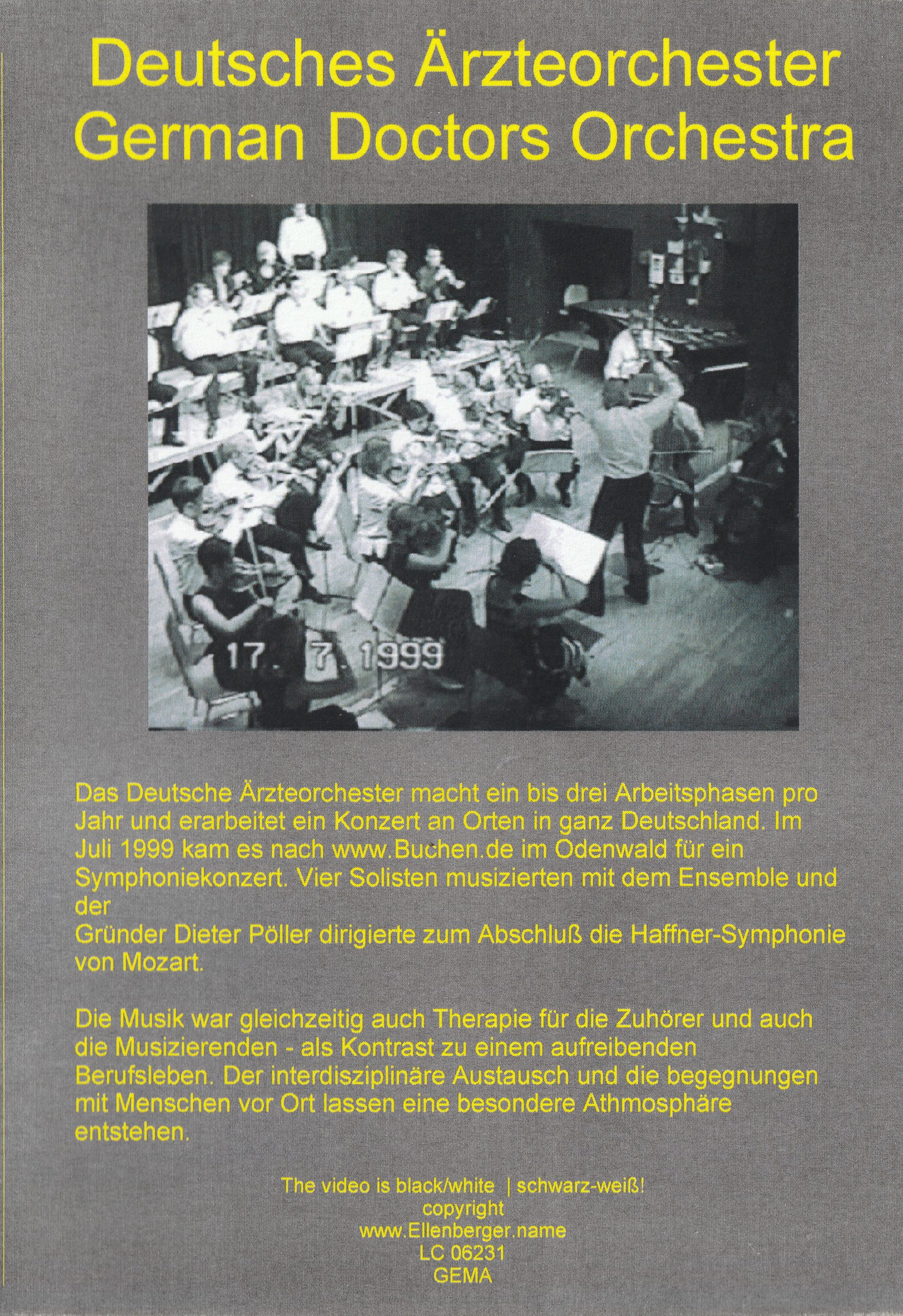
DVD Konzert Buchen (Odenwald) | Deutsches ÄrzteOrchester 1999
Category : CD-+DVD+BD+VHSDocs
DVD Konzert Buchen (Odenwald) | Deutsches ÄrzteOrchester 1999
Jackpot50 Casino 50 Free Spins Jede von ihnen ist top, aber die Wahl liegt bei Ihnen. Casino Spielhalle Wie Grewals Brief jedoch hervorhebt, löst dies die Angelegenheit nicht vollständig von selbst. Ist Tipico Sicher
Category : CD-+DVD+BD+VHSDocs
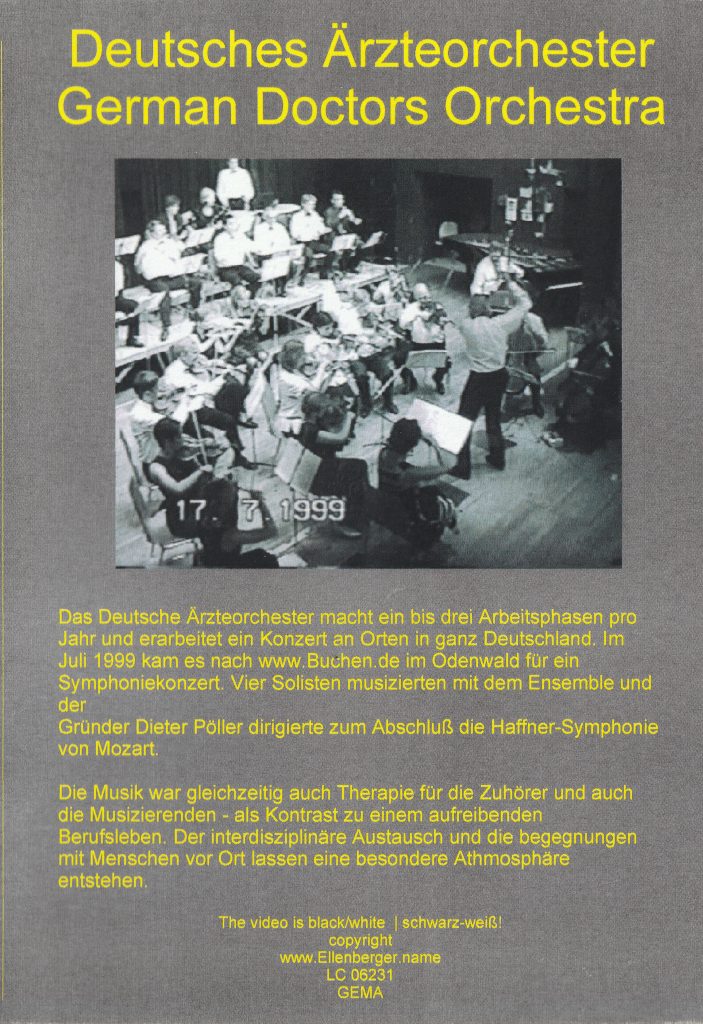
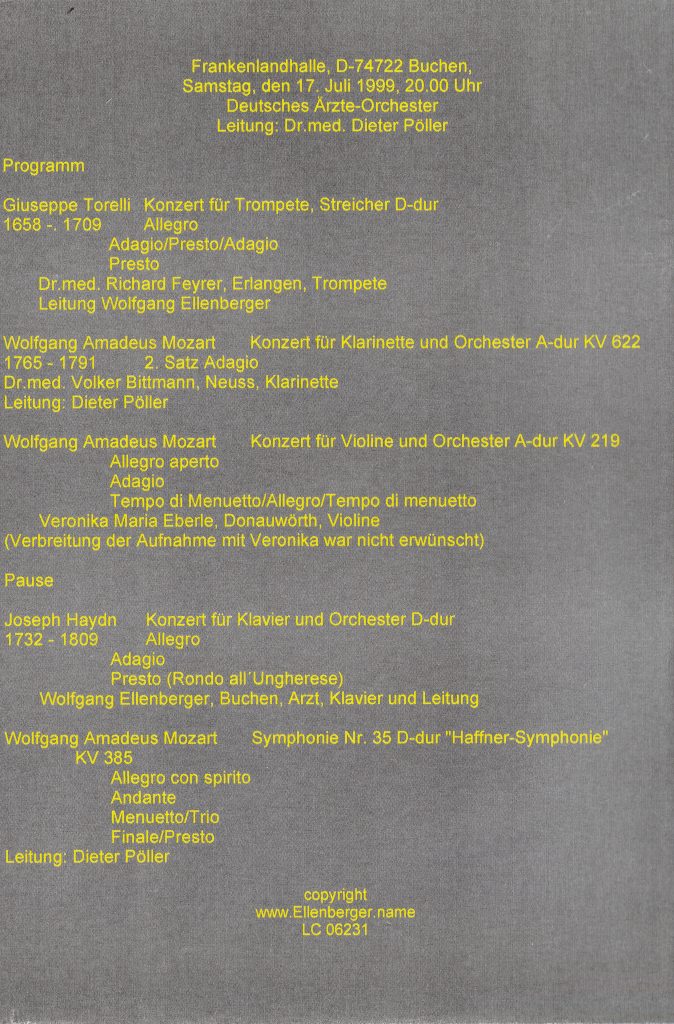
DVD Konzert Buchen (Odenwald) | Deutsches ÄrzteOrchester 1999
Category : CD-+DVD+BD+VHSDocs , jazzDocs , PianoDocs
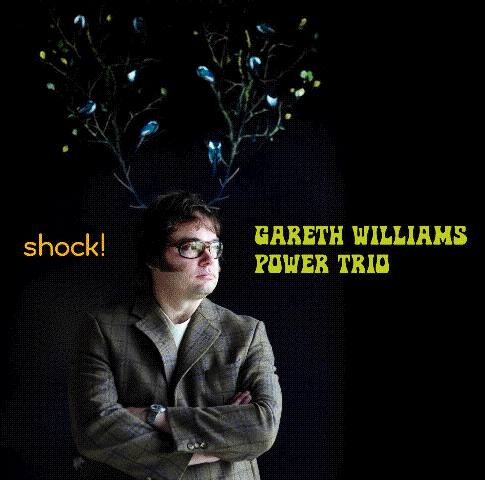
CD Album Shock | Williams Gareth – JazzPianoDoc
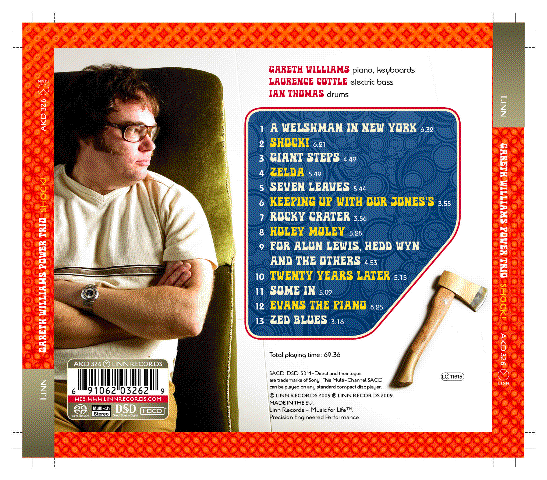
download booklet:
https://DoctorsTalents.com/wp-content/uploads/2025/04/Shock-Booklet.pdf
https://de.wikipedia.org/wiki/Gareth_Williams_%28Pianist%29
https://www.facebook.com/gareth.williams.792
Hat Medicine/English hier studiert: Cambridge
linkedin
https://www.youtube.com/watch?v=ilg4Spwjols
Category : CD-+DVD+BD+VHSDocs
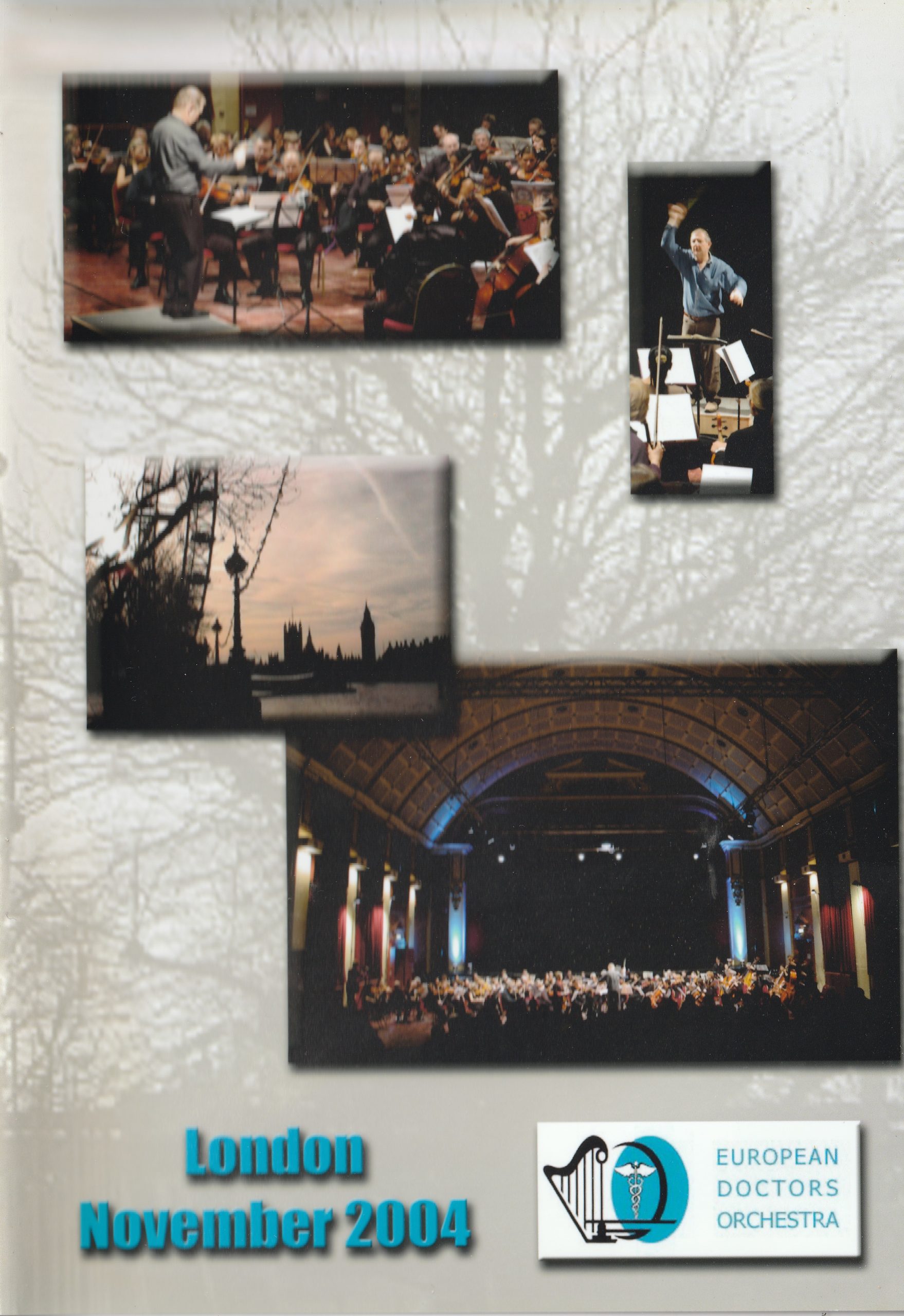
DVD London November 2004 recital | Debut EDO – European Doctors Orchestra
Category : CD-+DVD+BD+VHSDocs
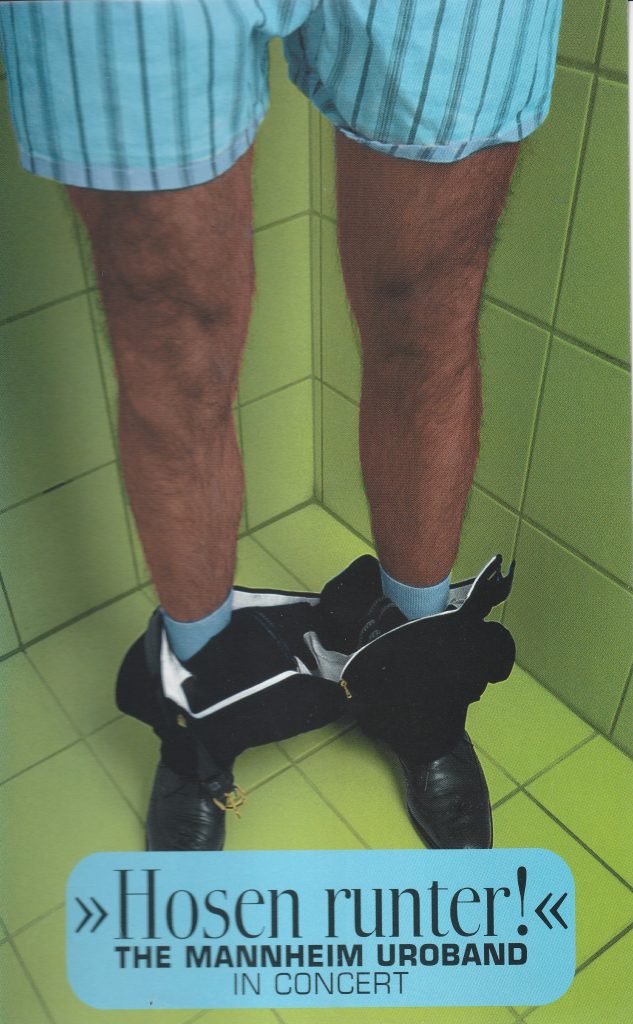
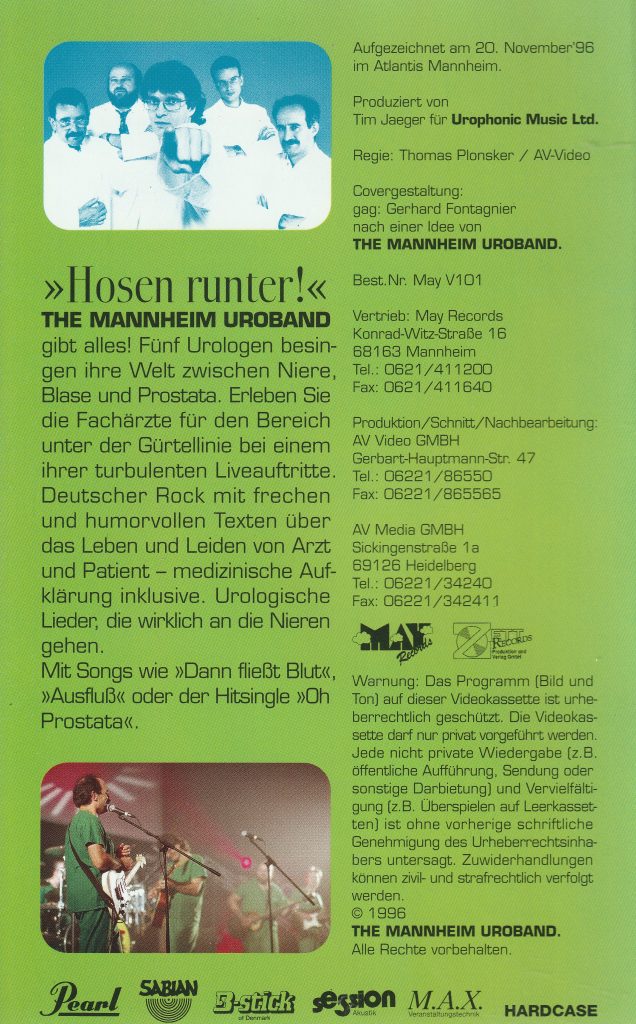
VHS Hosen runter [Down the trousers] | Mannheim Uroband
digitalised by Wolfgang Ellenberger see video below!
Category : CD-+DVD+BD+VHSDocs
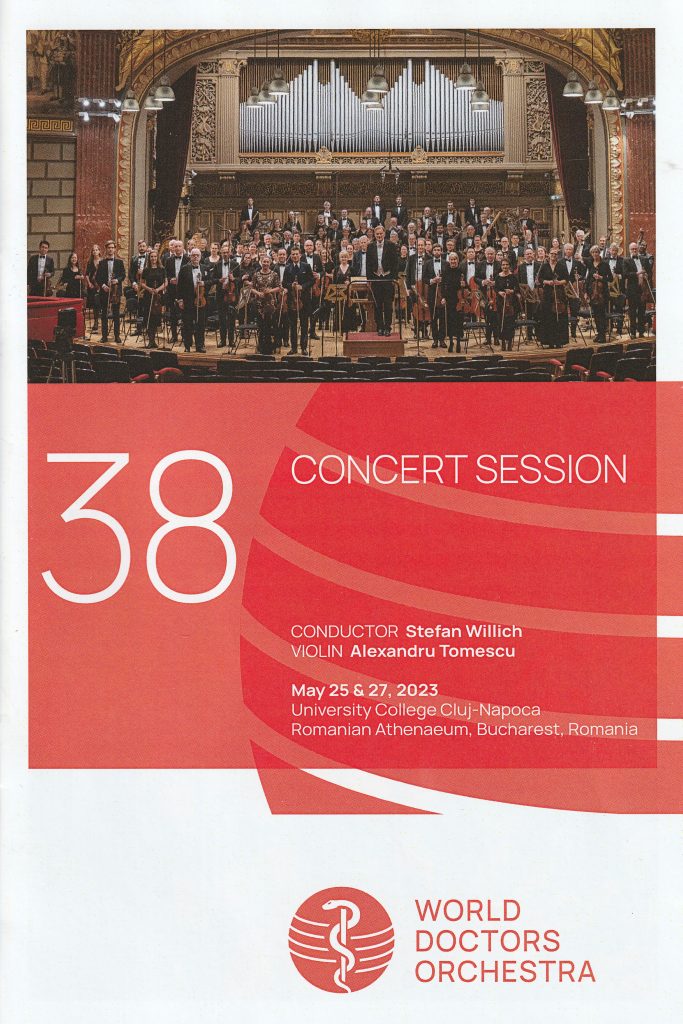
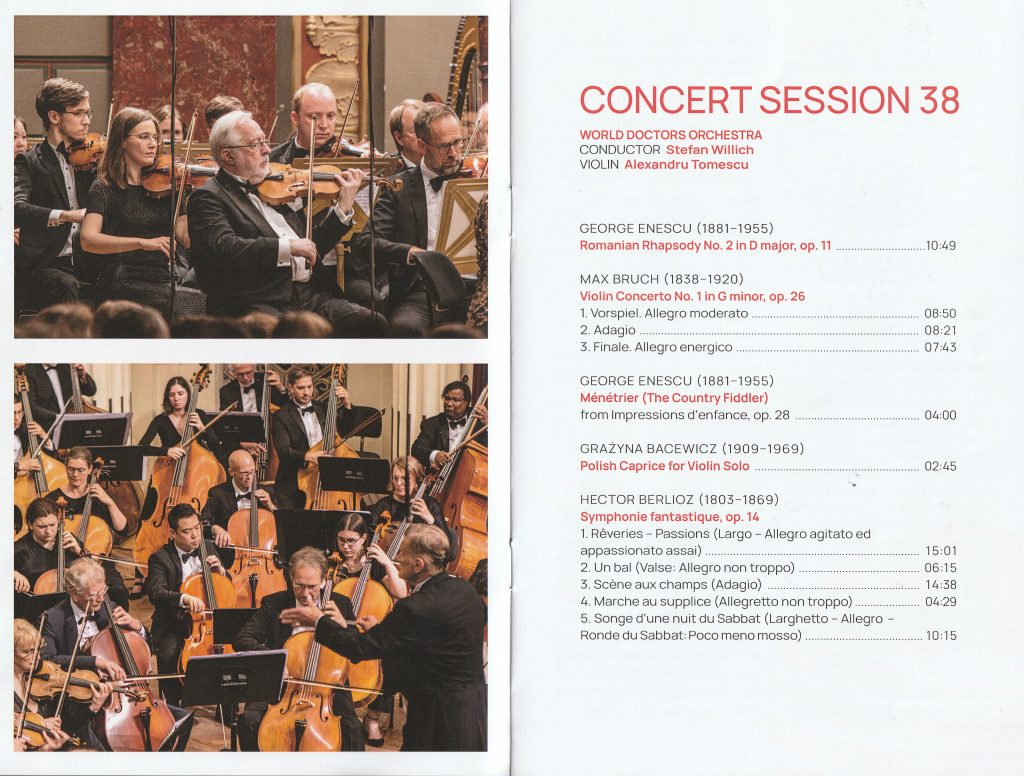
DVD Cluj-Napoca+Athenaeum | WDO – World Doctors Orchestra session 38
Category : CD-+DVD+BD+VHSDocs
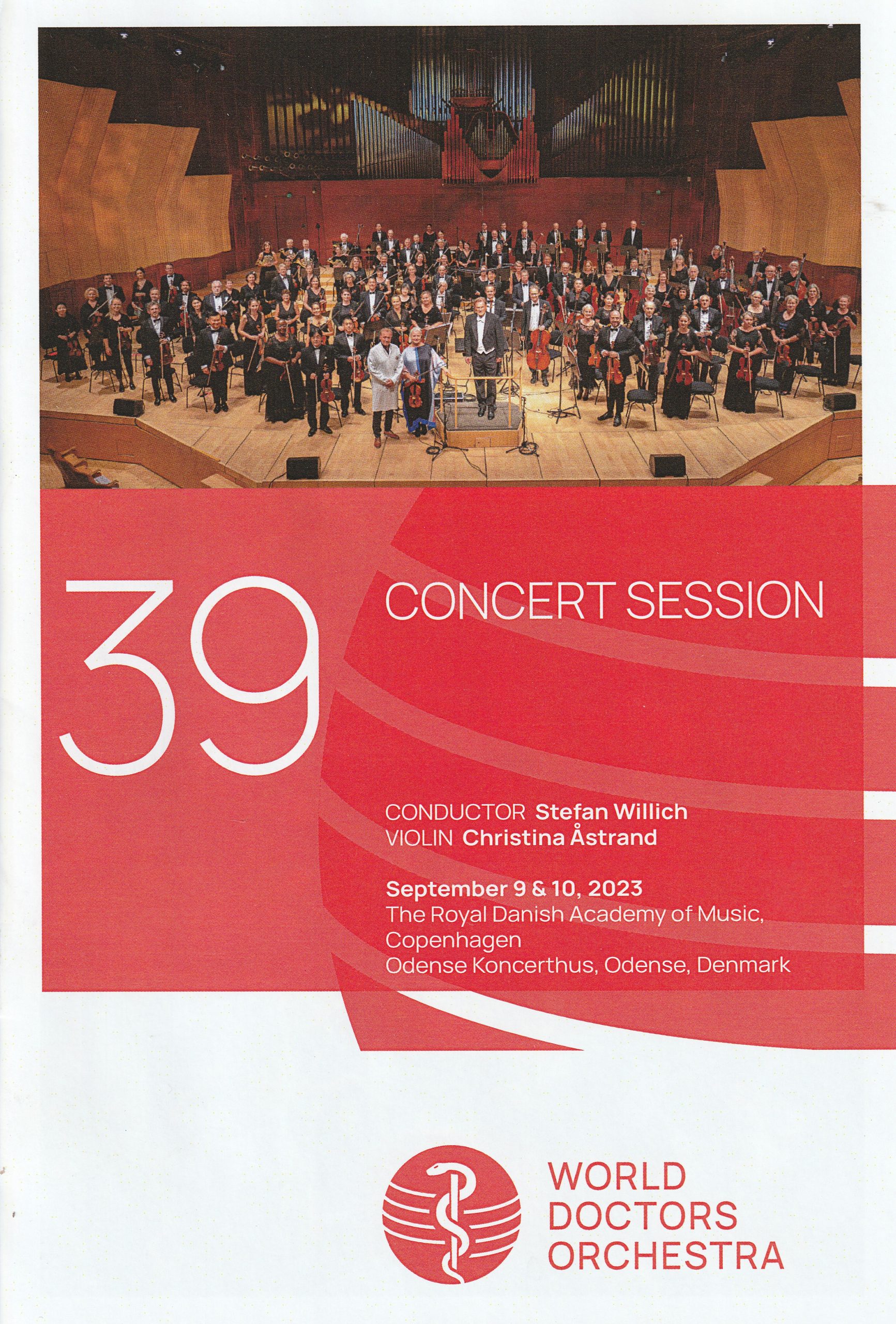
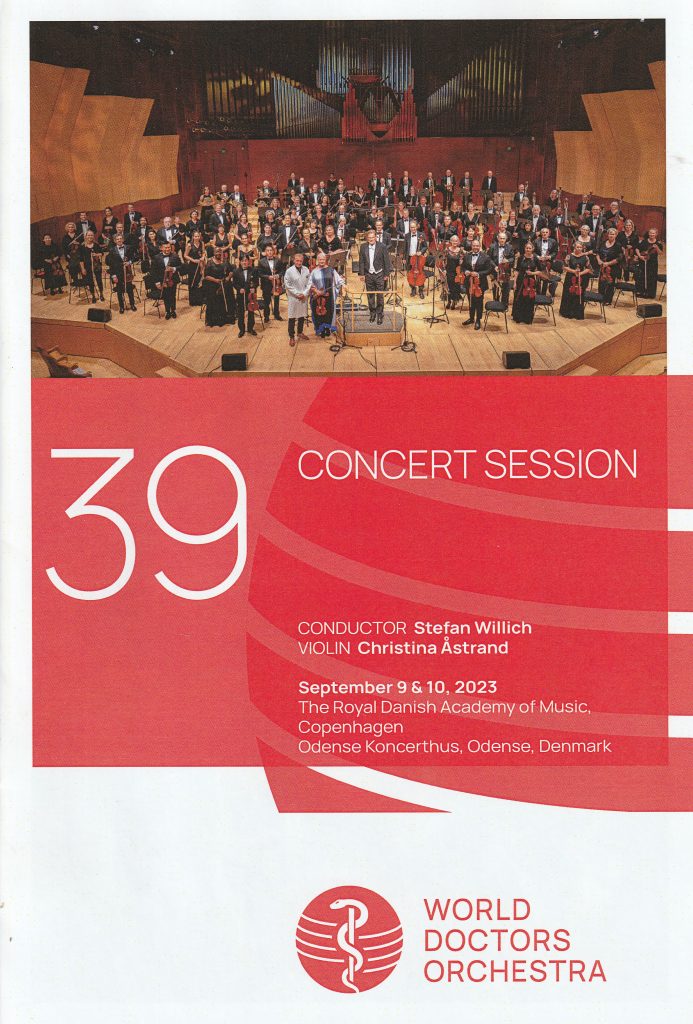
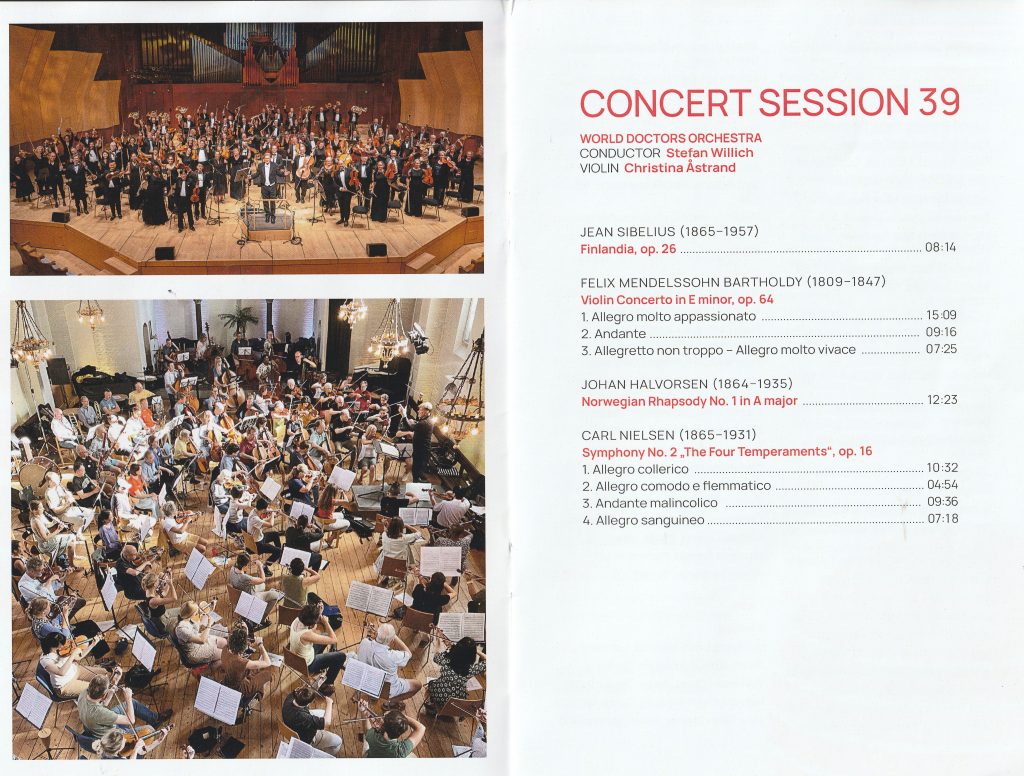
DVD WDO – 39 Concert Session | World Doctors Orchestra
@Royal Danish Academy of Music, Copenhagen
Category : CD-+DVD+BD+VHSDocs , SpiritualDocs , WriterDocs
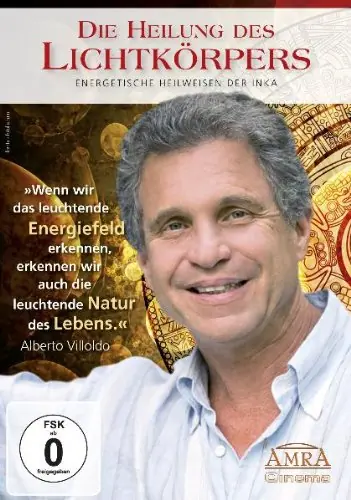
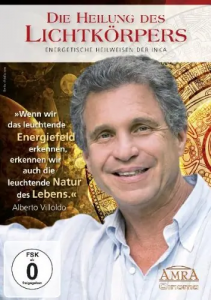
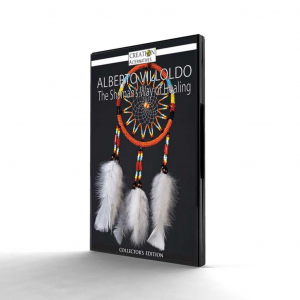
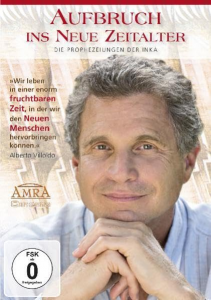
DVD The Healing of the Astral Body | Alberto Villoldo
In his mid-20s, Alberto Villoldo was the youngest clinical professor at San Francisco State University. He headed the Laboratory for Biological Self-Regulation and investigated how energy medicine could alter brain chemistry. One day, Alberto realized in his work that his research needed to be bigger, not smaller—that he was looking through the wrong end of the microscope. He needed to find a system larger than the brain’s neural networks. Many others were already learning the hardware—Alberto wanted to learn how to program the mind to create psychosomatic health.
Anthropological histories indicate that there were people all over the world who claimed to know such things, including the few remaining “shamans” in today’s modern world.
Alberto traded his lab for a pair of hiking boots and a ticket to the Amazon, determined to learn from researchers whose gaze wasn’t limited to the lens of a microscope, from people whose knowledge encompassed more than the measurable, material world he’d learned was the ONLY reality. He wanted to meet the people who sense the spaces between things and perceive the luminous strands that animate all life. Throughout the Andes and the Amazon, there were a number of wise men, or “earth guardians,” who remembered the ancient customs. Alberto traveled through countless villages and hamlets, meeting with numerous medicine men and women. The lack of a written body of knowledge meant that each village brought its own flavor and style to the healing practices that still exist today.
For more than 10 years, Alberto trained with the medicine men of the jungle. In healing his own emotional wounds, Alberto followed the path of the wounded healer and learned to transform old pain, grief, anger and shame into sources of strength and compassion.
From the Amazon, Alberto hiked along the coast of Peru, from Nazca, the site of gigantic markings on the desert floor depicting spirit animals and geometric figures, to the fabled Shimbe Lagoons in the north, home to the country’s most famous shamans. Then, at Lake Titicaca—the sea on the roof of the world—Alberto collected the stories and healing practices of the people from whom, according to legend, the Incas originated.
Along the way, Alberto discovered a series of technologies that can transform the body, heal the soul, and change the way we live and die.
These ancient teachings explain that a Luminous Energy Field (LEF) surrounds us and acts as a matrix or blueprint that maintains the health and vitality of the physical body.
Alberto is the founder of the world-renowned Four Winds Society and the Light Body School. In his teachings and writings, he shares the experience of infinity and its ability to heal and transform us, freeing us from the temporal chains that bind us to sickness, old age, and infirmity.
Category : conductorDocs , StringDocs
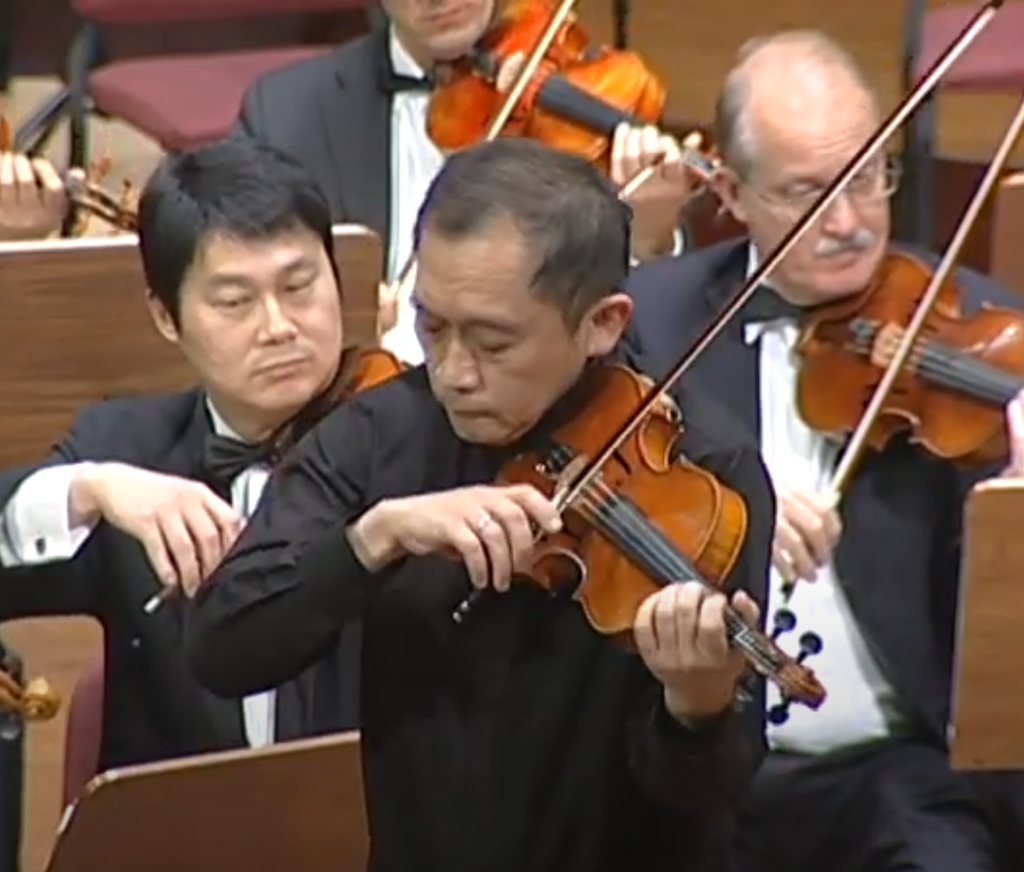
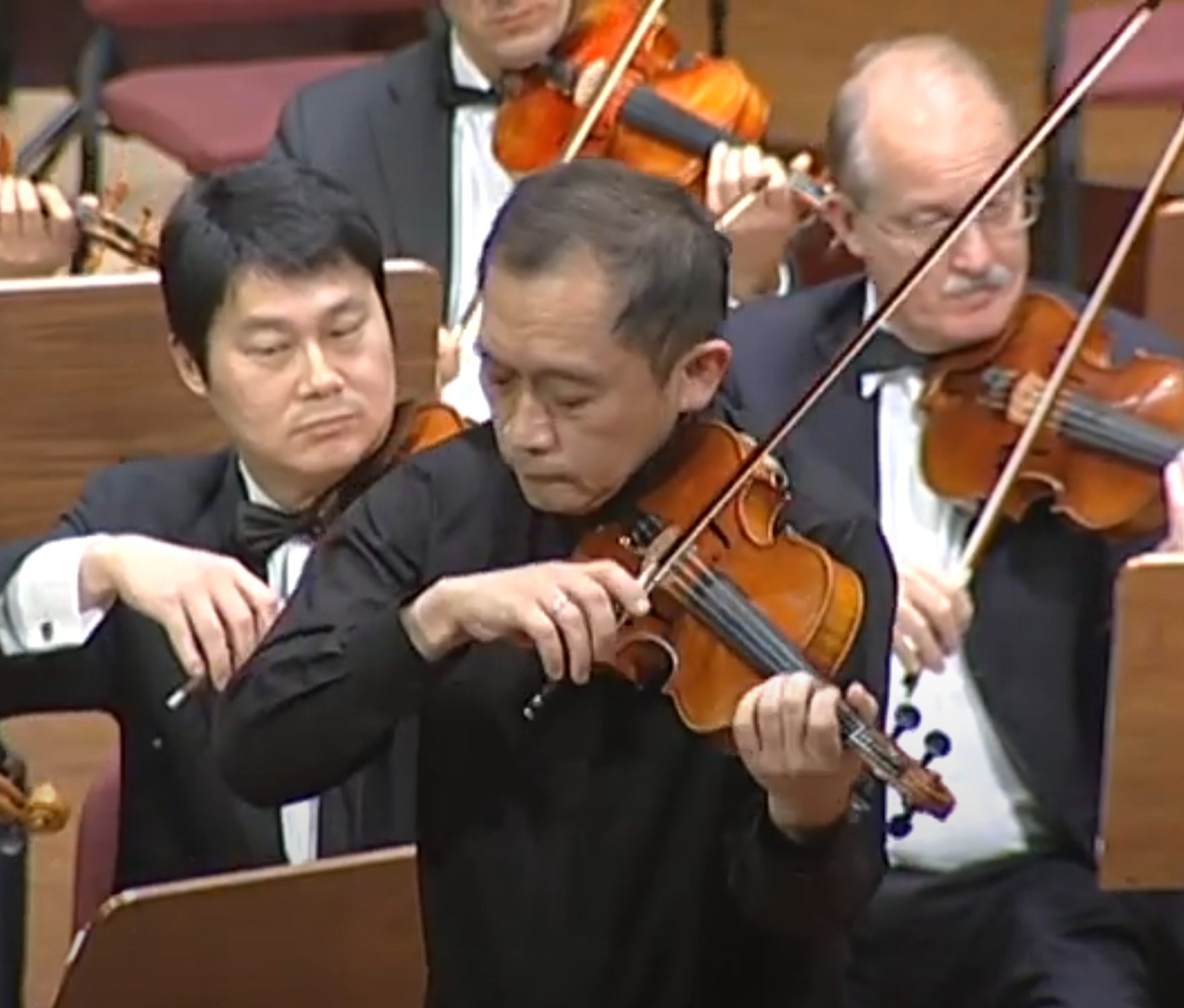
Dr. Kim Chang graduated from the Taipei Medical School Department of Dentistry, and is an Attending Dentist at the Taipei Jen-Ai Hospital. Dr. Kim Chang was first taught to play violin by Professor Lin Tong-Che, and began studying under Professor Yang Tsu-Hsien while an elementary school pupil. Throughout the last 30 years of professional career as a dentist, Dr. Chang never ceased to pursue his passion in music. To this day, he still frequently performs in classical music concerts.
Dr. Chang started entering into violin competitions since an early age, and has received first place awards in All-Taiwan Violin Competitions and Taipei’s Municipal Violin Competition several times. He was the Second Place Winner in the 1972 All Taiwan Music Competition, and was the First Place Winner of the same competition in 1976 and 1985. In 1979, he was awarded the first place awards in both the string quartet and the piano trio categories of the All Taiwan Chamber Music Competition. In addition to the awards won, he was invited many times to perform in concerts featuring concertos as well as chamber music pieces. He has worked with many orchestras, including the Physicians Chamber Orchestra of Taiwan, the National Taiwan University Symphony Orchestra, the Taipei Civic Symphony Orchestra, the Eurasia Chamber Orchestra Taipei, the Physicians Chamber Orchestra of Hong Kong, the Macau Youth Symphony Orchestra, the World Doctors Orchestra, the Taipei Youth Philharmonic Symphony Orchestra, and so on. His repertoire spans a wide range of musical compositions, covering classical music, modern music, as well as musical compositions by current Taiwanese composers.
In September of 2001, At Taipei’s Novel Hall, Dr. Chang held his first and very successful recital, entitled “Music Without Boundaries”. Since then, Dr. Chang has given 9 concerts under such name, to critical acclaim. At these “Music Without Boundaries” concerts, Dr. Chang challenges himself each time with different master pieces, giving professional-level performances as an amateur musician. He also has been joined by his many renowned fellow musician friends who share his passion for music.
Dr. Chang has been the Concert Master and Co-Founder of the Physicians Chamber Orchestra of Taiwan and the Taipei Civic Symphony Orchestra. He has also served as the Director of the Physicians Chamber Orchestra of Taiwan since its establishment in 1990. In addition, Dr. Chang is a lifetime member and Concert Master of the World Doctors Orchestra.
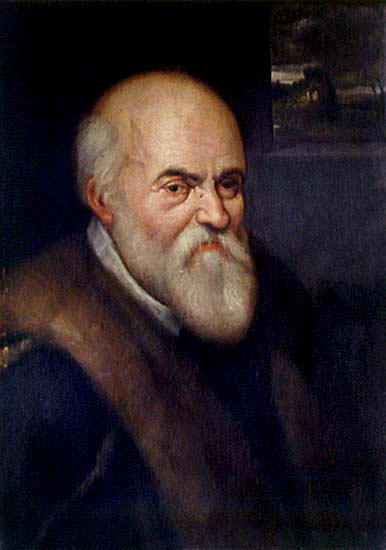
Category : AdvocateDocs , biologyDocs , BotanicDocs , managerDocs , philosophyDocs
Ulisse Aldrovandi (11 September 1522 – 4 May 1605) was an Italian naturalist, the moving force behind Bologna’s botanical garden, one of the first in Europe. Carl Linnaeus and the comte de Buffon reckoned him the father of natural history studies. He is usually referred to, especially in older scientific literature in Latin, as Aldrovandus; his name in Italian is equally given as Aldroandi.
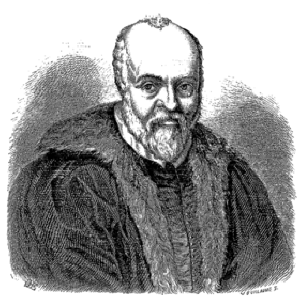
Aldrovandi was born in Bologna to Teseo Aldrovandi and his wife, a noble but poor family. His father was a lawyer, and Secretary to the Senate of Bologna, but died when Ulisse was seven years old. His widowed mother wanted him to become a jurist. Initially he was sent to apprentice with merchants as a scribe for a short time when he was 14 years old, but after studying mathematics, Latin, law, and philosophy, initially at the University of Bologna, and then at the University of Padua in 1545, he became a notary. His interests successively extended to philosophy and logic, which he combined with the study of medicine.[1]
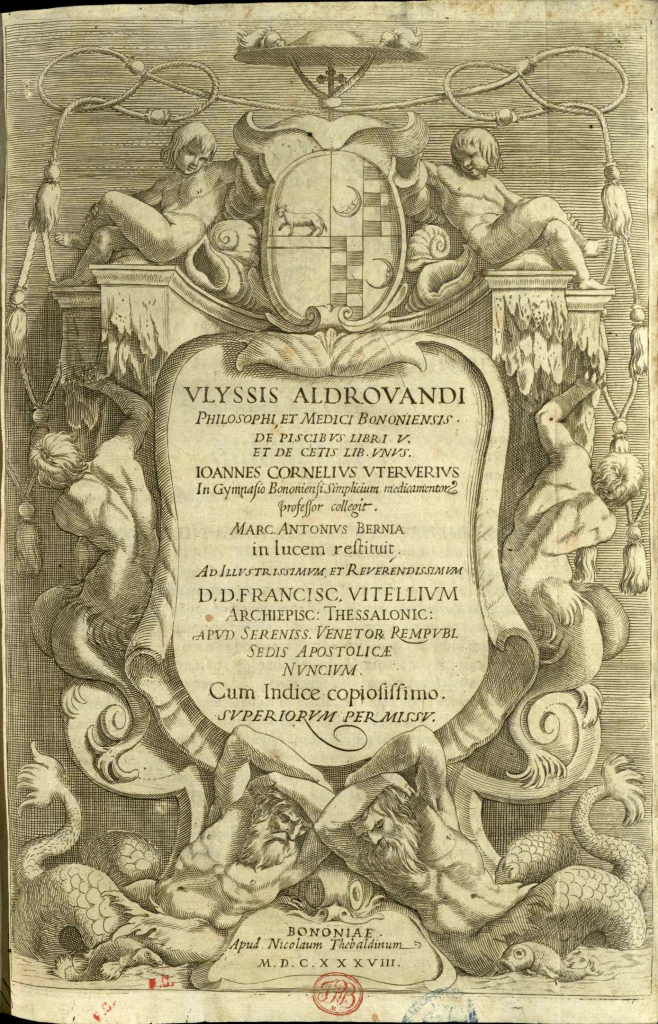
In June 1549, Aldrovandi was accused and arrested for heresy on account of his espousing of the anti-trinitarian beliefs of the Anabaptist Camillo Renato. By September, he publicly abjured, but was nevertheless transferred to Rome, and remained in custody or house arrest until absolved in April, 1550. During this time, he befriended many local scholars. While in light captivity there, he became more and more interested in botany, zoology, and geology (he is credited for the invention/first written record of this word[2]). From 1551 onward, he organized a variety of expeditions to the Italian mountains, countryside, islands, and coasts to collect and catalogue plants.
He obtained a degree in medicine and philosophy in 1553 and started teaching logic and philosophy in 1554 at the University of Bologna. In 1559, he became professor of philosophy and in 1561 he became the first professor of natural sciences at Bologna (lectura philosophiae naturalis ordinaria de fossilibus, plantis et animalibus).[1] Aldrovandi was a friend of Francesco de’ Medici, Grand Duke of Tuscany (1574 – 1587), visiting his garden at Pratolino and travelling with him, compiling a list of the most valuable plants at Pratolino.[b] He also formed fruitful associations with botanical artists such as Jacopo Ligozzi, to further develop illustrated texts.[3] He died in Bologna on 4 May 1605, at the age of 82.
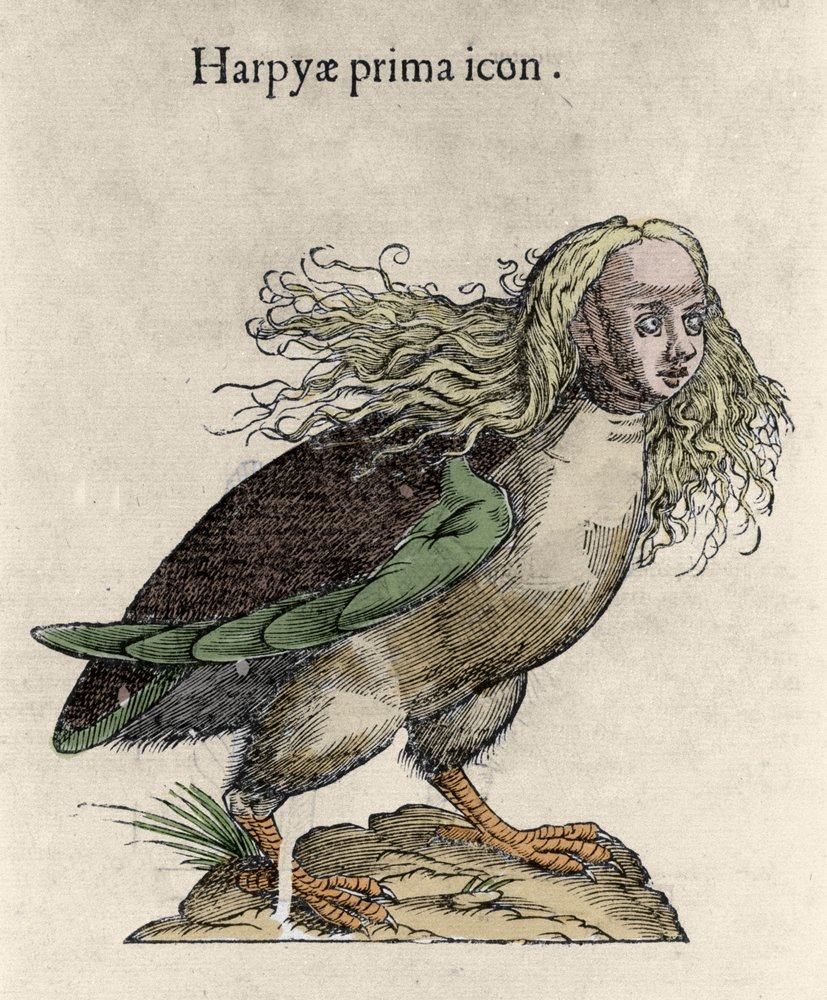
Aldrovandi’s wife Francesca Fontana was invaluable to his research. He utilized her dowry to build their massive country estate that ultimately included his natural history collection. She was a research partner who located texts for him to cite and use in his books, edited his books, and wrote sections of them as well. She wrote the preface for his posthumous book On the Remains of Bloodless Animals, which Suzanne Le-May Sheffield described as “their shared work”.[4]
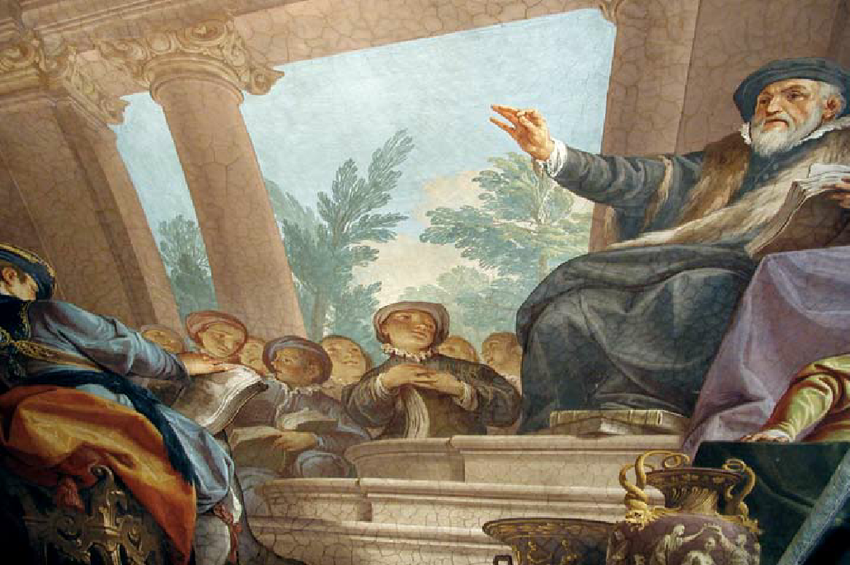
Over the course of his life, he would assemble one of the most spectacular cabinets of curiosities: his “theatre” illuminating natural history comprising some 7000 specimens of the diversità di cose naturali, of which he wrote a description in 1595. Between 1551 and 1554, he organized several expeditions to collect plants for a herbarium, among the first botanizing expeditions. Eventually, his herbarium contained about 4760 dried specimens on 4117 sheets in sixteen volumes, preserved at the University of Bologna. He also had various artists including Jacopo Ligozzi, Giovanni Neri, and Cornelio Schwindt, compose illustrations of specimens.
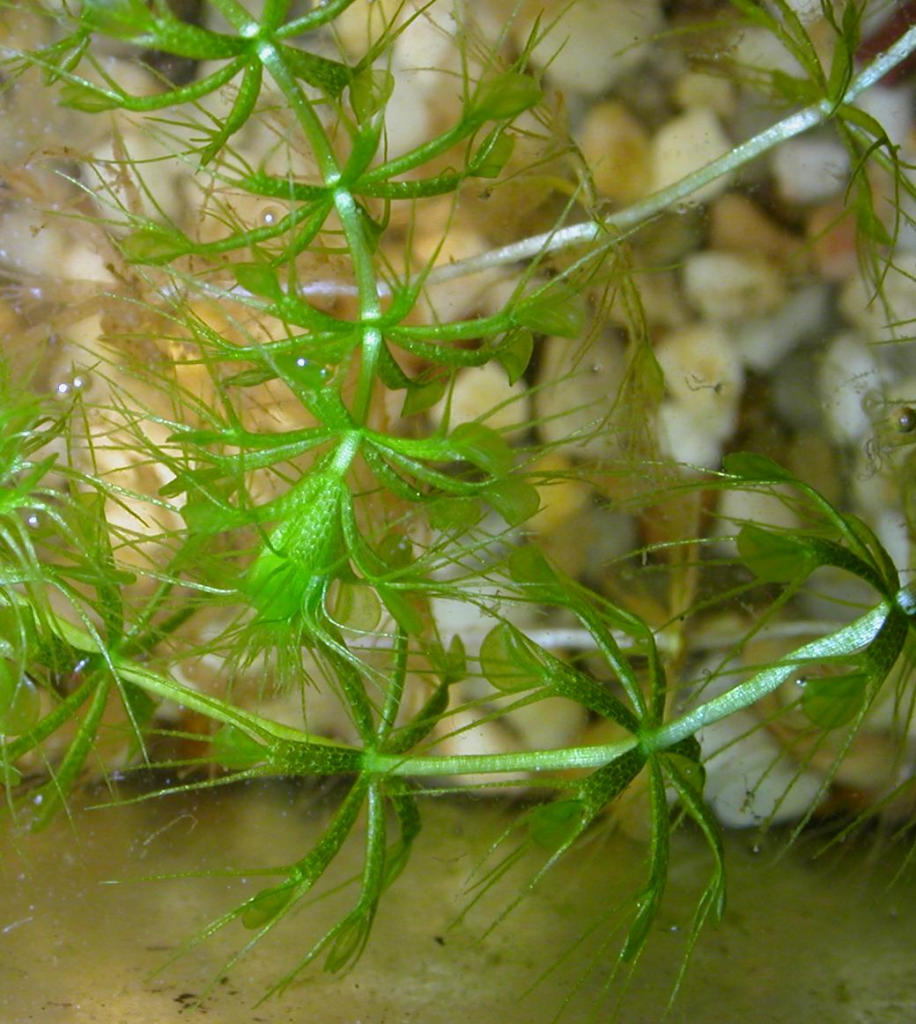
At his demand and under his direction, a public botanic garden was created in Bologna in 1568, now the Orto Botanico dell’Università di Bologna.[5] Due to a dispute on the composition of a popular medicine with the pharmacists and doctors of Bologna in 1575, he was suspended from all public positions for five years. In 1577, he sought the aid of Pope Gregory XIII (a cousin of his mother), who wrote to the authorities of Bologna to reinstate Aldrovandi in his public offices and request financial aid to help him publish his books.
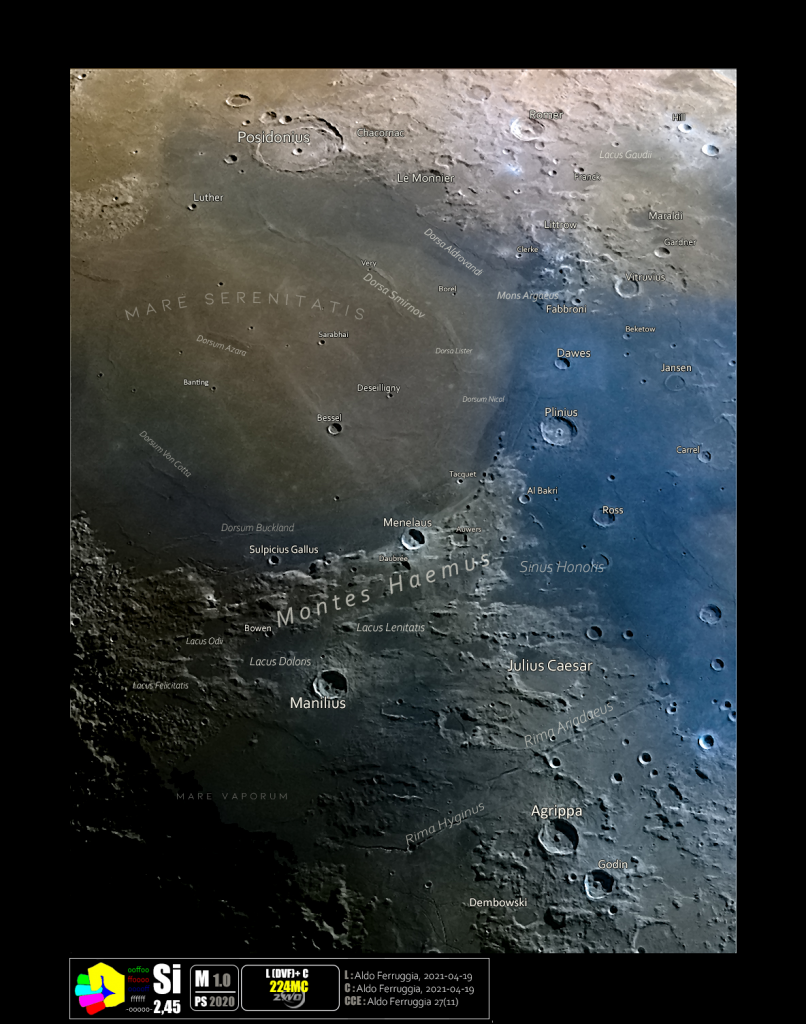
The Civico Orto Botanico “Ulisse Aldrovandi” in San Giovanni in Persiceto is named in his honor.