Roulette Spielfeld: Als eine Möglichkeit für das Online-Casino, seine Kosten zu senken, begrenzen sie manchmal den Betrag, den Sie aus diesen Arten von Freispielen auszahlen dürfen.
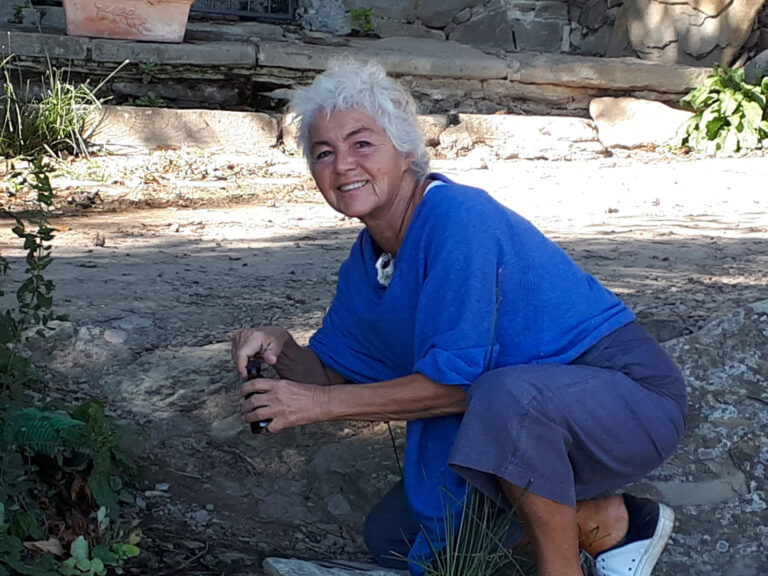
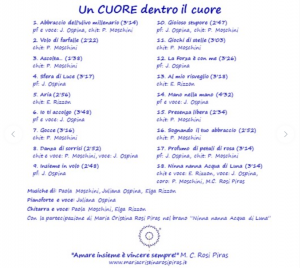
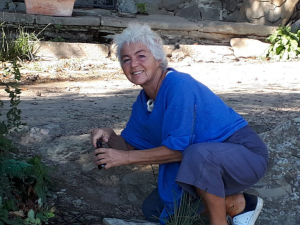
Maria Cristina Piras is a doctor and writer who works spiritually and gives seminars and various events in addition to publishing her books and CDs.
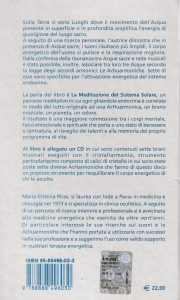
Maria Cristina Piras, a physician, graduated in Medicine and Surgery from the University of Pavia and specialized in Clinical Ophthalmology. Following a journey of soul-searching and professional exploration, she approached holistic medicine, including homeopathy, which she has practiced for approximately 40 years. Of particular interest are her studies on the waters of high-vibration places and the harmonic harmonies that led her to develop a unique working method for rebalancing the energy of the environment and humanity. Following her encounter with Bert Hellinger, she integrated the systemic constellations technique into a unique path of awareness: The Way of the SELF®. President of the Prismablu Cultural Association, she offers seminars and programs for reconnecting with the SELF.
Her multi-sensory arrangement “Freely based on Momo”:
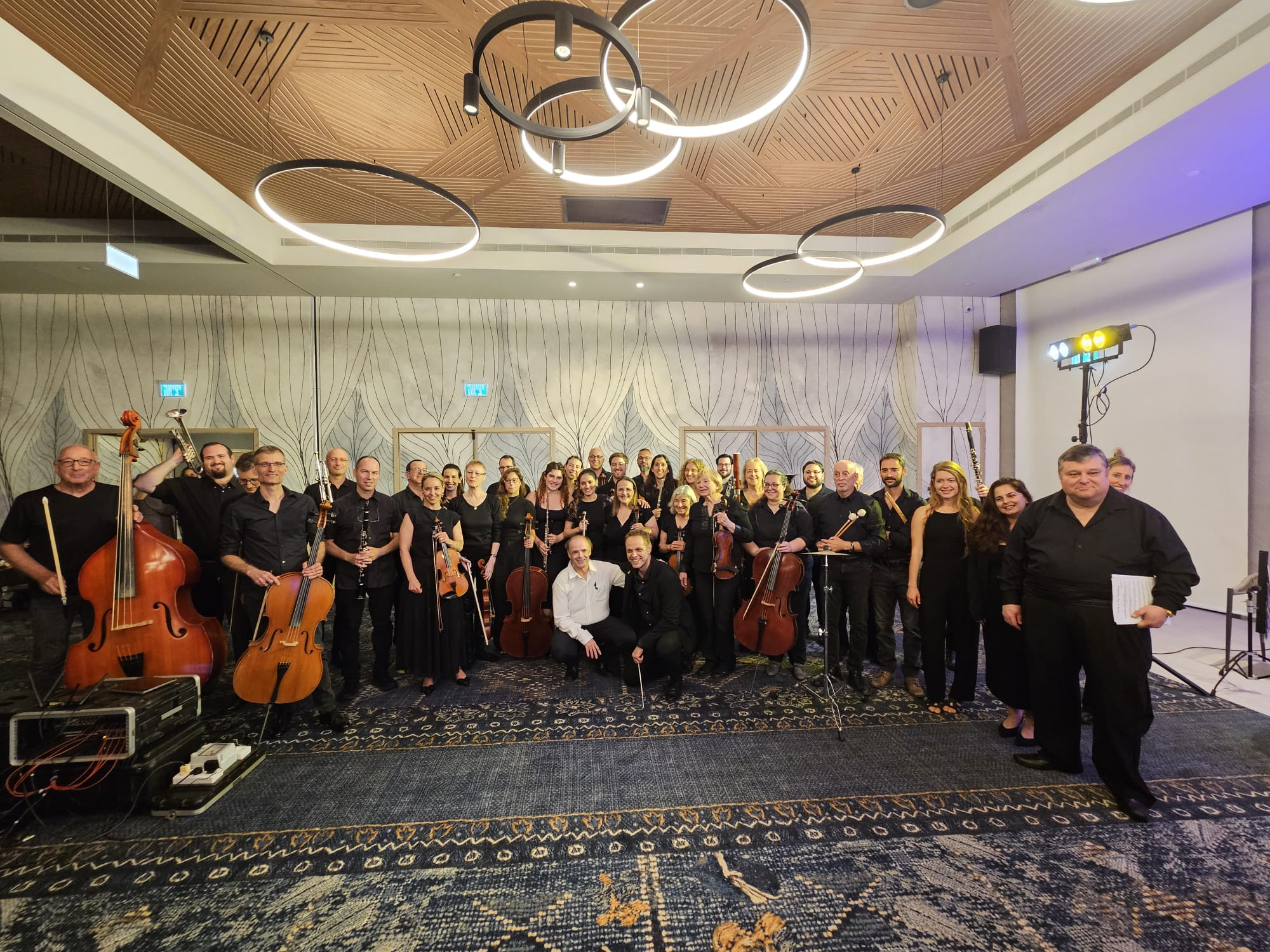
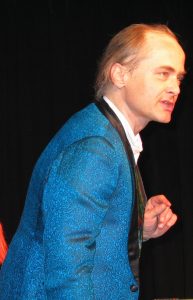
An ensemble of physicians from various medical disciplines, united by their passion for music and commitment to medical and social causes. Founded in 2025! Founder and Director: Dr. Orit Gourgy Hacohen Musical Director and Conductor: David Sofer
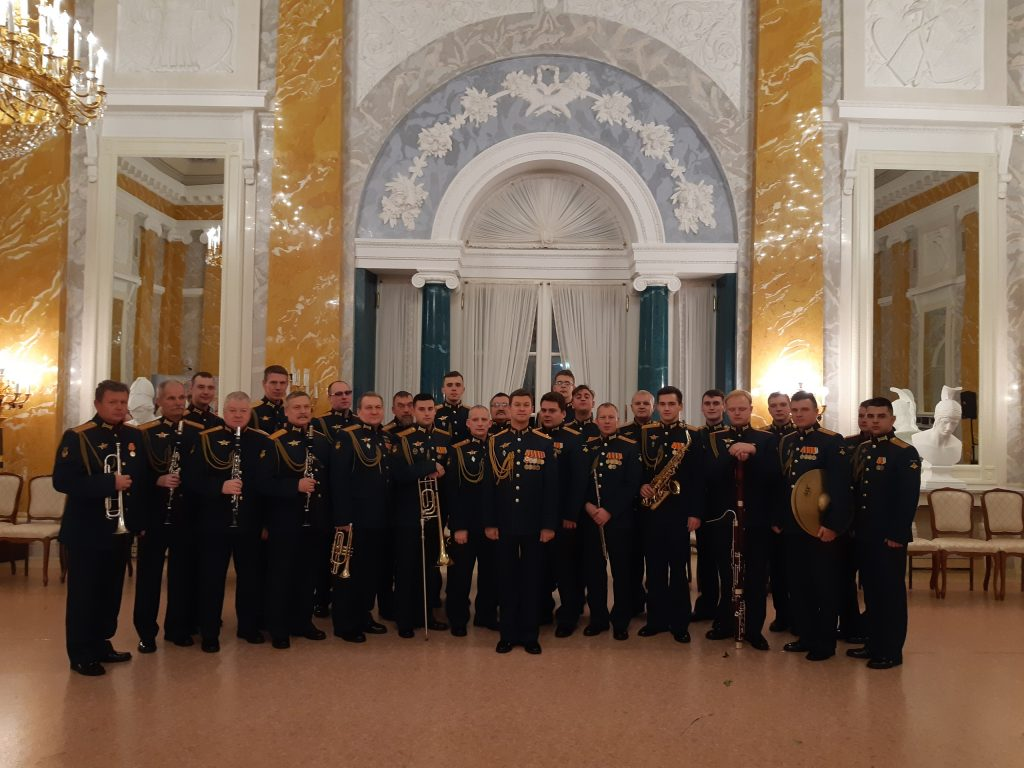
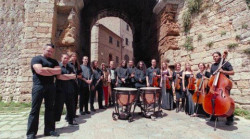
The Military Orchestra of the Military Medical Academy is a highly professional, creative team of military musicians with an unlimited repertoire. The orchestra performs both applied military music and early, classical, modern, and dance music. The orchestra participates in many holidays of the administrations of St. Petersburg and the Leningrad Region, days of military glory, and ceremonial events of the Ministry of Defense of the Russian Federation: the May 9 parade dedicated to Victory in the Great Patriotic War; the January 27 parade dedicated to the complete lifting of the siege of Leningrad; City Day, Russian Railways Day, Airborne Troops Day, Alexander Nevsky Day, Heroes of Russia Day, and the opening of monuments and memorials dedicated to great personalities and major events of our country. The orchestra’s musicians have repeatedly participated in the filming of historical films and military-historical reconstructions.
The orchestra is a regular participant and prize-winner of the International Festival of Military Brass Bands, held on the founding day of the city of St. Petersburg, and a participant and winner of the All-Russian Military Brass Band Competitions. In 2019, the S. M. Kirov Military Medical Academy Orchestra was recognized as the best orchestra among orchestras of military educational institutions of the Armed Forces of the Russian Federation at the All-Russian Competition of Military Bands of the Armed Forces of the Russian Federation, achieving the 1st degree of laureate. Orchestra soloist Konstantin Andreev (alto saxophone) was named the best soloist of the Russian Armed Forces. The Military Medical Academy Orchestra collaborates with musical educational institutions, including conservatories and music schools in St. Petersburg, Moscow, Kazan, Nizhny Novgorod, Samara, and Saratov. Students of these musical institutions have repeatedly performed with the orchestra as soloists and performers of various instruments. The military conductor and the orchestra’s musicians are always open to new creative contacts and artistic projects.
was born in Kempten/Allgäu. While still studying pharmacy, he was accepted into the vocal class of Professor Monika Bürgener at the Würzburg University of Music and Performing Arts, where he completed the advanced training class with distinction in March 2002. Since then, he has worked freelance.
Sven Fürst now has an extensive concert schedule both in Germany and throughout Europe, working with orchestras such as the Nuremberg Symphony Orchestra, the Prague Philharmonic, and the Baden-Baden Symphony Orchestra. He has attended master classes with Prof. Ingeborg Hallstein, Prof. Richard Sigmund, and Prof. Helmut Deutsch, among others, and has participated in various CD productions and radio recordings. Sven Fürst is the first prize winner of the 1999 Armin Knab Competition, a finalist of the 2000 Joseph Suder Competition, a prize winner of the 2005 “Debut in Merano” competition, and a scholarship holder of the Richard Wagner Society in 2000. In 1999, he also took up a teaching position in singing at the University of Würzburg. In the 2001/02 season, he was a guest at the Mainfrankentheater Würzburg and is a member of the Cologne Young Chamber Opera, where he sang Papageno in The Magic Flute alongside the father in “Hansel and Gretel” and Dr. Falke in “Die Fledermaus.” In the 2005/06 season, he appeared in Cologne as Guglielmo in a production of “Cosi fan tutte.”
In addition to the Merano Opera Summer of 2005, where he sang one of the leading roles in a revival of Flotow’s opera “The Miller of Merano,” he finally performed Dr. Bartolo in W.A. Mozart’s “The Marriage of Figaro” in a highly acclaimed production at the Pasinger Fabrik in Munich in the summer of 2006. A recording by Bayerischer Rundfunk took place in January 2007.
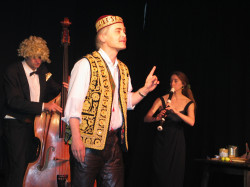
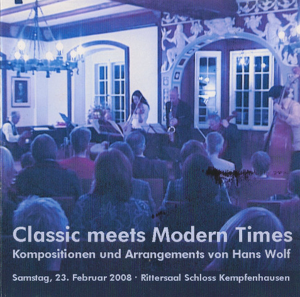
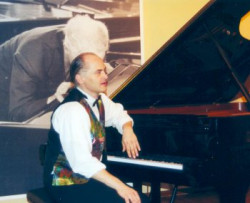
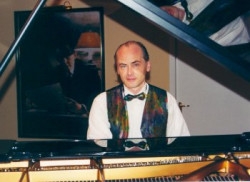
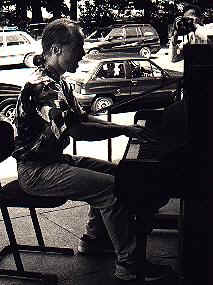
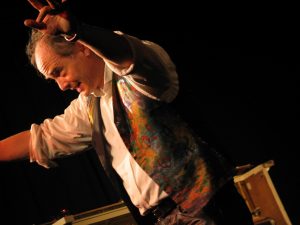
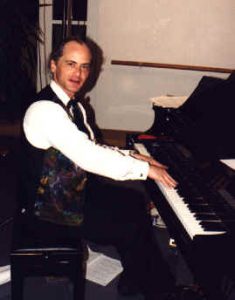
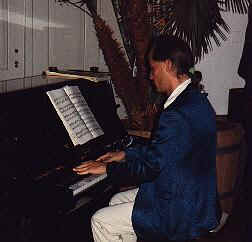
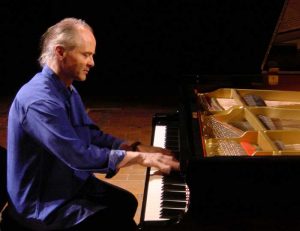
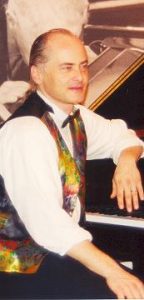
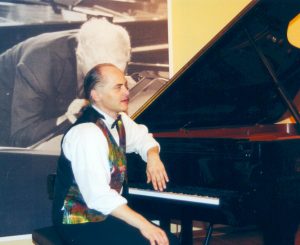
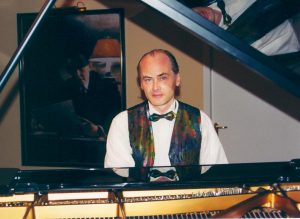
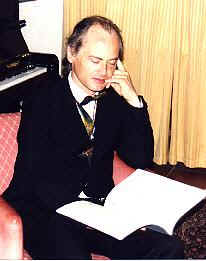
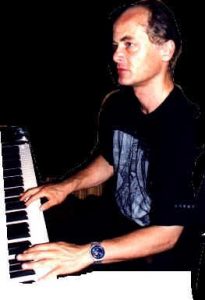
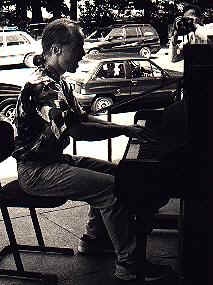
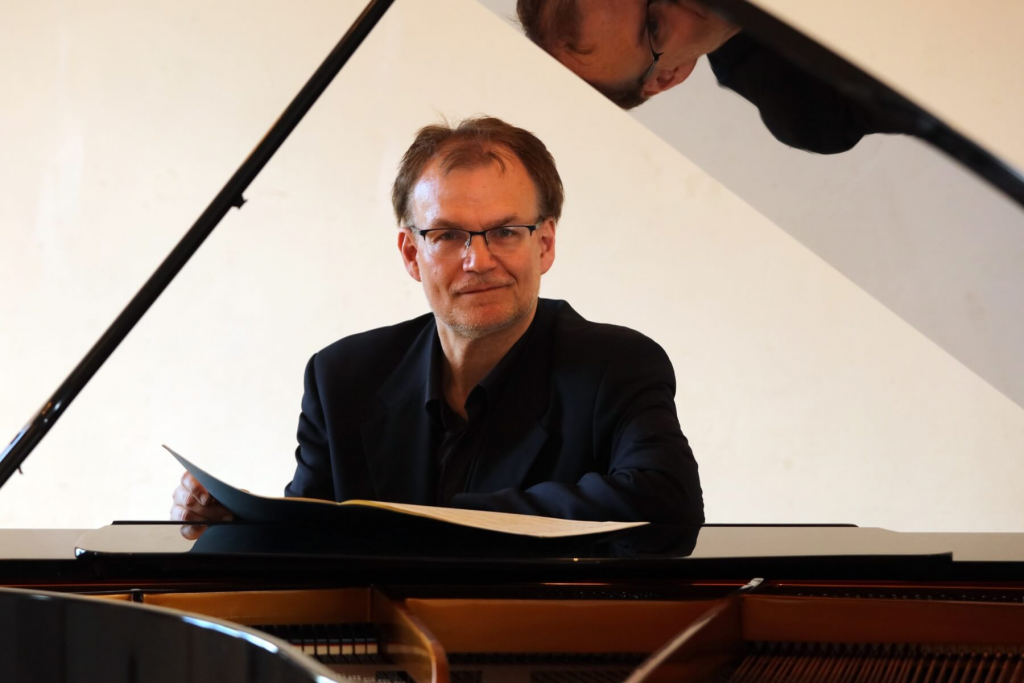
Hans Wolf, born May 31, 1958 in Braunschweig, is a German physician, concert pianist, and multimedia artist. From 1977 to 1985, he studied medicine and worked as a medical officer. He performed numerous cabaret shows at holistic medicine conferences in Bad Herrenalb.
He completed classical piano studies with Prof. Edith Picht-Axenfeld in Freiburg, receiving his diploma.
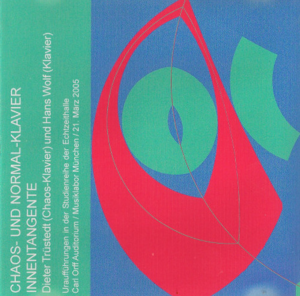
Premieres of his own compositions at the Munich Festivals for Contemporary Music/Art by the MGNM (Munich Society for New Music) and the Echtzeithalle group.
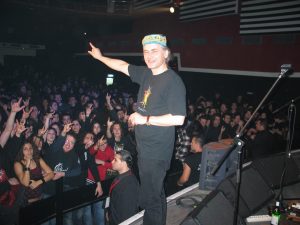
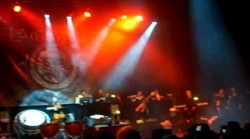
Member of well-known ensembles: Haggard: Medieval metal with classical influences, founded in 1993; tours across Europe and to Mexico (2001). Three CDs, one DVD
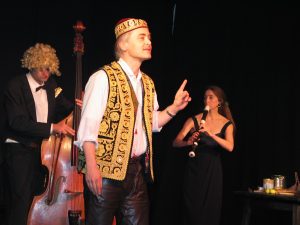
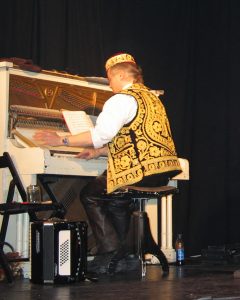
Trio Superstrada, founded in 1995 (here, in addition to piano, he also plays accordion, guitar, and djembe): polystylistic musical theater with Stephan Lanius (double bass) and Michaela Götz (vocals, flute). One CD, one demo video.
A brief member of the PHREN Music Theater in Munich.
Ensembles for free improvisation from Munich’s avant-garde and jazz circles: With the well-known group N.I.E. (New Improvisors Ensemble), founded in 1993 and disbanded after a year, Wolf performed in concerts in public squares and at the Unterfahrt Jazz Club, among others. N.I.E. is partially continued in the following groups to which Wolf belongs:
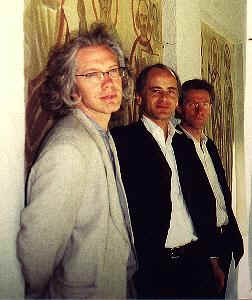
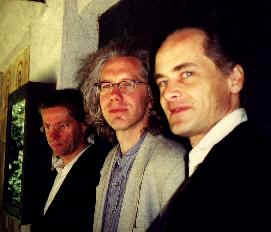
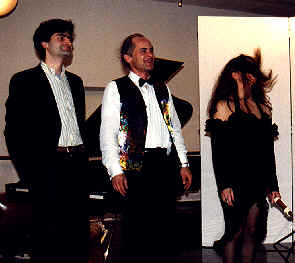
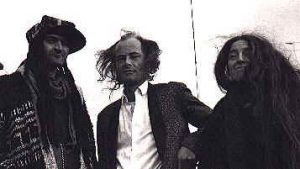
Trio Animali (founded in 1994, performances at Club 2 and the Munich Jazz Festival 1995, among others) with G. Geisse (g) and L. Hahn (from left), group ECHT (founded in 2000, performances at the Long Night of Music ’01, scoring computer-animated images at “Echtzeit 2001”, group Asyl-Art (founded in 2000, including poetry and image scoring at the Asylart Festivals ’00 and ’01).
Founding member of the jazz big band “Forum 2” (since 1993), Munich Olympic Village Cultural Association.
Duos: Duo Capriccioso with Andreas Suttner (cello), founded in 1999: Music “from entertaining to serious.”
Duo with Anne Greve (mezzo-soprano), founded in 2001: A swinging kind of music.
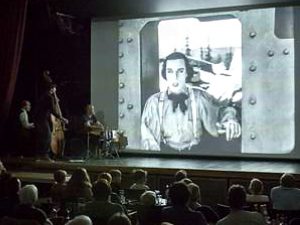
Live silent film scoring in a trio (founded in 1998) with Thomas Hüter (percussion, fl) and Stephan Lanius (bass): “Metropolis,” “Nosferatu,” and “Dr. Caligari.”
Collaboration with directors Javier Andrade and Martina Veh (Munich) since 1995, and with Alexander Schilling (Nuremberg) since 2001, as a composer and pianist in music theater and multimedia projects.
Collaboration with Dieter Trüstedt since 1999: Several lectures at the “Monday Talks” he organized, including on his own compositions; jointly creating the music for the performance “Genesis.”
Commissions for theater music, big bands, fashion shows, and musical settings for art and literature.
Commissions as a studio musician, especially for piano music in television films.
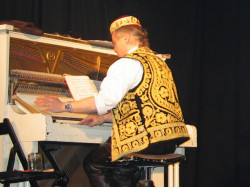
Performances as a versatile party pianist at all kinds of celebrations; regular pianist in bars and cafes, e.g., at the Cafe am Beethovenplatz and Cafe Giesing in Munich.
Engagements as an accompanist and keyboardist for touring musical productions.
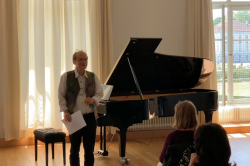
Teaching activities: Piano teacher with new creativity-oriented concepts, piano technique based on the Langenhan-Serkin school, classical instruction, including preparation for the entrance exams to music colleges, including theory and ear training. Lessons in rock, pop, and jazz piano, as well as other piano improvisation; development and teaching of improvisation and composition courses, e.g., with the title “Discover Your Own Music.” Since 1995, instructor at the Grafing Adult Education Center; organization of student concerts for the Munich Pianists’ Club.
Active memberships: Society for New Music and Music Education Darmstadt, International Summer Courses for New Music Darmstadt, Bavarian Association of Musicians, Pianists’ Club, MGNM (Munich Society for New Music), Echtzeithalle e.V.
Over the past three decades Dr. Eric Pearl has shed a new light on the essence of healing. Undeniably, Reconnective Healing® and the Reconnective Healing Experience™ (RHE) have redefined both what healing is and how it is received. Through Jillian Fleer’s insights, it has become clear the RHE has shown us how our direct awareness connects us to the essence of healing itself. Moreover, it gives us a healing experience available to everyone and not limited to the physical, mental, emotional or spiritual: it is infinite. Additionally, it is devoid of tools, steps or rituals to follow. In brief, Reconnective Healing® is the direct path to healing.
since 2009 As an expert on ZDF, RTL, N24, Sat1, and HR for “Service:Gesundheit” and “Einfach gesund!”
2008 “Gesundheit!”, BR, working as an expert in nutritional medicine
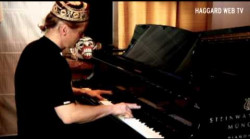
Explanatory video with self-played piano transitions
2006-2007 “Die Sprechstunde” (The Consultation Hour), BR, Engagement: Nutrition Expert
2006-2007 “Weck Up” (SAT.1), Engagement as a Consulting Physician
Kokew impresses with her naturalness and freshness, as well as her excellent screen presence… (Logo Institute) Member of the cabaret group “Comedizyniker” (KOMM-Kabarett) at the University Hospital Frankfurt; acting lessons
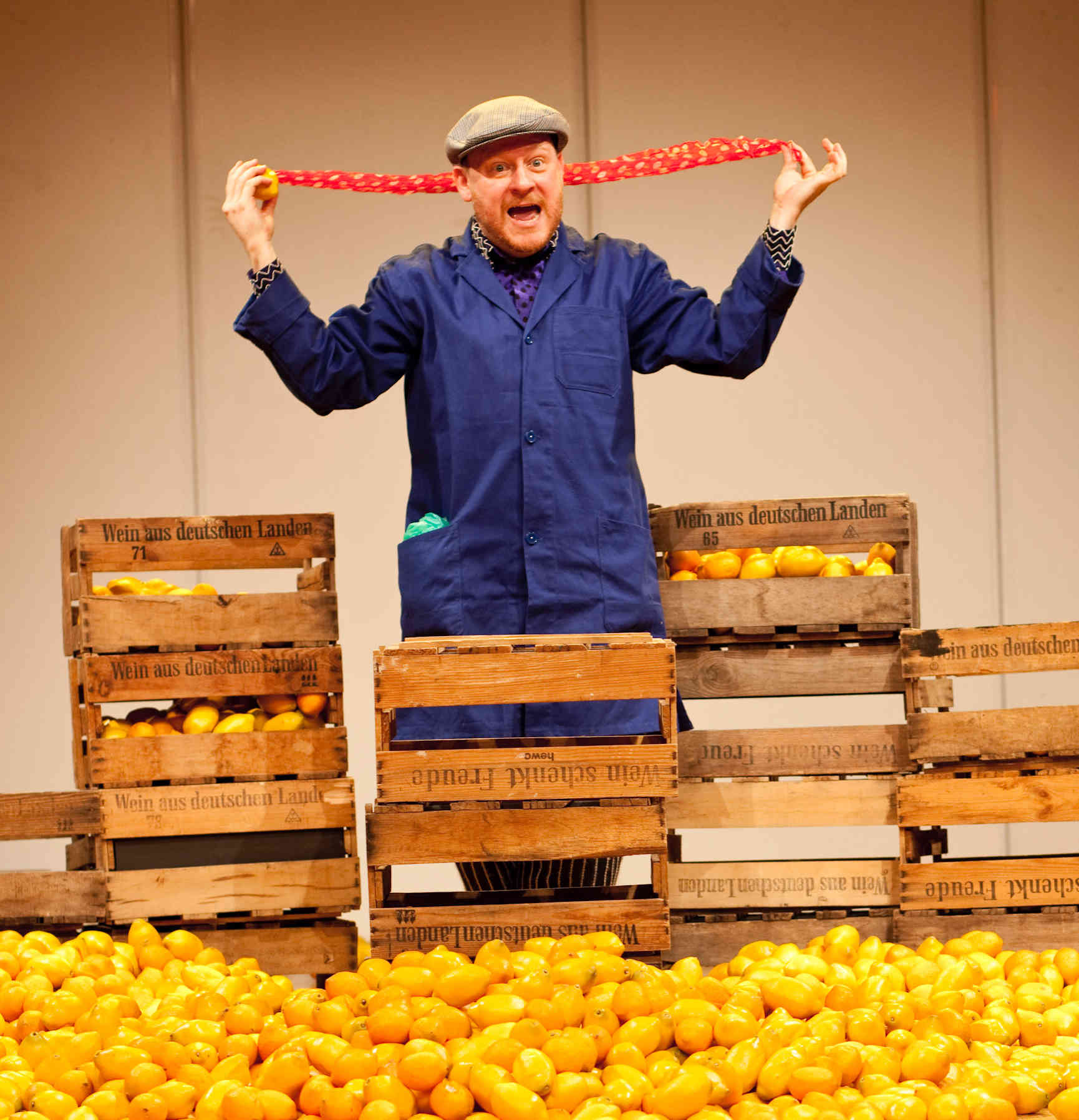
Simon Heiniger: Born in 1962 and raised in Emmental, he studied medicine in Bern. Thanks to a curriculum from the FIAM Bern, he trained as a general practitioner. Since 1994, he has been a family doctor in Olten. Married to a very understanding and patient wife, with three adult children. He writes like a writer:
I would like to tell you something about my hobby. I restore. From a medical perspective, the problem of restoration is not yet fully understood. It is suspected that a relatively rare spontaneous mutation on the Y chromosome occurs (so the female readership can breathe a sigh of relief). This deviation from the original genome forces the male psyche to fight against natural aging with all its might. If a man fails to do this for himself, he turns his energies to, for example, his car.
Divide and conquer – but be sure to make a sketch first!
The first symptoms appeared at an atypically young age, which I didn’t yet know how to interpret clearly at the time: I began restoring wooden furniture during my studies. I told everyone at the time that it was a mental balance, and I felt absolutely certain that I had found a survival tool and perhaps even a second source of income for future crises. After a few years, when our apartment looked like a stage set for a Gotthelf theater, my wife convinced me that it might not be very beneficial for the children to grow up in this antiquated living environment, and that, after all, something modern could also be very appealing. I recognized the seriousness of these objections and, somewhat offended, retreated to my workshop, gave away one piece after another, and patronizingly allowed modernity to slowly move into our household. I had the time and opportunity to choose a new hobby. For a brief moment, I even considered sports or reading.
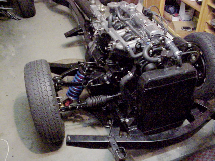
As with many chronic illnesses, one tends to delude oneself into believing one’s health during symptom-free periods. However, when I saw a Triumph Spitfire shortly after opening my practice (for the more interested reader: Mk IV, Jg 72), I quickly added the price tag to the total investment expenditure, and since this didn’t result in a significant difference, I drove the Spitfire home. This spontaneity, often typical of me and equally overwhelming for those around me, didn’t meet with much approval this time either. Since then, I always discuss a car purchase with my wife beforehand, or at least mention such a project sometimes. The Spitfire was a good purchase. The engine almost always started, and only rarely did it let me down on the road. Every now and then, I curiously unscrewed something, marveled at the (still) nameless part, and screwed it back on. Apparently, it was fine; everything worked. The problem with this car was that there was nothing to restore. On a later occasion, I complained about this plight to the Triumph dealer. I think he wrestled with himself for a moment before telling me that instead of ruining the good car, he had an idea. His suggestion was a rather dilapidated Triumph GT6 (for the still-interested reader: Mk I, 1968, also known as the “poor-man’s E-Type”), parked behind the garage years ago and left to rot and rust.
Runs, but doesn’t drive yet
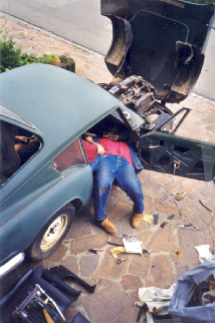
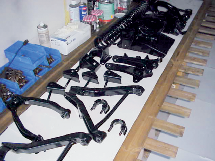
My restoration heart leapt with pity, beat faster, and with much effort (I can’t go into the details, as the various violations may not have expired yet), I parked the “vehicle” in our backyard. I tried to counter my wife’s incomprehensible horror (had I really forgotten to inform her?) with arguments like “it’ll be a great car by spring” and “it looks terrible, but it’s solid.” Admittedly, spring had come several times, and the solidity wasn’t quite so great after all. To lend my determination a touch of credibility, I began the rather hectic disassembly that same day. This bold step in particular isn’t particularly suitable for imitation: even today, I still have a reproachful box of small parts for which, no matter how hard I tried to imagine, I simply couldn’t find room when putting them back together. Very quickly, an unexpected space problem arose. If the car, in drivable condition, has the dimensions of a small vehicle, the space required in a gutted state is about four times larger. I had to discreetly incorporate the now-modernized living space into the storage room, and even for this practical conversion of space, there was strangely no applause. Today I can talk about it; at that stage, I was almost desperate. Half the neighborhood was amused by the noise and chaos.
Give up? Those who restore cars don’t know that expression, and anyway, it’s part of the very nature of a family doctor to persevere, not to give up, even when no one believes in a happy ending anymore. I needed help and comfort, lots of comfort. The bookshelf was filled with specialist literature on British vehicles, rust treatment, engine construction, reports with tips and tricks from fellow sufferers. I discovered I wasn’t alone. Similar fates seem to be shared in many places, with many a self-proclaimed preserver of rusty cars suffering with brave perseverance in a small, unheated garage. The project progressed in small steps. There was a time when the various parts were spread out over a radius of many kilometers: the engine was at the cardiologist’s, the chassis at the orthopedist’s, and the body at the dermatologist’s. Our house was once again stress-free and livable. In this situation, I was once again able to benefit from my experience as a family doctor.
«Barba non facit philosophum», And a beautiful body doesn’t necessarily make a vehicle.
It took my persistent attention until my patient (still disassembled) was finally back home. Now all that was left was to reassemble it. With my now considerable experience and the painful experience of using many new tools, this should really only be the crowning achievement. The conclusion, and especially the crowning achievement, would have to wait for another spring. I became acquainted with the English understanding of precision. The majority of imported new parts rarely fit; where there should have been a recess, there wasn’t one. And the wiring harness had countless nerve endings that simply ended up somewhere without any reason (perhaps I should have paid more attention in neurology). Improvisation and courage were required. Once all the holes and recesses on the freshly veneered dashboard were covered, I had the part x-rayed in the office. With the old bronchoscope, I was sometimes able to get a better overview of the depths of the engine or the body. And all the useful surgical instruments were briefly put to a different use (and, of course, later sterilized again).
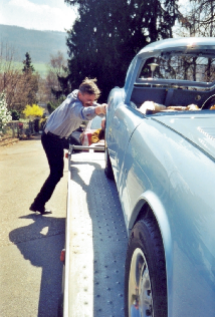
One fall, the Triumph was finally finished, previously in “British racing green,” now in a more conciliatory “powder blue.” Everything worked, and even the motor vehicle inspection gave it its veteran’s blessing. For a short time, the symptoms disappeared, and everyone rejoiced in the miraculous healing. If only the Moto Guzzi hadn’t been at the motorcycle dealer, or the sadly beautiful Saab on the internet, or the old Vespa in my father-in-law’s barn…
With time and experience, I’ve learned something very important. Before making any new purchase, I always talk to my wife first. She’s learned to live with my weakness and patiently stands by me (sometimes she still has a meltdown when there are so many vehicles in and around the house, so I just have to get rid of another restored object; never mind, I’ll find another one).
Dear reader, I have one final request: If you meet a man in a shiny, beautiful old car, be kind to him. He’s been through a lot.
PrimaryCare 2006;6: Nr. 51-52
Dr. med. Simon Heiniger Ziegelfeldstrasse 25 4600 Olten heiniger.simon@freesurf.ch
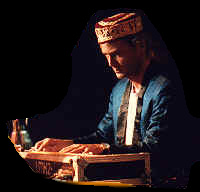
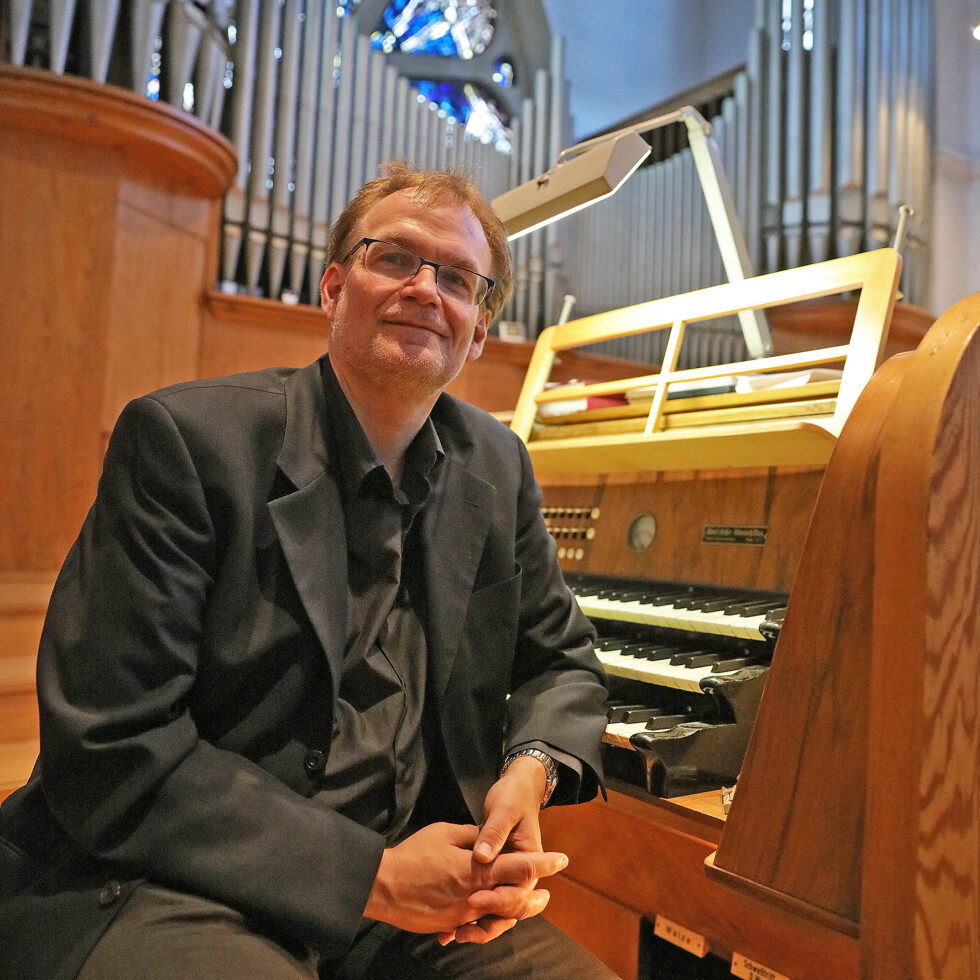
In addition to his work as a senior physician, Hans-Roman Kitterer leads an active musical life in and around Aalen as a pianist in the theater with solo and chamber music programs and on the organ solo or in ensembles such as here:
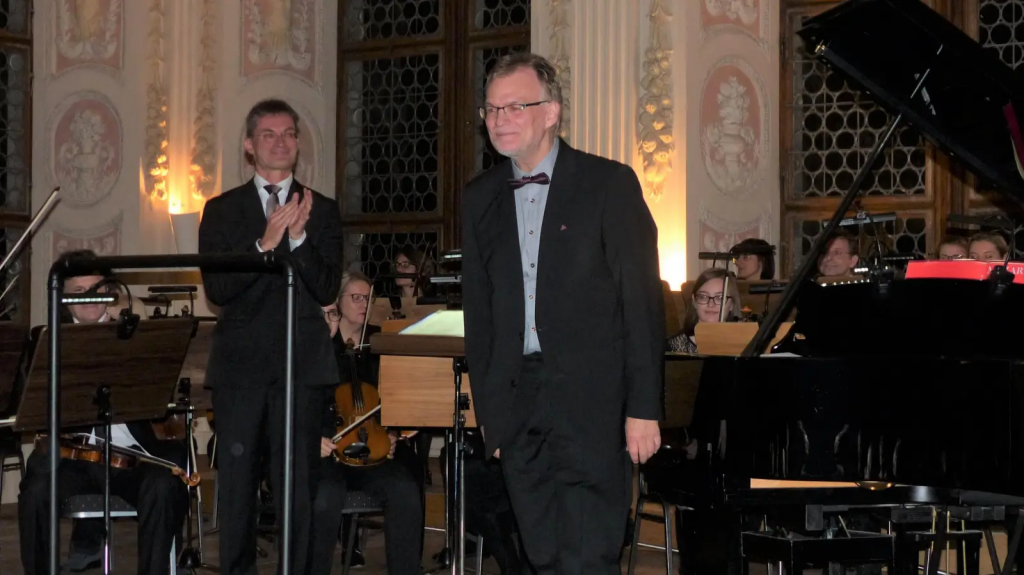
The Oettinger Residence Concerts Board concluded the concert season with a piano concerto by W. A. Mozart, played by Hans Roman Kitterer from Aalen and the Oettinger Chamber Orchestra under the direction of Günter Simon.
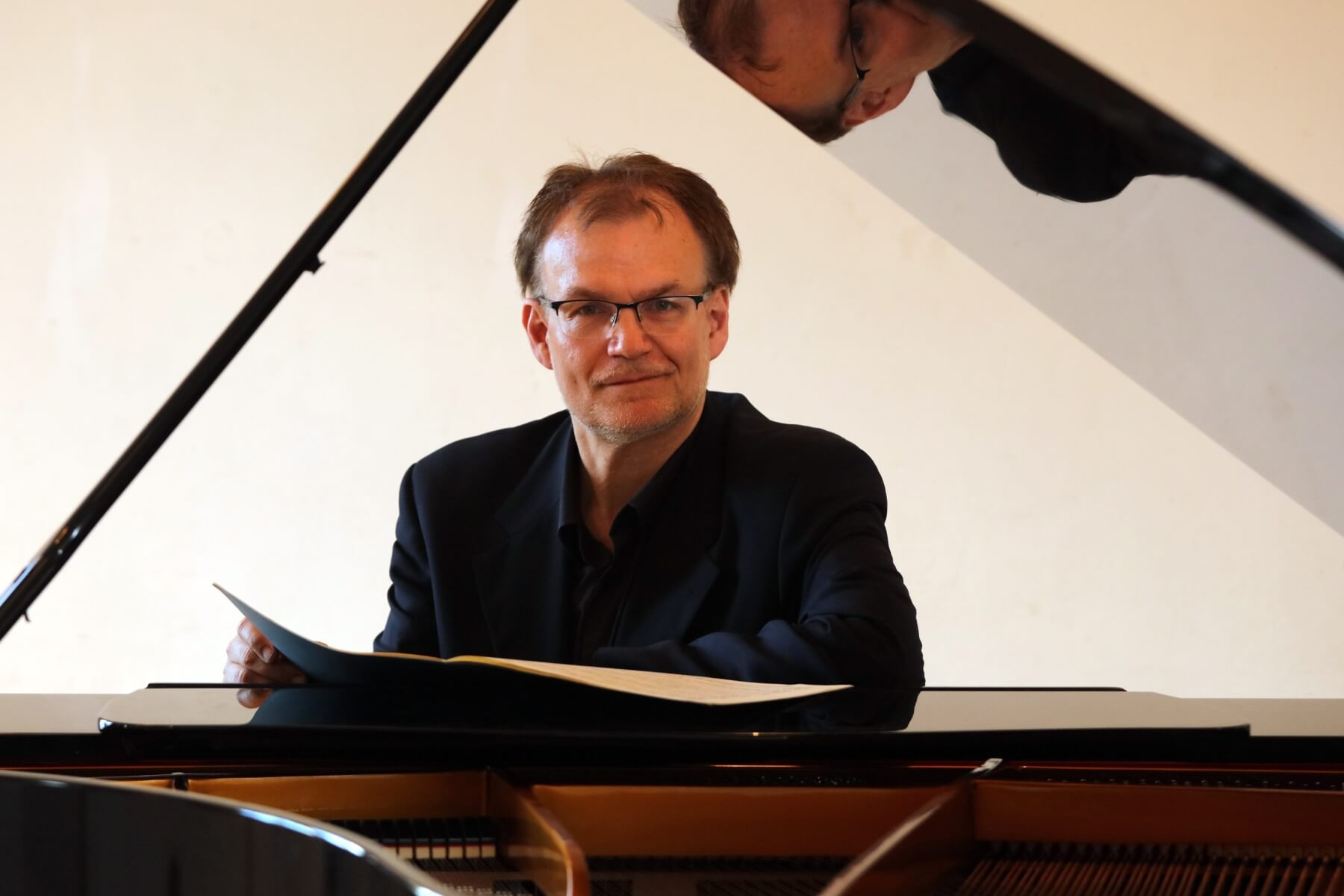
Few people know the musician Christoph Wagner. Anyone who listened to him improvise on the piano understood that it was this immediate proximity to music that motivated and drove him to create a science for musicians.
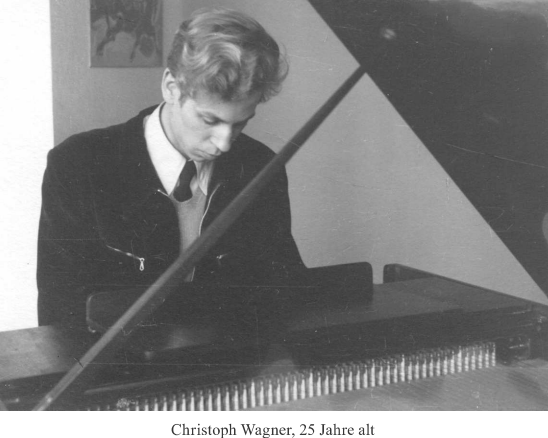
Born on May 20, 1931, in Marburg, Christoph Wagner grew up in Weilburg/Lahn in a culturally diverse and stimulating home. Despite only sporadic piano lessons due to the war, the boy soprano developed into a sensitive pianist who mastered the great works of piano and violin literature. Even as a young man, he was a sensitive chamber music partner and accompanist. From early childhood, improvisation was also second nature to him. Throughout his life, it remained a source of spiritual balance – later in a musical language that was partly reminiscent of Bach, but often also of Brahms or Schumann.
1958 – 1963
Music studies in Detmold – majoring in conducting with Martin Stephani, piano with Renate Kretschmar-Fischer, composition with Günter Bialas
Christoph Wagner’s longing for music was so constant that in 1958, after studying medicine (“out of reason”) and subsequently obtaining his doctorate, he began studying music with a major in conducting. In Detmold, he enjoyed a musically fulfilling time—but on the other hand, doubts crept in: “The idea for a systematic investigation into the physiological foundations of music performance arose during my music studies, which followed my medical studies. Given the conceptual background of natural science, with its efforts to objectively validate insights and decisions as much as possible, it seemed strange that musical education relied solely on subjective experience, despite obvious contradictions in methods and results. Successes were admired, failures were usually explained away as a lack of talent, but their causes were not investigated. The increasing incidence of tendonitis and similar complaints remained consistently silent. It was obvious that many of my fellow students were unsure of themselves and suffered from self-doubt. As my studies progressed, it became increasingly clear to me that this dilemma could be significantly improved if the work of musicians and its physiological prerequisites were scientifically investigated. In 1963, at the end of his music studies in Detmold, he predicted to his then piano teacher Renate Kretschmar-Fischer while out for a walk: “There will be an institute dedicated to this task full-time.” – Eleven years later, the time had come.