Month: May 2025

  • -

William Carlos Williams

Category : WriterDocs

William Carlos Williams (September 17, 1883, Rutherford, New Jersey – March 4, 1963, ibid.), often abbreviated to WCW, was an American physician and poet.

Williams’ life quickly became entirely centered – apart from his travels in Europe – in his hometown of Rutherford, New Jersey, where he practiced medicine (M.D.) since 1910.

In addition to his writing, Williams was a long-time physician, practicing both pediatrics and general medicine. He was affiliated with Passaic General Hospital, where he began serving as chief of pediatrics from 1924 until his death. The hospital, now called St. Mary’s General Hospital, honored Williams with a plaque bearing the inscription, “We walk the paths Williams walked.”

In contrast to Pound, who was inspired by European models, William Williams, in his collection of essays “In the American Grain” (1925), called for a simple yet avant-garde poetry that should be oriented towards spoken language and everyday American life.

Williams writes in his autobiography, published in 1951[5]: “Ezra has always been very careful to bridge the gap between my educational deficiencies and his sovereign scholarship. Since he treats me in no way patronizingly in this regard, I allow it. It genuinely grieves me that my literary knowledge is so far inferior to his. I respect his discomfort and try my best to accommodate his well-intentioned efforts.”[6] If Williams was less well-versed in European literature than Pound, he endeavored to remedy this deficiency on his European tour, as he met with well-known European writers, intellectuals and painters, especially in Paris.

His early poems were still strongly influenced by European Dadaism and Surrealism. In 1923 he wrote his most famous poem to date, “This is Just to Say.”[10] Together with Pound and Eliot, he joined the Imagists, an Anglo-American literary movement, around 1912. His friendship with Pound later broke down due to artistic differences of opinion and Pound’s support for Italian fascism, but this did not prevent him from visiting Pound, who was interned in the USA (see autobiography).

As a result of his third stroke (the first was in 1951) in October 1955, he suffered paralysis, which slowed his work pace. Nevertheless, he taught himself to type on an electric typewriter with his non-paralyzed hand.

At the age of 79, poet-physician William Carlos Williams died in March 1963 in Rutherford, New Jersey, after another series of severe strokes.

Audio William Carlos Williams https://writing.upenn.edu/pennsound/x/Williams-WC.php

https://de.wikipedia.org/wiki/William_Carlos_Williams

https://en.wikipedia.org/wiki/William_Carlos_Williams


  • -

Matthias Schrenk

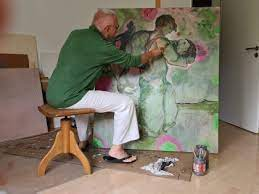
The artist Matthias Schrenk (left) and Bernd Salfner in front of the oil painting “Young Man with Fish.” Photos: Rosemarie Tillessen | Image: Rosemarie Tillessen

After graduating from Klettgau Gymnasium in Tiengen, he received a scholarship from Norway and began his artistic studies at the Ringsaker Folkehögsskole. While on a scholarship in Norway, he decided to perform civilian service at the Reichenau State Psychiatric Hospital instead of completing his military service. Following this, he studied art education for three semesters at the Freiburg University of Education, then transferred to the independent art school in Stuttgart. After passing the entrance exam at the Karlsruhe Art Academy, he was given the opportunity to continue his artistic studies in Gerd van Dülmen’s painting class.

He has been an ophthalmologist in Rheinfelden since 1996. All of the approximately 50 works on display in an exhibition in 2023 – except for one – were created in the past two years: “Thanks to the coronavirus, I had more time for the first time, not just at night or on weekends.” In conversation with Salfner, he explains how his paintings are created – without a fixed plan, from the subconscious: “I just start.” Then he often paints over them, changes them. Viewers frequently discover traces of overpainted work. “I always stick to the representational: here a head, a face, a figure. I’m not that interested in landscapes.” When asked whether his paintings are melancholic, he affirms: “There is always melancholy in art.”

https://www.suedkurier.de/region/hochrhein/waldshut-tiengen/wanderer-zwischen-zwei-welten;art372623,11803113

Praxis | office


  • -

Irvin D. Yalom

Irvin David Yalom (born June 13, 1931 in Washington, D.C.) is an American psychoanalyst, psychotherapist, psychiatrist, and writer. He is Professor Emeritus of Psychiatry at Stanford University and the author of numerous academic books and novels. Yalom is considered the most important living representative of existential psychotherapy. He is the recipient of the 2009 International Sigmund Freud Prize for Psychotherapy.

The book Every Day a Little Closer, which he published in 1974 in the form of an epistolary novel with Ginny Elkins [the pseudonym of his former client], is based on an unusual experiment. The client was a writer and her year-long participation in one of his therapy groups had been relatively unsuccessful. He therefore suggested individual therapy on the condition that, instead of paying him, she write a free-flowing, uncensored summary of each therapy session, in which she expressed all the feelings and thoughts she had not verbalized during the session. He did exactly the same. Exchanging notes every few months revealed the great discrepancies between sensations and memories regarding the same sessions. At first he used the notes in therapeutic teaching, then they were published as a book. The advice in his book The Panama Hat is based on notes from 45 years of clinical practice.

Fiction and memoir

Filmography

Auszeichnungen und Ehrungen

https://www.yalom.com

https://de.wikipedia.org/wiki/Irvin_D._Yalom

https://en.wikipedia.org/wiki/Irvin_D._Yalom


  • -

Marcos Aguini

Marcos Aguinis (born January 15, 1935 in Córdoba, Argentina) is an Argentine neurosurgeon and writer.

Aguinis’ father immigrated to Buenos Aires from Bessarabia in 1928 and soon moved in with relatives living in Cruz del Eje in the province of Córdoba. As a schoolchild, Marcos Aguinis suffered discrimination from classmates and some teachers because of his Jewish heritage. During the persecution of Jews in Germany, all of his remaining family members in Europe were killed. After his bar mitzvah, he began to study literature and religion intensively. He borrowed books about the Bible and Israel from the public library. Among other works, he read Stefan Zweig, Julio Nin y Silva’s “History of the Religion of Israel,” Emil Ludwig’s “The Son of Man,” “Muhammad and the Koran” by the Spaniard Rafael Cansinos Assens, and Ernest Renan’s “The Life of Jesus.” Reading Renan’s book marked the beginning of his doubts about his faith. Today, Aguini is an agnostic.

He began writing short stories while still at school. After finishing school, he studied psychiatry, neurology, and psychoanalysis. At the age of 23, he received a scholarship to study neurosurgery in Buenos Aires. He continued his medical and psychiatric studies at the Hôpital de la Salpêtrière in France, as well as in Freiburg im Breisgau and Cologne with the help of a scholarship from the Alexander von Humboldt Foundation. After returning from Europe, he earned his doctorate at the University of Córdoba and initially worked as a neurosurgeon at the Southern Regional Clinic. During this time, he published his first short stories.

Aguinis published his first book in 1963. Since then, he has published numerous novels, essay collections, short story collections, and two biographies. His articles in newspapers and magazines in Latin America, the United States, and Europe cover a wide range of diverse topics. He has given numerous lectures and offered courses in Germany, Spain, the United States, France, Israel, Russia, Italy, and almost all Latin American countries.

During the dictatorship in Argentina, the distribution of Aguinis’s works was subject to restrictions. Some of his works could only be published abroad and were brought into the country illegally.

When Argentina returned to democracy in December 1983, Aguinis was appointed Secretary of State and then Secretary of Culture. He organized PRONDEC, a national program for the democratization of culture, supported by UNESCO and the UN. He launched intensive activities to raise public awareness of their rights, responsibilities, and opportunities for developing a genuine democracy. For his work, he was nominated by UNESCO for the Peace Education Prize.

https://www.youtube.com/@AguinisMarcos/featured


  • -

Manolis Anagnostakis

Category : WriterDocs

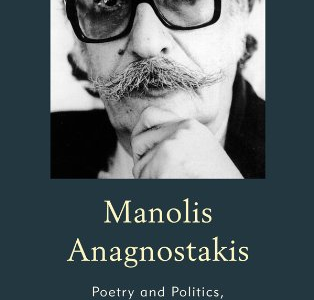
Manolis Anagnostakis (Greek: Μανώλης Αναγνωστάκης; * 10 March 1925 in Thessaloniki – 22 June 2005 in Athens) was a Greek existentialist poet.

Leben

Anagnostakis initially studied medicine at the Aristotle University of Thessaloniki and later practiced as a radiologist. During World War II and the subsequent civil wars, he was an active member of the resistance movement. After a military court sentenced him to death, he spent many years in prison and exile.

He began his writing career in 1944 with articles in the magazine Xekinima. His first volume of poetry, titled Epoch I, was published in 1945. Further volumes in this cycle followed in 1948 and 1951. He published a second series of poems between 1956 and 1962.

His works have been set to music by composers such as Mikis Theodorakis, Thanos Mikroutsikos, Angeliki Ionatou, and Michalis Grigoriou.

In 2002, he received the Greek Special Prize for Literature

https://de.wikipedia.org/wiki/Manolis_Anagnostakis

https://en.wikipedia.org/wiki/Manolis_Anagnostakis


  • -

Wassili Pawlowitsch Aksjonow

Vasily Pavlovich Aksyonov (Russian: Василий Павлович Аксёнов, scientific transliteration: Vasilij Pavlovič Aksënov, born August 20, 1932 in Kazan; died July 6, 2009 in Moscow) was a Russian writer. He began his career in the Soviet Union and later had to emigrate to the United States.

Wassili Aksjonow (left) with Viktor Nekrasov (in front of the equestrian statue of Joan of Arc, Place du Martroi, Orléans, 1983)

From 1956 to 1960, he worked as a doctor, but had already begun writing sketches and short stories while still a student. He published his first stories in the 1960s, which soon became very popular, especially among young readers. In 1979, he came under pressure for his collaboration on the underground literary almanac Metropol, along with Andrei Bitov, Fazil Iskander, Viktor Yerofeyev, and Yevgeny Popov.

In 1980, Aksyonov accepted an invitation from an American university and took up permanent residence in the United States, where he continued his writing career. Until 2003, he taught as a professor of Russian at George Mason University in Fairfax, Virginia. In 2004, he moved to Biarritz. He spent the following years alternating between France and Moscow, where he died in July 2009.[2] His grave is in the Vagankovo ​​Cemetery in Moscow.

In 1980, Aksyonov accepted an invitation from an American university and took up permanent residence in the United States, where he continued his writing career. Until 2003, he taught as a professor of Russian at George Mason University in Fairfax, Virginia. In 2004, he moved to Biarritz. He spent the following years alternately in France and Moscow, where he died in July 2009.[2] His grave is in the Vagankovo ​​Cemetery in Moscow.

Aksyonov’s first stories appeared in the magazine Yunost, on whose editorial board he was a member.

In his works, Aksyonov processed his family’s experiences during the Stalin era. The thaw that began in the political and intellectual life of the USSR in the 1960s allowed him to address this topic.

In 1981, while he was in exile, the novel The Island of Crimea (Остров Крым), written in 1979, was first published in English translation. It tells, among other things, how Crimea was “liberated” from the Moscow government through an invasion. In the English-speaking West, Aksyonov became known for his novel “The Burn” (Russian: “Ozhog,” 1975; German: “Gebrannt,” 1986) and the trilogy “Generations of Winter” (Russian: Московская сага, 1989–1993), works in which he explored the taboo subject of Stalinist persecution. “Generations of Winter” tells the story of the Gradov family of doctors from 1925 to 1953. The novel was adapted into a lavish television series in Russia in 2004.

For his 2004 novel “Voltarians and Voltarian Women,” Aksyonov received the $15,000 Booker Prize for Literature – Open Russia. Aksyonov’s books have been translated into several languages. Film adaptations of his books have been made in Russia and France. He has also written plays.

https://de.wikipedia.org/wiki/Wassili_Pawlowitsch_Aksjonow

https://en.wikipedia.org/wiki/Vasily_Aksyonov

Grave of Vasily Aksyonov in Moscow


  • -

Veronica Lambert

“I find the sound of a carillon very beautiful. It’s a joy to be making such wonderful music. I also like that during a performance, no-one actually sees you up in the tower. The audience is outside, enjoying the day and listening to the music.

Dentist DoubleBay


  • -

Minako Uchino

Minako Uchino began her music studies at age 4 in Tokyo and started playing organ in grade 8. She
pursued a medical career, completing her training as a radiation oncologist. In 2009, while studying
medical education at the University of Toronto, Dr. Uchino discovered the carillon at Soldiers’ Tower
and began studying under Roy Lee.

She has played recitals in Toronto, Ottawa, and Japan, including for the 150th Anniversary of Friendship between Japan and Belgium recital at the Belgian Embassy of Tokyo in 2017. In 2019, she became the first Japanese member of the Guild of Carillonneurs in North America. Since 2022, Dr. Uchino has studied carillon, organ and figured base full-time at Carleton University in Ottawa. She is currently at the Royal Carillon School in Belgium, pursuing her passion for music.

“Flying in the Sky” composed by Koichi Sugiyama.
“Flying in the Sky” is the song played during the flying scenes in the game “Dragon Quest.”
This piece was arranged for performance on a glockenspiel and recorder.
This piece was performed at Carillon Day (Beiarddag) in May 2024 in Mechelen with Japanese recorder player Gosuke Nozaki.
Please excuse the poor camera position, as only the glockenspiel is captured…
(I’m truly sorry, Mr. Nozaki.)
A musette piece entitled “Carillon” was performed by an ensemble consisting of a real carillon and musette.
Musette: Gosuke Nozaki; Glockenspiel: Minako Uchino
“Furusato” is one of the most popular songs from the Japanese children’s songbook. Performed by GCNA member Minako Uchino in Itami, Japan.

https://www.facebook.com/minako.uchino.3

https://www.linkedin.com/in/minakouchinomd

https://www.youtube.com/@beiaard_jp/featured

https://www.theglobeandmail.com/news/national/for-remembrance-day-a-tower-of-song/article4182456


  • -

Jill Forest

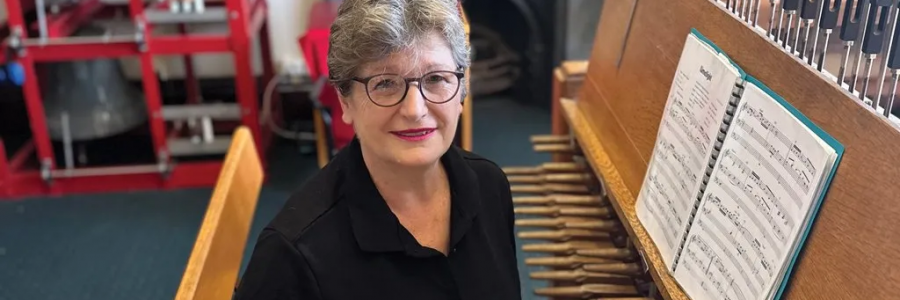
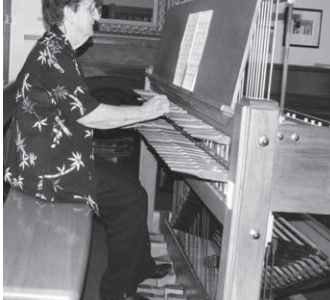
Alongside her medical work, in 1978 Jill Forrest was appointed an Honorary Carillonist. In 1993 she was
appointed University Carillonist through to her retirement in 2010. In this position Jill Forrest and the carillon
have brought great prestige to the University.
The War Memorial Carillon is the ceremonial voice of the University of Sydney, the only University in
Australia to have such a splendid asset. It is played to celebrate festive occasions and to dignify solemn
occasions and serves all faculties and organisations of the University. Jill Forrest has treasured the carillon
and with distinction, made an outstanding contribution in her role as the University Carillonist. She is a highly
accomplished performer and has represented Australia at International Carillon Festivals in Europe and
America.
During her tenure she played the carillon for well over a hundred graduations, Sunday recitals and festive
occasions each year. She has maintained the fabric of the carillon, bell chamber and clavier at world
standards and fostered strong links between the University and all other countries with carillons. She also
founded and donated a library of carillon music, with the latest annual publications. She has published,
edited, arranged and composed a vast quantity of high quality carillon music, and has educated carillonists
to world standards, thus ensuring Australian carillonists for the future. She has hosted international
carillonists all of whom have been immensely impressed with the instrument and the art of carillon in
Australia. In addition, as Honorary Consultant to the Bathurst Council, she has advised on refurbishment and
upgrading of the Bathurst War Memorial Carillon. Her dedication to Medicine and Music for over 50 years
was recognised in 2011 by the Award of Member of the Order of Australia (AM).
Chancellor, I present Consultant Physician Emeritus and Emeritus University Carillonist Dr Jill Forrest AM
and invite you to confer the title of Honorary Fellow of the University upon her.

Full article from Sydney University as pdf

Interview: Katherine Connolly talks to Jill Forest, University Carillonist

So what exactly is a Carillon and how does it work?
Carillons are the largest musical instruments in existence. They consist of at least two chromatic octaves of tuned bells, made from an alloy of 80% copper and 20% tin, which sound when struck by internal clappers of soft iron. The Sydney carillon contains 54 bells (4 ½ octaves) that are hung in the clock tower in the main quadrangle. The bells are fixed in position; their clappers are connected by wires to a large keyboard in the room below the belfry. When the clapper strikes the inside of the bell, the bell’s diameter determines the frequency of the fundamental note. A number of overtones also sound, including the minor third; these add richness to the sound. The instrument is played from a keyboard of manual batons and pedals.

How did you get to become the University Carillonist?

In its early years, the carillon was played by a number of honorary carillonists. In 1944 John Douglas Gordon was appointed the first University Carillonist, a position that he held until his death in 1991. He taught me to play, and in 1978 I passed an exam and joined the group of enthusiasts who assisted him as Honorary Carillonists. Later I studied carillon in New Zealand and Holland. When John died senior Honorary Carillonist, Dr Reginald Walker, took over for a year, during which time auditions and interviews took place and I was fortunate enough to be appointed to the position.

What’s the history of the University’s Carillon?

The University of Sydney War Memorial Carillon commemorates the 197 undergraduates, graduates and staff who died in World War I. It was paid for by private subscription both inside and outside the university, and was dedicated on Anzac Day 25 April 1928. The original bells were cast in England by the famous bellfoundry of John Taylor and Co. of Loughborough, Leicestershire. In 1973, the Taylors recast the top bells, and in 2003 the top 33 treble bells were replaced by Whitechapel of London, the bellfoundry that cast Big Ben.

Is it difficult for players to access the Carillon to practice?

Yes, this certainly restricts the number of students. The Environmental Protection Act precludes playing the bells themselves before 8 am (if we were a chainsaw we could start at 7 am!), and of course during working hours and lectures they could be a distraction. So if you are jogging in the morning between 8 and 8.45 am, or in the evenings and weekends when there are no other functions in the vicinity, someone will be practicing.

What is the best time and place to hear the Carillon being played?

There are free recitals every Sunday afternoon at 2 pm, and every Tuesday at 1 pm, except when there are exams in the vicinity. However, to hear the bells at their joyful best one should listen on the front lawns or in the main quadrangle before and after each of the University graduation ceremonies because then, as the Ceremonial Voice of the University, the bells will rejoice with you.