Slots Casino Bonus Ohne Einzahlung: Wir bieten auch ausführliche Testberichte für jedes Casino und bieten dir Informationen über die Spiele, Zahlungen, Bonusangebote und Bedingungen.
Spielbank Deutschland Online - Die Vampirsymbole erscheinen nur auf den Walzen 2 und 5, während menschliche Bilder nur auf den Walzen 3 und 4 erscheinen.
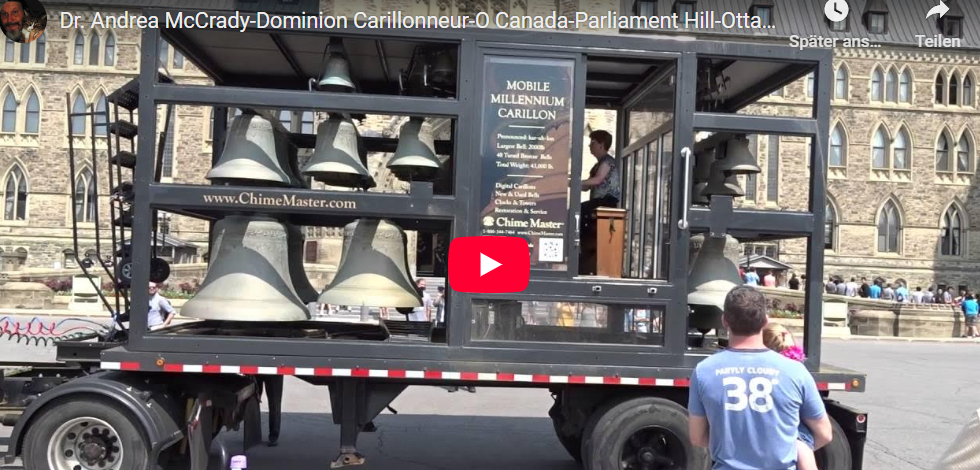
Die Glockenspielerin des kanadischen Dominion sagt, ihre Schüler würden im Peace Tower üben und ihre Fehler würden bis zum Parliament Hill übertragen. Andrea McCrady spielt das Glockeninstrument seit 1971. (13. Oktober 2018)
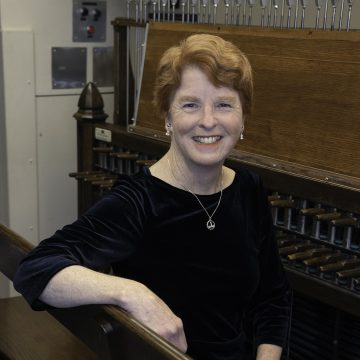
Dr. Andrea McCrady wurde 2008 zur Dominion Carillonneur des Peace Tower Carillon ernannt. Sie begann 1971 am Trinity College in Hartford, CT (B.A., 1975) Glockenspiel zu spielen. Während ihres Postgraduiertenstipendiums in Europa studierte sie an Glockenspielschulen in den Niederlanden, Belgien und Frankreich. Während ihres Medizinstudiums an der McGill University in Montreal war sie Glockenspielerin am St. Joseph’s Oratory, gefolgt von ihrer Facharztausbildung in Toronto, wo sie an der University of Toronto und bei der Canadian National Exhibition spielte. Von 1990 bis 2008 koordinierte sie das Glockenspielprogramm der Cathedral of St. John the Evangelist in Spokane, WA, wo sie auch als Allgemeinmedizinerin praktizierte. 2008 beendete sie ihr Medizinstudium, nachdem sie an der University of Denver einen Bachelor of Music mit Auszeichnung erhalten hatte. 2012 wechselte sie als Dozentin zum ersten Glockenspielstudienprogramm Kanadas an die Carleton University in Ottawa.
Dr. McCrady war viele Jahre im Vorstand der Guild of Carillonneurs in North America (GCNA) und von 1988 bis 1989 deren Präsidentin. Sie war Co-Vorsitzende des GCNA Ronald Barnes Memorial Grant Fund und des Heritage Music Committee. Von 1990 bis 1996 war sie Sekretärin der World Carillon Federation (WCF) und hielt Vorträge und Konzerte auf den WCF-Kongressen 1996, 2002, 2014, 2021 und 2023.
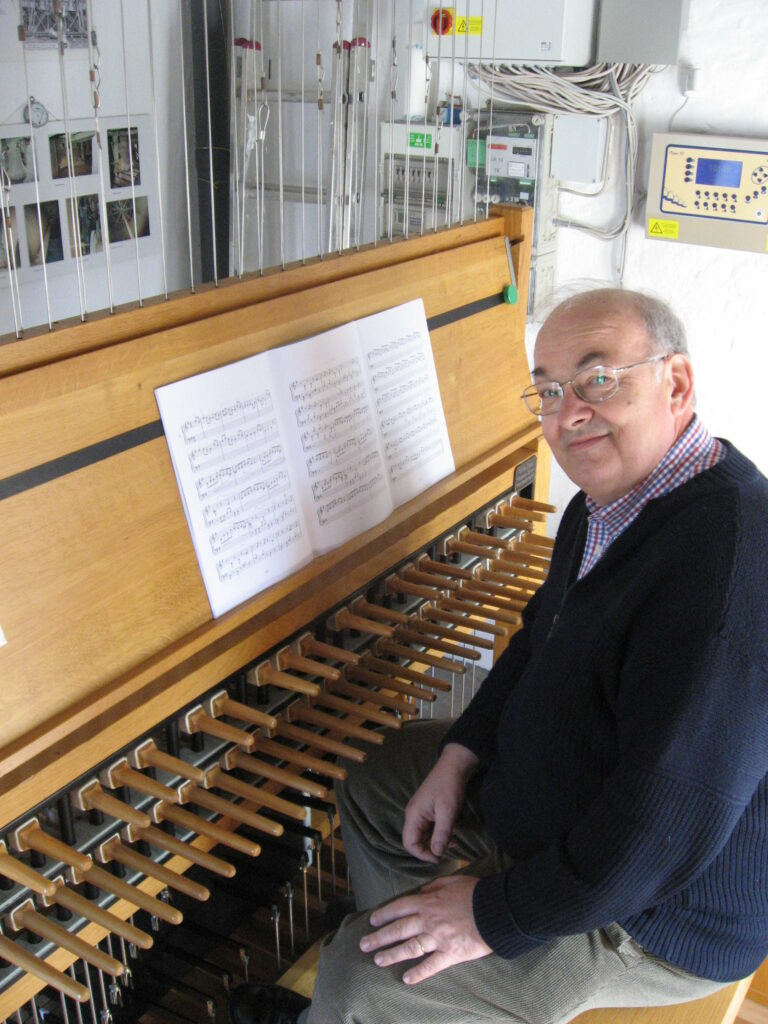
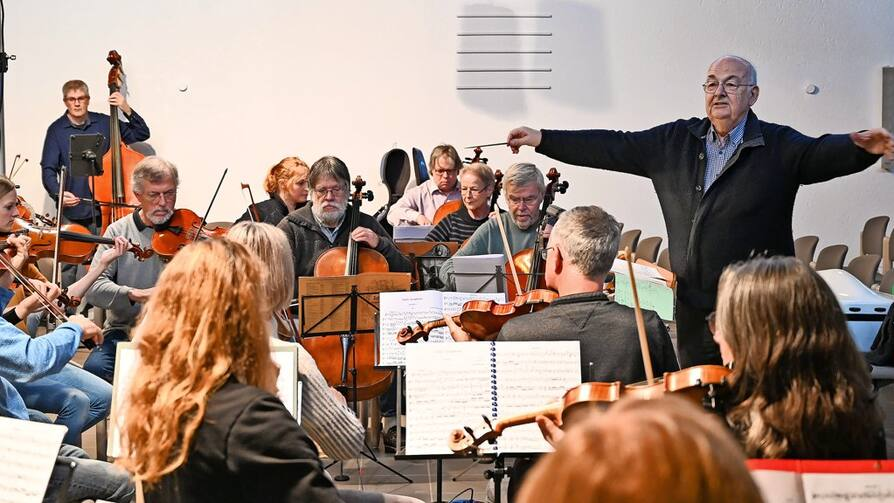
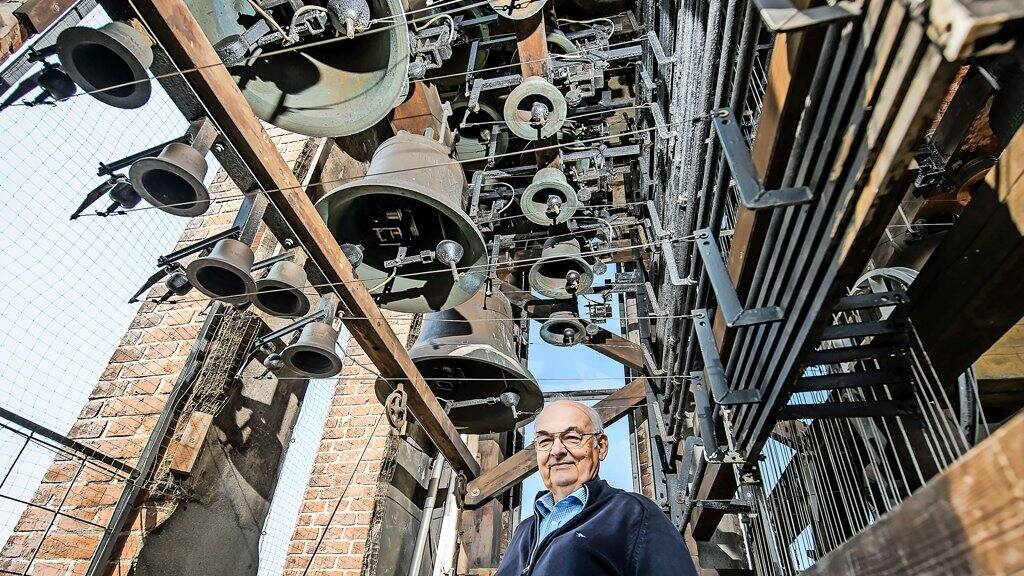
Dr. Gunther Strothmann war bis Ende 2006 als Arzt in Kiel tätig. Nach dem Abitur in Bremen nahm er u. a. bei Ernst Hörbe (1921 – 2012) Klavier-, Orgel-, Improvisations- und Kompositionsunterricht. Nach dem Medizinstudium in Kiel begann er seine musikalischen Aktivitäten zunächst als konzertierender Organist. 1977 gründete er das Sinfonieorchester Melsdorf, ein Amateurensemble, das als Projektorchester inzwischen auf mehr als 80 Mitspieler angewachsen ist. 1999 gründete Strothmann zusammen mit Michael Stoll das Klassikensemble Kiel, ein Kammerorchester, dessen Leitung er bis 2017 innehatte. Gunther Strothmann gründete darüber hinaus 1977 das Sinfonieorchester Melsdorf. Zwischen 1980 und 2022 leitet er den Rachmaninow-Chor Kiel. Auch das Klassik-Ensemble Kiel geht auf seine Initiative zurück.
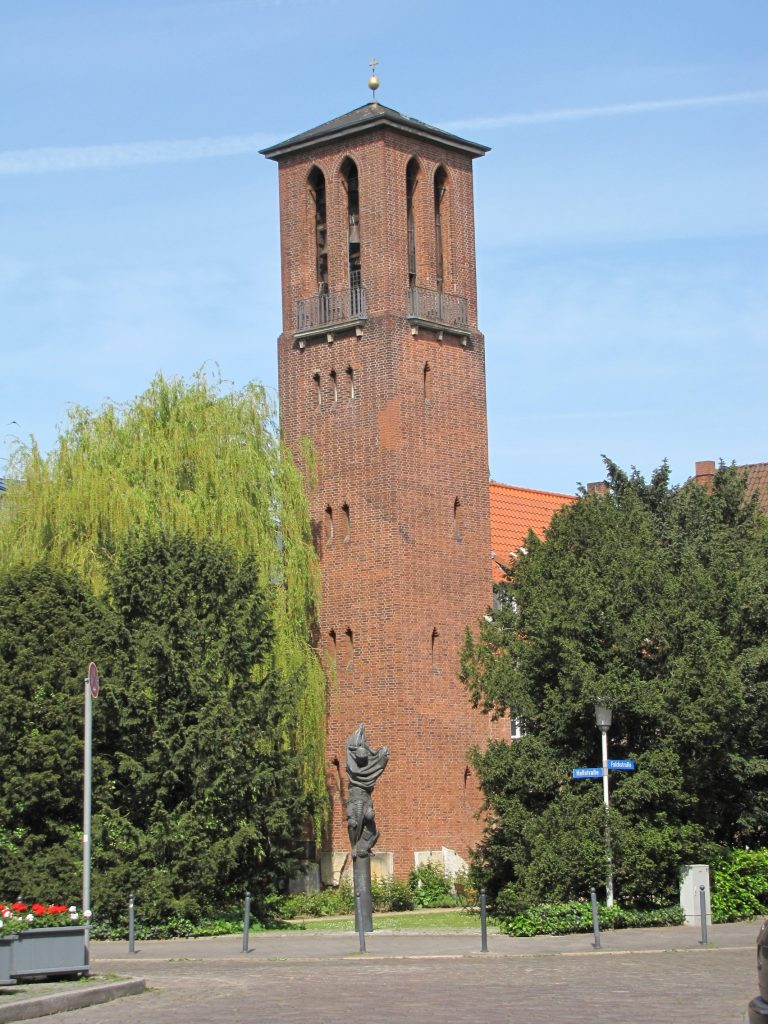
1999 wurde das Kieler Carillon im Turm des ehemaligen Kieler Franziskanerklosters mit einem öffentlichen Konzert eingeweiht. Von der Nordelbischen Kirche wurde Strothmann im selben Jahr zum Carillonneur und Kustos des Kieler Glockenspiels ernannt. Konzertreisen führten Gunther Strothmann nach Dänemark, Schweden, Norwegen, Frankreich, Belgien, den Niederlanden, Spanien und den USA.
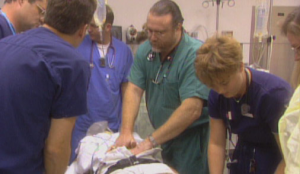
A decade out of med school, Tom was confident in his ability to handle any case that came into the emergency department at Bloomington Hospital.
In need of some doctoring
NOVA: Are you glad you became a doctor?
Tom Tarter: I couldn’t imagine myself doing anything else but what I do. Well, that’s not entirely true—I could be a mechanic. But I do love emergency medicine. I just love it.
Q: I can tell. You light up when you talk about it.
Tom: Yeah.
Q: Can you tell me a little bit about your own health?
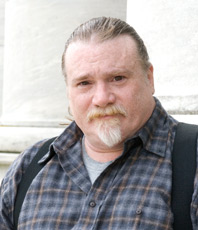
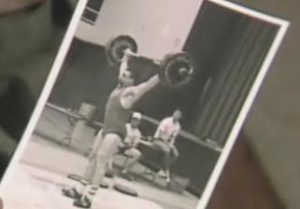
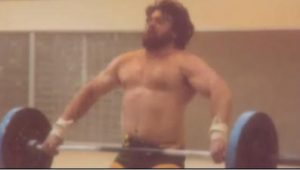
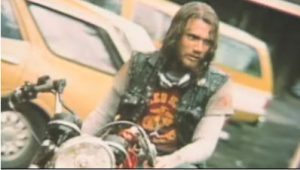
Tom: Sure. I’ve just been running so hard, trying to get my life together, that my health has really gone to hell in a handbasket. For the last three years, I haven’t had any health insurance. I’ve gained a monstrous amount of weight. And I smoke. So these are issues that I really have to address. I’ve had multiple orthopedic procedures for injuries from when I was involved in weight lifting and motorcycles. So I have quite a bit of pain to deal with. But I think everything will get a lot better when I lose 100 pounds and quit smoking.
Q: Why haven’t you had health insurance?
Tom: I couldn’t afford it.
Q: It seems ironic that you’re a physician and not able to afford health insurance.
Tom: Health insurance would cost my family close to $2,000 a month for the four of us. I just can’t do it. Now, my wife just got a job, and we’re gonna be able to get coverage under her policy at work. But I’m kind of like a freelance worker, so I have no insurance, haven’t had it for years.
Q: You must be able to relate to people you see in the hospitals without insurance.
Tom: Yeah. You’ve gotta do what you gotta do to get by. If it’s a choice between paying your mortgage, or getting your house foreclosed, or doing without health insurance, well, we all have to make those choices. I still am living in my house.
Q: Do you think our health-care system is broken?
Tom: The health-care system in this country is a mess. There’s a horrendous amount of waste and abuse on both sides of the line. I’m pretty familiar with both sides. The answer certainly isn’t as simple as just throwing a bunch of money at it. There has to be fundamental change in the way medicine is structured in this country. Really it would be best to throw the whole system out and start from scratch.
Fighting stereotypes
Q: When you were in medical school, you felt like the odd man out. Do you still feel that way as a doctor now?
Tom: Guys like me aren’t supposed to be in medicine. I’m from a poor family, broken home, and I didn’t go to any special schools. I’ve never fit in, really, for that reason. On top of that, I’m a bit of a freethinker.
Q: Has your tendency to challenge the status quo gotten you into trouble?
Tom: Lots of trouble.
Q: Talk about that.
Tom: I’ve gotten into trouble for all kinds of ridiculous things. For instance, I once had a patient who had bad sleep apnea, and on top of that, he had hay fever. He hadn’t slept for days and was virtually at the point of suicide. Well, I asked this nurse for a medication called Afrin, which you can buy at any drugstore. This would open up his sinuses, and he’d be able to sleep. The nurse said, „We don’t have it, and I’m not gonna even look for it.“
I happened to have an unopened bottle of this stuff in my bag. He tried it. It opened up his nose, and he was real happy. But I got read the riot act for giving home-brewed medications that weren’t approved by the hospital.
Basically, they didn’t want me there. I wasn’t the stereotypical doctor, and they wanted me out of there. I’ve had multiple experiences like that.
Q: It must be depressing at times.
Tom: It’s very depressing. [laughs] It is.
„A lot of people just don’t understand that everybody isn’t stamped out of the same cookie cutter…“
Q: Have you tried to conform to fit in?
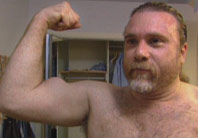
Tom: I’ve done everything—I’ve cut my hair, I’ve worn the white coats, cleaned up my act as much as I possibly can. But there’s just something about me—the way I’ve been raised, the story of my life, the way I think, the way I am. It just says, „This guy isn’t your typical doctor.“
Q: Do you think it’s fair that people in management may judge you on superficial things like your tattoos?
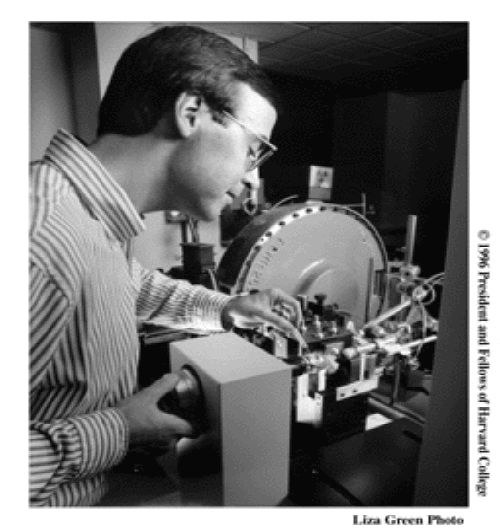
Tom: Well, I don’t think people should judge me by my tattoos, by the way I wear my hair. These people have access to my CV. They see that I graduated from Harvard, that I’ve been working for 15 years as a board-certified, high-trauma emergency doctor. I’ve never been sued, never been named in a case. They see this stuff.
I think part of why the medical community, in general, doesn’t communicate well with the public is because most doctors were hand-selected from upper middle class families. They don’t relate to working-class people and don’t acknowledge working-class people as being worthwhile. You know? If you don’t enjoy golf, if you don’t hate tattoos, if you smoke cigarettes, you’re dirt. And if you think that way, well, you’re not going to like me.
Q: Are you angry?
Tom: I don’t think I’m particularly angry, no. I don’t blame anybody. It hurts and it’s depressing, absolutely.
A lot of people just don’t understand that everybody isn’t stamped out of the same cookie cutter, that people are different and that’s okay. It seems to be less so at my current job—in the VA [Veterans Affairs hospitals], soldiers are much more similar to myself. We seem to understand each other better. I think there’s less of a boundary between the socioeconomic classes, and a lot of the other physicians there were ex-soldiers themselves. So I think it’s a better spot for me. But in the private sector, it’s tough. It is tough.
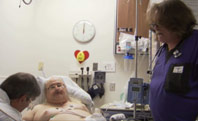
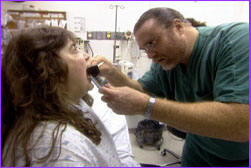
Q: I’ve seen you with patients. You’re amazing with patients. They really respond to you.
Tom: Yeah, it’s funny. Patients seem to really gravitate towards me. It’s just the administrators and other doctors who sometimes have trouble with me.
Q: In the future, would you like to stay with the VA because it’s a better fit?
Tom: That’s pretty much what I’m thinking. I’ll probably continue working at the VA as long as they want me. And we’ll see.
One thing I like about the VA is we get to spend a decent amount of time with patients. The people who work at the VA, at least where I’m working, really care about giving good health care. These are vets who have served their country, and we want to do a good job of taking care of them.
Q: Are there other things you see ahead in your career?
Tom: I’d like to do some kind of activism. I really would. We live in the greatest country in the world, yet we’re falling apart. I’d love to get involved in some kind of activism, whether it’s in the health-care field or just political activism. I’m an old hippie, and I’ve always wanted to make some kind of positive change.
Q: You would make a great activist.
A downward spiral
Q: You were a pretty seasoned doctor when I last saw you here [in Bloomington, Indiana] in 2000.
Tom: Yeah. It took me about 15 years of medical training to really feel comfortable in the emergency department, to feel that I was a competent physician. But I did feel that way, and I do now.
Q: What started to go wrong after I last visited?
Tom: Well, I kind of had two crises going at the same time. My third marriage, of course, did not work out. It was probably a very poorly advised thing for the two of us to get married to start with. And my life in medicine was great in terms of my love of doing it, but it went downhill in other ways.
I had been recruited to what was at the time the only hospital in Bloomington, and after a falling-out with the people who run the emergency department, I no longer was able to work in Bloomington. That put me in a difficult situation, ‚cause I’d bought this house, and I had begun to put down roots here.
„I have a wonderful wife. She’s just absolutely the greatest. I love her like nobody I’ve ever met before.“
Emergency department doctors have to work within the boundaries of a hospital. We don’t have the choice of just opening up a practice. After I left Bloomington Hospital, I took some jobs at hospitals here and there, essentially working for an agency that placed me at different facilities.
Q: So now you are something of an itinerant doctor.
Tom: Right. I’ve been bouncing around, from one job to another, sometimes having to drive four or five hours to get to a job. Currently, I’m taking planes to anywhere from Seattle, Washington to St. Thomas, Virgin Islands just to find work.
Q: Financially, it’s been tough for you. What’s happened to your credit rating?
Tom: Because of some circumstances surrounding the divorce, my credit rating has gone down the toilet, and right now I couldn’t get a credit card from Sears if I wanted to. During the divorce, I was court-ordered by the judge to turn over one of our cars to [my ex-wife]. She was court-ordered to pay the payments on the car and the insurance. Well, she didn’t.
When I heard that the car was impounded, I paid off what was owed and got the car back. I contacted the credit company and said, „Would it be possible to get some kind of forbearance, given that I was court-ordered to give this car to this woman?“ They said, „No, it’s going on your credit score.“ That set up a spiral where my credit has just gone so far down the toilet it’s laughable.
Q: Did you imagine when you were in med school that you might be in this place financially after you became a doctor?
Tom: I never expected that I would be almost as broke as I was before I went to medical school and possibly looking at bankruptcy. It blows my mind completely.
The business of emergency medicine
Q: Do you think that most emergency departments are managed with too much of a business mentality?
Tom: The doctors who run these groups [that have contracts to manage emergency departments] have become businessmen. They’ve adopted models of how medicine should be practiced based on corporate models.
They measure how well their business is doing like McDonald’s would. They issue questionnaires on patient satisfaction. Actually, they stop calling patients „patients.“ They refer to them as customers. They talk about customer satisfaction. Well, unfortunately, medicine doesn’t fit that paradigm. You cannot use the same paradigm for selling hamburgers as for taking care of an ill patient.
You’re not always making people happy when you’re making them healthy. Sometimes you’re pissing them off. So these tools to measure patient satisfaction don’t measure the quality of the health care. Here’s a basic example: Every emergency physician deals with a patient who abuses prescription pain medicines, who is trying to get pain medicine to use or sell. If you say, „We’re not gonna give you narcotics,“ this person blows a fit. When this person gets his exit questionnaire, and it says, „Are you happy with the care you got?“ he’s gonna say no.
So these questionnaires can encourage physicians to do bad things-—give narcotics when they’re not warranted, give unnecessary antibiotics, order too many tests. Ordering lots of tests makes everybody happy, because you can bill more. These are all things that corporate emergency medicine encourages. And if you try to buck that system, you’re gone. You’re toast. You’re history.
Q: Do you think emergency departments are a particularly troubled part of the health-care system?
Tom: What’s happening in emergency medicine is really very dire, and there isn’t much appreciation for it. A lot of people don’t even know how emergency departments are run. They think that doctors from the hospital fill shifts, which hasn’t happened since the 1970s.
Still grateful
Q: Knowing what you do now about emergency medicine, would you go down this path again?
Tom: You bet I’d do it all over again. I love emergency medicine. I love it. I wouldn’t want to do anything else. I know that when somebody walks into my emergency department, no matter what’s wrong with them, I can give them their best shot at getting better. I wouldn’t trade that for the world.
Q: When you can’t save someone, how does it feel to have to tell their loved ones? Have you dealt with death so much by this point in your career that it feels normal?
Tom: It never feels normal or okay to inform someone that their loved one’s died or to inform someone that they have a terminal illness. It’s a horrible thing to do. I empathize with their pain, and I’d rather stick hot pins in my eyes than tell somebody that their life mate has died. Unfortunately, someone has to do it, and often that’s me. So I try to do it in the most compassionate way that I can.
„You take what life gives you. If I had a magic wand that could change it, believe me, I would.“
Q: Given all the difficulties in your life, are there still things for which you’re thankful?
Tom: I have a wonderful wife. She’s just absolutely the greatest. I love her like nobody I’ve ever met before. She’s so hardworking and level-headed and smart. She doesn’t even know how smart she is, how much insight she has. She’s just fantastic.
We live in a beautiful town. We have this beautiful land and beautiful house. I’m very grateful for all those things—I’m just afraid they’re all going to get taken away. Well, they’re not going to take away my wife, but we could end up living in refrigerator boxes. We always kid about that.
Q: How do you feel about participating in this series, our following you for 21 years?
Tom: I really am very happy to have done it. It’s been very therapeutic, allowed me get a lot of things off my chest. It’s almost like analysis or something.
Q: What would you say to a young person who thought he or she wanted to be an emergency-medicine doctor?
Tom: There’s a lot to think about. You can definitely get a better return for less investment working in other fields of medicine. You can do something like become a physician’s assistant or a certified nurse anesthetist. You don’t have to sell your soul for half your life to get there. So I advise people to strongly consider that they’re going to have to work very hard for many, many years for very little pay. They may have to borrow money for a good part of it, come out in debt. It’s a tough road.
Q: If you could do some things in your life differently, what are some of the life lessons you’ve learned?
Tom: Watch out for adjustable-rate mortgages, watch out for cars that don’t get good gas mileage. I don’t know. Try to smell good all the time. That’s about it.
Q: You have been under such stress in the last few years. I can’t even imagine it. It must be exhausting.
Tom: Yeah, but you take what life gives you. If I had a magic wand that could change it, believe me, I would. My wife and I constantly brainstorm to try to think of ways to turn things around. We’re doing the best we can. If anybody has a better idea, write to Tom Tarter, care of WGBH, and let me know. [laughs] I’m open for suggestions.
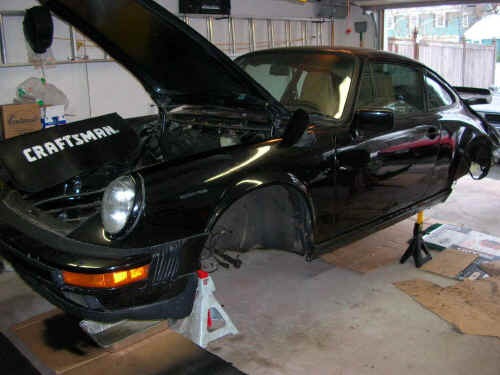
Ich habe mir die auf Ihrer Website aufgelisteten Hobbys gerne angesehen. Die meisten sind anspruchsvoller als meine. In den letzten Jahren habe ich ein altes Hobby aus meiner vergeudeten Jugend wieder aufgegriffen, das man treffender als „Schmier-Doc“ bezeichnen könnte. In meiner Freizeit restauriere ich alte Porsche 911 (Fotos im Anhang) und finde die handwerkliche Arbeit sehr entspannend.
Hallo! Ich bin Eric Schendel, Inhaber von The Lifestyle Doctor. Ich bin persönlicher Technologieberater und zeige Menschen, wie sie erfolgreich von zu Hause aus am Computer ein Unternehmen führen können. Hier ist eine kurze Zusammenfassung meines Werdegangs und meiner Interessen.
Meine Familie zog nach Mexiko, als ich sieben war, und wir lebten dort elf Jahre, die meiste Zeit in der kleinen Stadt San Miguel de Allende. Zurück in den USA ließen wir uns in Texas nieder, wo ich die High School abschloss, studierte und Medizin studierte. 1984 entdeckte ich meine Leidenschaft für Computer und deren Potenzial für die medizinische Praxis. Mein erster Computer war ein KayPro II, mein zweiter ein PC-Klon von Heath. Er wurde als Bausatz geliefert und musste zusammengebaut werden – ich musste sogar die Komponenten auf die Platinen löten! Später arbeitete ich in einer Vertretungsagentur, um in Bioingenieurwesen mit Schwerpunkt computergestützte medizinische Diagnostik zu promovieren. Jetzt bietet mir Big Planet die Möglichkeit, mein Computerwissen und meine Leidenschaft für Technologie mit anderen Menschen zu teilen.
Ich lebe mit meiner Frau Fionnuala und unserem Sohn Keith in Seattle. Zu meinen Freizeitinteressen zählen Schreiben, Skifahren, Segeln, Wandern und Reisen.
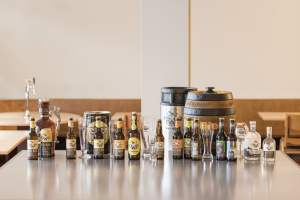
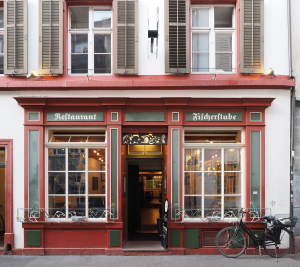
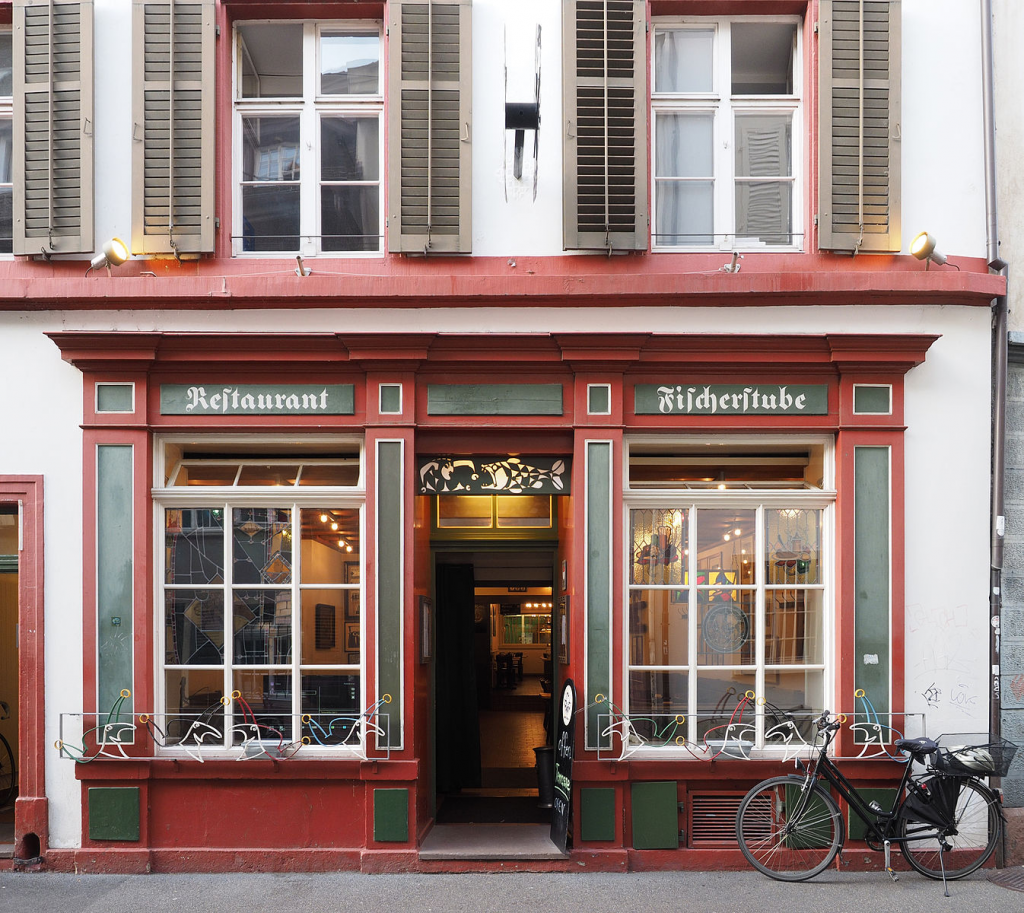
Die Brauerei Fischerstube AG ist eine SchweizerBierbrauerei mit Hauptsitz in Basel. Sie produziert Bier unter dem Markennamen «Ueli Bier»
1974 erwarb der Arzt Hans-Jakob Nidecker (1919–2005)[4] das Restaurant Fischerstube an der Kleinbasler Rheingasse 45, das mehrere Jahre leergestanden hatte, um die Quartierwirtschaft zu reaktivieren. Nidecker war an der Rebgasse aufgewachsen, fest im Kleinbasel verwurzelt und während mehrerer Jahre Meister der Kleinbasler Ehrengesellschaft zum Rebhaus. Bereits im Jahr 1970 hatte sich Nidecker um die Basler Traditionen verdient gemacht, als er mit einer eigens gegründeten Stiftung die Basler Fähren vor der Kommerzialisierung und einer ungewissen Zukunft rettete. Die ersten Pächter der neueröffneten Fischerstube war das Wirte-Ehepaar Silvia und Mike Künzli.
Sein Sohn, Niklaus Nidecker, geboren 1949, ist Allgemeinmediziner und praktiziert in Erlach am Bielersee. Er ist verheiratet und hat zwei erwachsene Töchter. Seine Hobbys sind Bier und Segeln. In der Brauerei ist er als Präsident des Verwaltungsrats tätig und betreut Kunden und Mitarbeiter. Die Frau eines weiteren Bruders (eine Musikerin) ist Geschäftsführerin.
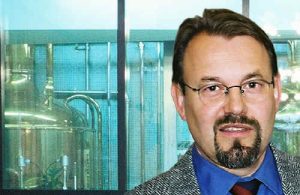
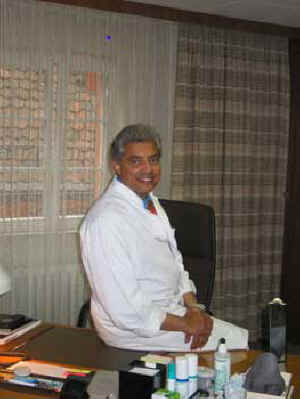
Der andere Sohn, Dr.med. Andreas Nidecker ist Facharzt für Radiologie in Basel und Mitglied des Brauereirats. Sein Vortrag ist unten auf dieser Seite zu sehen.
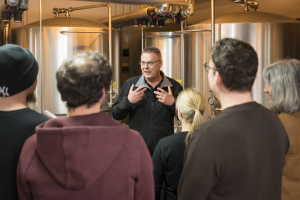
Am 13. November 1974 floss das erste eigene Bier aus dem Zapfhahn der Fischerstube. Als Namensgeber für das Bier wählte Nidecker den «Ueli»,[8] eine Figur aus der Tradition der drei Kleinbasler Ehrengesellschaften. Die Brauerei begann zwar klein mit einem Ausstoss von lediglich 475 Hektolitern im Jahr, aber gleich mit drei Sorten.[9] Schnell wurde Nidecker klar, dass er einen qualifizierten Braumeister einstellen musste. Er engagierte den gebürtigen Emmentaler Anton Welti, der damals gerade aus dem westafrikanischen Ghana zurückgekehrt war, wo er während mehreren Jahren als Braumeister für eine Grossbrauerei gearbeitet hatte. Die Wahl erwies sich als ein Glücksgriff, und Welti trug einen grossen Anteil zum Erfolg des Unternehmens bei. Er blieb dem Ueli-Bier 34 Jahre lang als Braumeister treu und entwickelte in dieser Zeit immer wieder neue und originelle Biersorten, bis er 2009 in Pension ging.[10] 2010 wurde Jürgen Pinke Braumeister.
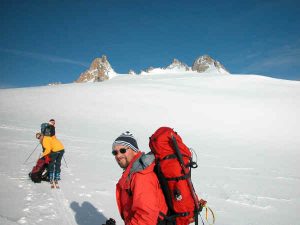
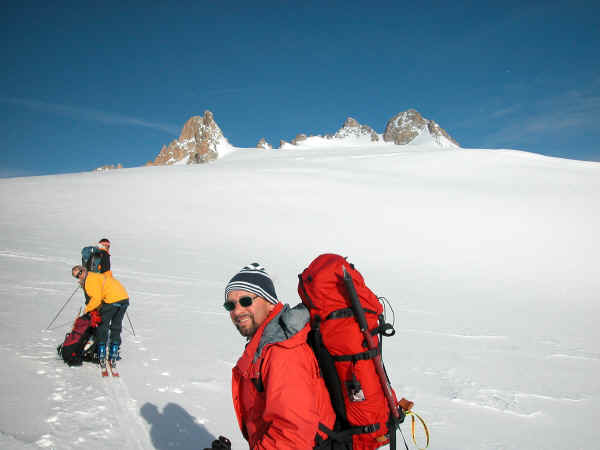
It is a pleasure for me to send you a photo for the DoctorsHobbies.com web. It has been shot in the Wallis Alps in the area of Trento.
My environmental activities consist of two groups, the medical doctors of environmental protection and with energy politics at the medical doctors of social responsibility. We are working against atomic war.
Even if not every colleague can be active politically it seems to be important to be active in one or another form. Since our profession still receives a lot of respect and doors open more easily we can achieve something!
Besides this I play tennis, sometimes also Alp Horn (!), I am singing as bass in the Basel Vocal Ensemble and I go jogging, apart from the mountain climbing. As founder and member of the Basel „association for medical cooperation“ I visit our partner hospitals in Serbia and Zambia on a yearly basis and teach there.
An actual project is to supply 70 egyptian hospitals with x-ray equipment. My special task is to assure not only the correct installation of the machines but also the correct use by the staff!
Hoping that these informations are useful I send my warmest greetings
Andreas Nidecker
Prof. Dr. med. A. Nidecker Universität Basel
Thank you, Prof. Nidecker! This nice e-mail with information about your NON-medical activities is perfectly the spirit of DoctorsHobbies.com
Let us hope many others will think and act the same way! Yours
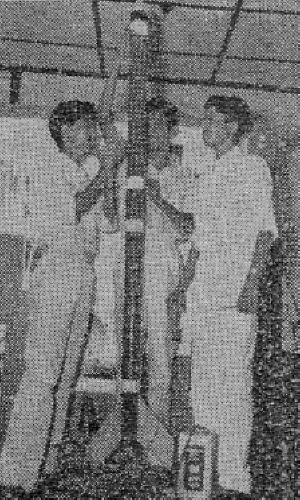
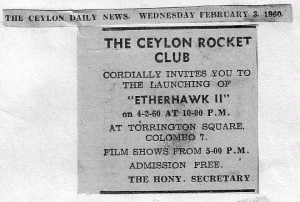
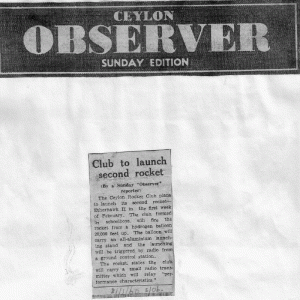
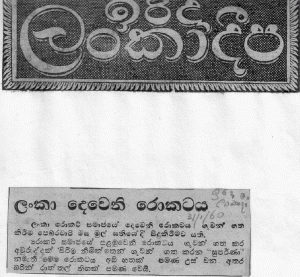
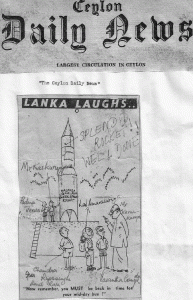
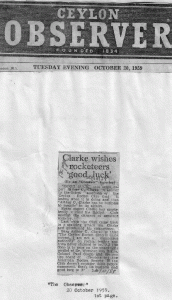
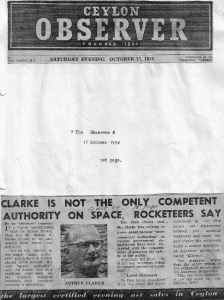
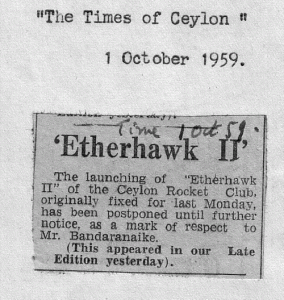
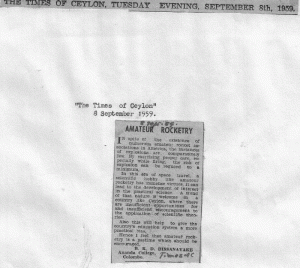
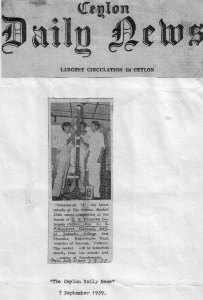
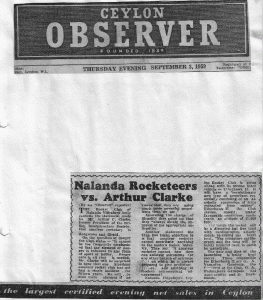
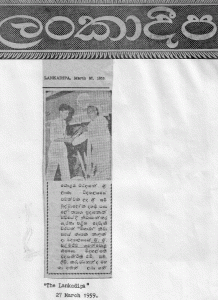
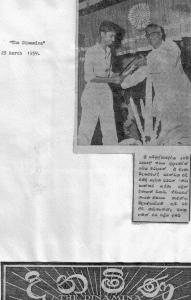
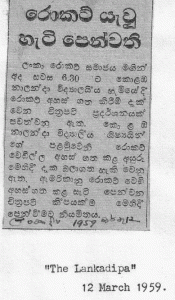
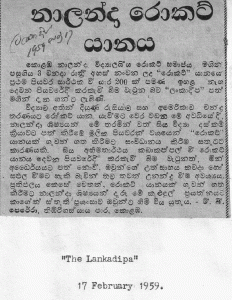
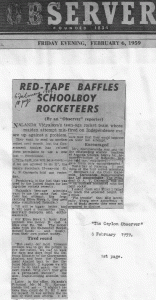
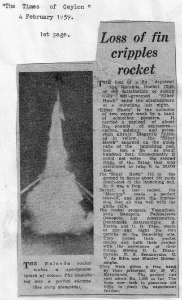
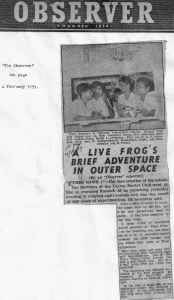
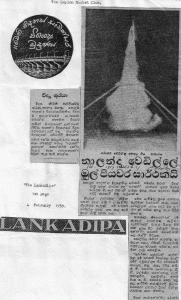
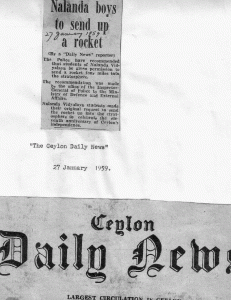
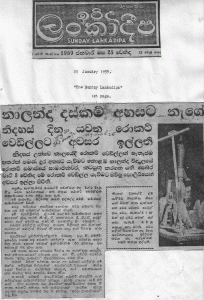
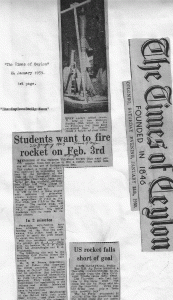
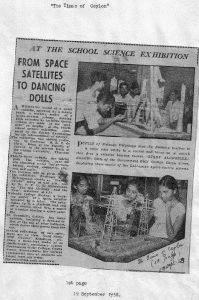
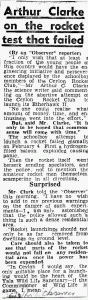
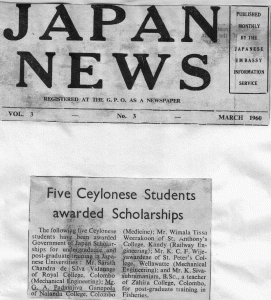
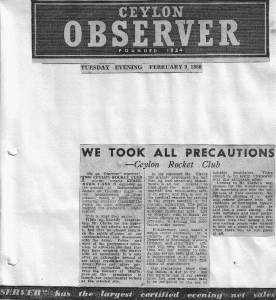
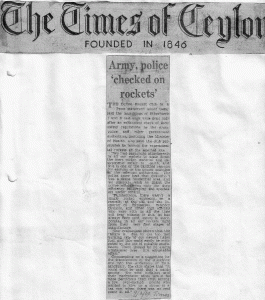
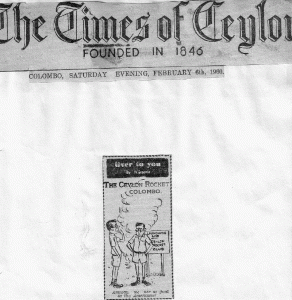
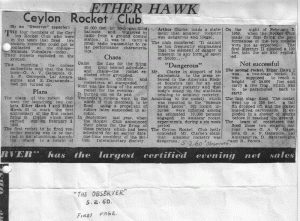
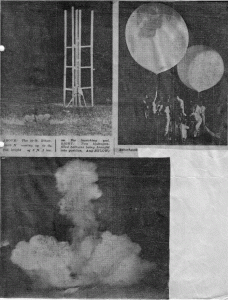
In seiner Jugend baute er mit seinem Bruder Raketen!
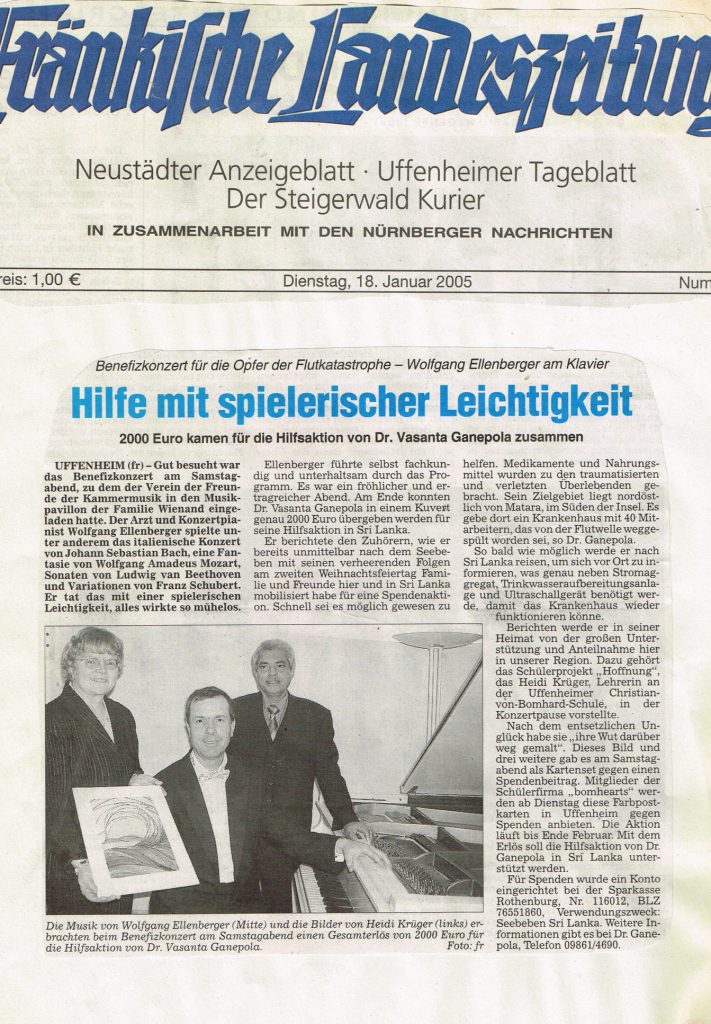
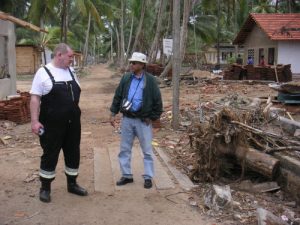
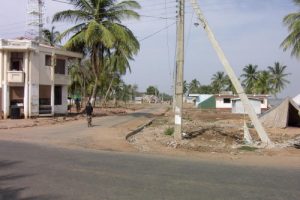
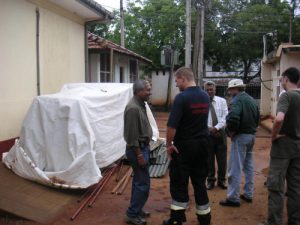
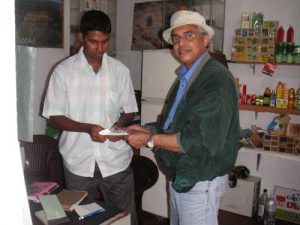
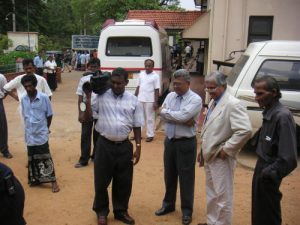
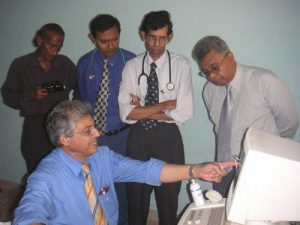
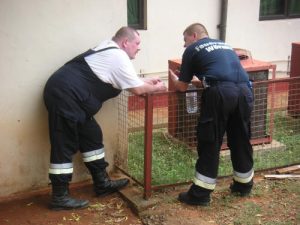
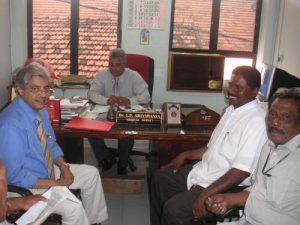
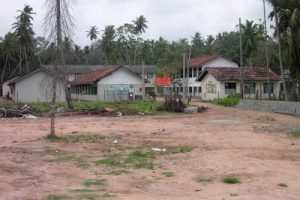
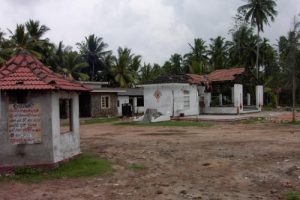
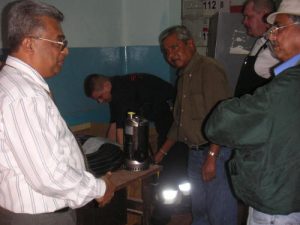
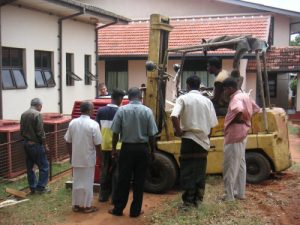
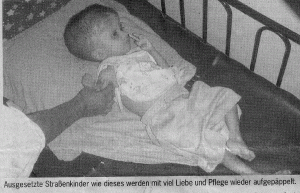
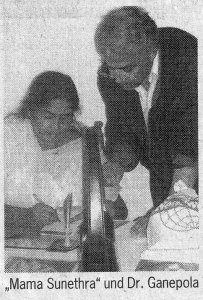
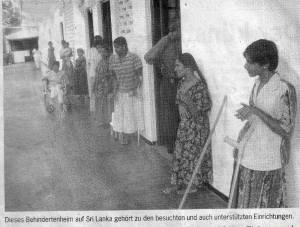
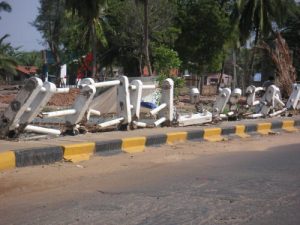
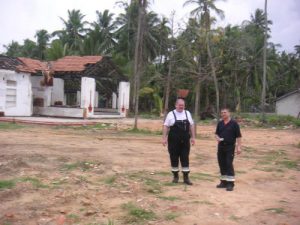
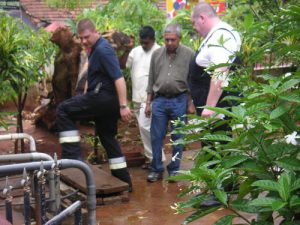
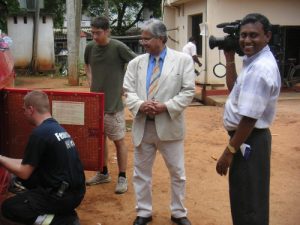
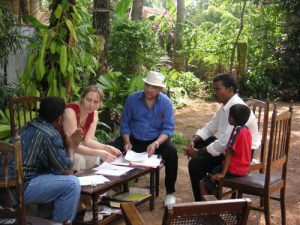
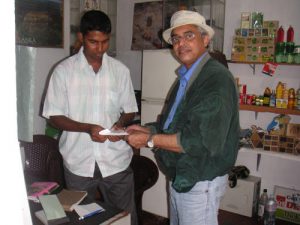
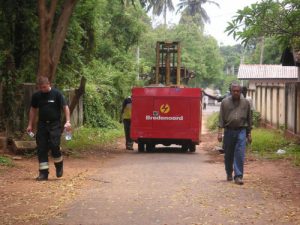
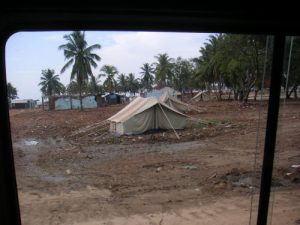
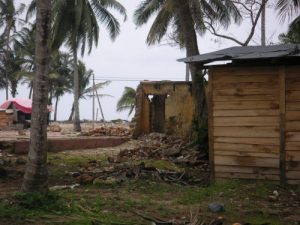
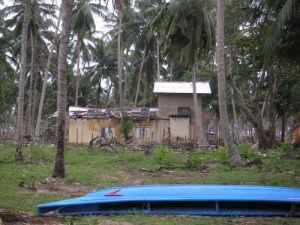
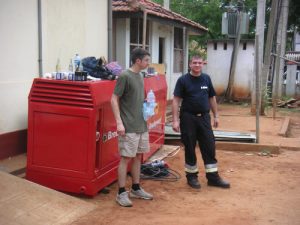
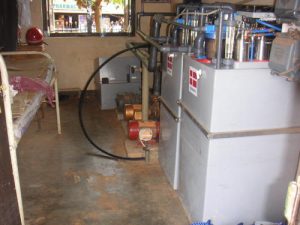
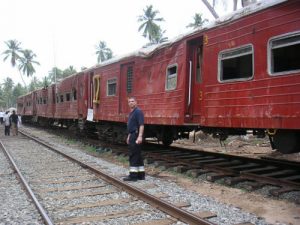
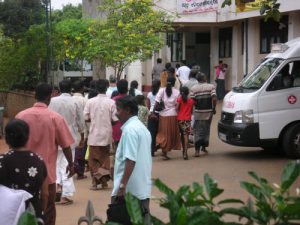
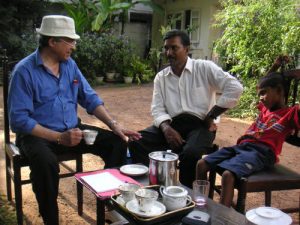
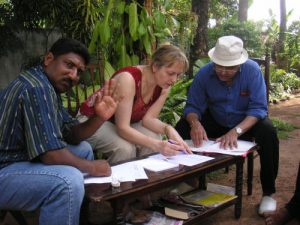
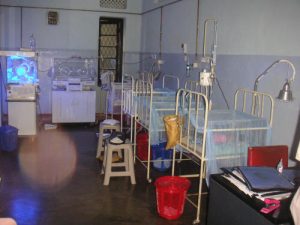
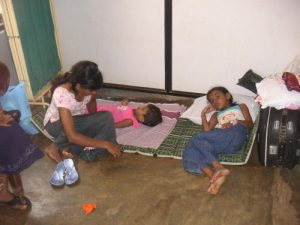
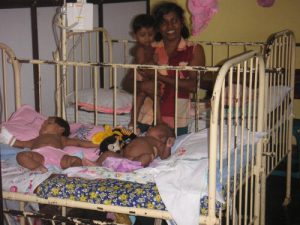
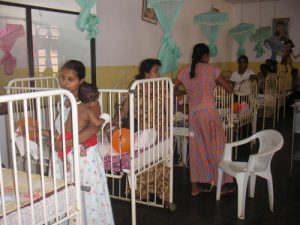
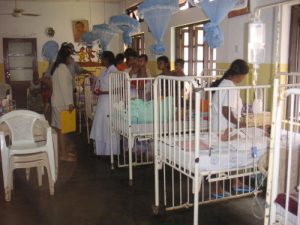
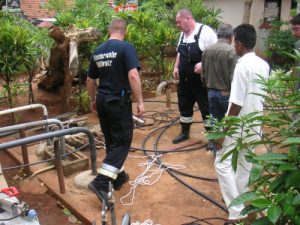
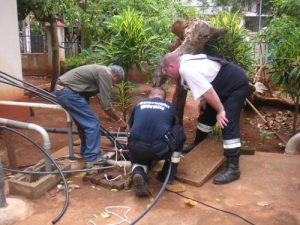
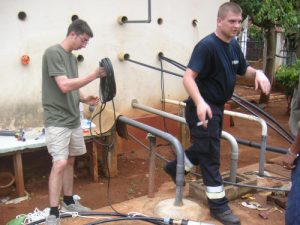
2005 fand an seinem Praxisort in Uffenheim ein Benefizkonzert für die Tsunamiopfer in Sri Lanka statt, und er brachte den Erlös zu 100 % persönlich vor Ort in dieser Aktion:
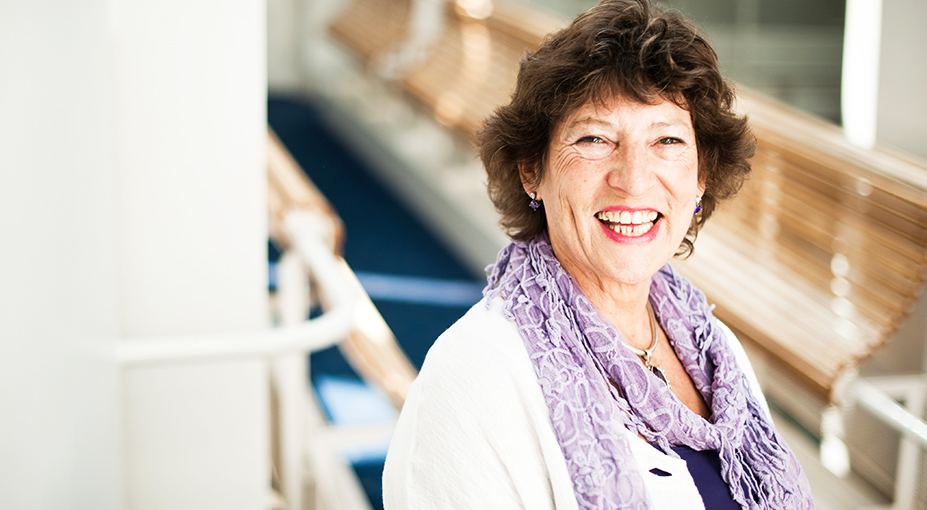
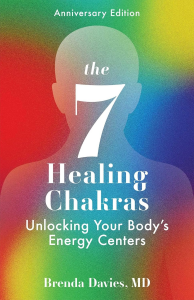
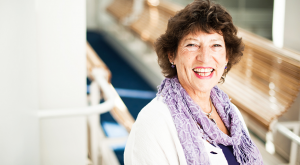
Dr. Brenda Davies – Psychiaterin, Psychotherapeutin, Medium, Autorin, Rundfunksprecherin und spirituelle Lehrerin, Apothekerin – ist in der Grafschaft Durham (Großbritannien) geboren und aufgewachsen und ist eine sehr glückliche Mutter, Großmutter und Urgroßmutter. Sie hat ein faszinierendes Leben geführt, das sie viele Male um die Welt geführt hat. Als Direktorin der Brenda Davies International School of Healing and Spiritual Development unterrichtete sie in England, Irland, Deutschland, Australien, Neuseeland, Japan, den USA, der Türkei, Zypern, Bali, Sambia, Simbabwe, Südafrika und anderswo. Sie hat ihre Friedens- und Konfliktlösungsarbeit in vielen vom Krieg verwüsteten Ländern mit großer Freude geleistet. Ihre große Liebe gilt Sambia, wo sie viele glückliche und aufregende Jahre verbrachte. Jetzt lebt sie glücklich in Wales.
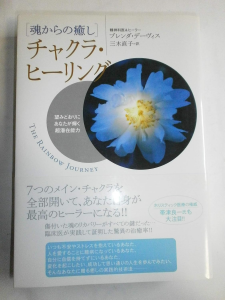
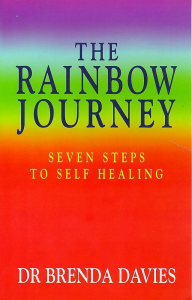
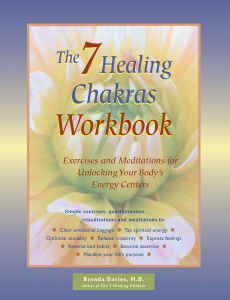
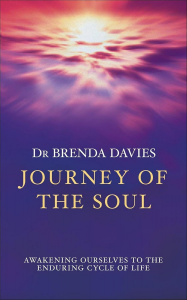
Ihren ersten Versuch als Belletristik verfasste sie mit Anfang zwanzig, als sie mit ihrem zweiten Kind schwanger war. Das Manuskript lagert noch immer zu Hause in einem Schrank. Ihre eigentliche Karriere als Schriftstellerin begann mit 55 mit der Veröffentlichung von „The Rainbow Journey“. Es folgten mehrere Sachbücher über Spiritualität und Gesundheit, darunter „Journey of the Soul“, das für den Kindred Spirit Award nominiert wurde. Mit 78 Jahren wandte sie sich der Belletristik zu und veröffentlichte ihren Debütroman „The Girl behind the Gates“, der hoffentlich in nicht allzu ferner Zukunft verfilmt wird. Mit 82 Jahren lebt sie glücklich in Wales, wo sie immer noch Vollzeit arbeitet – mittlerweile hauptsächlich online – und in jeder freien Minute schreibt. Sie liebt das Leben, die Menschen und die Natur und ist mit ihrem Schicksal sehr zufrieden. Sie hofft, dass Ihnen ihre Bücher gefallen werden, auch wenn sie noch einige davon schreiben muss. Hoffentlich wird ihr zweiter Roman bald veröffentlicht.